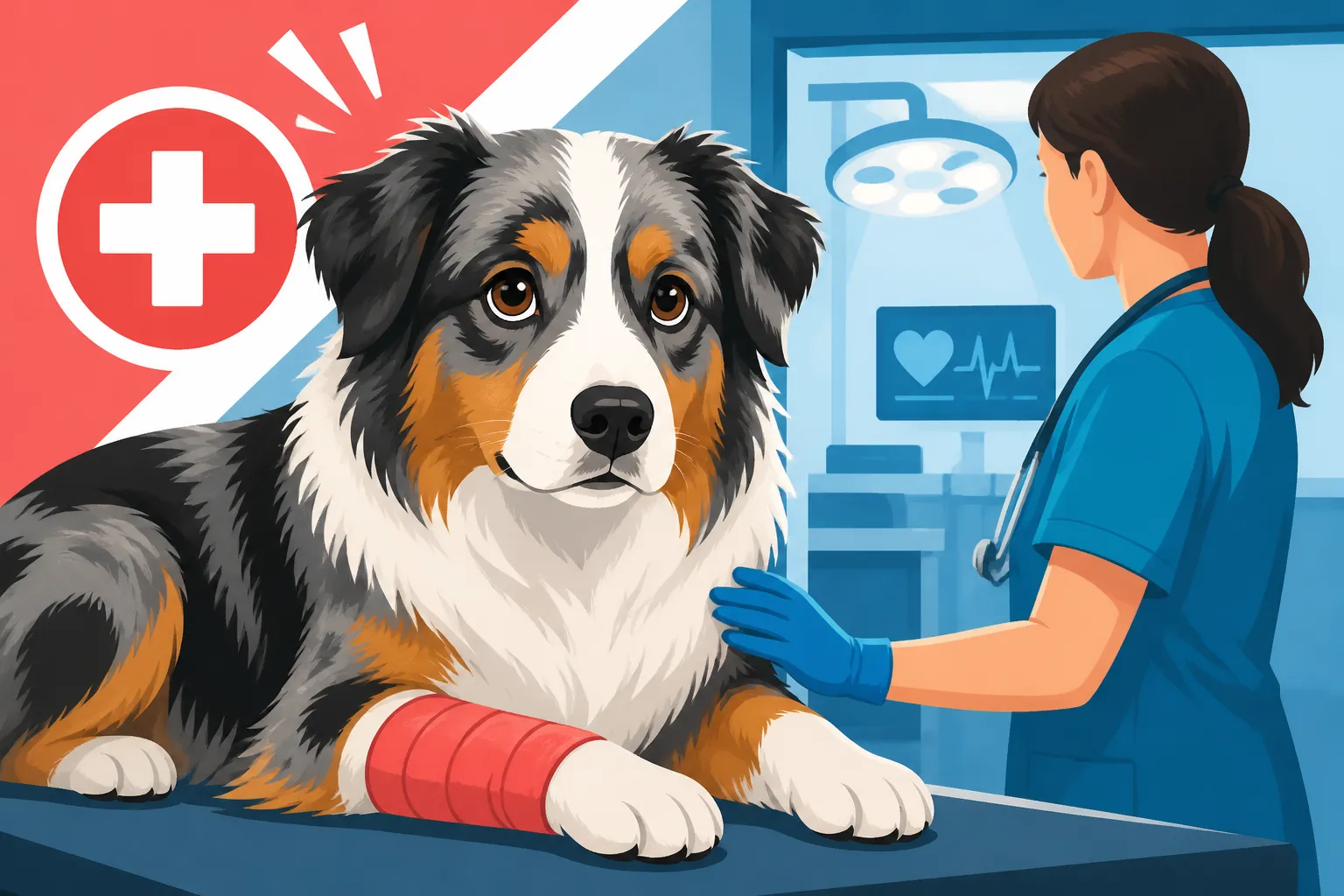
An Australian Shepherd Emergency Vet Visit
It’s a moment every Australian Shepherd owner dreads: that gut-wrenching realization that something is seriously wrong with your beloved dog. Whether it's a sudden injury from an adventurous leap, a mysterious illness that comes on fast, or an unexpected seizure, an emergency vet visit is often a terrifying and expensive experience. This guide is here to walk you through how to recognize a true emergency, what crucial steps to take, and how to navigate the overwhelming costs, helping you be as prepared as possible when minutes count.
Recognizing When Your Australian Shepherd Needs Urgent Care
When your active, intelligent Aussie suddenly acts out of character, it can be tough to tell if it's just a "weird day" or a genuine crisis. The stakes are high, and the fear of overreacting can be as paralyzing as the fear of not reacting fast enough. Knowing the difference between something that can wait until your regular vet opens and a situation demanding immediate attention is crucial for your Australian Shepherd's well-being.
Distinguishing Urgent from Routine Concerns
The first step is often the hardest: trusting your instincts. Most Australian Shepherd owners have a strong bond with their dogs and can sense when their energy, appetite, or demeanor is significantly off. A minor limp that resolves with rest, a brief bout of soft stool, or a sudden bark at a new noise are generally not emergencies. However, a sudden, inexplicable change in behavior, severe physical distress, or any symptom that progresses rapidly should set off alarm bells.
Consider these scenarios: Your Aussie might have just gulped down something questionable from the yard. If they seem fine, energetic, and aren't showing any symptoms, a call to your regular vet or poison control might be enough. But if they're suddenly lethargic, vomiting repeatedly, or experiencing tremors, that's an urgent trip to the emergency room.
What warrants an emergency visit immediately?
- Sudden Collapse or Weakness: If your Aussie suddenly can't stand, collapses, or is severely weak.
- Difficulty Breathing: Labored breathing, gasping, blue gums, or non-stop coughing.
- Uncontrolled Bleeding: Profuse bleeding from any wound, or blood in vomit/stool.
- Non-Stop Vomiting or Diarrhea: Especially if accompanied by lethargy, pain, or bloating.
- Severe Pain: Whining, crying, guarding a body part, refusal to move, or aggression when touched.
- Inability to Urinate or Defecate: Straining without success, especially in male dogs, can indicate a blockage.
- Suspected Poisoning: If you know or suspect your Aussie ingested something toxic like antifreeze, certain medications, or poisonous plants.
- Severe Allergic Reactions: Rapid swelling of the face, hives, difficulty breathing after an insect sting or vaccine.
- Prolonged or Cluster Seizures: A seizure lasting more than a few minutes, or multiple seizures in a short period. If this is your dog's first seizure, it's always an emergency, particularly given the prevalence of Australian Shepherd Epilepsy Starting Between One and Five.
- Bloated or Distended Abdomen: This is a critical sign, especially if accompanied by unproductive retching, a symptom of Gastric Dilatation-Volvulus (GDV), or "bloat," a life-threatening condition for deep-chested breeds like Australian Shepherds.
Common Aussie-Specific Emergencies
Australian Shepherds, with their high energy, strong herding drive, and genetic predispositions, face certain emergency risks more often than some other breeds. Being aware of these can help you spot trouble faster.
One of the most terrifying emergencies for an Aussie owner is Bloat (Gastric Dilatation-Volvulus). As a medium-to-large breed with a deep chest, Aussies are at a higher risk for this condition where the stomach fills with gas and can twist, cutting off blood supply. Symptoms include a distended abdomen, unproductive retching, restlessness, and lethargy. This is a true medical emergency, and immediate vet attention is crucial. You can learn more about recognizing the signs in Australian Shepherd Bloat Warning Signs.
Their active, agile nature also makes them prone to Trauma. Whether it's an unfortunate fall during an agility course, a run-in with a car, or injuries sustained during a dog park scuffle, trauma often requires emergency stabilization. Paw pads can be cut, bones can be broken, and internal injuries can occur. Related to their high activity, injuries like Cruciate Tears in a Working Australian Shepherd can be debilitating and often require urgent assessment.
Poisoning is another concern, as curious Aussies might ingest things they shouldn't. From household cleaners and human medications to toxic plants in the garden, a quick decision on whether to induce vomiting (only if advised by a vet) or head straight to the ER is vital. Always have the packaging or a sample of the ingested substance if possible.
Seizures can be incredibly frightening. If your Australian Shepherd has a seizure that lasts longer than five minutes, has multiple seizures in a 24-hour period (cluster seizures), or experiences repeated seizures without fully recovering in between, it's an emergency. Even a single seizure warrants a vet visit to determine the cause and discuss a management plan, potentially including Anti-Seizure Medication for an Australian Shepherd.
Finally, given their double coat, Aussies are susceptible to Heatstroke, especially during vigorous exercise in warm weather. Signs include excessive panting, drooling, weakness, vomiting, and collapse. Understanding Keeping an Australian Shepherd Cool Under a Double Coat is key to prevention, but if heatstroke occurs, immediate cooling and vet care are essential. It's also vital to be aware of their genetic predispositions, such as the MDR1 mutation, which means certain common drugs can be dangerous. Knowing your Aussie’s MDR1 status is critical, especially when an emergency vet needs to choose medications quickly. You can find more information about how this affects drug choices in Anesthetics That Need Adjusting for an MDR1 Aussie.
What to Do in an Australian Shepherd Emergency
When the unthinkable happens, panic is a natural reaction. However, staying as calm as possible is the single most important thing you can do for your Australian Shepherd. Your composure can make a huge difference in handling the situation effectively and getting your dog the help they need.
First Steps and Stabilization
The moments immediately following an emergency are critical. Your actions can directly impact the outcome for your Aussie.
- Stay Calm (or Try To): Take a deep breath. Your dog will pick up on your stress, which can elevate their heart rate and potentially worsen their condition or make them harder to handle. Focus on being a calm, reassuring presence, even if you’re internally reeling.
- Ensure Safety: Before approaching an injured or distressed Australian Shepherd, ensure it's safe for you. Even the sweetest dog can bite if they are in severe pain or fear. Approach slowly, speak in a calm voice, and assess the situation from a safe distance if necessary. If there's a risk of being bitten, a muzzle might be necessary if your dog will tolerate it without further distress.
- Call Ahead: As soon as you suspect an emergency, call your nearest veterinary emergency hospital. Provide them with a brief but clear description of the situation, your Aussie's breed, estimated weight, and your estimated time of arrival. This allows them to prepare staff and equipment for your arrival, potentially saving precious minutes. In a dire situation, this call might be made while you're already en route.
- Safe Transport: Carefully move your Australian Shepherd. If they are unable to walk, use a sturdy blanket, towel, or board as a stretcher to minimize movement, especially if a spinal injury or fracture is suspected. If you have an appropriate crate in the car, secure them in it. Have someone else drive if possible, allowing you to monitor your dog and keep them calm. Keep the car calm and cool.
Information to Provide at the ER
Upon arrival at the emergency vet, you'll likely be overwhelmed, but providing clear, concise information is paramount. The vet team needs to quickly understand what they're dealing with.
- Your Contact Information and Your Regular Vet's Details: Have these ready. The emergency clinic will need to communicate with you and will eventually need to send records to your primary veterinarian for follow-up care.
- Your Australian Shepherd's Medical History:
- Known Conditions: Any pre-existing illnesses like allergies, heart conditions, or Australian Shepherd Epilepsy Starting Between One and Five.
- Current Medications: List all drugs, including dosage and frequency, especially if they are on Anti-Seizure Medication for an Australian Shepherd.
- MDR1 Status: This is critical for Australian Shepherds. If your dog is MDR1 positive (even a carrier), it influences which drugs are safe to administer. Make sure to clearly state this, perhaps with a pre-printed card or note on their collar tag. Reviewing Telling Your Vet an Australian Shepherd Is MDR1 Positive can help you prepare this vital information.
- Vaccination Status: When were their last vaccinations? Are they up to date on rabies, distemper, parvovirus, etc.?
- Allergies: Any known allergies to medications, food, or environmental factors.
- Details of the Incident:
- What Happened: Explain exactly what you observed. "He suddenly collapsed while playing fetch," or "She started vomiting uncontrollably after eating something in the yard."
- When It Started: Provide a timeline. "Symptoms started about two hours ago," or "The seizure began 15 minutes before we left."
- Symptoms Observed: Describe all symptoms, even if they seem minor. "He's lethargic, his gums look pale, and he won't stop panting."
- Potential Ingested Substances: If poisoning is suspected, bring the packaging of the substance if possible (e.g., medication bottle, chemical container, plant sample). This makes identification and treatment much faster.
- Recent Changes: Have there been any recent changes in diet, routine, or environment that might be relevant?
Being prepared with this information, perhaps even written down in advance, can save valuable time and reduce stress during an already frantic situation.
Understanding Emergency Vet Costs and Coverage
Let's be brutally honest: an Australian Shepherd emergency vet visit can deliver significant financial shock right alongside the emotional distress. It's a harsh reality that quality, specialized care comes at a price, and when your dog's life is on the line, there's rarely time to shop around.
The Sticker Shock of Emergency Care
Emergency veterinary clinics operate 24/7, with specialized staff, advanced diagnostic equipment, and the ability to perform complex procedures at a moment's notice. This level of readiness is expensive to maintain, and those costs are reflected in the bills. Unlike a routine check-up, an emergency often requires multiple services performed rapidly.
Think about it: your Australian Shepherd might need immediate blood tests, X-rays to check for internal injuries or obstructions, an ultrasound, IV fluids, pain medication, anti-nausea drugs, and potentially surgery or overnight hospitalization. Each of these components adds up. A standard emergency exam might start at $100-$200, but diagnostics and initial treatment can easily push the total into the hundreds, if not thousands, very quickly. Procedures like bloat surgery, for example, can range from $3,000 to $7,000 or even more, depending on the severity and location. Even less invasive interventions, such as treating severe allergic reactions or stabilizing a dog after a cluster seizure, often incur costs of $500 to $2,000. For reference, even typical procedures like Australian Shepherd Surgery Costs From Hips to Eyes can be substantial, and emergencies are often much higher.
Navigating Payment Options
When you're faced with an unexpected bill for life-saving care, it can feel overwhelming. Having a plan, or at least knowing your options, can ease the burden slightly.
- Pet Insurance: This is by far one of the best ways to mitigate emergency costs. Companies like Healthy Paws offer accident and illness plans that can reimburse a significant portion (often 70-90%) of your vet bills after your deductible. The key is to enroll your Aussie before any emergencies occur, as pre-existing conditions are typically not covered. Reviewing options for Insuring an Australian Shepherd Before Its First Seizure is a smart proactive step. While you still pay upfront, knowing you'll be reimbursed can be a huge relief.
- Emergency Funds/Savings: If pet insurance isn't an option or doesn't cover everything, a dedicated savings account for your pet's health can be a lifesaver. Even setting aside a small amount each month can build up over time.
- Credit Options: Many veterinary clinics work with third-party financing services like CareCredit or Scratchpay, which offer deferred interest or low-interest payment plans. This can make large bills more manageable. Standard credit cards are also an option, though interest rates can be higher.
- Veterinary Payment Plans: Some clinics, especially your regular vet for follow-up care, might offer their own in-house payment plans. However, emergency clinics, with their high overhead, are less likely to offer this for initial emergency care.
- Crowdfunding: For truly catastrophic costs, platforms like GoFundMe or RedBasket can sometimes provide support from a wider community, but success varies greatly.
- Assistance Programs: Local humane societies, breed-specific rescues (like those mentioned in Adopting an Australian Shepherd From Breed Rescue), or national organizations sometimes offer financial aid for owners in need, though eligibility requirements can be strict.
Preparing for Future Emergencies
The best defense against financial stress during an emergency is preparation.
- Proactive Savings: Start an "Aussie Emergency Fund" today. Even $25-$50 a month can grow into a substantial cushion over a few years.
- Consider Pet Insurance: Research plans from reputable providers like Healthy Paws, Spot, or Embrace. Understand their coverage, deductibles, reimbursement percentages, and waiting periods. Enroll your Australian Shepherd while they are young and healthy.
- Emergency Contact List: Keep a clearly visible list of your regular vet's number, the nearest 24-hour emergency vet's number, and a trusted friend or family member who can help in a crisis.
- Pet First Aid Kit: Assemble a kit with essentials like gauze, antiseptic wipes, vet wrap, hydrogen peroxide (for induced vomiting only under vet guidance), tweezers, and a pet-safe thermometer. Knowing basic pet first aid can help stabilize your Aussie before you reach the vet.
- Medication Management: For routine medications, consider ordering through online pharmacies like Chewy, which can often be more cost-effective than buying directly from your vet. This frees up budget for unexpected events.
- Optimal Nutrition: While not a guarantee against emergencies, maintaining your Aussie's overall health can reduce risks. High-quality food tailored to their needs can make a difference. Services like Ollie provide fresh, human-grade food that can be customized to your dog's specific dietary requirements, potentially helping to manage issues like Food Allergy Itching in an Australian Shepherd and supporting overall vitality.
After the Emergency: Recovery and Follow-Up
Surviving an emergency vet visit is a huge milestone, but the journey doesn't end there. The period immediately following hospitalization, and the long-term emotional impact, are just as important to address for both your Australian Shepherd and yourself.
Post-Hospital Care at Home
Bringing your Aussie home after an emergency can be a mix of relief and anxiety. They might be groggy, sore, or simply not themselves, and you'll be responsible for continuing their care.
- Strictly Follow Discharge Instructions: Your vet will provide detailed instructions covering medication schedules, dosage, activity restrictions, wound care (if any), and dietary recommendations. Read these carefully, ask questions before you leave, and don't hesitate to call the clinic if you have any doubts once you're home. Missing a dose or allowing too much activity too soon can lead to setbacks.
- Diligent Monitoring: Keep a close eye on your Australian Shepherd for any changes in their condition. Look for signs of pain, lethargy, loss of appetite, vomiting, diarrhea, or worsening symptoms. Note any unusual behavior. Your vet might ask you to log food intake, medication times, or any specific symptoms.
- Provide a Sanctuary: Your Aussie needs a quiet, comfortable, and safe space to recover. This might mean a cozy crate, a bed in a low-traffic area, or a small, confined space away from children or other pets. Minimize noise and excessive stimulation to allow them to rest and heal.
- Dietary Adjustments: Many emergencies, especially those involving the GI tract or surgery, require a temporary change in diet. This often means bland food like boiled chicken and rice, or a specific veterinary diet. If your Aussie usually eats a fresh food diet like Ollie, discuss with your vet how to reintroduce it or if a special vet-prescribed diet is needed temporarily. Gradual transitions are usually best to avoid further stomach upset.
Managing Stress and Emotional Toll
Emergency situations are profoundly stressful, not just for your Australian Shepherd, but for you, the owner, as well. It's completely normal to feel overwhelmed, exhausted, sad, or even angry.
- Acknowledge Your Feelings: Don't dismiss your own emotional experience. Caring for a critically ill pet is emotionally taxing. Give yourself permission to feel whatever you're feeling.
- Lean on Your Support System: Talk to friends, family members, or other pet owners who understand. Sharing your experience can be incredibly therapeutic. Online forums or local pet owner groups can also provide a sense of community.
- Reflect and Learn: Once the immediate crisis has passed, take time to reflect on what happened. Was there anything you could have done differently to prevent it? This isn't about self-blame, but about learning how to better prepare for the future. For instance, if it was a poisoning, can you secure toxic items better? If it was an injury, can you adjust their exercise routine or environment?
- Follow-Up with Your Regular Vet: Even after discharge from the emergency clinic, a follow-up visit with your primary veterinarian is essential. They can review the emergency records, assess your Aussie's recovery, and integrate the treatment into their ongoing health plan. This ensures continuity of care and helps manage any long-term effects of the emergency. They can also advise on preventative measures and further tests if needed.
Common Australian Shepherd Emergencies and Estimated Costs
It's helpful to have a general idea of what some common Aussie emergencies might entail, both in symptoms and potential financial outlay. Please note these are broad estimates and actual costs will vary significantly based on location, severity, and specific clinic pricing.
| Emergency Type | Key Symptoms | Typical Initial Diagnostics/Treatment | Estimated Cost Range (USD) |
|---|---|---|---|
| Bloat (GDV) | Distended abdomen, unproductive retching, restlessness, weakness, collapse. | X-rays, bloodwork, IV fluids, surgery | $3,000 – $7,000+ |
| Severe Trauma (e.g., car accident, serious fall) | Visible injuries, pain, limping, internal bleeding signs (pale gums, distended abdomen), shock, collapse. | X-rays, ultrasound, bloodwork, pain meds, IV fluids, surgery. | $1,500 – $8,000+ |
| Poisoning | Vomiting, diarrhea, tremors, seizures, lethargy, drooling, weakness, disorientation. | Bloodwork, IV fluids, induced vomiting, activated charcoal, supportive care. | $500 – $3,000+ |
| Prolonged/Cluster Seizures | Seizure lasting >5 mins, multiple seizures in short time, inability to fully recover between seizures. | Bloodwork, IV fluids, anti-seizure meds, MRI (if cause unknown). | $800 – $4,000+ |
| Heatstroke | Excessive panting, drooling, lethargy, vomiting, wobbly gait, collapse, dark red gums. | IV fluids, cooling measures, bloodwork, organ function monitoring. | $500 – $2,500+ |
| Severe Allergic Reaction | Facial swelling, hives, difficulty breathing, vomiting, diarrhea. | Antihistamines, steroids, IV fluids, airway support. | $200 – $1,000 |
Note: These ranges do not typically include long-term medication, specialist consultations, or rehabilitation if required.
Disclaimer
The information provided in this article is for general informational purposes only and is not a substitute for professional veterinary advice, diagnosis, or treatment. Always seek the advice of your veterinarian or other qualified health provider with any questions you may have regarding a medical condition. Never disregard professional veterinary advice or delay in seeking it because of something you have read in this article. In case of an emergency, contact your nearest veterinary emergency hospital immediately.