Long Lines and Harnesses for an Australian Shepherd
Living with an Australian Shepherd means embracing a whirlwind of energy, intelligence, and a deeply ingrained herding instinct. Owners often find themselves struggling with a dog who, despite their best efforts in training, still decides that chasing that squirrel or "gathering" the neighborhood kids is a far more compelling endeavor than coming when called. This can lead to stressful walks, limited exercise opportunities, and a constant worry about safety. This guide aims to help you navigate these challenges by exploring the indispensable tools of long lines and harnesses, ensuring your Aussie gets the mental and physical stimulation they need while staying safe and secure.
Understanding the Australian Shepherd's Unique Needs on Leash
Australian Shepherds are incredible dogs, bred for centuries to work livestock, which means they come pre-programmed with a specific set of drives and behaviors. Understanding these traits is key to choosing the right equipment and training methods.
The Powerful Herding Instinct
That undeniable urge to chase and control movement is perhaps the most defining characteristic of an Australian Shepherd. It’s what makes them so brilliant at their jobs, but it can also be a significant challenge in a modern, busy world. Imagine your Aussie seeing a bicycle whizzing by, a child running, or even a leaf skittering across the pavement. To them, these are all "sheep" that need to be collected. This instinct is so profound that, for many, it's simply The Australian Shepherd Herding Drive You Cannot Train Out. A standard short leash might give you a false sense of control until that instinct kicks in, leading to lunging, pulling, and potentially escaping. Without the right gear, practicing recall in a distracting environment feels like playing Russian roulette with your dog's safety.
High Energy and Arousal Levels
Aussies are not couch potatoes by design. They were bred to work long days, covering miles of varied terrain, and managing a flock of animals. This translates into a substantial need for physical exercise and mental stimulation. Just a quick walk around the block isn't going to cut it for these dogs; they need to run, sniff, and explore. If their physical and mental needs aren't met, that pent-up energy can manifest as pulling on the leash, destructive behavior at home, or even heightened Australian Shepherd Reactivity and Overarousal to everyday stimuli. A harness that allows free movement and a long line that provides a safe way to stretch their legs are crucial for channeling this energy positively. Trying to restrict a high-energy Aussie with just a collar can lead to discomfort, neck strain, and a frustrated dog.
Recall Challenges in Distracting Environments
Even the most impeccably trained Australian Shepherd can experience what I like to call "selective hearing" when a high-value distraction appears. You’ve practiced recall in the yard a thousand times, and they come running every single time. Then, you're at the park, a rabbit bolts, and suddenly, you're yelling into the wind as your furry friend becomes a blur chasing after it. This isn't necessarily disobedience; it's often their instincts overriding their training in that moment of high arousal. For situations like Australian Shepherd Recall Off a Squirrel, a long line acts as a vital safety net. It allows you to practice recall in progressively more distracting environments, offering controlled freedom while ensuring you can always intervene before a dangerous situation arises. It bridges the gap between a sterile training environment and the unpredictable real world.
Choosing the Right Harness for Your Australian Shepherd
Given their strong pulling potential and active nature, a harness is almost always a better choice than a collar for an Australian Shepherd on a leash. But not all harnesses are created equal.
Front-Clip vs. Back-Clip Harnesses
The choice between a front-clip and a back-clip harness often comes down to your dog's leash manners and your training goals.
- Front-Clip Harnesses: These harnesses feature a leash attachment ring on the dog's chest. When your Aussie pulls, the leash redirects their forward momentum, gently turning them to the side instead of allowing them to lunge straight ahead. This makes it much harder for them to pull effectively and provides an immediate, gentle correction without putting pressure on their neck. For strong pullers or those still learning polite leash walking, a front-clip harness can be a game-changer. Brands like PetSafe Easy Walk and Blue-9 Balance Harness are popular choices in this category. They are designed to be comfortable while providing that extra bit of leverage you might need with a powerful, driven Australian Shepherd.
- Back-Clip Harnesses: These harnesses have the leash attachment on the dog's back. They are generally more comfortable for dogs who already walk nicely on a leash, offering minimal restriction. They're great for casual strolls, for dogs who don't pull, or for attaching a long line once your dog has good recall. However, for an Aussie with a strong pulling habit, a back-clip harness can actually encourage pulling by allowing them to use their full body weight and strength. They also don't offer the same level of control as a front-clip harness in high-distraction environments. Many popular brands offer comfortable back-clip options, but consider your dog's current training level before choosing one for an Aussie.
Y-Shape vs. T-Shape Design
When selecting a harness, pay close attention to its shape, particularly around the shoulders and armpits.
- Y-Shape Design: A Y-shaped harness creates a "Y" shape over your dog's chest, allowing for a wide range of motion in their shoulders. This is crucial for an active breed like the Australian Shepherd who needs to run, jump, and move freely without restriction. A well-designed Y-harness prevents rubbing and chafing in the armpit area and doesn't impede their natural gait. Many high-quality front-clip and back-clip harnesses are designed with this ergonomic shape, ensuring comfort even during extended periods of activity like a long hike or a training session.
- T-Shape Design: T-shaped harnesses, on the other hand, have a strap that goes horizontally across the chest, essentially forming a "T" shape. This design can restrict shoulder movement and, over time, potentially alter your dog's gait or lead to discomfort and even injury for a highly active dog. For an Aussie, whose joints are already put through their paces during vigorous exercise, avoiding T-shaped harnesses is a good preventative measure. You want your Aussie to be able to extend their front legs fully, and a restrictive harness can hinder that.
Material and Durability for Active Aussies
Australian Shepherds are robust and often enthusiastically adventurous, meaning their gear needs to be just as tough.
Look for harnesses made from durable, high-quality materials like heavy-duty nylon or robust, ripstop fabrics. Reinforced stitching is a must, especially at stress points like D-rings and buckles. Padding, particularly around the chest and straps, can greatly enhance comfort and prevent chafing during long walks or runs. Reflective elements are also a smart feature for visibility during early morning or evening excursions.
You’ll find a huge array of options when browsing online. Retailers like Chewy offer a vast selection, allowing you to compare materials, designs, and read reviews from other active dog owners before making a purchase. Investing in a well-made harness isn't just about longevity; it's about your dog's comfort and safety. A flimsy harness might fail at the worst possible moment, putting your dog at risk.
Getting the Perfect Fit
A harness is only effective and comfortable if it fits correctly. An ill-fitting harness can cause chafing, restrict movement, or allow your Australian Shepherd to slip out, which is a terrifying prospect.
To ensure a proper fit, you'll need two measurements: your Aussie's chest girth (the widest part of their rib cage, usually just behind the front legs) and their neck circumference (where a collar would sit). Most harness brands provide sizing charts that correlate with these measurements. When you try on the harness, you should be able to comfortably slide two fingers under all the straps. The harness should be snug but not tight, and the chest strap (on a Y-shaped harness) should rest below your dog's throat, not on it. Watch your dog move in the harness to ensure there’s no rubbing in the armpits or restriction of their shoulder movement. Remember that Aussies can range quite a bit in size, so don't just assume a "medium" will fit without measuring.
Selecting and Using Long Lines Safely with Your Aussie
Long lines are incredibly valuable tools for Australian Shepherds, offering a compromise between off-leash freedom and complete security. They are essential for proofing recall, practicing distance commands, and allowing your dog to explore safely in open spaces.
Different Lengths and Materials for Various Scenarios
Long lines come in a variety of lengths and materials, each suited for different training goals and environments.
- Lengths:
- 10-15 feet: Great for initial recall training in low-distraction areas, practicing "stay," or giving a bit more sniffing room on a walk. This length is manageable and less prone to tangling.
- 20-30 feet: Ideal for practicing recall in more open areas like a park or large yard, allowing your Aussie to explore further while still under your control. This length gives them enough room to run a decent distance before you reel them back in.
- 50 feet or more: Perfect for advanced recall practice, simulating off-leash experiences in vast, open, and safe spaces like a quiet beach or a large field. This length demands more attention to handling to prevent tangles and ensure safety. It's often used when working on advanced training like Australian Shepherd Herding Trial Levels or when you simply want to let your dog truly gallop without being fully unleashed.
- Materials:
- Nylon: A common and affordable choice. Nylon long lines are durable and come in various widths. However, they can absorb water, get muddy, and become heavy, and if they tangle around your legs or your dog's, they can cause friction burns.
- Biothane: A fantastic investment for active Aussies. Biothane is a synthetic material that feels like leather but is waterproof, easy to clean (just wipe it down!), doesn't absorb odors, and holds up incredibly well to the elements. It's less prone to tangling and significantly reduces the risk of rope burn, making it much safer and more pleasant to handle, especially in wet or dirty conditions. While a bit more expensive upfront, the durability and ease of maintenance often make it worthwhile.
How to Introduce and Practice with a Long Line
Introducing your Aussie to a long line should be a positive and gradual process.
- Start in a low-distraction, fenced area: This could be your backyard or a secure dog park during off-peak hours.
- Attach the long line to a well-fitting harness (never a collar!).
- Let your Aussie drag the line initially: Allow them to move around freely, getting used to the feel of it. Supervise closely to prevent tangling.
- Practice basic recall: Let them wander a bit, then call them back using your chosen recall word and reward them enthusiastically when they return. If they don't come, gently reel them in using the line. This gentle guidance helps them understand that coming when called is non-negotiable, but also that you aren't trying to punish them.
- Gradually increase distractions: Once your Aussie is reliably responding in a quiet environment, slowly introduce more distractions. This might mean moving to a slightly busier park or having a friend walk nearby. Remember to keep sessions short, positive, and end on a high note. Over-challenging your dog too soon can lead to frustration for both of you.
Safety Considerations and Common Pitfalls
Using a long line requires vigilance and adherence to certain safety measures.
- Always attach a long line to a harness, never a collar. If your Aussie hits the end of a long line while running, the sudden jerk could cause severe neck or tracheal injury if attached to a collar. A well-fitting harness distributes pressure safely across their chest and shoulders. Consider potential Australian Shepherd Paw Injuries From Hard Running if they get tangled or pull sharply.
- Be aware of your surroundings. Ensure the area is safe, free of obstacles that the line could snag on, and that there are no sharp objects that could cut the line. Avoid areas with heavy traffic or other dogs whose owners might not appreciate a long line.
- Learn proper handling. Never let the line wrap around your hands or body. Always have a clear grip on the line, letting it slide through your fingers as needed. Consider wearing gloves to prevent rope burn, especially with nylon lines.
- Supervise constantly. A long line is not a substitute for supervision. You need to be actively engaged, watching your dog and the environment, and ready to intervene at a moment's notice.
- Avoid using it for punishment. The long line is a training aid, not a tool for scolding or yanking. Gentle guidance and positive reinforcement are always the most effective methods.
Here's a quick comparison of harness types:
| Harness Type | Leash Attachment | Primary Benefit | Best For | Potential Drawback |
|---|---|---|---|---|
| Front-Clip | Chest | Discourages pulling, redirects dog's momentum | Strong pullers, training loose-leash walking, dogs with neck sensitivities | Can tangle legs if too loose, might twist on dog if poorly fitted |
| Back-Clip | Back | Comfort, doesn't restrict movement, easy to put on | Dogs with good leash manners, casual walks, attaching to seatbelts | Can encourage pulling, offers less control in high-distraction situations |
| Dual-Clip (Front & Back) | Chest & Back | Versatility, combines benefits of both types | Training progression, owners who want options for different scenarios | More straps, can be pricier, fitting can be more involved |
Integrating Long Lines into Training
Long lines are fantastic for more than just recall. They offer a controlled environment to work on several training challenges. You can use them to teach your Aussie to An Aussie Reacting to Dogs on the Lead by practicing "look at me" or "leave it" from a safe distance, slowly reducing the distance as your dog shows progress. They also enable you to allow your dog to explore and sniff on walks, fulfilling their natural desires without risking an escape. This "controlled freedom" is invaluable for mental enrichment and can significantly reduce frustration. For instance, when working on impulse control around triggers, a long line ensures you can step in before your Aussie gets over threshold, making training sessions more successful and less stressful. This allows your Aussie to truly explore the world and get the full physical and mental workout they need, contributing to The Cost of Keeping a High-Energy Australian Shepherd Busy by providing an effective way to manage their exercise needs.
Practical Tips for Aussie Owners and Common Challenges
Managing an active Australian Shepherd often feels like a full-time job, but with the right tools and strategies, you can make it a rewarding experience for both of you.
Combining Harnesses with Long Lines for Optimal Control
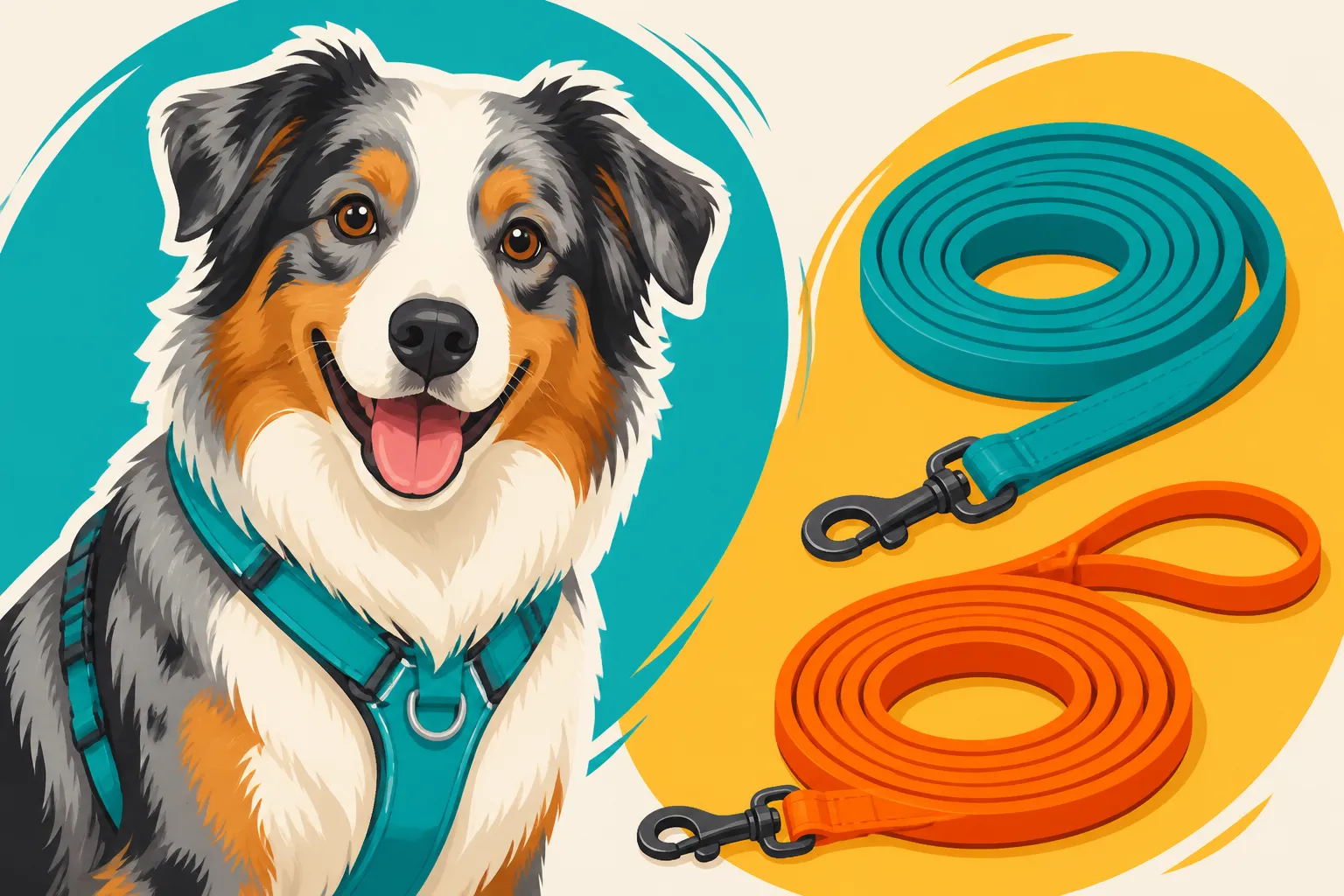
The true power of these tools often comes from using them together. A well-fitting, Y-shaped, front-clip harness, paired with an appropriate long line, creates a formidable safety and training system for your Australian Shepherd. The harness provides comfort and prevents injury, while the long line offers that crucial umbilical cord of safety and communication.
Imagine taking your Aussie to a large, open field that isn't fully fenced. Attaching a 30-foot biothane long line to their front-clip harness allows them to run, sniff, and investigate to their heart's content. If a rabbit darts across their path, you have the line to gently guide them back, reinforcing their recall command without the panic of them disappearing over the horizon. This combination also offers security if your Aussie has a tendency to be reactive; you can keep them at a safe distance from triggers while still allowing them to move freely and not feel trapped on a short leash. It's about empowering them with freedom in a way that you can manage effectively, allowing them to burn off that immense energy that defines them.
Overcoming Pulling and Leash Reactivity
Pulling on the leash is one of the most common complaints from Aussie owners. It’s physically taxing for you and can be frustrating for your dog. Leash reactivity, where your Aussie barks, lunges, or growls at other dogs, people, or objects while on leash, is another significant challenge.
The right harness, especially a front-clip one, can immediately reduce pulling by shifting their center of gravity and making it less rewarding for them to pull. But the equipment is only part of the solution; consistent training is key. Use positive reinforcement to reward loose-leash walking, stopping and waiting whenever the leash goes taut.
For reactivity, a long line allows you to practice counter-conditioning and desensitization from a safe distance. You can identify your Aussie's "threshold"—the point at which they start reacting—and work below that threshold. For example, if your Aussie barks at dogs 50 feet away, start practicing "look at me" or "treats, treats, treats!" when a dog is 75 feet away. The long line ensures they remain safe and gives you the ability to move away if they start to get overstimulated. Addressing these issues takes patience and consistency, and the right gear simply makes the process more manageable and safer for everyone involved. For persistent problems, you might even consider enrolling in classes or seeking private coaching from a trainer.
The Importance of Professional Guidance
While long lines and harnesses are incredible tools, they are not magic wands. For complex behavioral issues, especially persistent pulling, leash reactivity, or severe anxiety, seeking professional help is paramount. A certified professional dog trainer or a veterinary behaviorist can provide tailored guidance, teach you advanced handling techniques, and help you understand the root cause of your Aussie's behavior.
Finding a trainer who understands the unique temperament and drives of an Australian Shepherd is essential. They can help you craft a training plan that leverages your Aussie's intelligence and work ethic, rather than trying to suppress their natural instincts. Sometimes, what seems like a simple training problem can have underlying medical causes, in which case your vet or a specialist would be the first point of contact. Remember, the goal is always a happy, well-adjusted dog, and sometimes that means bringing in an expert to help you along the way. Your dog's well-being is worth the investment, and if an injury or condition arises, having pet insurance like Healthy Paws can help alleviate the financial stress of veterinary care.
Outfitting Your Aussie for Adventures
Australian Shepherds thrive on adventure, whether it's a strenuous hike in the mountains, a long run on the beach, or a day exploring a new trail. The right harness and long line are essential components of their adventure kit.
For hiking, look for a harness with multiple adjustment points to ensure a snug, escape-proof fit, and perhaps a handle on the back for quick control over tricky terrain. For water activities, a biothane long line is invaluable as it won't get waterlogged or heavy. Always carry plenty of water for your Aussie, especially on long excursions, and be mindful of hot pavement or rough terrain that could lead to Australian Shepherd Paw Injuries From Hard Running. By properly outfitting your Aussie, you ensure they can safely enjoy all the activities they love, which ultimately contributes to their overall health and happiness.
Ultimately, long lines and harnesses aren't just about control; they're about expanding your Australian Shepherd's world safely and responsibly. They allow you to build confidence in your dog, strengthen your bond through shared experiences, and give your high-energy companion the freedom to be an Aussie, even when off-leash isn't an option.
Disclaimer
This article is intended for informational purposes only and is not a substitute for professional veterinary advice, diagnosis, or treatment. Always seek the advice of your veterinarian or other qualified health provider with any questions you may have regarding a medical condition.