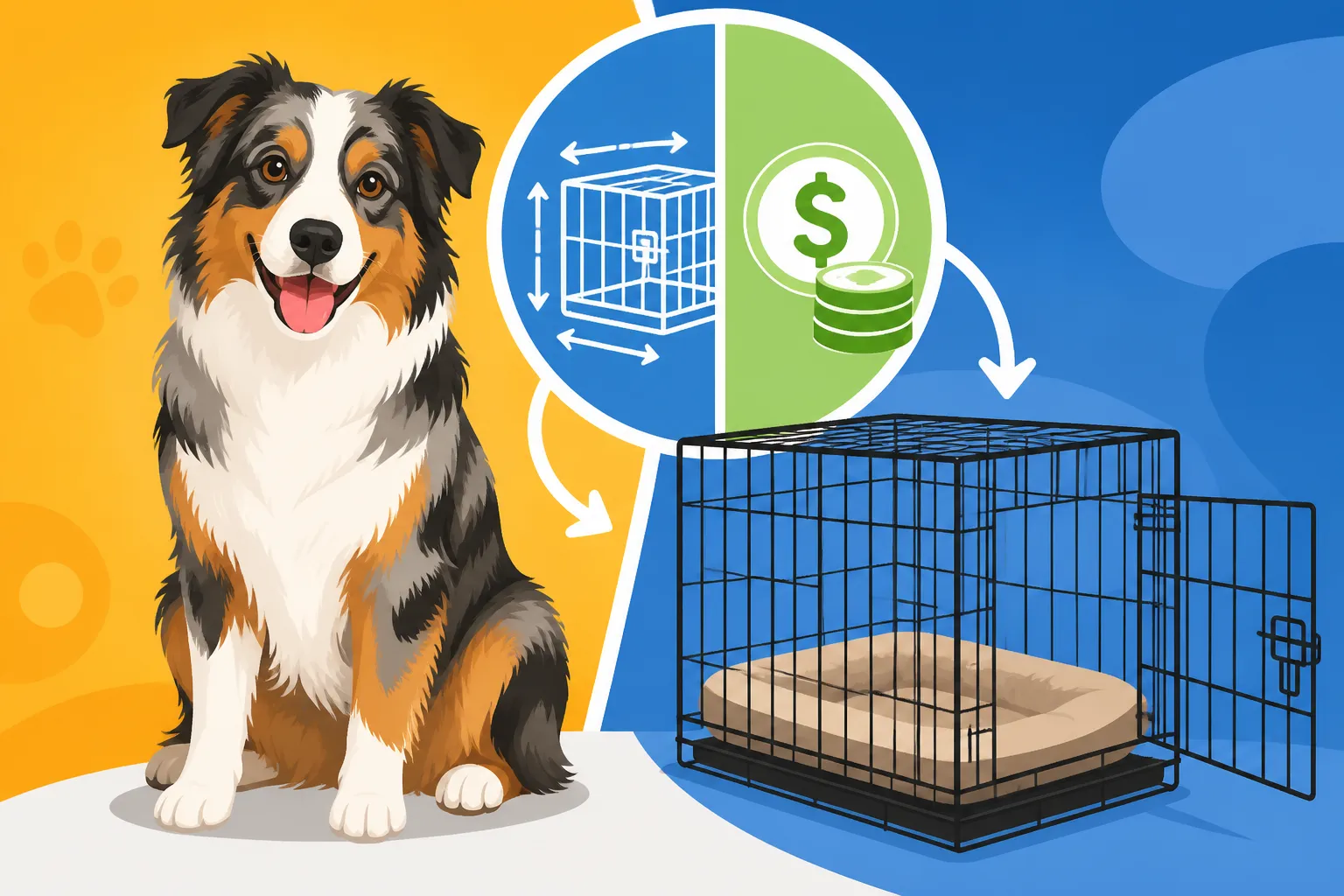
Australian Shepherd Crate Size and Cost
Bringing home a new Australian Shepherd, whether a tiny fluff ball or a fully grown rescue, means navigating a mountain of decisions – and one of the biggest, and often most overlooked, is finding the perfect crate. It’s not just about picking a box; it’s about providing a safe haven, a crucial training tool, and a comfortable retreat for a breed renowned for its intelligence and energy. Many owners struggle with figuring out the right size that will last, or how much they should really be spending on something that seems so simple. This guide will walk you through everything you need to know about selecting the ideal Australian Shepherd crate, from initial sizing for a rapidly growing puppy to the long-term investment for an adult dog, along with a realistic look at the costs involved.
Understanding Australian Shepherd Growth for Crate Sizing
Australian Shepherds are a medium-to-large breed, but they start off as surprisingly small puppies that grow at an astonishing rate. What fits them today certainly won't fit them in a few months, and guessing their adult size can be tricky. Getting the sizing right from the start is paramount, not just for their comfort, but for the success of your crate training efforts.
Puppy Crate Needs and Temporary Solutions
When you first bring home an Australian Shepherd puppy, they're often a tiny bundle of fluff, usually weighing between 5 to 15 pounds. It might seem logical to buy a small crate for them, but this is where many new owners make a mistake. Instead of purchasing multiple crates as your puppy grows, the savvier approach is to invest in a full-sized adult crate right away and utilize a divider panel. These panels are typically included with many wire crates, or can be purchased separately, and allow you to adjust the living space as your puppy grows.
The key is to create a space that's just big enough for your puppy to stand up, turn around, and lie down comfortably. If the crate is too large, a puppy might decide one end is for sleeping and the other is for relieving themselves, completely undermining your house training efforts. As your puppy matures, you'll gradually move the divider back, expanding their available space until they can comfortably use the entire crate. This method saves you money in the long run and helps your puppy develop good bladder control by naturally discouraging them from soiling their sleeping area. You can find many crate options, including those with dividers, on sites like Chewy.
Adult Australian Shepherd Dimensions
An adult Australian Shepherd is a robust and agile dog, typically falling into the medium-to-large size category. Males usually stand between 20 to 23 inches tall at the shoulder and weigh 50 to 65 pounds. Females are slightly smaller, generally 18 to 21 inches tall and weighing 40 to 55 pounds. These dimensions are critical when selecting an adult crate.
The general rule of thumb for crate sizing is that your dog should be able to stand up without their head touching the top, turn around easily, and lie down comfortably stretched out. For most adult Australian Shepherds, a crate in the 42-inch range (length) is often appropriate. This typically translates to a width of around 28-30 inches and a height of 30-32 inches. However, always measure your individual dog, especially if they are at the upper end of the breed standard or have a particularly deep chest or long legs. When you consider the full picture, from their energetic bursts to their need for proper rest, knowing your dog's adult size is key to selecting The Crate a Fifty Pound Aussie Needs.
The Importance of a Properly Sized Crate
Choosing the correct crate size isn't just about comfort; it's fundamental to successful crate training and your Aussie's overall well-being. A crate that is too small will be uncomfortable, potentially leading to anxiety, joint issues, or even aggression due to confinement. Imagine trying to sleep in a space where you can't fully stretch out or turn over; it's not a pleasant experience, and it's certainly not conducive to seeing the crate as a safe, positive den.
Conversely, a crate that is too large, especially for a puppy, can hinder house training, as discussed. They'll have room to eliminate in one corner and sleep in another, completely missing the point of using their den to learn bladder control. For an adult Aussie, an oversized crate might not offer the snug, secure feeling of a den that many dogs instinctively seek. A properly sized crate becomes their personal sanctuary, a place where they can relax, feel safe, and retreat from the hustle and bustle of a busy household. This positive association is vital for their mental health and your peace of mind, especially when you need to step out or if your Aussie needs some quiet time after a busy day. It can also help with managing issues like Getting a Restless Aussie to Settle in a Crate.
Types of Crates and Their Suitability for Australian Shepherds
Not all crates are created equal, and what works wonderfully for one dog or owner might be a complete mismatch for another. For an intelligent and often active breed like the Australian Shepherd, selecting the right type of crate involves considering their temperament, your lifestyle, and the specific use case for the crate.
Wire Crates and Their Versatility
Wire crates are perhaps the most common type you'll encounter, and for good reason: they're incredibly versatile and practical for Australian Shepherds. Their open design provides excellent ventilation, which is crucial for a double-coated breed prone to overheating, especially in warmer climates. The visibility they offer allows your Aussie to see what's happening around them, which can be comforting for some dogs, though others might prefer a more enclosed space.
Many wire crates come with removable divider panels, making them perfect for growing puppies, as mentioned earlier. They are also foldable, which is a huge plus if you need to transport the crate or store it away temporarily. Wire crates are generally durable and chew-resistant for most Aussies, though a determined chewer might find ways to bend wires or damage the tray. They are relatively easy to clean and often come in various sizes, making it simple to find one that fits your adult Australian Shepherd's dimensions perfectly. Brands like MidWest Homes for Pets are popular choices, widely available from retailers like Chewy.
Plastic Crates for Travel and Security
Plastic crates, often referred to as "kennels" or "pet carriers," are another popular option, particularly for travel. Their solid construction provides a den-like feel that many dogs find comforting and secure. This enclosed environment can be very calming for an Aussie who might feel overstimulated by an open wire crate. They offer privacy and can help reduce visual distractions, making them a great choice for dogs who need a quiet retreat.
Crucially, plastic crates are typically airline-approved, making them the go-to choice if you plan to fly with your Australian Shepherd. They are also lighter than comparable wire crates, which can make them easier to move around the house or load into a car. While generally durable, they might not stand up to the most persistent chewers as well as some heavy-duty wire crates. Cleaning is usually straightforward, though ventilation can be a concern in very hot weather, so always ensure adequate airflow. They are an excellent option for car travel, providing a secure and contained space.
Soft-Sided Crates for Convenience
Soft-sided crates are a fantastic option for portability and convenience, but they come with significant caveats when considering an Australian Shepherd. These crates are typically made of canvas or nylon stretched over a collapsible frame, making them incredibly lightweight and easy to fold down for storage or transport. They're often used for dog shows, casual visits to friends' houses, or as a temporary calm-down spot in a familiar, low-stress environment.
However, soft-sided crates are generally not suitable for puppies or any Aussie that is prone to chewing, scratching, or trying to escape. Their fabric construction offers little resistance to sharp teeth or claws, meaning a determined dog can quickly chew through the mesh windows or fabric walls. They also offer minimal protection in a car accident, so they're not recommended for vehicle travel. While they provide good ventilation and a cozy, den-like feel, they are best reserved for adult Australian Shepherds who are already reliably crate trained, are not destructive, and who view their crate as a safe, temporary resting place. They are certainly not a primary crate for everyday use or for leaving an Aussie unsupervised for extended periods.
Furniture-Style Crates for Home Integration
For owners who prefer their dog's crate to blend seamlessly with their home décor, furniture-style crates are an appealing choice. These are typically designed as end tables, side tables, or even larger credenzas, incorporating the crate structure into a piece of functional furniture. They are often made from wood or wood composite and feature decorative elements that make them look less like a traditional dog crate and more like a stylish piece of furniture.
While aesthetically pleasing, furniture-style crates tend to be significantly more expensive than standard wire or plastic crates. Their functionality as a crate can also vary; some offer excellent security and ventilation, while others prioritize looks over canine comfort and safety. They are generally not portable and are best suited for adult Australian Shepherds who are already completely crate trained and are not destructive chewers. A puppy or a young Aussie with Australian Shepherd Puppy Biting and Herding Nips would likely quickly damage the wood or decorative elements. For a calm, well-established adult Aussie, a high-quality furniture crate can be a beautiful and practical addition to the home, but it's a significant investment that requires careful consideration of your dog's habits.
What to Expect: Australian Shepherd Crate Costs
Once you've settled on the type of crate that best suits your Australian Shepherd, the next big question is often: how much is this going to set me back? The cost of a crate can vary widely based on its size, material, brand, and included features. It’s an investment, and like any good investment, understanding the price points and what you’re paying for is key.
Entry-Level to Premium Crate Pricing
The price range for Australian Shepherd crates is extensive. For a basic, yet perfectly functional, wire crate suitable for an adult Aussie (typically 42 inches), you can expect to pay anywhere from $70 to $150. These often come with a plastic pan and a divider, making them excellent value for money. Brands like Frisco or Amazon Basics offer reliable options in this price bracket.
Moving up the ladder, heavier-gauge wire crates or those with extra features, such as multiple doors, better latching systems, or more durable finishes, might run $150 to $250. These often come from established brands known for their quality, like MidWest Homes for Pets.
Plastic travel crates for an adult Aussie usually fall in a similar range, often $80 to $200, depending on size and brand. The more robust, airline-approved options will be at the higher end. Soft-sided crates are generally less expensive, from $50 to $150, but remember their limitations for an active breed like an Aussie.
At the premium end, furniture-style crates can start around $200 for smaller, simpler models and easily climb to $500 to $1000 or more for large, well-crafted pieces made from solid wood. High-end, heavy-duty crates designed for escape artists or very strong dogs can also command prices in the $300-$700 range. The best way to track costs for your Australian Shepherd is to research and compare options from various retailers, which you can often do online or in person at stores like PetSmart or Petco.
Accessories and Additional Costs
The crate itself is just the starting point; there are several essential accessories that contribute to your Aussie's comfort and crate training success, adding to the overall cost.
- Bedding: A comfortable bed or mat is crucial. For puppies or chewers, a durable, chew-resistant mat is a must. These can range from $20 to $80. For an adult Aussie who is past the chewing phase, you might opt for a plush orthopedic bed, which could cost $50 to $150. Remember that multiple beds might be needed over the years, especially if accidents happen or your Aussie sheds a lot.
- Crate Cover: A cover can transform a wire crate into a cozy den, providing privacy and reducing distractions. Fabric covers typically cost $20 to $50.
- Water Bowl: A bowl that attaches to the crate bars is important, especially for longer confinement periods. These are usually $10 to $25.
- Chew Toys: Indispensable for keeping your Aussie occupied and preventing boredom or destructive chewing within the crate. Durable Chew Toys That Last With an Australian Shepherd are key. These range from $10 to $30 each, and you'll want a variety. High-value treats, like those from a fresh food service like Ollie, can also be used as special crate-only rewards, making the crate an even more positive place.
- Cleaning Supplies: Accidents happen, especially with puppies. Having appropriate enzymatic cleaners on hand is vital and adds a small, ongoing cost.
Long-Term Value vs. Upfront Investment
When you look at the numbers, the total cost for a crate and its accessories can feel substantial, especially when you're already budgeting for Australian Shepherd Puppy Health Checks at Eight Weeks and other initial expenses. However, it's essential to view a quality crate as a long-term investment in your Australian Shepherd's well-being and your household's harmony.
A well-chosen, durable crate can last for the entire Australian Shepherd Lifespan Across Twelve to Fifteen Years, serving as a consistent safe space through all stages of their life. Investing in a good quality, appropriately sized crate from the outset can save you money by preventing the need for replacements due to damage or outgrowing cheaper, smaller options. More importantly, it contributes significantly to successful house training, anxiety management, and provides a secure area for your Aussie to rest, especially after rigorous activities or when you simply need them to be safe and contained. Consider it a foundational piece of equipment that pays dividends in training ease and peace of mind for years to come.
Here's a quick comparison of common crate types:
| Crate Type | Aussie Size Range (Approx.) | Typical Cost Range ($) | Pros | Cons |
|---|---|---|---|---|
| Wire Crate | 36"-48" (40-70 lbs) | 70-250 | Excellent ventilation, foldable, divider-friendly, durable, easy to clean, good visibility for dog. | Can feel less den-like, no privacy unless covered, heavier than plastic for transport. |
| Plastic Crate | 36"-48" (40-70 lbs) | 80-200 | Den-like security, airline-approved, good for travel, offers privacy, lighter than wire. | Less ventilation than wire, harder to clean, can be bulky, limited visibility for dog. |
| Soft-Sided | 36"-48" (40-70 lbs) | 50-150 | Lightweight, highly portable, collapsible, cozy feel. | Not suitable for chewers/escape artists, minimal protection for travel, not for unsupervised use. |
| Furniture-Style | 36"-48" (40-70 lbs) | 200-1000+ | Blends with home décor, functions as furniture. | Very expensive, not portable, may not be durable for chewers, less versatile. |
Remember, your Australian Shepherd needs plenty of Australian Shepherd Exercise at One to Two Hours a Day outside the crate, but a properly chosen crate offers them the perfect spot for essential rest and downtime. Providing a comfortable, secure crate is one of the best things you can do for your highly intelligent and active companion.
Disclaimer
Please note that this article is intended for informational purposes only and is not a substitute for professional veterinary advice. Always consult with a qualified veterinarian or professional dog trainer for personalized advice regarding your Australian Shepherd's health, training, or specific needs. Prices mentioned are estimates and can vary based on location, brand, retailer, and current market conditions.