Miniature American Shepherds and the Split From Aussies
It's completely understandable to feel a bit lost in the world of Australian Shepherds and their smaller counterparts. Many people encounter a dog that looks exactly like an Australian Shepherd but is half the size and wonder if it's just a puppy, a mixed breed, or perhaps a new version of the beloved Aussie. This guide is here to untangle that confusion, explaining the fascinating journey of how the Miniature American Shepherd came to be its own distinct breed, separate from the traditional Australian Shepherd.
Understanding the Australian Shepherd Foundation
Before we can dive into the emergence of the Miniature American Shepherd, it's crucial to understand the original Australian Shepherd. These dogs weren't just born out of thin air; they were carefully developed for a specific, demanding purpose that shaped every aspect of their being. Their history is steeped in the hard work of the American West, not the Australian outback, despite their misleading name.
The Original Aussie's Roots and Purpose
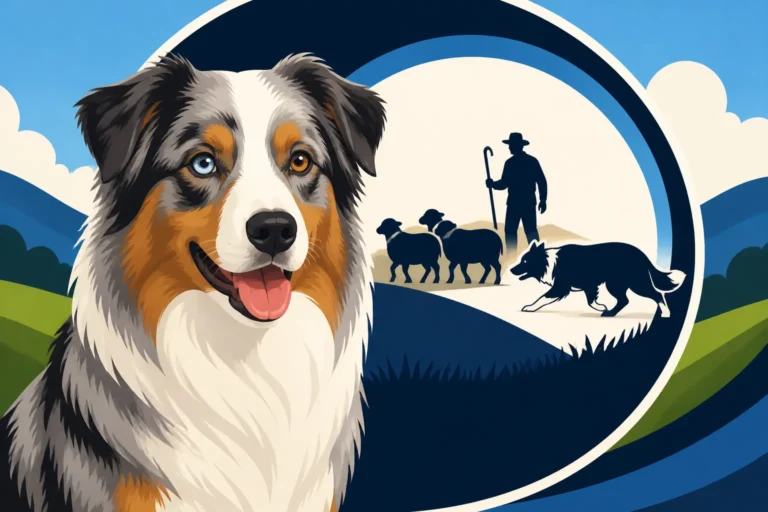
The Australian Shepherd, as we know it today, primarily developed in the Western United States during the 19th and early 20th centuries. While their ancestors arrived with Basque shepherds who came to America via Australia (hence the name confusion!), it was in the vast ranch lands of California, Colorado, and other western states that the Aussie truly found its calling. These were working dogs, bred not for looks or showing, but for their incredible intelligence, agility, and tireless drive to herd livestock, particularly sheep and cattle. Ranchers needed a dog that could think on its feet, handle stubborn animals, and cover huge expanses of land day in and day out. Their job was paramount, and their physical and mental traits evolved directly from these demanding requirements. You can learn more about this by reading Why the Australian Shepherd Is Not From Australia.
These dogs were valued for their resilience and adaptability. They worked alongside cowboys, driving livestock, protecting the flock, and often acting as trusted companions in isolated environments. Their distinctive looks—the striking merle coats, keen eyes, and agile bodies—were secondary to their undeniable working prowess. This deep-seated herding instinct is the "operating system" of the breed, a fundamental trait you simply cannot train out, as explored in Why Herding Instinct Is the Aussie Operating System. This inherent drive meant they needed significant physical exercise and, perhaps more importantly, mental stimulation to be truly happy and well-adjusted.
Early Breed Development and Recognition
For many decades, Australian Shepherds were primarily seen as working animals, passed down from rancher to rancher based on their ability to perform. There wasn't a formal breed standard or a registry to track their lineage in the same way show breeds were being developed. Their development was organic, driven by the practical needs of the farm and ranch. It wasn't until after World War II, when Western riding and rodeos gained popularity, that the Aussie started to gain wider recognition beyond the working ranch. Their intelligence and agility made them excellent performers in rodeo acts and trick shows, bringing them into the public eye.
As their popularity grew, people began to appreciate their unique appearance and charismatic personalities, not just their working abilities. This led to the formation of breed clubs, like the Australian Shepherd Club of America (ASCA) in 1957, dedicated to preserving and promoting the breed. These clubs started establishing breed standards, defining the ideal physical traits and temperament, which eventually led to recognition by larger organizations like the American Kennel Club (AKC) in 1993. This formalization marked a significant shift, bringing the Australian Shepherd from purely a working utility dog into the realm of recognized show breeds, although their working roots always remained a strong part of their identity. The ASCA and AKC standards have some nuanced differences, which are touched upon in ASCA and the AKC Australian Shepherd Standards.
The Emergence of Smaller Aussies
As the Australian Shepherd's popularity expanded beyond the ranch, a new desire began to emerge among some enthusiasts: a dog with all the beloved traits of the Aussie but in a more compact, manageable size. This wasn't about "miniaturizing" a working dog for novelty; it was about adapting the breed to different lifestyles and environments.
The Desire for a More Compact Herder
Imagine loving everything about an Australian Shepherd – their intelligence, loyalty, striking looks, and trainability – but living in a smaller home, an apartment, or simply not having the extensive acreage that a full-sized working Aussie thrives on. This was the dilemma for many potential owners. A full-sized Australian Shepherd, often weighing between 40 and 65 pounds and standing 18 to 23 inches tall, can be a lot of dog. Their exercise needs are significant, often requiring one to two hours of dedicated activity daily, as explored in Australian Shepherd Exercise at One to Two Hours a Day. For families in suburban or urban settings, or those simply looking for a smaller companion that could still participate in dog sports and family activities, the traditional Aussie's size could be a barrier.
The desire wasn't to create a completely different dog, but rather to breed down the size while retaining the core qualities that made the Australian Shepherd so special. People wanted the same sharp intellect, the beautiful merle coat patterns, the intense gaze, and the playful, devoted nature, but in a package that might be more comfortable on a smaller sofa or easier to manage in a bustling city park. This niche slowly but surely began to carve out its own path in the breed's development.
Initial Breeding Efforts and Challenges
The journey to a smaller Aussie began in the late 1960s and early 1970s. Dedicated breeders started selectively breeding smaller Australian Shepherds to each other, aiming to consistently produce offspring that fell within a desired height and weight range. This wasn't always a straightforward process. Breeding for size alone can sometimes inadvertently affect other traits, including health and temperament, if not done responsibly. Responsible breeders focused on maintaining the breed's sound structure, health, and characteristic working temperament, ensuring that the "mini" version wasn't just small, but also robust and true to the Aussie spirit.
One of the biggest challenges was ensuring genetic diversity and avoiding the pitfalls of overly narrow breeding pools. Early breeders faced the task of selecting individuals who not only met the size criteria but also possessed excellent health clearances, good temperaments, and strong conformation. They also had to contend with the perception that they were simply breeding "runts" or "poor quality" Aussies, rather than carefully developing a new type. This period of selective breeding laid the groundwork, demonstrating that a smaller version could indeed be produced consistently while retaining the beloved characteristics of its larger relatives. The careful selection of breeding stock is paramount, especially considering potential hereditary conditions like Australian Shepherd Hip Dysplasia and Working Joints or The MDR1 Mutation Half of Australian Shepherds Carry.
The Path to Separate Recognition
The creation of smaller Australian Shepherds wasn't just a quiet endeavor by a few individuals. It evolved into a significant movement with its own clubs and, eventually, its own distinct identity, culminating in official recognition by major kennel clubs.
The Miniature Australian Shepherd Club and Movement
As the "miniature" version of the Australian Shepherd gained traction, enthusiasts and breeders recognized the need for formal organization to guide its development and ensure its future. In 1990, the Miniature Australian Shepherd Club of America (MASCA) was founded. This was a pivotal moment, as it provided a dedicated framework for the breed. MASCA established its own breed standard, distinct from the larger Australian Shepherd, outlining the ideal characteristics for the smaller version. This club worked diligently to promote the breed, educate the public, and maintain a registry for these dogs, tracking pedigrees and health information.
The formation of MASCA was a clear statement: these dogs were not just smaller Aussies, but a developing breed with its own specific goals and a clear vision for its future. Breeders within MASCA were committed to preserving the intelligence, versatility, and athleticism of the Australian Shepherd, scaled down to a more compact size. They focused on maintaining sound health and good temperaments, ensuring that the smaller stature didn't compromise the breed's overall quality or working ability. This organized effort was essential in moving the breed from a "type" to a recognized entity.
AKC Recognition and the Name Change to Miniature American Shepherd
The ambition of MASCA and its members eventually led them to seek recognition from the American Kennel Club (AKC), the largest purebred dog registry in the United States. This process is rigorous and requires a breed to demonstrate a consistent breeding program, a distinct breed standard, and a significant number of registered dogs across multiple generations. In 2011, after years of dedicated work, the AKC accepted the breed into its Foundation Stock Service, the first step towards full recognition.
However, a crucial point of contention arose during this process: the name. The AKC has a strict policy against registering two distinct breeds with very similar names, especially when they share such a close history. To avoid confusion with the existing Australian Shepherd, and to clearly delineate its separate identity, the breed underwent a name change. In 2011, it was officially renamed the Miniature American Shepherd. This change was a significant milestone, solidifying its status as a unique breed rather than simply a size variation of another. The Miniature American Shepherd gained full AKC recognition in 2015, joining the Herding Group. This marked the culmination of decades of selective breeding and organizational effort.
The Distinct Breed Standard for the MAS
With the name change came a clear and distinct breed standard for the Miniature American Shepherd, setting it apart from its Australian Shepherd cousin. While sharing many similarities in appearance and temperament, the MAS standard emphasizes its smaller size as a defining characteristic.
Here's a simplified comparison of some key physical traits, but remember, the full standards delve into much more detail:
| Trait | Australian Shepherd (AKC) | Miniature American Shepherd (AKC) |
|---|---|---|
| Height (Male) | 20-23 inches (51-58 cm) | 14-18 inches (35.5-46 cm) |
| Height (Female) | 18-21 inches (46-53 cm) | 13-17 inches (33-43 cm) |
| Weight | 40-65 lbs (18-29 kg) | 20-40 lbs (9-18 kg) |
| General Build | Moderate bone, well-balanced | Moderate bone, well-balanced |
| Coat | Medium texture, weather resistant | Medium texture, weather resistant |
| Colors | Black, Blue Merle, Red, Red Merle | Black, Blue Merle, Red, Red Merle |
| Tail | Natural Bobtail or Docked | Natural Bobtail or Docked |
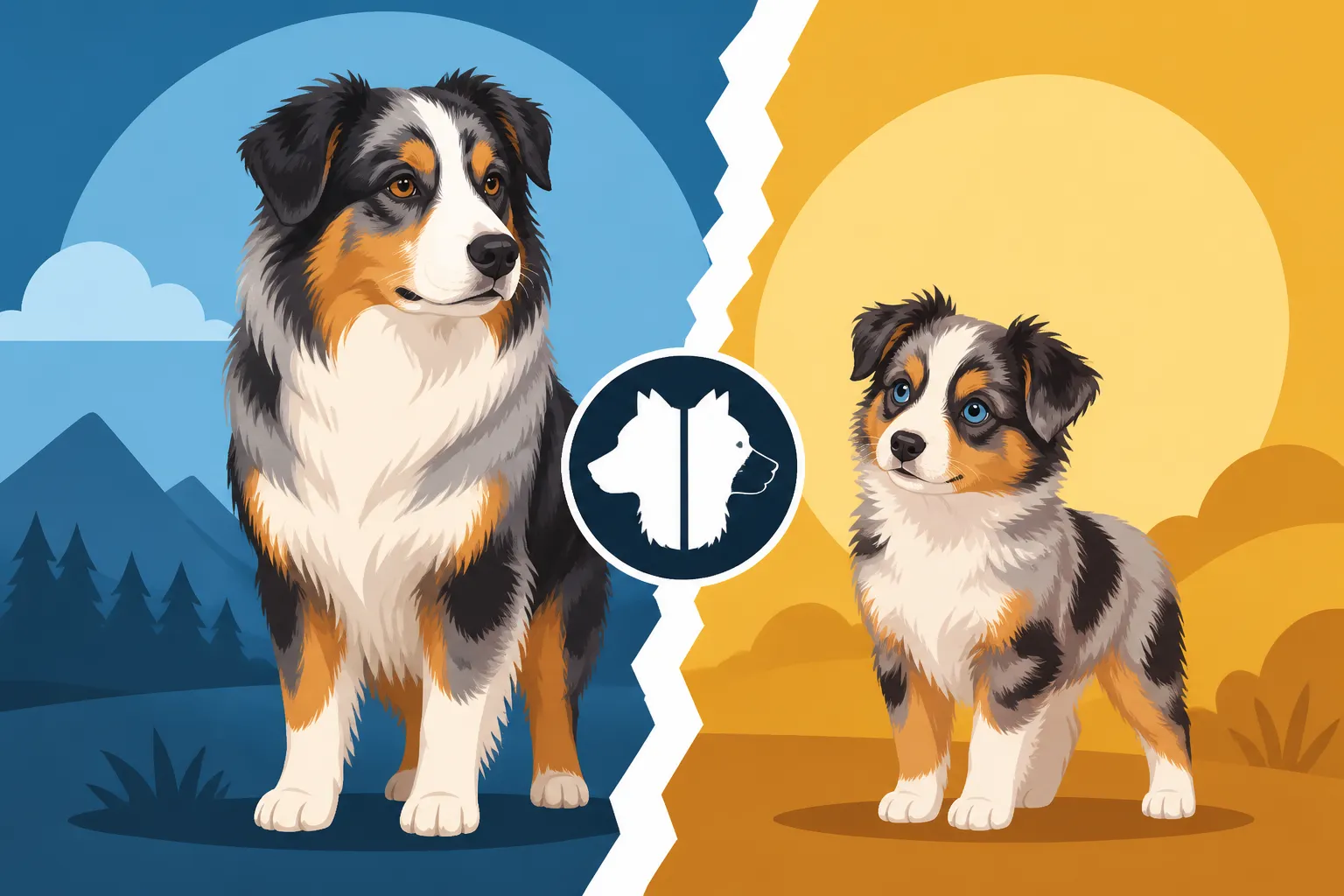
This table clearly illustrates the primary difference: size. Beyond that, both breeds share the same four acceptable coat colors (black, blue merle, red, red merle, all with or without white markings and/or copper points), similar double coats, and characteristic alert expressions. The standard for the Miniature American Shepherd specifies that its height should be proportionately balanced with its length, maintaining the active, athletic appearance of its larger predecessor. This distinct standard ensures that breeders have a clear guide for producing consistent, healthy, and true-to-type Miniature American Shepherds. You can see how the general build for the larger breed is described in Australian Shepherd Proportions in the Standard.
Key Differences Between the Breeds
While the Miniature American Shepherd clearly inherited many wonderful traits from the Australian Shepherd, the process of selective breeding and the establishment of a separate standard naturally led to some distinct differences. Understanding these nuances is key for anyone considering either breed.
Size, Structure, and Appearance
The most obvious and fundamental difference is, of course, size. As seen in the table above, the Miniature American Shepherd is significantly smaller. A male Aussie can easily outweigh a male Miniature American Shepherd by 20-25 pounds and stand several inches taller. This size difference isn't just about weight; it affects their overall presence and how they fit into various living situations. A full-sized Australian Shepherd has a certain robustness, a solid working frame, that is scaled down in the Miniature American Shepherd. While both breeds are athletic and agile, the sheer mass and stride length of a larger Aussie naturally equip them for covering more ground with greater power.
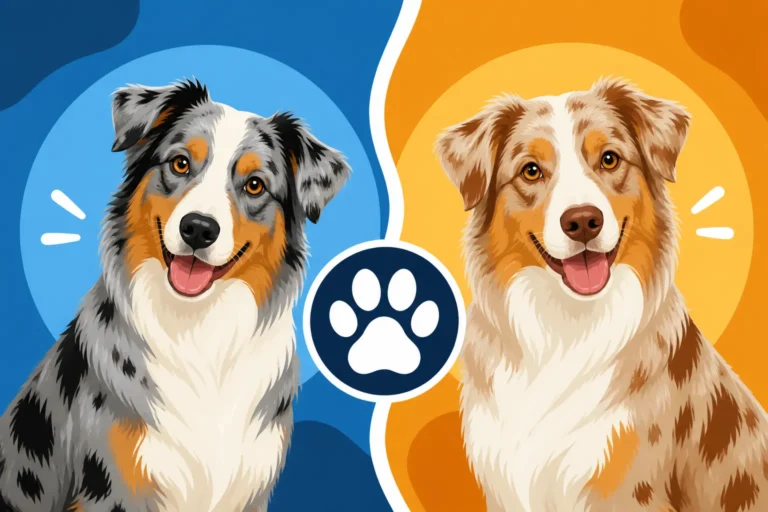
Beyond the numbers, their structures are remarkably similar. Both breeds are described as being well-balanced, slightly longer than tall, with moderate bone. They share the same striking coat colors, often featuring merle patterns, and their alert, intelligent expressions are nearly identical. The signature bright, often parti-colored, eyes are also common to both. If you were to see a Miniature American Shepherd and a smaller Australian Shepherd puppy side-by-side, without any context for age, it could be genuinely challenging to tell them apart without a keen eye for subtle breed type differences that develop with maturity. The structure, head, and ear set are all defined in their respective standards, for instance, The Australian Shepherd Head and Expression.
Temperament and Drive Considerations
Here's where things get interesting, and often, where generalizations can be misleading. In essence, the Miniature American Shepherd was bred to be a miniature Australian Shepherd, meaning the goal was to retain as much of the original temperament and drive as possible, just in a smaller package. They are incredibly intelligent, highly trainable, and possess that strong herding instinct that is characteristic of the Aussie. They are often described as devoted, loyal, and energetic companions.
However, there can be subtle differences. Because the Miniature American Shepherd was specifically developed for companion homes and dog sports where sheer endurance over vast ranges might not be the primary requirement, some lines might exhibit a slightly less intense herding drive or a slightly lower overall energy level than the most driven working line Australian Shepherds. This is a generalization, though, and it's crucial to remember that both breeds have a wide spectrum of energy and drive levels. You can find Miniature American Shepherds with intense working drive and Australian Shepherds who are happy with moderate activity, just as you'll find the opposite. The "typical" Australian Shepherd temperament is known for being lively and intelligent, as detailed in Australian Shepherd Temperament and Working Character. Ultimately, a dedicated working line Aussie might possess a more profound and unyielding desire to herd, making it a challenging fit for a novice owner or a low-activity household.
Health and Genetic Similarities/Differences
Given their shared lineage, it's not surprising that both Australian Shepherds and Miniature American Shepherds share many of the same potential health concerns. Responsible breeders for both varieties prioritize genetic health testing to minimize the risk of passing on hereditary conditions.
Common health issues found in both breeds include:
- Hip and Elbow Dysplasia: These orthopedic conditions can affect mobility and quality of life. Reputable breeders screen their breeding stock using evaluations like OFA (Orthopedic Foundation for Animals).
- Eye Diseases: Both breeds are susceptible to various eye conditions, including Collie Eye Anomaly (CEA), Progressive Retinal Atrophy (PRA), and Hereditary Cataracts (HC). Comprehensive eye exams by a veterinary ophthalmologist are crucial, often at six weeks for puppies to check for conditions like The Aussie Puppy Eye Check at Six Weeks.
- MDR1 Gene Mutation: This genetic mutation makes dogs sensitive to certain common medications, including some parasite preventatives and anesthetics. Testing for MDR1 is highly recommended for both breeds, and a significant portion of Australian Shepherds carry it, as explained in The MDR1 Mutation Half of Australian Shepherds Carry. Knowing your dog's status is vital for their safety.
- Epilepsy: Idiopathic epilepsy, a seizure disorder, is also seen in both breeds. This can be a challenging condition to manage and is a significant concern for owners. You can read more about this in Australian Shepherd Epilepsy Starting Between One and Five.
Because Miniature American Shepherds came from the same genetic pool as Australian Shepherds, their baseline genetic predispositions are largely the same. However, a responsible breeder focusing on a smaller size will still be vigilant about health clearances, ensuring that the breeding lines are free from known genetic issues. When considering a puppy from either breed, always ask to see the health clearances for both parents, including hips, elbows, eyes, and genetic panel results. This due diligence is critical for ensuring a long, healthy life for your future companion. Many helpful products for managing special needs or supporting senior dogs can be found on Chewy's website.
Living with a Miniature American Shepherd (as distinct from an Aussie)
Bringing a Miniature American Shepherd into your home means preparing for a vibrant, intelligent, and active companion. While they are smaller than their Australian Shepherd relatives, they are far from being "lap dogs" and share many of the same fundamental needs.
Exercise and Training Needs
Don't let the "miniature" in their name fool you; Miniature American Shepherds are not low-energy dogs. They are true herding dogs in a compact package and require significant daily exercise and mental stimulation. Expect to dedicate at least an hour, if not more, to their physical activity each day. This isn't just a leisurely stroll around the block; it needs to be engaging activity like brisk walks, runs, fetch in a securely fenced yard, or dog sports. Without adequate exercise, a Miniature American Shepherd can become restless, destructive, or develop undesirable behaviors like excessive barking or heel-nipping. This is a common problem when The Exercise Gap That Sends Aussies to Rescue.
Beyond physical exertion, their brilliant minds need to be challenged. They excel in dog sports like agility, obedience, rally, flyball, and even miniature herding. Puzzle toys, scent work, and trick training are excellent ways to keep their brains busy. They thrive on having a "job" to do, and if you don't provide one, they'll often invent their own, which might not align with your preferences! Start training early with positive reinforcement, and consider puppy classes, which are vital for socialization and learning foundational manners. Many reputable trainers offer classes specifically designed for active, intelligent breeds. Chewy also offers a vast selection of puzzle toys and training treats to keep their minds engaged.
Grooming and Care Considerations
Both Miniature American Shepherds and Australian Shepherds boast beautiful double coats that require regular care. While the Miniature American Shepherd is smaller, meaning there's less volume of fur to contend with, the type of coat and its needs are very similar to the larger Aussie. They have a medium-length, weather-resistant outer coat and a dense, soft undercoat. This double coat means they shed, often quite a bit, and experience two major "coat blows" per year, typically in spring and fall, where they shed profusely.
During these periods, daily brushing with a good quality slicker brush and an undercoat rake is essential to prevent mats and reduce the amount of loose hair in your home. Outside of coat blow seasons, brushing a few times a week should suffice. Regular brushing also helps distribute natural oils, keeping their skin and coat healthy. Never shave an Australian Shepherd or Miniature American Shepherd, as their double coat insulates them from both heat and cold, and shaving can permanently damage the coat's texture and protective qualities. Other grooming needs include regular nail trims, ear cleaning, and dental care. Establishing a routine from a young age will make grooming a positive experience for your Miniature American Shepherd. You can find comprehensive grooming supplies, from brushes to shampoos, on Chewy to help keep their coat in top condition.
The journey from the ranches of the American West to the modern Miniature American Shepherd is a testament to dedicated breeders who sought to offer the remarkable qualities of the Australian Shepherd in a more compact, yet equally capable, form. While the names and official standards have diverged, the spirit of the intelligent, loyal, and driven herding dog lives on in both magnificent breeds.
Disclaimer
This article is for general informational purposes only and does not constitute professional advice. Laws, prices and regulations vary by location and change over time. Consult a qualified professional for guidance on your specific situation.