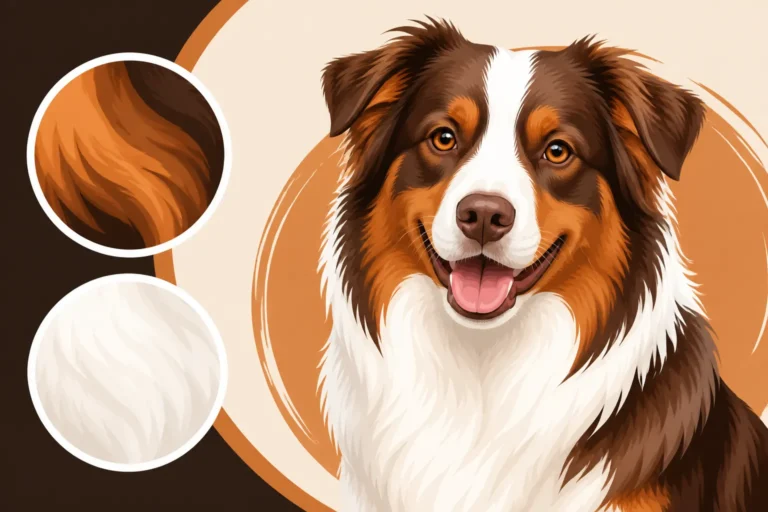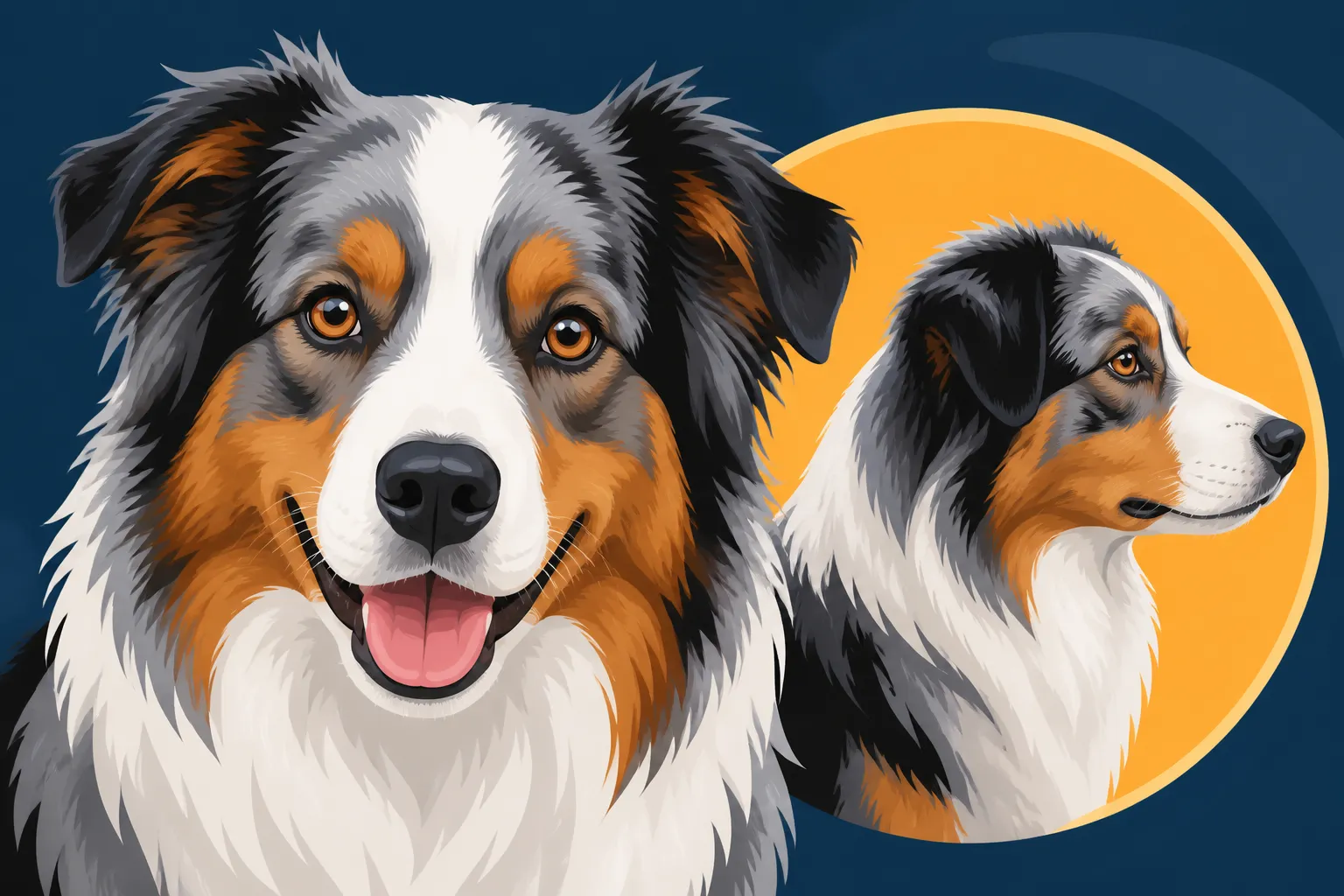
The Australian Shepherd Head and Expression
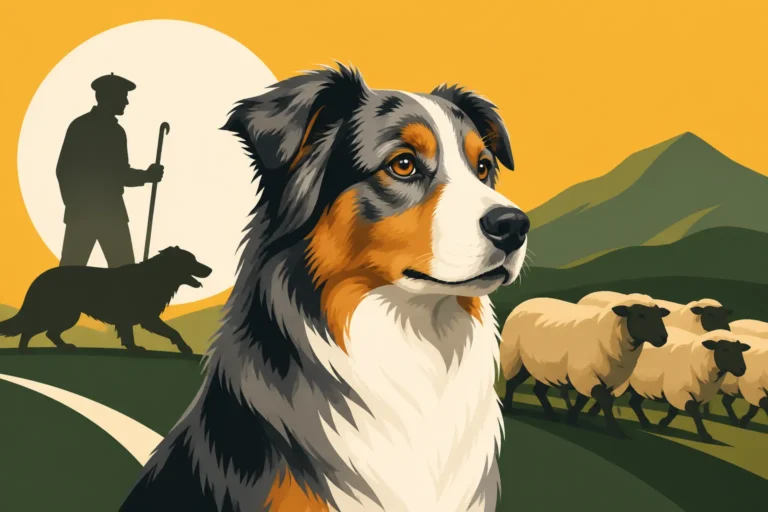
When you first meet an Australian Shepherd, beyond the swirl of their stunning coat or the flash of their intense eyes, you're immediately struck by their overall presence, and a huge part of that comes from their head and expression. Many new Aussie parents find themselves wondering what makes that "look" so distinct, often observing a range of head shapes and expressions even within the breed. This guide is here to demystify what defines the Australian Shepherd's head and expression, helping you understand the nuances, the ideal characteristics, and what these features tell us about the dog's inner world and breed purpose.
Understanding the Aussie Head: More Than Just a Pretty Face
The Australian Shepherd's head is often described as clean, strong, and well-proportioned, but what does that really mean in practice? It’s not just about aesthetics; every feature of an Aussie’s head plays a role in their ability to perform their traditional duties, whether that's working livestock or keenly observing their surroundings. The head isn't merely a decorative attachment; it's a functional tool that speaks volumes about the dog's intelligence, alertness, and working spirit.
The Overall Impression and Balance
When you look at an Australian Shepherd's head, the first thing you should notice is a sense of balance. Nothing should appear exaggerated – no overly long muzzle, no blocky skull, no tiny ears. Instead, everything should fit together harmoniously, creating an impression of moderate proportions that are neither too coarse nor too fine. This balance contributes to the dog's overall athletic and agile build. Think of it like a beautifully sculpted piece of art where every curve and angle complements the next, resulting in a cohesive and functional whole. This balanced appearance ensures that the head is not cumbersome for a dog meant to be quick, agile, and enduring in its work.
It’s this balance that really sets the stage for the classic Aussie expression. A well-proportioned head allows the eyes to be set correctly, the ears to frame the face appropriately, and the muzzle to offer the necessary strength for tasks like guiding sheep. If the head is too large for the body, or the muzzle too short, it can throw off not just the dog's appearance, but also its efficiency in tasks requiring keen senses and swift movement. This overall impression of balance and moderation is a hallmark of the breed, signaling both beauty and utility in equal measure.
What the Head Communicates
Beyond its physical attributes, an Australian Shepherd's head, especially its expression, is a powerful communicator. An Aussie’s face can convey deep intelligence, unwavering loyalty, and an almost uncanny ability to "read" their handler's intentions. Those alert, keen eyes and the way their ears perk up or shift can tell you if they're focused on a distant squirrel, pondering your next command, or perhaps even planning their own mischievous adventure. This expressiveness is a core part of their charm and why so many people fall head over heels for the breed. The Temperament the Aussie Standard Requires talks more about the underlying personality that shines through.
The head also communicates the dog's alertness and readiness to work. A blank or dull expression is entirely uncharacteristic of a true Australian Shepherd. Instead, you'll see a thoughtful, observant look, often with a slight tilt of the head as they process information. This isn't just a cute quirk; it's a direct reflection of their high intelligence and innate desire to engage with their environment and their human partners. They are constantly taking in information, evaluating it, and deciding how to react, and much of that processing is visibly reflected in their facial expressions and the subtle movements of their head.
The Skull and Muzzle: Proportions That Matter
Delving deeper, the specifics of the skull and muzzle are critical to achieving that ideal Australian Shepherd head. These aren't just arbitrary details; they're measurements and shapes refined over generations to produce a dog perfectly suited for its working heritage. Understanding these proportions helps appreciate the careful thought that goes into The Australian Shepherd Standard and What Judges Want.
Skull Shape and Width
The Australian Shepherd's skull should be as long as, or slightly longer than, its muzzle. It should be broad between the ears, but not so broad as to appear coarse or heavy. There should be a moderate, well-defined stop – that's the indentation between the eyes where the muzzle meets the forehead. A skull that's too domed or too flat deviates from the ideal, impacting the overall balanced appearance. The width between the ears is important because it provides ample room for a well-developed brain, fitting for a breed renowned for its intelligence and problem-solving abilities.
When you run your hands over an Aussie's head, you should feel a smooth, well-filled skull that tapers slightly towards the eyes. If the skull feels too narrow, it can make the eyes appear too prominent, or give the dog a pinched look. Conversely, an overly wide or blocky skull can make the dog appear cumbersome and less refined, detracting from the characteristic agility of the breed. This balance in skull width and shape is essential for maintaining the harmonious proportions of the entire head.
Muzzle Length, Depth, and Jaw
The muzzle is equally important. It should be of equal length or slightly shorter than the skull, measured from the stop to the tip of the nose. It should also be well-filled, tapering gradually from the base to a rounded end, rather than being pointy or snipey. The jaw should be strong and deep, giving the impression of power without being heavy or bulky. A full complement of strong, white teeth meeting in a scissor bite is also crucial, reflecting their working capability.
A common frustration for many Aussie owners is noticing muzzles that are either too long and narrow, giving a "Borzoi" or "Collie-like" appearance, or too short and boxy, resembling some bulldog breeds. Neither extreme is desirable as it affects both the look and the functionality of the bite. A well-developed muzzle and jaw are vital for a working dog; imagine trying to gently guide a stubborn ewe with a weak jaw or an ill-formed bite! This is why breeders pay close attention to the strength and structure of the muzzle and jaw, ensuring that the dog can effectively use its mouth for the tasks it was bred for.
Eyes and Ears: Windows to the Aussie Soul
The eyes and ears are arguably the most captivating features of an Australian Shepherd's head, contributing immensely to their intelligent and expressive persona. They are not just sensory organs; they are key components in the dog's communication and overall "look."
Eye Shape, Color, and Expression
Australian Shepherds are famous for their captivating eyes. They can come in an incredible array of colors, from amber and hazel to green and the striking blue, often with marbling or flecks of different colors, or even one blue and one brown eye – a trait known as heterochromia. Australian Shepherd Eye Colors and Split Eyes delves into these fascinating variations. Regardless of color, the eyes should be oval-shaped, neither protruding nor sunken, and set moderately apart. They should always convey an alert, intelligent, and keen expression. It's that look of deep engagement and understanding that truly makes an Aussie's eyes stand out.
The expression derived from their eyes is perhaps the most defining characteristic. A true Australian Shepherd's eyes should radiate intelligence and inquisitiveness. They should always appear watchful and interested in their surroundings, rarely dull or disinterested. Sometimes, people mistake the intense stare of an Aussie for aggression, but it's often pure focus. They are constantly observing, processing, and trying to anticipate. This keen expression, combined with their striking eye colors, gives them an almost human-like depth that resonates deeply with their owners. When an Aussie looks at you, it feels like they’re truly seeing you, which is an incredibly powerful bond for many of us.
Ear Set and Carriage
The ears on an Australian Shepherd are typically medium in size, set high on the head, and triangular in shape. When alert, they should break forward and slightly over, or lay to the side as a rose ear. Erect ears or hanging hound-like ears are considered faults because they don't contribute to the characteristic alert and natural look of the breed. The way an Aussie uses its ears to track sounds and communicate is fascinating; they are constantly swiveling, twitching, and orienting themselves, revealing their high level of auditory awareness. Australian Shepherd Ear Set and Carriage explains more about the nuances of this feature.
An Aussie's ears are remarkably expressive. A relaxed dog might have their ears slightly back or lying naturally, while an alert dog will typically have them perked and rotated forward, like little satellite dishes tuning into every sound. When they're deeply engaged in thought, perhaps trying to figure out a puzzle toy from Chewy or listening intently to your whispered commands, their ears might be cocked at different angles. These subtle movements add so much character to their overall expression and further emphasize their intelligence and responsiveness. The natural, balanced set of their ears allows for this wide range of expressive movement, fitting for a dog that relies on subtle cues in its work.
The Aussie Expression: Intelligence, Alertness, and Depth
The true magic of the Australian Shepherd's head comes when all these individual features – the balanced skull, the strong muzzle, and the expressive eyes and ears – converge to create that unmistakable Aussie expression. It’s a look that’s hard to define but instantly recognizable, a blend of wisdom, keenness, and sometimes, a mischievous spark.
A Look of Intense Focus
An Australian Shepherd's expression is fundamentally one of intense focus. Whether they're watching a child play, tracking a frisbee, or simply observing their owner, their eyes often convey a deep, unwavering concentration. This isn't a vacant stare; it’s an active engagement with their environment. This intense focus is a direct inheritance from their herding lineage, where vigilance and quick assessment were paramount. They need to be able to instantly read and react to the movements of livestock, and that same intensity translates into their interactions with their human families and surroundings.
This focus can sometimes be misunderstood by those unfamiliar with the breed. A dog intently watching a small child might not be "guarding" in a protective sense, but rather "herding" them with their eyes, anticipating movement and ready to intervene if the "flock" disperses too widely. It's a natural instinct that manifests in their gaze. This level of attentiveness is one of the most beloved traits for owners who appreciate a dog that is truly "tuned in" to them, always ready for the next adventure or command.
The Appearance of Depth and Understanding
There's a reason many Australian Shepherd owners feel like their dogs truly understand them. The combined features of their head and expression often give them an appearance of remarkable depth and intelligence. Those keen, often multi-colored eyes, framed by well-set ears, seem to be constantly processing and empathizing. They can convey a spectrum of emotions – from playful eagerness and profound joy to thoughtful contemplation and even gentle concern. This emotional range in their expression is part of what makes them such incredible companions and partners.
This depth is not just an illusion; Aussies are highly intelligent dogs, capable of complex problem-solving and forming strong, intuitive bonds with their people. Their expression is a window into that intelligent mind, reflecting their readiness to learn, to work, and to connect. When you combine this with Australian Shepherd Loyalty to One Person, you get a dog whose gaze can feel like a profound conversation, even without words. It's this unique combination of visual cues that allows us to perceive such profound understanding from our beloved Aussies.
Faults and Variations: What Deviates from the Standard
While we adore every Aussie regardless of their appearance, understanding breed standards helps us appreciate the intent behind specific physical traits. Sometimes, certain features, while perhaps endearing, deviate from what is considered ideal for the breed and can sometimes even indicate underlying health or structural issues.
Common Head Faults
Several features can be considered faults when evaluating an Australian Shepherd's head according to the breed standard. These include muzzles that are too short (snipey) or too long, skulls that are too narrow or too domed, and a lack of a defined stop. Eyes that are too round or too close together can also detract from the desired expression. While these traits might not affect a pet Aussie's quality of life, they do impact how closely the dog adheres to the historical and functional characteristics of the breed.
For example, a snipey muzzle might look cute to some, but it can indicate a weaker jaw and a less effective bite, which would be a disadvantage for a working herding dog. Similarly, eyes that are too prominent can be more susceptible to injury. It’s not about perfection for its own sake, but about preserving the integrity of a working breed where form and function are deeply intertwined.
Deviations in Eye and Ear Presentation
When it comes to eyes and ears, deviations often revolve around their set, size, or expression. Ears that are too large, too small, or that stand fully erect (like a German Shepherd) or hang entirely (like a Labrador) are considered faults. Similarly, eyes that appear dull, or small, beady, or bulging can be considered deviations from the desired alert, intelligent, and oval-shaped eye. While The Aussie Puppy Eye Check at Six Weeks primarily focuses on health, it's also when professionals start to assess these conformational elements.
These structural variations can sometimes affect how effectively an Aussie processes information or communicates. For instance, overly large ears might be more prone to infections or injury in the field. A dull eye expression might not always indicate a lack of intelligence, but it certainly doesn't project the characteristic keenness that is a hallmark of the breed. Breeders strive for a balance that optimizes both the functional abilities and the aesthetic appeal of the Australian Shepherd, ensuring that the features of the head contribute to a sound, capable, and expressive dog. You might find specialty grooming tools on Chewy designed for specific ear shapes, but the underlying structure is part of the breed's identity.
Caring for an Aussie's Head and Face
While the structure of an Aussie's head is largely genetic, caring for the features on it, particularly the eyes, ears, and mouth, is a crucial part of responsible ownership. Regular checks and maintenance can prevent common issues and keep your Australian Shepherd looking and feeling their best.
Eye Care and Health Checks
An Aussie's eyes, being so central to their expression, deserve regular attention. Check them daily for any redness, discharge, cloudiness, or irritation. While Collie Eye Anomaly in an Australian Shepherd and Hereditary Cataracts Clouding an Aussie Eye discuss specific genetic conditions, even pet Aussies can get irritations from dust, pollen, or debris caught in their long facial hair. Gently wiping around the eyes with a damp cloth can help keep the area clean. If you notice persistent issues, always consult your vet, as eye problems can escalate quickly.
Maintaining good eye hygiene not only helps prevent infections but also keeps their expressive eyes looking bright and clear. Some Aussies, especially those with lighter-colored eyes, might be more sensitive to bright sunlight, in which case some owners consider dog-specific eyewear, though this is less common. The key is consistent observation and prompt action if anything seems amiss. Their eyes are one of their most telling features, so keeping them healthy is paramount.
Ear Cleaning and Maintenance
Australian Shepherds have medium-length, feathered ears that can sometimes trap moisture, dirt, or foreign objects like grass seeds. This makes regular ear checks and cleaning an essential part of their routine. Inspect their ears weekly for redness, odor, excessive wax buildup, or any signs of irritation or infection. A good quality ear cleaner, recommended by your vet or found on sites like Chewy, can be used to gently clean the outer ear canal. It’s crucial not to probe too deeply into the ear. Australian Shepherd Ear Infections are not uncommon, so vigilance is key.
Proper ear care helps prevent discomfort and potential health issues. If your Aussie loves swimming or playing in tall grass, checking their ears after these activities is even more important to remove any trapped moisture or debris. Some Aussies, especially those with heavier feathering around the ears, may also benefit from occasional trimming of the hair inside the ear flap to improve air circulation, but always consult with a professional groomer or vet before attempting this yourself.
Dental Hygiene and Jaw Health
While not directly part of the "expression," the health of an Aussie's mouth and jaw greatly contributes to their overall well-being and appearance. Regular dental hygiene, including brushing your Aussie's teeth several times a week, is vital to prevent tartar buildup, gum disease, and bad breath. Chew toys and dental treats can also help, but nothing replaces manual brushing. The stronger their teeth and healthier their gums, the better they can use their impressive jaws for everything from carrying toys to enjoying their meals.
A strong, healthy jaw is also essential for their overall structure. Issues with teeth or jaw alignment can sometimes impact how they eat or even how they carry their head. Dental problems can lead to more serious health complications if left untreated. So, even though it's "inside" the head, paying attention to their oral health ensures that the foundation of their magnificent head and expressive face remains solid for years to come.
Disclaimer
This article is for general informational purposes only and does not constitute professional advice. Laws, prices and regulations vary by location and change over time. Consult a qualified professional for guidance on your specific situation.