Teaching an Aussie to Take a Break
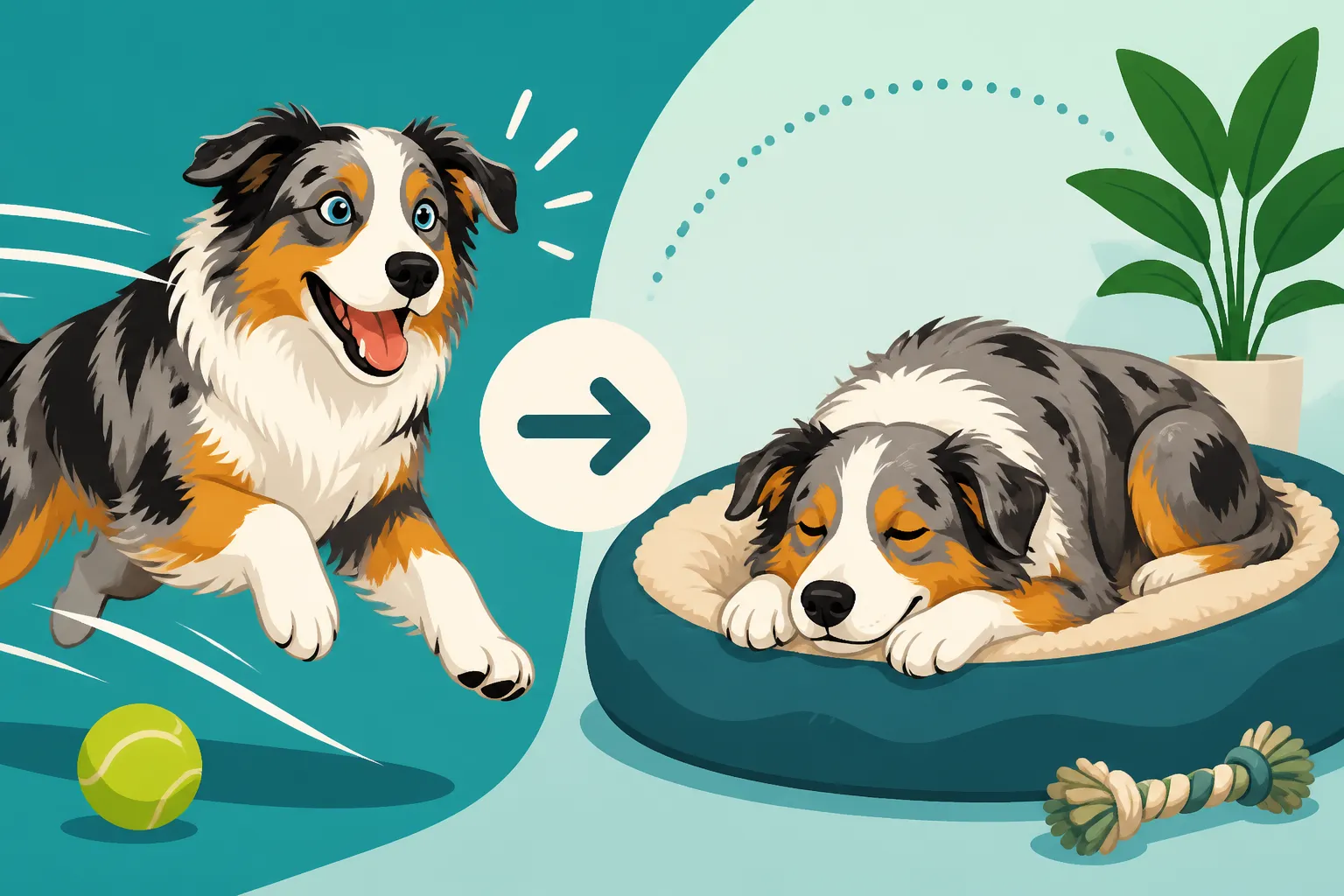
If you're living with an Australian Shepherd, you know that their "on" switch seems permanently stuck. They thrive on activity, constantly scanning their environment, ready to herd, chase, or investigate the next exciting thing. This boundless energy, while charming, can quickly turn into overstimulation, reactivity, and a frustrated household, leaving you wondering if your brilliant companion will ever just relax. This guide is dedicated to helping you teach your Australian Shepherd how to genuinely take a break, fostering calm and balance in your busy life together.
Understanding the Australian Shepherd's "On" Switch
It’s easy to look at your perpetually active Australian Shepherd and feel like you're doing something wrong, or that your dog is just "too much." The truth is, their intense drive to work and stay engaged isn't a flaw; it's a deeply ingrained part of their heritage. Understanding this is the first step toward helping them learn to settle.
The Deep-Seated Drive to Work
Australian Shepherds were bred for one primary purpose: to work livestock, often for long hours in challenging conditions. This isn't just about physical stamina; it's about intense mental engagement, observation, and decision-making. They possess a high level of situational awareness, constantly taking in information from their surroundings. That fleeting shadow, the neighbor walking past, the leaf blowing across the yard – these aren't just minor details to your Aussie; they are potential "flock members" that need to be managed, monitored, or, at the very least, observed.
This inherent need to "do something" or "be aware" means their brains are often running at full throttle. When they're not actively herding, many Aussies try to apply this instinct to their domestic lives, whether it's collecting toys, organizing family members, or trying to manage the comings and goings of visitors. It's why they might nip at heels, circle children, or block doorways – they're just doing their job, as they understand it. This deep-seated drive is precisely Why Herding Instinct Is the Aussie Operating System, and it explains why simply wearing them out physically often isn't enough to achieve true calm. Their minds are still buzzing.
The Cycle of Overarousal
When an Australian Shepherd's brain is constantly engaged and their physical needs are met with high-intensity activities without adequate mental downtime, they can easily fall into a cycle of overarousal. This isn't just about being "hyper"; it’s a state where their stress hormones are elevated, their impulse control decreases, and their ability to think clearly or respond to cues diminishes. Think of it like a child who skipped their nap – they become cranky, prone to meltdowns, and unable to process information effectively.
For an Aussie, overarousal can manifest in many ways. You might see frantic zoomies that seem endless, excessive barking at minor stimuli, or even an increase in nipping and mouthiness, especially during play. They might struggle to settle even when tired, pacing, panting, or obsessively bringing you toys. It’s a frustrating experience for owners, as it can feel like your dog is deliberately ignoring you or acting out. However, more often than not, it's a sign that their system is overloaded and they don't know how to switch off. This is a common challenge, and if you feel like your Aussie "just can't settle," you're likely observing An Australian Shepherd That Cannot Switch Off.
Practical Strategies for Teaching Relaxation
Teaching an Aussie to take a break isn't about crushing their spirit or denying their working instincts. It's about providing them with the tools and opportunities to self-regulate and find calm amidst their natural drive. It's a skill, just like "sit" or "stay," and it requires patience and consistent training.
The Power of a "Place" or "Mat" Command
One of the most effective ways to teach an Aussie to relax is through a designated "place" or "mat" command. This provides them with a specific, safe, and predictable spot where the expectation is calm and quiet. It gives them a job – "go to your spot and chill" – which appeals to their desire for direction, but this job is one of stillness, not action.
To begin, you'll need a comfortable mat, dog bed, or even a raised cot. Look for something durable that defines their space clearly; many options can be found easily on Amazon. Start by luring your Aussie onto the mat with a high-value treat. As soon as all four paws are on the mat, mark the behavior (with a "yes!" or a clicker) and reward them. Repeat this several times. Once they're reliably going to the mat, introduce your verbal cue, such as "Place" or "Mat." Gradually, you'll start to build duration, asking them to stay on the mat for a few seconds before rewarding, then a few more. Slowly increase the distance you can be from the mat while they remain there, and finally, introduce minor distractions. The key is to make the mat a highly positive experience, associating it with rewards and peace. This method is foundational for Mat Settle Training for a Restless Aussie and can be a game-changer for managing their energy indoors.
Enforced Naps and Structured Downtime
While it might seem counterintuitive to force a high-energy dog to rest, enforced naps and structured downtime are absolutely crucial for an Australian Shepherd, especially puppies and adolescents. Just like human toddlers, Aussies often don't know when they need to sleep until they're overtired and melting down. Their desire to be involved and engaged means they'll push themselves past the point of exhaustion, which only exacerbates overarousal.
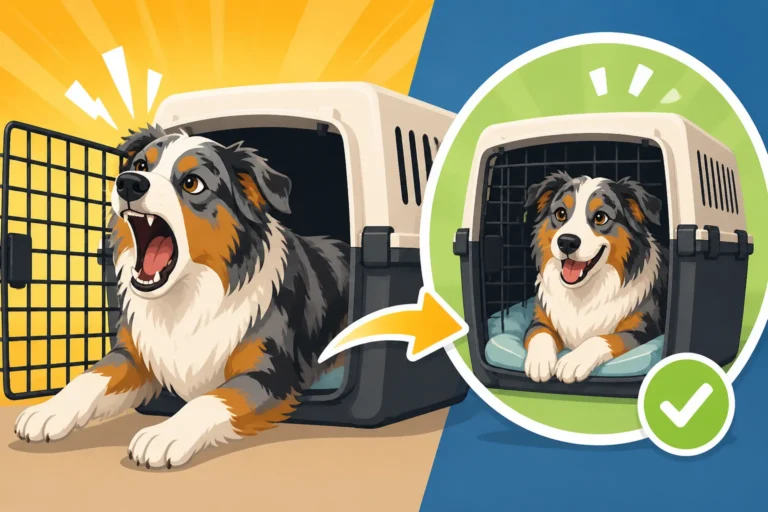
A crate can be an invaluable tool for this. Providing a comfortable, quiet crate in a low-traffic area gives your Aussie a den-like space where they can truly decompress without feeling the need to constantly monitor their surroundings. For a young Australian Shepherd, a schedule of an hour or two of focused activity followed by an hour or two in their crate can work wonders for their mental state and help prevent common behavioral issues that arise from overtiredness. Ensure the crate is appropriately sized; generally, a fifty-pound Australian Shepherd needs a crate that allows them to stand, turn around, and lie down comfortably. The Crate a Fifty Pound Aussie Needs provides more details on choosing the right size. During these enforced breaks, you might offer a safe chew toy or a puzzle feeder to encourage quiet self-entertainment, but the primary goal is rest. Don't feel guilty about these breaks; they are a gift you're giving your dog – the gift of calm. These Enforced Naps for an Overtired Aussie Puppy are vital for their development.
Integrating Mental Stimulation Over Constant Physical Exertion
It's a common misconception that if your Australian Shepherd is acting up, they just need more physical exercise. While physical activity is vital for their health, endless hours of fetch or running can often wind them up more, rather than truly tiring them out mentally. For an Aussie, mental stimulation is often far more exhausting and satisfying than purely physical exertion. Their minds are their primary tools, and engaging them in problem-solving tasks can achieve a level of calm that physical exercise alone rarely provides.
Instead of just another game of fetch, consider incorporating activities that require focus and thought. Scent work, where they have to find hidden treats or toys, taps into their natural tracking abilities. Puzzle toys that dispense kibble or treats only when manipulated correctly can keep them engaged for significant periods. Trick training, even just learning fun new behaviors like "spin" or "bow," builds focus and a working relationship. These activities encourage them to think, problem-solve, and engage their minds, leading to a much more profound sense of satisfaction and tiredness. Many online programs, like those offered by BAXTER & Bella, can provide structured guidance for incorporating mental enrichment into your daily routine. By shifting some of your energy expenditure from purely physical to mental, you'll find your Aussie is not only calmer but also more content. This type of engagement is key to Mental Work That Actually Tires an Australian Shepherd.
Recognizing and Preventing Overstimulation
Being able to teach your Australian Shepherd to take a break is one thing, but preventing them from reaching the point of overstimulation in the first place is even better. This requires you, the owner, to become a keen observer of your dog's subtle cues and to proactively manage their environment.
Reading Your Aussie's Body Language
Australian Shepherds are incredibly expressive dogs, but their signals can sometimes be subtle, especially when they're first starting to get overwhelmed. Learning to read these early warning signs is crucial for intervening before they spiral into full-blown overarousal. Look for changes in their posture, eye contact, and even the tension in their body.
Early signs of overstimulation might include: a hard stare, dilated pupils, excessive panting without physical exertion, rapid shifts in attention, a stiff body posture, lip licking, yawning (when not tired), or frantic, unfocused sniffing. They might start to ignore your cues, or respond with a delayed, agitated reaction. Some Aussies will start vocalizing more, such as whining or repetitive barking. Their movements might become more abrupt or clumsy. It’s easy to miss these nuances when you're caught up in the moment, assuming their energy is just "Aussie being Aussie." However, if you see these signs, it's a clear indicator that your dog is struggling to cope and needs a break, immediately. Becoming fluent in Reading an Aussie Body Language Under a Full Coat will empower you to act before your dog becomes overwhelmed, offering them a quiet space or a calming activity before they reach their breaking point.
Creating a Calm Environment
Beyond specific training techniques, the environment you provide for your Australian Shepherd plays a massive role in their ability to relax. A chaotic, constantly stimulating home will make it incredibly difficult for even the most well-trained Aussie to settle. Think about what your dog sees, hears, and experiences throughout the day.
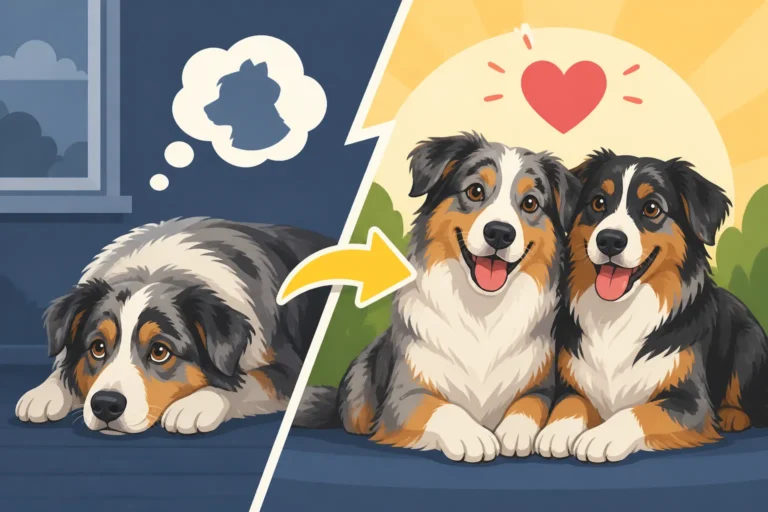
Creating a calm environment often involves simple adjustments. Designate a quiet area in your home where your Aussie can retreat – this might be their crate, a bed in a spare room, or a corner away from foot traffic and windows. Reduce visual stimuli by closing blinds or curtains, especially if your dog barks at passersby or outdoor movement. Use calming scents like lavender (diffused safely, away from your dog) or quiet classical music to create a soothing atmosphere. Establish consistent daily routines for feeding, walks, and training sessions, as predictability helps reduce anxiety. Avoid letting them "free roam" with unlimited access to stimulation all day; instead, structure their time with periods of active engagement followed by enforced relaxation. Remember, your Aussie is hardwired to respond to everything, so minimizing unnecessary triggers allows their system to truly switch off.
Common Pitfalls and Troubleshooting
Teaching an Australian Shepherd to take a break is a marathon, not a sprint. There will be good days and challenging days. Recognizing common pitfalls can help you navigate these bumps and stay consistent in your approach.
The "Always On" Trap
One of the biggest hurdles for Aussie owners is falling into the "always on" trap. This happens when we, often subconsciously, reinforce our dog's constant need for activity. We might throw the ball every time they bring it, engage in play every time they nudge us, or allow them to follow us from room to room, supervising our every move. While this feels like you're meeting their needs, you're actually inadvertently teaching them that being "on" and seeking interaction is always the rewarded behavior, and being calm yields nothing.
It's crucial to differentiate between healthy interaction and incessant demand. Start by ignoring polite requests for attention when your dog isn't truly calm. Only reward calm behavior – for example, a gentle pet when they're lying quietly, or a treat for settling on their mat. Teach them that you initiate play and engagement, and that downtime is a normal and expected part of their day. You don't have to entertain them every waking moment. This requires a shift in mindset for many owners, but it's essential for breaking the cycle of constant demand and enabling your Aussie to self-settle.
Consistency is Key (and Hard!)
Perhaps the most critical, yet most challenging, aspect of teaching an Australian Shepherd to take a break is consistency. Aussies are incredibly intelligent and observant; they quickly learn what works and what doesn't. If you enforce "place" training diligently for a few days, then slack off, they'll learn that the rules are flexible, and they'll revert to their old habits. This is especially true during challenging developmental phases, such as The Aussie Teenage Months and What Changes, when their hormones are surging and their impulse control often takes a nosedive.
Every member of the household needs to be on the same page, consistently applying the rules and expectations for calm behavior. This means consistently sending them to their mat, consistently enforcing quiet time, and consistently rewarding relaxation. It's tough, especially when you're tired or your dog is being particularly insistent. However, every time you reinforce calm, you're building a stronger foundation for a well-adjusted, relaxed Aussie. Consider enrolling in online training programs, like BAXTER & Bella, that offer structured, consistent advice, which can be invaluable for keeping you and your Aussie on track. Remember, you're not just training a behavior; you're shaping a lifestyle for your dog. The payoff for your consistency will be a much happier, calmer companion and a more peaceful home.
Here's a quick look at the contrasting behaviors between an overstimulated Aussie and one who's learning to take a break:
| Behavior Characteristic | Overstimulated Australian Shepherd | Relaxed Australian Shepherd |
|---|---|---|
| Eyes | Hard stare, dilated pupils, darting eyes | Soft gaze, blinking, eyes may be half-closed |
| Mouth | Excessive panting (no heat), tight lips, lip licking | Soft, relaxed mouth, gentle pant (if warm), soft yawn |
| Body Posture | Stiff, rigid, pacing, hunched, constantly shifting | Loose, fluid, curled up, lying on side, often deeply sighing |
| Vocalizations | Repetitive barking, whining, frantic growling | Quiet, occasional soft sigh, maybe a contented grumble |
| Attention | Hyper-vigilant, easily startled, difficult to focus | Responsive to cues, easily redirects attention, ignores minor stimuli |
| Interaction | Nipping, jumping, pushing, constant demand for play | Comes for gentle pets, leans in, settles nearby, accepts quiet presence |
Disclaimer
This article is for general informational purposes only and does not constitute professional advice. Laws, prices and regulations vary by location and change over time. Consult a qualified professional for guidance on your specific situation.