How Long an Aussie Long Line Should Be
One of the biggest struggles for any Australian Shepherd owner is finding that sweet spot between giving our high-energy, intelligent companions the freedom they crave and keeping them safe from their own intense instincts. You want to let them stretch their legs, chase scents, and explore without the constant fear of them bolting after a squirrel or "herding" a passing cyclist right into traffic. This guide is all about mastering the long line, a fantastic tool that offers that much-needed balance, and more specifically, helping you figure out just how long an Aussie long line should be to best suit your dog and your training goals.
The Rationale Behind Using a Long Line for Your Aussie
Let's face it, Australian Shepherds are not lap dogs. They're bundles of energy, intelligence, and instinct, bred to cover vast distances and manage livestock with precision and enthusiasm. That genetic blueprint means they come hardwired with a drive to move, to observe, and often, to control their environment. While we love them for these traits, they can make off-leash adventures in uncontrolled environments a real headache, or even dangerous. This is where the humble long line steps in as a game-changer for many Aussie owners.
Balancing Freedom and Safety
Imagine this: you're at a local park, a wide-open space with plenty of interesting smells and perhaps a few other dogs or people in the distance. Your Australian Shepherd is practically vibrating with the desire to go. Letting them off leash might mean they vanish over the horizon, completely absorbed by a scent trail or the irresistible urge to investigate something far away. On the flip side, keeping them on a standard six-foot leash feels restrictive, almost cruel, when their body is screaming for a real run. A long line bridges this gap beautifully, allowing your Aussie to roam a significant distance from you, giving them the illusion of freedom, while still maintaining a crucial physical connection. It's about letting them be a dog, safely.
This tool isn't just for puppies, either. Even a well-trained adult Australian Shepherd can have a moment of lapsed judgment, especially when that powerful prey drive kicks in. Think about a sudden dart from a rabbit or a deer, or the sudden appearance of a child on a scooter. Your Aussie's recall might be fantastic 99% of the time, but that 1% can be devastating. The long line acts as a vital safety net, a physical tether that prevents them from reaching danger or causing a nuisance. It grants peace of mind, letting you relax a little and allowing your Aussie to truly stretch out and explore without you constantly anticipating their next move.
Managing That Instinctive Herding Drive
Ah, the herding drive – the very essence of an Australian Shepherd. It's what makes them so captivating to watch when they're working, but it's also what can make walks in public spaces a unique challenge. Joggers, cyclists, children playing, even fallen leaves caught in a gust of wind – anything that moves can trigger that instinct to chase, gather, and control. A short leash only gives you so much leverage when your Aussie locks onto a target and feels that powerful urge to get behind it and direct its movement. The Australian Shepherd Herding Drive You Cannot Train Out is a deep-seated characteristic that needs proper management, not suppression.
A long line provides the space your Aussie needs to practice impulse control and work through that herding instinct in a controlled way. Instead of just pulling them back from a perceived "flock" of people, you can use the length of the line to guide them, interrupt their focus, and redirect their energy onto more appropriate activities. It's a fantastic training aid for working on a solid "leave it" or "come" around distractions. You can allow them to get closer to a moving object, observe it, and then call them back before they act on instinct, gradually building their ability to self-regulate. This isn't just about preventing undesirable behavior; it's about teaching your Aussie how to exist calmly in a world full of moving targets, respecting their natural drive while guiding them toward appropriate responses. It’s an investment in their overall emotional regulation, especially for dogs that might otherwise develop Australian Shepherd Reactivity and Overarousal from constant frustration.
Understanding Different Long Line Lengths and Their Applications
When you start looking at long lines, you'll quickly realize they come in a huge range of lengths. It's not one-size-fits-all, and the "best" length for your Australian Shepherd really depends on what you're trying to achieve, where you're using it, and your dog's individual needs. Let's break down the common options.
The Shorter End of the Spectrum (10-20 feet)
A long line in the 10 to 20-foot range might not feel "long" to some, but it's incredibly versatile and often overlooked. This length is fantastic for environments where you need a bit more reach than a standard leash but still require a good amount of control. Think of smaller parks, urban green spaces with less open area, or even larger backyards where you want to give your Aussie more room to sniff and explore without them getting into things or zooming away too fast.
For younger Australian Shepherd puppies, this shorter long line can be a gentle introduction to off-leash concepts. It provides enough length for them to wander a bit, practice checking in with you, and get used to the feel of a longer line trailing behind them, all while you're still close enough to intervene quickly. It's also excellent for focused training sessions, particularly for practicing "stay" or short recalls with minor distractions. You can quickly gather the slack and reinforce good behavior. Many trainers recommend starting with a 15-foot line for puppies, allowing them to build confidence and understanding before graduating to greater distances. For finding quality lines, a quick search on Amazon will show you many options in this beginner-friendly range.
The Mid-Range Sweet Spot (20-30 feet)
This is often considered the workhorse length for many Australian Shepherd owners, and for good reason. A 20 to 30-foot long line offers a significant amount of freedom, allowing your Aussie to gallop, run in wider arcs, and investigate scents well away from your immediate vicinity. This is perfect for larger parks, open fields, or even hiking trails where you want your dog to feel truly "off-leash" without the associated risks. It's enough length to really test your Aussie's recall around moderate distractions, allowing them to make choices and giving you the opportunity to reinforce them.
Imagine working on Australian Shepherd Recall Around Moving Things. With a 25-foot line, your Aussie can spot a distant jogger, maybe start to lean into their herding instinct, and then you have the crucial seconds and the physical connection to call them back before they commit to a chase. This length allows for a realistic "out-of-reach" scenario while still providing the control you need. It's also great for practicing distance commands like "sit" or "down," building up their understanding that they need to listen even when they're not right next to you.
Embracing the Long Haul (30-50+ feet)
Now we're talking serious freedom! Long lines in the 30 to 50-foot, or even longer, range are for those wide-open spaces – deserted beaches, vast fields, or private land where you can truly let your Australian Shepherd fly. This length is incredibly empowering for an Aussie, allowing them to reach top speeds, engage in exhilarating bursts of running, and truly explore their environment as if they were completely off-leash. It's an excellent tool for confidence building, allowing shy or environmentally sensitive Aussies to explore at their own pace without feeling pressured by your proximity.
For advanced recall training, especially in highly distracting environments, a 50-foot line allows you to simulate true off-leash situations. Your Aussie might be sniffing a fascinating patch of grass or watching a bird take flight a good distance away. Calling them back from such a distraction, with the safety net of the long line, is invaluable practice for solidifying a reliable recall. It’s also fantastic for working on retrieving or scent work, letting your Aussie range far and wide to find an item before returning it to you. Just be mindful that managing a line of this length requires extra care to avoid tangles and ensure your dog isn't getting into dangerous situations beyond your immediate control. It requires a good amount of space and vigilance, but the payoff in terms of your Aussie's sheer joy and physical exertion can be immense. For very specific training scenarios or if you’re enrolled in a program like BAXTER & Bella, their trainers might recommend certain lengths for particular exercises.
Here's a quick overview of long line lengths and their best uses:
| Length (Feet) | Ideal Use Cases | Aussie Benefits | Handler Considerations |
|---|---|---|---|
| 10-20 | Urban parks, smaller yards, puppy training, focused recall | Introduction to freedom, safe exploration | Easy to manage, less chance of tangles |
| 20-30 | Larger parks, open fields, hiking trails, distraction work | Good balance of freedom and control, solid recall practice | Moderate management, some tangling risk |
| 30-50+ | Very open spaces, beaches, advanced recall, scent work | Maximum freedom, high-speed running, true off-leash feel | Requires large clear space, high vigilance, more tangling |
Factors to Consider When Choosing Your Aussie's Long Line Length
Choosing the right long line isn't just about picking the longest one you can find. It's a thoughtful process that takes into account your specific circumstances, your dog's personality, and your training goals. Getting it right ensures safety, effectiveness, and enjoyment for both you and your Australian Shepherd.
Your Aussie's Age and Training Level
This is perhaps the most critical factor. A rambunctious Australian Shepherd puppy, still learning the ropes of the world, will benefit from a different approach than a seasoned adult dog with a solid training foundation. For young puppies, starting with a shorter long line – perhaps 10 to 15 feet – is generally recommended. This allows them some freedom to explore and practice their nascent recall skills without overwhelming them (or you) with too much distance. It keeps them within a range where you can easily intervene if they get into mischief or become overly distracted. As they mature and their understanding of commands grows, you can gradually increase the length. Think of it as a progression, similar to the stages outlined in The Aussie Puppy Curriculum Month by Month.
An adult Australian Shepherd who already has a decent recall but struggles with high-value distractions like squirrels or other dogs might benefit greatly from a 20-30 foot line. This length provides enough space for them to be genuinely tempted by a distraction, giving you a realistic opportunity to practice Teaching an Aussie to Come Off a Chase while still having the safety net. For an Aussie with a truly bomb-proof recall, or one engaged in advanced scent work or field training, a 50-foot line can be a fantastic tool to simulate true off-leash work in areas where absolute freedom isn't safe or permitted. Conversely, if your Aussie is highly reactive or struggles with overarousal, a shorter line might be better initially to maintain closer control and help them manage their emotional state.
The Environment Where You'll Be Using It
The setting where you plan to use the long line dictates its practical length more than you might think. A 50-foot line is fantastic for an empty beach or a sprawling, fenced field, but it becomes a tangled nightmare in a wooded area with lots of underbrush or a crowded urban park. Before you even head out, visualize the space. Are there trees, bushes, picnic tables, or other obstacles that the line could snag on? Will there be other people, dogs, or cyclists that your Aussie might try to "herd" or interact with? Consider the specific challenges of your chosen environment. For example, An Australian Shepherd Circling Joggers and Cyclists is much easier to manage with a manageable length of line in a park with mixed users.
If you frequent smaller, more enclosed parks or often find yourself on paved paths, a 15-20 foot line might be the most practical. It gives your Aussie room to sniff and explore without creating a trip hazard for others or getting caught on every bench. If you're lucky enough to have access to vast, open spaces, then a 30-50 foot line can truly shine, giving your Australian Shepherd the exhilarating experience of a full-speed run. Always err on the side of caution. A shorter line in a busy area is safer and less frustrating than a super long one that constantly tangles or puts others at risk.
Your Personal Handling Style and Physicality
Let's be real: managing a long line, especially a very long one, is a physical task! It requires good coordination, quick reflexes, and strong hands. A 50-foot line, even if it's lightweight, still needs to be gathered, released, and potentially reeled in quickly. Are you comfortable doing that? Do you have any physical limitations that might make handling a very long line difficult? If you're prone to tripping, or if your grip isn't strong, a shorter, more manageable line might be a better choice for your safety and comfort.
Your handling style also plays a role. Are you an attentive handler who constantly watches your dog and the line, ready to react? Or are you someone who might get distracted by your phone or surroundings? A longer line demands more vigilance. If you prefer to be more hands-off, a shorter line might be safer, as it keeps your Aussie closer by default. Furthermore, think about your training philosophy. Are you working with a positive reinforcement approach where you want to allow your Aussie to make choices and then reward the right ones from a distance? Or do you need to maintain tighter control for a dog that's still learning impulse control? The length of the long line can significantly influence how effectively you can apply your preferred training methods. For handlers seeking guidance, a program like BAXTER & Bella often provides video tutorials on how to safely handle long lines, emphasizing the importance of technique.
Practical Tips for Using a Long Line Safely and Effectively
Using a long line isn't just about clipping it on and letting your Australian Shepherd run wild. There's a technique to it, and a few practical considerations that will make the experience safer and more enjoyable for both of you. Getting these details right can prevent frustration, injury, and foster a better training environment.
Materials and Comfort for Your Hands (and Your Aussie)
Long lines come in various materials, and your choice will significantly impact comfort and durability. The most common materials are nylon, biothane, and cotton/webbing. Nylon lines are generally affordable and widely available, but they can be rough on the hands, especially if your Aussie suddenly bolts and the line zips through your fingers. They can also absorb water, making them heavy and prone to mildew. A good pair of gloves is often recommended if you opt for nylon, particularly with a strong-pulling Aussie.
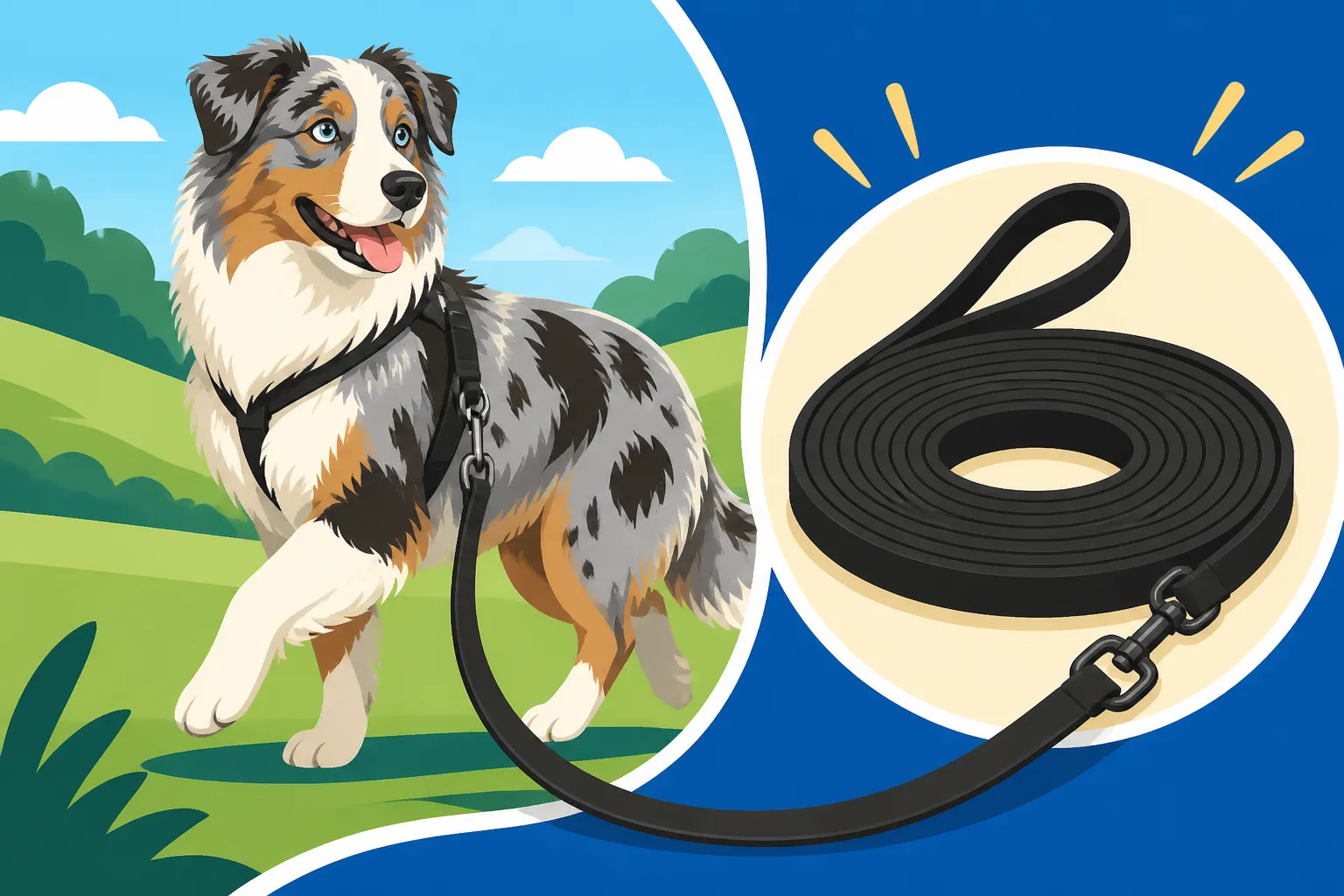
Biothane, often found on Amazon, is a fantastic option for long lines. It's a synthetic material with a PVC coating, making it incredibly durable, waterproof, odor-proof, and easy to clean. It feels smoother in the hand than nylon and offers a better grip, reducing the chance of rope burn. It also doesn't snag as easily on brush. The downside is that it can be a bit more expensive than nylon. Cotton or webbing lines are softer on the hands but can be very prone to tangling, absorb water, and wear out faster. Always choose a line with a strong, reliable clasp that won't unexpectedly open if your Australian Shepherd pulls hard. Remember, this line is your safety connection, so quality matters.
Teaching Your Aussie to Respect the Line
The long line is a tool for training, not just containment. Your Australian Shepherd needs to learn what it means. Don't just clip it on and expect immediate results. Start in a low-distraction environment. Allow your Aussie to drag the line initially, getting used to the feel of it trailing behind them. This can also be good practice for Building an Emergency Recall Whistle for an Aussie. Gently pick up the line and practice calling them back, reeling them in slowly and calmly if they don't respond. The goal is for them to understand that the end of the line means "stop" or "come here," not a punishment.
Never yank or use the long line to correct harshly, as this can create a negative association and make your Aussie fearful of the line or even you. Instead, use gentle, consistent pressure to guide them. When they hit the end of the line, don't let them snap against it hard. Try to anticipate their movements and gently step on the line or take up slack to smoothly bring them to a stop. Reward enthusiastically when they turn back toward you or respond to a recall. Consistency is key, and just like any other training, it will take time and repetition for your Aussie to fully understand and respect the boundaries the long line provides. Programs like BAXTER & Bella offer detailed modules on recall training that can be effectively integrated with long line practice.
The Importance of a Good Harness
While some people attach long lines to collars, this is generally ill-advised, especially for an active Australian Shepherd. A sudden stop or lunge at the end of a long line can put immense pressure on your dog's neck and throat, potentially causing injury. Even worse, if they're running at full speed and hit the end of a long line, a collar can cause a severe neck injury or even collapse their trachea.
Always attach your long line to a well-fitting, comfortable harness, specifically one with a back clip. This distributes any pressure across their chest and shoulders, which is much safer and more comfortable for your Aussie. Look for harnesses that are durable and won't chafe. Some harnesses have a front clip, which can be useful for reducing pulling on a regular leash, but for a long line, a back clip is generally preferred to prevent the line from tangling around their legs. A good harness ensures that the long line remains a positive and safe training tool, protecting your Australian Shepherd from potential harm while still giving you control. This also ties into preventing injuries, as discussed in Australian Shepherd Paw Injuries From Hard Running, where proper gear is paramount.
Common Mistakes to Avoid with Long Lines
Even with the best intentions, it's easy to fall into common traps when using a long line with your Australian Shepherd. Being aware of these pitfalls can save you frustration, prevent accidents, and ensure your training remains effective and positive.
Treating it Like an Elastic Band
One of the biggest mistakes handlers make is allowing the long line to become a constant source of tension or an elastic band. If your Australian Shepherd is always pulling against the line, constantly hitting the end with a jolt, they're not learning anything positive. Instead, they're learning to pull, and that the line is simply a drag or a source of discomfort. This can also lead to frustration and even reactivity. The goal of a long line is to provide a safety net and a training aid, allowing for freedom with the ability to intervene, not constant restraint.
Instead, aim to keep the line slack as much as possible, only applying gentle tension when you need to guide or stop your Aussie. Practice "reeling" the line in smoothly as your dog moves closer to you, and letting it out when they move away, striving for a loose leash feel even at a distance. If your Aussie keeps hitting the end, it might be a sign that they're not ready for that much freedom in that environment, or that your recall isn't strong enough yet. Consider practicing in a less distracting area or reducing the line length temporarily until their understanding improves. Remember, the long line is about controlled freedom, not a perpetual tug-of-war.
Not Practicing in Varied Environments
It’s easy to get comfortable using the long line in the same quiet field every time. Your Australian Shepherd might have a fantastic recall and great loose-line manners there. But the real test, and where the long line proves its worth, is in varied environments. Just because your Aussie ignores a bird in your usual park doesn't mean they'll do the same for a rabbit in a new, exciting woodland. This is particularly relevant for an Australian Shepherd, whose intelligence and drive can lead to different behaviors in novel situations.
Gradually introduce your Australian Shepherd to new places with increasing levels of distraction. Start with a quieter corner of a new park, then slowly move to busier areas. This helps generalize their training and build their confidence in responding to you regardless of the sensory input around them. For instance, Practicing Aussie Recall in a Fenced Field is a great start, but eventually, you need to challenge them in more "real-world" scenarios. The long line allows you to safely test their boundaries and reinforce positive choices without the risk of them making a dash for it. The more diverse environments you train in, the more reliable your Aussie's behavior will become, making eventual off-leash excursions much safer.
Neglecting Safety Protocols
A long line, while a wonderful tool, is not without its own set of safety considerations. First and foremost, never, ever wrap the long line around your hand or wrist. If your Australian Shepherd suddenly bolts or pulls hard, the line can tighten, causing severe rope burns, fractures, or even degloving injuries to your hand. Always hold the line loosely, allowing it to slip through your fingers if necessary, or use gloves for added protection. You can also simply step on the line to stop your dog if they reach the end too quickly.
Secondly, be acutely aware of your surroundings and other people or animals. A long line trailing across a path can be a major trip hazard for unwitting pedestrians, cyclists, or even other dogs. Always scan ahead and ensure the path is clear. If you see someone approaching, gather the line and shorten your Aussie's range of motion until they've passed. Be particularly mindful if your Australian Shepherd struggles with An Aussie That Stops Reading the Room and might not be aware of their surroundings. Furthermore, never leave your Australian Shepherd unattended on a long line. They could become entangled, injured, or even choke if the line gets caught on something and they pull against it. Constant vigilance is key to ensuring the long line remains a safe and effective tool for everyone involved.
Disclaimer
This article is for general informational purposes only and does not constitute professional advice. Laws, prices and regulations vary by location and change over time. Consult a qualified professional for guidance on your specific situation.