How Many Aussie Puppies Arrive Without a Tail
It’s a question that catches many new Australian Shepherd parents off guard: why do some puppies in a litter have full tails, some have nubs, and others seem to have no tail at all? The variations can be quite dramatic, leading to confusion and sometimes concern. This guide is here to shed light on the fascinating, sometimes complicated, genetics behind the Australian Shepherd's tail, helping you understand what's perfectly normal and what might be a red flag, especially when you're looking at a new litter.
The Unique Genetics of the Australian Shepherd Bobtail
The Australian Shepherd is one of those distinctive breeds known for its incredibly varied tail lengths, from a full, long plume to a tiny, barely-there nub, or even no visible tail at all. This isn't usually the result of a veterinarian's scalpel (though docking certainly happens, which we'll get into later), but rather a specific genetic trait known as the Natural Bobtail, or NBT. It’s a truly fascinating piece of canine genetics that makes Aussies stand out.
The gene responsible for this characteristic is often referred to as the T-box gene, or C189G mutation, which affects tail development. It's an autosomal dominant gene, meaning that a puppy only needs to inherit one copy of this gene from one parent to express the bobtail trait. This is a crucial distinction from recessive traits, where two copies are required. This single copy is usually enough to cause a shortening or absence of the tail. So, if even one parent carries a copy of the NBT gene, there’s a good chance some of their puppies will display a natural bobtail.
However, the expression of this gene isn't always uniform. You might see littermates with a spectrum of tail lengths, from a quarter-length bob to a three-quarter bob, to a full-length tail, and everything in between. It's not an all-or-nothing situation, which is why observing an entire litter can be quite an education in genetic variation! The gene dictates the potential for a bobtail, but other modifying genes or environmental factors during development might influence the exact length. This variability is part of what makes the Australian Shepherd so unique, but it also means that simply looking at a puppy's tail length doesn't always tell the full story of its genetic makeup without a DNA test.
The Aussie Bobtail Gene and Its Lethal Pairing
While the natural bobtail gene is responsible for those adorable short tails, it carries a significant genetic caveat that every Australian Shepherd breeder and owner needs to understand: it’s considered a lethal gene in its homozygous form. This means that if a puppy inherits two copies of the NBT gene—one from each parent—it will likely not survive gestation or will die very shortly after birth. These puppies often have severe spinal deformities or other developmental issues that are incompatible with life.
This is why responsible breeders are very careful about their breeding pairs. They will never intentionally breed two dogs that both carry the natural bobtail gene (NBT/NBT or NBT/full tail carriers). The risk of producing puppies that suffer and don't survive is too high, and it's simply unethical. Reputable breeders will test their dogs for the NBT gene, much like they test for The Genetic Panel Every Australian Shepherd Needs, to ensure they are not inadvertently creating this dangerous pairing. Breeding two full-tailed Aussies (assuming neither carries the NBT gene) will result in 100% full-tailed puppies, and breeding a full-tailed Aussie with an NBT Aussie will produce a mix of NBT and full-tailed puppies, but none with the lethal double dose.
The table below illustrates the typical outcomes when breeding Australian Shepherds based on their NBT gene status.
| Parent 1 NBT Status | Parent 2 NBT Status | Expected Litter Outcome (Approximate) | Ethical Breeding?
The problem of identifying if an Australian Shepherd puppy has a natural bobtail, as opposed to having its tail docked, is a recurring concern for potential dog owners. It creates uncertainty, given the health implications of the NBT gene and the historical practice of tail docking. This article aims to clarify the genetic and historical aspects of tail length in Australian Shepherds, helping you understand how to differentiate between naturally short tails and those that have been surgically altered.
The Australian Shepherd Natural Bobtail
When you look at a litter of Australian Shepherd puppies, you might notice something quite striking: their tails are all over the place! Some are long and flowing, others are barely-there nubs, and a few might even seem like they don't have a tail at all. This incredible variation is largely due to the "Natural Bobtail" (NBT) gene. It’s one of those hallmark traits that many people associate with the breed, often assuming all Aussies are born with short tails. But that's not quite the case.
The NBT trait in Australian Shepherds is controlled by an autosomal dominant gene. What this means in simpler terms is that a puppy only needs to inherit one copy of this specific gene from either parent to exhibit some degree of tail shortening. If a dog receives one copy of the gene, it will have a bobtail of varying length. If it doesn't receive the gene, it will have a full-length tail. The fascinating thing is the degree of bobtail can differ wildly. You might see a full bob, a three-quarter length tail, a half-length, or even just a very short stub. This spectrum of expression is what makes it tricky to instantly tell if a short tail is naturally occurring or if it was docked, especially without knowing the parents' genetic status.
It's also important to realize that the presence of the NBT gene doesn't just mean a short tail. The gene's influence is tied to the development of the caudal vertebrae (the tail bones). So, when a puppy has a natural bobtail, it's not just a matter of "missing" part of the tail, but rather a genetic instruction that tells the body to develop fewer or shorter tail vertebrae from the get-go. This is a very different mechanism than surgical docking, which we'll discuss in a moment. Understanding this genetic basis helps you appreciate the natural diversity within the breed and recognize that a "bobtail" isn't a single, uniform look.
The Aussie Bobtail Gene and Its Lethal Pairing
This natural bobtail gene, while giving us those charmingly short-tailed Aussies, comes with a serious genetic caveat: it's what scientists call a "lethal gene" in its homozygous form. This isn't something to gloss over. If an Australian Shepherd puppy inherits two copies of the NBT gene—one from each parent—it typically doesn't survive. These puppies often suffer from severe spinal deformities or other profound developmental issues that make life impossible, usually resulting in reabsorption during gestation or death shortly after birth. It's a heartbreaking reality that underscores the importance of responsible breeding.
Because of this very real risk, ethical breeders take great care to avoid breeding two NBT carriers together. They will often perform genetic testing on their breeding dogs to identify their NBT status. This way, they can ensure that they pair a dog with the NBT gene (NBT/full tail) with a dog that has a full tail and does not carry the NBT gene (full tail/full tail). This pairing produces a mix of NBT puppies and full-tailed puppies, but crucially, it avoids any puppies inheriting two copies of the lethal gene. It’s a vital practice that prevents unnecessary suffering in litters.
If you're ever speaking to a breeder who is casual about whether both parents carry the NBT gene, or who seems unaware of the risks, that should be a major red flag. A responsible breeder will be able to tell you the NBT status of both parent dogs and explain how they prevent the lethal pairing. They prioritize the health and welfare of their puppies above all else, and this includes careful genetic planning. You can learn more about important genetic screenings in The Genetic Panel Every Australian Shepherd Needs.
How Many Aussie Puppies Arrive Without a Tail
Given the genetic principles we've just explored, it’s not an exact science to say precisely how many puppies in an Aussie litter will be born without a tail (or with a natural bobtail, which is the more accurate term). The outcome depends entirely on the genetic makeup of the parents.
Let's break down the possibilities:
- If both parents have full tails and neither carries the NBT gene: Every single puppy in that litter will be born with a full tail. There's simply no NBT gene to pass on.
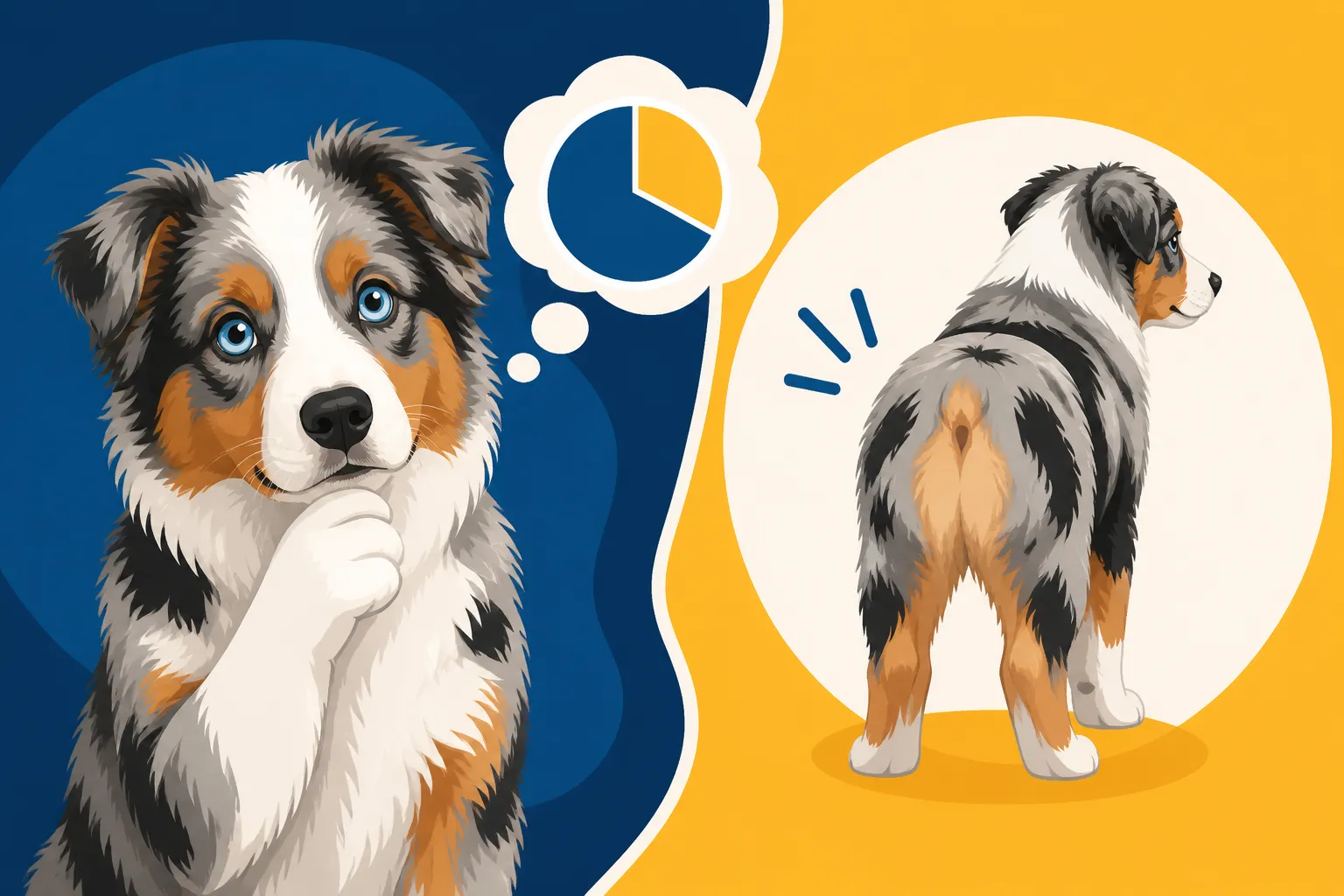
- If one parent has a full tail (and doesn't carry NBT) and the other parent has a natural bobtail (meaning it carries one copy of the NBT gene): Statistically, about 50% of the puppies in the litter will inherit the NBT gene and be born with a natural bobtail, while the other 50% will inherit the full-tail gene from both parents and have full tails. This is the safest and most common ethical breeding practice for producing NBT puppies.
- If both parents each have a natural bobtail (meaning they both carry one copy of the NBT gene): This is the risky pairing. In this scenario, about 25% of the litter would tragically inherit two copies of the lethal NBT gene and likely not survive. Another 50% would inherit one copy and have natural bobtails, and 25% would inherit no copies and have full tails. This breeding practice is highly discouraged by ethical breeders due to the high risk of puppy loss and suffering.
So, the number of puppies born without a tail (or with a bobtail) is far from random; it's a direct reflection of the parents' specific genetic contributions. It’s not uncommon to see a mix of tail lengths in a single litter, reflecting the heterozygous nature of the NBT gene. When you visit a litter, it’s a good idea to observe The Aussie Litter Size to Expect and notice the tail variations. This variety is perfectly normal and a fascinating aspect of Australian Shepherd genetics, provided responsible breeding practices are followed.
Natural Bobtails Versus Docked Tails
For many years, and still in some places, it was common practice to dock the tails of Australian Shepherds, regardless of whether they were born with a natural bobtail or a full tail. This was historically done for practical reasons, especially for working dogs. A long tail could be caught in machinery, stepped on by livestock, or sustain injuries during active work. However, this practice has become increasingly controversial and is even banned in many countries today, seen as an unnecessary cosmetic procedure.
The difference between a natural bobtail and a surgically docked tail can be subtle to the untrained eye, especially if the docking was done very early and neatly. However, there are often clues. A natural bobtail will usually have a natural, rounded, or tapered end, often with a tuft of hair. The bone structure simply ends shorter. A docked tail, on the other hand, is a cut appendage. While a skilled vet can make it look natural, sometimes the cut end might feel different, or the scar tissue could be palpable. If you're unsure, gently feel the end of the tail for a natural bone structure versus a blunt, cut end.
More importantly than the visual or tactile difference, knowing if a puppy has a natural bobtail is crucial because it indicates the presence of the NBT gene. This information is vital for future breeding decisions, even if you never intend to breed your dog. Your veterinarian might ask about it for their records, or you might need to disclose it if you ever rehome the dog. Tail Docking in Australian Shepherds Today continues to be a hot topic, highlighting the importance of understanding the history and ethics behind these practices.
Examining an Aussie Puppy's Tail at Eight Weeks
When you're looking at a litter of Australian Shepherd puppies, especially around the typical eight-week mark when they're ready to go home, examining their tails can be quite insightful. At this age, a natural bobtail will be clearly evident. It will look like a miniature version of an adult bobtail – shorter, perhaps a little stubby, but with a natural appearance to the tip. It won't look like something has been removed; rather, it will look like it simply developed to that length.
If a puppy has been docked, the signs can also be visible, though less so if done expertly. Look for any signs of scarring, discoloration, or a distinct bluntness at the tip that doesn't feel natural. A reputable breeder will always be transparent about a puppy’s tail status. They should be able to tell you if the puppy has a natural bobtail or if it was docked, and why. If a tail was docked, it would typically happen within the first few days of life, long before eight weeks. Therefore, any short tail you see at eight weeks is either a natural bobtail or a very well-healed docked tail. For general health insights at this stage, you might also find Australian Shepherd Puppy Health Checks at Eight Weeks helpful.
Always remember to ask for clear information from the breeder about tail length and whether it's natural or docked. This isn't just about aesthetics; it's about understanding the genetics of your future companion. A good breeder will have all this information readily available and will be happy to discuss it with you, providing confidence in your decision. When shopping for puppy essentials, sites like Chewy offer a wide range of products for all tail types, from beds to collars that accommodate different body shapes.
The History of Aussie Tails and Modern Considerations
The original Australian Shepherds were bred for their working ability on ranches, primarily in the American West, despite their misleading name. These dogs were agile, intelligent, and relentless herders. In a working environment, a long, flowing tail could be a liability. It could get stepped on by livestock, caught in fences, or simply become a nuisance while darting through brush. This is largely why tail docking became a common practice in the breed's early history, aligning with the functional demands of their job.
Over time, as Australian Shepherds transitioned from purely working dogs to beloved family companions and show dogs, the reasons for docking became more about tradition and breed aesthetics than practical necessity. The breed standard, for many years, called for a docked tail, which further cemented the short tail as the "look" of the Australian Shepherd. However, as public awareness and ethical considerations about animal welfare grew, the practice of routine tail docking for cosmetic reasons began to face significant opposition.
Today, there's a strong movement towards preserving the natural tail, especially in countries where docking is now illegal or heavily regulated. Many breed clubs and enthusiasts advocate for appreciating the full range of tail lengths that Aussies naturally possess. A full-tailed Australian Shepherd is just as much an Australian Shepherd as one with a natural bobtail. For new puppy parents, it's about making informed choices and supporting breeders who prioritize health and ethical practices. For example, Chewy offers excellent supplies for training and care, whether your Aussie has a wagging full tail or a happy little nub.
Breeding Practices and Tail Length Choices
Responsible breeding of Australian Shepherds goes far beyond just pretty coats and bright eyes. It involves a deep understanding of genetics, temperament, and health. When it comes to tails, a conscientious breeder will have a clear policy and understanding of the NBT gene. They will never deliberately breed two NBT carriers together due to the lethal gene risk. Instead, they will either breed full-tailed dogs together (producing full-tailed puppies), or a full-tailed dog with an NBT dog (producing a mix of NBT and full-tailed puppies). This way, they avoid the tragedy of puppies with severe genetic defects.
If a breeder still chooses to dock tails, they should be transparent about this decision, explain their reasoning (if permitted in their region), and ensure the procedure is done by a qualified veterinarian within the first few days of the puppy's life, when their nervous system is less developed. However, as mentioned, many breeders are now opting to leave tails natural, respecting the individual genetic makeup of each puppy. They recognize that a full-length tail is just as much a part of the breed's genetic diversity as the natural bobtail.
When you're looking for a puppy, always ask about the parents' NBT status and the breeder's approach to tails. A good breeder will openly share this information and will educate you on the genetic implications. Be wary of breeders who offer "cheap" puppies with ambiguous tail histories, as this could indicate Aussie Puppies Bred With No Genetic Testing or other questionable practices. It’s about ensuring you bring home a healthy, well-bred puppy, whether it has a magnificent plume or an endearing little nub.
The Aussie Standard and Whether a Long Tail Faults an Aussie in the Ring
Historically, the breed standard for Australian Shepherds, particularly in the United States, favored a docked tail that was no longer than four inches. This meant that if an Aussie was born with a full tail, it was almost invariably docked if it was destined for the show ring or if the owner simply adhered to the traditional "look." A long tail, in some interpretations, could even be considered a fault in the show ring, leading many breeders to continue the practice of docking to meet these aesthetic preferences.
However, times are changing, and breed standards can evolve. In many parts of the world, where tail docking is illegal, the breed standard has been modified to accept natural tails, whether short or long. This shift reflects a growing emphasis on natural health and welfare over purely cosmetic alterations. Even in regions where docking is still permitted, there's a rising acceptance and appreciation for full-tailed Australian Shepherds in various dog sports and companion roles. Some registries and shows are becoming more inclusive, understanding that a natural tail does not detract from an Aussie's working ability, intelligence, or overall beauty.
For those of us who simply adore our Australian Shepherds as family members and partners in adventure, whether they have a short bob or a sweeping tail, it truly doesn't matter for their quality of life or their capacity for love. The focus should always be on their health, temperament, and ensuring they get the mental and physical stimulation that this incredible breed thrives on. So, whether your Aussie comes with a natural bobtail or a beautiful, full-length tail, embrace it! They're all wonderful, intelligent, and active companions who will bring immense joy to your life.
Disclaimer
This article is for general informational purposes only and does not constitute professional advice. Laws, prices and regulations vary by location and change over time. Consult a qualified professional for guidance on your specific situation.