The Australian Shepherd Head and Stop
When you first lay eyes on an Australian Shepherd, it's often their captivating gaze or striking coat patterns that draw you in. But beyond the immediate visual appeal, there's a world of subtle detail in their conformation that tells a deeper story about the breed's purpose and heritage. One of the most telling features, yet often overlooked by the casual observer, is the structure of their head and the specific curve known as the "stop." Understanding these elements isn't just for show judges; it gives us insight into the very essence of what makes an Aussie an Aussie. This guide will take a detailed look at the defining characteristics of the Australian Shepherd's head, what the "stop" actually is, and why these features are so important, both functionally and aesthetically.
The Distinctive Features of the Australian Shepherd Head
The Australian Shepherd's head is far more than just a place for their beautiful eyes and expressive ears. It’s a carefully balanced structure that speaks volumes about their intelligence, alertness, and working capabilities. When breeders and enthusiasts talk about an ideal Aussie head, they're looking for a combination of strength, refinement, and balance that perfectly complements the rest of the dog's physique.
Overall Impression of Intelligence and Alertness
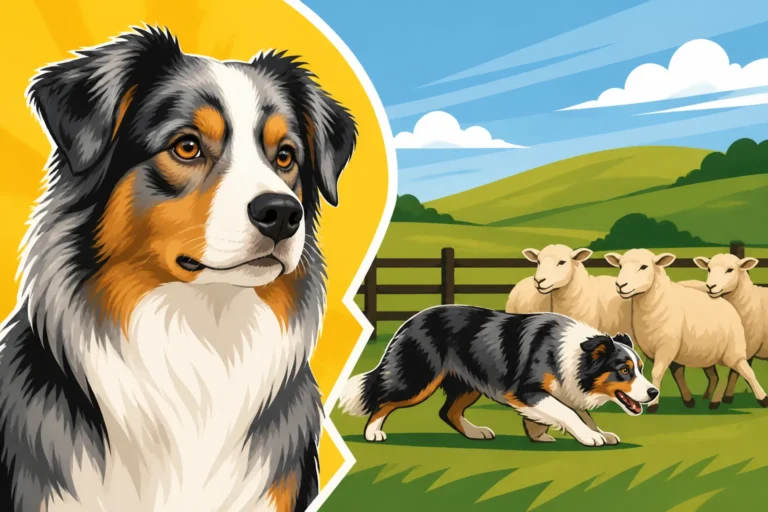
When you look at an Australian Shepherd, you should immediately get a sense of an intelligent, keen, and attentive animal. Their eyes, often described as expressive, are set to convey a piercing gaze, always ready to observe their surroundings and react. This isn't just about a pretty face; it’s about a dog that is constantly processing information, a crucial trait for a herding dog needing to anticipate and respond to livestock movements.
The shape of the head plays a huge role in this overall impression. It should be clean-cut, without excessive skin or wrinkles, allowing for clear vision and an unobstructed field of hearing. Imagine an Aussie on a ranch, working a flock of sheep. Any feature that obstructs their senses or gives them a clumsy appearance would be detrimental to their job. The breed's intelligent expression is a hallmark, reflecting their sharp minds and eagerness to engage.
Skull Shape and Proportions
The skull of an Australian Shepherd should be in proportion to the body, neither too heavy nor too fine. Picture a dog that needs to be agile and swift, yet also possess enough power and substance. The skull should be flat to slightly domed between the ears. When you run your hand over their head, it should feel broad enough to house a substantial brain, reflecting their problem-solving abilities, but not so wide that it looks clunky.
The muzzle is another critical component, and it should be equal in length to the backskull (the distance from the stop to the occiput, the bony bump at the back of the head). This equal proportion creates a balanced and harmonious profile. A muzzle that is too short or too long throws off this balance, making the dog appear disproportionate. The jaws should be strong and well-developed, designed to hold a strong grip when needed, even if their primary role isn't biting. These proportions contribute significantly to The Australian Shepherd Standard and What Judges Want.
Deciphering the Australian Shepherd Stop
The "stop" is one of those terms that might sound obscure, but it's a very specific and important feature in canine anatomy, particularly for breed identification and standard. For the Australian Shepherd, the stop is a crucial indicator of correct head type.
What Exactly Is the Stop?
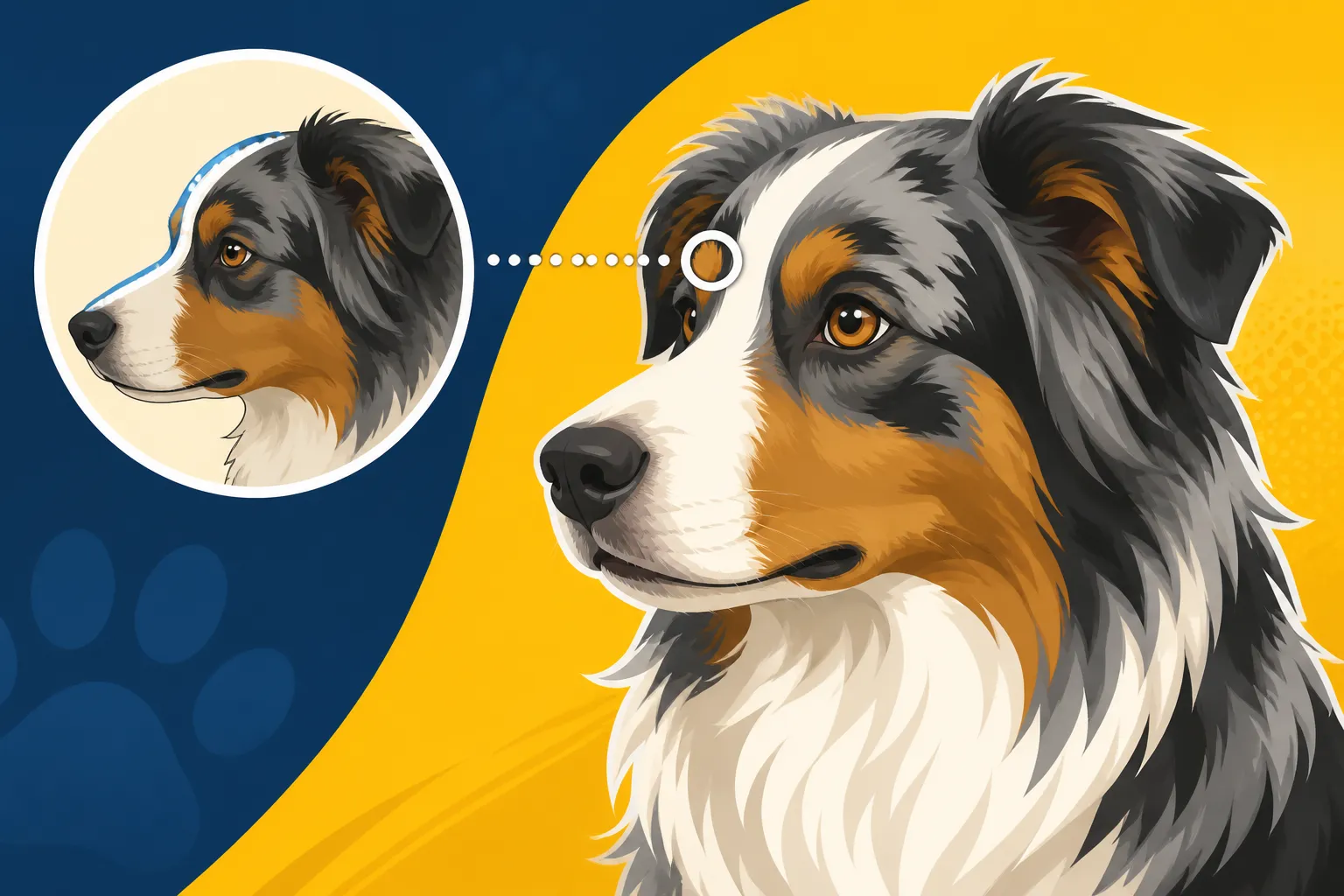
Simply put, the stop is the indentation or angle between the eyes, where the muzzle meets the skull. If you gently run your finger from the top of your Aussie's head down towards their nose, you'll feel a slight dip just above their eyes. That dip is the stop. It's the transition point, a subtle but distinct feature that defines the profile of the dog's face.
Different breeds have different types of stops. Some breeds, like Bulldogs, have a very pronounced, almost abrupt stop, creating a deep indentation. Others, like many sighthounds, have a very gradual, almost imperceptible stop. For the Australian Shepherd, the ideal stop is somewhere in the middle – it’s distinct but not exaggerated, clearly defined but smoothly integrated into the overall flow of the head.
The Ideal Aussie Stop
The Australian Shepherd standard describes the stop as "moderate, well-defined." What does this mean in practical terms? It means you shouldn't see a sudden, sharp drop-off, nor should the transition from skull to muzzle be completely flat and seamless. Instead, it should be a clear, gentle slope.
Think of it like this: if you drew a line from the top of the skull to the tip of the nose, the stop would be the point where that line smoothly changes direction, creating a visible but not overly dramatic angle. This moderate stop contributes to the breed's intelligent expression and helps frame their almond-shaped eyes, which are set obliquely (at an angle). It’s an essential part of the overall balance that breeders strive for. You can often see this described in detail when reviewing The ASCA Australian Shepherd Standard.
Here’s a simple table to illustrate the concept:
| Feature | Ideal Australian Shepherd Stop | Less Ideal Stop (Examples) |
|---|---|---|
| Depth | Moderate, well-defined indentation | Too shallow (almost flat), or too deep (abrupt) |
| Angle | Smooth, gentle slope between skull and muzzle | Sharp, angular break, or no discernible angle |
| Overall Look | Contributes to balanced, intelligent, and alert expression | Gives a "snipy" (too long/thin) or "boxy" (too broad) look |
| Functionality | Allows for clear vision and unobstructed sensory input | Can obscure vision or give a less keen appearance |
Why the Head and Stop Matter for Your Aussie
Beyond meeting breed standards, the specific characteristics of an Australian Shepherd's head and stop actually play a significant role in their health, functionality, and overall quality of life. These aren't just cosmetic details; they're integral to the dog's well-being and ability to perform.
Functionality and Working Ability
Remember, Australian Shepherds were bred to work. Their head structure is optimized for this purpose. A properly balanced head with a moderate stop means several things for a working dog:
- Unobstructed Vision: A head that is too flat or too domed, or a stop that is too shallow, can affect how the eyes are set. The correct placement of the eyes, coupled with the moderate stop, allows for a wide field of vision, crucial for tracking livestock or a frisbee across a field.
- Optimal Breathing: A muzzle that is proportionate in length to the skull ensures proper airflow, which is vital for a dog that needs stamina and endurance. A muzzle that is too short can lead to breathing difficulties, especially during strenuous activity, while one that is too long might compromise bite strength. This is particularly relevant when considering their overall physical capabilities, often discussed in terms of Australian Shepherd Height and Weight and Australian Shepherd Proportions in the Standard.
- Hearing and Focus: The way the skull is shaped influences the placement and carriage of the ears. A well-proportioned skull provides an excellent auditory channel, allowing an Aussie to pinpoint sounds with precision – essential for responding to subtle commands from a handler or detecting movement in their environment.
These functional aspects are why serious breeders pay such close attention to head type. A dog that can't see, breathe, or hear optimally isn't just less effective at its job; it's also less comfortable and potentially less healthy.
Health Implications and Breed Type
While the head and stop aren't directly linked to major genetic health conditions like Australian Shepherd Hip Dysplasia and Working Joints or Australian Shepherd Epilepsy Starting Between One and Five, they are indicators of careful breeding and adherence to a healthy type. A head that deviates significantly from the standard might indicate broader conformational issues.
For instance, an extremely flat stop might be seen in mixes or dogs bred without attention to type, potentially affecting eye health or overall symmetry. Similarly, an overly short muzzle, while not typically a problem for Aussies, could point to issues like dental crowding in other breeds. In Australian Shepherds, their strong, scissor bite is expected, and extreme deviations in muzzle length or width can impact jaw alignment and dental health.
When Choosing an Australian Shepherd Breeder, you should look for someone who understands and prioritizes correct head structure. This attention to detail usually reflects a broader commitment to breeding healthy, functional dogs with good temperaments, not just pretty ones. They should be able to articulate why specific features like the head and stop are important to them.
Common Variations and What to Observe
Even within the standard, there's a natural range of variation among Australian Shepherds. However, some deviations can be more significant than others, impacting both appearance and function. Knowing what to look for can help you appreciate the finer points of the breed and identify potential concerns.
Deviations from the Standard
While "moderate" is the keyword for the Aussie stop, dogs can sometimes have stops that are too shallow or too pronounced.
- Too Shallow (almost flat): A stop that is too shallow or non-existent can make the head appear more like a wedge, lacking the distinct break between skull and muzzle. This can give the dog a more "primitive" or wolf-like appearance, which is not characteristic of the Australian Shepherd breed type. It might also make the eyes appear less deeply set, altering their expression.
- Too Pronounced (abrupt): Conversely, a stop that is too deep or abrupt gives the head a "boxy" or "dish-faced" look. This can make the muzzle appear shorter than it actually is and can lead to a less refined expression. It's often associated with brachycephalic (short-nosed) breeds, which an Aussie is definitely not. This kind of stop can also subtly change how the eyes are positioned, and a very deep stop might even restrict peripheral vision.
Other head deviations might include:
- Muzzle Length: A muzzle that is significantly longer or shorter than the backskull. If it’s too long, the face might look "snipy" or weak. If it’s too short, it can give a heavy or "pushed-in" appearance, affecting the overall balance.
- Skull Width: A skull that is too narrow can give a dog a less intelligent look, while one that is excessively broad can look coarse. The ideal is a width that complements the muzzle and overall body size, as detailed in Australian Shepherd Proportions in the Standard.
- Ear Set and Carriage: While not directly part of the stop, the placement of the ears on the head is crucial for expression. Ears that are too high or too low, or that don't fold correctly, can alter the entire impression of the head. We delve into this more in Australian Shepherd Ear Set and Carriage.
- Eye Shape and Color: The eyes should be almond-shaped and set obliquely. Round eyes, or eyes that are too wide or too close set, change the expression dramatically. While eye color can vary widely and beautifully – often influenced by merle genetics, as explored in Australian Shepherd Eye Colors and Split Eyes – the shape is key to the keen Aussie look.
When to Consult a Breeder or Vet
For most pet owners, subtle variations in head and stop won't impact their dog's health or happiness. However, if you're concerned about extreme deviations, especially if you notice related issues, it's always wise to consult a professional.
- Breeding Aspirations: If you have aspirations for showing or breeding your Australian Shepherd, understanding The Aussie Puppy Eye Check at Six Weeks and The ACVO Eye Exam Australian Shepherd Breeders Run along with head conformation is critical. A reputable breeder can explain the nuances of their dog's head type and how it aligns with the standard. They'll also be transparent about any deviations in their lines and why they occur.
- Health Concerns: While rare, extreme variations in head structure could be associated with health issues. For example, a severely undershot or overshot jaw (which relates to muzzle length) can cause difficulty eating or dental problems. If you notice your Aussie struggling to chew, or if they have chronic eye irritation that might be related to unusual eye set, a vet consultation is in order. Most general vets are familiar with breed standards and can tell you if a structural anomaly is causing an issue.
- Just Curious? Even if there are no health concerns, if you're just curious about your dog's specific features, chat with your vet or a knowledgeable Australian Shepherd breeder. They can provide insights into what makes your particular dog unique and how their features fit into the broader breed picture. Companies like Chewy often provide educational resources on breed standards and health, which can be a good starting point for general information before you talk to a professional. Remember, The Health Tests Every Australian Shepherd Parent Needs goes beyond just the head, but a good breeder will consider all aspects of conformation.
Ultimately, the Australian Shepherd's head and stop are beautifully intricate features that define much of the breed's character and capability. By appreciating these details, we gain a deeper understanding of these magnificent dogs, honoring the purpose for which they were originally bred.
Disclaimer
This article is for general informational purposes only and does not constitute professional advice. Laws, prices and regulations vary by location and change over time. Consult a qualified professional for guidance on your specific situation.