How Aussie Type Settled by the 1950s
It’s a common misconception to assume the Australian Shepherd hails from Australia, or that this striking, intelligent breed has been around forever. In truth, the Aussie we know and love today—with its keen intelligence, unwavering loyalty, and distinct herding prowess—didn't simply materialize overnight. Its recognizable type, the very essence of what makes an Aussie an Aussie, was truly forged and settled in the crucible of the American West, especially through the vibrant and demanding decades leading up to and including the 1950s. This guide will take you on a journey through that fascinating period, explaining how a diverse collection of working dogs coalesced into the beloved breed we recognize today.
The American West and the Early Shepherds
Before the Australian Shepherd became a distinct and celebrated breed, the American West was a vast tapestry of working dogs, each contributing to the demanding life of ranching and livestock management. This was a time when function truly dictated form, and a dog's value was measured by its ability to work, not its pedigree.
Pre-1950s: A Melting Pot of Herding Dogs
Imagine the scene: vast open ranges, herds of sheep and cattle, and the need for intelligent, resilient dogs to manage them. In the late 19th and early 20th centuries, America's burgeoning livestock industry drew people and their working dogs from all over the world. Among the most influential were the Basque Sheepherders Behind the Aussie, who migrated from the Pyrenees mountains of Europe, bringing with them a variety of highly skilled herding dogs. These were not uniform breeds as we understand them today, but rather landrace dogs—types that had evolved to perform specific tasks in particular environments.
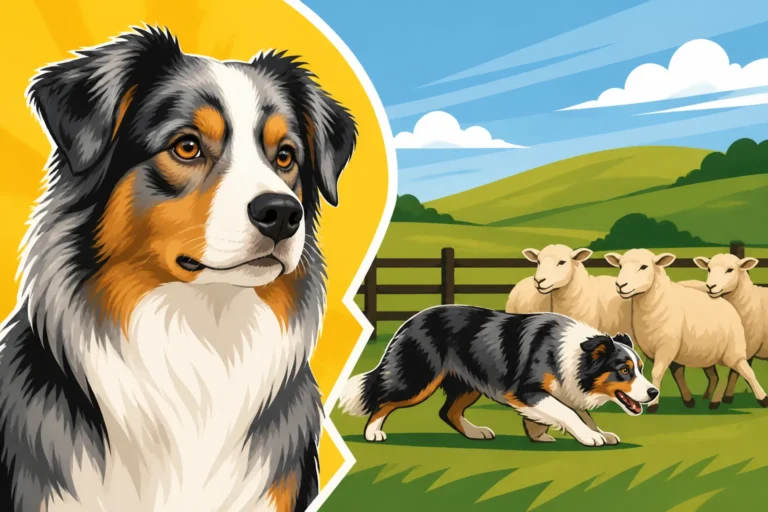
These early "shepherd dogs" were a diverse bunch, often a mix of various collie-type dogs, Pyrenean shepherds, and other European herding breeds. They were selected purely for their working ability, adapting to the harsh conditions and diverse livestock found in places like California, Oregon, and Nevada. Their appearance varied wildly; some were rough-coated, some smooth, with different ear sets and tail lengths. What united them was their innate drive and intelligence. Ranchers simply called them "shepherd dogs" or "California shepherds," with little regard for formal breed names. They needed a dog that could gather, drive, and protect, and these dogs delivered, adapting to the specific demands of the American landscape. You can learn more about their early influences in Where Aussie Ancestors Worked in California.
The Post-War Livestock Boom and Demand
The mid-20th century brought significant changes to American agriculture. Post-World War II, the demand for meat and other livestock products surged, leading to larger ranches and increased herd sizes. This economic shift created an even greater imperative for highly efficient working dogs. A dog that could handle both sheep and cattle, navigate varied terrain, and withstand the elements was invaluable. This wasn't just about one type of livestock; a good ranch dog needed to be versatile.
Ranchers were looking for dogs with specific characteristics: an intense, yet controllable, herding instinct, the stamina to work long days, and the intelligence to problem-solve on their own. They needed dogs that could work quietly with sheep, yet be tough enough to move stubborn cattle. They also needed dogs that were loyal and attentive to their handlers, capable of understanding subtle commands. This intense demand for functional working dogs created a strong selection pressure, favoring those canine traits that proved most effective and adaptable across different scenarios. This practical need laid the groundwork for the emerging Australian Shepherd, pushing breeders (both informal and formal) towards a more consistent and predictable working type.
The Rodeo Circuit and Public Prominence
While the American ranches were the breeding ground for the Australian Shepherd's working spirit, it was the lively and dramatic rodeo circuit that truly brought the emerging breed into the public eye and helped solidify its distinct type.
The Aussie's Rise to Fame in Rodeo Arenas
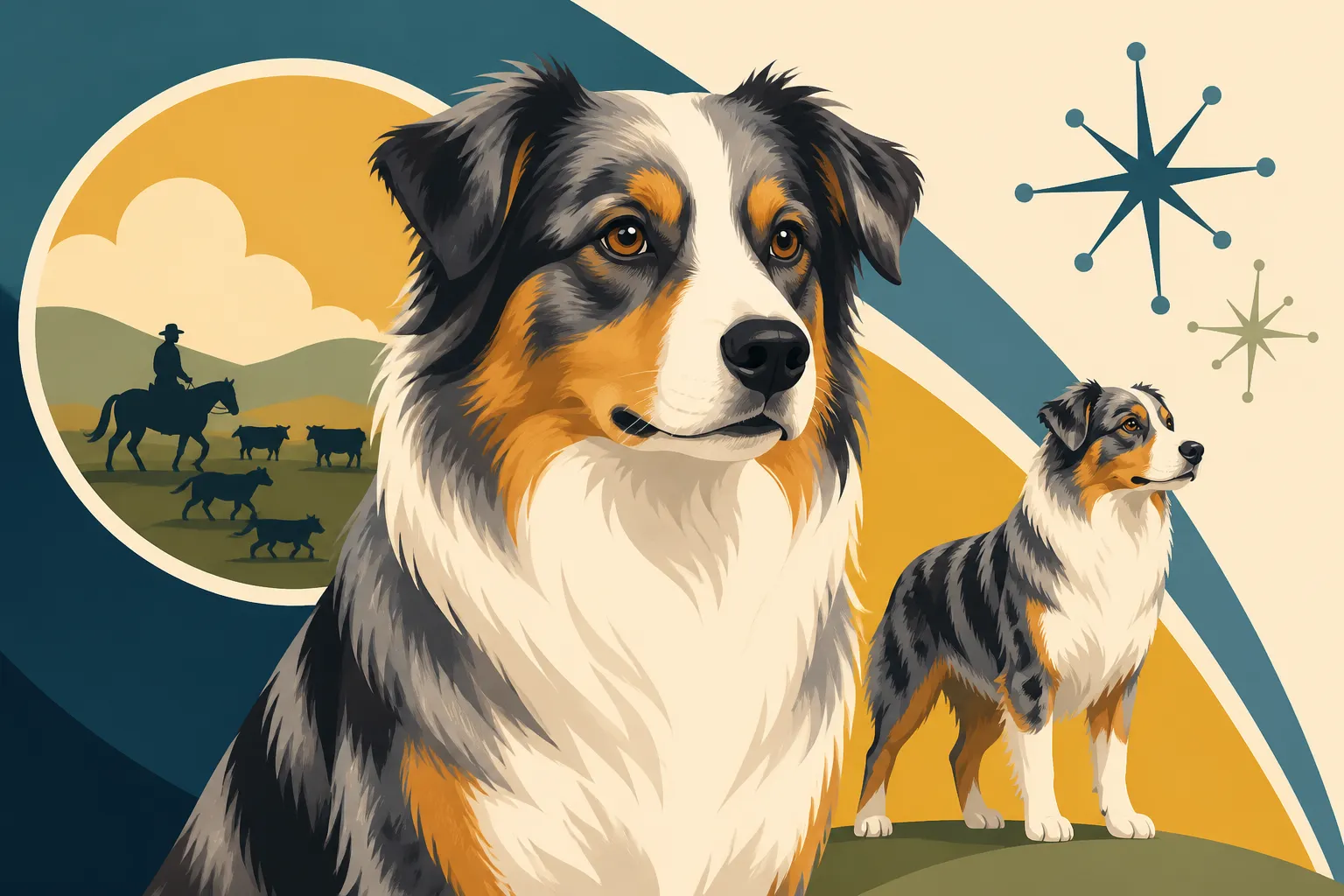
Before television became ubiquitous, rodeos were massive public spectacles, drawing crowds from all walks of life across the American West. These events weren't just about cowboys and broncos; they were also a showcase for incredible animal talent, and that included working dogs. It was in these dusty arenas, under the bright lights, that the "little blue dogs" and "red dogs" began to capture the imagination of the nation. People like Jay Sisler, a legendary cowboy and dog trainer, played a pivotal role. Sisler’s Australian Shepherds, like Shorty and Stub, performed astonishing tricks: jumping rope, walking tightropes, herding miniature horses, and even performing comedic skits. These dogs weren't just performing; they were demonstrating incredible intelligence, agility, and a profound bond with their handler.
The crowds were captivated. For many, this was their first encounter with such a versatile and talented dog. The performances highlighted not just their flash, but also their underlying herding ability, as many acts incorporated controlled demonstrations of livestock management. You can find more details on this aspect in Australian Shepherds in Rodeo Arenas and Aussie Trick Routines Between Rodeo Events. This exposure was critical; it showed the world what these dogs were capable of, moving them beyond mere ranch hands to genuine stars. This public adoration fueled interest and admiration, causing more people to seek out these unique dogs.
Shaping the Ideal "Type" for Versatility
The demands of the rodeo circuit, surprisingly, played a significant role in shaping the physical and behavioral "type" of the Australian Shepherd. For a dog to excel in a rodeo act, it needed more than just herding instinct; it required exceptional agility, boundless energy, and a keen willingness to learn complex commands and routines. This meant dogs that were athletic, structurally sound, and had an almost uncanny ability to focus on their handler amidst chaos.
Breeders, whether they were actively performing or simply supplying dogs to the rodeo circuit, began to select for these traits. The dogs needed to be sturdy enough to withstand the rigors of travel and performance, but agile enough to execute quick movements. Their coats had to be weather-resistant, as they often performed outdoors in various conditions. The characteristic "eye" and intense focus, so crucial for herding, also translated perfectly into the laser-like attention required for complex trick training. This era solidified the Australian Shepherd as a dog of remarkable versatility – equally adept at managing a herd of cattle and thrilling an arena full of spectators. This blend of practical working ability and showmanship became a hallmark of the emerging Aussie type by the 1950s, setting them apart from other purely utilitarian herding breeds.
Ranchers and Breeders Define the Standard
As the Australian Shepherd gained recognition through their indispensable work on ranches and their dazzling performances in rodeos, a more concerted effort began among dedicated ranchers and early breeders to refine and standardize the breed. This period was less about formal registries and more about cultivating a consistent, predictable "type" based on observed excellence.
Focusing on Functionality and Temperament
The core value of these dogs remained their working ability. Ranchers and thoughtful breeders understood that while flash was appealing, sustained functionality was paramount. Therefore, selective breeding focused heavily on temperament and innate working traits. They sought dogs with high intelligence, making them quick learners and adaptable problem-solvers on the range. Biddability, or the willingness to cooperate and take direction from a handler, was also highly prized, as an unruly herding dog could do more harm than good.
A strong "herding eye" – that intense gaze used to control livestock – was a defining characteristic, combined with a balanced herding style that could work both sheep and cattle effectively. This meant a dog that could apply pressure when needed but also back off, demonstrating control and finesse. Loyalty to their human family and a reserved nature with strangers also became important distinctions, reflecting their role as both working partners and watchful companions on isolated homesteads. You can delve deeper into what these early ranchers desired in What Ranchers Wanted From an Australian Shepherd. These qualities, honed over generations of practical application, formed the very foundation of the Australian Shepherd's mental and emotional makeup.
Physical Characteristics and Health Considerations
Alongside temperament, certain physical characteristics were naturally selected for, simply because they enhanced the dog's ability to perform its demanding job. A moderate size was ideal – large enough to be robust and command respect from livestock, but agile enough to maneuver quickly in tight spaces or over varied terrain. The double coat, a defining feature, provided essential protection against both the harsh winter cold and the scorching summer sun of the American West. Sound structure, including strong bones, well-angulated joints, and powerful muscles, was crucial for longevity in a dog that spent its life running, turning, and working. A dog with poor structure simply wouldn't last in this environment.
While formal genetic health testing was still decades away from becoming standard practice, astute breeders paid close attention to the health and vitality of their breeding stock. Dogs that remained sound and healthy well into their senior years were highly valued, as were those that produced robust, healthy offspring. Any dog that showed consistent lameness or illness would likely be culled from a breeding program, simply because a sick or injured dog was a liability on a working ranch. This practical, observational approach to health inadvertently shaped a physically resilient breed.
The table below illustrates some of the key shifts in what was valued as the "Australian Shepherd type" began to solidify:
| Feature | Pre-1950s "Shepherd Dog" | 1950s "Australian Shepherd" Emerging Type |
|---|---|---|
| Appearance Uniformity | Highly variable, mixed breeds | More consistent, recognizable look |
| Primary Focus | Purely utilitarian work dog | Versatile worker & performance dog |
| Herding Style | Diverse, specific to region/stock | Balanced, adaptable to various livestock |
| Public Recognition | Limited to ranching communities | Gaining fame through rodeos |
| Temperament | Hard-working, sometimes independent | Intelligent, biddable, loyal, reserved |
| Physical Build | Varies widely, often robust | Moderate size, agile, sound structure |
| Coat Type | Any functional coat | Distinct double coat, moderate length |
The 1950s: A Recognizable Breed Emerges
By the close of the 1950s, the dedicated efforts of working ranchers, rodeo performers, and early enthusiasts had firmly established a recognizable "type" that was consistently referred to as the Australian Shepherd. This decade marked the true birth of the breed as we largely know it today.
Solidification of "Australian Shepherd" Identity
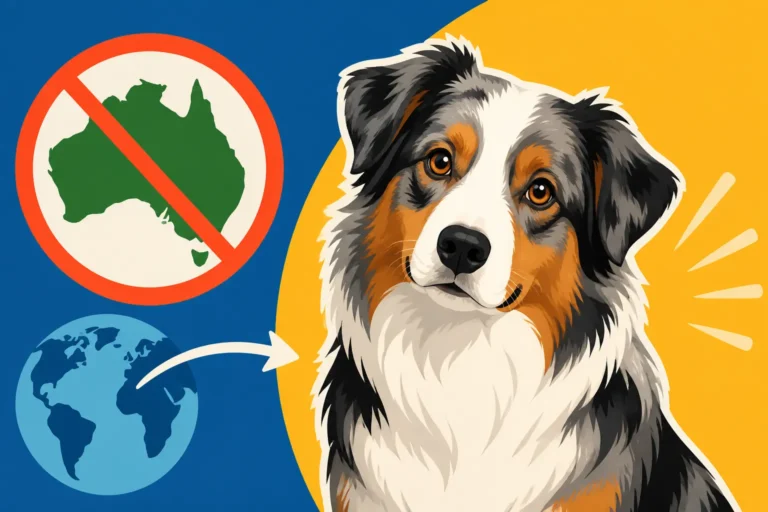
The name itself, "Australian Shepherd," despite the dogs having no actual lineage from Australia (they were developed solely in the American West!), had stuck. It's often thought to be because some of the sheep they herded in the US were imported from Australia, accompanied by their own dogs, leading to a natural, if geographically inaccurate, association. Regardless of the origin of the name, the consistency in the dogs' characteristics became undeniable. Whether you saw them working a ranch in Colorado, performing tricks at a rodeo in California, or even in advertisements of the era (perhaps for something as everyday as feed from a company like Chewy), there was a shared understanding of what an Australian Shepherd looked like and how it behaved.
The distinct combination of traits—the strong herding instinct, the striking merle patterns, the intense gaze, and that undeniable drive—set them apart from other working dogs. This wasn't just a collection of various farm dogs anymore; it was a breed with its own identity, forged through hard work and shared experience across the American landscape. The stories of their prowess spread far and wide, fueled by their growing visibility. You can see how this widespread recognition started with How Rodeo Fame Spread the Aussie Nationwide. It was a testament to their exceptional abilities that such a distinct type emerged without the benefit of formal breed clubs or standardized pedigrees in their earliest days.
Early Breed Clubs and Pedigrees
With a distinct "type" solidified, the natural next step was to preserve and promote it. The 1950s saw the informal beginnings of what would become more structured breed clubs and registries. Enthusiasts, captivated by the Australian Shepherd's capabilities and unique charm, began to band together. They started documenting pedigrees, even if initially quite basic, to track successful working lines and ensure desirable traits were passed on. This was a grassroots effort, driven by a genuine passion for the breed.
These early groups were focused on maintaining the breed's working integrity. While appearance was becoming more uniform, the priority remained on preserving the intelligence, biddability, and herding instinct that made the Australian Shepherd so valuable. They shared knowledge, discussed breeding practices, and sought to create a more consistent genetic pool. Over time, these informal gatherings evolved into organizations like the Australian Shepherd Club of America (ASCA), which would formally establish a breed standard and registry in the years to follow, building directly upon the foundational work done by these dedicated pioneers in the 1950s. The dogs that became the bedrock of these early official lines were precisely those whose "type" had settled during this pivotal decade. Many of these foundational kennels, often family-run operations, contributed significantly to the Australian Shepherd’s legacy, as explored further in The Kennels That Founded American Aussie Lines.
In fact, if you're looking for dog supplies today, whether it's quality food for your active Aussie or a sturdy leash for herding practice, a store like Chewy often highlights products designed for breeds with high energy and specific nutritional needs, a direct result of the characteristics established in this era. The journey from a disparate group of working dogs to the beloved Australian Shepherd we know today is a testament to the vision and dedication of those who shaped its type in the mid-20th century. Their legacy continues to influence breeding decisions, training methodologies, and even the types of products, from kibble to toys, we consider for our own Australian Shepherds today, available through retailers like Chewy.
Disclaimer
This article is for general informational purposes only and does not constitute professional advice. Laws, prices and regulations vary by location and change over time. Consult a qualified professional for guidance on your specific situation.