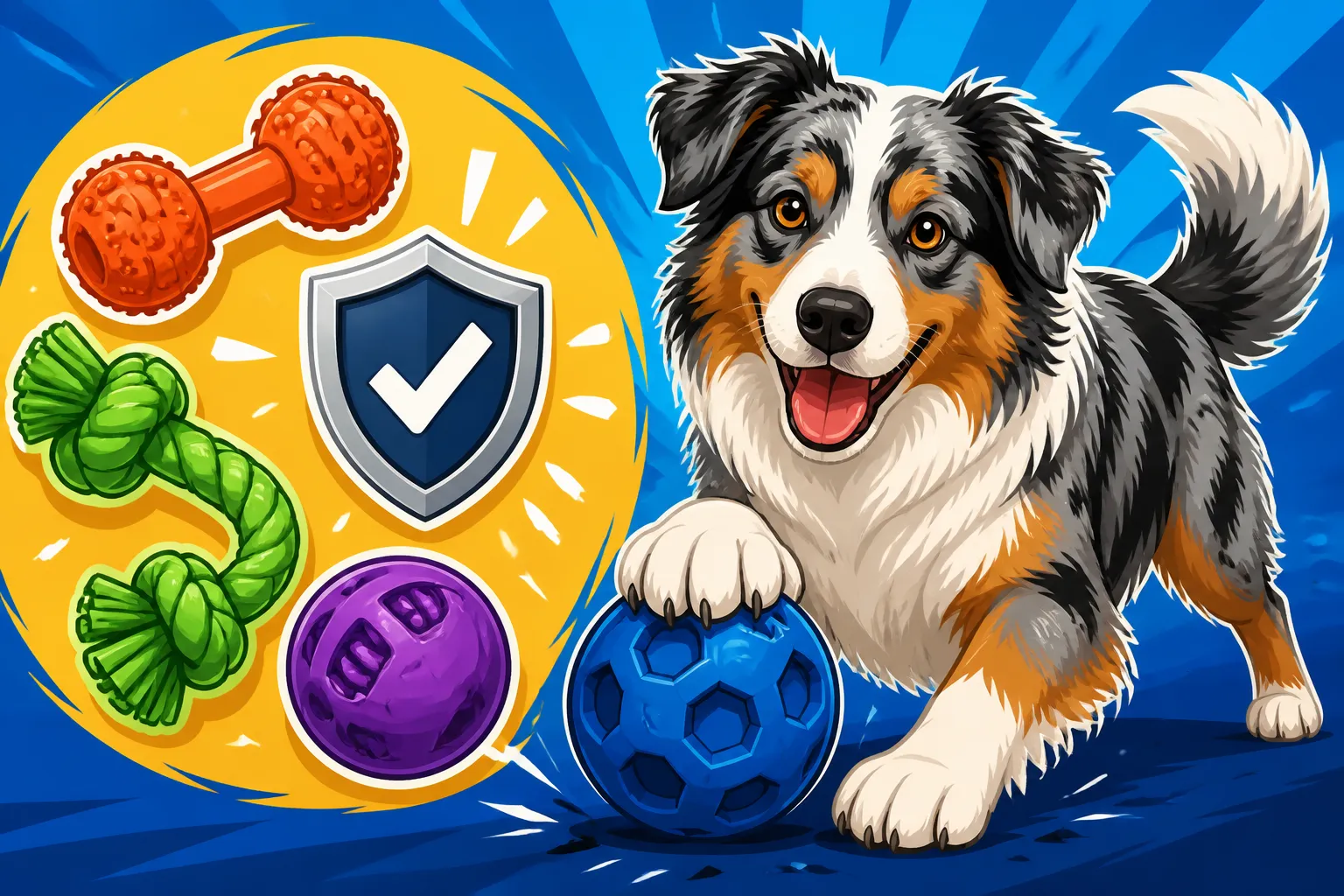
Toys That Survive an Australian Shepherd
If you’ve ever come home to a shredded "durable" toy, a cascade of stuffing across the living room, or found a once-beloved squeaker now residing in a million tiny pieces, you know the unique frustration of owning an Australian Shepherd. These brilliant, high-drive dogs aren't just powerful chewers; they're problem-solvers who see a toy as a challenge to be conquered. This guide will walk you through understanding your Aussie's destructive tendencies and, more importantly, finding toys that can actually stand up to their intelligence and enthusiasm.
Understanding the Australian Shepherd's Play Style
It’s easy to feel like your Aussie is just being naughty when they annihilate yet another toy, but understanding why they do it is the first step toward finding suitable replacements. Their play isn’t simply about destructive chewing; it's deeply rooted in their breed characteristics and innate drives.
The Instinct to Destruct: Herding Drive and Jaws
Australian Shepherds were bred for intense work, herding livestock, often over vast distances and varied terrain. This means they possess incredible physical stamina, sharp intelligence, and a remarkable ability to focus on a task. Part of this drive manifests in their play. They don't just chew; they dissect, deconstruct, and problem-solve. When you give an Aussie a stuffed toy, they often see it as something to be "rounded up" and broken down, much like they might try to control a wayward sheep.
Their jaws are strong, capable of holding onto and manipulating animals much larger than themselves. This strength, combined with a persistent nature, means flimsy toys stand no chance. Many Aussies approach toys with the same intensity they’d apply to a herding job – they want to get to the core, to figure out how it works, and ultimately, to "kill" it. This isn't aggression; it's a display of their inherent drive and powerful chewing capabilities. For many Aussies, that satisfying ripping and tearing is a job well done.
Intelligence and Boredom: The Roots of Destruction
Beyond physical strength, Australian Shepherds are incredibly intelligent dogs. They thrive on mental stimulation, and a bored Aussie is often a destructive Aussie. If their minds aren't engaged, they will find ways to entertain themselves, and often, that means taking apart your belongings or their own toys. A toy that offers no mental challenge quickly becomes a casualty of boredom.
Imagine an Aussie who has had all their physical exercise but nothing to make their brain work. They might lie down, seeming calm, but their mind is still whirring. A squeaky toy might hold their attention for a moment, but if it doesn't require problem-solving, it swiftly becomes a target for destruction. This is why you'll often see them systematically removing squeakers, pulling out stuffing, or finding the weak points in a seemingly tough toy. It’s their way of making the toy interesting, even if the end result is a mess. It’s not malicious; it's simply an intelligent, under-stimulated dog finding a "job."
Not Just Chewing: The Disassembly Process
For an Australian Shepherd, destroying a toy isn't just about the act of chewing; it's often a meticulous process of disassembly. They might start by finding a seam, then systematically unstitching it. Or they’ll zero in on an attachment, like an ear or a tail, and work diligently to detach it. This methodical approach is a hallmark of their intelligence and problem-solving skills. It’s akin to watching a child take apart a new gadget to see how it works inside, only with more slobber and significantly sharper teeth.
This makes "indestructible" claims on many toys laughably short-lived for an Aussie owner. What might withstand a casual chewer often becomes a puzzle for an Australian Shepherd to unravel. It's less about raw power and more about strategic engagement. They learn quickly which materials give way, which seams are weak, and how to get to the most satisfying parts. This is why variety in toys, and truly robust materials, becomes so important. You’re not just looking for a chew toy; you’re looking for something that can withstand a canine engineer.
Types of Durable Toys for Aussies
When it comes to toys that can actually survive an Australian Shepherd, you need to think beyond your average pet store offerings. We're talking about heavy-duty, thoughtfully designed items built to withstand powerful jaws and determined minds. The key is often in the material and the intended function of the toy.
Heavy-Duty Rubber Chew Toys
These are often the first line of defense against an Aussie's powerful jaws, and for good reason. High-quality rubber toys, made from dense, natural rubber, are incredibly resilient. Brands like Kong, particularly their classic black extreme line, are practically legendary among owners of strong chewers. These aren't the squishy, brightly colored rubber toys meant for puppies; they are hard, almost rigid, and designed to flex rather than break.
The beauty of these toys is their versatility. Many are hollow, allowing you to stuff them with treats, peanut butter, or even their kibble, transforming them into a long-lasting mental exercise. An Aussie will spend a significant amount of time trying to extract every last crumb, providing valuable mental stimulation while also satisfying their natural urge to chew. Look for options made from veterinary-grade rubber, which tend to be non-toxic and more durable. The weight and thickness of the rubber are key indicators of its longevity. A good quality rubber toy should feel substantial in your hand.
Virtually Indestructible Tug and Fetch Toys
For an Australian Shepherd, fetch and tug-of-war aren't just games; they're an outlet for their prey drive, energy, and desire to "work" with you. Many standard tug ropes and tennis balls are no match for an Aussie's enthusiasm. You need toys specifically designed for intense physical interaction.
When it comes to tug, look for materials like fire hose, industrial-grade nylon, or reinforced rubber. Some brands use tough, multi-layered fabrics with strong stitching that can withstand repeated pulling and shaking. Avoid traditional braided cotton ropes, as Aussies often unravel them and ingest the strands, which can lead to serious digestive issues. For fetch, traditional tennis balls are often shredded in minutes. Instead, opt for solid rubber balls (like those from Chuckit! or GoughNuts) that are too dense to collapse and too tough to tear. Some are even designed to float, making them great for Aussies who enjoy swimming, and some can even be bought in bulk from retailers like Chewy, ensuring you always have a fresh supply. The aim is to find toys that are solid, difficult to get a purchase on for tearing, and resilient to repetitive impact and strong grip. If your Aussie enjoys retrieving, consider toys like those from West Paw's Zogoflex line, which are often guaranteed for durability.
Interactive Puzzle Toys for Mental Engagement
As discussed, an Australian Shepherd's intelligence is a double-edged sword: it makes them wonderful companions but also prone to boredom if not adequately challenged. This is where interactive puzzle toys become invaluable. These aren't just chew toys; they're tools designed to make your Aussie think.
Puzzle toys come in various forms, from treat-dispensing labyrinths that require pushing and nudging to get food out, to complex multi-step puzzles where compartments must be opened in a specific sequence. They capitalize on an Aussie's natural problem-solving abilities and provide a productive outlet for their mental energy. Some excellent options include those by Nina Ottosson (now part of Outward Hound), which offer different levels of difficulty. By making your Aussie work for their food or treats, these toys can significantly reduce boredom-induced destruction. Remember, mental work is just as tiring as physical exercise for an Aussie. A good 20-minute puzzle session can sometimes be as exhausting as a long walk. Just be sure to supervise, especially initially, to ensure your Aussie learns to solve the puzzle rather than trying to chew through it.
| Toy Type | Best For | Material Examples | Pros | Cons |
|---|---|---|---|---|
| Heavy-Duty Rubber Chews | Satisfying strong chewing, mental stimulation | Natural rubber, Kong Extreme | Extremely durable, non-toxic, often stuffable with treats | Can be expensive, some dogs lose interest if not stuffed |
| Tug/Fetch Toys (Hard) | High-energy play, impulse control, retrieve | Solid rubber, fire hose, nylon | Withstands powerful pulling and impact, good for bonding | Can be hard on teeth if used improperly, limited solo play |
| Interactive Puzzle Toys | Mental stimulation, boredom busting | Hard plastic, wood, durable rubber | Engages intellect, slows down eating, reduces destructive habits | Supervision often required, can still be chewed if not solved |
| Durable Plush/Knot Toys | Comfort, gentle play (rarely survive Aussies) | Reinforced canvas, heavy-duty stitching | Softer feel, often squeakers (though usually removed quickly) | Almost always destroyed eventually, not for power chewers |
Choosing the Right Toy for Your Aussie's Needs
Selecting the perfect toy for your Australian Shepherd isn't a one-size-fits-all endeavor. What works for one Aussie might be shredded in moments by another. It requires a bit of trial and error, paying close attention to your dog's individual play style, size, and preferences.
Matching Toy Size and Strength to Your Aussie
This is perhaps the most crucial factor in toy selection. A toy that is too small poses a significant choking hazard, as an Aussie’s strong jaws can easily get a grip and swallow it whole. Conversely, a toy that is too large or too heavy might not be appealing or manageable for them to play with effectively.
Always choose toys that are appropriately sized for your Australian Shepherd's mouth and jaw strength. For example, if your Aussie is a super chewer, you'll need toys specifically labeled "extra durable" or "for power chewers." Consider the width of the toy – can they get their entire mouth around it comfortably without it being small enough to fit down their throat? Many durable rubber toys come in different sizes, from medium to extra-large, to accommodate various breeds. Don't underestimate your Aussie's strength; always err on the side of larger and tougher. Even a slight mismatch in size or material can mean the difference between a toy that lasts for months and one that lasts for minutes.
Considering Age and Developmental Stage
An Australian Shepherd's play style and toy preferences can change dramatically as they grow from a puppy into an adult and then into their senior years.
- Puppies: Young Australian Shepherds have needle-sharp puppy teeth and an intense urge to chew, especially during teething. However, their jaws aren't yet as strong as an adult's. Toys should be durable enough to withstand sharp teeth but soft enough not to damage their developing jaws. Teething rings, softer rubber chews (still durable, but not the extreme versions yet), and puzzle toys filled with frozen puppy-safe treats are excellent choices. During this stage, preventing them from developing habits like Australian Shepherd Puppy Biting and Herding Nips is vital, and appropriate chew toys are a great redirect.
- Adolescents/Adults: This is typically when an Aussie's chewing power is at its peak. Their adult teeth are in, their jaws are strong, and their drive is high. This is the prime time for those "virtually indestructible" rubber chews, tough tug toys, and advanced puzzle feeders. They need toys that can withstand constant gnawing and provide significant mental challenge.
- Seniors: As Aussies age, their teeth might become more sensitive or worn, and their energy levels may decrease. They might still enjoy a good chew or a puzzle, but less intense options may be more appropriate. Softer rubber chews, gentler tug toys, and easier-to-solve puzzles can still provide enrichment without causing discomfort. Monitoring their dental health is crucial during these years; regular Australian Shepherd Dental Care helps ensure they can continue to enjoy appropriate chew toys.
Tailoring Toys to Specific Play Preferences
Every Australian Shepherd is an individual, and while they share common breed traits, their specific play preferences will vary. Does your Aussie love to:
- Chew relentlessly? Focus on solid, heavy-duty rubber chews.
- Fetch for hours? Invest in virtually indestructible rubber balls or durable frisbees designed for dogs, rather than cheap plastic ones.
- Disassemble things? Lean heavily into interactive puzzle toys that challenge their brain, or strong fabric toys specifically designed with multiple layers and reinforced stitching that provide a satisfying "tear" without being easily destroyed.
- Tug-of-war? Choose long, strong tug ropes or rubber tugs that give both you and your Aussie a good grip.
- Scent work? Use snuffle mats or treat-dispensing toys to engage their nose. This aligns with Mental Work That Actually Tires an Australian Shepherd.
Observe your Aussie carefully. Do they lose interest in a toy quickly? Do they prefer to carry a toy around rather than chew it? Do they ignore soft toys in favor of hard ones? Their behavior will tell you a lot about what kind of toy will be most engaging and, therefore, most likely to survive their attention. Some Aussies might even appreciate the texture of a real antler or a sturdy Benebone, while others prefer the bounce of a ball.
Beyond Durability: The Importance of Mental Stimulation
While finding toys that survive is critical, we must remember that an Australian Shepherd’s needs go far beyond just physical chewing. These intelligent, driven dogs require significant mental engagement. If you only provide durable chew toys, you're missing a huge opportunity to enrich their lives and prevent boredom-driven destruction.
Engaging the Aussie Brain with Puzzle Toys
Australian Shepherds thrive on having a job to do. When they don't have one, they often invent their own, which can manifest as barking, destructive chewing, or even herding children or furniture. Puzzle toys are a fantastic way to give their minds a workout and redirect that intense problem-solving drive. These toys aren't just about dispensing food; they're about teaching your Aussie patience, persistence, and strategic thinking.
Think about a Kong Wobbler, where your Aussie has to nudge and paw it to get kibble to fall out. Or a more complex feeder like the Trixie brand's dog activity toys, which involve sliding panels and lifting cones. These challenge an Aussie to figure out cause and effect, to learn sequences, and to engage their natural curiosity. Regular engagement with puzzle toys helps exhaust their minds in a way that physical exercise alone often can’t. This is why Why Physical Exercise Alone Never Settles an An Aussie is so true for this breed; their brains need a job too. Moreover, if your Aussie tends to bolt their food, puzzle feeders can help slow down their eating, which is beneficial for digestion.
The Role of Scent Work and Foraging Toys
An Australian Shepherd's nose is a powerful tool, often overlooked in day-to-day play. Engaging their sense of smell through scent work and foraging toys is incredibly mentally stimulating and deeply satisfying for them. It taps into their natural instincts to hunt and track, even if it's just for their dinner.
Snuffle mats are simple but highly effective foraging toys. You hide kibble or small treats deep within the fabric strips, and your Aussie has to sniff them out. This activity is surprisingly tiring for dogs, as using their nose requires immense concentration. You can also use treat-dispensing balls that require rolling or nudging to release kibble. Even simpler, hide treats around the house and encourage your Aussie to "find it." This type of activity is not only mentally enriching but also builds confidence and focus. Foraging for food makes mealtime an exciting game rather than just a routine, and it utilizes a sensory input that is often under-utilized in domestic life. Using Puzzle Feeders and Enrichment Gear for an Aussie can turn a routine meal into an exciting challenge.
Balancing Physical and Mental Play
The ideal enrichment plan for an Australian Shepherd involves a healthy balance of both physical exercise and mental stimulation. Providing only physical outlets, like endless games of fetch, can actually create an "athlete" Aussie who is physically fit but still mentally restless and prone to destructive behavior indoors. Conversely, too much mental work without enough physical release can also lead to frustration.
A balanced day might look like this: a vigorous walk or run in the morning, followed by a quiet puzzle toy session. In the afternoon, some training practice or a game of fetch, capped off with some scent work before dinner. This combination addresses all facets of their drive – the physical, the mental, and the instinctual. It helps channel their boundless energy and intelligence into productive, satisfying activities, making them calmer and happier companions. Without this balance, even the most durable toy in the world will eventually fall victim to an Aussie desperate for something more engaging to do. Finding this balance is key to The Cost of Keeping a High-Energy Australian Shepherd Busy in a healthy and sustainable way.
Safety First: What to Avoid in Aussie Toys
Even with the best intentions, choosing the wrong toy can lead to serious health issues for your Australian Shepherd. Their powerful jaws and determined chewing mean that what's safe for a smaller, less intense dog might be a significant hazard for an Aussie. Prioritizing safety is paramount.
Recognizing Choking Hazards and Ingestible Parts
Any toy that can be broken into pieces small enough to be swallowed presents a choking hazard or, at the very least, a risk of intestinal blockage. Australian Shepherds are experts at finding and exploiting weak points in toys. This means:
- Soft plush toys: While cute, these are often an Aussie's arch-nemesis. Stuffing, squeakers, plastic eyes, and small limbs are all prime targets for removal and ingestion. That seemingly innocuous squeaker can quickly become lodged in a windpipe or cause an obstruction further down the digestive tract.
- Toys with small attachments: Buttons, ribbons, bells, or decorative elements can be easily chewed off and swallowed.
- Thin plastic or rawhide: These materials can splinter or break into sharp pieces that can damage the esophagus or intestines. Rawhide, in particular, can swell in the stomach and become almost impossible to pass.
- "Chew-resistant" fabric toys: Many fabric toys are marketed as durable, but if they're made of woven material, an Aussie can often unravel threads. These threads, if ingested, can cause a linear foreign body, which is a very dangerous type of obstruction requiring emergency surgery. This is why it's safer to avoid rope toys for power chewers.
Always inspect toys regularly for wear and tear. If a toy starts to break apart, has loose pieces, or shows significant damage, it's time to retire it. When in doubt, throw it out. Investing in a high-quality pet insurance plan from a provider like Healthy Paws can give you peace of mind, but preventing these incidents is always the best approach.
Steering Clear of Toxic Materials and Coatings
Just as important as structural integrity is the chemical composition of a toy. Many mass-produced pet toys, especially cheaper ones, can contain harmful chemicals, dyes, and coatings that are not safe for ingestion. When your Aussie is gnawing on a toy for hours, they are inevitably ingesting tiny particles of it.
Look for toys made from:
- Food-grade or medical-grade rubber: These are generally considered safe and non-toxic.
- BPA-free plastics: If you're buying plastic puzzle toys, ensure they are free from harmful phthalates and BPA.
- Natural, untreated materials: For wooden chews (ensure they are dog-safe wood and not splintering) or antlers, make sure they are natural and haven't been treated with varnishes or chemicals.
Always check the product description for safety certifications or explicit statements about non-toxic materials. Reputable brands are usually transparent about what their toys are made of. If a toy has a strong chemical smell, it's best to avoid it. Your Aussie's health depends on the safety of the items they interact with daily.
The Dangers of "Soft" Chew Toys
While some soft chews like dental sticks or edible bones are fine for a supervised snack, many soft rubber or plastic chew toys marketed as "chews" are simply not robust enough for an Australian Shepherd. These often fall into a dangerous middle ground: too soft to truly last, but hard enough to break off into ingestible chunks.
For an Aussie, a "soft" chew toy becomes a game of swift destruction. They'll quickly tear through it, potentially swallowing large, soft pieces that can still cause digestive upset or blockages. Instead, opt for the firmest, densest rubber options available. Think of it this way: if you can easily bend or squish the toy in your hand, your Aussie will likely make short work of it. The goal is to provide a challenge, not an easily dismantled snack. When your Australian Shepherd is home, they should always have appropriate, durable chew toys available, not those that pose a risk.
Making Toys Last Longer
Even the most robust toys won't last forever, especially with a determined Australian Shepherd. However, there are strategies you can employ to maximize their lifespan, keep your Aussie engaged, and ensure your investment goes further.
Implementing a Toy Rotation System
One of the simplest yet most effective ways to make toys last longer and keep your Australian Shepherd interested is to implement a toy rotation system. Imagine having access to the same three toys every single day, year after year. Even the most exciting toy would eventually become boring, right? For an intelligent Aussie, novelty is key.
Instead of leaving all their toys out all the time, divide them into groups. Keep one group accessible for a few days or a week, then put those away and bring out a different group. This makes old toys feel new again when they reappear. It also prevents your Aussie from becoming overly fixated on one toy and wearing it out prematurely. For instance, you might have a "puzzle toy" day, a "fetch and tug" day, and a "heavy chew" day. This ensures a varied mental and physical workout and keeps their interest piqued. Plus, if you spot a toy starting to show wear, you can pull it out of rotation for inspection or repair before it becomes a hazard. This also gives you a chance to thoroughly clean the toys before they go back into circulation.
Supervision and Knowing When to Retire a Toy
No matter how durable a toy claims to be, consistent supervision is always the best policy. This is especially true when introducing a new toy or if your Aussie is a known "toy destroyer." Watch how they interact with the toy. Are they simply chewing, or are they trying to tear pieces off? Are they ingesting parts?
- Active Supervision: When your Aussie is intensely focused on a new chew or puzzle toy, stay nearby. If you see them beginning to break off pieces, redirect them to a different, more appropriate toy, or remove the toy altogether.
- Regular Inspection: Make it a habit to inspect all of your Aussie's toys regularly. Look for:
- Cracks or splits in rubber toys.
- Loose threads or holes in fabric toys.
- Missing pieces on puzzle toys.
- Sharp edges where plastic or rubber has been chewed through.
- Any signs that the toy is no longer structurally sound.
If a toy is compromised, it's time to retire it. Don't try to stretch its life; the potential cost of a vet visit for an ingested foreign body far outweighs the price of a new toy. Some owners mistakenly think a slightly broken toy is still fine, but a small crack can quickly become a large break, leading to ingestion.
Proper Cleaning and Maintenance
Just like anything else, proper care can extend the life of your Aussie's toys and, importantly, keep them hygienic. Toys collect slobber, dirt, and bacteria, especially if they're used outdoors or stuffed with food.
- Regular Washing: Most hard rubber and plastic toys can be washed with warm, soapy water or even run through the dishwasher (check manufacturer instructions). For fabric toys, many are machine washable on a gentle cycle. Use pet-safe detergents if washing by hand, or just plain hot water for rubber toys.
- Drying: Ensure toys are thoroughly dry before returning them to your Aussie, especially stuffed or fabric toys, to prevent mold and mildew.
- Storage: Store rotated toys in a clean, dry place. If you have a particularly slobbery chewer, you might even consider rotating toys more frequently to allow for regular cleaning.
- Repair vs. Replace: For some minor damage, like a loose seam on a high-quality fabric toy, a quick repair might be possible. However, if the structural integrity of the toy is compromised, or if it's a hard chew toy with a significant crack, replacement is almost always the safer option.
By taking these steps, you not only make your investment in durable toys last longer but also ensure that your Australian Shepherd always has access to clean, safe, and engaging playthings.
Disclaimer
This article is for general informational purposes only and does not constitute professional advice. Laws, prices and regulations vary by location and change over time. Consult a qualified professional for guidance on your specific situation.