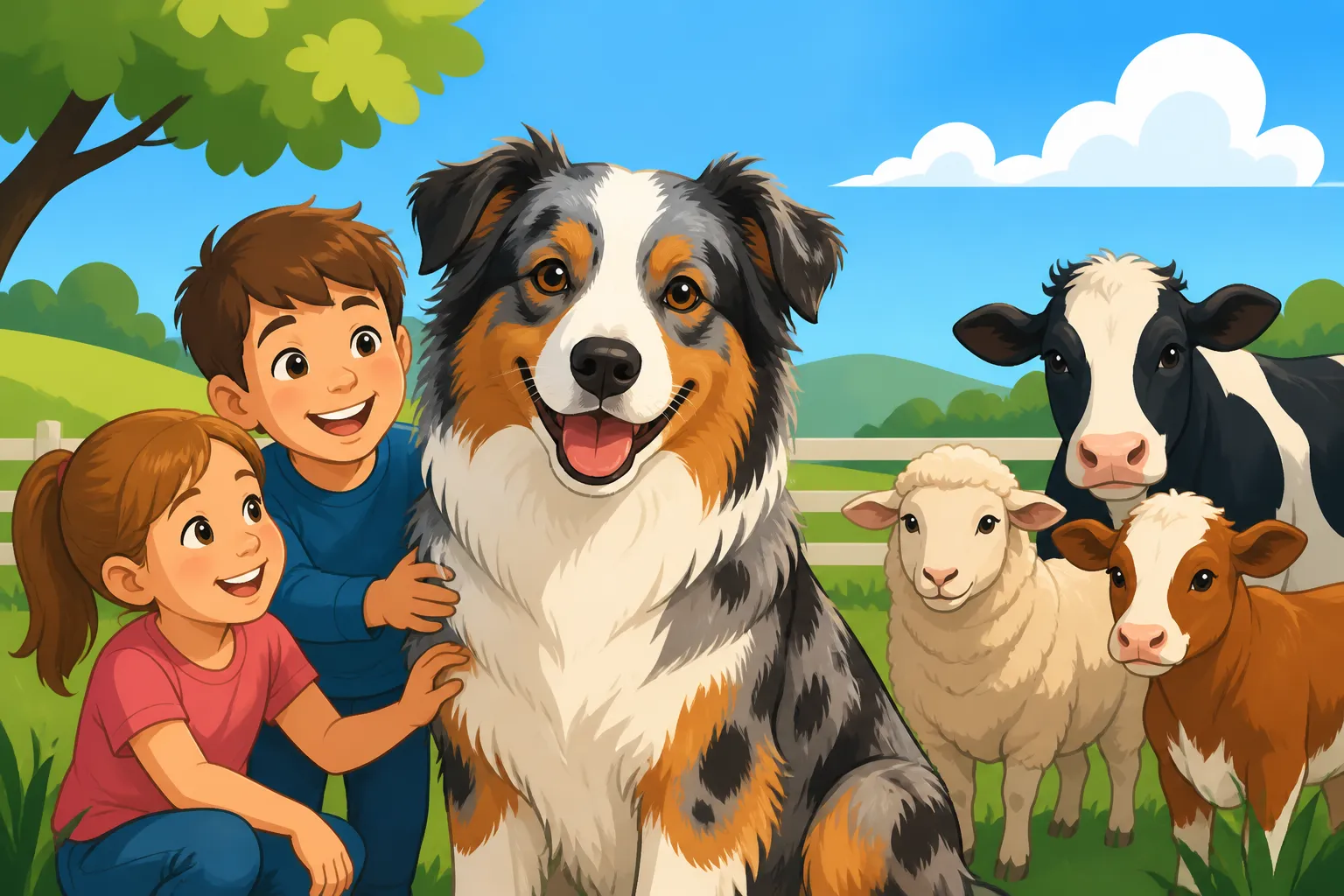
Australian Shepherds With Children and Livestock
Many Australian Shepherd owners find themselves in a unique bind: they adore their intelligent, energetic companions, but quickly realize that the very traits that make Aussies so special – their intense herding drive and boundless energy – can become challenging when living alongside small children or other animals, especially livestock. It’s a common frustration to see your beloved Aussie "organizing" the kids in the yard or trying to move the family cat, leaving you wondering if a peaceful coexistence is even possible. This guide will delve deep into the Australian Shepherd's natural instincts and offer practical strategies to help your Aussie integrate safely and happily into a household that includes both young humans and various farm animals.
Understanding the Australian Shepherd's Innate Herding Drive
Let’s be honest: an Australian Shepherd without a strong herding drive is a bit like a fish that doesn't swim. It's simply fundamental to who they are. This isn't a quirk or a bad habit; it's thousands of years of selective breeding for a very specific job. These dogs were developed to gather, move, and protect livestock, and that instinct is deeply ingrained in their DNA, no matter if they're a working ranch dog or a beloved family pet in the suburbs. You can read more about Why Herding Instinct Is the Aussie Operating System.
The Core of Their Being: Instinctual Behaviors
When an Australian Shepherd sees something move, especially something small, fast, or chaotic, their brain lights up with ancestral programming. They don't think, "Oh, that's my kid playing tag." They think, "That's a sheep trying to break from the flock, and it needs to be gathered." This can manifest in various ways, from circling and staring to nudging and, yes, even nipping at heels. It's not aggression; it's simply their brain telling them to work. They're hardwired for this, and it’s important for owners to understand that it’s not something you can just train out of them entirely. Instead, you learn to manage and redirect it.
This inherent drive means that situations we consider normal family fun, like kids running and screaming during a game, can trigger intense herding responses. Similarly, a flock of chickens or a pen of goats isn't just a picturesque farm scene to an Aussie; it's a job waiting to happen. Recognizing that this behavior stems from instinct, rather than defiance, is the first crucial step in effectively addressing it. It helps us approach training with empathy and realistic expectations, understanding that we're working with their nature, not against it.
The Herding "Language" of an Aussie
Australian Shepherds communicate their herding intentions through a fascinating repertoire of body language. They might drop into a low crouch, often called "the eye," where they fix their gaze intensely on their target, shoulders slightly lowered, ready to spring. This is their way of saying, "I'm about to move you." You'll also see them circling, trying to get behind the "flock" (be it children or sheep) to push them forward or gather them. Sometimes, they'll weave between legs, or even use a gentle bump with their nose or shoulder to direct movement.
When the target doesn't respond as a sheep would – by moving in the desired direction – the Aussie might escalate. This could involve a sharp bark to startle, or a quick, almost imperceptible nip at the heels or ankles. This heel-nipping is a classic herding technique, meant to get stubborn livestock moving. It’s not done out of malice, but pure instinct. For children, this can be frightening and painful, and for livestock, it can cause stress or even injury if not managed. Understanding these signals allows you to intervene before the behavior escalates, giving you a chance to redirect their focus or provide an appropriate outlet.
Australian Shepherds and Children: Finding Harmony
Bringing an Australian Shepherd into a home with children, or having children arrive into an Aussie's life, requires careful planning and consistent management. The energetic, often chaotic nature of children can be a direct trigger for an Aussie's herding instincts. The key isn't to suppress their nature, but to teach them appropriate boundaries and provide alternative outlets for their drive.
Managing the Herding Instinct Towards Kids
The challenge with Aussies and kids often centers on those natural herding behaviors. When kids are running, yelling, or playing wildly, an Aussie's instinct can kick in, leading them to try and "herd" the children. This can manifest as circling, nudging, or even nipping at pant legs or ankles. It's rarely aggressive, but it can certainly be alarming and painful for a child. This is where understanding their inherent drive, as discussed in An Australian Shepherd Herding Children in the Yard, becomes vital.
A crucial strategy is prevention. Supervised interactions are paramount, especially when children are very young or prone to high-energy play. If your Aussie starts to show signs of intense focus on the kids – the "eye," a low crouch, or circling – it's time to interrupt and redirect. This might mean calling your dog away for a quick game of tug with a designated toy, or asking them to perform a known command like "settle" on a mat. Providing a strong verbal cue or a reliable recall, learned through consistent training, is invaluable in these moments. The goal is to teach your Aussie that children are not something to be herded, but rather part of the family "flock" that they protect, not manage.
Teaching Safe Interactions and Boundaries
Beyond preventing herding, it's essential to actively teach both your Aussie and your children how to interact safely and respectfully. For your dog, this means establishing clear boundaries. Teach them a "place" command, where they go to a specific mat or bed and stay there, especially during children's playtimes or when the energy level in the house gets high. Reward them generously for calmly observing the children without attempting to engage in herding. Mat Settle Training for a Restless Aussie can be incredibly helpful here.
For children, education is just as important. Teach them not to run screaming past the dog, not to tease or poke, and not to invade the dog's personal space when it's resting. Supervise all interactions, showing children how to pet gently and calmly. Consider enrolling in a positive reinforcement training class for both your dog and, if age-appropriate, your children. This can help build a foundation of mutual respect and understanding. Never leave an Australian Shepherd unsupervised with very young children, no matter how trustworthy you believe your dog to be, as instincts can sometimes override learned behaviors in unexpected moments.
Australian Shepherds and Livestock: Respecting the Role
Australian Shepherds were, and often still are, bred for their ability to work livestock. This means that their presence around sheep, cattle, goats, or even poultry is a very different dynamic than with children. While their instinct is to work, not all Aussies are suitable for every type of livestock, and some may need significant training to safely and effectively interact.
Working Instincts Around Farm Animals
For an Australian Shepherd, livestock represent their ultimate purpose. Their entire being is geared towards moving and controlling animals. This instinct is incredibly powerful, and it’s why Aussies are so prized on ranches. However, this also means that without proper training and guidance, an untrained Aussie can be a nightmare on a farm. They might chase, harass, or even injure livestock in their overzealous attempts to "work" them. The goal is to channel that drive, not to extinguish it.
Some Aussies may have a "harder" herding style, using more force or barking, while others are "softer" and rely more on the "eye" and subtle pressure. Knowing your dog's individual style is important. Young Aussies, full of unchanneled drive, can be particularly problematic, potentially causing panic among animals or getting themselves into dangerous situations. It's crucial to understand that even if your Aussie has strong herding genes, they still need to learn how to apply those instincts responsibly and safely, which often means an experienced handler teaching them the rules of the pasture. For a deeper dive into this, check out Whether an Aussie Should Live With Livestock.
Establishing Boundaries and Safety Protocols
When living with livestock, clear boundaries and strict safety protocols are non-negotiable. An Aussie should never be allowed unsupervised access to livestock unless they are a fully trained working dog with a job to do. Even then, supervision might be necessary depending on the individual dog and type of stock. This means secure fencing for pastures and dog-specific containment (like a kennel or fenced yard) when they are not working.
Training is paramount. This includes a rock-solid recall, which is absolutely vital around moving animals. Australian Shepherd Recall Around Moving Things is a must-read. Your Aussie needs to understand that "come" means come now, no matter how exciting the sheep are. It's also important to teach them "leave it" and "off" commands for when their herding drive goes into overdrive. Consider seeking out a professional herding trainer who understands the breed and can help you channel their instincts appropriately. They can teach your dog how to work stock safely and effectively, or at the very least, how to coexist peacefully without causing stress or harm. Consistency and patience are key, as training around livestock is a long-term commitment.
Managing Herding Behavior in a Family Setting
Living with an Australian Shepherd means actively managing their herding drive, especially when they live in a non-working environment with children and other pets. This isn't about crushing their spirit, but about providing appropriate outlets and clear rules so they can be a well-adjusted, happy family member.
Providing Appropriate Outlets for Herding Drive
Since you can't simply train out a primal instinct, the trick is to redirect it into acceptable channels. This means giving your Aussie a "job" that satisfies their need to herd, without involving your kids or the cat. Flirt poles are fantastic for this, allowing your dog to chase and "catch" a lure, simulating the thrill of a chase and capture. Herding balls, particularly large, sturdy ones, can also be a great outlet, as they mimic moving an object from one place to another. You can find excellent options for these on sites like Chewy, which often stock durable toys specifically designed for high-drive breeds.
Beyond physical exertion, mental stimulation is equally, if not more, important. Aussies are incredibly smart and thrive on challenges. Puzzle toys, scent work, or even learning complex trick sequences can be incredibly tiring for their minds, which helps to reduce the pent-up energy that can lead to unwanted herding behaviors. Regular, structured training sessions that involve problem-solving are also excellent. Remember, an Australian Shepherd that is physically and mentally tired is a much calmer companion.
Establishing Consistent Rules and Boundaries
Consistency is the bedrock of living successfully with an Australian Shepherd. Every member of the household needs to be on the same page regarding rules and expectations. This means everyone uses the same commands, rewards desired behaviors, and consistently corrects unwanted ones. For instance, if heel-nipping is a problem, everyone must immediately interrupt it by redirecting the dog to a toy or a "place" command. Australian Shepherd Heel Nipping and How to Redirect It offers further insights.
Create clear physical boundaries within the home. If your children are playing in a high-energy way, it might be best to have your Aussie in a separate, secure area with an enriching chew toy. Using baby gates or crates can be very helpful for managing these situations, allowing your dog to decompress while still being nearby. When they are integrated into family activities, ensure they have a designated "safe space" where they can retreat if they feel overwhelmed. This consistent structure helps your Aussie understand what is expected of them, leading to a more relaxed and harmonious household.
Socialization and Training for Coexistence
Effective socialization and ongoing training are critical components in ensuring an Australian Shepherd can coexist peacefully with children and livestock. This isn't just about preventing problems; it's about building a confident, adaptable dog that understands its role in the family and on the farm.
Early and Ongoing Socialization
Socialization is about exposing your puppy to a wide variety of sights, sounds, people, and animals in a positive, controlled way during their critical developmental periods. For an Aussie living with children, this means supervised, positive interactions with kids of all ages and temperaments from a young age. Let them observe calm children, offering treats for calm behavior. For livestock, early exposure, always on a leash and with proper distance, can help them habituate without triggering an intense herding response initially. You want them to be comfortable with the presence of these elements, not necessarily to interact with them immediately.
Crucially, socialization isn't a one-and-done event; it's an ongoing process throughout your dog's life. Even adult Aussies benefit from continued exposure and positive experiences. This helps them remain adaptable and less likely to react negatively to novel situations. Think about enrolling in well-run puppy classes and then advanced obedience or even specific dog sports classes that offer further opportunities for positive social interaction, as discussed in Socializing an Aussie Puppy Off the Farm. This ongoing exposure reinforces good habits and builds confidence.
Foundation Obedience and Impulse Control
A strong foundation in obedience is absolutely non-negotiable for an Australian Shepherd, especially one living in a busy household or on a farm. Commands like "sit," "stay," "down," "come," and "leave it" are not just party tricks; they are life-saving tools. A reliable recall, as mentioned, is paramount for both child and livestock safety. Teaching "stay" and "wait" helps build impulse control, which is essential for a dog with such a strong drive to act.
Beyond basic commands, focus on teaching impulse control exercises. Games like "It's Your Choice" where your dog learns to wait for permission before taking a treat, or practicing "leave it" around highly distracting items (moving toys, children, other animals) can significantly help manage their herding urges. Remember, training an Aussie is often a puzzle-solving exercise for them, so keep it fun, engaging, and consistent. Using high-value treats (which you can easily source from places like Chewy) and positive reinforcement will yield the best results and strengthen your bond with your intelligent companion.
When to Seek Professional Guidance
Sometimes, despite your best efforts, managing an Australian Shepherd's herding instincts around children or livestock can feel overwhelming. It's important to recognize when you might need to bring in external help. Seeking professional guidance isn't a sign of failure; it's a responsible step towards ensuring the safety and well-being of everyone involved.
Identifying Problematic Behaviors
It's natural for Aussies to exhibit some herding behaviors. However, there's a line where these behaviors become problematic or dangerous. If your Australian Shepherd is consistently:
- Intensely nipping at children, causing pain or fear.
- Chasing livestock relentlessly, causing injury or extreme stress to the animals.
- Showing aggression (growling, snapping, biting) towards children or livestock beyond typical herding attempts.
- Becoming overly possessive or protective of certain family members or resources, leading to conflict.
- Exhibiting high levels of anxiety or stress when children or livestock are present.
These are strong indicators that the situation is escalating beyond typical breed traits and may require professional intervention. Early identification and addressing these issues can prevent them from becoming deeply ingrained habits or serious safety concerns. Keep a log of these incidents – when they occur, what triggered them, and how your dog reacted – to share with a professional.
Choosing the Right Professional Trainer or Behaviorist
When you decide to seek help, it’s crucial to find a professional who understands the unique temperament and drives of an Australian Shepherd. Not all dog trainers are created equal, and some methods can actually exacerbate problems with a sensitive, intelligent breed like an Aussie. Look for trainers who:
- Specialize in herding breeds or working dogs: They will understand the underlying instincts.
- Utilize positive reinforcement methods: These are generally more effective and humane for Aussies.
- Are certified: Look for certifications from reputable organizations (e.g., CCPDT, KPA-CTP, IAABC).
- Offer in-home consultations or specialized classes: This allows them to observe your dog in its natural environment or in specific scenarios.
- Are recommended by other Aussie owners or breed rescue groups: Word-of-mouth from those who truly understand the breed can be invaluable.
If you're dealing with serious aggression or anxiety, a certified veterinary behaviorist might be the most appropriate choice, as they can assess for underlying medical conditions and prescribe medication if necessary. Don't hesitate to ask prospective trainers about their experience with Australian Shepherds and their approach to managing herding behaviors. A good starting point might be looking for a trainer who comes recommended by local Aussie clubs or rescue organizations, as outlined in Finding a Trainer Who Understands an Aussie. It’s an investment in your dog’s future and the peace of your household.
| Aspect | Managing Aussies with Children | Managing Aussies with Livestock |
|---|---|---|
| Primary Goal | Ensure safety, promote calm coexistence, prevent injury/fear. | Channel instinct, prevent harm to stock, define working role. |
| Key Challenges | Heel-nipping, circling, loud play triggering herding, child fear. | Chasing, uncontrolled herding, stressing/injuring stock, safety. |
| Prevention Tactics | Supervised play, baby gates, designated 'place' for dog, calm interactions. | Secure fencing, always leashed near stock (until trained), separate dog containment. |
| Training Focus | "Leave it," "place," "off," calm observation, recall from play. | Rock-solid recall, "leave it," "off," specific herding commands. |
| Outlet Activities | Flirt pole, puzzle toys, scent games, structured training. | Herding balls, treibball, actual herding lessons with a trainer. |
| Children's Role | Education on gentle interaction, respecting dog's space. | Not applicable, or strict supervision if children are around stock. |
| Professional Help | Behaviorist for aggression/anxiety, positive reinforcement trainer. | Herding trainer, behaviorist for aggression/stress. |
Conclusion: A Lifetime of Partnership
Living with an Australian Shepherd, especially one sharing its home with children and possibly livestock, is a journey of understanding, patience, and consistent effort. These are magnificent dogs, intelligent and loyal, with an incredible drive that is both their superpower and their biggest management challenge. By embracing their innate herding instincts and channeling them through appropriate outlets, firm boundaries, comprehensive training, and continuous socialization, you can foster a harmonious environment. It’s about building a partnership where your Aussie understands its role, feels secure, and can thrive as a valued member of your family, whether they're guarding the backyard flock of kids or carefully moving a real one.
Disclaimer
This article is for general informational purposes only and does not constitute professional advice. Laws, prices and regulations vary by location and change over time. Consult a qualified professional for guidance on your specific situation.