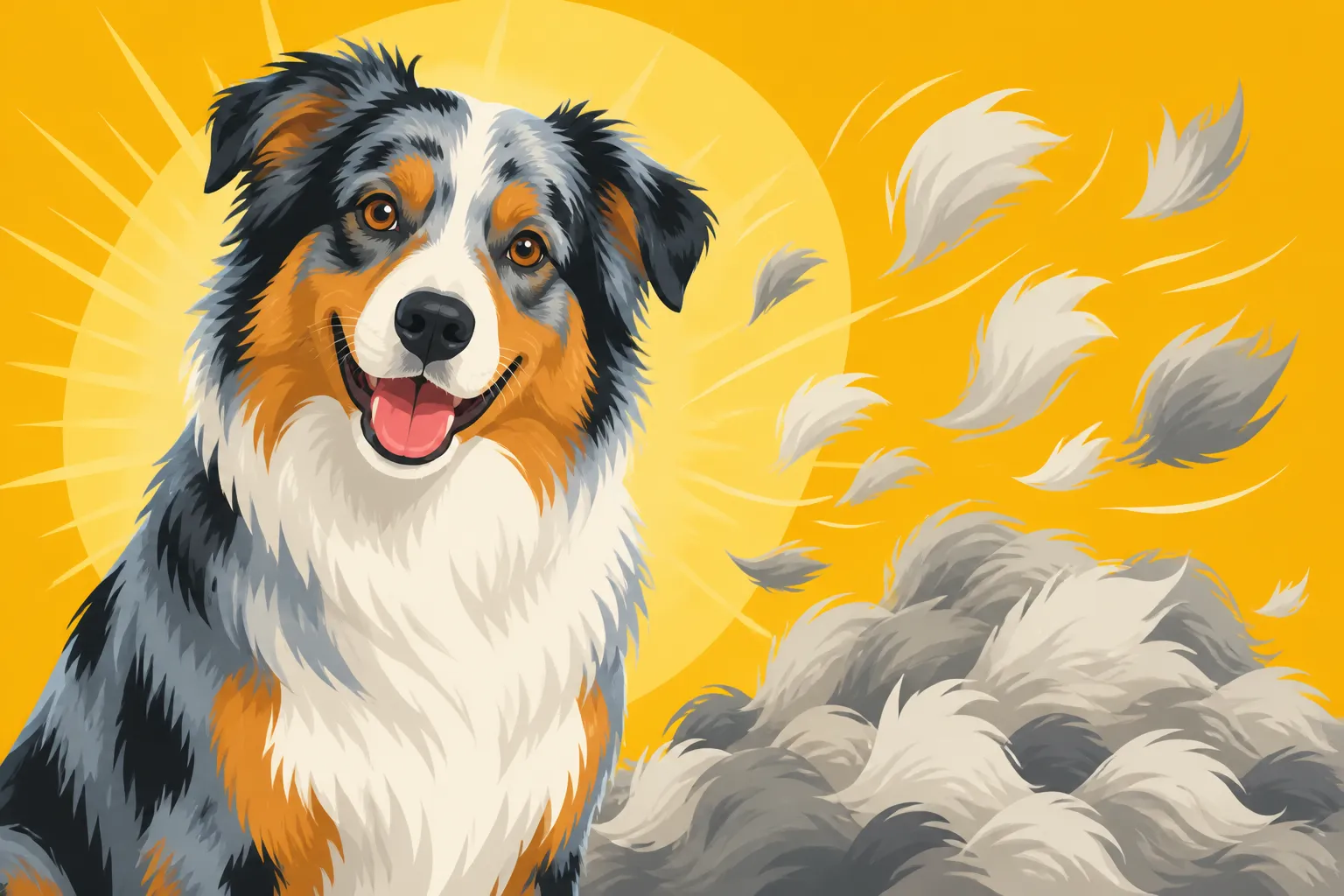
When an Australian Shepherd Blows Its Coat
If you share your home with an Australian Shepherd, you know that managing their gorgeous coat is a commitment. One of the most common — and often overwhelming — coat events is when your Aussie "blows" their coat. It can feel like suddenly your entire house is covered in a soft, fluffy snow of undercoat, leaving you wondering if it will ever end. This guide will walk you through exactly when and why your Australian Shepherd blows their coat, and, more importantly, how you can navigate this intense shedding period with grace and a lot of brushing.
Understanding the Australian Shepherd Double Coat
Before we dive into the flurry of coat blow, it’s important to understand what makes an Australian Shepherd's coat so special, and frankly, so prone to monumental shedding. These dogs were bred for tough, outdoor work, often in varied climates, and their coat is perfectly designed for that job. It’s a remarkable piece of natural engineering that serves multiple vital functions.
The Anatomy of an Aussie's Coat
An Australian Shepherd's coat isn't just one layer of hair; it's a sophisticated double coat, composed of two distinct parts: the outer guard coat and the dense undercoat. The outer coat consists of longer, coarser guard hairs that are water-resistant and protect the dog from external elements like rain, snow, burrs, and UV rays. These hairs are what give your Aussie their vibrant color and distinct markings. They provide the initial barrier, much like a good raincoat.
Beneath this protective layer lies the undercoat, a softer, much denser layer of fine, woolly hair. This is the insulation system of your Australian Shepherd. In cold weather, it traps warm air close to the body, keeping them cozy. In warm weather, it acts as a barrier against heat and helps regulate body temperature by preventing the sun's rays from reaching the skin directly. It's a common misconception that shaving an Aussie helps them cool down; in reality, it disrupts this natural insulation, leaving them vulnerable to sunburn and heatstroke. For a deeper dive into this incredible feature, check out The Australian Shepherd Double Coat Explained.
Why the Double Coat Leads to "Blowing"
The term "blowing coat" is a perfect description of what happens when an Australian Shepherd sheds their undercoat. Unlike single-coated breeds that shed hair relatively consistently year-round, Aussies (and other double-coated breeds) have distinct periods where they dramatically shed their undercoat. This isn't just regular shedding; it's a strategic expulsion of dead, loose undercoat that the dog no longer needs. Imagine shedding a winter sweater in preparation for summer, or a summer tee in anticipation of winter – that’s essentially what your Aussie is doing.
This process is primarily triggered by changes in daylight hours and temperature, signaling to the dog's body that it's time to adapt to the upcoming season. The dense undercoat that kept them warm through winter needs to be replaced by a lighter layer for spring and summer, and vice-versa. This cycle is perfectly natural, but it can be quite a shock if you're not prepared for the sheer volume of hair that will come off your dog during these times. It's not just a few stray hairs; it's handfuls, sometimes even tumbleweeds, of soft fluff.
The "When" of Coat Blowing: Seasonal Shedding Cycles
So, when exactly does this phenomenon occur? For most Australian Shepherds, coat blowing is a biannual event, deeply tied to the natural rhythms of the seasons. Understanding these primary shedding periods can help you anticipate the onslaught of hair and prepare your grooming arsenal.
The Primary Shedding Seasons
The most significant coat blow events typically happen in spring and fall. These are the times when the shift in daylight and ambient temperature is most pronounced, triggering your Aussie's body to adapt.
-
Spring Shed (The "Winter Coat" Blow): As the days grow longer and temperatures begin to warm after winter, usually around late winter to early spring (think March to May in the Northern Hemisphere), your Australian Shepherd will start to shed their thick, insulating winter undercoat. This is often the more intense of the two major shedding cycles, as they are getting rid of a very dense layer of hair. This phase can last for several weeks, and you might feel like you’re brushing an entirely new dog out of your old one! The purpose here is to lighten up their insulation in preparation for warmer weather.
-
Fall Shed (The "Summer Coat" Blow): Conversely, as the days shorten and temperatures begin to drop, typically in late summer to early fall (August to October), your Aussie will blow their lighter summer undercoat to make way for a thicker, warmer winter coat. While often not as dramatic as the spring shed, it's still a noticeable period where you'll find plenty of hair around the house. The body is preparing for colder temperatures, requiring more insulation.
It's crucial to remember that this isn't an overnight process; it's a gradual shedding that builds in intensity. During these periods, you'll see a noticeable increase in loose hair, not just on your floors, but often clinging to furniture, clothes, and even floating through the air. You can learn more about the duration of this shedding in How Long an Aussie Coat Blow Lasts.
Factors Influencing Shedding Frequency and Intensity
While spring and fall are the general rules of thumb, several factors can influence how frequently and intensely your individual Australian Shepherd blows their coat. It's not a one-size-fits-all situation, and understanding these variables can help manage expectations.
-
Climate and Environment: Dogs living primarily indoors in temperature-controlled environments may shed more consistently year-round, but still experience peaks during seasonal changes. Those who spend more time outdoors, exposed to natural light cycles and temperature fluctuations, often have more distinct and predictable seasonal blows. For example, an Aussie living on a ranch in Montana will likely have a more extreme winter coat and thus a more dramatic spring blow than one living in a climate-controlled apartment in Southern California.
-
Hormonal Status: Intact (unspayed female or unneutered male) Australian Shepherds may have different shedding patterns. Females, in particular, often undergo a significant coat blow after a heat cycle or pregnancy, due to hormonal shifts. Spayed or neutered dogs tend to have a more consistent coat density throughout the year, but can still experience intense seasonal shedding.
-
Stress and Health: Stress can sometimes trigger or exacerbate shedding. A dog undergoing significant changes in their environment, routine, or experiencing anxiety might shed more. Likewise, underlying health issues, nutritional deficiencies, or allergies can impact coat health and shedding patterns, sometimes leading to excessive or unusual hair loss outside of normal seasonal cycles. If your Aussie's shedding seems abnormal, or is accompanied by skin irritation or dullness, it's always wise to consult your vet. Australian Shepherd Skin, Coat and Allergy Problems can offer more insights into related issues.
Here's a quick overview of typical Australian Shepherd shedding:
| Shedding Season | Primary Trigger | Undercoat Type Being Shed | Intensity | Duration |
|---|---|---|---|---|
| Spring | Increasing daylight, warmth | Dense winter undercoat | High, very noticeable | Several weeks |
| Fall | Decreasing daylight, cold | Lighter summer undercoat | Moderate to High | Several weeks |
| Year-round | Minor hair turnover | Regular loose hairs | Low | Constant |
| Other | Hormonal changes, stress | Variable | Can be intense | Varies |
Managing the Coat Blow: Brushing, Bathing, and Care
When your Australian Shepherd starts blowing their coat, it can feel like a losing battle against the tide of fluff. However, with the right tools and a consistent approach, you can significantly reduce the amount of loose hair in your home and keep your Aussie comfortable and healthy. This period requires proactive grooming, not just reactive clean-up.
Essential Grooming Tools for Coat Blow
During a coat blow, your regular quick brush might not cut it. You need to bring in the heavy artillery to tackle the dense undercoat effectively. Investing in quality grooming tools will make a world of difference for both you and your dog.
- Undercoat Rakes: These are non-negotiable. An undercoat rake has a single or double row of widely spaced, blunt teeth designed to reach deep into the undercoat and pull out loose, dead hair without damaging the longer guard hairs. Use it gently, in the direction of hair growth, section by section. You’ll be amazed at the amount of hair these tools remove.
- Slicker Brushes: Once you've removed the bulk of the undercoat with a rake, a slicker brush can help smooth the topcoat and catch any remaining loose hairs. They are great for finishing touches and for areas with finer hair, like behind the ears or on the legs. Slicker Brushes and Line Brushing an Aussie gives a good overview of their use.
- Deshedding Tools: Brands like Furminator offer specific deshedding tools that are very effective, though they must be used carefully to avoid irritating the skin or cutting the guard hairs. Always read instructions and use lightly. Many Australian Shepherd owners find a good deshedding tool to be invaluable during peak shedding. You can find a wide variety of these tools, along with undercoat rakes and slicker brushes, on platforms like Chewy or Amazon. Comparing Deshedding Tools on an Aussie will help you decide which one might be right for your dog.
During a coat blow, aim to brush your Aussie daily, or at least every other day. Consistent, thorough brushing is the single most effective way to manage shedding and prevent painful matting.
Bathing Strategies During Coat Blow
Bathing can be a powerful ally during a coat blow, but only if done correctly. A warm bath can help loosen dead undercoat, making it easier to brush out. However, thoroughly drying a double coat is absolutely critical.
- The Power of Water and Shampoo: Choose a deshedding shampoo specifically formulated to help release loose hair. Work the shampoo deep into the coat, massaging it to reach the skin and loosen dead undercoat. Let it sit for a few minutes as per product instructions. Rinse thoroughly – an incomplete rinse can lead to skin irritation.
- Thorough Drying is Key: This is where many owners run into trouble. An Australian Shepherd's dense double coat can take hours to air dry, and leaving it damp can lead to skin infections and horrible matting. After bathing, towel dry vigorously to remove as much water as possible. Then, use a high-velocity dog dryer (like those used by professional groomers) to blast out the remaining water and, crucially, blast out loose undercoat. This tool is a game-changer for speeding up drying and getting rid of massive amounts of hair. If you don't have one, consider taking your Aussie to a professional groomer for a deshedding bath and blow-out during peak shedding times. These Deshedding Treatments at an Aussie Groomer can be incredibly effective.
Preventing Mats and Hot Spots
The sheer volume of shedding hair during a coat blow makes your Australian Shepherd highly susceptible to matting. Mats are dense clumps of tangled hair that pull on the skin, causing discomfort, pain, and even skin infections. They are particularly common in areas where hair rubs together or gets wet frequently.
- Common Matting Zones: Pay extra attention to areas like behind the ears, in the armpits, on the breeches (the fluffy hair on the back of their thighs), and around the tail. These spots can mat almost overnight if not regularly brushed. For insights into these tricky areas, read The Mats That Form Behind Aussie Ears.
- The Danger of Mats: Mats restrict air circulation to the skin, creating a warm, moist environment perfect for bacteria to thrive, leading to painful hot spots. If mats become severe, they often need to be shaved out by a professional, which can be an uncomfortable process for your dog and potentially lead to coat regrowth issues.
- Brushing Strategy: Regular, methodical line brushing is your best defense. This technique involves parting the coat and brushing in sections, working your way down to the skin to ensure you're removing all loose undercoat. Don't just brush the top layer; you need to get deep. Never try to brush out a dry, severely matted coat; it will only cause pain. Instead, seek professional help. And on that note, remember, you should never shave your Australian Shepherd, even if you think it will help with shedding, as it can permanently damage their coat. Why an Australian Shepherd Should Never Be Shaved explains this in detail.
Supporting Coat Health Year-Round
While coat blows are inevitable, maintaining your Australian Shepherd's overall coat health throughout the year can make these shedding periods more manageable and ensure their coat remains beautiful and functional. A healthy coat is a resilient coat, and it starts from within.
Nutrition for a Healthy Coat
What goes into your Australian Shepherd's bowl directly impacts the health and quality of their skin and coat. A diet lacking in essential nutrients can lead to a dull, brittle coat and increased shedding.
- High-Quality Diet: Always feed a high-quality, balanced dog food appropriate for your Aussie's age, activity level, and any specific dietary needs. Look for foods with real meat as the first ingredient and avoid excessive fillers. A healthy diet supports healthy skin, which in turn grows healthy hair. Many owners are turning to fresh food options, with services like Ollie providing carefully balanced meals that can contribute to a lustrous coat.
- Omega Fatty Acids: Omega-3 and Omega-6 fatty acids are crucial for skin and coat health. These can often be found in quality dog foods, but many owners choose to supplement their Aussie's diet with additional fish oil or other omega-rich supplements. These fatty acids help maintain skin elasticity, reduce inflammation, and promote a shiny, strong coat, which can shed more cleanly. Fish Oil for an Aussie Double Coat provides more detail on this beneficial supplement. Always discuss any supplements with your vet first to ensure proper dosage and suitability for your dog.
Environmental Factors and Shedding Control
Beyond diet and direct grooming, the environment your Australian Shepherd lives in also plays a role in their coat health and shedding patterns. Small adjustments can sometimes make a big difference.
- Temperature Regulation: While Aussies are built for various climates, extreme swings in indoor temperature can sometimes confuse their natural shedding cycles, leading to more constant, light shedding. Maintaining a relatively stable indoor temperature can help their body regulate more effectively.
- Hydration: Just like humans, dogs need adequate hydration for overall health, including skin and coat health. Ensure your Australian Shepherd always has access to fresh, clean water. Dehydration can lead to dry skin and a lackluster coat.
- Stress Reduction: As mentioned earlier, stress can impact shedding. A calm, predictable environment and a consistent routine can help reduce stress, which in turn supports a healthier coat. Ensure your Aussie is getting enough physical and mental exercise; a bored or anxious Aussie might over-groom or shed more.
- Regular Vet Check-ups: Sometimes, excessive or unusual shedding can be a sign of an underlying health issue, such as allergies, thyroid problems, or parasites. Regular veterinary check-ups are essential to catch any potential problems early. Your vet can rule out medical causes for shedding and offer tailored advice. As your Aussie ages, their coat can also change, so discuss any shifts with your vet during their annual visits. How an Australian Shepherd Coat Changes With Age might offer some interesting perspectives on this.
By understanding the unique nature of your Australian Shepherd's double coat, anticipating the seasonal coat blows, and committing to a consistent grooming and health regimen, you can navigate these fluffy periods with much greater ease. It’s a labor of love, but the reward is a happy, comfortable Aussie with a magnificent coat.
Disclaimer
This article is for general informational purposes only and does not constitute professional advice. Laws, prices and regulations vary by location and change over time. Consult a qualified professional for guidance on your specific situation.