Whether Aussie Exercise Costs Fit a Tight Budget
Many people dream of welcoming an Australian Shepherd into their home, captivated by their intelligence, loyalty, and stunning looks. What often isn't fully understood, however, is the sheer volume of exercise and mental stimulation these brilliant dogs truly demand. It's not just a casual walk around the block; it's a lifestyle commitment, and this commitment inevitably comes with costs. If you're wondering whether your budget can truly stretch to keep an Aussie happy and well-behaved, you've come to the right place. This guide will help you understand the financial implications of meeting an Australian Shepherd's exercise needs and offer strategies to manage those costs, even on a tight budget.
Understanding the Australian Shepherd's Exercise Needs
Let's be real: the "exercise needs" of an Australian Shepherd are often underestimated by new owners. It's easy to think, "Oh, I'm active, I can handle it!" but an Aussie's requirements go far beyond what most people consider a good workout. Failing to meet these needs doesn't just mean a restless dog; it often translates into behavioral problems, which can then lead to even more significant costs.
Beyond Basic Walks: The Mental and Physical Demands
An Australian Shepherd isn't built for a leisurely stroll. These dogs were bred for hours of intense work, covering vast distances and making complex decisions while herding livestock. Their bodies are athletic powerhouses, and their minds are always on, seeking purpose and problem-solving. A simple walk, even a long one, often doesn't cut it. You might walk for an hour, come home, and your Aussie is still pacing, still looking for something to do. It’s frustrating when you feel like you’ve done everything right, but your dog is still bouncing off the walls. This is because they need to engage both their physical energy and their incredible intellect.
Think about it: a Border Collie or an Australian Shepherd isn't just running; they're strategizing, watching the flock, anticipating movement, and responding to commands. Their brains are as tired as their bodies at the end of a good day. For a pet Aussie, we need to replicate that kind of comprehensive engagement. If you are struggling with this concept, you might find insight into Why physical exercise alone never settles an Aussie. It's about giving them a job, even if that job is just fetching a disc, solving a puzzle, or learning a new trick. Without this dual engagement, you'll find yourself with a dog that has pent-up energy, leading to destructive chewing, incessant barking, or even nipping at heels as they try to "herd" anything that moves, including children or guests.
The Time Investment vs. Financial Cost
This is where the rubber meets the road for many budget-conscious owners. An Australian Shepherd typically needs a minimum of one to two hours of dedicated, high-quality exercise every single day. And by "high-quality," I mean something that really works their brain and body. This could be a vigorous game of fetch, an agility session, or a long, stimulating hike.
Now, consider your own schedule. If you work a full-time job, commute, and have other responsibilities, finding two hours of focused time each day for your dog can be incredibly challenging. This is where the time investment starts to convert into financial cost. If you can't provide that time yourself, you'll likely need to pay someone else to do it. This might mean hiring a dog walker, enrolling your Aussie in doggy daycare, or even looking into specialized training classes. Suddenly, those "free" exercise needs are adding up to a significant monthly expense. It's a common scenario, and it's not a reflection of your commitment, but rather the intense demands of the breed. For a more detailed look into what constitutes proper activity, check out Two Aussie hours a day and what counts.
Breaking Down the Typical Exercise-Related Costs
Let's get specific about where your money might go when trying to keep an Aussie adequately exercised. These aren't just one-time purchases; many are recurring expenses that can quickly add up.
Equipment and Gear: The Upfront and Ongoing Investment
When you bring home an Australian Shepherd, you quickly realize that their enthusiasm and intelligence often translate into a knack for destroying anything less than bomb-proof.
- Durable Toys: Forget those cute, plush squeaky toys from the grocery store. An Aussie will shred them in minutes. You'll need tough, durable chew toys, ropes, and puzzle toys. Brands like Kong and Nylabone are popular for a reason—they stand up to the challenge. Even then, these aren't indestructible, and you'll be replacing them more often than you might expect. Finding durable chew toys that last with an Australian Shepherd is an ongoing quest. Online retailers like Chewy offer a wide selection of heavy-duty toys, but the cost for a rotating supply of these can easily become a regular line item in your budget.
- Long Lines and Harnesses: For safe off-leash practice in open, secure areas, a good quality long line is essential. These allow your Aussie to explore while still under your control. A comfortable, well-fitting harness is also crucial for walks, especially if your Aussie has a strong prey drive and tends to pull. These are typically one-time purchases, but replacing them if they get lost or damaged adds up. You can explore Long lines and harnesses for an Australian Shepherd for more information.
- Crates: Many Aussie owners find a crate indispensable for managing their dog's energy and providing a safe den. A sturdy, appropriately sized crate is an initial investment but one that pays dividends in management and training. However, these aren't cheap, especially for a fifty-pound dog.
Classes, Trainers, and Dog Sports: The Specialist Costs
This is often the biggest surprise for new Aussie owners. While basic obedience is a must for any dog, an Australian Shepherd truly thrives with more advanced, stimulating activities.
- Puppy Classes and Basic Obedience: These are foundational and highly recommended. They help socialize your puppy and teach essential manners. Prices vary widely, but expect to pay for a series of classes.
- Advanced Training: Once you've mastered the basics, an Aussie's mind craves more. This is where advanced obedience, trick training, or even specialized "brain games" come in. Some owners even invest in private sessions with a trainer who understands the nuances of the breed's herding drive and intelligence. Finding a trainer who understands an Aussie can make all the difference, but it's not a cheap endeavor.
- Dog Sports: This is where many Aussies truly shine and find their purpose. Agility, flyball, disc dog, rally obedience, and even beginner herding classes can provide incredible mental and physical outlets. However, these activities come with fees for classes, equipment, and competition entry. For instance, Aussie agility class and trial entry fees can really accumulate over a season. Even if you're just doing it for fun, the costs can add up quickly.
Daycare, Walkers, and Boarding: When You Can't Do It All
Life happens. There will be days when you're unexpectedly busy, sick, or traveling. For an Australian Shepherd, simply leaving them alone for long periods without adequate stimulation is a recipe for disaster.
- Dog Walkers: If you have a long workday, a professional dog walker can provide that crucial midday exercise. Depending on your location and the walker's rates, this can be a significant weekly or monthly expense.
- Doggy Daycare: For some Aussies, a few days a week at a reputable doggy daycare can be a lifesaver. It provides supervised play, socialization, and a chance to burn off energy. However, this is one of the more expensive options for exercise. Daycares that can tire an Aussie out are worth their weight in gold, but they come at a cost.
- Boarding: When you travel, boarding an Aussie requires finding a facility that understands and can handle their high energy levels. A standard kennel might not provide the mental and physical stimulation they need, so you might need to seek out specialized boarding facilities, which naturally cost more.
Here's a quick overview of potential exercise-related costs:
| Category | Initial Cost (Estimate) | Monthly/Recurring Cost (Estimate) | Notes |
|---|---|---|---|
| Basic Gear | Medium | Low-Medium | Crate, harness, leash, durable chew toys. Toys need replacing. |
| Specialty Toys | Low-Medium | Medium | Puzzle feeders, flirt poles, herding balls. These are more robust but still wear out. Chewy is a good source. |
| Training Classes | Medium | N/A (per session/course) | Puppy, basic obedience, advanced classes. Essential for channeling drive. |
| Dog Sports | Low-High | Low-High (per session/trial) | Agility, herding, rally. Requires classes, equipment, and entry fees. |
| Dog Walker | N/A | Medium-High | If you can't provide daily exercise. Varies by frequency and location. |
| Doggy Daycare | N/A | High | Good for socialization and burning energy, but one of the most expensive options. |
| Travel Boarding | N/A | High (when needed) | Specialized facilities for high-energy breeds can be pricier. |
| Preventive Care | Low | Low-Medium | Joint supplements (proactive for working breeds), regular vet check-ups to ensure physical readiness for exercise. Consider pet insurance like Healthy Paws for unexpected injuries or illnesses. |
Note: Specific prices and fees are omitted, as they vary greatly by location and provider. This table describes the general shape of the costs.
Strategies for an Australian Shepherd on a Tight Exercise Budget
Don't despair if your budget isn't endless! While Aussies are demanding, there are many creative and effective ways to meet their needs without breaking the bank. It just requires more of your time and ingenuity.
Maximizing Free and Low-Cost Activities
This is where you become your Aussie's personal activity coordinator, using what's readily available.
- Running and Hiking: If you're a runner, taking your Aussie with you can be fantastic exercise, once they're fully grown and cleared by your vet for sustained impact. Long hikes on varied terrain are also excellent, engaging their body and mind. Remember, a growing Aussie should not run long distances. Just be mindful of paw pads on rough trails and consider a doggy backpack to give them a "job."
- DIY Agility: You don't need fancy equipment to set up an agility course in your backyard or a local park. Use household items like broomsticks for jumps, hula hoops for tunnels, or even just weave poles made from PVC pipe. The goal is engagement, not competition. Building an Aussie herding course in a yard can also be a creative, low-cost solution.
- Scent Work and Nose Games: These are incredibly mentally fatiguing for dogs and require minimal equipment. Hide treats or your Aussie's favorite toy around the house or yard and encourage them to sniff them out. You can start simple and gradually increase the difficulty. This taps into their natural instincts and tires them out without a huge physical output. Scent games that tire an Australian Shepherd are a powerful tool.
- Fetch and Disc Play: While simple, intense sessions of fetch or disc can be highly effective. The key is to keep it dynamic, using different throws and requiring your Aussie to think about where the disc will land. Rotate through different types of toys to keep their interest piqued. Just be cautious not to overdo repetitive movements, especially as they age, to protect their joints.
DIY Enrichment and Mental Games
Mental stimulation is often overlooked but is paramount for an Aussie's well-being. And it doesn't have to cost a fortune.
- Puzzle Feeders: Instead of just putting food in a bowl, make your Aussie work for it. Many affordable puzzle feeders are available online (check out Chewy again for a wide variety) or you can create your own. Use a muffin tin with tennis balls to hide kibble, or stuff a Kong with wet food and freeze it. Puzzle feeders that slow an Australian Shepherd are excellent for daily enrichment.
- Trick Training: Teaching new tricks is a fantastic way to engage your Aussie's mind. There are countless free resources online for trick training, from basic "shake a paw" to more complex routines. It builds your bond and gives your dog a sense of accomplishment. Trick training as Aussie mental work is highly effective.
- "Find It" Games: Similar to scent work, but focused on objects. Teach your Aussie the names of their toys and ask them to "find" a specific one. This works their memory and problem-solving skills.
- Enforced Naps: Sometimes, an overtired or overstimulated Aussie acts out because they need to settle down. Enforced naps for an overtired Aussie puppy can be a godsend, and the same principle applies to adults. A quiet crate time gives them a chance to decompress.
Leveraging Community Resources
Your local community might offer free or low-cost options for exercise and socialization.
- Dog Parks: While not suitable for all Aussies (especially if they're reactive or have poor recall), a well-managed dog park can provide free exercise and socialization. Use caution and ensure your Aussie has a solid recall before going. Practicing Aussie recall in a fenced field is a smart first step.
- Local Hiking Trails: Many public parks and nature preserves have dog-friendly trails that are free to use. These offer changing scenery and smells that are incredibly stimulating for an Aussie.
- Meetup Groups: Look for local Australian Shepherd or herding breed meetup groups. Often, these groups organize pack walks, playdates, or even informal training sessions, providing both exercise and social opportunities for you and your dog.
The Hidden Cost of Under-Exercising an Australian Shepherd
This is perhaps the most crucial point for someone on a tight budget. While upfront exercise costs might seem daunting, the costs of not exercising an Australian Shepherd adequately are often far greater and more distressing.
Behavioral Problems and Their Repercussions
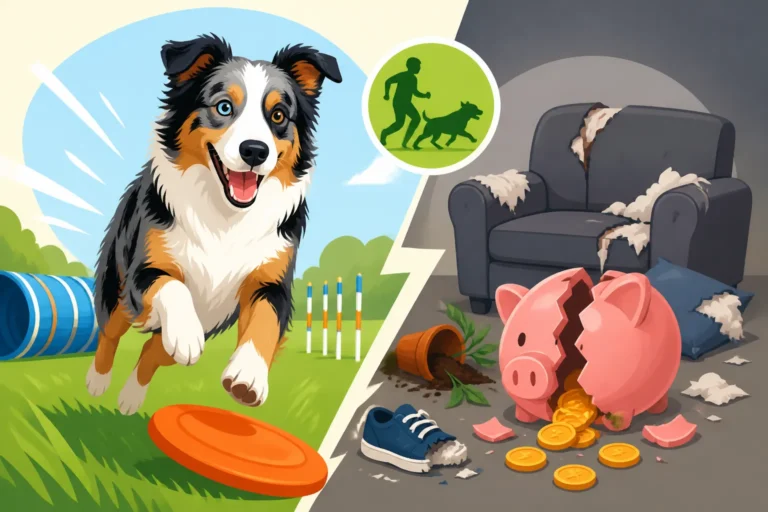
An under-exercised, under-stimulated Australian Shepherd is a ticking time bomb of potential behavioral issues. These dogs are intelligent and driven, and if their energy isn't channeled productively, they will find their own (often destructive) outlets.
- Destructive Chewing: Boredom and excess energy can lead an Aussie to chew on furniture, shoes, walls, or anything else they can get their mouths on. This isn't malicious; it's an attempt to relieve stress and occupy their minds. The cost of replacing damaged household items can quickly dwarf any savings made by cutting corners on exercise. An Australian Shepherd destroying doors when alone is a common, heartbreaking scenario.
- Excessive Barking: Whether it's alert barking at every leaf that blows by, frustration barking because they're confined, or demand barking for attention, an under-exercised Aussie can become incredibly vocal. This can lead to neighbor complaints, stress for everyone in the household, and potentially even fines in some areas. Australian Shepherd barking and noise sensitivity is a real issue.
- Reactivity and Aggression: A lack of appropriate socialization and outlets can make an Aussie reactive to other dogs, strangers, or moving objects. This can manifest as lunging, growling, or even snapping. Addressing reactivity often requires professional behavioral intervention, which is far more expensive than preventing it in the first place. You might find yourself needing to look into Working a reactive Aussie under threshold, which takes time and often professional guidance.
- Anxiety and Stress: Chronic under-stimulation can lead to anxiety, pacing, and compulsive behaviors. An Aussie that paces indoors is a clear sign of unmet needs. These are deeply unhappy dogs, and managing their anxiety can become a constant struggle.
Vet Bills from Stress-Related Issues
Behavioral problems aren't just emotionally draining; they can also lead to direct vet bills.
- Ingestion of Foreign Objects: A bored Aussie might chew and swallow inappropriate items, leading to emergency vet visits for blockages, poisoning, or internal injuries. These surgeries can run into thousands of dollars.
- Injuries from Escaping: An Aussie desperate for an outlet might try to escape the yard, potentially getting hit by a car, injured by other animals, or incurring cuts and scrapes. An Australian Shepherd chasing cars is a serious risk.
- Stress-Related Illnesses: Chronic stress can suppress a dog's immune system, making them more susceptible to illnesses. While pet insurance providers like Healthy Paws can help with unexpected medical costs, preventing these issues through proper care is always the best approach. Investing in their mental and physical well-being from the start is truly an investment in their long-term health and your financial peace of mind.
In conclusion, while owning an Australian Shepherd on a tight budget for exercise isn't impossible, it requires significant dedication, creativity, and a willingness to invest your time rather than just your money. Cutting corners on an Aussie's exercise and mental stimulation needs is a false economy, as the behavioral and medical consequences will almost certainly end up costing you more in the long run. By understanding their needs and actively seeking out affordable solutions, you can provide a fulfilling life for your Australian Shepherd without breaking the bank.
Disclaimer
This article is for general informational purposes only and does not constitute professional advice. Laws, prices and regulations vary by location and change over time. Consult a qualified professional for guidance on your specific situation.