Why Herding Instinct Is the Aussie Operating System
Many Australian Shepherd owners find themselves utterly charmed by their intelligent, energetic dogs, only to be baffled by behaviors that seem… well, a little too intense. Whether it’s relentless heel-nipping, the unwavering stare at a moving object, or the constant urge to "gather" family members, it can feel like your otherwise sweet companion has a hidden agenda. This guide is all about peeling back the layers to understand the fundamental drive that underpins so much of an Aussie’s personality: their powerful herding instinct.
The Deep Roots of Australian Shepherd Herding Instinct
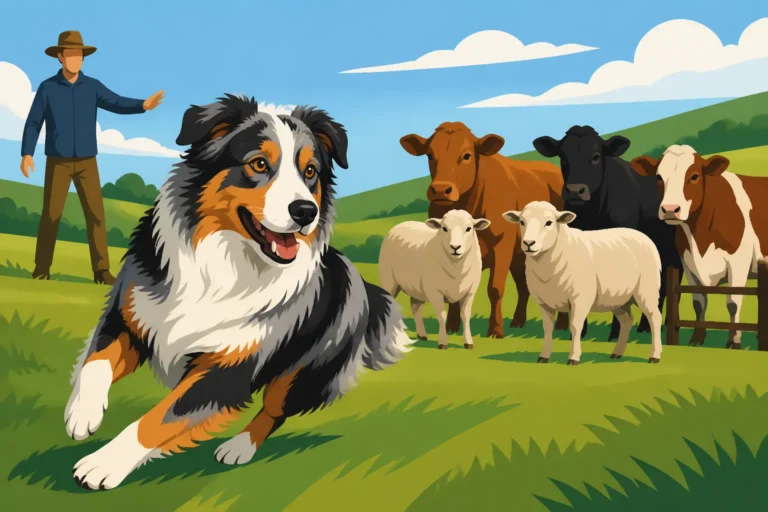
It’s easy to look at our fluffy, blue-eyed companions and forget they were bred for a demanding, critical job: working livestock. The Australian Shepherd isn't just a pretty face; they are a finely tuned herding machine, and that isn't something that can simply be trained out or ignored. It's the very foundation of their being, their operating system, if you will.
The Ancestral Call: Where the Drive Began
Despite their name, Australian Shepherds were developed right here in the American West, primarily California, during the Gold Rush era. They were crafted from a mix of European herding breeds, brought over by Basque shepherds who emigrated with their flocks. These working dogs needed keen intelligence, incredible agility, and an unwavering focus to handle tough, independent range livestock like sheep and cattle in vast, rugged terrains. They weren't just pushing sheep; they were problem-solvers, making split-second decisions and controlling movement with precision and grit.
Think about the traits a rancher needed: a dog that could read livestock, anticipate movement, and respond to subtle commands, all while working independently far from the handler. That kind of dog isn't passive; it's proactive, observant, and possesses an incredible inner drive. So, when you see your Aussie staring intently at a ball or trying to cut off your toddler, you're not seeing stubbornness; you're seeing generations of carefully selected instinct bubbling to the surface. It's truly incredible when you stop to consider the history. The Basque Shepherds Behind the Australian Shepherd played a monumental role in shaping this incredible breed.
The Instinctive Sequence: Eye, Stalk, Chase, Gather
Understanding the full herding sequence helps us recognize these behaviors in our modern-day Aussies. It's not always a full-blown sheep-herding display, but often fragmented pieces of it.
- Eye: This is the intense, unwavering stare. An Aussie's gaze can be incredibly powerful, almost hypnotic. They use their eyes to control and intimidate livestock, locking onto a target and communicating, "I see you, and I'm in charge." You'll see this when your Aussie stares down a frisbee, a cat, or even a child. It's their primary tool for initiating control.
- Stalk: After the eye, comes the stalk. This is the low, stealthy approach, often with their body dipped, moving slowly and deliberately towards the "livestock." It’s about positioning, cutting off escape routes, and maintaining that powerful visual connection. Your Aussie might do this before pouncing on a toy or slowly creeping towards a squirrel in the park.
- Chase: Once the "livestock" moves, the chase is on. This is where their incredible speed and agility come into play, darting, weaving, and staying close to the moving target. For a pet Aussie, this could be chasing a ball, a bicycle, or even someone jogging past the house. They live for that burst of speed and the thrill of the pursuit.
- Gather/Drive: This is the ultimate goal: bringing the livestock together and moving them in a desired direction. This involves circling, flanking, and applying pressure to influence movement. In a domestic setting, this translates to your Aussie trying to "herd" family members into a specific room, circling guests, or attempting to keep other dogs from scattering during play. They want to contain and control.
Recognizing these components allows us to see our dog's "misbehaviors" not as defiance, but as expressions of deeply ingrained patterns.
Beyond Dominance: It's All About Design
One common misconception is that these herding behaviors are a sign of dominance or a dog trying to "be the alpha." While Australian Shepherds certainly have strong personalities, their herding tendencies are not primarily about dominance over humans in a pack hierarchy sense. Instead, they are about genetic predisposition and fulfilling an intrinsic drive. They're designed to do this.
It’s about control of movement, not control of people. A herding dog instinctively wants to control the flow and direction of anything that moves. When a child runs, an Aussie sees a small, fast-moving "sheep" that needs to be brought back to the "flock" (the family group). When another dog runs off during play, the Aussie wants to collect it. They are not trying to be the boss of you, but rather the "manager" of all things in motion within their perceived territory. This subtle but crucial distinction helps shift our perspective from seeing a "naughty" dog to understanding a dog simply acting on its powerful, inherent design.
How Herding Instinct Shows Up in Daily Australian Shepherd Life
For an Aussie living without a flock of sheep, their herding instinct doesn't just disappear. It simply finds other, sometimes inconvenient, outlets within the home and neighborhood environment. This is where understanding their "operating system" truly becomes vital for harmonious living.
The Infamous Heel Nipping and Ankle Biting
This is perhaps the most well-known manifestation of an Aussie's herding instinct in a non-working home. When people, especially children, are running, cycling, or even just moving quickly, an Aussie's instinct might kick in to "gather" them. And how does a herding dog stop or redirect a stubborn sheep? Often, with a quick nip to the heels.
It's not usually aggressive, but rather a sharp, precise nip designed to interrupt movement and encourage direction. Imagine a child excitedly running through the house; your Aussie might follow, then nip at their ankles or calves. It's their way of saying, "Stop! Go that way!" or "Stay with the group!" It can be startling and even painful, leading to frustration for both dog and human. This is why addressing Australian Shepherd Heel Nipping and How to Redirect It is so crucial, especially in households with kids.
Circling and Gathering People or Other Pets
Ever notice your Aussie trying to round up everyone in the living room? Or perhaps they constantly try to push the family cat away from the kitchen table? This is their gathering instinct at play. They want to keep their "flock" (be it humans, other pets, or even inanimate objects) together and organized.
This can look like:
- Encircling family members: Your Aussie might circle you and your partner when you're talking in the yard, as if trying to keep you from wandering off.
- Pushing other pets: They might nudge or body-check other dogs or cats, trying to direct their movement or consolidate them into a smaller space. For instance, an Aussie might spend significant energy trying to get the cats to stay in one part of the house, perhaps even attempting to herd a vacuum cleaner! An Australian Shepherd Rounding Up the Family Cats is a classic example.
- Blocking doorways: An Aussie might stand in a doorway, seemingly preventing you from passing, which is their way of controlling the "gate" for the flock.
While sometimes endearing, it can also be a challenge, especially if the dog is constantly trying to manage everyone's movement, creating a sense of tension or confinement for other family members or pets.
The Laser Focus: Eye Stalking and Intense Observation
That piercing, unblinking stare your Aussie gives? That's the "eye" in action. Herding dogs use their gaze to exert control, and Aussies excel at it. They can fixate on something with an intensity that can be unnerving.
This isn't just about watching; it's about anticipating. They are constantly observing their environment, noting every movement, every shift, every potential "breakout" from their perceived flock. You might see this when:
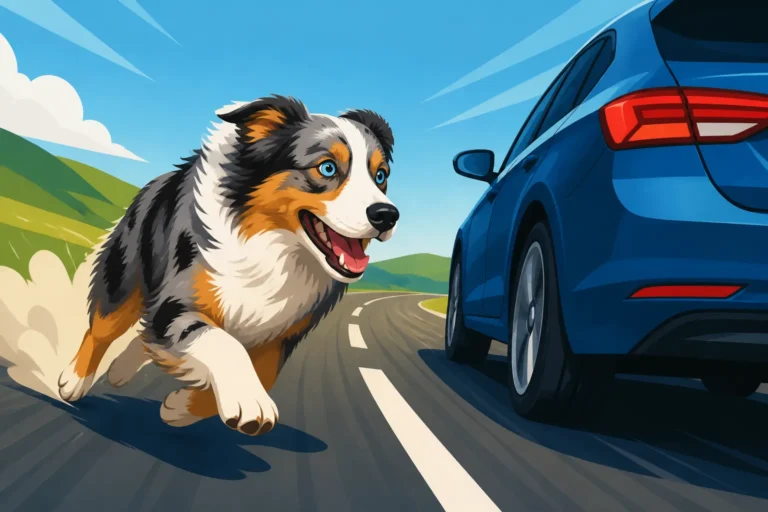
- Staring at moving vehicles: Bicycles, skateboards, cars, joggers—anything that moves quickly can trigger that intense gaze, often followed by a lunge or a bark if not managed. An Australian Shepherd Chasing Cars is a dangerous manifestation of this.
- Fixating on toys or balls: Their focus on a fetch toy is legendary, but it's more than just wanting to play; it's the predator's gaze, the herder's concentration.
- Watching children intently: Especially when kids are playing or being boisterous, an Aussie's eyes will often be glued to them, assessing, waiting for the right moment to intervene and "correct" their movement.
This intense focus can be a fantastic asset in training, as Aussies are incredibly attentive to their handlers. However, it can also lead to hyper-vigilance and reactivity if they feel constantly compelled to "manage" everything around them without proper direction or a suitable outlet.
The Urge to Control Movement and Space
At its core, herding instinct is about controlling movement within a defined space. For a ranch dog, this means keeping the sheep within the boundaries of the pasture or moving them from one pen to another. For a pet Aussie, this translates into an inherent desire to influence how things and people move in their home and yard.
They may try to prevent people from leaving a room, or perhaps they'll try to block the path of another dog. They might position themselves strategically to observe and intervene. This deep-seated need to maintain order and direct flow is a constant undercurrent in their behavior. It’s why simply giving them an hour-long walk might not really tire them out, because it doesn't engage that deep cognitive and instinctive drive. They need jobs that fulfill this core programming.
Instinct vs. Problem Behavior: Drawing the Line
It's easy to label all herding-related behaviors as "problems," but that's not quite fair to our Aussies. Many are simply expressions of their genetic blueprint. The challenge lies in distinguishing between a dog being an Aussie and a dog whose instincts are creating genuine issues that need intervention.
When Natural Instincts Become a Nuisance
The line between natural behavior and problem behavior often depends on context and consequence. An Aussie trying to gather the family during a backyard BBQ might be mildly amusing, but an Aussie consistently nipping at a toddler's heels or lunging at passing cars is a safety concern.
Behaviors move from "instinctive" to "problematic" when they:
- Cause harm or fear: Nipping that breaks skin, or intense staring that makes guests uncomfortable.
- Are disruptive to daily life: Constant circling, barking at every movement outside, or preventing free movement within the home.
- Are dangerous to the dog: Chasing cars, or escaping to "herd" neighborhood children.
- Are difficult to redirect: When attempts to offer alternative behaviors consistently fail.
It’s about scale and impact. A gentle nudge from your Aussie to get you moving is different from a persistent, sharp nip. Recognizing this distinction is the first step in effective management.
The Amplifying Effect of Under-Stimulation
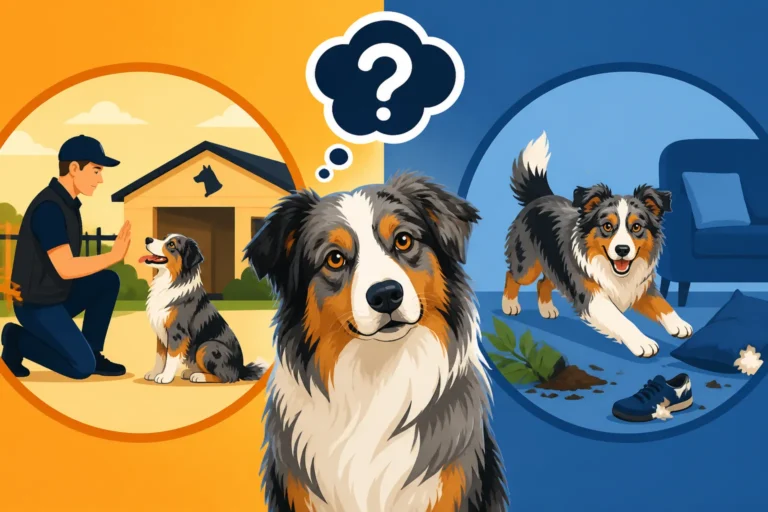
Here's the critical point: an Australian Shepherd's herding instincts become far more pronounced and often problematic when the dog is under-stimulated, both mentally and physically. These aren't dogs designed to be couch potatoes, even if they enjoy a good snuggle session.
When an Aussie doesn't have appropriate outlets for their intelligence, energy, and herding drive, that powerful operating system will search for any available program to run. This often leads to:
- Hyper-vigilance: They become overly watchful and reactive to every movement or sound, feeling compelled to "manage" everything.
- Obsessive behaviors: Fixating on shadows, lights, or specific toys to an unhealthy degree.
- Destructive chewing: Redirecting their energy and frustration into tearing apart furniture or shoes.
- Excessive barking: Alerting to every perceived threat or movement.
- Increased reactivity: Lunging and barking at dogs, people, or vehicles on walks because their threshold for stimulation is lower due to pent-up energy. Why Physical Exercise Alone Never Settles an Aussie really drives this point home; they need mental engagement too.
It’s like having a supercomputer running a simple word processing program all day—it has immense capabilities that are going unused, leading to frustration and glitches. Giving an Australian Shepherd a fulfilling "job" is not just about exercise; it's about channeling their fundamental nature.
Decoding Your Aussie's Body Language
To truly understand when herding instinct is at play, learning your Aussie’s body language is invaluable. They communicate a lot before they act.
Look for these cues:
- Lowered head and body: The classic "herding crouch" or stalk.
- Intense, unwavering stare ("the eye"): Often accompanied by stillness.
- Raised hackles (piloerection): Can indicate arousal, not always aggression.
- Tail position: A stiff, low wag or tucked tail can signal focus or apprehension.
- Mouth tension: A tightly closed mouth or lip licking can indicate stress or focus.
- Pupil dilation: Their eyes might seem larger when fixated.
- Slow, deliberate movements: Creeping, flanking, or circling.
- Quick, darting movements: Especially when trying to cut off a target.
Recognizing these signals early allows you to intervene before the behavior escalates. If you see your Aussie go into a low stalk with an intense stare directed at a child running, that's your cue to redirect them to a more appropriate activity. Reading an Aussie Body Language Under a Full Coat is a fantastic resource for learning these nuances.
Managing Herding Instinct in a Non-Working Home
Living with an Australian Shepherd means learning to work with their herding instinct, not against it. Since most Aussies don't have daily sheep to herd, it's up to us to provide appropriate outlets and clear boundaries.
Setting Clear Boundaries Indoors
Your home is not a ranch, and your family members are not sheep. It's crucial to establish clear rules and boundaries to prevent your Aussie from applying their herding tactics to the household.
- No nipping, ever: This is non-negotiable. If your Aussie nips, even playfully, immediately interrupt the behavior with a firm "no" or "leave it," and redirect them to an appropriate chew toy. Consistency is key. Everyone in the household must follow this rule.
- Manage access: Use baby gates (you can find plenty of options on Amazon) to create "safe zones" for children or other pets, or to limit your Aussie’s ability to chase through the house. This can be especially helpful when kids are playing or guests are over.
- Teach "place" or "settle": Train your Aussie to go to a designated mat or bed and stay there, especially during times of high activity. This gives them an alternative to engaging in unwanted herding behaviors and teaches them to relax in stimulating environments. Mat Settle Training for a Restless Aussie is an excellent skill to teach.
- Discourage circling/blocking: If your Aussie tries to herd you or block your path, gently but firmly move past them without engaging in a chase game. Reward calm waiting.
It's about being firm but fair, and consistently communicating what is acceptable and what is not in the human home.
Teaching an Off Switch and Calmness
One of the biggest challenges with high-drive herding dogs is that they can have trouble "switching off." They're always on alert, always looking for a job. Teaching them to relax and be calm is just as important as providing outlets for their energy.
- Enforced quiet time: Schedule periods of quiet throughout the day, especially for puppies. This could be crate time with a safe chew toy, or tethering them to you while you work quietly. This teaches them that doing nothing is also a valid state of being.
- Relaxation protocols: There are specific training exercises designed to teach dogs to relax in increasingly stimulating environments. Start in a quiet room, reward calm behavior, and gradually introduce mild distractions.
- Capture calm: Actively reward your Aussie whenever you see them lying down calmly, sighing, or generally chilling out. Don’t wait for them to perform a trick; reward the desired state of mind.
- Mindful play: Engage in play that has clear start and stop cues. Don't let fetch or tug games devolve into endless, frantic activity. End games before your Aussie is completely overstimulated. Teach them "all done" or "settle." An Aussie That Cannot Switch Off is a common frustration, and addressing it directly helps everyone.
Environmental Management and Safety
Sometimes, the best training is simply managing the environment to prevent the instinct from being triggered in an inappropriate or dangerous way.
- Secure fencing: A strong, tall fence is non-negotiable for an Aussie, especially one with a strong chase drive. They can be incredibly agile and creative escape artists if they see something worth herding on the other side.
- Leash discipline: On walks, use a sturdy leash and harness. If your Aussie tends to lunge at cars, bikes, or joggers, work on counter-conditioning and desensitization from a safe distance, rewarding calm observation. A long line (you can find these easily on Amazon) can be a great training tool in a safe, open field to practice recall before trusting them off-leash.
- Supervise interactions: Always supervise interactions between your Aussie and children or other pets, especially if herding behaviors are still a challenge. Intervene early if you see the "eye" or a stalk starting.
- "Leave It" and "Watch Me": These commands are lifesavers. "Leave It" can interrupt an impending chase or nip, while "Watch Me" redirects their intense focus from an external trigger to you.
| Herding Instinct Manifestation | Potential Problem Behavior | Management Strategy | Relevant Training |
|---|---|---|---|
| Eye/Stalk | Staring, Fixating, Lunging | Leash control, Gates | "Leave It," "Watch Me," "Place" |
| Chase | Running after cars, bikes, kids | Secure fencing, Long line practice | Emergency Recall, Redirection |
| Nip | Nipping heels, clothes | Immediate interruption, Redirection to toy | Bite inhibition, "No" |
| Gather/Circle | Rounding up people/pets, Blocking doorways | Boundary training, "Settle" | "Place," Doorway etiquette |
| High Energy/Drive | Destructive chewing, Barking | Ample mental & physical exercise | Puzzle feeders, Dog sports |
Channelling Herding Drive Through Appropriate Activities
Since you can't train out herding instinct, the key is to channel it. Provide your Australian Shepherd with acceptable, safe, and engaging outlets that satisfy their inherent need to work, think, and move. This is where Giving an Australian Shepherd a Job Instead of a Walk really makes a difference.
Herding Balls and Flirt Poles: Safe Outlets for Chase and Gather
For many urban or suburban Aussies, actual livestock herding isn't an option. But there are fantastic alternatives that tap into similar instincts.
- Herding Balls (Treibball): These are large, inflatable balls, often yoga balls, that your dog learns to push or "herd" into a goal. This activity directly simulates the gathering and driving aspects of herding, allowing your Aussie to use their body to control a large object. It's fantastic mental and physical exercise. Many dogs take to it naturally, using their noses and bodies to move the ball. You can find robust herding balls designed for dogs on Amazon.
- Flirt Poles: A flirt pole is essentially a long stick with a lure (a toy or rag) attached to a rope at the end. It allows you to simulate the chase and stalk of prey or livestock in a controlled way. You can make the lure dart, stop, and change direction, engaging your Aussie's eye and chase drive without encouraging them to chase inappropriate targets. It’s a great way to burn energy and practice impulse control (e.g., "leave it" before you release the lure). Just ensure the pole is used on a soft surface to protect joints and that you don't over-exert a growing puppy. Whether a Flirt Pole Winds an Aussie Up is a valid concern, so use it as a controlled training tool rather than just a free-for-all.
These tools provide an acceptable "flock" for your Aussie to manage, satisfying that deep-seated desire to move things and chase.
Dog Sports That Satisfy the Drive
Australian Shepherds excel in a wide array of dog sports precisely because these activities tap into their core instincts. They provide both physical challenge and, critically, mental engagement.
- Herding Trials: If you have access to livestock and an experienced trainer, participating in actual herding trials is the ultimate outlet for an Aussie's instinct. It allows them to use their full suite of natural behaviors in a safe, constructive environment. Starting an Australian Shepherd in Herding can be incredibly rewarding.
- Agility: This fast-paced sport involves navigating an obstacle course (jumps, tunnels, weave poles, dog walks). It's a fantastic way to burn physical energy, develop incredible body awareness, and engage their problem-solving skills and desire for speed and precision. The handler acts as a guide, and the dog has to make quick decisions, much like working livestock. Australian Shepherd Agility and Disc Sports are perfect for their energetic nature.
- Obedience and Rally Obedience: While seemingly less "instinctual," advanced obedience requires intense focus, precision, and a strong working relationship with the handler. It channels their desire to cooperate and follow direction. Rally adds a fun, fast-paced element that many Aussies love.
- Disc Dog (Frisbee): The chase, the incredible leaps, the precise catches—this sport is tailor-made for an Aussie's athleticism and focus. It’s a high-energy outlet that also requires teamwork.
- Scent Work/Nose Work: This is a surprisingly powerful way to tire out an Aussie. It taps into their natural sniffing abilities and desire to solve puzzles. Finding hidden scents requires immense concentration and mental effort, which can be far more exhausting than a simple walk. Scent Games That Tire an Australian Shepherd are highly recommended.
The beauty of dog sports is that they provide structure, challenges, and a sense of purpose, mimicking the "job" their ancestors performed daily. Many online resources and courses, such as those from BAXTER & Bella, can guide you through the basics of these sports and help you build foundational skills with your Aussie.
Mental Stimulation as a Herding Alternative
Never underestimate the power of mental work to satisfy a herding dog. A physically exhausted Aussie might still be mentally revved up. A mentally tired Aussie is a calm Aussie.
- Puzzle Toys and Treat-Dispensing Games: These make your Aussie work for their food or treats, engaging their problem-solving skills. Look for durable puzzle toys on Amazon that challenge them to manipulate objects, solve sequences, or use their nose to find rewards.
- Trick Training: Teaching new tricks (bow, spin, wave, weave through your legs) is an excellent way to engage their intelligence and desire to learn. Aussies thrive on learning and performing.
- Interactive Games: Instead of just throwing a ball, play hide-and-seek with toys or treats. Make them use their nose and brain to find things.
- "Find It" Games: Hide kibble around the house or yard and have your Aussie "hunt" for it. This engages their nose and provides a productive outlet for their searching drive.
- Structured Training Sessions: Short, frequent training sessions (5-10 minutes) throughout the day, focusing on obedience, new commands, or even just reinforcing known cues, can be incredibly draining in a good way.
A well-balanced program for an Australian Shepherd includes a combination of appropriate physical exercise and substantial mental stimulation. It’s not about stifling their herding instinct, but rather appreciating it, understanding it, and giving it positive, constructive channels. Your Aussie's "operating system" is powerful; give it the right software, and you'll have an incredible, well-adjusted companion. Mental Work That Actually Tires an Australian Shepherd offers more fantastic ideas.
Disclaimer
This article is for general informational purposes only and does not constitute professional advice. Laws, prices and regulations vary by location and change over time. Consult a qualified professional for guidance on your specific situation.