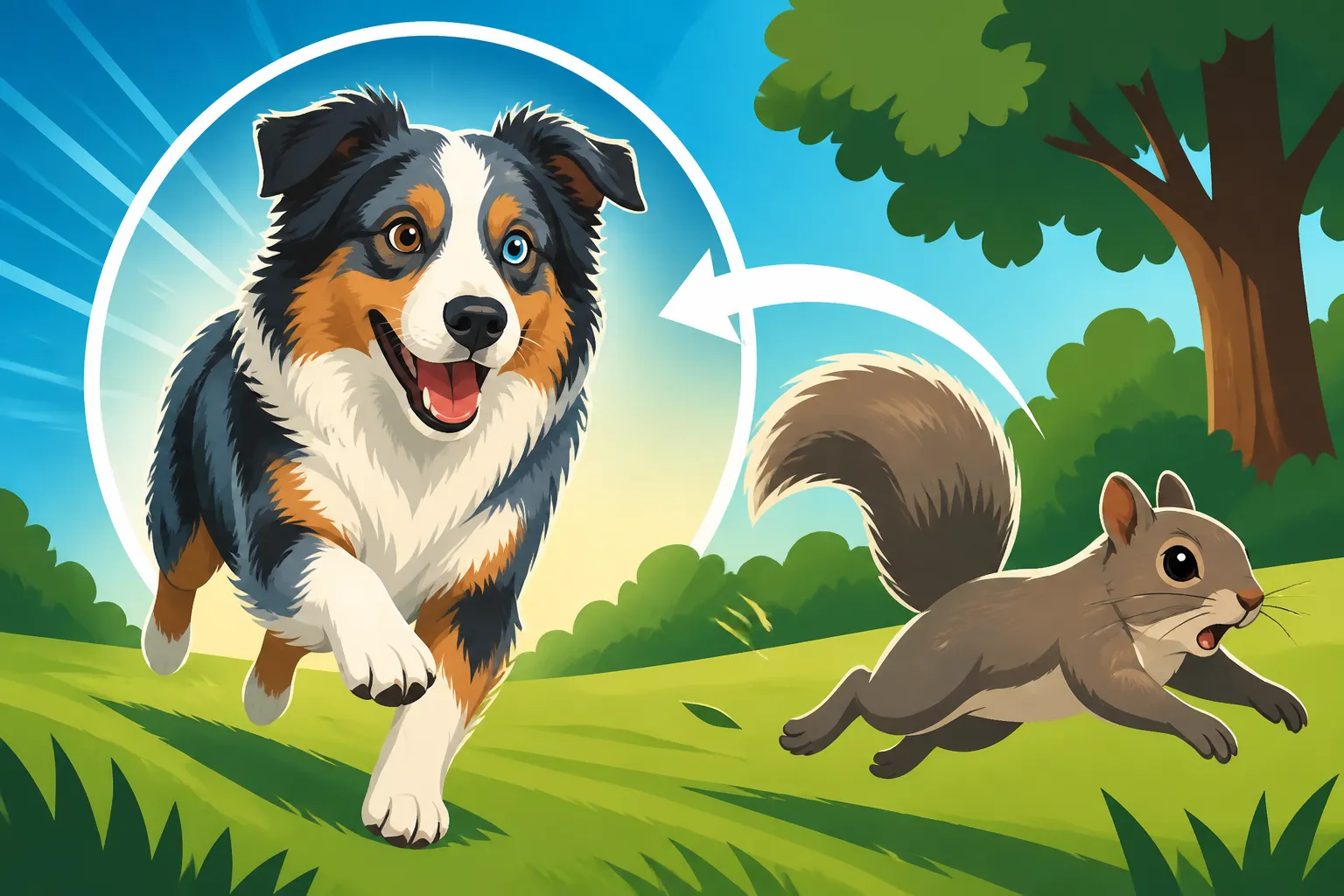
Australian Shepherd Recall Off a Squirrel
There's nothing quite like the heart-stopping moment when your intelligent, energetic Australian Shepherd locks eyes on a squirrel, a rabbit, or even a blowing leaf, and takes off like a rocket, seemingly deaf to your panicked calls. That powerful prey drive, coupled with their innate herding instinct, makes teaching a reliable recall one of the biggest challenges—and triumphs—of owning an Aussie. This guide will dive deep into understanding that chase impulse and equip you with the strategies to build a recall that truly sticks, even when a bushy tail flicks.
Why Australian Shepherds Are So Distracted by Squirrels and Other Fast Movers
It's easy to get frustrated when your Australian Shepherd completely ignores you for a fleeting critter, but understanding why they do it is the first step toward effective training. Aussies were bred to work, to think independently, and to respond to movement. Those adorable floppy ears might just be filtering out your voice when a squirrel zips across the path.
The Deep Roots of Herding and Prey Drive
The Australian Shepherd’s ancestors were working dogs, selectively bred for centuries to gather and control livestock. This means they possess an incredibly strong instinct to chase, track, and "manage" anything that moves. A squirrel darting up a tree or a bunny hopping across a field isn't just a distraction; it's a job opportunity in your Aussie's mind. They aren't being disobedient; they're simply doing what their genetics tell them to do. This drive is often referred to as The Australian Shepherd Herding Drive You Cannot Train Out.
Think about it from their perspective: that squirrel is behaving exactly like a tiny, fast-moving sheep. The chase, the focus, the desire to bring it back (or at least stop its movement) are hardwired into their DNA. This isn't something you can punish out of them; it's a force of nature that needs to be understood and channeled appropriately. You can't eradicate the drive, but you can definitely build a stronger counter-command.
The Thrill of the Chase and Self-Reinforcement
Chasing is incredibly rewarding for a dog. The rush of adrenaline, the physical exertion, and the potential (even if rarely realized) for a catch are all powerful motivators. Every time your Aussie successfully chases a squirrel, even if they don't catch it, the act of chasing itself becomes its own reward. This self-reinforcement makes breaking the habit particularly challenging because the dog doesn't need you to give them a treat or praise; the chase is the treat.
This means that your recall command has to be even more rewarding and exciting than the thrill of the chase. You're essentially competing with one of the strongest primal urges a dog has. It’s a tall order, but definitely achievable with consistent, high-value training. Understanding this powerful internal reward system helps you appreciate why simply yelling "COME!" isn't enough when a rabbit streaks by.
Building the Bedrock: Foundation Recall Skills
Before you can tackle the squirrel-level distractions, you need to ensure your Australian Shepherd has a rock-solid understanding of what "come" means in a distraction-free environment. This is where the real work begins, establishing an undeniable positive association with responding to your call.
Making "Come" the Best Thing Ever
Your recall cue—whether it’s "Come," "Here," or a whistle—needs to mean "party time!" every single time. Start in a very quiet, contained area like your living room or a securely fenced yard with no distractions. Say your recall word once, enthusiastically. As soon as your Aussie turns their head, or takes a step towards you, start praising them and backpedaling. When they reach you, immediately reward them with the absolute highest-value treat you can find – think cooked chicken, cheese, or hot dogs, not just kibble. Make it a celebration.
Practice this many, many times a day, for short bursts. Avoid using your recall word for anything negative, like calling them to put on a leash to leave the park when they don’t want to. If "come" sometimes means "fun stops," it will lose its power. Every single time they come to you, even if you just wanted to pet them, give them a small, unexpected high-value reward. You want them to think of "come" as winning the lottery.
The Power of the Long Line in Building Trust
Once your Aussie has a good foundation in a distraction-free zone, it's time to introduce a long line. This is a critical tool for safely practicing recall in progressively more distracting environments without letting your dog self-reinforce a chase. A long line can range from 15 to 50 feet and allows your dog freedom to explore while you maintain control. Brands available on Amazon offer various lengths and materials.
Attach the long line to a well-fitting harness (never a neck collar when using a long line, as a sudden stop can injure their neck). Let them wander, sniff, and enjoy being a dog. When they are mildly distracted but not fixated, give your recall cue. If they don't immediately respond, gently reel them in while still giving your recall cue and praising them. The moment they start moving toward you, drop the line and let them come the rest of the way, rewarding heavily. This teaches them that resisting your call means getting guided in, but responding quickly earns massive rewards. You might also want to explore Long Line Length for an Australian Shepherd to decide what's best for your situation.
Leveling Up: Introducing Distractions Gradually
Once your Aussie is consistently responding to your recall on a long line in a relatively calm environment, it’s time to slowly increase the challenge. This is where most owners get stuck, jumping too quickly to high-level distractions.
Controlled Exposure to Mild Distractions
Start small. Practice recall on a long line in a park when it’s mostly empty, or on a quiet street where people or other dogs are far off in the distance. The goal is to set your Aussie up for success. Have a friend walk by at a distance, or introduce a familiar, low-key dog to the environment. Give your recall cue before your Aussie becomes overly fixated. If you wait until they are staring intently at a distant squirrel, you’ve likely waited too long.
When they respond, even if it's just a slight turn of the head, reward them generously. Gradually decrease the distance to the distraction as they gain confidence. Remember, success breeds success. If they fail repeatedly because the distractions are too high, they're learning that your recall cue is optional. Consistency and patience are key here.
The Hierarchy of Distractions: From Leaves to Live Action
Create a mental "hierarchy of distractions" for your Aussie. It might look something like this:
- Low: A rustling leaf, a distant bird, a person walking by.
- Medium: A jogger, a child playing, another dog on a leash.
- High: A bicyclist, a skateboarder, a cat, and finally, the ultimate challenge: a squirrel.
Start at the bottom of the list and don't move up until your Aussie has mastered recall at the current level with 90-100% reliability. This takes time, often weeks or months at each stage. Always use the long line in these stages to prevent them from bolting and self-reinforcing the chase. Practicing in various environments, such as Practicing Aussie Recall in a Fenced Field, helps generalize the command.
The Emergency Recall: When It's More Than Just a Squirrel
Sometimes, a squirrel isn't just a squirrel; it's a squirrel running towards a busy road, or a rabbit disappearing into dangerous thicket. For these critical moments, you need an emergency recall – a command so powerful it cuts through any distraction.
Choosing and Proofing Your Emergency Cue
Your emergency recall needs to be a unique word or sound that you never use for anything else. A whistle is often an excellent choice, as its sound carries further and has a distinct quality that cuts through ambient noise better than a human voice. Building an Emergency Recall Whistle for an Aussie can be incredibly effective. Once chosen, this cue should only be associated with the absolute highest rewards and a complete, instant cessation of whatever your Aussie is doing.
To proof this, practice it intermittently and unpredictably. If you only use it in emergencies, it won't have enough positive reinforcement attached to it. Every few days, or even once a week, use your emergency cue when your dog is engaged in something they love (but not something dangerous). As soon as they respond, give them a jackpot reward – a handful of their favorite treats, a minute of intense tug, or a special toy they only get for this. This keeps the value of the emergency cue incredibly high.
Situational Awareness and Prevention
A huge part of a successful emergency recall is preventative. This means being constantly aware of your surroundings when you're out with your Aussie. Scan ahead for potential triggers – is there a patch of woods known for squirrels? Are there children playing with a ball that might get loose? If you see a potential high-level distraction approaching, get your Aussie's attention before they spot it.
You can often avoid the full-on chase impulse by redirecting their focus early. Call their name, ask for a "watch me," or offer a treat right as they start to notice something. This proactive approach prevents the situation from escalating to a point where even your emergency recall might be tested to its limits. Remember, an Australian Shepherd's attention can be deeply focused, so breaking that concentration requires strong tools. An Australian Shepherd That Chases Cars is another situation where early intervention and a strong emergency recall are paramount.
Troubleshooting Common Recall Breakdowns
Even with diligent training, every Aussie owner hits recall roadblocks. It's frustrating when your usually obedient dog seems to "forget" everything you've taught them. Identifying the common pitfalls can help you get back on track.
"Selective Hearing" and Environmental Proofing
Many Aussies develop "selective hearing," where they respond perfectly at home but not at the park. This usually means you haven't "proofed" the behavior in enough different environments and with varying distractions. It's not that they don't know the command; it's that they don't generalize it across all contexts. To combat this, you need to practice recall in as many different locations as possible – different parks, quiet trails, even busy sidewalks – always starting on a long line and working your way up.
Consider what BAXTER & Bella or similar online training platforms offer in terms of structured lessons for proofing commands. They often break down environmental exposure into manageable steps. This ensures your Aussie learns that "come" means "come," regardless of whether they're in the backyard or at a bustling farmer's market. Each new environment is like starting recall training over at a lower distraction level, slowly building back up to off-leash reliability.
Adolescent Regression and "Teenage Years"
Just like human teenagers, adolescent Australian Shepherds (typically between 6 months and 2 years old) can experience a period of regression where previously mastered commands seem to vanish into thin air. Their brains are developing, hormones are raging, and they're testing boundaries. This is not a sign that your training has failed, but rather that you need to go back to basics, reinforcing heavily and being extra consistent. Whether an Aussie Recall Holds at Adolescence is a common concern during this period.
During this phase, lean heavily on your long line for safety. Shorten your recall practice sessions but increase their frequency. Re-introduce those super high-value treats and make recall extra fun. This isn't the time to ease up; it's the time to double down on positive reinforcement and make sure your Aussie knows that responding to you is always the best choice, even when their hormones are telling them to be independent.
When Underlying Issues Affect Recall
Sometimes, a sudden breakdown in recall isn't about training at all. Pain, fear, or an increase in anxiety can cause a dog to ignore commands and focus on self-preservation or avoiding discomfort. If your Aussie's recall suddenly deteriorates, especially without clear environmental triggers, a vet check-up is always a good idea to rule out any medical issues.
Additionally, factors like overarousal or reactivity can make recall impossible. An Aussie that is already overstimulated by their environment is less likely to hear or process your command. Addressing Australian Shepherd Reactivity and Overarousal through management and counter-conditioning can indirectly improve recall by reducing the dog's overall stress and excitement levels, making them more receptive to your voice.
Maintaining a Rock-Solid Recall for Life
Building a reliable recall isn't a "one-and-done" task. It's a lifelong commitment to reinforcement, practice, and understanding your Australian Shepherd's unique drives.
Consistent Reinforcement and High-Value Rewards
Never stop rewarding your Aussie for coming when called, even after years of reliability. You don't have to give them a hot dog every time, but a sincere "Good dog!" and a happy scratch behind the ears, or a quick game of tug, should always accompany their return. Keep a stash of high-value treats for unexpected moments when they surprise you with a lightning-fast recall. The value of your reward must remain competitive with the environment.
Vary your rewards to keep things interesting. Sometimes it's food, sometimes it's a favorite squeaky toy, sometimes it's enthusiastic praise and petting. Keeping your rewards unpredictable and exciting helps maintain the powerful positive association with responding to your cue. You want your Aussie to think, "What amazing thing will happen this time?!" whenever they hear your recall word.
Daily Engagement and Mental Work
A tired Aussie is a well-behaved Aussie, and that often means a dog more receptive to commands. Beyond physical exercise, integrating daily mental stimulation can significantly help manage their high drive and improve their responsiveness. Activities like scent work, puzzle toys (many great options on Amazon), or trick training engage their intelligent minds and burn energy in a constructive way. Mental Work That Actually Tires an Australian Shepherd helps fulfill their breed-specific needs and makes them less prone to chasing every flicker of movement.
When your Australian Shepherd's mental and physical needs are met, they are less likely to be "over threshold" and reactive to environmental stimuli. This means their focus is more readily available to you, making recall training much more effective. Think of it as creating a more balanced dog overall, which then translates to better manners in distracting environments.
The Recall "Check-In" Game
Turn recall into a fun game even when you don't need your dog to come. While on a walk in a safe, fenced area, call your Aussie, reward them, and then immediately release them back to sniff and play. Do this several times during a walk. This teaches them that coming to you doesn't mean the end of fun; it often means a quick reward and then more fun.
This "check-in" approach also helps maintain engagement with you, making them more likely to glance your way periodically and respond quickly when a real need for recall arises. It keeps the recall muscle strong and the positive association fresh in their minds, reinforcing that you are the source of good things, even amidst tempting distractions.
Table: Recall Training Progression and Tips
To help you visualize the journey, here's a table outlining key stages and corresponding strategies for recall success:
| Recall Stage | Environment / Distraction Level | Training Focus | Key Strategies & Tools |
|---|---|---|---|
| Foundation | Quiet home, securely fenced yard (no distractions) | Building a positive, instant association with "come" | Short sessions, high-value treats, enthusiastic praise, 100% success rate, never punish. |
| Low Distraction | Quiet park, open field (distant, mild distractions) | Generalizing recall cue to new, calm environments | Start on a 15-30 ft long line, use slightly less common high-value treats, vary rewards. |
| Moderate Distraction | Public park, walking trails (people, dogs at a distance) | Maintaining focus amidst mild environmental stimuli | Move to a 30-50 ft long line, practice "check-ins", use a consistent recall phrase or whistle. |
| High Distraction | Busy park, areas with known wildlife (squirrels, bikes) | Proofing recall under strong competing motivators | Emergency recall cue, extra high-value jackpot rewards, strict long line use, proactive observation. |
| Adolescence / Regression | Any environment | Re-establish foundation, overcome "selective hearing" | Go back to basics, shorten line, increase treat value, consistent practice, understanding patience. |
| Lifelong Maintenance | All environments | Keep recall strong, fun, and reliable through all ages | Continue random rewards, play "check-in" game, incorporate mental stimulation, vet checks for changes. |
Remember, every Australian Shepherd is an individual, and their journey to a reliable recall will be unique. Celebrate every small victory, be patient with setbacks, and never underestimate the power of high-value rewards and consistency. With dedication, you and your Aussie can enjoy many safe, off-leash adventures together.
Disclaimer
This article is for general informational purposes only and does not constitute professional advice. Laws, prices and regulations vary by location and change over time. Consult a qualified professional for guidance on your specific situation.