How an Aussie Plays With Non-Herding Breeds
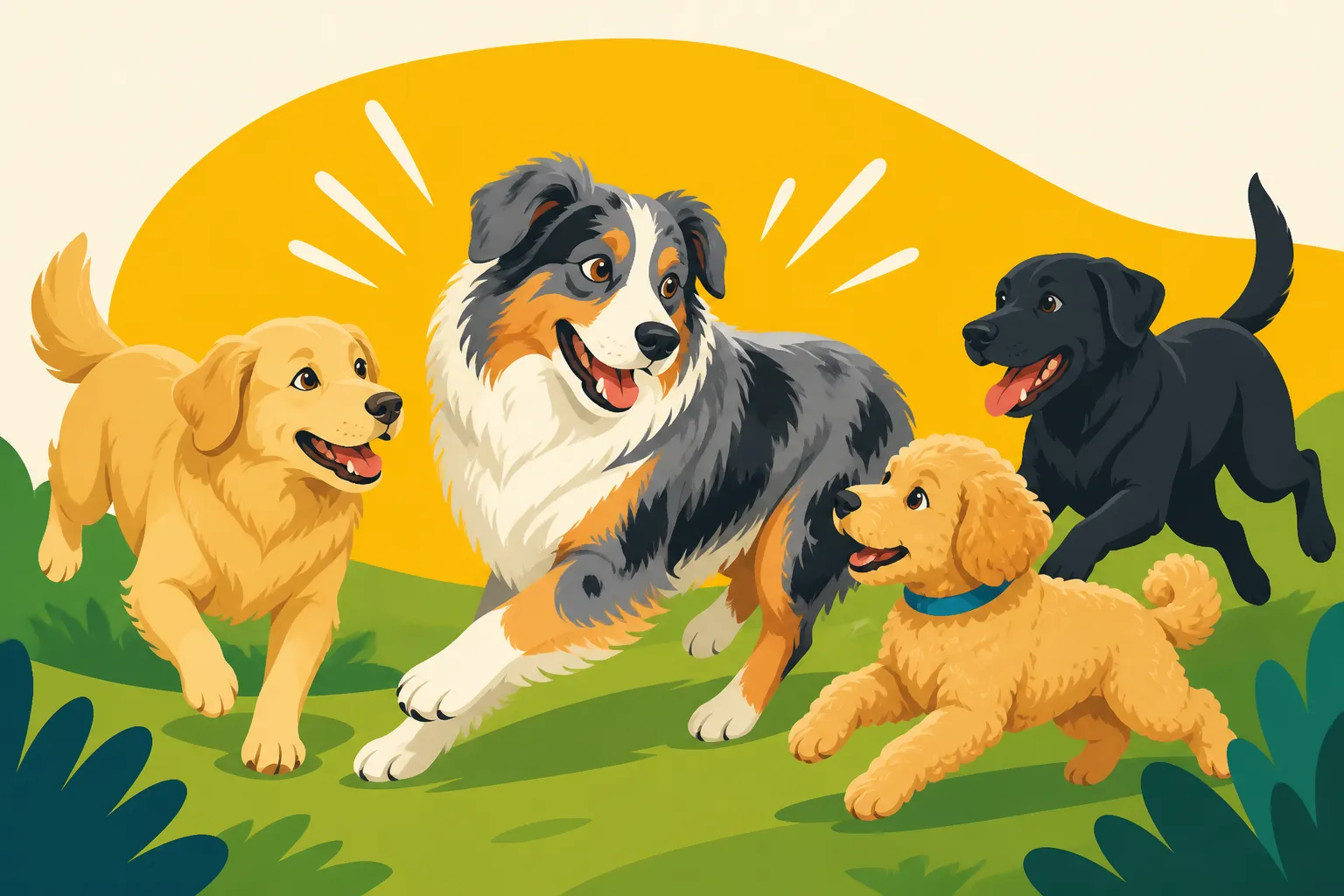
It’s a common scenario: you’ve got a spirited Australian Shepherd, bursting with energy and ready to play, but when they encounter dogs of other breeds, things don't always go as smoothly as you’d hope. Their unique play style, driven by generations of herding instinct, can sometimes be misunderstood or even overwhelming for a Labrador who just wants to fetch, or a bulldog who prefers a good wrestle. This guide will walk you through the distinct characteristics of Aussie play, help you understand why it sometimes clashes with non-herding breeds, and offer practical strategies to ensure safer, more enjoyable interactions for everyone involved.
Understanding the Australian Shepherd Play Style
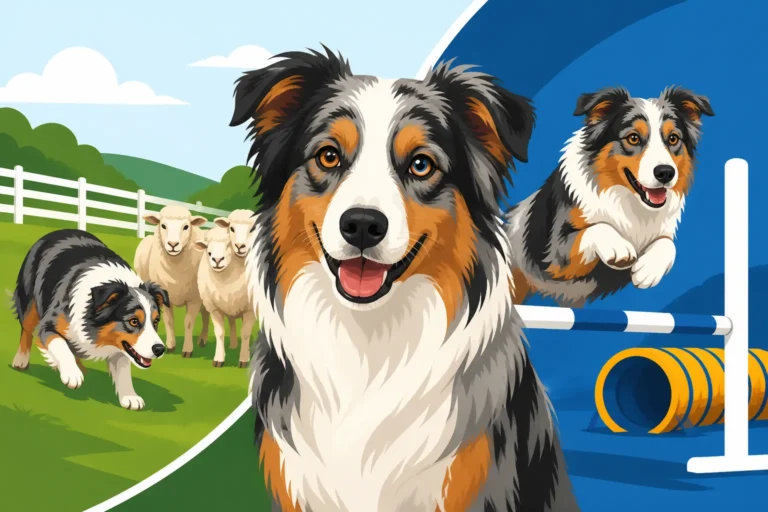
Australian Shepherds are phenomenal dogs, intelligent, athletic, and fiercely loyal. But beneath that beautiful coat and those captivating eyes lies a powerful, instinctual drive to herd. This isn't just something they can do; it's often hard-wired into their very being, shaping how they see the world and, crucially, how they play.
The Herding Instinct in Play
Even if your Aussie has never seen a sheep in their life, that deep-seated herding instinct often translates directly into their play. Imagine a border collie on a farm, constantly moving, circling, and gathering livestock – that's the blueprint. In a play scenario, this means your Australian Shepherd might not engage in the same reciprocal chase games or "bitey-face" wrestling that many other breeds enjoy. Their primary goal often becomes to control the movement of their playmate, to "collect" them.
This inherent drive often manifests as specific behaviors: they might nip at heels or flanks, not out of aggression, but to direct movement. They might body-check or bump another dog to cut off an escape route, or circle rapidly to keep their playmate contained. For an Australian Shepherd, successful play often means getting the other dog to move where they want them to go. While this might be perfectly acceptable to another herding breed that understands the "game," it can be incredibly confusing and even unwelcome to a breed that has no concept of being "managed." It’s less about a shared, free-flowing game and more about a strategic exercise in control for the Aussie.
The subtle difference in intent here is key. Many dogs play by taking turns chasing, or by engaging in a push-and-pull game of wrestling. An Australian Shepherd, however, is often more interested in maintaining a constant state of motion or bringing a dog back into their perceived "flock." This can lead to them chasing tirelessly, even if the other dog is clearly trying to disengage, or constantly cutting off another dog's path rather than engaging in a more give-and-take interaction. Understanding this fundamental difference is the first step in managing mixed-breed play.
Intensity and Endurance
Australian Shepherds are built for work, and that means they have incredible stamina and a high tolerance for continuous activity. When an Aussie plays, they often do so with an intensity and endurance that can easily overwhelm other dogs who aren't wired for such sustained effort. They can go and go and go, seemingly without a break, and this relentless energy can be a lot for a more laid-back or easily fatigued breed to handle.
Picture a dog park scene: a golden retriever might enjoy a good sprint, then settle down for a sniff and a breather. Your Australian Shepherd, however, might interpret that pause as an invitation to re-engage the chase, constantly nudging, barking, or circling to get the game going again. This isn't malicious; it's simply their natural operating speed. They're bred to work for hours, often without direct human instruction, and that self-starting, self-sustaining drive carries over into their recreational activities.
This high intensity can quickly turn a fun interaction into a stressful one for the non-herding dog. What starts as an exciting chase might become an exasperating pursuit for a dog that needs more downtime. Owners of non-herding breeds might notice their dogs becoming increasingly stiff, giving appeasement signals, or actively trying to hide from the persistent Aussie. It's crucial for us as Aussie owners to recognize this natural inclination and be prepared to step in, otherwise, our dogs' good intentions can quickly lead to friction.
Sensitivity and Body Language
Aussies are renowned for their intelligence and their ability to read subtle cues – they are, after all, meant to work closely with their human partners and understand complex tasks. They are often very perceptive about their environment and the behavior of other animals. However, this keen observation can sometimes be overridden by their powerful herding drive, especially when they get "in the zone" during play. They might see a dog dart away and instinctively chase, even if that dog is sending clear signals that they're no longer having fun.
The conflict arises when their strong desire to control and move another dog clashes with the other dog's subtle (or not-so-subtle) communication that they want the interaction to stop. A quick head turn, a lip lick, a yawn, or even a slight crouch from a non-herding dog might go unnoticed by an Aussie deeply engrossed in their herding game. This isn't necessarily a failure of reading body language, but rather a prioritization of their innate drive over interpreting nuanced social signals.
Furthermore, Aussies themselves can be quite sensitive. While they might dish out intense play, they can sometimes react poorly to the more boisterous, less refined play styles of certain non-herding breeds. A Labrador's joyful body slam or a Boxer's exuberant pawing might be perfectly normal in their own circles, but an Aussie might find it too rough or intrusive, leading to a startled yelp, a sharp bark, or a quick retreat. It's a delicate balance, and understanding both your Aussie's outgoing yet sometimes sensitive nature, and the other dog's communication, is paramount. Reading an Aussie Body Language Under a Full Coat can be challenging, but focusing on the other dog's cues is a great starting point.
Common Play Mismatches with Non-Herding Breeds
When an Australian Shepherd's natural play style meets that of a non-herding breed, it's a bit like two different languages trying to hold a conversation. Both dogs might have good intentions, but their methods of communication and their expectations for interaction can be vastly different, leading to misunderstandings and sometimes, conflict.
The Chase-and-Nip vs. Mutual Play
One of the most frequent points of contention arises from the Australian Shepherd's instinct to chase and nip at the heels or flanks of other dogs. For an Aussie, this is a perfectly normal, functional part of herding. They are trying to gather, direct, and move the other dog. For many non-herding breeds, however, being relentlessly chased and nipped can be perceived as rude, threatening, or simply annoying. They might see it as an aggressive act rather than an invitation to play.
Consider a Basset Hound, whose idea of play might involve a lumbering run followed by a good sniff, or a Pug who prefers short bursts of activity and then snuggling. When an Australian Shepherd continually nips at their heels, circles them, and tries to get them moving again, these breeds aren't going to understand the 'game.' They don't have the ingrained response to be 'herded.' Instead, they might become increasingly agitated, try to hide, or even snap back in frustration because their boundaries are being ignored. Why an Australian Shepherd Nips at Heels explores this in more detail.
The disconnect is profound: one dog is trying to control movement, while the other is looking for a reciprocal interaction – perhaps a shared chase where roles switch, or a gentle wrestle that involves mutual consent. When the Aussie maintains the 'herder' role consistently, and the other dog always feels like the 'herd,' it quickly stops being fun for one of them. This can be particularly obvious if your Aussie constantly tries to herd a ball away from a dog who wants to play fetch, or pushes another dog away from a person, trying to 'contain' them.
Space Invaders and Personal Boundaries
Herding, by its very nature, often requires getting into another animal's personal space to influence their direction. Australian Shepherds are experts at this. They might run close, cut off paths, use their bodies to redirect, and generally operate within a tight radius around their "herd." This constant proximity and physical contact, while necessary for herding, can be a major violation of personal boundaries for many non-herding breeds.
Many dogs, especially those from more independent or guarding lines, value their personal space greatly. They communicate discomfort with close proximity through subtle body language: a stiffening of the body, a whale eye, or even a direct stare. When an Australian Shepherd consistently ignores these signals, either because they don't perceive them as stop signs or because their drive overrides their interpretation, it can lead to escalating tension. The non-herding dog might feel trapped, threatened, or simply overwhelmed by the relentless invasion of their bubble.
Imagine a typically reserved Akita or a self-possessed Great Dane. Their play might involve a more formal exchange of greetings followed by parallel play or short, agreed-upon wrestling matches. An Aussie continually bumping, circling, or pressing into them would be seen as incredibly rude and disrespectful. This can easily trigger a defensive response from the other dog, who feels they need to protect their space. It's a key reason why An Australian Shepherd Circling Joggers and Cyclists or even their own human family members can lead to misunderstanding if those being "herded" don't understand the underlying motivation.
Barking and Vocalization in Play
Australian Shepherds can be quite vocal, and this trait is often tied to their working heritage. Herding barks are typically sharp, insistent, and serve as a tool to move and direct livestock. This means an Aussie's vocalizations during play are often not the playful yips or low, rumbling growls you might hear from other breeds engaging in a wrestling match. Instead, they can be high-pitched, repetitive, and very commanding.
For many non-herding dogs, especially those who are more sensitive to noise or who interpret sharp barks as aggression, this vocalization can be genuinely alarming. A dog who prefers a quieter, more gentle play style might quickly become stressed or fearful when an Australian Shepherd repeatedly barks directly at them while chasing or trying to initiate play. They don't understand that the bark is simply part of the Aussie's job.
Consider a timid Cavalier King Charles Spaniel or a calm Bulldog. A constant barrage of insistent barks from an enthusiastic Aussie could easily make them want to retreat and end the interaction. Other breeds, particularly those with a strong guarding instinct or a history of responding to perceived threats, might even take offense at the vocal challenge and react with aggression. The sound volume and tone of an Aussie's play barks are often distinct, and it's essential for owners to recognize how these vocal cues might be received by dogs from different backgrounds. Australian Shepherd Puppy Biting and Herding Nips often come hand-in-hand with these vocalizations, compounding the intensity for other dogs.
Strategies for Successful Inter-Breed Play
Understanding the nuances of your Australian Shepherd's play style is the first hurdle. The next is actively managing and guiding these interactions to ensure they are positive, safe, and fair to all dogs involved. This isn't about suppressing your Aussie's natural instincts entirely, but rather providing appropriate outlets and clear boundaries.
Supervised and Structured Interactions
The golden rule for Australian Shepherds playing with non-herding breeds is active, hands-on supervision. You cannot simply "let them figure it out" and expect harmony. Your role as the owner is to be a vigilant referee, ready to intervene at the first sign of discomfort or escalating tension. This means more than just watching from a distance; it means being engaged in the interaction, ready to step in physically if needed.
Structured playdates, especially in a familiar and controlled environment like a securely fenced yard, are far preferable to free-for-all dog parks, at least initially. When you introduce your Aussie to a new dog, keep them on a long line or leash at first, even if it's just a drag line. This gives you an immediate way to interrupt persistent herding, prevent rude invasions of space, or redirect their attention before things get too intense. Consider play sessions to be short and sweet, ending on a positive note before either dog becomes overstimulated or frustrated.
Think about the context: is it an open field where an Aussie can run for miles, creating a high-energy chase scenario? Or is it a smaller, more confined space that might feel more intense? Opt for environments where you can easily manage the interaction. If you notice your Aussie constantly attempting to herd a specific dog, or if the other dog is repeatedly disengaging, it's time to step in. A gentle leash pull, a verbal cue, or even physically blocking your Aussie can prevent issues. Focus on quality, supervised interactions rather than letting your Aussie have carte blanche with every dog they meet.
Teaching an "Off Switch" and Impulse Control
One of the most valuable things you can teach an Australian Shepherd is an "off switch" – the ability to disengage from play, settle down, and respect boundaries. Because Aussies can get so focused on their herding "job," breaking their concentration once they're in full play mode can be challenging. This requires consistent training and reinforcement of calm behaviors.
Start by teaching a strong "leave it" or "break" cue outside of play, in less stimulating environments. Practice calling your Aussie away from interesting things, rewarding them generously when they respond. Then, gradually introduce this cue into play scenarios. During a play session, if you see your Aussie getting too intense or the other dog showing signs of stress, use your "break" cue. If they respond, praise and reward them, then allow a moment of calm before they re-engage (if appropriate). If they don't respond, physically step in, take them aside for a brief timeout, or clip on a leash. An Aussie That Cannot Switch Off details this challenge.
Impulse control isn't just about stopping play; it's about making good choices during play. Training programs, like those offered by BAXTER & Bella online puppy school, can provide excellent structured lessons on impulse control, building a solid foundation from puppyhood. They teach owners how to manage arousal levels and encourage self-control in various situations, which is invaluable for an Aussie. Furthermore, teaching your Australian Shepherd to settle on a mat, or to relax on command, can give them the tools to de-escalate their own energy. This not only makes them better playmates but also calmer companions in everyday life.
Providing Appropriate Outlets for Herding Drive
Since the herding instinct is so strong, simply telling your Aussie "no" all the time won't solve the problem; it just frustrates them. The key is to redirect that powerful drive into appropriate, acceptable, and safe channels. If your Australian Shepherd needs to herd, chase, and organize, then it’s your job to provide those opportunities in a way that doesn't involve bothering other dogs.
There are many fantastic dog sports and activities that tap into an Aussie's natural herding abilities without requiring actual livestock or other dogs. Treibball, for instance, allows dogs to herd large exercise balls into a goal, mimicking the act of gathering a flock. Flyball involves racing and retrieving, satisfying their chase drive. And even simple games with a sturdy herding ball from a vendor like Amazon, where they learn to push and control the ball, can be incredibly satisfying. Flirt poles are another excellent tool, providing a fast-moving, "prey-like" object for your Aussie to chase and "catch," satisfying their instinct to pursue and engage. Tug as a Legal Outlet for Aussie Herding Drive can also be a fantastic way to engage their mouth and body in an acceptable, energetic manner.
Beyond structured sports, even mental games can help. Scent work, puzzle feeders, and trick training engage their intelligent minds and burn energy in a different way, reducing the residual drive that might otherwise come out in inappropriate herding behaviors towards other dogs. The more you can fulfill their innate needs through purposeful activities, the less they will feel compelled to try and "manage" their canine friends. Regularly providing these outlets is a proactive step in fostering better inter-breed play.
Recognizing When to Intervene and Prevent Conflict
Even with the best intentions and training, not every play interaction will be smooth sailing. As an Aussie owner, developing a keen eye for canine body language and knowing when to step in is paramount. It’s about preventing problems before they escalate, ensuring that both your dog and their playmate have a positive experience, or at least a safe one.
Reading Canine Body Language
This is perhaps the most critical skill for any dog owner, but especially when you have an Australian Shepherd who can be both intensely driven and subtly sensitive. You need to be able to accurately read the body language of both your Aussie and the other dog. Look for common signs of stress, discomfort, or over-arousal: lip licking, yawning (when not tired), whale eye (showing the whites of the eyes), stiff body posture, tucked tail, ears flattened back, excessive panting, or even a sudden shift in weight. These are often early warning signs that one or both dogs are not enjoying the interaction.
Pay particular attention to the non-herding dog. Are they trying to move away but being blocked? Are they giving appeasement signals like lowering their head, turning their body, or licking their lips repeatedly? Are they trying to hide behind their owner? Any sustained attempt to disengage that is being ignored by your Aussie is a clear signal for you to intervene. Similarly, watch for signs of frustration or irritation in the other dog, such as a low growl, a snarl, or even a quick snap in the air. These are direct communications that the play has crossed a boundary.
Your Aussie might also give signals, but sometimes their herding drive overrides them. For instance, an Aussie might be getting over-aroused and start to fixate, ignoring calls or becoming stiff in their body. Knowing these cues helps you to anticipate conflict. It's about being proactive rather than reactive, using your observations to prevent a negative experience. You'll want to review resources on dog body language frequently to stay sharp.
Time-Outs and Breaks
Sometimes, even if no obvious conflict has occurred, the intensity of play, especially from an Australian Shepherd, can simply be too much. This is where strategic time-outs and breaks become invaluable. It’s not about punishment; it’s about de-escalation and giving both dogs a chance to reset. A dog that is constantly being chased, herded, or pestered, even playfully, needs a breather.
If you notice either dog is getting too revved up, or if the play seems one-sided (your Aussie is always chasing, the other dog is always being chased), call your Aussie for a brief break. Leash them up, take them to a calm spot, have them sit, and reward them for settling. Even a minute or two of separation can significantly lower arousal levels. For younger or particularly excitable Aussies, regularly scheduled breaks are essential. Enforced Naps for an Overtired Aussie Puppy are a lifesaver in their early months, teaching them that quiet time is part of the day.
The goal of a time-out is to interrupt the cycle of escalation. By stepping in before a warning growl or a snap, you teach both dogs that you are managing the situation and that they don't need to resolve it themselves. This builds trust and confidence in your leadership. It also ensures that play remains a positive experience, rather than a frustrating or fearful one for the other dog. Don't be afraid to end a play session entirely if the dogs simply aren't meshing or if one is becoming too stressed.
Knowing When a Match Is Not Meant to Be
This might be the hardest lesson for many owners, but it's crucial: not all dogs are meant to be playmates, and that is perfectly okay. Just like people, dogs have different personalities, energy levels, and play styles. Trying to force an interaction that consistently causes stress or conflict for either your Australian Shepherd or the other dog is unfair and potentially dangerous.
Recognize persistent signs of incompatibility. If a non-herding dog consistently retreats, hides, snaps, growls, or becomes fearful or aggressive every time your Aussie tries to play, it's a clear signal. Similarly, if your Aussie consistently ignores social cues, escalates play to an inappropriate level, or shows clear frustration when their herding attempts are rebuffed, it might be best to seek out different play partners. It's not a failure on your part or your dog's part; it's simply a recognition that their play languages are too different.
Focus on quality over quantity. Instead of trying to make your Aussie compatible with every dog at the park, identify a few well-matched playmates whose energy levels and styles complement your Aussie's. Perhaps a high-energy retrieve-driven dog who doesn't mind a chase, or another herding breed who understands the game. Finding dogs who can handle your Aussie's intensity and whose play style doesn't trigger negative herding behaviors is more valuable than constant, potentially stressful, interactions with incompatible dogs. Remember, your Aussie is still a wonderful dog, even if they don't click with everyone.
| Play Style Trait | Australian Shepherd Play | Typical Non-Herding Breed Play | Potential Mismatch & Outcome |
|---|---|---|---|
| Primary Goal | Control movement, gather, chase | Mutual chase, wrestling, bitey-face, tug, fetch | Non-herding dog feels "managed" or chased relentlessly, gets annoyed. |
| Physical Contact | Body bumps, hip checks, heel nipping, circling | Bounding, pouncing, reciprocal wrestling, open mouth play | Non-herding dog may see nipping/bumping as aggressive or rude. |
| Intensity/Duration | High, sustained, often ignores fatigue cues from others | Varies widely; often takes breaks, reciprocal invitations | Non-herding dog gets overwhelmed or exhausted, retreats. |
| Vocalization | Sharp, insistent herding barks, growls in play | Growls, barks (often lower pitch or more playful), yips, whines | Non-herding dog may perceive vocalizations as aggression. |
| Personal Space | Invades space to redirect or gather | Often respects personal space, uses bows to invite play | Non-herding dog feels crowded or threatened. |
Ultimately, Australian Shepherds are incredible companions with an amazing drive. Their unique play style is a testament to their heritage and intelligence. By understanding these inherent traits, proactively managing their interactions, and providing appropriate outlets for their energy, you can help your Aussie navigate the complex world of canine friendships. With careful supervision and thoughtful training, your Aussie can have fulfilling play experiences, even with dogs who speak a slightly different "play language."
Disclaimer
This article is for general informational purposes only and does not constitute professional advice. Laws, prices and regulations vary by location and change over time. Consult a qualified professional for guidance on your specific situation.