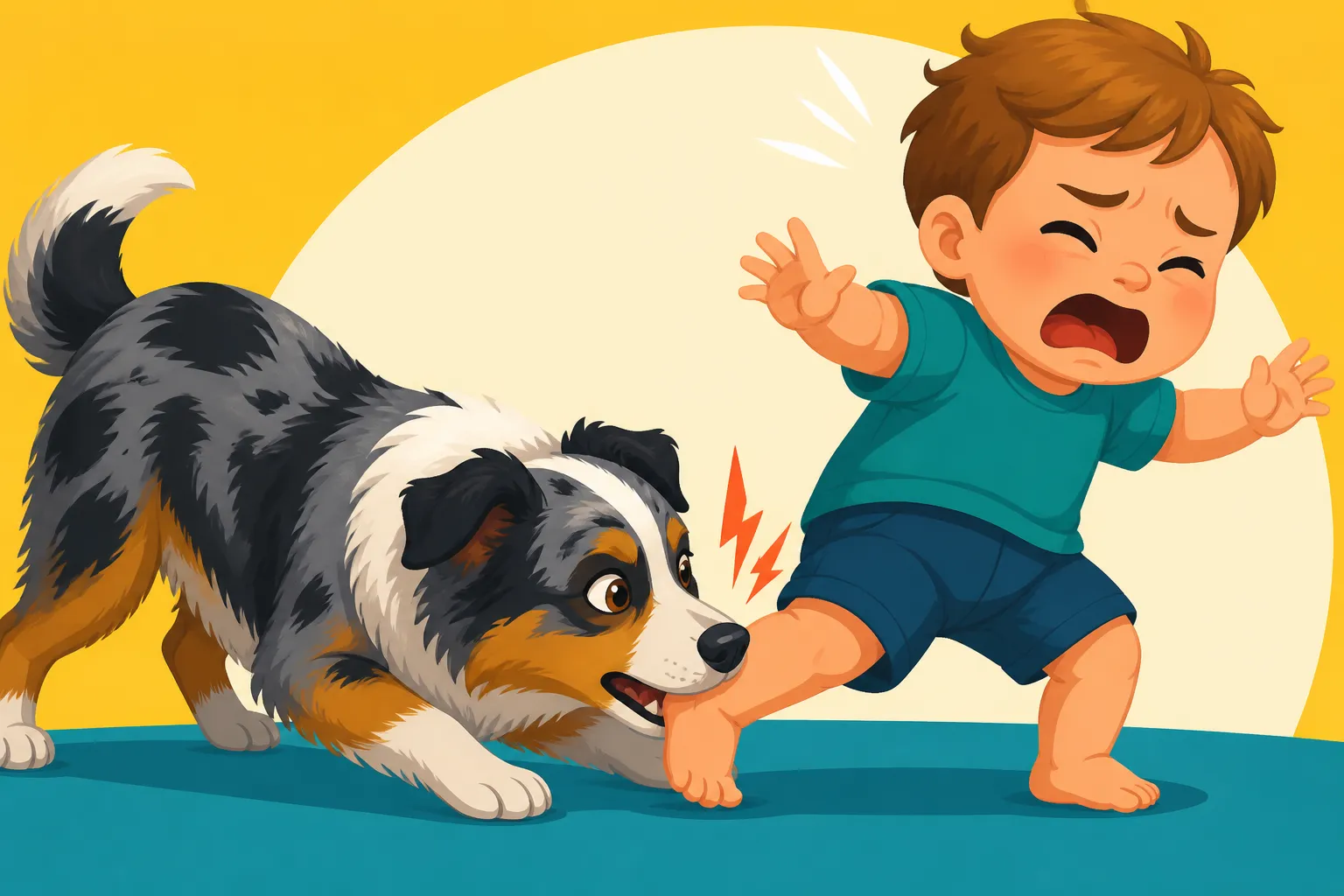
An Australian Shepherd Nipping a Toddler’s Ankles
It’s a heart-stopping moment for any parent: your beloved Australian Shepherd, usually so gentle, suddenly nips at your toddler’s ankles. This isn't just a rude gesture; it's a deep-seated instinct manifesting in a way that can be both startling and genuinely concerning for family safety. This guide will walk you through understanding why your Aussie resorts to this behavior and, more importantly, provide practical, empathetic strategies to manage and redirect that powerful herding drive.
Understanding the Herding Instinct Behind the Nip
The first step in addressing any Australian Shepherd behavior is to understand its roots. These aren't just pretty dogs with striking eyes; they are highly intelligent, driven working dogs bred for a very specific purpose: to herd. And that herding instinct, while often charming in their play, can become problematic when directed at the smallest, most unpredictable members of your family.
The Deep Roots of the Herding Breed
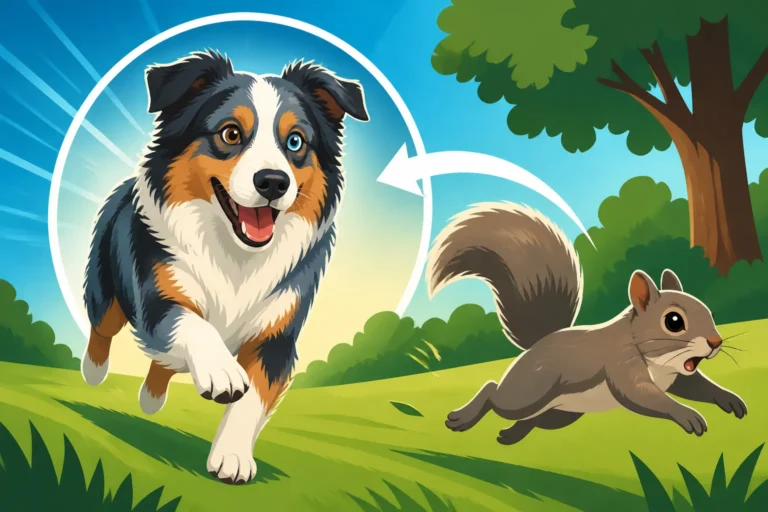
Australian Shepherds were developed to control livestock, moving animals by circling, nudging, and yes, sometimes nipping at their heels to guide them. This isn't aggression in the way we typically think of it; it's a functional, evolutionary behavior. When a dog nips at a toddler's ankles, they're not necessarily trying to harm them, but rather to gather, direct, or stop movement, much like their ancestors would do with a wayward sheep or cow. It’s an involuntary, almost automatic response to movement.
Many owners are taken by surprise when this happens because their Aussie is otherwise so loving and well-behaved. You might think, "My dog would never hurt a fly!" And while that's likely true, the instinct to herd is incredibly powerful and can override learned manners in high-stimulation environments. It's not a flaw in your dog's character; it's simply a strong manifestation of their breed's purpose. Recognizing The Australian Shepherd Herding Drive You Cannot Train Out is crucial to managing it.
Why Toddlers are "Prime Targets" for Herding
Consider how a toddler moves: often erratically, with sudden bursts of speed, unpredictable changes in direction, and sometimes accompanied by high-pitched squeals or excited cries. To an Australian Shepherd, this is practically a flashing neon sign that says, "Come herd me!" Their small stature, combined with their often wobbly gait, mimics the appearance and movement of young livestock that would have been prime targets for herding on a ranch.
The difference between a playful nip and an intense herding behavior can be subtle to the untrained eye, but the intent is usually to control. Your Aussie might circle, nose-nudge, or block the child's path, escalating to a quick nip if the child continues to move or if the dog feels its "herding" attempts are being ignored. It's not malicious; it's a dog trying to do the job it was bred for, only the "livestock" happens to be your precious child. This is a common issue, and many Aussie owners grapple with An Australian Shepherd Herding Children in the Yard.
Immediate Strategies to Prevent Nipping
When you have an Australian Shepherd and a toddler in the same house, safety is paramount. You need immediate, practical strategies to prevent nipping while you work on long-term solutions. These tactics focus on managing the environment and providing clear, consistent redirection.
Managing the Environment
The easiest way to prevent nipping is to prevent the opportunities for it to happen in the first place. This means creating a safe, controlled environment where both your toddler and your Aussie can coexist without unintended conflicts.
- Physical Barriers: This is your number one tool. Baby gates, playpens, and even a well-placed crate can be lifesavers. Establish separate zones in your home where your dog and child can be safely apart, especially during times when you can't offer 100% supervision. For instance, your toddler can play in a gated area while your Aussie has a designated "place" bed nearby, allowing them to observe calmly without direct interaction. You can find robust baby gates and crates easily online, perhaps from retailers like Amazon, to set up these safe zones.
- Constant Supervision: Never, ever leave your Australian Shepherd and toddler unsupervised, even for a second. An accidental nip can happen in the blink of an eye. This isn't about distrusting your dog; it's about acknowledging their strong instincts and ensuring everyone's safety.
- Leash Management Indoors: Sometimes, keeping your Aussie on a drag leash (a lightweight leash that trails behind them) even when indoors can be a huge help. It allows you to quickly and safely intervene if you see the "pre-nip" body language start to emerge. A quick, gentle step on the leash can interrupt the behavior without being punitive, giving you time to redirect.
Redirection and Positive Reinforcement
Once you've established a safe environment, the next step is to actively redirect the herding instinct when it starts to surface and reward appropriate behavior.
- Interruption and Redirection: The moment you see your Aussie fixating on your toddler's movement, or any signs of them getting ready to nip (lowering head, intense stare, stalking), interrupt it immediately. A sharp "Ah-ah!" or a clap can break their focus. Then, immediately redirect them to an appropriate chew toy or a game of fetch with you, far away from the child. The goal is to teach them that redirecting their energy to an approved item is far more rewarding than bothering the child. Remember, Presenting a Toy the Second an Aussie Nips is key to changing this pattern.
- Reward Calmness: Actively seek out and reward moments when your Australian Shepherd is calm around your toddler. If your dog is lying quietly on their bed while your toddler is playing in the same room (behind a barrier, of course), quietly toss them a treat or offer soft praise. This builds a positive association with the child's presence and reinforces the idea that calm behavior earns good things.
- Mental and Physical Outlet: A tired Aussie is a well-behaved Aussie. Ensure your dog is getting sufficient physical exercise and, equally important, mental stimulation every single day. Long walks, structured playtime, puzzle toys, and training sessions can help drain that excess energy and reduce the urge to herd. Consider how How Much Daily Exercise an Australian Shepherd Needs might not be enough if it's not also mentally engaging.
Long-Term Training and Management Solutions
While immediate strategies keep everyone safe, addressing the root cause requires consistent, long-term training and management. This is where you actively teach your Australian Shepherd alternative behaviors and provide appropriate outlets for their innate drives.
Teaching Impulse Control and an "Off Switch"
Australian Shepherds thrive on having a job and understanding boundaries. Teaching them strong impulse control commands is vital for coexisting peacefully with small, fast-moving humans.
- "Place" Command Training: This is a game-changer. Teach your Aussie to go to a designated "place" (a mat or bed) and stay there until released, even with distractions. Start in a quiet room, gradually adding distractions like toys rolling by, then eventually having your toddler present (always at a safe distance and supervised). This teaches your dog to settle and observe rather than engage in reactive herding behavior. This is directly tied to teaching your Aussie An Australian Shepherd That Cannot Switch Off.
- "Leave It" Command: This command is invaluable. Practice it with tempting items on the floor, then with moving objects, and eventually with your toddler's toys or even the toddler themselves (from a distance, of course, and never with actual contact). The goal is for your Aussie to ignore the movement or object on command.
- Building a Strong Recall: A reliable recall is crucial for safety and for interrupting unwanted behaviors from a distance. Practice "come" in various environments, making it the most rewarding thing your dog can do. If your Aussie starts to fixate on your toddler, a strong recall can bring them away from the situation before a nip occurs. For comprehensive online training resources, many owners find programs like those offered by BAXTER & Bella incredibly helpful in structuring these crucial commands and working on Teaching an Australian Shepherd an Off Switch.
Providing Appropriate Herding Outlets
You can't eliminate the herding instinct, but you can channel it into acceptable activities. Give your Aussie a job that fulfills their drive in a safe and structured way.
- Flirt Poles and Herding Balls: These tools are fantastic for burning energy and satisfying the chase instinct. A flirt pole allows your dog to chase a lure in a controlled manner, engaging their prey drive without involving your child. Large, sturdy herding balls (like the Jolly Ball or a similar durable product from Amazon) can be pushed and "herded" around a yard, giving your dog a safe target for their instincts. This is a perfect example of Tug as a Legal Outlet for Aussie Herding Drive, extending to other forms of toy-based redirection.
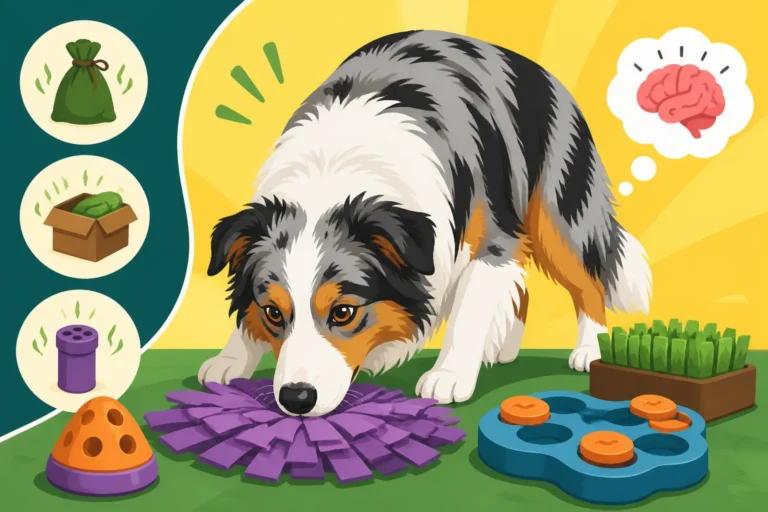
- Scent Work and Puzzle Toys: Mental exercise is just as important as physical. Hide-and-seek games with treats, scent work (like teaching them to find specific scents), and puzzle feeders can exhaust an Aussie's mind, making them less likely to invent their own "jobs" like herding children. Mental Work That Actually Tires an Australian Shepherd can significantly reduce unwanted behaviors.
- Structured Play, Not Free-for-All Chasing: Engage in structured play sessions with your Aussie, ensuring you initiate and end the play. Avoid games that encourage chasing or nipping at your hands or feet, as this can inadvertently reinforce similar behaviors towards children.
Socialization and Desensitization
Carefully planned socialization and desensitization can help your Aussie learn to be calm and respectful around children.
- Controlled Interactions: When you do allow your Aussie and toddler to be in the same room (always supervised and with a barrier), ensure these interactions are calm and positive. Have your toddler sit quietly in a high chair or playpen while you quietly reward your Aussie for remaining calm nearby.
- Gradual Exposure: Slowly and carefully expose your Australian Shepherd to the sounds and movements associated with children. Start with recorded sounds of children playing, rewarding your dog for calm responses. Gradually introduce them to children from a distance in a park setting, again, rewarding calm observation. The goal is to build positive associations, rather than allowing their natural reactive instincts to take over. This is a continuation of early efforts in Socializing an Aussie Puppy Off the Farm but specifically tailored to children.
When to Seek Professional Help
While many families can manage this behavior with consistent effort, there are times when professional intervention is not just helpful, but necessary. Recognizing these signs and knowing when to call in an expert can make all the difference for your family's safety and your dog's well-being.
Recognizing Escalating Behavior
It's important to be honest about the severity of your dog's nipping. While an initial "ankle nudge" might be instinctual, certain signs indicate the behavior is escalating and requires immediate professional attention.
- Increased Intensity or Frequency: If the nips become harder, more frequent, or if your dog is actively pursuing your child with intent to nip, this is a red flag. A light, exploratory nip is different from a strong bite that breaks skin or causes bruising.
- Inclusion of Other Aggressive Behaviors: If the nipping is accompanied by growling, snarling, prolonged intense stares, stiff body language, or attempts to bite harder when the child tries to move away, you are no longer dealing with simple herding. These are signs of potential aggression that need to be addressed by a professional immediately.
- Failure of Redirection: If your usual redirection methods (interrupting, offering a toy) are no longer working, or if your dog is becoming more focused on the child despite your efforts, it's a sign that the behavior is deeply ingrained or fueled by other factors.
Consulting a Certified Professional
Don't wait until an incident occurs that causes serious harm. If you're struggling to manage your Aussie's nipping behavior, especially if it's escalating, it's time to bring in a qualified professional.
- Look for Certified Professionals: Seek out a certified professional dog trainer (CPDT-KA) or a certified applied animal behaviorist (CAAB). These individuals have the knowledge and experience to assess your dog's behavior, identify underlying causes (such as fear, anxiety, or resource guarding that might mimic herding), and develop a safe, effective behavior modification plan. When it comes to something as serious as nipping children, Vetting a Trainer Before Booking an Aussie is essential.
- Emphasize Force-Free Methods: Always choose a trainer who uses positive reinforcement and force-free methods. Punitive training methods, like alpha rolling or harsh corrections, can exacerbate fear and aggression, making the problem worse and potentially damaging your bond with your dog. A good trainer will help you understand your dog's motivations and guide you in teaching them appropriate alternatives.
- Prioritize Safety: Ultimately, your family's safety is the priority. A professional can help you implement management strategies and training plans that ensure your toddler is safe while your Australian Shepherd learns to manage their powerful instincts in a positive way. Sometimes, this might even involve a temporary, stricter management plan until the training takes hold.
| Behavior Type | Description | Action Needed |
|---|---|---|
| Mild Herding Nip | Quick, light nips at ankles, circling, nudging. No broken skin. | Immediate environmental management, redirection, positive reinforcement. |
| Persistent Herding | Repeated nipping despite redirection, intense focus on child's movement. | Intensify training on impulse control, provide more structured outlets. |
| Escalating Nip | Nips become harder, more frequent, accompanied by growling or stiffness. | URGENT consultation with a certified professional dog trainer/behaviorist. |
| Aggressive Behavior | Snarling, biting that breaks skin, active pursuit, resource guarding. | IMMEDIATE consultation with a certified professional behaviorist. |
Disclaimer
This article is for general informational purposes only and does not constitute professional advice. Laws, prices and regulations vary by location and change over time. Consult a qualified professional for guidance on your specific situation.