Trick Training as Aussie Mental Work
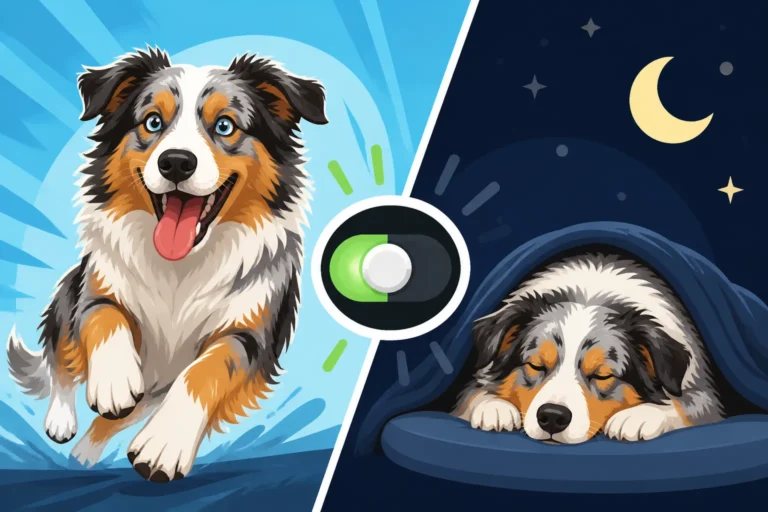
Anyone who lives with an Australian Shepherd knows that a long walk or even a spirited game of fetch often isn't enough to truly tire them out. You've probably seen your highly intelligent companion staring intently at you, practically vibrating with untapped mental energy, even after a significant physical outing. This constant demand for engagement can be frustrating for owners, often leading to undesirable behaviors born out of sheer boredom. This guide is all about how trick training isn't just a fun pastime, but a powerful tool to provide that crucial mental workout, satisfying your Aussie's deep-seated need for a job and helping you build an even stronger bond.
Why Trick Training Is Crucial Mental Work for Your Australian Shepherd
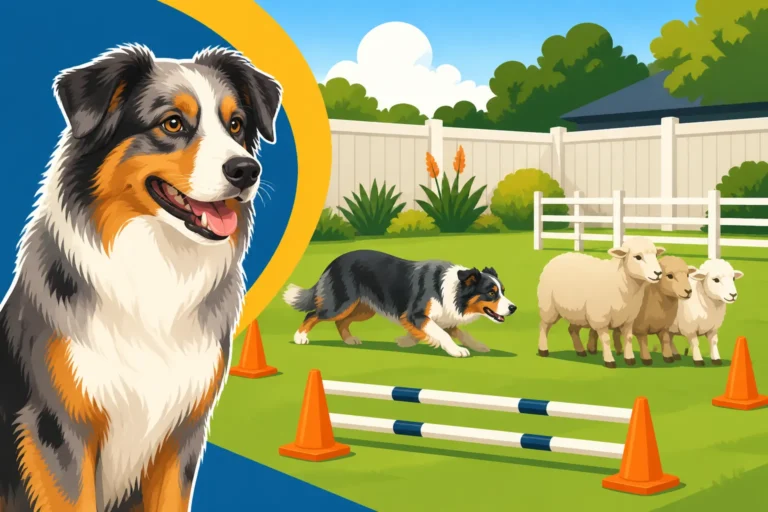
The Australian Shepherd breed wasn't developed to simply fetch a ball in the yard. These dogs were bred for generations to work complex problems, to think critically, and to respond to subtle cues while managing livestock. Their minds are wired for strategy and engagement, and if you don't give them appropriate mental outlets, they will absolutely find their own "jobs" – which often involve things you'd rather they didn't do, like herding your kids, barking at shadows, or redesigning your furniture.
Physical exercise, while vital, only scratches the surface of an Aussie's needs. Think about it: a runner might be physically exhausted after a marathon, but their mind could still be buzzing. It's the same for an Australian Shepherd. They can run for miles and still come home looking at you as if to say, "Okay, what's next? That was just the warm-up." This is where mental stimulation, like trick training, becomes indispensable. It taps into their innate intelligence and problem-solving skills, providing a different kind of fatigue – brain fatigue – that is far more effective at creating a calm, content dog than physical exertion alone. Redirecting their intensity from constantly scanning for things to herd or worry about, to focusing on learning a new skill, fulfills their natural drive in a constructive way.
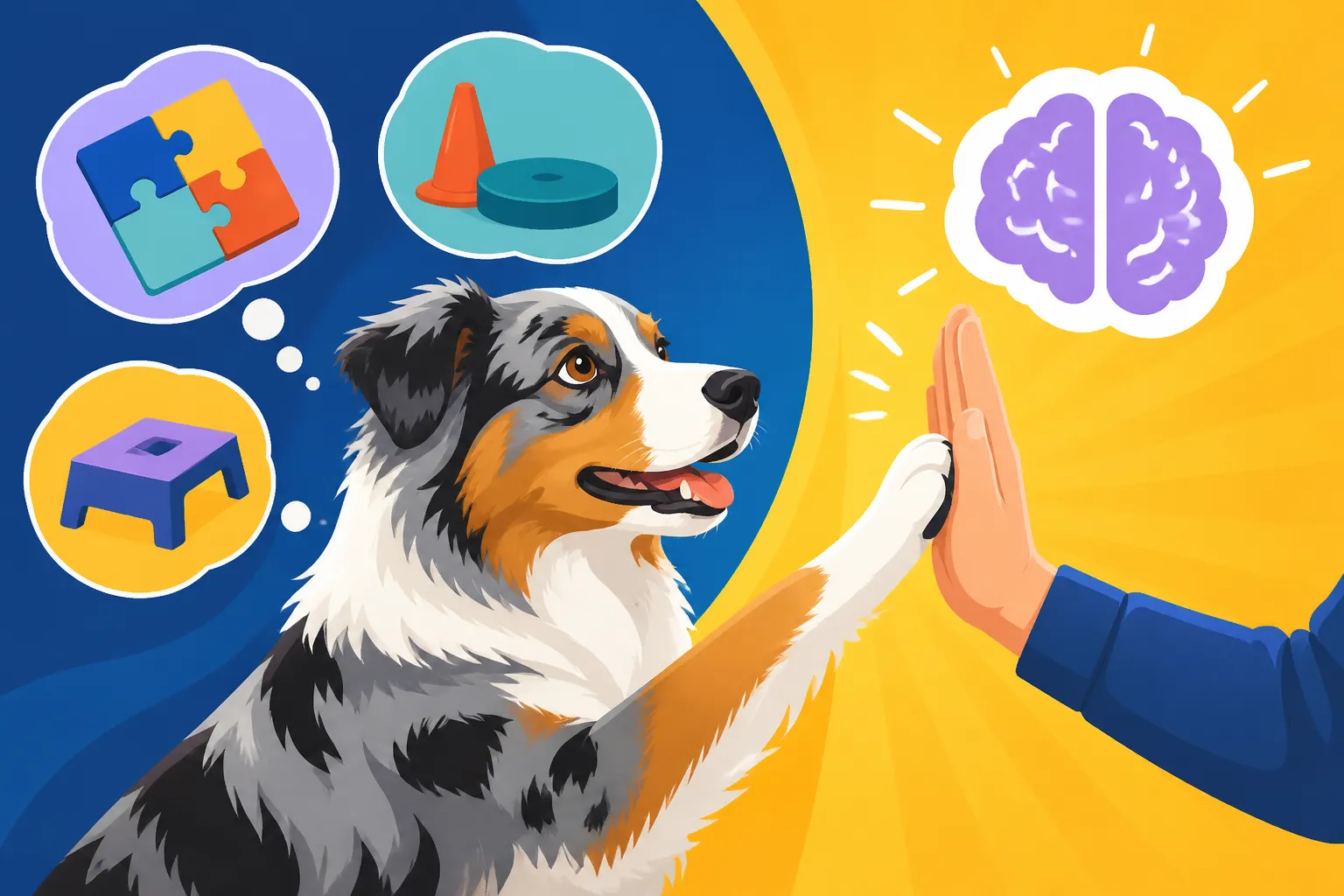
Trick training goes beyond basic obedience commands like "sit" or "stay" because it often requires a higher level of cognitive processing. It asks your Aussie to understand concepts, chain behaviors together, and think creatively to achieve a desired outcome. This kind of work is incredibly rewarding for them, much like solving a puzzle is for us. When an Aussie learns a new trick, you can almost see the gears turning in their head, the spark of understanding, and the immense satisfaction they get from figuring it out. This engagement can significantly reduce anxiety and destructive tendencies, leading to a much more settled and enjoyable companion. If you've ever wondered Why Physical Exercise Alone Never Settles an Aussie, trick training is a big part of the answer.
Getting Started with Australian Shepherd Trick Training
Embarking on trick training with your Australian Shepherd doesn't require elaborate equipment or a dog show background. The most important ingredients are patience, positive reinforcement, and a willingness to make it fun. Start simple, using the basic obedience commands your Aussie already knows as building blocks. For example, a "sit" can lead to "shake a paw," and "down" can transition into "roll over." Remember, the goal is mental engagement, not perfection from day one.
The environment for your initial training sessions should be calm and free of distractions. A quiet room in your home is often ideal. Keep sessions short, maybe 5-10 minutes, especially when you're first starting out or teaching a completely new concept. Aussies are incredibly smart, but even the brightest minds can get overwhelmed. Ending a session on a high note, with success and praise, ensures your dog looks forward to the next one. High-value treats are your best friend here – think small, soft, and super tasty. Kibble might work for daily meals, but for trick training, you want something that will really grab their attention and reward their effort. You can find a fantastic array of suitable training treats on platforms like Amazon. Many owners also find clicker training incredibly effective, as the click provides a precise marker for the exact moment your dog performs the desired action, making it clear what they're being rewarded for. Programs like BAXTER & Bella offer comprehensive online guidance for incorporating clicker training and positive reinforcement techniques into your routine.
Let's talk about a few foundational tricks that are great starting points:
- Shake a Paw/High Five: Start with your Aussie in a sit. Hold a treat in your closed hand near their paw. They'll likely try to paw at your hand to get the treat. The moment their paw lifts, mark it with a click or "yes!" and give the treat. Repeat this a few times, then introduce the verbal cue "shake" or "paw."
- Touch (Targeting): This is fantastic for building focus and can be used as a stepping stone for many other tricks. Hold your hand out flat (or use a target stick). The moment your Aussie touches their nose to your palm, click and treat. Gradually increase the distance, asking them to move a step or two to touch your hand.
- Spin/Twist: With a treat in your hand, guide your Aussie in a full circle, praising and treating as they complete the spin. Once they consistently follow your hand, start introducing the verbal cue "spin" or "twist" as you make the circular motion.
Using props like a low stool, a small box, or even a pillow can add another layer of challenge and fun. Ask them to "climb on" or "put paws up." These seemingly simple tasks require focus and body awareness, which are excellent for their mental development. For a puppy, this type of mental engagement is critical and can be integrated into The Aussie Puppy Curriculum Month by Month.
Intermediate and Advanced Tricks for the Bored Aussie
Once your Australian Shepherd has mastered the basics and you've both got the hang of the training rhythm, it's time to up the ante. Intermediate and advanced tricks aren't just about showing off; they offer deeper mental challenges that satisfy your Aussie's inherent drive for complex tasks. This is where their cleverness really shines, and you'll find them eager to learn, often anticipating what you're asking for.
One of the most rewarding aspects of advanced trick training is "chaining behaviors." This means teaching your Aussie to perform a sequence of tricks one after another to achieve a larger goal. For example, "Go get your leash" might involve them running to the leash, picking it up, and bringing it back to you. "Put away toys" could be a sequence of picking up individual toys and dropping them into a designated basket or box. These multi-step tasks mimic the complex problem-solving they'd do in a herding environment, forcing them to think several steps ahead. This is truly Mental Work That Actually Tires an Australian Shepherd.
Here are some ideas for intermediate and advanced tricks:
- Weave Through Legs: Start with your dog between your legs. Lure them through with a treat, alternating which leg they go around. As they get the motion, add the "weave" command. This requires coordination and understanding of spatial cues.
- Roll Over: From a "down" position, lure your dog's head around with a treat, encouraging them to roll onto their back and then over to their other side. Break it down into small steps: lure to lie on side, then lure to roll over.
- Jump Through a Hoop: Start with the hoop on the ground. Lure your Aussie over it. Gradually raise the hoop a few inches at a time. Always keep it low enough for safe jumping, especially as they grow, remembering Australian Shepherd Growth Plates and When They Close.
- Ring a Bell: Attach a bell to a door or hook. Lure your Aussie to touch the bell with their nose or paw, marking and treating the contact. This can become a functional trick for signaling when they need to go outside!
- Retrieve Specific Objects: Start by teaching the names of a few objects (e.g., "ball," "rope"). Practice retrieving each one individually. Then, place two objects out and ask for one. This really engages their cognitive skills.
- Play Dead/Bang: Teach your Aussie to drop to their side from a "down" position. Use a hand signal and a verbal cue like "bang!" It takes practice, but it's a crowd-pleaser and a great test of their understanding.
For many of these tricks, you can find props and resources on Amazon, from agility hoops to puzzle feeders that can be adapted for trick practice. BAXTER & Bella also offers guided lessons that break down even complex tricks into manageable steps, perfect for the Australian Shepherd owner who wants structured learning. The more you expand their repertoire, the more fulfilled your Aussie will be, and the less likely they are to invent their own, less desirable, forms of entertainment.
Troubleshooting and Maximizing Engagement in Trick Training
Even the smartest Australian Shepherds can hit a snag in their trick training journey. There will be days when they're not as motivated, or a particular trick seems to stump them. Don't get discouraged! The key is to remember that the process is as important as the outcome. Your Aussie thrives on interaction and problem-solving, so maintaining a positive and engaging atmosphere is paramount.
If your Aussie seems to lose interest, it's often a sign that the session is too long, the trick is too hard, or the rewards aren't high-value enough. Try shortening your sessions dramatically, maybe just 2-3 minutes, and switch to a treat they absolutely adore. Sometimes, simply taking a break and coming back to it later with fresh eyes (yours and theirs) can make all the difference. Remember, an Australian Shepherd that seems "stubborn" is often just confused or unmotivated. Break down complex tricks into the smallest possible steps, rewarding each tiny increment of effort towards the goal. For example, if you're teaching "roll over," first reward them for lying on their side, then for shifting their weight, then for lifting a paw, and so on.
Consistency and patience are non-negotiable with an Australian Shepherd. They are intelligent and eager to please, but they also respond best to clear, consistent communication. If you're sometimes rewarding a half-hearted attempt and other times expecting perfection, it will confuse them. Keep your cues clear and your expectations consistent. Incorporating training into your daily routine, perhaps a few quick tricks before dinner or during a commercial break, can make it feel less like a chore and more like a natural part of your life together. This also helps with An Aussie That Cannot Switch Off by providing structured engagement rather than endless self-directed activity.
Finally, always be mindful of your Aussie's body language. Signs of mental fatigue or frustration include excessive yawning, lip-licking, sniffing the ground, or looking away. When you see these, it's time to end the session on a positive note, even if it's just repeating an easy trick they know well. You want them to associate trick training with fun and success, not stress. There are many excellent Puzzle Feeders and Enrichment Gear for an Aussie that can complement trick training, giving them independent mental tasks. The goal is to build a dog that is confident, engaged, and truly enjoys working with you, whether that's performing a "bow" or "weaving" through your legs.
The Long-Term Benefits of Mental Work for Your Australian Shepherd
The impact of consistent mental stimulation, especially through trick training, extends far beyond simply teaching your Australian Shepherd a few cool moves. It fundamentally shapes their behavior, strengthens your relationship, and contributes significantly to their overall well-being throughout their life. This isn't just about managing a high-energy breed; it's about nurturing their incredible intelligence and drive in a way that creates a well-adjusted, confident, and happy companion.
One of the most significant long-term benefits is the reduction of common Australian Shepherd behavior problems. Many of the issues owners face – excessive barking, destructive chewing, frantic pacing, or even nipping – often stem from boredom and a lack of appropriate mental outlets. When an Aussie's mind is regularly challenged and engaged through trick training, they are less likely to seek out undesirable ways to entertain themselves. Instead of herding the vacuum cleaner or trying to round up your guests, they'll be thinking about the next command, eager to earn their reward. It helps redirect their natural The Australian Shepherd Herding Drive You Cannot Train Out into something constructive and fun.
Furthermore, trick training builds an incredible bond between you and your dog. It’s a shared activity that relies on communication, trust, and positive interaction. Your Aussie learns to pay attention to your cues, to problem-solve with you, and to see you as a source of fun and rewarding challenges. This deepens their connection to you, making them more responsive and tuned in to your needs. This improved communication can even help in unexpected situations, such as a quick emergency recall or settling them in a new environment. Australian Shepherd Rally and Obedience classes are a natural extension of trick training, formalizing these skills into competitive sports.
As your Australian Shepherd ages, trick training continues to be invaluable. While their physical capabilities might decline, their need for mental engagement often remains strong. Senior Aussies can still learn new tricks, albeit perhaps at a slower pace, keeping their minds sharp and active. This cognitive exercise can even help delay age-related mental decline, similar to how puzzles benefit humans. It keeps them feeling vital and connected. Ultimately, investing time in trick training is an investment in a calmer, happier, and more deeply connected life with your extraordinary Australian Shepherd. It’s a testament to their intelligence and your commitment to meeting their unique needs.
| Trick Difficulty | Examples of Tricks | Primary Mental Skill Engaged | Benefits |
|---|---|---|---|
| Beginner | Sit, Down, Paw, Touch, Spin, Look | Basic Association, Focus | Builds foundation, establishes communication, boosts confidence |
| Intermediate | Roll Over, Weave, Jump Through Hoop, Bow, Stay (long) | Sequence Comprehension, Body Awareness, Impulse Control | Deepens understanding, enhances coordination, increases self-control |
| Advanced | Fetch Specific Item, Open/Close Door, Tidy Toys, Play Dead, Chain Behaviors | Complex Problem-Solving, Object Recognition, Multi-step Recall | High cognitive load, satisfies herding drive, strengthens bond, prevents boredom |
Disclaimer
This article is for general informational purposes only and does not constitute professional advice. Laws, prices and regulations vary by location and change over time. Consult a qualified professional for guidance on your specific situation.