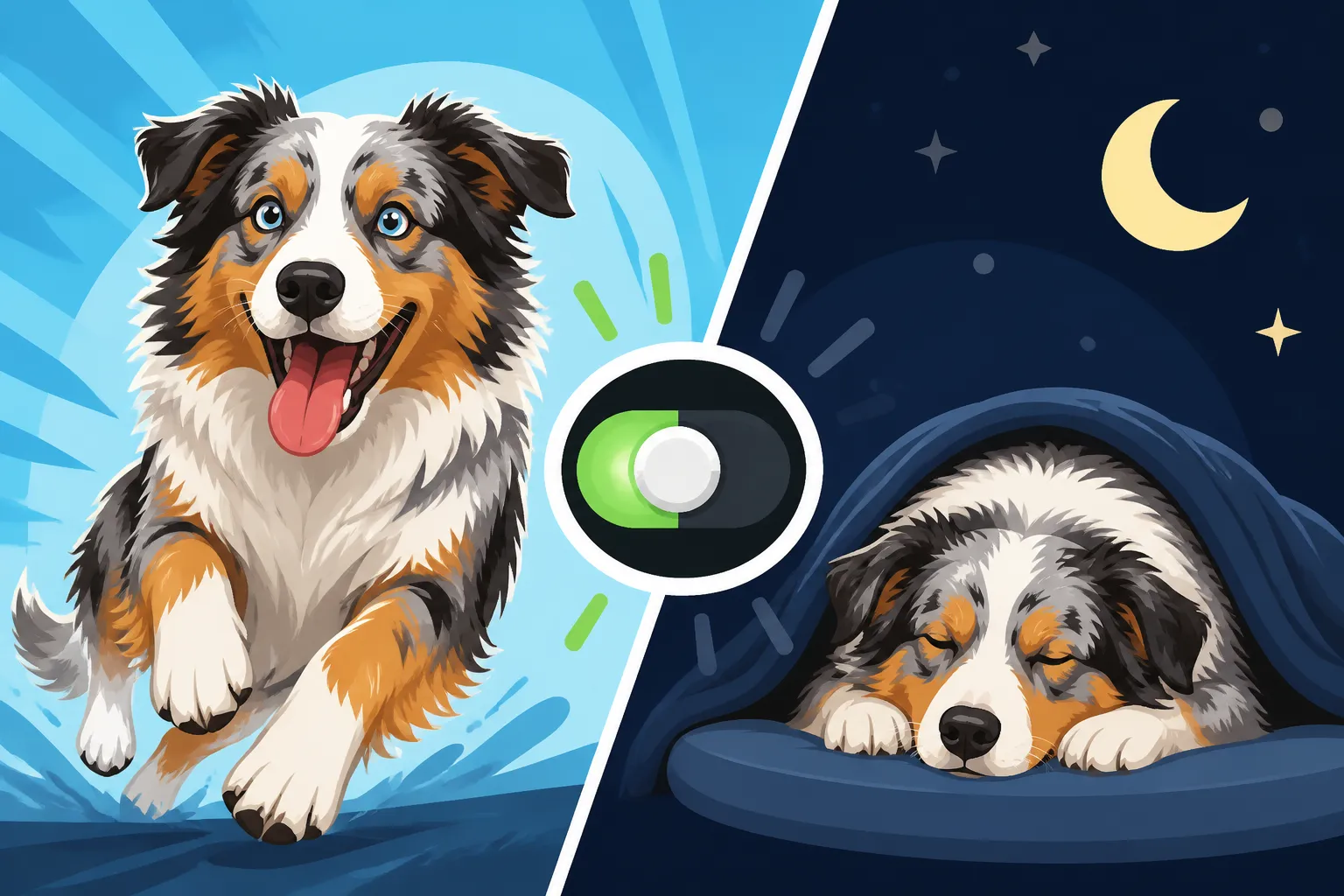
An Australian Shepherd That Cannot Switch Off
It's a common, utterly exhausting frustration for many Australian Shepherd owners: that feeling like your dog just can't switch off. You've walked them, played fetch for what feels like hours, and yet they're still pacing, still nudging a toy into your lap, or giving you that intense stare that screams, "What's next?!" This guide is for you. We're going to dive deep into why your Australian Shepherd might be struggling to find that elusive "off switch" and, more importantly, lay out practical, realistic strategies to help your energetic companion learn to settle and truly relax.
Understanding the Aussie's 'Always On' Nature
It’s easy to look at your Australian Shepherd’s relentless energy and assume they’re just being a "bad" dog, but the truth is, their drive is hardwired. These dogs were bred for intense work, often spending entire days running, thinking, and reacting to livestock. That heritage doesn't just disappear because they live in a suburban home with a fenced yard.
The Deep-Seated Herding Drive
At the core of an Australian Shepherd’s inability to switch off is their incredibly strong herding instinct. These aren't dogs who just chase a ball for fun; they're constantly evaluating, organizing, and looking for something to do. This drive manifests in various ways, often surprising new owners. You might find your Aussie trying to "herd" your children during playtime, circling them and nudging them into a group, or perhaps they're attempting to round up the family cat or even the vacuum cleaner. It's not malice; it's instinct. They see movement, they see a group, and their brain says, "My job is to gather and control this." This constant mental engagement, even if it's just observing the world, keeps their engine running. You can read more about this inherent trait in The Australian Shepherd Herding Drive You Cannot Train Out.
This isn't something you can simply train out of them; it's their operating system. Trying to suppress it entirely can lead to frustration for both you and your dog, often resulting in redirected behaviors like excessive barking, destructive chewing, or even nipping. Instead, we need to acknowledge and channel this drive into appropriate, constructive outlets. Think of it less as a problem to eliminate and more as a powerful engine that needs the right fuel and a proper transmission to run smoothly, not just endlessly.
Mental Stimulation is Key
Many owners assume that if their Aussie isn't settling, they simply need more physical exercise. So, they add another half-hour to the walk, or throw the ball an extra fifty times. While physical exercise is crucial for a breed like the Australian Shepherd, it's often not the missing piece of the puzzle when it comes to an "off switch." In fact, for many Aussies, endless repetitive physical activity like fetch can actually increase their arousal levels rather than calming them down. They get fitter, faster, and more amped up, always anticipating the next throw. This can create a cycle where you're constantly chasing their energy without ever truly meeting their needs.
What these intelligent, working dogs often crave is mental stimulation. Their brains need a workout as much, if not more, than their bodies. If their minds aren't engaged in problem-solving, learning, or focused tasks, that restless energy can manifest as an inability to settle. Imagine being a brilliant mathematician but only being allowed to run laps all day – you'd be physically tired but mentally buzzing with unspent intellectual energy. It's the same for your Aussie. Physical exertion helps, but it needs to be balanced with activities that require them to think, concentrate, and use their inherent instincts in a directed way. This is why you'll often hear that Why Physical Exercise Alone Never Settles an Aussie.
Overstimulation vs. Under-stimulation: The Tricky Balance
The inability to switch off can sometimes be a direct result of being either constantly overstimulated or paradoxically, under-stimulated in the right ways. An Aussie living in a busy household with constant noise, activity, and lack of quiet time can easily become perpetually overstimulated. They never learn how to filter out distractions or truly relax because they're always "on," absorbing everything around them. This can lead to a state of chronic low-level stress, where their cortisol levels remain elevated, making relaxation almost impossible. They might be constantly scanning the environment, reacting to every little sound or movement.
On the flip side, an Aussie that isn't getting enough appropriate mental and physical outlets can also struggle to settle. This isn't just about total hours of exercise, but the quality of that exercise. If their day consists of a couple of walks and then hours of boredom, they'll invent their own "jobs"—which often involve destructive chewing, incessant barking, or hyper-vigilance—all ways to cope with unmet needs. These self-appointed tasks keep them wound up. The key is finding that Goldilocks zone: enough engagement to satisfy their drive without tipping them into frantic overarousal, and providing sufficient opportunities for quiet, deliberate downtime to teach them how to truly unwind. It's a delicate balance that often requires careful observation and adjustment.
Practical Strategies to Cultivate an Off Switch
Once we understand the root causes, we can start implementing practical strategies to help our Australian Shepherds learn to settle. This isn't a quick fix; it's about consistency, patience, and fundamentally reshaping their daily routine and your interactions.
Structured Mental Work
This is perhaps the most powerful tool in your "off switch" arsenal. Instead of just another game of fetch, focus on activities that require concentration and problem-solving. Think of it as intellectual heavy lifting for their brains.
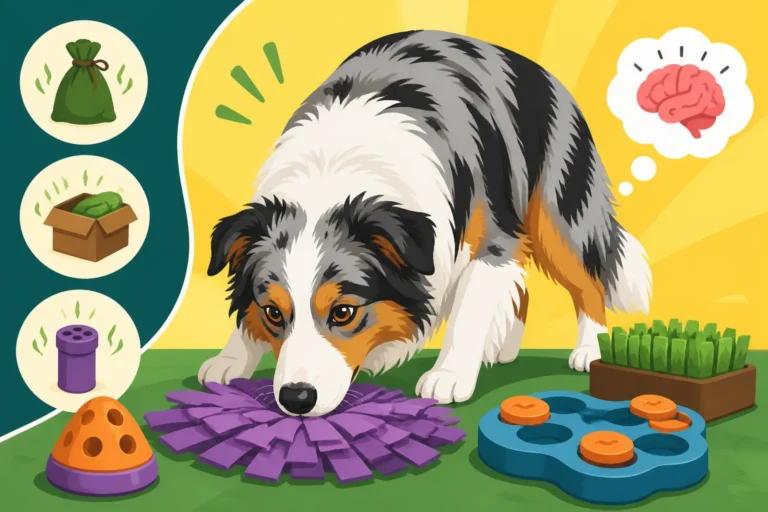
- Puzzle Toys and Snuffle Mats: These are fantastic for providing mental engagement. Instead of simply eating their meal from a bowl in seconds, your Aussie has to work to get their food out of a puzzle feeder. This engages their brain, their nose, and slows them down. You can find a huge variety of these on Amazon, from simple treat-dispensing balls to multi-stage puzzles.
- Scent Work: Australian Shepherds have incredible noses, and scent work is an amazing way to tap into that natural ability. Hide treats around the house or yard and encourage your dog to "find it." This is low-impact physically but incredibly tiring mentally. You can even get started with formal Scent Games That Tire an Australian Shepherd.
- Trick Training: Teaching new tricks, even silly ones, requires focus and helps build your dog's confidence. Break tricks down into small steps and reward frequently. "Crawl," "play dead," "weave through legs"—these all build on basic obedience and make your dog think.
- Interactive Games: Instead of mindless fetching, try games like "find the toy" where you hide a favorite toy and have them locate it. Tug-of-war can also be great, but ensure you teach a clear "drop it" command to prevent resource guarding and keep it controlled. It offers a legal outlet for their prey drive and intense focus.
The beauty of mental work is that it often produces a tired dog much faster than physical exercise, leading to a calmer state afterwards. It’s about quality, not just quantity. We've even explored more about how beneficial these types of activities can be in Mental Work That Actually Tires an Australian Shepherd.
The Power of Place Training and Mat Work
Teaching your Australian Shepherd a "place" command or specific mat work can be revolutionary for building an off switch. This isn't just about obedience; it's about teaching them how to relax in a designated spot, even amidst distractions.
- What is Place Training? "Place" is a command where your dog goes to a specific bed, mat, or raised cot and stays there until released. The goal isn't just to go to the spot, but to settle there. This means lying down, being calm, and not constantly scanning for the next thing to do.
- How to Start: Begin in a quiet environment with high-value treats. Lure your dog onto the mat, say "Place," and immediately reward them for being on it. Gradually, you'll extend the duration they stay on the mat, then introduce distractions. The key is to reward them for calmness on the mat, not just for being there. If they lie down and sigh, that's a jackpot moment.
- Benefits: This teaches your Aussie an invaluable skill: how to self-regulate and relax on command. It's particularly useful when guests come over, during meal times, or when you need a moment of peace. Many online programs, like those offered by BAXTER & Bella, include extensive sections on place training and developing a "settle" command, providing structured lessons to guide you through the process. It's truly life-changing for high-drive breeds. Further insights on this can be found in Mat Settle Training for a Restless Aussie.
Table: Mental Work vs. Physical Exercise for Aussies
| Activity Type | Primary Benefit | Impact on "Off Switch" | Best Use Case | Example |
|---|---|---|---|---|
| Mental Work | Brain engagement, problem-solving | Directly builds, calms | Daily routines, before downtime, managing weather | Puzzle feeders, scent games, trick training, Puzzle Feeders and Enrichment Gear for an Aussie |
| Physical Exercise | Cardiovascular health, muscle tone | Can sometimes increase arousal | Energy release, stamina building, outdoor adventures | Hiking, swimming, agility, structured playtime, Australian Shepherd Agility and Disc Sports |
Enforced Naps and Routine
Just like human toddlers, puppies and even adolescent Australian Shepherds often don't know when to stop. They'll keep going until they're overtired, which then makes them more prone to nipping, barking, and general chaos. Implementing enforced naps can be a game-changer.
- Puppy and Adolescent Naps: For younger Aussies, this often means putting them in their crate or a quiet, puppy-proofed area for an hour or two several times a day, even if they protest initially. They need to learn that it's okay, even necessary, to rest. You'd be amazed how much calmer a well-rested puppy is. Dive deeper into this topic with Enforced Naps for an Overtired Aussie Puppy.
- Adult Doggie Downtime: Even adult Aussies benefit from scheduled downtime. This might not be a full nap, but it could be 30-60 minutes in their "place" with a long-lasting chew, or quiet time in their crate while you're busy. This builds the habit of settling.
- Consistency is Key: A consistent daily routine provides predictability, which can be incredibly comforting for an Aussie. They thrive on knowing what to expect. Schedule walks, training sessions, mental games, and relaxation periods. This structure helps them anticipate downtime and reduces anxiety about what might happen next. An irregular schedule can leave an Aussie feeling constantly on alert, wondering when the next exciting thing will happen, which prevents them from truly relaxing. If you notice your Aussie getting more frantic in the evening, it could be a sign of overtiredness or inconsistent routine, a phenomenon explored in An Australian Shepherd That Gets Worse in the Evening.
Recognizing and Managing Overarousal
Sometimes, an Aussie's inability to switch off isn't just about boundless energy; it's about being overaroused. This is a state where they are overly stimulated, often to the point of being unable to process information or respond appropriately. Recognizing the signs is the first step.
Signs Your Aussie is Overaroused
It’s easy to mistake an overaroused Australian Shepherd for one that’s just "excited" or "naughty." However, paying close attention to their body language can tell you a different story. These are not signs of happiness, but rather a dog on the verge of losing control or already past its threshold.
- Frantic Pacing or Circling: Not just general movement, but fast, repetitive pacing, often with a low head or a darting gaze. They might be unable to settle in one spot.
- Excessive Barking or Whining: This isn't just a friendly "hello" bark; it's often high-pitched, insistent, and difficult to interrupt. Whining can be a sign of frustration or anxiety.
- Nipping, Mouthing, or Herding Nips: Particularly common in younger Aussies, overarousal often leads to frantic nipping at hands, clothing, or even ankles, sometimes reminiscent of their herding instincts. This is often an uncontrolled release of energy. This can escalate to Australian Shepherd Puppy Biting and Herding Nips.
- Inability to Focus or Take Cues: If your normally well-trained Aussie suddenly seems "deaf" to commands, it's a strong indicator they're too aroused to listen. Their brain is simply too busy processing everything else.
- Stiff Body Language or Dilated Pupils: Look for a rigid posture, tense muscles, or wide-open eyes with large pupils. These are physiological signs of stress and heightened awareness.
- Zoomies or Frantic Play: While some zoomies are normal, if they're happening constantly, are very intense, and end with the dog still wired, it can be a sign of too much pent-up energy rather than pure joy.
- Resource Guarding or Reactivity: In some cases, chronic overarousal can spill over into more challenging behaviors, making them more likely to react negatively to other dogs, people, or possessions because they're already on edge.
De-escalation Techniques
When you spot the signs of overarousal, your immediate goal is to help your Aussie "come down" from that heightened state. This requires interrupting the cycle and providing a calm alternative.
- Create a Quiet Space: The first step is often to remove your dog from the stimulating environment. Lead them to their crate, a quiet room, or their "place" mat. This isn't a punishment, but a safe space to decompress.
- Redirection with a Calming Chew: Once in their quiet spot, offer a long-lasting, calming chew (like a bully stick or a frozen Kong). This provides an appropriate outlet for their mouth and helps to shift their focus to a lower-arousal activity.
- Calm Leash Pressure: If your dog is pulling frantically on the leash, a simple, consistent pressure on the leash (without yanking) and waiting for them to yield to it can help them regain focus and slow down. This isn't about force, but about clear communication.
- "Find It" Game: A quick game of "find it" where you toss a few treats on the ground can redirect frantic energy into a calming scent work activity, helping to engage their nose and lower their arousal.
- Gentle Touch or Massage: For some Aussies, slow, deliberate strokes or a gentle massage can help reduce tension. However, be mindful of their individual preferences; some dogs might be too overstimulated for touch.
- Structured Breathing: Believe it or not, your own calm demeanor can influence your dog. Take a deep breath, exhale slowly, and speak in a low, even tone. This models calm behavior.
Consulting a Professional
While many of these strategies can be implemented at home, there are times when an Australian Shepherd's inability to switch off requires professional intervention. Don't feel ashamed or defeated if you reach this point; it means you're dedicated to helping your dog.
- When to Seek Help: If your Aussie's overarousal leads to aggressive behavior (growling, snapping, biting), severe anxiety, chronic stress, or if your efforts aren't making a noticeable difference, it's time to call in the experts. Also, if you suspect there's a physical component, such as pain contributing to restlessness, a vet check is paramount.
- What Kind of Professional? Look for a certified professional dog trainer (CPDT-KA) or, for more complex behavioral issues, a certified dog behaviorist (CDBC) or a veterinary behaviorist (DACVB). These professionals have specialized knowledge in canine behavior and can create a tailored plan for your dog. They understand the nuances of high-drive breeds like the Australian Shepherd.
- What to Expect: A professional will typically start with a thorough assessment of your dog's history, daily routine, and behavior. They'll look for triggers, observe your interactions, and then help you implement a structured training and management plan. This might involve counter-conditioning, desensitization, specific training protocols, and sometimes, medication if anxiety or other underlying issues are severe. When considering a trainer, it's vital to ensure they use positive reinforcement and understand the specific needs of working breeds; searching for Finding a Trainer Who Understands an Aussie can provide good guidance.
Tools and Resources for Success
Having the right tools and knowing where to look for support can make a huge difference in helping your Australian Shepherd develop a reliable off switch. It's not just about what you do, but also what you use and who you learn from.
Enrichment Tools
These are the physical aids that help redirect your Aussie's mental and physical energy into constructive, calming activities. They are your allies in preventing boredom and encouraging quiet engagement.
- Long-Lasting Chews: Bully sticks, dental chews, or sturdy chew toys like those from Kong, Nylabone, or Benebone can keep an Aussie occupied for a significant period. These satisfy their natural urge to chew and can be very calming. Always supervise to ensure safety. You can find a wide selection of these on Amazon.
- Puzzle Feeders: As mentioned, these are invaluable. Look for interactive feeders that require your dog to manipulate parts to get food. They come in varying difficulty levels, so you can increase the challenge as your Aussie gets smarter. Brands like Nina Ottosson (available on Amazon) make excellent, durable puzzle toys.
- Snuffle Mats: These fabric mats with hidden pockets and folds are perfect for hiding kibble or small treats, turning mealtime into a fun, scent-based foraging activity. They’re great for slowing down fast eaters and engaging their nose.
- Lick Mats: Spread with peanut butter, yogurt, or pureed pumpkin, lick mats provide a soothing, repetitive licking action that can be incredibly calming for dogs. They’re excellent for crate training, nail trims, or just quiet downtime. Again, Amazon has a plethora of options.
Training Programs and Support
While books and articles are helpful, sometimes you need more structured guidance, especially for a complex breed like the Australian Shepherd.
- Online Training Platforms: Websites like BAXTER & Bella offer comprehensive online training programs that cover everything from puppy basics to advanced obedience, including specific modules on impulse control and developing a "settle" command. These programs often come with live support, community forums, and step-by-step videos, making them accessible no matter where you live.
- Local Classes: Group classes for obedience, impulse control, or even specific dog sports can be beneficial. They offer structured learning in a stimulating but controlled environment. Look for classes that emphasize positive reinforcement and cater to high-energy breeds.
- Private Trainers: For specific behavioral issues or if you prefer one-on-one guidance, a private trainer can provide personalized advice and hands-on help in your home environment. Ensure they are certified and experienced with Australian Shepherds.
- Breed-Specific Resources: Organizations like the Australian Shepherd Health & Genetics Institute (ASHGI) or your local Australian Shepherd club can be excellent resources for understanding breed-specific traits and finding trainers or behaviorists familiar with Aussies.
Creating a Calming Environment
Your home environment plays a significant role in your Aussie's ability to relax. Small changes can make a big difference.
- Designated Quiet Zones: Ensure your Aussie has a comfortable, quiet place where they can retreat. This might be their crate, a dog bed in a less trafficked room, or a spot where they won't be constantly disturbed. This helps them feel secure and gives them permission to relax.
- Visual Barriers: If your Aussie is constantly reacting to things outside windows, consider using frosted film, curtains, or even strategically placed furniture to block their view. This reduces constant visual stimulation that can keep them "on."
- Sound Management: If your dog is noise-sensitive, consider playing calming music, white noise, or using a fan to mask sudden outdoor sounds. Creating a consistent soundscape can reduce startle responses.
- Consistent Routines: As mentioned earlier, predictability reduces anxiety. A consistent schedule for meals, walks, training, and downtime helps your Aussie understand what's coming next and when it's appropriate to relax.
- Your Own Calmness: Dogs are incredibly adept at reading our emotions. If you are constantly stressed, rushed, or agitated, your Aussie will pick up on that and may struggle to settle themselves. Practice your own mindfulness and calm demeanor; it can be contagious in the best way.
By understanding the unique needs of your Australian Shepherd, implementing structured mental engagement, teaching them how to settle, and creating a supportive environment, you can help them develop that crucial "off switch." It's a journey, not a destination, but the reward of a calm, well-adjusted companion is immeasurable.
Disclaimer
This article is for general informational purposes only and does not constitute professional advice. Laws, prices and regulations vary by location and change over time. Consult a qualified professional for guidance on your specific situation.