An Australian Shepherd Destroying Doors When Alone
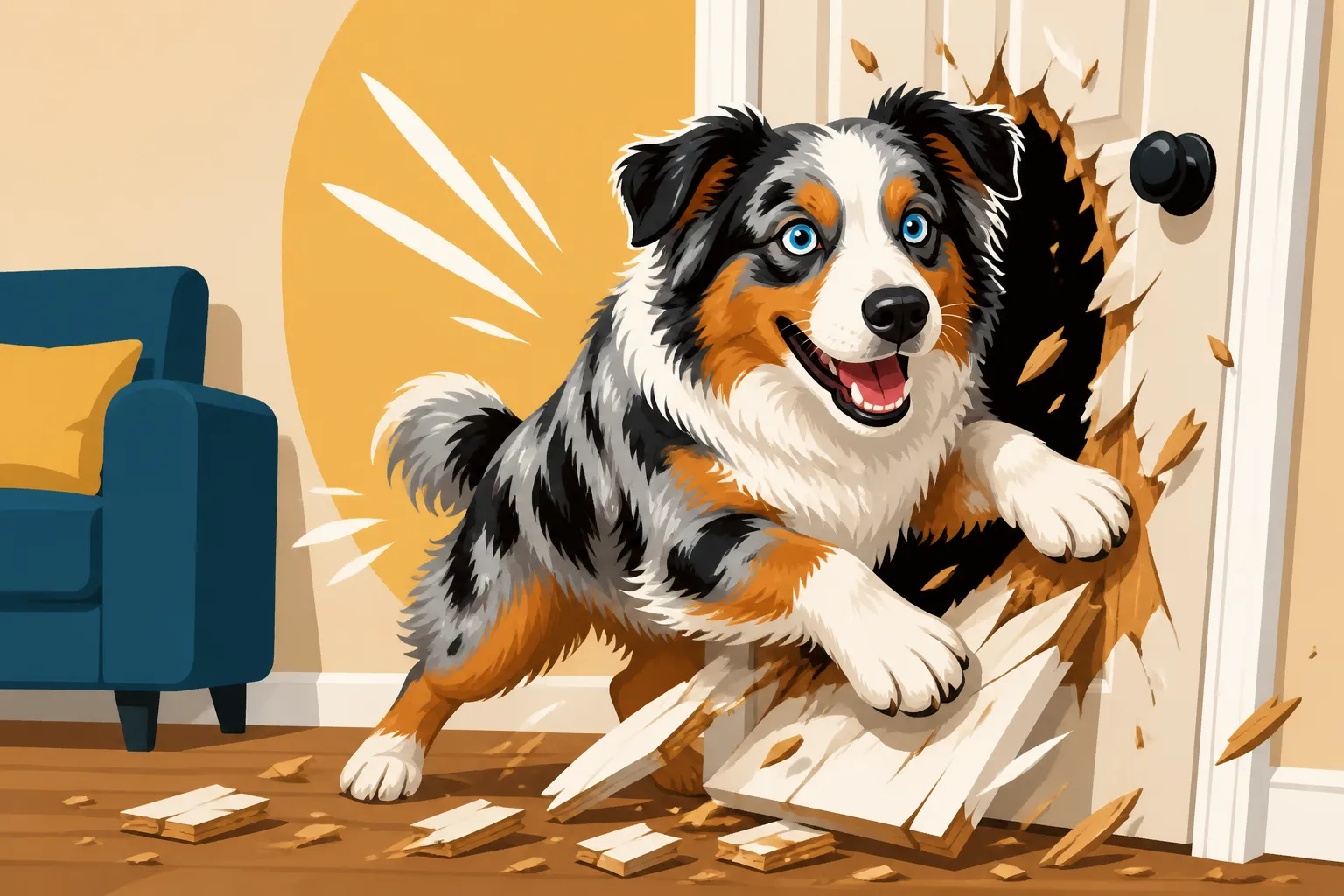
Oh, the dreaded chewed-up door frame! If you’ve come home to find splinters of wood, tooth marks marring your beautiful woodwork, or even a gaping hole where a door used to be, you’re not alone. It’s an incredibly frustrating experience, leaving you wondering if your sweet Australian Shepherd has suddenly developed a beaver complex. This isn't just about property damage; it's often a cry for help from your intelligent, high-energy companion. This guide will walk you through understanding why your Aussie might be taking out their frustrations on your home and, more importantly, how to redirect that powerful drive into more appropriate behaviors, ensuring both your sanity and your dog’s well-being.
Unpacking the "Why": The Roots of Door Destruction
When your Australian Shepherd starts gnawing on doors, it's rarely out of malice. Instead, it's usually a symptom of an underlying issue. Aussies are incredibly intelligent, sensitive, and possess a strong working drive. When these needs aren't met, or when they experience distress, that energy and intensity have to go somewhere, and unfortunately, sometimes it’s into your home.
Separation Anxiety Versus Boredom Versus Frustration
One of the biggest misconceptions is that all destructive chewing stems from a single cause. With an Australian Shepherd, it's crucial to differentiate between true separation anxiety, simple boredom, or sheer frustration from under-stimulation. Each requires a slightly different approach, though there’s often overlap.
Separation anxiety is a profound distress response that occurs when a dog is left alone. They're not just bored; they're genuinely panicked. Signs might include incessant whining, howling, house soiling only when alone, excessive drooling, and frantic escape attempts. A dog with separation anxiety might target doors and windows specifically, trying to get out to find you. The destruction is often severe and immediate upon your departure. If you suspect this is the case, pay close attention to The Signs an Aussie Is Panicking Alone to confirm your suspicions, as this condition often requires a more intensive intervention.
Boredom, on the other hand, is less about panic and more about finding a "job." Aussies are bred to work, to think, and to move. If left without mental or physical outlets, they will invent their own entertainment. This often manifests as indiscriminate chewing – maybe the couch one day, a shoe the next, and yes, sometimes the door. The destruction from boredom might be less frantic, possibly starting after some time, once the initial quiet has worn off. It's their way of saying, "Hey, I have all this energy and nothing to do with it!"
Frustration often sits somewhere in between. Your Aussie might be frustrated if they can see or hear things outside the door but can't get to them. This can also manifest if they’re under-exercised, both physically and mentally, leading to a build-up of unspent energy that erupts in destructive behavior. They want to be doing something, anything, and that door is just… there.
Lack of Mental and Physical Stimulation
This is a huge one for Australian Shepherds. They aren't content to be couch potatoes, even if they sometimes enjoy a good snuggle. Their heritage as herding dogs means they are wired for activity, problem-solving, and close partnership with their human.
A quick walk around the block, or even an hour of fetch in the yard, simply isn't enough to satisfy the profound needs of many Aussies. They need diverse physical exercise that engages their body in different ways – running, hiking, swimming, or even structured play. More importantly, they need mental work. If their intelligent brains aren't challenged, they become bored, and bored Aussies find their own "work," which is almost always destructive. You might think your Aussie is getting plenty of exercise, but it’s crucial to understand Why Physical Exercise Alone Never Settles an Aussie.
This means incorporating training sessions, puzzle toys, scent work, or even just consistent short bursts of mental engagement throughout the day. Without this critical mental outlet, your Aussie's mind can become a dangerous idle workshop, leading to anxieties and frustrations that target your doors. They genuinely need a "job" to feel fulfilled and calm, even when you're not actively working with them.
Inadequate Crate Training or Confinement
For many dogs, a properly introduced crate can be a safe, den-like space where they feel secure. For others, if not done correctly, it can be a source of immense stress and claustrophobia. If your Aussie has not been positively conditioned to their crate, or if it's too small, they might panic when left inside, leading to frantic escape attempts that can damage the crate, themselves, or the surrounding area (like, you guessed it, a nearby door).
Even if you're not crating, how you confine your Aussie can impact their behavior. Leaving them in a small, empty room with nothing to do for hours is a recipe for disaster. They might feel trapped or simply become overwhelmed by boredom, leading them to direct their energy towards the most obvious escape route or object of destruction: the door. A proper, secure, and comfortable confinement strategy is essential, and understanding how to introduce this correctly can prevent a lot of headaches later on. If you're struggling with crate training, consider resources that guide you through making it a positive experience, not a punishment.
Immediate Fixes and Management Strategies for Door Destruction
When you're dealing with a door-chewing Aussie, you need both short-term management to stop the immediate damage and long-term training to address the root cause. Let's start with what you can do right now to protect your home and your dog.
Securing the Area and Preventing Access
The first step is to make the tempting target, the door, inaccessible or unappealing. This might seem obvious, but often owners try to just stop the behavior without changing the environment.
If your Aussie is chewing a specific door frame, consider blocking access to that area entirely when you're away. Durable baby gates or exercise pens can be your best friend here, creating a barrier that keeps them from the door without confining them to a tiny space. For more severe cases, a sturdy metal crate can be invaluable. If you haven't properly crate-trained your Aussie, now is the time to start, but remember it must be a positive experience. Ensure the crate is appropriately sized – large enough for them to stand, turn around, and lie down comfortably. Many owners find robust crates on Amazon that can withstand an Aussie's determination. Remember, the crate should feel like a safe den, not a prison. Check out guidance on The Crate a Fifty Pound Aussie Needs to choose the right one.
For the door itself, there are temporary physical deterrents like heavy-duty plastic or metal door frame protectors. These can be secured to the frame to prevent chewing, buying you time while you work on the underlying behavioral issues. They’re not a cure, but they're a band-aid that saves your door. You might also try spraying a taste deterrent on the door frame, though results vary and some determined Aussies will chew right through it.
Providing Appropriate Outlets and Enrichment
An Aussie with a job is a happy Aussie, even if that job is just emptying a puzzle toy. When you leave, ensure your dog has something positive and engaging to focus on instead of the door.
High-value, long-lasting chew toys are essential. Think Kongs stuffed with frozen peanut butter, plain yogurt, or wet dog food. The freezing part is key, as it makes the activity last much longer. Bully sticks, dental chews, or other durable chews that are safe for your dog's size and chewing style can also provide a healthy outlet for their natural chewing instincts. These should only be given when you leave, making them a special, positive association with your departure.
Puzzle feeders and interactive toys are also fantastic for mental stimulation. There's a wide range available on Amazon, from treat-dispensing balls to complicated feeders that require multiple steps to get the reward. These can keep your Aussie’s brain engaged and their mouth busy for a good chunk of time, diverting their attention from destructive behaviors. Refer to Puzzle Feeders and Enrichment Gear for an Aussie for more ideas. Rotate these toys so they don't get bored of the same ones every day. The goal is to provide mental engagement that simulates the problem-solving and focus they would get from herding or other work.
Shortening Alone Time and Doggy Daycare/Sitters
If your Australian Shepherd is destroying doors, they are likely being left alone for too long or without sufficient preparation for alone time. It’s a bitter pill to swallow, but sometimes we need to acknowledge that our schedule doesn't quite match our dog's needs.
Try to significantly reduce the amount of time your Aussie is left unsupervised initially. This might mean arranging for a friend, family member, or professional dog walker to come by mid-day. The goal is to set your dog up for success, not failure. Even breaking up a long stretch of alone time into two shorter periods can make a huge difference.
For many high-energy, intelligent breeds like Aussies, doggy daycare can be a lifesaver. A good daycare provides structured play, socialization, and often a much-needed outlet for their physical and mental energy. They come home tired and happy, much less likely to have the energy or inclination to chew your door. Before enrolling, make sure the daycare is well-managed, with staff who understand herding breeds and offer appropriate supervision and activities. You can read more about the benefits in Australian Shepherd Daycare and Whether It Helps. If daycare isn't an option, a trusted pet sitter who can spend time with your dog in your home can provide company and exercise.
| Strategy | Description | Pros | Cons |
|---|---|---|---|
| Crate Training | Confinement in a secure, den-like kennel. | Prevents access to doors, can be a safe space, aids potty training. | Requires positive introduction, can exacerbate anxiety if misused. |
| Baby Gates | Physical barriers to block access to specific rooms/doors. | Keeps dog away from problem areas, less confining than a crate. | Determined Aussies might jump or chew through some types. |
| Door Protectors | Clear adhesive or metal covers for door frames. | Protects property immediately, relatively inexpensive. | Only a band-aid, doesn't address underlying behavior. |
| Stuffed Kongs | Durable rubber toy filled with frozen treats. | Long-lasting mental and physical engagement, positive association. | Requires preparation, can be messy. |
| Puzzle Feeders | Interactive toys requiring problem-solving for food. | Excellent mental stimulation, reduces boredom. | Some Aussies solve them too quickly, needs variety. |
| Doggy Daycare | Supervised group play and activities. | High-energy outlet, socialization, professional supervision. | Costly, not all daycares suit all Aussies, risk of injury. |
Long-Term Training to Build Confidence and Calm
While immediate management is crucial, the real solution lies in addressing the underlying behavioral patterns through consistent, positive training. You want to teach your Australian Shepherd how to cope with being alone in a healthy way, not just stop the chewing.
Desensitization and Counter-Conditioning to Departures
The goal here is to change your Aussie's emotional response to your departures from anxiety or frustration to neutrality, or even positive anticipation. This is a gradual process that involves desensitization (making them less reactive to your leaving cues) and counter-conditioning (creating a positive association with your departure).
Start by identifying your "departure cues"—things you do before leaving, like grabbing keys, putting on shoes, or picking up your bag. Your Aussie is probably already tensing up when they see these. Begin performing these cues randomly throughout the day without actually leaving. Pick up your keys, walk to the door, and then sit back down. Do this dozens of times until your dog no longer reacts. This desensitizes them to the cues.
Next, combine these cues with very brief departures, always leaving a high-value, pre-stuffed Kong or puzzle toy behind. Start with just stepping out the door for 10 seconds, then coming back in calmly. Don't make a big fuss when you return. Gradually increase the duration of your absence, only moving to the next step when your dog remains calm at the current duration. If they show signs of anxiety, you've gone too fast, and need to take a step back. This process takes immense patience and consistency.
Establishing a "Relax" or "Settle" Command
Teaching your Aussie a "relax" or "settle" command can be incredibly empowering for both of you. This command helps them learn to calm themselves down on cue, which is invaluable for alone time. It's about teaching them to lay down quietly on a mat or bed and stay there, even amidst distractions.
Start by rewarding calm behavior naturally. When your Aussie lies down and sighs, quietly say "settle" and give them a treat. Gradually, you'll start cueing the behavior. Guide them to their mat, reward them for lying down, and slowly extend the time they stay there. Make it a positive experience with high-value treats and gentle praise. You can use a long-lasting chew toy once they're on their mat to reinforce the "settle" behavior.
Many online training programs, such as those from BAXTER & Bella, offer structured lessons on teaching foundational behaviors like "place" or "settle," which are critical for developing an "off switch" in a busy Australian Shepherd. This skill directly translates to them being able to relax when you're not actively engaging with them, reducing the likelihood they'll feel the need to destroy something. It builds their confidence in their ability to be calm, even when alone.
Boosting Overall Mental and Physical Stimulation
You simply cannot overstate the importance of sufficient mental and physical stimulation for an Australian Shepherd. It's the foundation of a well-behaved, happy dog. If you're tackling door destruction, a critical long-term strategy is to ensure your Aussie is genuinely tired and fulfilled before you leave them alone.
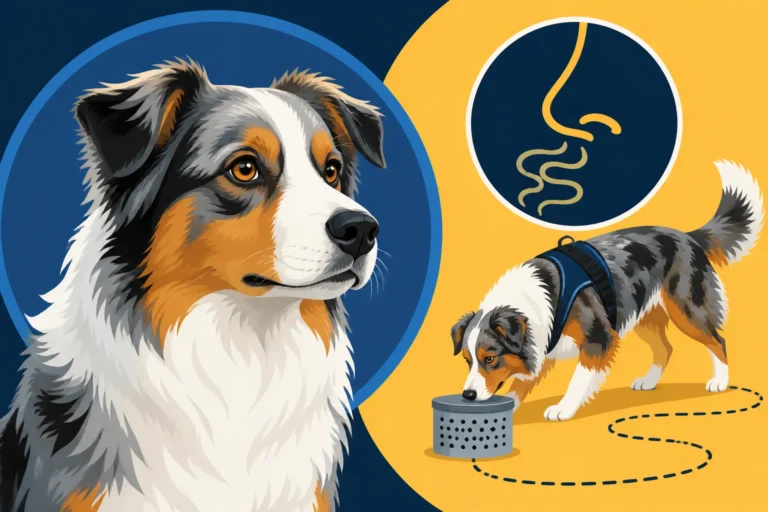
This means a consistent daily routine that includes more than just walks. Incorporate structured training sessions – even 10-15 minutes of working on obedience commands, new tricks, or scent games can be incredibly taxing for their clever brains. Scent work, where they use their noses to find hidden treats or toys, is a fantastic mental workout that often tires them out more than a long run. These activities fulfill their natural drives and give them appropriate outlets for their intelligence. You might find that Mental Work That Actually Tires an Australian Shepherd is exactly what your dog needs to settle down.
Physical exercise should also be diverse and engaging. Consider activities like fetch, flirt pole play, or even short bursts of agility work in the yard. Remember that An Australian Shepherd That Cannot Be Left With Nothing to Do will find something to occupy itself, and you want to be in control of what that "something" is. A truly well-exercised and mentally stimulated Aussie is less likely to have pent-up energy that manifests as destructive chewing. Their need for stimulation is ongoing, and building it into your daily routine is the best preventative medicine.
When to Call for Backup: Professional Help for Severe Cases
Sometimes, despite your best efforts, the behavior persists or worsens. It can feel disheartening, but it's important to recognize when the issue is beyond what you can reasonably tackle on your own. There's no shame in seeking professional help; in fact, it's often the most responsible and effective path forward for both you and your Australian Shepherd.
Recognizing When It's Beyond DIY
How do you know when it's time to call in the cavalry? If your Australian Shepherd's destruction is extreme, consistently involves self-harm (e.g., bloody paws from scratching at doors), includes consistent house soiling when alone, or is accompanied by non-stop vocalization (howling, barking, whining), you are likely dealing with true separation anxiety. These aren't just "bad habits" – they are signs of profound distress. If the destruction is severe and happens immediately upon your departure, rather than after a period of calm, that's another strong indicator.
Another sign it's beyond DIY is if your efforts at desensitization and counter-conditioning aren't yielding results, or if your dog is showing increasing signs of stress, such as pacing, panting, or hyper-vigilance, even during short absences. This isn't a training issue in the traditional sense; it's an emotional one. When the dog's emotional state is so heightened, their ability to learn and respond to training cues is severely diminished. At this point, you're not just trying to stop chewing; you're trying to heal a deeply anxious dog. You might also notice other anxiety-related behaviors, such as An Australian Shepherd That Paces Indoors, even when you are home.
The Role of a Certified Professional Dog Trainer
For many behavioral issues, a certified professional dog trainer is an excellent first point of contact. Look for trainers who use positive reinforcement methods and have experience with high-drive, intelligent breeds like Australian Shepherds, particularly those who understand separation-related behaviors. They can assess your dog's specific situation, help you fine-tune your management strategies, and develop a structured, step-by-step training plan.
A good trainer will observe your Aussie's behavior, possibly even using video footage you take while you're away, to identify triggers and tailor a program. They can help you implement the desensitization protocols, teach you how to properly use enrichment tools, and guide you in building your Aussie's confidence. For example, some online puppy training platforms like BAXTER & Bella offer one-on-one coaching sessions that can be a fantastic resource for targeted advice and support without the need for an in-person visit initially. They can also connect you with resources for specific challenges like alone-time training, laying strong foundations that prevent common pitfalls mentioned in The First Year Mistakes Aussie Owners Make.
Considering Veterinary Behaviorists and Medication
When separation anxiety is severe and impacting your Aussie's welfare despite consistent training efforts, a veterinary behaviorist is the specialist you need. These are veterinarians who have gone on to specialize in animal behavior, meaning they can diagnose medical conditions, understand the neurological underpinnings of anxiety, and prescribe medication.
Medication for anxiety is not a "magic pill" to make your dog "drugged" or "compliant." Instead, it's often used to lower their overall anxiety threshold, allowing them to be calm enough to learn from the behavior modification protocols you're implementing with a trainer. Think of it like someone with a severe phobia needing medication to calm their panic enough to engage in therapy. Often, the best results are seen when medication is used in conjunction with a comprehensive behavior modification plan. A veterinary behaviorist can also rule out any underlying medical conditions that might be contributing to your Aussie's distress or destructive behavior. They offer a holistic approach to complex behavioral challenges, ensuring your Australian Shepherd gets the comprehensive support they need to overcome their struggles and live a calmer, happier life.
Disclaimer
This article is for general informational purposes only and does not constitute professional advice. Laws, prices and regulations vary by location and change over time. Consult a qualified professional for guidance on your specific situation.