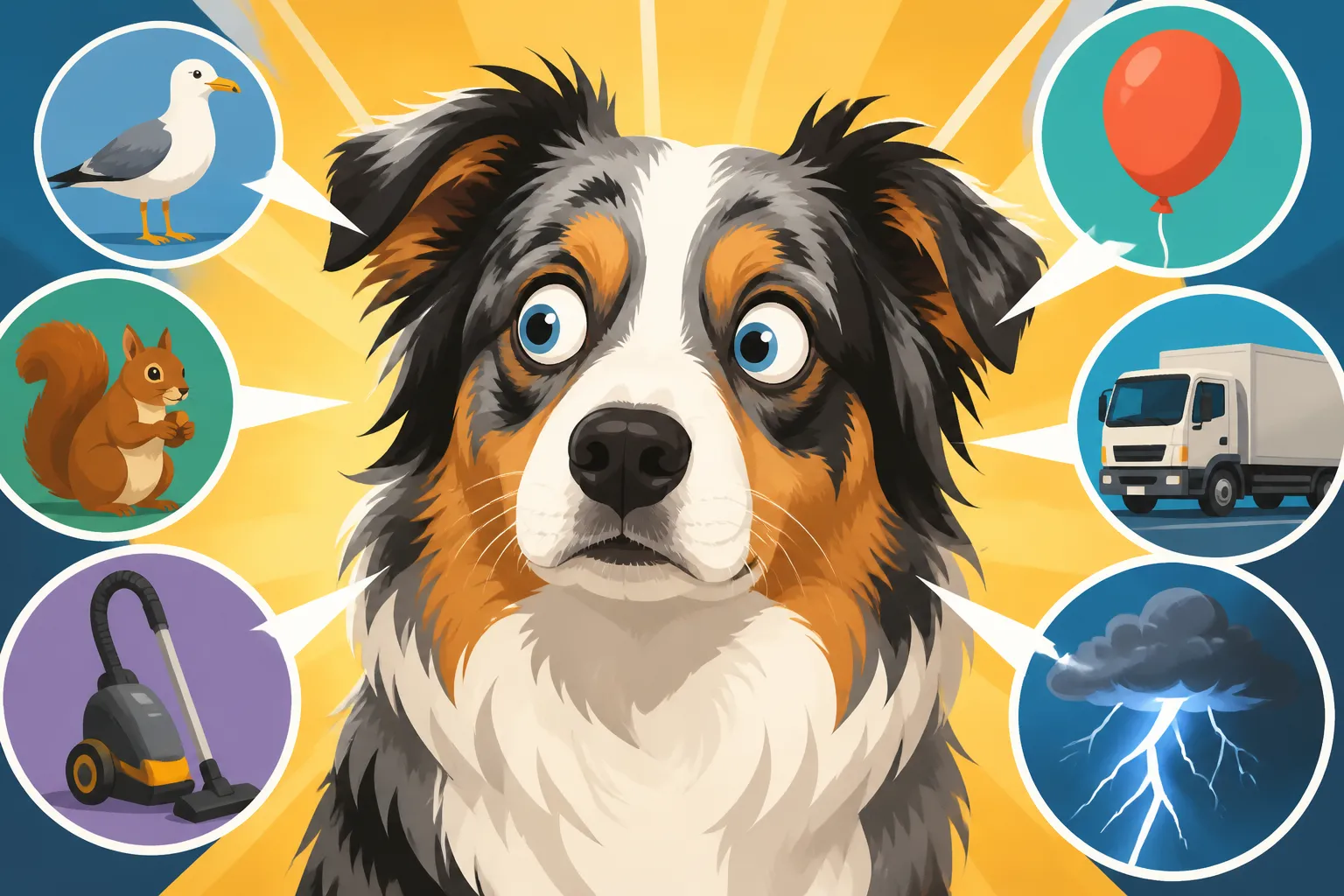
An Australian Shepherd That Stares at Everything
If you've ever found your Australian Shepherd staring intently at you, a wall, a toy, or even seemingly nothing at all, you're not alone. It's a common behavior that can range from endearing to downright perplexing, often leaving us wondering what exactly is going on in that brilliant, busy Aussie brain. This guide is here to unravel the mystery of the Aussie stare, helping you understand its roots, interpret its meaning, and equip you with practical strategies to manage it effectively, especially when it becomes excessive or problematic.
Why Your Australian Shepherd Fixates with That Intense Stare
That intense, sometimes unnerving, stare from your Australian Shepherd isn't just them being dramatic (though they certainly can be!). It's a complex behavior rooted in their history, their intelligence, and their unique way of interacting with the world. Understanding the underlying reasons is the first step toward addressing it.
The Deep-Seated Herding Instinct
Let's be real: your Australian Shepherd was quite literally bred to stare. Their ancestors spent generations fixing their gaze on livestock, using that intense focus to control movement, intimidate, and direct sheep or cattle. This "eye" is a fundamental component of their herding style. When you see your Aussie staring, often with a low head and a quiet stillness, they might be tapping into this primal instinct. They see something as "out of place" or needing to be "gathered," whether it's a cat sauntering across the living room, a child running through the yard, or even just you heading for the kitchen.
This isn't necessarily a bad thing; it's just how they're wired. Imagine trying to get a toddler not to be curious about a shiny object – it’s that ingrained. For some Aussies, this herding eye is incredibly strong, manifesting in behaviors like nipping at heels, circling, or that unwavering stare. It's crucial to remember that The Australian Shepherd Herding Drive You Cannot Train Out; it's part of their core identity.
Seeking Attention and Information
Beyond herding, your Aussie's stare can often be a direct plea for attention or a sophisticated way of gathering information. These dogs are incredibly smart and observant. If they stare at you while you're eating, they might be hoping for a dropped crumb, or they might be trying to figure out your next move. "Are you getting up? Are you going outside? Is it playtime?" Their minds are constantly processing.
Sometimes, the stare is simply a very effective communication tool they've learned works on you. If you tend to respond to a prolonged stare by engaging with them, giving them a toy, or even just talking to them, you've inadvertently reinforced the behavior. They've learned that "staring = interaction." They're not being manipulative; they're just being intelligent problem-solvers who found a strategy that gets results. They're constantly reading your body language, your routines, and even the subtle shifts in your attention.
Anxiety, Overstimulation, and Stress
While some staring is normal, an excessive or rigid stare can sometimes be a sign of underlying anxiety, overstimulation, or stress. An Australian Shepherd who is overwhelmed by a new environment, loud noises, or too much activity might "freeze" and stare as a coping mechanism. It's their way of trying to process everything, or sometimes, to disengage from a situation they find too intense. This is particularly common in Australian Shepherd Reactivity and Overarousal.
Think of it like this: when we're stressed, we might zone out, bite our nails, or pace. For an Aussie, a fixed stare can be a similar outlet for nervous energy or an attempt to control a situation they feel is spiraling. If the stare is accompanied by other signs of stress, such as lip licking, yawning (when not tired), tail tucked, ears flattened, or excessive panting, it's definitely something to pay close attention to. These dogs thrive on routine and predictability, and anything that disrupts that can lead to anxious behaviors, including staring.
Decoding Your Aussie's Staring Language
Since staring can mean so many different things, learning to decode your Aussie's specific cues is incredibly important. It's about looking at the entire picture—the context, their body language, and what usually follows the stare.
The "What's Next?" Stare
This is often the most common and benign type of stare. Your Aussie is essentially trying to read your mind, or at least your intentions. They might stare as you put on your shoes (walk time?), as you open the treat cupboard (snack time?), or when you simply pause in your activity. Their ears might be perked, tail held in a natural position (not tucked or rigidly high), and their body loose and ready for action. They're processing information, anticipating, and waiting for a cue.
This stare is usually accompanied by a relaxed posture, maybe a slight head tilt, and eyes that are bright and engaged rather than wide or worried. They're literally asking, "What are we doing now, boss?" It’s a sign of their intelligence and desire to be involved. You might notice this particularly if you’ve engaged in lots of Trick Training as Aussie Mental Work – they're always eager for the next puzzle.
The "I'm Concerned" Stare
A more concerning stare is one that signals discomfort, fear, or even potential aggression. This stare might be accompanied by a stiff body, a low growl, a tucked tail, flattened ears, or dilated pupils. The dog might be fixated on another dog, a stranger, or something in the environment that is making them uneasy. They're not just observing; they're assessing a perceived threat or preparing to react.
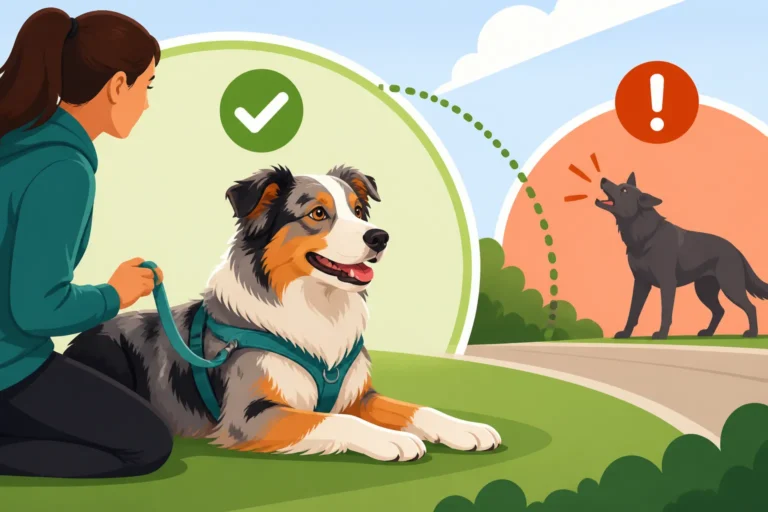
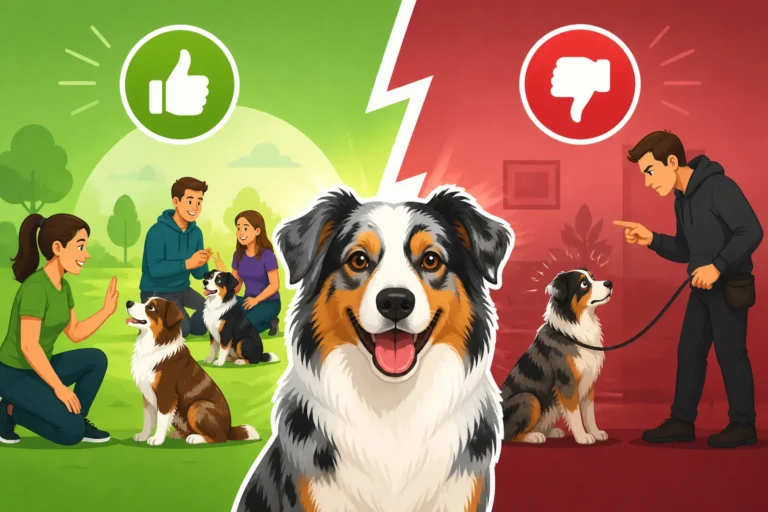
This type of stare is often held for longer periods, and the dog might seem almost frozen. If you observe this, it's crucial to intervene calmly and create distance from whatever is causing their concern. Never punish this stare, as it's a warning signal that could escalate if ignored or suppressed. Instead, try to Working a Reactive Aussie Under Threshold to slowly change their emotional response to the trigger.
The "I Want That" Stare
Ah, the classic "I want that" stare. This is your Aussie's attempt at telekinesis, trying to will an object (or food!) into their possession. You'll see this when you have a delicious snack, are holding their favorite toy, or when they want you to open the back door. Their eyes are usually locked on the desired item, sometimes darting between the item and your face, as if to say, "Look, it's right there. You know what to do."
This stare is typically persistent and can sometimes be accompanied by a whine, a paw tap, or even a soft nudge. It's often harmless, but if you always give in, you're reinforcing the idea that staring gets them what they want. While it's cute, it's important to teach impulse control around desired items to prevent demanding behaviors from escalating.
Here's a quick reference table for interpreting your Aussie's stare:
| Stare Type | Body Language Cues | Likely Interpretation | Recommended Response |
|---|---|---|---|
| "What's Next?" | Relaxed posture, perked ears, loose tail, bright eyes. | Anticipation, seeking guidance. | Give a command, initiate activity, or go about your business. |
| "I'm Concerned" | Stiff body, tucked tail, flattened ears, dilated pupils, low growl, lip lick. | Fear, anxiety, discomfort, potential aggression. | Create distance, calmly remove trigger, provide safe space. Avoid punishment. |
| "I Want That" | Focused on object/food, darting eyes to owner, paw tap, whine. | Demanding attention/item. | Ask for a polite behavior (sit/stay) before reward, or ignore until calm. |
| "Herding Eye" | Low head, still body, intense focus on moving object/person. | Instinctual herding drive. | Redirect with a toy, offer a job, or manage environment. |
Practical Strategies for Managing the Stare
Once you understand why your Australian Shepherd stares, you can start implementing strategies to manage it effectively. The goal isn't to eliminate all staring (it's natural!), but to reduce unwanted staring and redirect their intense focus positively.
Providing Appropriate Outlets for Drive
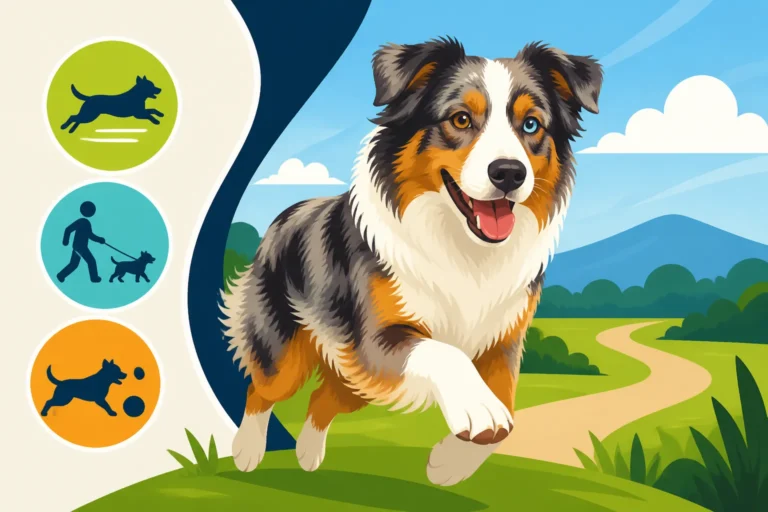
Many staring behaviors stem directly from an Aussie's innate herding drive and high intelligence. If they don't have appropriate ways to channel this energy, they'll find their own "jobs," which often involve herding or intensely watching you, the children, or other pets. Giving an Australian Shepherd a Job Instead of a Walk is paramount. This means more than just physical exercise; it means mental stimulation.
Think about structured activities that engage their minds and bodies. Herding balls in the yard (like a Jolly Ball or similar durable toy available on Amazon) can be a fantastic substitute for actual livestock. Teach them advanced obedience, scent work, or trick training. Engage them in puzzle feeders, especially for meals. These activities allow them to use their brains and bodies in a constructive way, often reducing the need to invent their own entertainment through staring. A good long line, also easily found on Amazon, can allow for safe, expansive practice of recall games in open areas, giving them a sense of freedom and a job.
Teaching an "Off Switch" and Relaxation
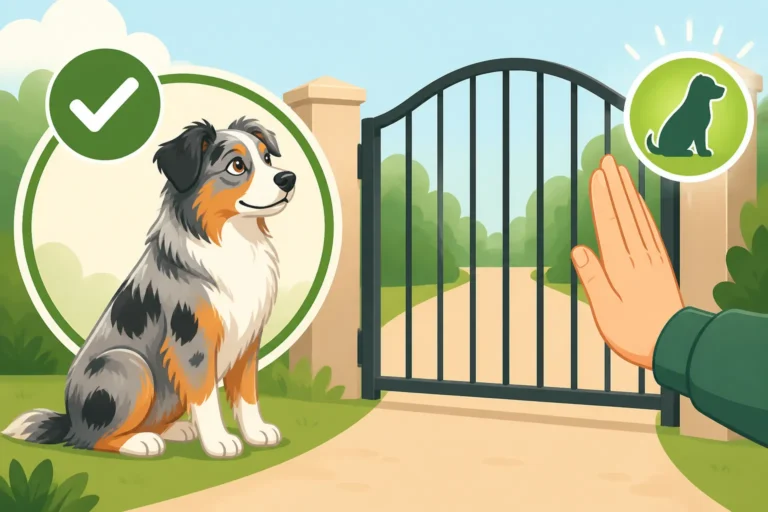
Australian Shepherds are incredible at "on," but many struggle with "off." Teaching them how to relax and settle is a game-changer for managing unwanted staring and overstimulation. This involves consciously rewarding calm behavior. Use a mat-training protocol where they learn to go to a specific spot (a mat, bed, or crate) and settle quietly. Reward them heavily for lying down, staying, and not staring or trying to engage you.
One effective technique is called "capturing calm." Whenever your Aussie is not staring and is instead lying quietly, even just for a moment, mark that behavior (with a clicker or a verbal "yes!") and reward them with a calm praise or a small, low-value treat. Over time, they'll learn that being calm and not staring gets them good things. Online training platforms like BAXTER & Bella offer excellent modules on teaching impulse control and relaxation, which can be invaluable for an Aussie owner. Consistency is key here. Teaching an Australian Shepherd an Off Switch takes patience, but it's incredibly rewarding.
Managing Environmental Triggers
Sometimes the stare is a reaction to something in the environment. If your Aussie stares intently out the window at passersby, or at children playing in the yard, it might be rooted in their protective or herding instincts, or even anxiety. In these cases, managing the environment is crucial.
- Block Visual Access: Use privacy film on windows, close blinds, or put up a baby gate to prevent them from seeing triggers that cause them to stare. "Out of sight, out of mind" can be very effective.
- Redirect and Engage: If you know a trigger is coming (e.g., mail carrier), redirect your Aussie before they start staring. Give them a special chew toy, practice a known command, or engage them in a short training session in another room.
- Structured Greetings: If the staring is directed at visitors, manage introductions carefully. Have your Aussie on a leash, ask them to "place" on their mat, and reward them for calmly observing rather than staring or trying to herd.
- Enrichment: Provide plenty of indoor enrichment when you can't be actively engaging them. Puzzle toys, snuffle mats, and long-lasting chews can keep their minds busy and reduce boredom-induced staring.
When to Call in a Professional Trainer or Vet
While many staring behaviors can be managed with consistent training and environmental adjustments, there are times when it’s best to seek professional guidance. Recognizing these situations early can prevent problems from escalating and ensure your Aussie gets the support they need.
Staring Coupled with Aggression or Fear
If your Australian Shepherd's staring is accompanied by clear signs of aggression (growling, snapping, lunging, stiff body language) or intense fear (shaking, cowering, hiding), it's a serious matter that requires professional intervention. This isn't just a quirky habit; it's a distress signal. A behavior consultant or a certified professional dog trainer with experience in herding breeds and behavior modification can help you identify the root cause of the aggression or fear and develop a safe, effective plan. Never try to "punish" aggression out of your dog, as this can often make the problem worse or suppress the warning signs, leading to sudden bites. Sudden Aussie Aggression and a Vet Check is always a good first step to rule out physical discomfort.
They might be experiencing significant stress or a lack of confidence, and a professional can provide tailored strategies, such as desensitization and counter-conditioning, to help them feel safer and more secure in triggering situations. This kind of nuanced work is often beyond what a well-meaning owner can achieve alone.
Persistent and Unresponsive Staring
You've tried all the redirection, the mental stimulation, the relaxation techniques, and your Aussie is still staring excessively, even when there's no clear trigger or when you try to break their focus. This persistent, almost obsessive staring, especially if it seems detached or unresponsive, could indicate a deeper behavioral or even medical issue.
It could be a sign of a compulsive disorder, a neurological problem, or even pain that's causing them to withdraw or fixate. While rare, certain seizure disorders can manifest in unusual staring or "fly-biting" behaviors. If your Aussie's staring feels unnatural, disconnected, or if their eyes seem glazed over, it's time to involve both your veterinarian and a qualified trainer. Logging Aussie Seizures for the Neurologist can be critical if you suspect a medical cause.
Ruling Out Medical Causes
Before delving deep into behavioral modification for persistent or unusual staring, it's always wise to rule out any underlying medical conditions. A comprehensive veterinary check-up can identify issues that might be contributing to changes in behavior. For example:
- Vision Problems: An Aussie with declining eyesight might stare more intently as they try to process what they can see, or they might stare into space if they're disoriented. Hereditary Cataracts Clouding an Aussie Eye or Progressive Retinal Atrophy in an Aussie are possibilities that could alter their visual processing.
- Pain or Discomfort: Dogs in pain, especially chronic pain like Australian Shepherd Arthritis After Years of Work or hip dysplasia, can exhibit behavioral changes including withdrawal, irritability, or unusual fixation as they try to cope.
- Cognitive Decline: In older Aussies, changes in brain function can lead to confusion, disorientation, and unusual staring patterns. An Old Australian Shepherd Losing Its Sight or An Aussie That Stops Reading the Room are often linked to cognitive changes.
- Neurological Issues: As mentioned, certain neurological conditions or seizure activity can cause staring spells.
Your vet can perform a thorough examination, including blood work, and possibly recommend further diagnostics like an eye exam or neurological consultation. Once any medical causes are ruled out, you and your vet can work with a qualified force-free trainer to address the behavioral components of the staring. Finding a Trainer Who Understands an Aussie is essential for effective and humane training.
Disclaimer
This article is for general informational purposes only and does not constitute professional advice. Laws, prices and regulations vary by location and change over time. Consult a qualified professional for guidance on your specific situation.