Teaching an Aussie to Wait at Gates
It's a familiar scenario for many Australian Shepherd owners: you reach for the gate latch, thinking you're just a second away from letting your dog out for some much-needed exercise, and whoosh! — your Aussie barrels through before you even have a chance to say "wait." This guide is all about tackling that common, and often dangerous, habit, offering practical steps to teach your clever companion to wait calmly at any threshold.
Understanding the Aussie's Gate-Crashing Impulse
That sudden burst through an open gate isn't usually born of malice; it's deeply ingrained in their very being as a herding breed. Australian Shepherds are wired to move, to control movement, and to anticipate what's next, especially when it involves getting to a new area or a perceived "job."
The Herding Instinct at Play
Think about it: an Australian Shepherd's ancestors were tasked with controlling flocks of sheep and cattle, often needing to move quickly and decisively to direct animals. This innate drive translates into an eagerness to be "in charge" of transitions, including moving through doorways and gates. When that gate opens, it's an invitation to go, to do, to herd whatever lies beyond, whether it's a flock of birds, a passing jogger, or just the freedom of the yard. They're not being disobedient; they're simply following a primal urge. This is a core part of The Australian Shepherd Herding Drive You Cannot Train Out, and it impacts almost every aspect of their behavior. They see an opening, and their brain says, "Opportunity! Go!"
What looks like rude behavior to us is often a very strong expression of their natural working drive. They want to be first, they want to be in control of the space, and they want to anticipate the next action. If you've ever seen your Aussie try to "herd" children playing in the yard or even An Australian Shepherd Circling Joggers and Cyclists, you know that impulse control around moving targets or exciting transitions isn't their strong suit without deliberate training. That urge to dart forward is their way of trying to get ahead of the "flock" (you, the kids, the mail carrier) and direct the movement.
Arousal and Impulse Control
Australian Shepherds are highly intelligent and observant dogs, which means they pick up on subtle cues. The jingle of keys, the sound of the gate latch, or even just your body shifting towards the door can send their arousal levels skyrocketing. Once they hit that elevated state of excitement, their ability to control their impulses diminishes significantly. It's like trying to have a calm conversation with a toddler who just had too much sugar and spotted an ice cream truck – their brain is just not in a place for rational thought or polite manners. For an Aussie, that gate opening is often the equivalent of seeing the ice cream truck and knowing there's a herd of sheep just waiting outside.
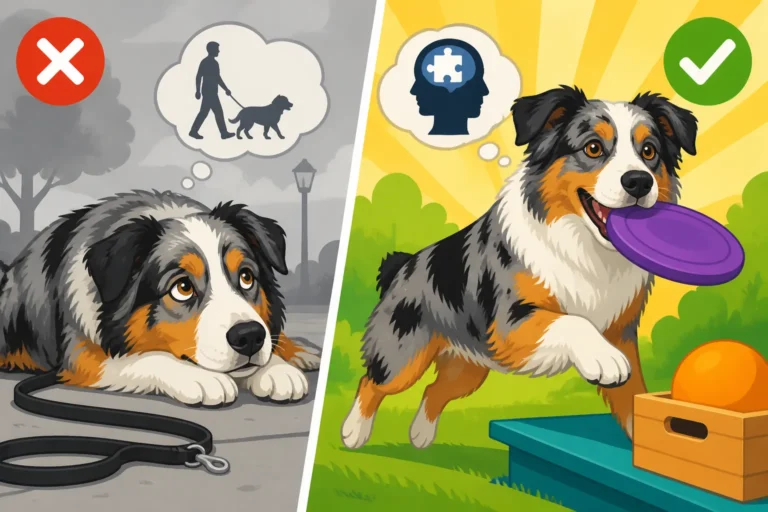
This high arousal makes it incredibly difficult for them to process a "wait" command if they haven't been systematically taught in a calm, controlled manner first. They're already anticipating the fun, the freedom, the chase, and that excitement overrides any polite request you might offer. We often see this when dogs are under-exercised or under-stimulated mentally; every outing becomes a huge, overwhelming event, rather than just another part of the routine. If your Aussie also struggles with An Australian Shepherd That Gets Worse in the Evening due to overarousal, you'll know this sensation well.
Consistency, or Lack Thereof
Let's be honest, we've all been guilty of this. Sometimes you're in a hurry, or your hands are full, or you just don't have the energy to enforce the "wait." You let your Aussie slip through the gate just this once. The problem is, for a smart dog like an Australian Shepherd, "just this once" isn't a fluke; it's a new data point. Every single time they successfully dart through a gate or doorway without a cue, they learn that it's an acceptable strategy. They're constantly testing the boundaries, and if the boundary isn't always firm, they'll push it.
Inconsistency is the biggest enemy of good manners with an Aussie. One day you ask for a sit and a wait, the next you let them barge through, and they quickly learn that your commands are optional. This creates confusion and reinforces the undesirable behavior. It's not about being mean; it's about being clear and predictable, which actually builds confidence and trust for your dog. If you want your Aussie to understand the rules, you need to apply them every single time, without exception.
Foundational Training for Gate Manners
Before you even approach a real gate, you need to build a solid foundation of self-control and clear communication with your Australian Shepherd. This isn't just about gates; it's about teaching them to pause, listen, and look to you for direction.
The 'Stay' and 'Wait' Commands
These two commands are the backbone of gate manners. While often used interchangeably, they have subtle differences that can be helpful. "Stay" typically means remaining in a specific position (sit-stay, down-stay) until released. "Wait," on the other hand, means pausing forward motion, usually at a threshold, until you give the all-clear. It implies that movement will happen, but only when permitted.
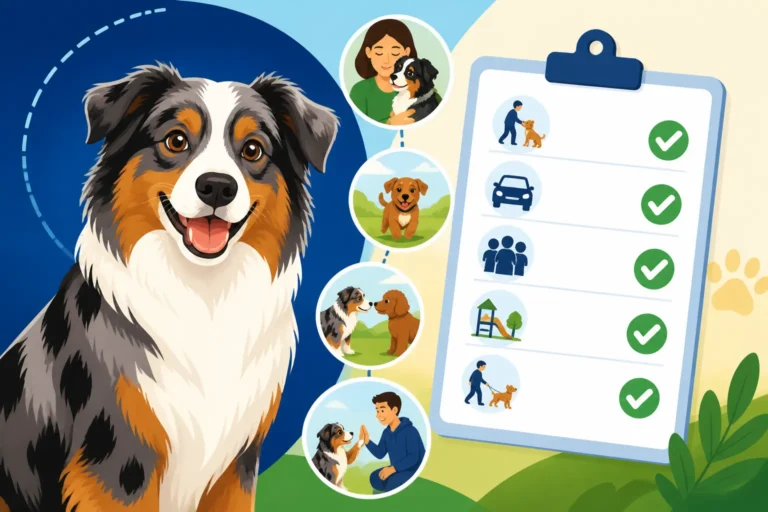
Start teaching "wait" in a low-distraction environment, like your living room with all doors closed. Have your Aussie on a leash, even indoors, to manage their movement. Ask them to sit a few feet from a closed doorway. Say "wait," take one step towards the door, then immediately return and reward with a high-value treat if they remained in place. Gradually increase the distance you move from them and the duration they wait. Once they're reliably waiting for several seconds while you move across the room, you can start incorporating opening the door slightly. The key is to build duration and distance in tiny increments, always rewarding stillness and eye contact. This is part of a broader The Aussie Puppy Curriculum Month by Month that focuses on impulse control.
Leash Pressure and Body Language
Your body language and subtle leash pressure are powerful communication tools. Before you even say "wait," your posture can signal your intentions. Stand tall, facing forward, with your Aussie slightly to your side. If they start to surge, subtly use the leash to apply gentle, upward pressure that communicates "no forward movement." The moment they yield and relax, release the pressure. This isn't about yanking; it's about a clear, consistent signal.
Practice walking towards a doorway with your Aussie on leash. If they try to pull ahead, stop immediately. Wait for them to relax and perhaps look back at you. Only then do you continue walking. Repeat this endlessly. This teaches them that pulling gets them nowhere, but calmly checking in with you restarts movement. Many Aussies respond incredibly well to this kind of clear, physical communication. Utilizing a longer line during these sessions can give you more control while still allowing your dog some freedom of movement, which is something you can explore further with Long Line Length for an Australian Shepherd.
Building Impulse Control Indoors
The journey to gate success often begins far from the actual gate itself. Every doorway, every crate, every boundary within your home is an opportunity to practice impulse control. Start by consistently making your Aussie "wait" at every indoor doorway. Before you open the door to another room, ask for a sit or a stand-stay, say "wait," and then open the door. If they move, immediately close the door. Repeat until they stay put. Once the door is open, then you give them their release cue ("okay," "free," etc.).
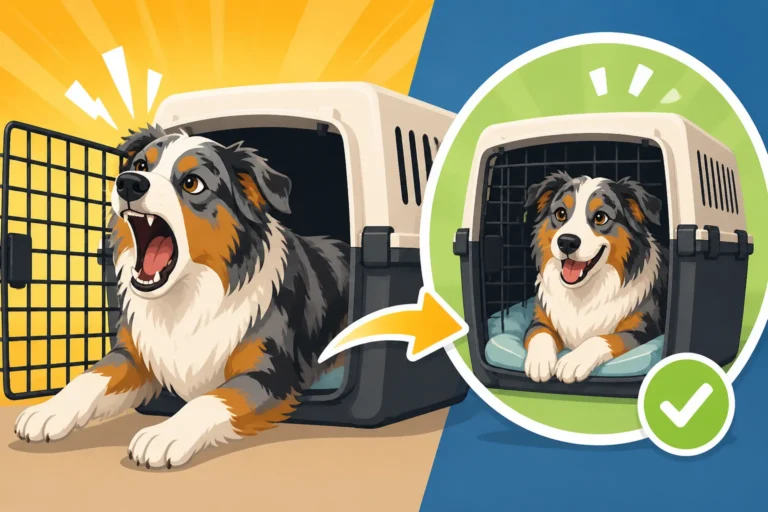
This practice extends to their crate too. Make them wait patiently before entering or exiting their crate. You can even use specific commands like "crate up" or "kennel" to signal entry, making them wait until you release them. This consistent training around multiple thresholds generalizes the concept of waiting. For a highly driven Aussie, incorporating Mat Settle Training for a Restless Aussie can also be incredibly effective. Teaching them to go to a designated "place" and relax, even when exciting things are happening around them, builds that vital mental muscle for self-control, which is important even for crate training as discussed in The Crate a Fifty Pound Aussie Needs. For many of these initial training items, simple, sturdy training tools like a comfortable harness and a good quality leash from a brand like Amazon can make a real difference in your success.
Step-by-Step Gate Training Protocol
Now that your Australian Shepherd has a solid understanding of "wait" and respects basic indoor thresholds, it's time to take that training to the actual gates. Remember, consistency is king, and patience is your best friend.
Starting with a Secure Area
Before you tackle the main gate, choose a low-stress, secure area for initial practice. This might be a secondary fence gate, a baby gate inside your house, or even just your front door if you have a securely fenced yard immediately outside. The key is to prevent any opportunities for failure or "bolting" that could undermine your training. Ideally, have your Aussie on a leash and collar, even if you're in a contained space. This gives you immediate control if they make a mistake.
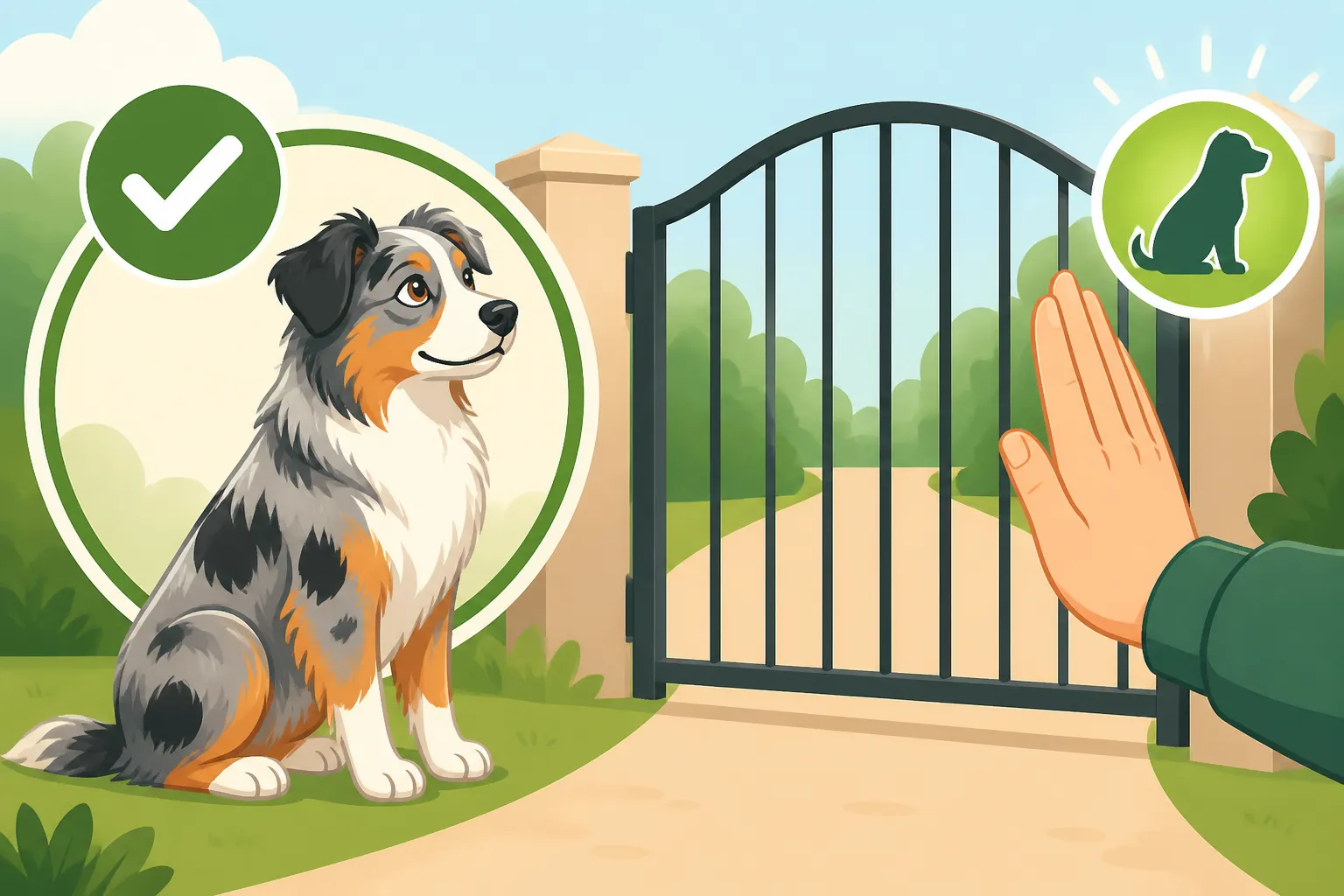
Begin by having your Aussie sit a few feet away from the closed gate. Give your "wait" cue. Approach the gate, perhaps jiggle the latch. If your Aussie holds their position, praise and reward them before you even open the gate. The goal here is to reward the calm, anticipatory wait, not the act of going through the gate. You want them to associate the sound of the latch and your approach with the reward for staying put, not with a race to freedom.
The "Closed Gate" Practice
Once your Aussie is reliably waiting for you to simply approach and touch the closed gate, it's time to introduce opening it.
- Aussie sits, you say "wait."
- Approach the gate and unlatch it. If your Aussie moves, immediately close the gate and reset. No punishment, just a clear consequence: moving means the gate closes.
- Open the gate a crack. Just enough for them to see movement, but not enough to slip through. If they hold their wait, praise and reward! Then close the gate and release them.
- Gradually increase the opening. Slowly open the gate wider and wider, always ready to snap it shut if they break their wait. Remember, the leash is your backup here. If they lunge, give a quick, upward leash correction and reset.
- Step through the gate yourself. Once they can hold their wait with the gate fully open, step through it. Turn and face them. If they stay, lots of praise and reward! Then, give your release cue and allow them to come through.
This process can take many short sessions. The moment they break their wait, the game stops, the gate closes, and you reset. This simple consequence is often more effective than scolding.
Adding Distractions and Real-World Scenarios
Once your Aussie is a pro at waiting for you to walk through the gate and then release them, it's time to layer in distractions. Real-life gates rarely open to an empty, silent void.
- People: Have a family member or friend walk past the open gate.
- Toys: Roll a favorite toy just outside the gate.
- Other Dogs: If safe and appropriate, have a calm, familiar dog walk by. This is where your earlier work on Australian Shepherd Recall Around Moving Things becomes crucial, as it builds their focus on you amidst exciting stimuli.
- Sound: Play sounds of cars, bikes, or other typical outdoor noises.
For each new distraction, start small. If your Aussie breaks their wait, reduce the distraction or go back to a simpler step. Remember to always use a release cue like "okay" or "free" to signal when they are allowed to move. This teaches them to wait for permission, not just for the gate to open. Over time, this meticulous practice will make them understand that gates are not free-for-alls but structured transitions where you are the guide.
Troubleshooting Common Gate Challenges
Even with the best intentions and consistent training, Australian Shepherds are smart and persistent. You're bound to hit a few snags along the way. Don't get discouraged! It's all part of the process of working with such a high-drive breed.
The "Bolting Before the Cue" Problem
This is probably the most common frustration. You've barely touched the latch, and your Aussie has already squeezed through or launched themselves forward. This typically means two things: their arousal is too high, and your "wait" cue isn't strong enough in that high-distraction context.
The fix? Go back to basics, indoors, with zero distractions. Rebuild the "wait" command from the ground up, making it bomb-proof in quiet environments. Use a longer line on your Aussie, even in the yard, so you have a physical backup. When approaching the gate, before you even touch it, ask for a sit or down and a "wait." If they start to shift their weight or inch forward, apply gentle leash pressure before they bolt, or even step in front of them with your body to block their path. Reward heavily for any moment of stillness. If they bolt, calmly reset, but don't let them have the "reward" of being outside the gate. The goal is to interrupt the bolt before it happens, so they don't get to practice the undesirable behavior. A short, sharp "ah-ah" or "no" coupled with the physical block or leash pressure can also work to interrupt. For many dogs, this kind of drive makes An Australian Shepherd Chasing Cars or other moving objects a strong temptation, so the gate becomes a critical control point.
Handling High-Value Distractions
What happens when a squirrel darts across the yard, or the neighbor's dog walks by? Your Aussie's herding brain might just override everything you've taught. This is where the systematic introduction of distractions (as mentioned in the previous section) is vital. However, sometimes real-world distractions are just too much.
When faced with a high-value distraction, you might need to increase your reward value. Have incredibly tempting treats ready (chicken, cheese, liver treats) to use before the distraction becomes overwhelming. If you know a high-value distraction is coming (e.g., mail carrier's usual time), practice the "wait" command proactively. Have your Aussie on a leash, in position, and ready to reward generously for maintaining focus on you despite the external stimulus. If they do break their wait, immediately close the gate and retreat indoors. Let the distraction pass. Only try again when the environment is calmer. You're essentially teaching them that staying with you, even with exciting things happening, results in a better payout than giving in to the chase.
Consistency in All Gateways
It’s easy to focus on just the backyard gate, but Aussies generalize poorly. If you teach them to wait at the back gate but not the front door, or not when getting out of the car, they'll assume the rules only apply to that one specific spot. You need to apply this training to every threshold they encounter.
This means:
- Front Door: Make them wait before stepping outside for walks or greet visitors.
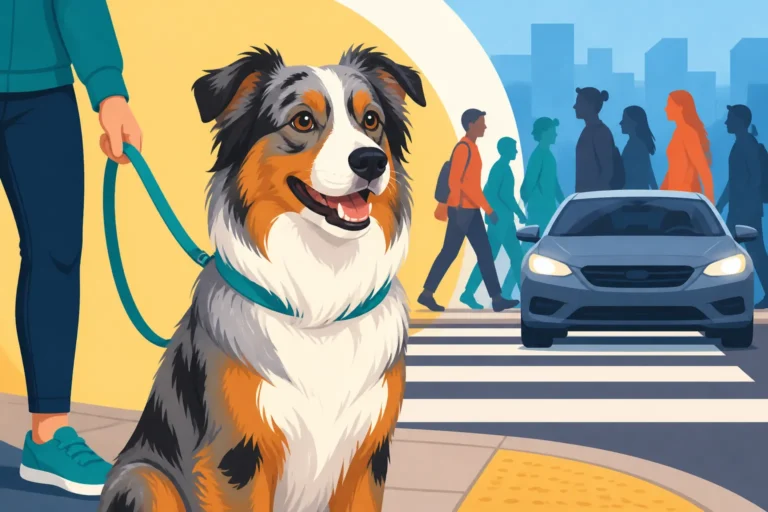
- Car Door: Before jumping out of the car, they should wait until released. This is particularly important for their safety and is a skill that ties into managing Long Drives With a Restless Australian Shepherd.
- Crates/Kennels: Always make them wait to enter or exit.
- Indoor Doors: Reinforce the "wait" at every interior doorway, especially if you have an Aussie that enjoys "supervising" you from room to room.
Every single instance of asking for a "wait" and rewarding it reinforces the behavior. Eventually, your Australian Shepherd will understand that waiting for permission is simply part of the routine, no matter where they are. Using practical tools like a pet gate from Amazon for indoor transitions can also help manage space and reinforce waiting.
| Command | Primary Function | Context | Implied Duration |
|---|---|---|---|
| Wait | Pause forward motion at a threshold or before an action. | Doorways, gates, car, before getting a toy. | Shorter, until released. |
| Stay | Remain in a specific position (sit, down, stand). | While you leave the room, at the park, during a photo. | Longer, until specific release. |
| Why both? | "Wait" for gates; "Stay" for position. Together, they teach comprehensive impulse control. | Applicable to all situations. | Flexible. |
Teaching your Australian Shepherd to wait at gates and other thresholds isn't a quick fix; it's an ongoing commitment to clear communication and consistent training. But with patience, you'll not only have a safer, better-mannered dog, but you'll also build a stronger, more trusting relationship based on mutual understanding.
Disclaimer
This article is for general informational purposes only and does not constitute professional advice. Laws, prices and regulations vary by location and change over time. Consult a qualified professional for guidance on your specific situation.