An Australian Shepherd That Paces Indoors
It's incredibly frustrating, isn't it, when your Australian Shepherd starts pacing incessantly around the house? You’ve just taken them for a walk, maybe played a good game of fetch in the yard, and yet there they go again, circling the living room, nose to the floor, or just wandering aimlessly from room to room. It makes you feel like you're missing something crucial, like they're trying to tell you something you just can't quite decipher. This guide is here to help you understand the common reasons behind this restless behavior and offer practical, actionable steps to help your Aussie find their calm.
Understanding Why Your Aussie Paces Indoors
Australian Shepherds are phenomenal dogs, brimming with intelligence, energy, and an innate drive to work. This remarkable combination, while making them incredible partners for active families and working homes, can also manifest as restless behaviors like pacing if their needs aren't properly met. It's easy to assume they just need more physical exercise, but often, the solution runs much deeper than just another walk.
Excess Energy and Lack of Fulfillment
One of the most common culprits behind indoor pacing is an Australian Shepherd’s incredible energy levels, coupled with a lack of mental fulfillment. Aussies were bred to be dynamic, problem-solving partners on the ranch, constantly assessing situations, moving livestock, and responding to their handler’s cues. A simple stroll around the block, while good for their physical body, often doesn’t engage their brilliant minds in the way they crave.
Imagine being given a crossword puzzle, but only allowed to fill in one square, then told to put it away. That's often how a purely physical walk feels to an Aussie's brain. They might be physically tired, lying down panting after a vigorous run, but their mind is still whirring, looking for a "job." This unspent mental energy or unfulfilled instinct can lead to restlessness, manifesting as repetitive pacing as they try to find an outlet for their innate drive. It's not just about tiring them out; it's about giving them a purpose, even within the confines of your home. If your Australian Shepherd often appears wired even after what you consider adequate exercise, it’s a strong signal that their brain needs more engagement.
Anxiety, Stress, or Overstimulation
Sometimes, pacing isn't about boredom or unspent energy, but rather a manifestation of anxiety, stress, or feeling overwhelmed. Australian Shepherds can be quite sensitive to their environment, and changes, loud noises, or even the subtle dynamics within a household can trigger feelings of unease. They might be pacing because they're worried about something outside they can hear but not see, or perhaps they're reacting to a new piece of furniture, a visiting guest, or even just a shift in your daily routine.
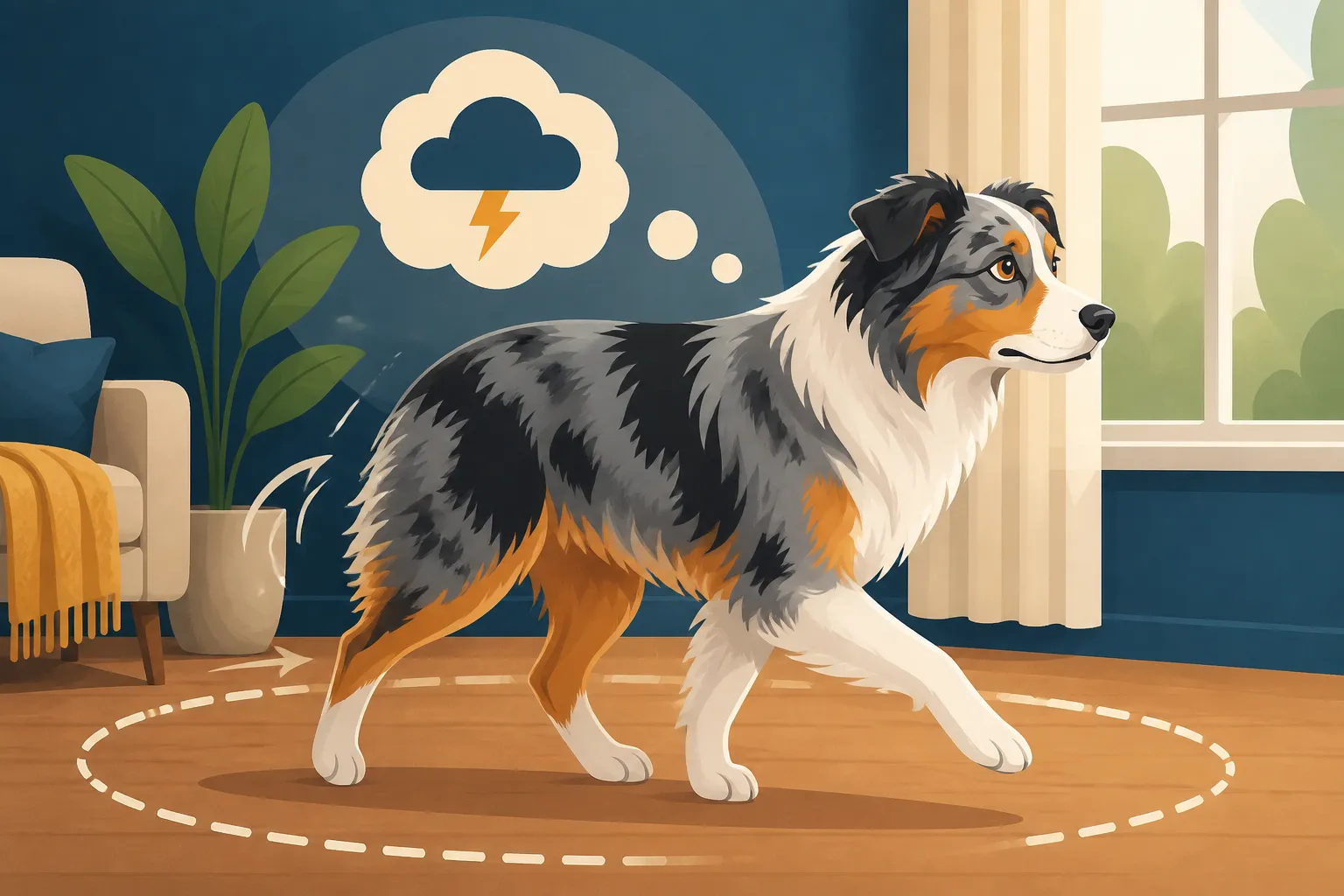
Think about how you might pace when you're stressed or anticipating something. Your Aussie might be doing the same. Common triggers include thunderstorms, fireworks, sudden construction noises nearby, or even the excitement and chaos of a family gathering. A new baby or another pet can also be a significant source of stress. When an Aussie feels overstimulated or anxious, pacing can be a self-soothing mechanism, an attempt to burn off nervous energy, or a way to try and escape what’s bothering them. Observing when your Aussie paces can provide valuable clues: do they pace before you leave for work, when a particular person enters the room, or only at night? Pinpointing these patterns is key to addressing the underlying cause.
Medical Conditions and Age-Related Changes
While often behavioral, pacing can sometimes be a sign of an underlying medical issue, especially if it's a new behavior or has worsened suddenly. Pain, for example, can make a dog restless and unable to settle comfortably. This could be anything from a sore joint, which is not uncommon for active breeds, to a less obvious internal discomfort. If your Aussie is suddenly pacing more than usual, seems uncomfortable, or is showing other subtle signs like changes in appetite or lameness, a vet visit is absolutely paramount to rule out any physical problems.
For older Australian Shepherds, pacing, particularly at night, can be a symptom of Canine Cognitive Dysfunction (CDS), sometimes referred to as "doggy Alzheimer's." Just like humans, senior dogs can experience disorientation, changes in sleep-wake cycles, and increased anxiety as their cognitive functions decline. They might pace because they’re confused about where they are, can’t settle, or are feeling anxious. Other conditions like thyroid imbalances or even certain medications can also contribute to restlessness. It's always best to consult your veterinarian if pacing is a new or escalating behavior, especially in an older dog, to ensure they aren't suffering from an easily treatable health issue. Senior Australian Shepherd Care After Ten offers more insights into the changes you might see.
Practical Strategies to Redirect Pacing Behavior
Once you have a better understanding of why your Australian Shepherd might be pacing, you can start implementing targeted strategies. The good news is that many pacing behaviors can be significantly reduced or even eliminated with a thoughtful approach that addresses both their physical and mental needs, as well as their emotional well-being.
Elevating Mental Stimulation
For many Australian Shepherds, the key to stopping indoor pacing lies not in more running, but in more thinking. Their sharp minds thrive on challenges. Engaging their brain can be far more tiring and fulfilling than endless physical exercise alone. Think about incorporating daily "brain games" into their routine. This can include puzzle toys where they have to manipulate objects to get treats; these are wonderful for independent problem-solving. You can find a wide variety of these on platforms like Amazon, from simple treat-dispensing balls to more complex sniff-and-find challenges.
Scent work is another fantastic outlet that taps into their natural instincts. Hide treats around the house and encourage them to "find it," starting with easy spots and gradually increasing the difficulty. Even simple trick training, teaching them a new "sit," "stay," or "rollover" can provide immense mental satisfaction. Short, frequent training sessions (5-10 minutes) throughout the day are often more effective than one long, overwhelming session. These activities give their minds a constructive "job" to do, redirecting that innate herding drive into positive, calming engagement. Mental Work That Actually Tires an Australian Shepherd and Trick Training as Aussie Mental Work dive deeper into these concepts, while Scent Games That Tire an Australian Shepherd offers specific ideas for nose work.
Structured Exercise and Routine
While mental stimulation is crucial, physical exercise is still a cornerstone of a well-adjusted Australian Shepherd's life. However, it needs to be structured and varied to truly meet their needs, not just a frantic blast of energy. Instead of just letting them run wild in the yard, incorporate activities that require thought and cooperation. Daily training walks where you practice loose-leash walking, recalls, and stays can be more beneficial than a simple free run. Introduce different environments to keep them engaged, like a new park or a quiet trail.
Dog sports like agility, obedience, or even flyball are incredible ways to combine physical exertion with mental challenges, giving them a real "job" that satisfies their instincts. Even if you don't compete, taking a local agility class can be incredibly rewarding for your Aussie. A predictable daily routine also helps immensely. Knowing when to expect walks, meals, and playtimes can reduce anxiety and create a sense of security, which can, in turn, reduce restless pacing. Remember, Giving an Australian Shepherd a Job Instead of a Walk really highlights the importance of purpose, and How Much Daily Exercise an Australian Shepherd Needs offers insights into appropriate physical activity levels. Exploring Australian Shepherd Agility and Disc Sports could also open up new avenues for structured play.
Creating a Calming Environment
Sometimes, your Aussie’s pacing is a direct response to their environment, and making some adjustments can go a long way. Start by identifying potential stressors in your home. Is there a window they stare out of, reacting to every person or dog passing by? Consider using frosted window film or simply drawing the blinds during peak activity times. Create a designated "safe space" for them, like a crate in a quiet corner or a comfy dog bed in a low-traffic area. Teach them to go to this spot and settle. This could be a place where they can retreat when feeling overwhelmed or just need a break.
Consider calming aids like a white noise machine to block out external sounds, or diffusers that release calming pheromones (though individual results vary). For noise-sensitive Aussies, simply having a radio or TV on low in the background can help mask sudden sounds that might trigger pacing. Consistency is key here; a predictable routine combined with a serene environment helps foster a sense of security for your sensitive herding dog. Mat settle training, as discussed in Mat Settle Training for a Restless Aussie, is an excellent technique to teach your dog to relax in a specific spot, which can be incredibly useful when you need them to settle indoors.
When to Seek Professional Help
While many pacing behaviors can be managed with consistent effort at home, there are times when it’s essential to bring in the experts. Don't feel like you've failed if you reach this point; it simply means you're being a responsible pet parent and seeking the best possible care for your beloved Australian Shepherd.
Consulting Your Veterinarian
If your Australian Shepherd's pacing is new, sudden, or has drastically increased, the very first step should always be a visit to your veterinarian. As we discussed earlier, pacing can be a symptom of underlying pain, discomfort, or a medical condition that needs professional diagnosis and treatment. Your vet will conduct a thorough physical examination, ask about your Aussie's history, diet, and any other behavioral changes you've noticed. They might recommend blood tests, X-rays, or other diagnostics to rule out conditions like arthritis, thyroid issues, or even neurological problems.
It's helpful to come prepared for your vet appointment. Keep a journal for a few days or a week, noting when your Aussie paces, for how long, and what might have triggered it. Also, observe if the pacing is accompanied by any other symptoms like loss of appetite, changes in bathroom habits, lameness, increased thirst, or lethargy. Providing your vet with a clear picture of the behavior will significantly help them in their diagnostic process. Ruling out medical causes is crucial before assuming the pacing is purely behavioral. The article Sudden Aussie Aggression and a Vet Check underscores the importance of a vet check for any sudden behavioral shift, even if pacing isn't aggression, it's a significant change.
Working with a Certified Professional Dog Trainer or Behaviorist
If your vet has given your Australian Shepherd a clean bill of health, but the pacing persists, it’s time to consider enlisting the help of a certified professional dog trainer or a veterinary behaviorist. These experts have specialized knowledge in canine behavior and can offer tailored strategies that you might not have considered. A professional trainer can assess your Aussie's behavior in person, identify specific triggers, and guide you through effective training techniques for impulse control, mental enrichment, and relaxation. They can help you implement a structured plan that fits your lifestyle and your dog’s unique personality.
Look for trainers who use positive reinforcement methods and have experience with herding breeds, as Aussies have unique drives and sensitivities. For more complex cases involving severe anxiety or compulsive behaviors, a veterinary behaviorist (a DVM with advanced training in animal behavior) can be invaluable. They can diagnose behavioral conditions and, if necessary, prescribe medication in conjunction with behavior modification. Online platforms, such as BAXTER & Bella, also offer structured training programs and support that can be a great starting point for owners looking to build a strong foundation of skills and address behavioral challenges with expert guidance. You can find guidance on choosing the right professional in Finding a Trainer Who Understands an Aussie and Vetting a Trainer Before Booking an Aussie.
Here's a quick summary to help you pinpoint potential causes and solutions:
| Pacing Cause | Common Indicators | Potential Solutions | When to Seek Professional Help |
|---|---|---|---|
| Excess Unspent Energy | Dog is otherwise healthy, paces after walks, seems restless even after physical play. | Increase mental stimulation (puzzle toys, scent games, trick training). Engage in structured activities (agility, obedience). Vary exercise routines. Provide a "job." | If pacing persists despite consistent efforts. |
| Anxiety/Stress | Paces during storms, after visitors, when left alone; accompanied by whining, panting. | Identify and minimize triggers (noise, visual stimuli). Create a safe, quiet space. Use calming aids (white noise). Maintain a predictable routine. Counter-condition negative associations. | If anxiety is severe, causes destructive behavior, or doesn't improve with environmental changes. |
| Medical Condition | Pacing is new, sudden, worse at certain times (e.g., night); accompanied by other symptoms (limping, appetite change, confusion). | IMMEDIATE VET VISIT! Follow vet's recommendations. Treatment of underlying condition (pain meds, thyroid meds, cognitive support). | Always the first step for new or worsening pacing. |
| Age-Related Changes | Older dog, pacing especially at night, disorientation, changes in sleep patterns. | Vet consultation for Canine Cognitive Dysfunction (CDS). Maintain routine, provide gentle exercise. Environmental modifications (night lights). Cognitive support supplements or medication as prescribed by vet. | If cognitive decline is suspected, for diagnosis and management. |
Disclaimer
This article is for general informational purposes only and does not constitute professional advice. Laws, prices and regulations vary by location and change over time. Consult a qualified professional for guidance on your specific situation.