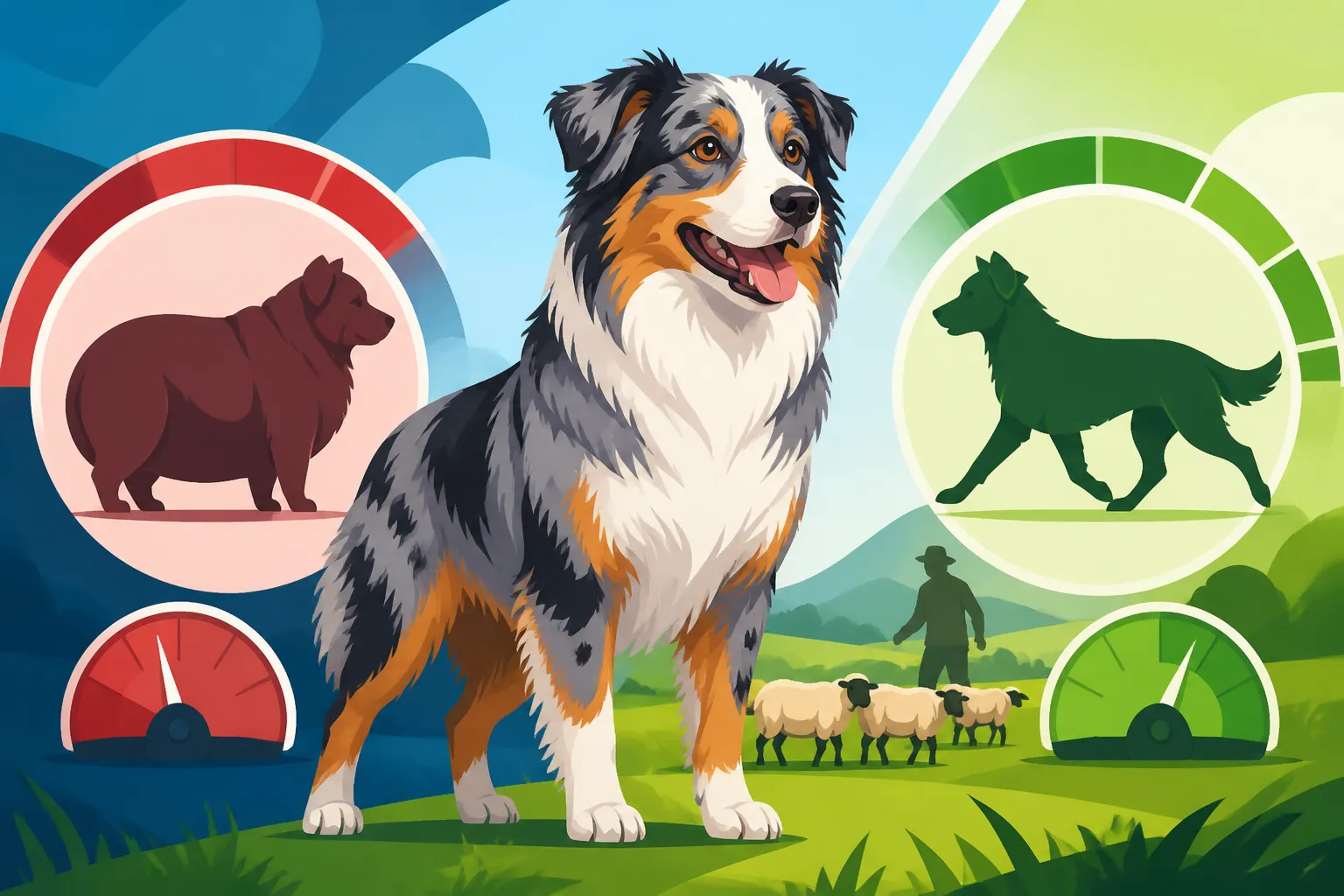
Australian Shepherd Weight Control on a Working Frame
One of the trickiest balancing acts for any Australian Shepherd owner is maintaining their dog's ideal weight, especially when you consider their inherent working drive and often fluctuating activity levels. It's not just about keeping them from getting chunky; it's also about ensuring they're not too lean, which can be just as detrimental to their health and performance. This guide will walk you through the nuances of Aussie weight control, helping you understand their unique needs and how to keep them in peak condition.
Understanding the Aussie's Working Frame: Why Weight Management is Unique
Many of us get an Australian Shepherd because we're drawn to their intelligence, their athleticism, and that incredible energy. But with that comes a very specific set of metabolic and physical needs that aren't quite like your average family pet. You can't just feed them a generic amount of food and expect them to thrive, especially if their daily routine shifts from a high-intensity agility weekend to a quiet week at home. Their body is literally built for motion and purpose, and their weight management needs to reflect that.
The Energetic Blueprint of the Australian Shepherd
Imagine your Aussie as a finely tuned sports car. They're bred to be agile, powerful, and have incredible stamina, capable of working long hours on a ranch, herding sheep, or excelling in dog sports. This isn't just a quaint historical fact; it's hardwired into their DNA. Their metabolism is often naturally higher than many other breeds, constantly burning calories to maintain that energy and muscle. This means that if they're not getting enough fuel, they can quickly dip below a healthy weight, appearing too bony or lacking the robust muscle tone they need. Conversely, if that high-octane engine isn't running due to a few days of bad weather or a temporary injury, the excess fuel can quickly pack on pounds, putting undue stress on their joints and organs.
It's a constant recalibration. One day they might have spent four hours running a herding course, burning through calories like crazy, and the next they might be chilling on the couch because you're both recovering. Their body wants to match food intake to energy output, and it's our job to help them do that. This inherent drive means a "one-size-fits-all" feeding approach just won't cut it.
Metabolism and Muscle Mass: A High-Octane Engine
Australian Shepherds typically boast a lean, muscular build. This muscle mass is crucial for their athletic abilities – jumping, weaving, stopping on a dime, and pushing livestock. Muscle is metabolically active, meaning it burns more calories even at rest compared to fat. So, a well-conditioned Aussie naturally has a higher energy expenditure. However, this also means that if they start to lose muscle, their metabolism can slow, making them more prone to weight gain if their diet isn't adjusted.
You'll notice this especially with working line Aussies. They often have a very defined, almost wiry physique, even at their ideal weight. Their ancestors spent generations running miles, solving problems, and being constantly engaged. That genetic predisposition means they're not meant to carry a lot of extra padding. When you put your hands on a healthy Australian Shepherd, you should feel solid muscle and easily detect their ribs without seeing them jut out. This unique composition means their diet needs to be nutrient-dense to support muscle maintenance and recovery, not just to fill them up.
The Dangers of Under and Over-Weight
Finding that perfect weight balance is crucial. An Australian Shepherd that is too thin might lack the energy reserves for their activities, have a compromised immune system, or experience reduced stamina. Their coat might lose its luster, and you might notice them getting cold more easily. For a working dog, being underweight means they simply can't perform their job safely or effectively, and it can also signal underlying health issues.
On the flip side, an overweight Aussie faces a host of potential problems. Extra pounds place significant strain on their joints, predisposing them to conditions like hip and elbow dysplasia, or exacerbating existing issues. Australian Shepherd Hip Dysplasia and Working Joints is a common concern, and added weight makes it far worse. Overweight dogs are also more susceptible to diabetes, heart disease, respiratory problems, and a decreased lifespan. They'll struggle to keep up on hikes, jump obstacles in agility, or even play vigorously, leading to a vicious cycle of less activity and more weight gain. It's a lose-lose situation that impacts their quality of life and can lead to costly vet bills down the line. We want our Aussies to enjoy long, active lives, and weight control is a huge part of making that a reality.
Assessing Your Aussie's Body Condition: More Than Just the Scale
Forget the number on the scale for a moment. While useful as a general guide, what truly matters for an Australian Shepherd is their body condition. Two Aussies of the same breed and height might weigh the same, but one could be lean and muscular, while the other carries too much fat. This is where learning to "read" your dog's body comes into play. It's an essential skill for any Aussie parent.
The Visual Cues: Ribs, Waist, and Tummy Tuck
When you look at your Aussie from above, you should see a distinct waistline, an hourglass shape narrowing behind the rib cage. If they look more like a sausage or a straight block from neck to tail, they're likely carrying too much weight. From the side, their abdomen should tuck up, not hang low or be straight across. This "tummy tuck" indicates a lean physique, crucial for agile movement.
Now, let's talk ribs. You should be able to see the last one or two ribs when your Aussie is standing, especially if they are inhaling or turning. If you can see all their ribs clearly, they might be underweight. If you can't see any ribs at all, even when they're stretching or moving, they're probably overweight. Pay attention to the subtle cues. A healthy Aussie's silhouette is one of athleticism, not roundness. This visual assessment becomes second nature over time, helping you make quick judgments about their condition.
Hands-On Assessment: Feeling for the Right Cover
The visual check is a great start, but nothing beats a hands-on assessment. This is where you actually get to feel what's under that magnificent double coat! Start by gently running your hands along their sides, over their rib cage. You should be able to feel each individual rib easily, almost like the knuckles on your hand, with just a thin layer of muscle and fat covering them. If you have to press hard to feel them, or can't feel them at all, they're too heavy. If the ribs feel prominent and sharp, with no covering, they're too thin.
Next, move to their spine. You should be able to feel the bumps of their vertebrae, but they shouldn't feel like sharp ridges. A good muscular covering is ideal. Then, assess their hips. You should be able to feel their hip bones, but again, they shouldn't protrude dramatically. This hands-on method, often referred to as Scoring an Aussie Body Condition by Hand, gives you a much more accurate picture than simply watching them. It helps you distinguish between a healthy, muscular dog and one carrying excess fat, even if their coat makes them look bigger than they are.
Utilizing Body Condition Scoring Charts
To help standardize this assessment, veterinarians and nutritionists use Body Condition Scoring (BCS) charts. These charts typically range from 1 to 9, where 1 is emaciated, 9 is obese, and 4 or 5 is ideal. They provide visual examples and descriptions for each score. By regularly checking your Aussie against a BCS chart, you can track changes over time and have an objective way to communicate with your vet.
Here's a simplified version of what you're looking for:
| BCS Score | Ribs | Waist/Tuck | General Appearance |
|---|---|---|---|
| 1-2 | Ribs, spine, hip bones easily visible/felt | Severe abdominal tuck | Emaciated, no body fat, obvious muscle loss |
| 3 | Ribs easily felt, slight fat covering | Obvious abdominal tuck | Very thin, minimal fat, some muscle loss may be present |
| 4-5 (Ideal) | Ribs easily felt, minimal fat covering | Well-proportioned waist, good tuck | Lean, athletic, well-muscled, active look |
| 6-7 | Ribs difficult to feel under moderate fat | Slight waist, less defined tuck | Overweight, noticeable fat deposits over ribs and base of tail |
| 8-9 | Ribs very difficult to feel under thick fat | No waist, abdomen rounded | Obese, extensive fat deposits, abdominal distention |
Many pet food companies and veterinary organizations offer free printable BCS charts online. Keep one handy, maybe on your fridge, and check your Aussie monthly. This systematic approach, combined with the visual and hands-on checks, will empower you to be a proactive advocate for your Aussie's health.
Tailoring Nutrition to a Working Australian Shepherd's Needs
Feeding an Australian Shepherd isn't just about putting kibble in a bowl. It's about fueling an athlete, ensuring they have the energy for their tasks, the building blocks for muscle repair, and the overall nutrition for a long, healthy life. Their diet needs to be as dynamic as their lifestyle.
Calorie Requirements for Active Aussies
The caloric needs of an Australian Shepherd can vary dramatically. A young, intact male Aussie actively training for agility and herding five days a week will need significantly more calories than a spayed female who enjoys daily neighborhood walks and puzzle toys. Factors like age, activity level, metabolism, and whether they are spayed/neutered all play a role. A good starting point for a moderately active adult Aussie is often around 25-30 calories per pound of body weight, but this can easily go up to 35-40 calories per pound for a truly high-drive, working dog.
Instead of guessing, use resources like calorie calculators provided by reputable pet food brands or consult with your vet or a certified veterinary nutritionist. They can help you dial in a starting number. The key, however, is observation. Is your Aussie maintaining weight, gaining, or losing? Their body will tell you if your initial calculation is correct. Adjust gradually, typically by 10-20% increments, and monitor for a week or two before making further changes. Remember that Daily Calories for a Thirty-Five to Seventy Pound Aussie will be a much wider range than for a less active breed.
Choosing the Right Food: Protein, Fat, and Carbs
For an active Australian Shepherd, the quality and composition of their food are paramount. You'll want a diet that prioritizes high-quality protein, moderate fat, and appropriate carbohydrates.
- Protein: This is critical for muscle maintenance and repair. Look for foods where a named meat (like "chicken meal," "beef," or "lamb") is the first ingredient. Aim for a dry matter protein content of at least 25-30% for adult Aussies, and even higher for very active dogs or puppies. Brands like Orijen or Merrick are often well-regarded for their high protein content.
- Fats: Healthy fats provide a concentrated source of energy, support a healthy coat, and aid in vitamin absorption. Sources like chicken fat, salmon oil, and flaxseed are excellent. The fat content typically ranges from 15-20% for active dogs. Too little fat can leave your Aussie feeling lethargic and looking dull.
- Carbohydrates: These provide readily available energy. Look for complex carbohydrates like sweet potatoes, brown rice, or oats. Avoid foods with excessive fillers or corn/soy as primary ingredients, which offer less nutritional value.
Many owners find success with premium kibble, while others opt for fresh food delivery services like Ollie, which can be custom-portioned to your dog's exact needs, making calorie control much simpler. Regardless of the type, always ensure the food is complete and balanced for your dog's life stage.
Portion Control and Meal Timing Strategies
Once you've chosen a high-quality food, portion control is your next challenge. Don't just scoop! Weighing your Aussie's food with a kitchen scale is the most accurate way to ensure they're getting the precise number of calories you've determined. This eliminates the variability of scoops and ensures consistency.
Most Australian Shepherds do well with two meals a day. This helps regulate their metabolism, prevents them from getting overly hungry, and can be a strategy for Bloat Warning Signs in an Australian Shepherd prevention by not feeding one massive meal. For very active dogs, some owners might even split the daily ration into three smaller meals to keep their energy levels stable.
Adjusting portions requires constant vigilance. If your Aussie has had an exceptionally active week, you might slightly increase their food. If they've been less active due to bad weather or a minor injury, a slight reduction is in order. Remember, these adjustments should be small and gradual, not drastic. This proactive approach to Feeding an Australian Shepherd That Works All Day will help keep their weight consistent and healthy.
Exercise and Activity Levels: Balancing Fuel and Output
We all know Aussies need a lot of exercise, but it’s not just about letting them run wild. For proper weight control, and overall well-being, the type and consistency of their activity are just as important as the duration. A well-exercised Australian Shepherd is a much healthier, happier, and easier-to-manage dog.
Defining a "Working" Australian Shepherd's Exercise
When we talk about an Australian Shepherd's exercise, we're not just referring to a leash walk around the block. While those are fine for sniffing and mental engagement, they rarely burn the kind of calories or satisfy the innate drive of a true Aussie. A "working" Aussie, even if they aren't on a ranch, needs activities that engage both their body and their mind. This could include:
- Herding lessons: Tapping into their natural instincts on sheep or ducks.
- Agility training: Running courses, jumping, weaving, and problem-solving.
- Flyball or disc dog: High-intensity bursts of running, jumping, and retrieving.
- Long, challenging hikes: Navigating varied terrain, often off-leash in safe areas (if recall is solid).
- Canicross or bikejoring: Running alongside a person on a bike or cross-country skis.
These activities don't just burn calories; they build lean muscle, improve cardiovascular health, and provide crucial mental stimulation. A solid Australian Shepherd Exercise at One to Two Hours a Day often combines several types of activities, ensuring a full-body and full-mind workout. Without this appropriate outlet, they can become restless, destructive, and even gain weight from pent-up energy that isn't being channeled.
Adjusting Food for Fluctuating Activity
Life isn't always consistent, and neither is an Aussie's activity level. Perhaps you have a rainy week and can't get out for those long hikes, or your dog is recovering from a minor sprain and needs crate rest. This is where adjusting their food intake becomes critical.
If you know a less active period is coming, slightly reduce their food portion before they start packing on pounds. For instance, if your dog typically gets two cups of kibble twice a day, you might reduce it by a quarter cup per meal for a few days. Conversely, leading up to an intense weekend of dog sports or a multi-day backpacking trip, you might gradually increase their food by a similar amount to ensure they have ample energy reserves. Think of it like a human athlete carb-loading before a marathon.
The goal is to prevent dramatic swings in weight. Sudden weight gain or loss can be hard on their system and indicate an imbalance. Consistent monitoring of their body condition, as discussed earlier, will be your best guide for making these subtle, proactive dietary changes. It's a dance, and you're leading!
The Role of Mental Stimulation in Energy Expenditure
It’s easy to focus solely on physical exercise when it comes to burning calories, but mental stimulation plays a huge, often underestimated, role in an Australian Shepherd’s energy expenditure and overall weight management. A bored Aussie, even one that gets plenty of physical exercise, can still be restless and prone to stress-related behaviors that might impact their weight.
Engaging their brilliant minds with puzzle feeders, scent work, trick training, or even just working on obedience commands for 15-20 minutes a day can be incredibly tiring. These activities burn mental energy, which contributes to a calm, satisfied dog who is less likely to pace nervously or become destructive – behaviors that can actually lead to unwanted weight loss (due to constant movement) or weight gain (from boredom eating, if applicable, though less common in Aussies). Consider a Kong filled with peanut butter and frozen, or a snuffle mat for their meals. These tools, readily available on platforms like Amazon or Chewy, slow down eating, provide mental enrichment, and can even contribute to feeling fuller longer. A mentally stimulated Aussie is a balanced Aussie, and a balanced Aussie is more likely to maintain a healthy weight.
Common Weight Challenges and How to Address Them
Even with the best intentions, you might encounter bumps in the road when it comes to your Aussie's weight. It’s important to recognize these challenges and have strategies ready to tackle them head-on. Neither being too thin nor carrying extra pounds is ideal for these active dogs.
The "Too Thin" Aussie: When They Burn More Than They Eat
Sometimes, despite your best efforts, your Australian Shepherd might seem a bit too lean, especially if they are particularly high-energy, young, or prone to being picky eaters. This can be frustrating because you're feeding them according to guidelines, but they just seem to burn through it all. Signs they might be too thin include prominent ribs, spine, and hip bones, visible muscle loss, or a generally "scrappy" appearance.
To address this, first, rule out any underlying medical conditions with your vet. Parasites, malabsorption issues, or other health problems can cause unexplained weight loss. If they get a clean bill of health, consider the following:
- Increase calorie density: Instead of just increasing quantity, opt for foods with higher fat and protein content. Sometimes a "performance" or "all life stages" formula can offer more calories per cup.
- Add healthy toppers: A tablespoon of plain canned pumpkin (not pie filling!), a drizzle of salmon oil (great for Joint Support in a Working Aussie Diet), or a spoonful of plain, unsweetened yogurt can add calories and palatability.
- More frequent meals: Instead of two meals, try three smaller meals throughout the day. This can help with nutrient absorption and keep their metabolism more evenly fueled.
- Monitor activity vs. intake: Are you underestimating how much they're truly doing? A working Aussie's caloric needs can be surprisingly high. Use the body condition score regularly to guide your adjustments.
The "Creeping Pounds": When Activity Slows or Diet Isn't Adjusted
This is a scenario many of us face as our Aussies mature, their activity levels naturally decrease, or they have a period of injury or illness. Those extra pounds seem to creep on slowly, and suddenly you notice their waist isn't as defined, or their belly tuck has disappeared. It's easy to get complacent, especially if they've always been lean.
Addressing creeping weight gain requires a multi-pronged approach:
- Honest assessment: First, use the BCS chart and be brutally honest with yourself. Is your Aussie truly at an ideal weight?
- Calorie reduction: This is often the most critical step. Weigh their food accurately and gradually reduce their daily intake by 10-15%. Don't drop too much too fast, as this can make them feel deprived and prone to begging. Consider switching to a "weight management" or "light" formula designed for lower calories but still nutritionally complete.
- Increase activity: While reducing food, try to gently increase their activity. Even an extra 15-20 minutes of brisk walking or an engaging game of fetch can make a difference. For older Aussies, low-impact activities like swimming can be excellent.
- Re-evaluate treats: Those training treats or evening snacks add up! Factor them into their daily calorie count or switch to low-calorie options like plain green beans or baby carrots.
- Consider a dietary consult: If you're struggling, a veterinary nutritionist can provide a tailored plan.
Remember, consistency is key. Small, consistent changes over time are more effective and sustainable than drastic, short-term efforts.
Managing Treats and Supplements Effectively
Treats and supplements are often overlooked culprits in weight management, for both underweight and overweight Aussies. We love to reward our dogs, but those calories count!
For the "too thin" Aussie, treats can be a fantastic way to add extra calories strategically. Opt for high-value, calorie-dense treats during training sessions. You can also use supplements like high-calorie pastes or nutrient-dense oils (like a good fish oil, also beneficial for coat health) mixed into their food.
For Aussies struggling with "creeping pounds," treats become a major area for adjustment. Those small, frequent rewards add up significantly. Here's how to manage them:
- Factor into daily calories: If you give treats, reduce their main meal portion accordingly.
- Choose wisely: Opt for low-calorie, healthy treats. Small pieces of cooked chicken, plain air-popped popcorn (no butter or salt), or dog-safe vegetables like carrots, bell peppers, or green beans can be great alternatives. Even small bits of their regular kibble can be used as training treats.
- Use puzzle toys: Instead of simply handing out treats, put them in a puzzle toy. This makes your Aussie "work" for the reward, engaging their mind and slowing consumption.
- Mindless munching: Be aware of leaving treat jars accessible. If you have guests, kindly ask them not to give your dog treats without your permission.
Supplements, while beneficial for things like Joint Support in a Working Aussie Diet or coat health, usually contain minimal calories, but it's always worth checking the label. For example, some joint supplements come in chewable forms that are more like treats, adding a few extra calories you might not consider. Always discuss supplements with your vet to ensure they're appropriate and necessary for your Aussie.
Preventive Measures for Long-Term Weight Health
Prevention is always better than cure, especially when it comes to maintaining your Australian Shepherd's ideal weight throughout their life. Establishing good habits early on can save you and your furry friend a lot of trouble (and vet bills!) down the line. It's about building a lifestyle that supports their unique working nature.
Regular Vet Checks and Growth Monitoring
From puppyhood right through their senior years, regular veterinary check-ups are foundational for weight management. Your vet can provide an objective assessment of your Aussie's body condition, discuss their growth curve (especially important for young, rapidly growing dogs), and help you adjust their diet as they age or their lifestyle changes.
For puppies, monitoring their growth is vital. You want steady, consistent growth, not rapid weight gain, which can put undue stress on their developing joints. Your vet can tell you if your Australian Shepherd Growth Plates and When They Close are progressing normally and if their weight is appropriate for their age and breed. As adults, annual (or even bi-annual for seniors) check-ups allow your vet to catch any subtle weight shifts early and rule out underlying medical conditions that might cause weight changes, such as thyroid issues or certain cancers. Hypothyroidism and a Dull Australian Shepherd Coat is one such condition that can lead to unexpected weight gain and can be identified by your vet. Don't underestimate the value of these routine visits; they're your best defense against both unexplained weight loss and insidious weight gain.
Consistent Routine and Environmental Enrichment
Australian Shepherds thrive on routine. A consistent schedule for feeding, exercise, and mental stimulation contributes significantly to their overall well-being, which in turn supports a healthy weight. When their daily life is predictable, stress levels often decrease, and their metabolism can function more efficiently.
Environmental enrichment goes hand-in-hand with routine. This means providing an engaging living space that encourages natural behaviors and prevents boredom-induced behaviors that might affect weight. Think about:
- Interactive toys: Regularly rotating a selection of puzzle toys, chew toys, and fetch toys keeps their minds engaged. Brands available on Chewy or Amazon offer a vast array of options.
- Training sessions: Short, positive training sessions throughout the day, even just reviewing basic commands, provide mental stimulation.
- Safe outdoor access: A securely fenced yard for supervised play, or regular visits to a dog park or open space, allows for natural exploration and movement.
- "Jobs" to do: Even a pet Aussie benefits from having a "job." This could be carrying a backpack on walks, retrieving specific items, or performing tricks. A dog with a purpose is often a more content dog, and less likely to fall into patterns of lethargy or restlessness that impact weight.
A well-structured routine coupled with engaging activities helps maintain a healthy energy balance, ensuring your Aussie is active enough to burn calories and stimulated enough to be calm and content.
Understanding Genetic Predispositions and Health Factors
Finally, being aware of your Australian Shepherd's genetic predispositions and overall health factors is a crucial preventative measure. Certain health conditions can directly impact weight and metabolism, making weight control more challenging.
For example, some Aussies might be prone to Australian Shepherd Autoimmune Thyroiditis, which can lead to hypothyroidism and subsequent weight gain if not managed. Others might develop conditions like Australian Shepherd Epilepsy Starting Between One and Five, and the medications used to control seizures can sometimes affect appetite or metabolism. Even joint issues like hip or elbow dysplasia, common in the breed, can lead to decreased activity and subsequent weight gain if not addressed with appropriate pain management and modified exercise.
Before bringing an Aussie home, research their lines for common health issues. Ask breeders about health testing results for hips, elbows, eyes, and genetic conditions like MDR1. Being informed allows you to be proactive with preventive care, screening, and diet adjustments. For instance, an Aussie with a known predisposition to joint issues might benefit from a diet supplemented with glucosamine and chondroitin early on, or from strict weight management to minimize joint stress. Knowing what might lie ahead helps you partner with your vet to craft a truly individualized weight management plan for your beloved companion.
Feeding a Senior or Less Active Australian Shepherd
As our beloved Australian Shepherds enter their golden years or simply become less active due to lifestyle changes, their nutritional needs shift significantly. What worked for a high-energy youngster will likely contribute to weight gain and other health issues in a calmer, older dog. This transition requires careful consideration and adjustment.
Recognizing the Signs of a Slowing Metabolism
Just like humans, an Australian Shepherd's metabolism naturally slows down with age. They burn fewer calories at rest, and their energy expenditure during activity typically decreases. You might notice your senior Aussie sleeping more, playing less intensely, or simply moving at a slower pace on walks. These are all natural signs of aging, but they directly impact their caloric needs.
Other subtle cues might include:
- Increased weight gain despite no change in food: This is the most obvious sign that their old diet is now too much.
- Less interest in prolonged activity: They might still enjoy a short walk or a game of fetch, but tire more quickly.
- Changes in muscle tone: Muscle mass can naturally decrease with age, even if they maintain their weight. This means their body composition is changing, with a higher fat-to-muscle ratio, which further slows metabolism.
- Stiffness or reduced mobility: Australian Shepherd Arthritis After Years of Work is a common concern, and joint pain can lead to less movement and subsequently, weight gain.
It's crucial to acknowledge these changes rather than dismiss them. Continuing to feed a senior Aussie a high-calorie diet formulated for a working adult is a recipe for obesity and exacerbation of age-related health problems.
Transitioning to a Senior or Less Active Diet
Once you recognize the signs, it's time to adjust their diet. This usually means transitioning to a "senior," "light," or "weight management" formula. These foods are specifically designed with:
- Lower calorie content: Fewer calories per serving to match their reduced metabolic rate.
- Reduced fat: To help control overall calorie intake.
- Moderate protein: To help maintain muscle mass without overtaxing their kidneys. Quality protein is still vital for older dogs to prevent muscle wasting.
- Increased fiber: To help them feel fuller and support digestive health.
- Added joint support: Many senior formulas include glucosamine, chondroitin, and Omega-3 fatty acids to support aging joints, which is especially beneficial for breeds prone to Australian Shepherd Hip Dysplasia and OFA Scoring.
When transitioning food, do it gradually over 7-10 days by mixing increasing amounts of the new food with decreasing amounts of the old food. This helps prevent stomach upset. Always discuss any dietary changes with your vet, as they can help you choose the best formula for your Aussie's specific health needs and ensure the transition is smooth.
Maintaining Muscle Mass and Joint Health in Older Aussies
While calorie reduction is important for senior Aussies, you don't want to sacrifice muscle mass. Maintaining lean muscle is vital for supporting their joints, mobility, and overall quality of life. Regular, gentle exercise becomes even more critical.
- Low-impact exercise: Focus on activities that are easy on their joints, such as short, frequent walks, swimming, or gentle leash work. Avoid high-impact jumps or long runs that could strain aging bodies. Even simple stretching exercises can help maintain flexibility.
- Quality protein: Ensure their senior diet still provides high-quality, digestible protein to support muscle maintenance.
- Supplements: Your vet might recommend specific supplements for joint health, such as those with MSM, green-lipped mussel, or curcumin, in addition to glucosamine and chondroitin. Joint Support in a Working Aussie Diet is essential for maintaining comfort and mobility.
- Comfortable living: Provide soft bedding, ramps if needed for car or couch access, and ensure their environment is safe and easy to navigate.
The goal is to keep your senior Aussie as active and comfortable as possible, managing their weight to prevent unnecessary strain on their body. This holistic approach will ensure they enjoy their later years with dignity and a good quality of life.
Disclaimer
This article is for general informational purposes only and does not constitute professional advice. Laws, prices and regulations vary by location and change over time. Consult a qualified professional for guidance on your specific situation.