Portioning an Aussie Ration by Workload
It can be incredibly frustrating to figure out how much food your Australian Shepherd truly needs. One day they're running a marathon, the next they're curled up on the couch, and feeding the same amount all the time inevitably leads to either a dog that's too thin or one that's packing on the pounds. This guide is all about helping you master the art of portioning your Aussie's meals, ensuring they get exactly what their unique daily workload demands, so you can keep them healthy, energetic, and at their ideal weight.
Understanding Your Aussie's Energy Demands
Australian Shepherds are not a "one size fits all" breed when it comes to energy. What one Aussie considers a light walk, another might find to be a full-on adventure. This inherent variability in their activity levels, even within the breed itself, is the primary reason why a static feeding plan simply won't cut it. You have to learn to read your dog and understand what their body is truly asking for.
The Spectrum of Aussie Activity Levels
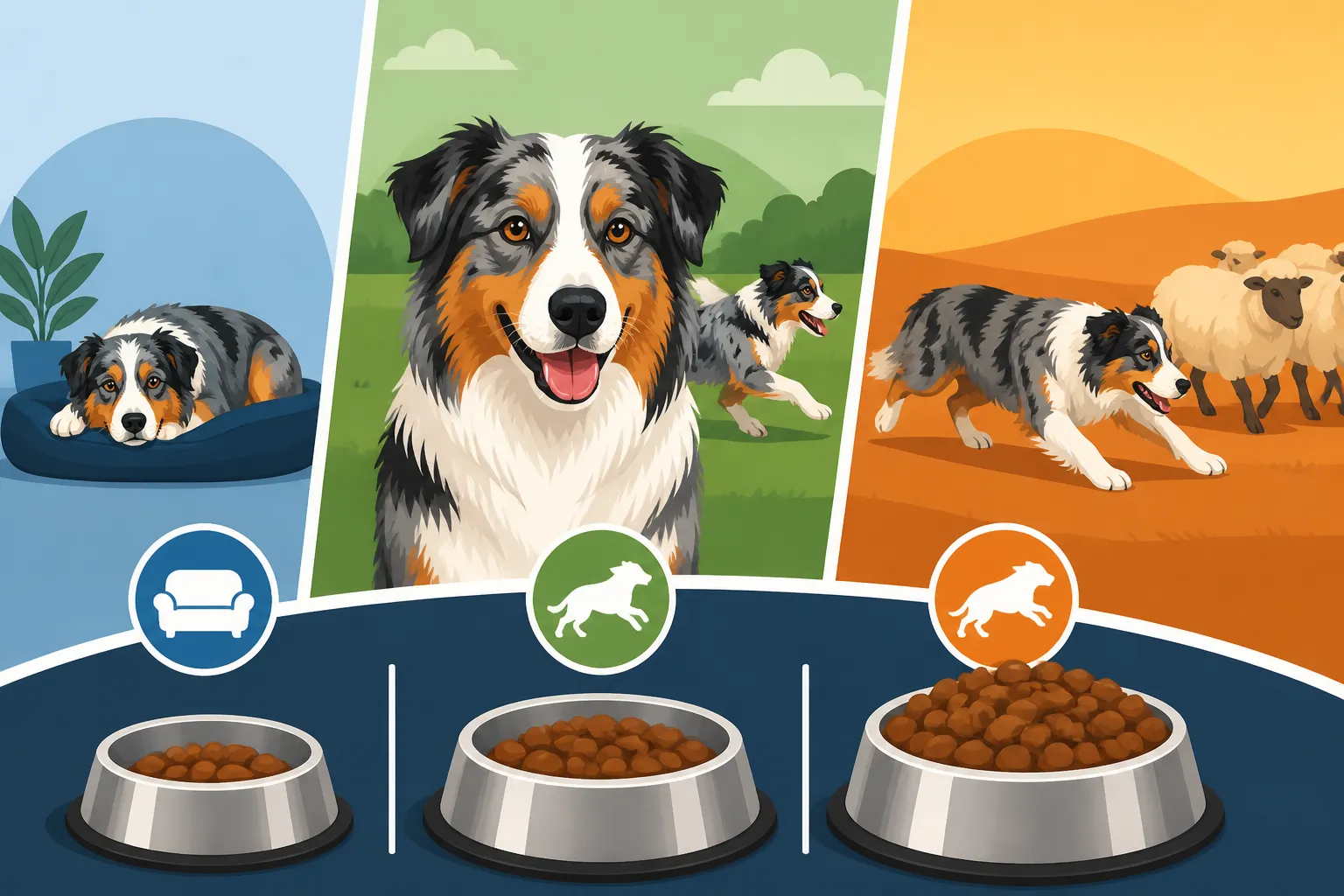
Think about the sheer range of activities an Australian Shepherd can be involved in. You might have a high-drive working dog on a farm, pushing sheep or cattle for hours each day, covering miles across rough terrain. This dog's caloric expenditure is immense, akin to a human athlete training for a triathlon. Their muscles are constantly engaged, their minds are sharp, and their body is burning through energy reserves at an incredible rate. Then there's the competitive sport dog – perhaps an agility champion, a disc dog, or a top-tier obedience performer. While their bursts of activity might be shorter, they are incredibly intense, demanding quick reflexes, explosive power, and sustained mental focus.
On the other end of the spectrum, you might have an Australian Shepherd who is primarily a family companion. They still get their walks and playtime, maybe a good hike on the weekends, but their daily routine doesn't involve the same sustained, high-intensity output. And let's not forget the senior Aussie, who, after years of loyal service or enthusiastic play, is slowing down. Their joints might be a bit stiff, their zest for long runs might have mellowed, and their metabolism is naturally decreasing. Trying to feed all these dogs the same way would be like giving a desk worker the same meal plan as a construction worker – it just doesn't make sense. Your first step is to honestly assess where your Aussie falls on this spectrum, recognizing that it can even shift from week to week or season to season.
Beyond the "Two Hours a Day" Myth
You often hear that Australian Shepherds need "two hours of exercise a day." While that's a good starting point for many, it's a simplification that can lead to miscalculations when it comes to feeding. Not all exercise is created equal, and physical activity alone isn't the only factor burning calories or contributing to your dog's overall energy expenditure. For example, a leisurely stroll around the block with plenty of sniffing is wonderful for mental enrichment and nose work, but it doesn't burn nearly as many calories as a fast-paced run or a session of intense fetch. Similarly, a half-hour of focused trick training or a scent work session, where your Aussie is using their brain extensively, can be just as tiring – if not more so – than a longer, less stimulating walk.
The quality and intensity of the exercise, rather than just the duration, significantly impact caloric needs. A dog engaged in herding for an hour, constantly making decisions, reacting to livestock, and using their whole body, will burn far more calories than an hour of simply jogging next to a bicycle. Think about the metabolic demands of different types of activity: sustained cardio, explosive sprints, problem-solving, and the sheer mental effort of focused tasks. All these contribute to energy use. This is why you'll often hear that Why Two Hours of Running Never Settles an Aussie – it's not just about the clock, it's about what they're doing during that time. Ignoring the nuance of their daily "work" will lead to a mismatch in their diet.
Calculating a Baseline Calorie Requirement
Before you can adjust your Aussie's food intake for their daily workload, you need to establish a solid baseline. This isn't just pulling a number out of thin air; it involves considering several critical factors that influence their general metabolic rate and overall energy needs. Getting this initial calculation right provides the foundation upon which all your subsequent adjustments will be built.
Factors Influencing Initial Calorie Needs
Several individual characteristics play a huge role in determining your Aussie's baseline caloric requirements. First, age is paramount. Growing puppies need significantly more calories per pound of body weight than adult dogs, as they're putting all that energy into building bone, muscle, and developing their internal systems. Conversely, senior Aussies, especially those over the age of ten, often have slower metabolisms and reduced activity levels, meaning their caloric needs will typically decrease. Senior Australian Shepherd Care After Ten often includes dietary adjustments to prevent weight gain.
Sex can also influence calorie needs, with intact males generally requiring slightly more energy than intact females due to differences in muscle mass and metabolic rates. However, spay/neuter status is a huge game-changer. Fixed dogs often experience a decrease in metabolism and can be prone to weight gain if their caloric intake isn't adjusted downwards. It's a common scenario for an Aussie to start packing on pounds within a few months of being spayed or neutered if their food portions aren't reduced. This is why Recalculating an Aussie Ration After Neutering is such an important step. Finally, your Aussie's ideal body weight is the target. If your dog is currently overweight, you'll calculate calories based on their ideal weight, not their current heavier weight, to promote healthy weight loss. Conversely, if they're a bit underweight, you'll aim slightly higher to help them reach their optimal condition. The goal is to determine What an Australian Shepherd Should Weigh and feed for that target.
How to Read a Dog Food Label for Calorie Content
Understanding what you're actually feeding your Aussie is crucial for accurate portioning. Dog food labels aren't always intuitive, but the most important number you're looking for is the "Metabolizable Energy" (ME) content, usually expressed in kilocalories per kilogram (kcal/kg) or kilocalories per cup/can. This ME value represents the amount of usable energy your dog's body can extract from that specific food. Without this number, you're essentially guessing how many calories are in each scoop.
Most quality dog foods will list the ME on the packaging, often in a small print section or within the nutritional analysis. It's usually found near the feeding guidelines, which, it must be said, are often just broad recommendations and not tailored to your individual dog's activity. So, while the bag might say "feed 3 cups a day," that's for an average dog with average activity, which your Aussie likely isn't! You need to take that ME value and use it in conjunction with your dog's calculated caloric needs to determine the precise volume of food. For instance, if your vet recommends 1500 kcal per day, and your kibble has 3500 kcal/kg, you'll need to do the math to convert that to grams or cups per day. Remember that dry matter basis and as-fed basis also influence these numbers, so sticking to the ME on the bag is your safest bet for consistency.
Adjusting Rations for Varying Workloads
This is where the real art of feeding an Australian Shepherd comes in – understanding how to dynamically adjust their meals based on their actual energy output. It’s a bit like a chef adding more spice when the dish needs it; you’re adding or reducing calories as your Aussie’s activity levels dictate. This prevents them from either burning through their reserves on a heavy day or storing excess energy as fat on a quiet one.
The High-Octane Working Dog's Diet
For Australian Shepherds who are genuinely working dogs – think sheep herders, agility champions, or even highly active search and rescue dogs – their dietary needs are significantly different from a typical pet. These dogs are athletes, and their bodies require fuel that can sustain prolonged exertion and aid in rapid recovery. They burn a tremendous amount of calories daily, easily exceeding the recommendations for a pet dog of the same size. Their diet often needs to be richer in easily digestible fats and high-quality protein. Fats provide a concentrated source of energy, sustaining them through long work sessions, while protein is crucial for muscle repair and maintenance.
Feeding a working dog isn't just about volume; it's also about timing and composition. Many working Aussie owners split their dog's daily ration into multiple meals, often feeding a smaller portion in the morning before work and the bulk of the calories after the day's tasks are done. This helps prevent discomfort during activity and allows for optimal nutrient absorption for recovery. On exceptionally demanding days, they might need an extra meal or nutrient-dense snacks throughout the day. Consider the difference between Daily Calories for a Thirty-Five to Seventy Pound Aussie for a pet versus a working dog; the upper end of that range, or even beyond, becomes commonplace for truly high-performing individuals. Supplementation, such as Joint Support in a Working Aussie Diet, might also become a more prominent consideration for these hard-working athletes.
Feeding the Active Companion Aussie
Most Australian Shepherds fall into this category: active family companions who get regular exercise but aren't performing intensive, all-day work. These are the Aussies who enjoy long walks, fetch sessions in the yard, hiking on weekends, and perhaps a beginner's agility class or some nose work. Their caloric needs are still higher than many other breeds of their size, but not to the extreme of a full-time working dog. The key here is consistency and observation. You'll likely establish a baseline amount of food for their "average" active day.
On days with higher activity – say, a full day out on a hiking trail, a long swim, or an extended playdate at the dog park – you'll need to slightly increase their food. This might mean an extra scoop of kibble, or perhaps a nutrient-dense treat that contributes meaningfully to their caloric intake without just being empty calories. Conversely, if bad weather keeps you indoors for a couple of days, or if your Aussie is recovering from a minor ailment and has reduced activity, you'll want to slightly decrease their portion to prevent unwanted weight gain. The goal is to maintain that ideal body condition – where you can easily feel their ribs but not see them, and they have a distinct waist. It's a constant dance of observation and adjustment.
Managing Calories for the Less Active or Senior Aussie
As an Australian Shepherd ages or if they naturally have a lower drive, their metabolism slows down, and their overall activity naturally decreases. This is a very common scenario, and it's where many owners inadvertently allow their dogs to become overweight. A less active Aussie still needs good nutrition, but the quantity of calories must be significantly reduced to match their lower energy expenditure. Continuing to feed them the same amount they ate in their prime will almost certainly lead to weight gain, which can exacerbate existing joint problems and put strain on their organs.
For these Aussies, the focus shifts to calorie-controlled diets that are still rich in essential nutrients. Many senior dog foods are formulated with fewer calories and often include ingredients to support joint health, which is a great starting point. Portion control becomes even more critical. You might find yourself feeding noticeably smaller meals than you once did. Even small amounts of treats need to be factored into their daily calorie budget. On very quiet days, even a slight reduction in their usual meal can make a difference. The aim is to keep them lean and comfortable, extending their healthy years. Senior Australian Shepherd Care After Ten often involves careful dietary management to avoid obesity and its associated health risks.
Tools and Techniques for Accurate Portioning
When it comes to feeding an Australian Shepherd, especially one with varying energy needs, precision is paramount. Eyeballing amounts or using inconsistent measuring tools can lead to significant calorie discrepancies over time, undoing all your careful calculations. Investing in a few simple tools and adopting consistent techniques will make a world of difference in maintaining your Aussie's ideal weight and health.
The Importance of a Kitchen Scale
Hands down, the single most valuable tool for accurate dog food portioning is a simple kitchen scale. Why? Because volume measurements (like "cups") are notoriously inaccurate, especially for kibble. The density of kibble can vary wildly between brands, and even within the same bag, depending on how it settles. A "cup" of one kibble might weigh 3 ounces, while a "cup" of another might weigh 4.5 ounces. That seemingly small difference can add up to hundreds of extra calories over a week or thousands over a month. This is precisely Why an Aussie Ration Should Be Weighed rather than measured by volume.
With a kitchen scale, you eliminate this variability. Most dog food bags list the caloric content per gram or per ounce. Once you know your Aussie's target daily calories, you can easily convert that into a precise weight of kibble. For example, if your dog needs 1500 kcal/day and your kibble contains 3500 kcal/kg (or 3.5 kcal/g), you would divide 1500 by 3.5, which tells you your dog needs roughly 428 grams of food per day. Then, you simply weigh out that amount at each meal. This level of precision is invaluable for managing weight, especially for dogs with fluctuating activity levels or those on a weight-loss plan. You can find reliable kitchen scales easily on Amazon or at most home goods stores.
Using Slow Feeders and Puzzle Toys
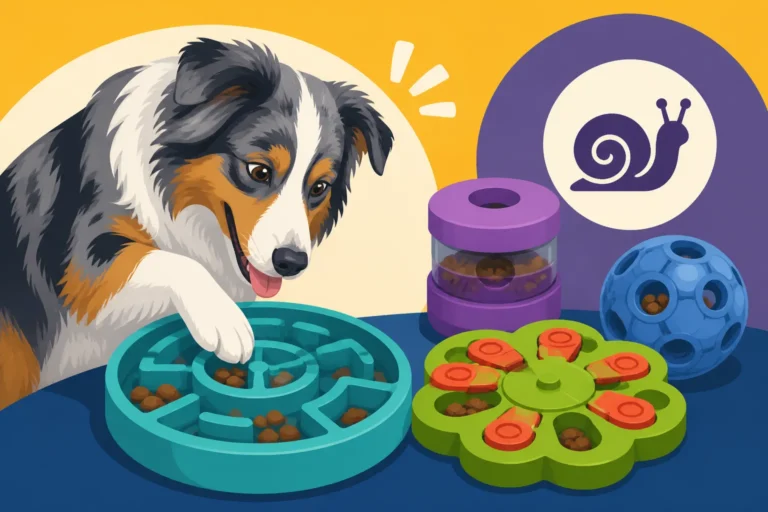
For many Australian Shepherds, eating too quickly can be a real issue. It's not just a polite table manner; rapid eating can contribute to digestive upset and, more critically for deep-chested breeds like Aussies, can increase the risk of bloat (Gastric Dilatation and Volvulus, or GDV). Slow feeders and puzzle toys are excellent tools to mitigate this risk and offer additional benefits. By forcing your dog to work for their meal, these devices slow down ingestion, encouraging better chewing and digestion. This in turn can help your Aussie feel more satisfied with their meal, as the act of eating is extended. Bloat Warning Signs in an Australian Shepherd are important to know, and slow feeders can be a preventative measure.
Beyond physical benefits, puzzle feeders also provide mental enrichment. An Aussie's brain is constantly seeking a job, and even something as simple as figuring out how to get kibble out of a dispenser can provide a valuable mental workout. This can be particularly useful on days when intense physical exercise isn't possible, helping to tire them out mentally. You can find a huge variety of slow feeder bowls, snuffle mats, and interactive puzzle toys at pet supply stores or online retailers like Chewy. Experiment with different types to see what your Aussie enjoys and what effectively slows down their eating pace.
Monitoring Body Condition and Adjusting as Needed
Feeding an Australian Shepherd is not a set-it-and-forget-it task. Their bodies are constantly changing, influenced by age, activity, health, and even the seasons. Therefore, continuous monitoring of their body condition is absolutely essential. This isn't just about stepping on a scale; it involves a hands-on approach and keen observation to ensure your feeding plan is always aligned with their current needs.
The Rib and Waistline Check
The easiest and most effective way to gauge your Aussie's weight status is through a combination of visual and tactile assessment, often referred to as the "Body Condition Score" (BCS). You want to be able to feel your dog's ribs easily without pressing hard, but you shouldn't be able to see them protruding sharply. If you can see prominent ribs, they're likely too thin. If you have to press firmly to feel them, they're likely overweight.
Next, look at their waistline. From above, your Aussie should have a distinct tuck in behind their ribs, like an hourglass shape, rather than a straight line or a bulging middle. From the side, their abdomen should tuck up, not hang low. A thick double coat can sometimes obscure these visual cues, making the hands-on rib check even more crucial. Learning Scoring an Aussie Body Condition by Hand is a skill every owner should develop. Perform this check regularly, perhaps once a week, so you can catch subtle changes before they become significant weight problems. This proactive approach allows you to make minor dietary adjustments rather than drastic ones.
Keeping a Food and Activity Log
Human athletes often track their caloric intake and expenditure to optimize performance, and the same principle applies to our canine athletes. Keeping a simple log of your Aussie's daily food intake (weighed, of course!) and their activity levels can provide invaluable insights. This doesn't have to be complicated; a small notebook or a simple spreadsheet can work wonders. Note down things like:
- Date and Day: Helps identify patterns over time.
- Total Kcal/Grams Fed: The precise amount of food.
- Type and Amount of Treats: Factor these into the daily caloric budget.
- Activity Description: E.g., "1 hr hike, 30 min fetch, 15 min training."
- Energy Level: "High," "Moderate," "Low."
- Body Condition Notes: "Ribs felt easily," "waist looking a little less defined."
Over time, this log will reveal correlations between activity levels and changes in body condition. You might notice that after a week of intense agility training, your Aussie looks a little leaner, indicating a need for a slight increase in food. Conversely, a week of bad weather and minimal exercise might lead to a softer waistline, prompting a slight reduction. This data-driven approach takes the guesswork out of feeding and empowers you to make informed adjustments to their portions and to account for Treats That Fit an Australian Shepherd Training Day as part of the overall ration.
When to Consult Your Veterinarian or a Canine Nutritionist
While self-monitoring and adjustment are vital, there are times when professional guidance is absolutely necessary. If you're consistently struggling to maintain your Aussie's ideal weight despite your best efforts – either they're losing too much weight, can't gain weight, or continue to gain despite reduced portions – it's time to involve your veterinarian. Unexplained weight changes can be a sign of underlying health issues, such as thyroid problems, digestive disorders, or other metabolic conditions that require medical diagnosis and treatment.
Additionally, if your Aussie has specific health concerns, such as allergies, kidney disease, or is on certain medications, a vet or a board-certified veterinary nutritionist can help you formulate a diet that meets their unique needs while also managing their weight. They can offer guidance on therapeutic diets, appropriate supplements, and advanced feeding strategies. For those looking for highly personalized, vet-backed meal plans, services like Ollie (or similar fresh food providers) can be an option, but it's always best to discuss these with your vet first to ensure they align with your Aussie's specific health profile and activity demands. Don't hesitate to seek professional advice; it’s a crucial part of responsible pet ownership.
Special Considerations and Dietary Tips
Beyond the mechanics of calorie counting and portioning, there are a few other aspects of feeding an Australian Shepherd that warrant attention. These might seem like minor details, but they can significantly impact your dog's overall health, energy levels, and satisfaction with their meals.
Treats as Part of the Daily Ration
It's so easy to forget that treats are, in fact, food, and they contribute to your Aussie's daily caloric intake. For many dogs, especially those in training, treats can make up a substantial portion of their daily calories. If you're constantly doling out treats for good behavior, training sessions, or just because they're cute, and you're not adjusting their main meal accordingly, you're almost guaranteed to overfeed them.
The trick is to view treats as a planned component of their daily ration, not an extra bonus. On days with heavy training, for example, you might use smaller, lower-calorie training treats and then reduce their dinner portion slightly to compensate. For larger, higher-value treats, make sure you know their caloric content. If your Aussie is on a weight management plan, consider using healthy, low-calorie options like small pieces of carrot, green beans, or plain cooked chicken (check for any ingredients harmful to dogs, of course). The key is awareness. If you track your treats in your food log, it becomes much easier to see their impact and adjust their primary meals. This mindful approach ensures your Aussie gets enough fuel for their training and rewards without tipping into unhealthy weight gain.
Hydration and Its Role in Energy and Digestion
While we focus heavily on solid food, water is arguably the most essential nutrient for any living creature, and it plays a particularly critical role in the health and performance of an active Australian Shepherd. Proper hydration is fundamental for almost all bodily functions, including digestion, nutrient absorption, temperature regulation, and joint lubrication. An Aussie who is even slightly dehydrated won't perform optimally, will feel lethargic, and can be at higher risk for health issues, especially during strenuous activity or in warm weather.
Ensure your Australian Shepherd always has access to fresh, clean water. For active dogs, especially those on long hikes or engaging in sustained work, portable water bowls and bottles are a must. Offer water breaks frequently, and encourage them to drink. Some owners even add a little bit of low-sodium broth to their water to entice them to drink more, particularly if they've been working hard or are recovering. Furthermore, adequate water intake is crucial for healthy digestion and helps to soften stool, making it easier to pass. Australian Shepherd Water Needs on a Long Day Out are substantial, and keeping them properly hydrated is just as important as feeding them the right amount of calories.
Disclaimer
This article is for general informational purposes only and does not constitute professional advice. Laws, prices and regulations vary by location and change over time. Consult a qualified professional for guidance on your specific situation.