Why an Aussie Ration Should Be Weighed
Many Australian Shepherd owners find themselves scooping kibble into a bowl, assuming a "cup" is always a cup, or that their active Aussie will just burn off any extra. This common habit, however, can slowly and silently lead to significant health issues. This guide will dive deep into why precise weighing of your Australian Shepherd's food isn't just a recommendation, but a crucial practice for their long-term health and vitality.
The Invisible Calorie Creep: Why Eyeballing Portions Is a Trap
It's so easy to do, isn't it? You grab the bag of kibble, plunge a measuring cup in, level it off (or maybe not quite), and pour it into the bowl. Or perhaps you even just eyeball a "handful" or two. We're all busy, and feeding our dogs can feel like a quick chore amidst a packed schedule of work, family, and keeping up with our high-energy Aussies. The problem is, while a slight overestimation might seem negligible day-to-day, these tiny discrepancies compound over weeks, months, and years, leading to what I call "invisible calorie creep."
Think about it this way: if your Australian Shepherd's food bag says a standard serving is one cup, but your "scoop" consistently holds 1.1 cups due to compaction, an extra few kibbles, or a slightly generous leveling, that's an extra 10% of calories every single meal. If your Aussie eats twice a day, that's an additional 0.2 cups of food they're consuming daily without you even realizing it. Over a week, that's 1.4 extra cups. Over a month, nearly six extra cups – enough to constitute several full meals that weren't accounted for. For a dog like an Australian Shepherd, who is prone to certain joint issues and needs to maintain a lean, athletic physique for their long-term well-being, this kind of consistent calorie surplus can be surprisingly detrimental.
The danger is amplified by the fact that Australian Shepherds are often incredibly active dogs. We see them running, jumping, and herding, and we naturally assume they're burning off everything they eat. While it's true they have high energy requirements, their bodies are also remarkably efficient at utilizing calories. A small excess for a working dog might not immediately manifest as obvious weight gain, but it can put subtle, constant strain on their joints and internal organs over time. This is especially critical for a breed susceptible to issues like Australian Shepherd Hip Dysplasia and Working Joints. Maintaining an ideal body weight is one of the most proactive steps you can take to mitigate such risks and ensure your Aussie stays agile and comfortable well into their senior years.
Precision Feeding for Optimal Australian Shepherd Health
Moving beyond the casual scoop to a precise, weighed portion for your Australian Shepherd offers a cascade of health benefits that truly underpin their longevity and quality of life. It’s not about being obsessive; it’s about providing truly tailored nutrition, which is paramount for a breed with specific needs. The biggest advantage, without a doubt, is maintaining an ideal body condition. A lean Aussie is a healthy Aussie. Excess weight, even a few pounds, significantly increases the stress on their joints, ligaments, and spine. This is particularly relevant given their propensity for conditions like hip and elbow dysplasia. Keeping them at their optimal weight can delay the onset or lessen the severity of these painful conditions, allowing them to continue their active lifestyles for longer.
Beyond joint health, precise feeding contributes to overall metabolic health. Obesity can predispose dogs to a host of other problems, including diabetes, heart disease, and certain types of cancer. By carefully managing their caloric intake, you're not just preventing them from getting chunky; you're safeguarding their entire internal system. It also ensures they're getting the exact nutritional balance intended by their food manufacturer, meaning they're receiving adequate vitamins, minerals, and protein without an overabundance of unnecessary calories. This can be especially important during critical growth phases for puppies, where proper nutrition impacts their developing skeletal structure, or for Senior Australian Shepherd Care and Slowing Down, when their metabolism changes.
Consider the implications of feeding too much too quickly. Why an Aussie's Deep Chest Raises Bloat Risk is a serious concern for Australian Shepherds, and while diet isn't the only factor, overeating or eating too fast can be contributing elements. Precise weighing, often combined with feeding smaller, more frequent meals, can help manage these risks. It also allows for easier adjustments. Is your Aussie putting on a little extra padding? You can precisely reduce their portion by a small, measured amount. Did they have an exceptionally active day herding or at agility? You can accurately increase their next meal to compensate. This level of control simply isn't possible with haphazard scooping.
Here's a quick comparison of eyeballing versus weighing:
| Feature | Eyeballing/Scooping (Rough Estimate) | Weighing (Precise Measurement) |
|---|---|---|
| Accuracy | Highly variable; depends on scooper, compaction, user. | Consistent and exact; numerical value eliminates guesswork. |
| Consistency | Difficult to replicate the same amount every time. | Easy to replicate the same amount with each feeding. |
| Weight Control | Leads to unintentional over or underfeeding; difficult to adjust. | Optimal for maintaining ideal body condition; easy to adjust. |
| Health Impact | Increased risk of obesity, joint strain, metabolic issues. | Reduces health risks associated with improper weight. |
| Cost Efficiency | Can lead to using more food than necessary over time. | Ensures optimal use of food; less waste. |
| Nutrient Intake | Unpredictable; can result in nutrient imbalances. | Reliable; ensures intended nutrient profile is delivered. |
Practical Steps to Weighing Your Aussie's Food
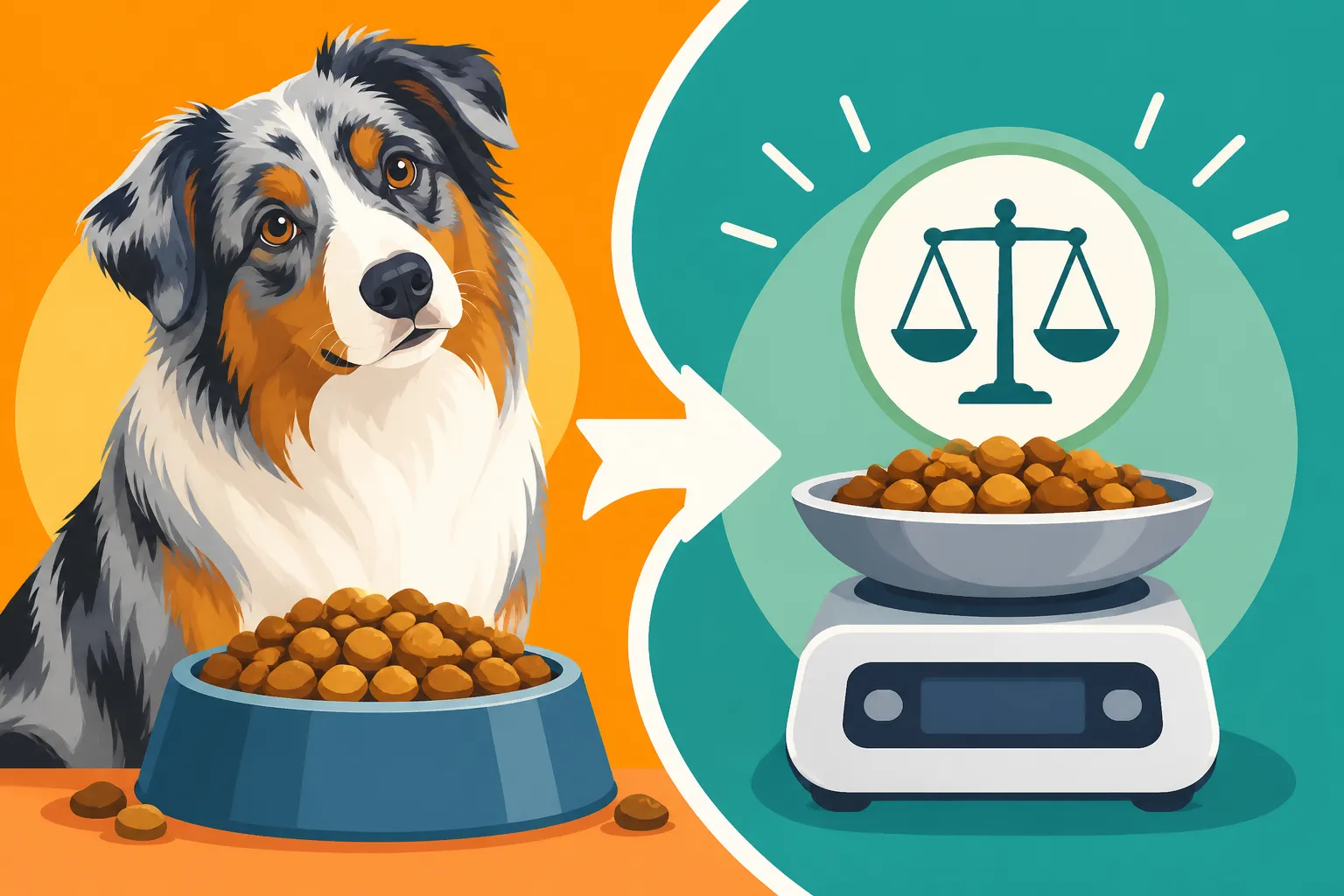
So, you're convinced that weighing is the way to go. Excellent! It's a simple change that makes a huge difference. The first step is to invest in a decent kitchen scale. You don't need anything fancy or expensive; a basic digital kitchen scale that measures in grams or ounces will do the trick. Many affordable options are available on platforms like Amazon or Chewy. Look for one with a tare function, which allows you to zero out the weight of the bowl before adding the food. This is a game-changer for convenience.
Once you have your scale, the process is straightforward:
- Find the Target Weight: Check your dog food bag for the feeding guidelines. Most quality brands will provide recommendations based on your dog's weight, age, and activity level. Crucially, they often list these recommendations in grams or ounces in addition to cups. If they only list cups, a quick search online for "kibble weight per cup [brand name]" can usually give you an average gram weight for that specific kibble. However, for true precision, you'll need to weigh a "level cup" of your specific kibble once to determine its exact weight, as density varies wildly between formulas.
- Calibrate and Tare: Place your Aussie's empty food bowl on the digital scale. Press the "tare" or "zero" button to reset the display to zero. Now, the scale will only measure the weight of the food you add.
- Add Food Gradually: Slowly add your dog's kibble to the bowl, watching the scale display. Stop when you reach the desired weight. It might take a couple of tries to get the hang of it, but you'll be a pro in no time.
- Consistency is Key: Do this for every meal. If you feed twice a day, divide the total daily gram weight by two. If you have multiple Aussies, weigh each portion individually into their respective bowls to ensure accuracy. This consistent approach is what makes the method so powerful for managing their Australian Shepherd Weight Control on a Working Frame.
To make this even easier, consider preparing meals in advance. If you have several small containers, you can weigh out a few days' worth of meals at once and store them. This is especially helpful for busy weekdays. Another useful tip is to communicate this new routine to anyone else who feeds your dog, whether it's a family member or a pet sitter. Leave clear instructions and demonstrate the process. Remember that treats also contribute to daily caloric intake. If your Aussie gets a lot of training treats, you might need to slightly reduce their main meal portion. Brands like Ollie, known for fresh food, also emphasize precise portioning based on a dog's individual needs, making it clear that a general "scoop" isn't sufficient for optimal health.
Beyond the Bowl: Factors Affecting Your Aussie's Nutritional Needs
While precise weighing is fundamental, it's just one piece of the puzzle. An Australian Shepherd's nutritional needs aren't static; they fluctuate based on a variety of factors that require owners to be attentive and flexible with their feeding routines. Understanding these variables allows you to adjust those carefully weighed portions to truly meet your dog's changing demands.
Firstly, age is a huge determinant. A rapidly growing Aussie puppy needs a different caloric and nutrient profile than a mature adult, and a senior dog's needs shift again as their metabolism slows and activity levels decrease. Australian Shepherd Growth Plates and When They Close means puppies require careful nutritional support to ensure proper bone development without excessive growth that could strain developing joints. Once they reach adulthood, typically around 12-18 months, their high-energy lifestyle will demand a consistent, nutrient-dense diet. For senior Aussies, often after ten years, their caloric requirements generally drop, and joint-supporting nutrients become more important. Joint Support in a Working Aussie Diet or specific senior formulas might be beneficial.
Activity level is another critical factor. A working Australian Shepherd who spends hours herding livestock, participating in agility trials, or accompanying you on long hikes will naturally require more calories than a pet Aussie who enjoys daily walks and some yard play. This is where the ability to adjust weighed portions truly shines. On a particularly intense day, you might increase their meal slightly, while on a rest day, you might reduce it. Understanding Daily Calories for a Fifty Pound Australian Shepherd is a starting point, but always consider the actual work they're doing.
Spay/neuter status can also impact metabolism. Typically, spayed or neutered dogs have slightly lower caloric needs than intact dogs, even if their activity levels remain the same. This often necessitates a small reduction in portion size to prevent weight gain. If your Aussie was recently altered, Recalculating an Aussie Ration After Neutering is a good idea to prevent unwanted weight creep. Additionally, environmental factors, such as extreme cold or heat, can influence energy expenditure. Dogs burn more calories to stay warm in winter, for example.
Finally, health conditions play a significant role. An Aussie recovering from surgery, managing a chronic illness like Australian Shepherd Epilepsy Starting Between One and Five, or dealing with allergies might have specific dietary requirements or altered appetites. Always consult your veterinarian if you notice a significant change in your dog's weight, appetite, or energy levels. They can help you determine the appropriate caloric intake and specific diet for any unique health needs. Regular check-ups, especially as your Aussie ages, will help you stay on top of these shifting requirements, as described in How Often a Ten Year Old Aussie Needs Checking. By combining precise weighing with an understanding of these variables, you'll be providing the most thoughtful and effective nutritional care for your cherished Australian Shepherd.
Disclaimer
This article is for general informational purposes only and does not constitute professional advice. Laws, prices and regulations vary by location and change over time. Consult a qualified professional for guidance on your specific situation.