Scoring an Aussie Body Condition by Hand
You love your Australian Shepherd's luxurious double coat, right? It's one of their most striking features! But let's be honest, that beautiful fluff can also be a master of disguise, making it incredibly tricky to tell if your furry friend is at a healthy weight just by looking. It’s a common frustration for Aussie owners, leaving us wondering if our active companions are getting enough, or perhaps a little too much, sustenance. This guide will walk you through the practical, hands-on method of body condition scoring (BCS) for your Australian Shepherd, helping you feel past the fur to understand their true physique and ensure their long-term well-being.
The Challenge of Assessing an Aussie's Weight
It's a universal truth for Australian Shepherd owners: their coats are magnificent, but they hide a multitude of sins – or in this case, a multitude of ribs! You might look at your perfectly fluffed Aussie and think they look great, only to realize their actual body condition is telling a different story underneath. This isn't just about vanity; maintaining an ideal body condition is crucial for your Australian Shepherd's health, mobility, and overall lifespan.
The Insulating Deception: Why a Thick Coat Hides Aussie Weight Gain
Imagine trying to guess someone's build when they're wearing a huge, puffy winter coat. That's essentially what we're doing when we try to eyeball an Australian Shepherd's weight. Their dense double coat, designed to protect them from the elements while herding, effectively camouflages both underweight and overweight conditions. A slightly thin Aussie might still look robust because their fur fills out their frame, while a heavier Aussie can carry an extra five or ten pounds without it being overtly visible.
This natural insulation makes it easy to misjudge, and many owners are genuinely surprised when a vet gently points out their Aussie is a little heavier than they should be. It's not a reflection of poor care, but simply a testament to the coat's effectiveness as a visual barrier. Why a Thick Coat Hides Aussie Weight Gain delves deeper into this phenomenon, but for now, understand that sight alone isn't enough for an Aussie.
Long-Term Health Impacts of Poor Condition
Getting your Aussie's body condition right isn't just about looking good; it's about preventing a host of potential health problems down the line. An Australian Shepherd that is too thin might not be getting enough nutrients to support their high energy levels and working joints. They could be more susceptible to illness, have less muscle mass, and struggle to maintain body temperature.
On the flip side, an overweight Aussie faces an increased risk of serious conditions. Extra weight puts undue strain on their joints, especially those prone to issues like hip or elbow dysplasia, which can lead to Australian Shepherd Arthritis After Years of Work prematurely. Obesity also contributes to heart disease, diabetes, and even certain cancers. Beyond these, excess weight can exacerbate respiratory problems and even increase the risk of Why an Aussie's Deep Chest Raises Bloat Risk, a life-threatening condition. It significantly impacts their quality of life, reducing their stamina, agility, and overall joy in movement.
Preventing Undernutrition and Overfeeding
The goal is a balanced approach that supports your Aussie's energetic lifestyle without tipping the scales too far in either direction. Aussies are active dogs, and their dietary needs can vary significantly based on their age, activity level, and individual metabolism. A young, working Australian Shepherd tearing through agility courses will have different caloric needs than a senior Aussie enjoying leisurely strolls.
Understanding how to accurately assess their condition by hand empowers you to make informed decisions about their diet and exercise. This proactive approach helps you prevent the creeping weight gain that can happen over months or years, or to quickly identify if your Aussie isn't thriving and needs a dietary boost. It’s about being an advocate for their long-term health, ensuring they have the energy to herd, play, and be the amazing companions they are.
The Basics of Body Condition Scoring (BCS)
Body Condition Scoring isn't some complex veterinary secret; it's a practical, objective tool that allows you to assess your dog's fat reserves and muscle mass. Think of it as a standardized way to talk about whether your dog is too thin, just right, or carrying a few extra pounds. While vets often use a 9-point scale, a simpler 5-point scale is incredibly useful for home assessment and gives you all the information you need.
Understanding the 5-Point Scale
The 5-point BCS system is intuitive and easy to apply once you know what to look and feel for. Each score corresponds to a specific physical state, from emaciated to obese. The ideal score, the sweet spot we're all aiming for, is usually a 3 out of 5.
Here's a quick rundown of what each number generally represents:
- BCS 1: Emaciated – Your Aussie is severely underweight.
- BCS 2: Underweight – Your Aussie is noticeably thin.
- BCS 3: Ideal – Your Aussie is at a healthy, optimal weight.
- BCS 4: Overweight – Your Aussie is carrying excess weight.
- BCS 5: Obese – Your Aussie is severely overweight.
The goal isn't just to pick a number, but to use the tactile and visual cues associated with each number to guide your adjustments to their care. Remember, consistency is key – performing this assessment regularly helps you track changes over time and react quickly.
Visual Cues vs. Palpation for Aussies
For many breeds, a quick visual check is often enough to get a general idea of their body condition. You'd look for a visible waistline, a slight abdominal tuck, and whether their ribs are subtly visible. However, as we discussed, an Australian Shepherd's dense coat makes these visual cues unreliable at best, and downright misleading at worst.
This is where palpation, or feeling with your hands, becomes absolutely essential for Australian Shepherds. You need to get your hands on them, feeling for their ribs, spine, and hip bones through that glorious fur. It's less about what you see and more about what you can feel and how easily you can feel it. This tactile assessment provides a much more accurate picture of their underlying fat coverage and muscle definition, allowing you to bypass the "fluff factor." You can still look for a waist and tuck, but always confirm with your hands.
Why an Aussie Ration Should Be Weighed
Once you've assessed your Aussie's body condition, the next step often involves adjusting their diet. And when it comes to diet, precision matters. Simply scooping food with a cup can lead to significant inconsistencies in calorie intake. The density of kibble can vary, and a "cup" might mean different things depending on how packed it is.
That's why Why an Aussie Ration Should Be Weighed is such a critical piece of advice. Using a kitchen scale to weigh your Aussie's food ensures that they are consistently receiving the exact number of calories you intend. This accuracy is paramount whether you're trying to help them gain a little muscle, maintain an ideal weight, or embark on a slow, healthy weight loss journey. You can find affordable digital kitchen scales on platforms like Amazon or Chewy that make this process incredibly simple and effective. It removes the guesswork and gives you confidence that your dietary adjustments are truly making an impact.
How to Perform a Hands-On BCS Assessment
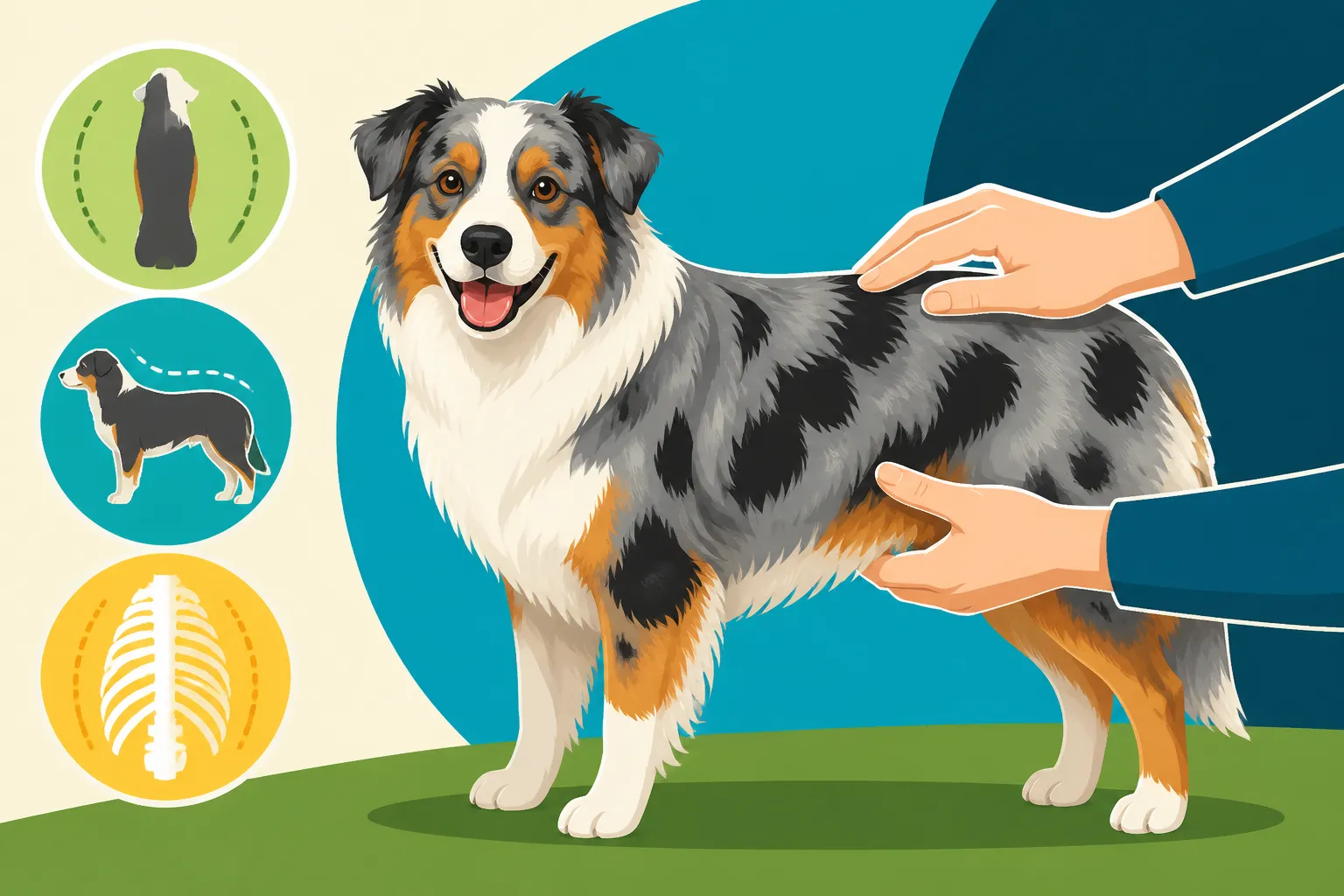
Alright, let's get down to business! The best way to assess your Australian Shepherd's body condition is with your own two hands. Don't be shy; your Aussie probably loves a good pat anyway, so you're just turning affection into a health check. Find a quiet time when your dog is relaxed, perhaps when they're lying down or standing calmly.
Feeling for Ribs: The Side-Test
This is perhaps the most crucial part of the hands-on assessment. Your Aussie’s ribs tell a big story about their fat coverage.
- Locate the Ribs: Start by placing both of your hands flat against your Aussie's side, just behind their shoulder blades. You'll be feeling the side of their chest, where their rib cage is.
- Gentle Pressure: Use your fingertips and a gentle, sweeping motion, similar to how you’d stroke their coat. You're not pressing hard, just feeling for the contours underneath.
- What You're Feeling For:
- Ideal (BCS 3): You should be able to feel their ribs easily, distinct like the knuckles on your hand, without having to press hard. You shouldn't see them prominently, but you should definitely be able to count them without much effort. There should be a thin layer of fat over them.
- Underweight (BCS 1-2): If their ribs are visible to the eye (even under a coat, you might see some definition) or feel extremely prominent, almost like they're right under the skin with no padding, your Aussie is likely too thin. They might feel sharp and easily counted without any pressure at all.
- Overweight (BCS 4-5): If you have to press firmly to feel their ribs, or if you can't feel them at all, your Aussie is carrying too much fat. It'll feel like a soft, padded layer over the bones.
Practice this a few times until you get a good sense of what's under that fur. It's a skill that improves with repetition!
Assessing the Waist and Abdominal Tuck
While visuals are tricky with Aussies, feeling for the waist and tuck still provides valuable information, especially if you can get past the fluff.
-
The Waistline: Stand over your Aussie and look down, or stand behind them if they are smaller. Place your hands on either side of their rib cage and sweep them back towards their hips.
-
What You're Feeling For:
- Ideal (BCS 3): As your hands move back, you should feel a gentle indentation or "waist" behind the last rib, before their hips. It shouldn't be dramatic, but a clear, noticeable narrowing.
- Underweight (BCS 1-2): The waist might be extremely pronounced, almost an hourglass shape, with little to no fat covering the area.
- Overweight (BCS 4-5): If your hands go straight back from ribs to hips with no indentation, or if there's a bulge, your Aussie is likely overweight. The area might feel thick and padded.
-
The Abdominal Tuck: This is best seen from the side, but again, the coat can be deceiving. The "abdominal tuck" refers to how the belly should curve upwards from the bottom of the rib cage to the groin, not hanging low.
- Ideal (BCS 3): A visible, gentle upward curve.
- Underweight (BCS 1-2): A very sharp, dramatic tuck, almost like their stomach is "sucked in."
- Overweight (BCS 4-5): Little to no tuck, or even a sagging abdomen. You might need to gently lift their fur to see this effectively.
Palpating the Spine and Hip Bones
These bony prominences also give clues about your Aussie's overall condition.
-
The Spine: Run your hand firmly but gently down the top of your Aussie’s back, along their spine.
-
What You're Feeling For:
- Ideal (BCS 3): You should be able to feel the individual bumps of their vertebrae, but they shouldn't feel sharp or protrude prominently. There should be a slight layer of muscle and fat cushioning them.
- Underweight (BCS 1-2): The spine will feel very prominent, almost knobby, and easy to distinguish each vertebra with little to no padding.
- Overweight (BCS 4-5): You might have difficulty feeling the spine at all, as it will be covered by a thick layer of fat. The area might feel broad and flat.
-
The Hip Bones: Locate your Aussie’s hip bones, which are generally near the base of their tail on either side.
-
What You're Feeling For:
- Ideal (BCS 3): You should be able to feel the hip bones with gentle pressure, but they shouldn't stick out or be visible.
- Underweight (BCS 1-2): The hip bones will be very prominent, sharp, and potentially visible, even under some fur.
- Overweight (BCS 4-5): The hip bones will be difficult to find or feel, buried under a thick layer of fat.
By combining all these tactile assessments, you'll get a comprehensive picture of your Australian Shepherd's true body condition, giving you the power to make informed decisions about their health.
Interpreting Your Aussie's Score: Too Thin, Ideal, Overweight
Once you’ve gone through the hands-on assessment, it’s time to interpret what you’ve found using the 5-point body condition score. Remember, an Australian Shepherd's coat is a master of disguise, so focus on what your fingers tell you, not just your eyes.
Too Thin: When Ribs and Hips Are Too Prominent
If your Aussie scores a 1 or 2 on the BCS scale, they are likely too thin. This means they're not carrying enough body fat, which can impact their energy levels, immune system, and ability to withstand cold.
Characteristics of a Too Thin Aussie (BCS 1-2):
- Ribs: Easily visible even from a distance, or extremely easy to feel with no fat covering. They might feel like sharp, exposed ridges.
- Waist/Tuck: A very dramatic hourglass shape when viewed from above, and a severe abdominal tuck where their belly seems "sucked in."
- Spine/Hip Bones: Spine feels very prominent and bony to the touch, often visible. Hip bones stick out distinctly and are very easy to feel.
- Muscle Mass: You might notice a loss of muscle definition, especially over their hindquarters.
What to do: If your Aussie is too thin, it's essential to consult your veterinarian first. Unexplained weight loss can be a symptom of underlying health issues, such as parasites, metabolic disorders, or digestive problems. Your vet can rule out medical causes and help you develop a plan to safely and healthily help your Aussie gain weight. This might involve increasing their food portions, switching to a higher-calorie, nutrient-dense food, or adding specific supplements. Always introduce changes gradually to avoid upsetting their stomach.
Ideal: Easily Felt, Not Seen
This is the sweet spot, the BCS 3 that we're all aiming for. An Aussie at an ideal weight has enough fat to be healthy, but not so much that it puts strain on their body.
Characteristics of an Ideal Aussie (BCS 3):
- Ribs: You can easily feel their ribs with gentle pressure, much like feeling the back of your hand. They are distinct, but you don't necessarily see them without pressing through the coat. There's a minimal, thin layer of fat over them.
- Waist/Tuck: A discernible waistline behind the ribs when viewed from above, and a nice, gentle abdominal tuck from the side. Again, you might need to feel for this rather than just seeing it through the fur.
- Spine/Hip Bones: You can feel the individual vertebrae of the spine, but they are rounded and not sharp. The hip bones are palpable but do not protrude prominently.
- Muscle Mass: Good, firm muscle definition is present, especially over the loin and hind legs.
What to do: Congratulations! Keep up the great work. Continue to monitor their body condition regularly, as an Aussie's activity levels and metabolism can change with age and seasons. Stick to Daily Calories for a Fifty Pound Australian Shepherd guidelines for their specific activity level, and always ensure they're getting Australian Shepherd Exercise at One to Two Hours a Day.
Overweight: Hidden Ribs and No Waist
If your Aussie scores a 4 or 5, they are carrying too much weight, and this can significantly impact their health and longevity. It’s a common issue, even with active breeds, because it’s easy to overfeed or underestimate caloric needs.
Characteristics of an Overweight Aussie (BCS 4-5):
- Ribs: Difficult to feel without firm pressure, or you may not be able to feel them at all, as they are covered by a moderate to thick layer of fat. It feels like pushing into a cushion.
- Waist/Tuck: Little to no discernible waist when viewed from above; their body may appear barrel-shaped or straight from ribs to hips. The abdominal tuck is absent, or their belly may even sag.
- Spine/Hip Bones: Difficult to feel the spine or hip bones, as they are covered by excess fat. The back might appear broad and flat.
- Fat Deposits: Noticeable fat deposits might be felt over the base of the tail and along the back.
What to do: If your Aussie is overweight, it's crucial to take steps to help them shed those extra pounds. Again, a vet visit is a good starting point to rule out any medical conditions that might contribute to weight gain, like thyroid issues. Your vet can also help you calculate a safe and effective weight loss plan. This will typically involve reducing calorie intake and increasing appropriate exercise.
| Body Condition Score (BCS) | Visual Cues (through fur) | Palpation (What you feel) | Recommendations |
|---|---|---|---|
| 1: Emaciated | Ribs, spine, hips very visible | Ribs, spine, hips sharp, no fat | Urgent Vet Visit. High-calorie diet, frequent small meals, monitor for underlying illness. |
| 2: Underweight | Ribs, spine, hips easily visible | Ribs, spine, hips easily felt, minimal fat | Vet consultation recommended. Gradually increase food, high-quality protein. Increase mental and physical stimulation. |
| 3: Ideal | Athletic tuck, slight waist | Ribs easily felt with light pressure, spine rounded, hips palpable, thin fat layer | Maintain current diet & exercise. Regular monitoring. |
| 4: Overweight | No tuck, slight bulge, no waist | Ribs hard to feel without firm pressure, spine and hips covered by fat, soft padding | Vet consultation recommended. Reduce calories by 10-15%, increase exercise gradually. |
| 5: Obese | Round, bulging, no waist or tuck | Ribs not palpable, spine and hips buried in thick fat, heavy fat deposits | Urgent Vet Visit & Structured Weight Loss Plan. Strict caloric restriction, controlled exercise, medical supervision. |
Adjusting Diet and Exercise Based on BCS
Once you have a clear picture of your Australian Shepherd's body condition score, you're ready to make informed adjustments to their diet and exercise routine. This isn't about drastic changes, but rather a thoughtful, gradual approach to nurture their health.
Cutting Aussie Calories Without Cutting Meals
If your Aussie is a BCS 4 or 5, your immediate thought might be to just feed them less. But simply slashing their food intake can leave them feeling hungry, frustrated, and can even lead to nutritional deficiencies if not done carefully. The goal is to reduce calories while still ensuring they feel satisfied and get all the essential nutrients.
One effective strategy is to reduce the density of their meals rather than the volume. For instance, you could slowly switch to a high-fiber, lower-calorie kibble. Many reputable brands offer "weight management" or "light" formulas. You could also incorporate more fresh vegetables, like green beans or carrots, into their existing meals to add bulk and nutrients without a lot of extra calories. These can make your Aussie feel fuller without adding unwanted weight. You might find a good selection of these specialized foods on Chewy or even fresh food options like Ollie that can be precisely portioned to your vet's recommendations.
Cutting Aussie Calories Without Cutting Meals offers more creative solutions, but remember to make these changes gradually over several days to avoid digestive upset. A sudden switch can be a real tummy shock!
How Slowly a Working Aussie Should Lose Weight
For an overweight Aussie, especially one that's typically active, slow and steady truly wins the race when it comes to weight loss. Rapid weight loss can be detrimental, leading to muscle loss, nutritional imbalances, and even rebound weight gain. Aim for a healthy weight loss of about 1-2% of their body weight per week. For a 50-pound Australian Shepherd, that's roughly half to one pound a week.
This slow pace ensures that your Aussie is losing fat, not valuable muscle mass, and it's much more sustainable for their body and your sanity as an owner. Regular weekly weigh-ins can help you track progress. You might find a digital pet scale on Amazon helpful for this, allowing you to track progress accurately at home. If progress stalls, don't just cut more food. Re-evaluate their exercise, measure portions meticulously (remembering Why an Aussie Ration Should Be Weighed), and consult your vet again. Consistency is key, even if the scale moves slowly. How Slowly a Working Aussie Should Lose Weight provides further detail on this.
Recalculating an Aussie Ration After Neutering
Neutering or spaying your Australian Shepherd can have a significant impact on their metabolism. After the procedure, many dogs experience a decrease in their energy requirements, even if their activity levels remain the same. This often goes unnoticed by owners, leading to gradual weight gain over months or years because they're still eating the same amount of food.
It's a common scenario: you have a high-energy pup, they get spayed/neutered, and suddenly their body needs fewer calories to maintain its weight. If you continue feeding the pre-procedure portion, those extra calories quickly turn into extra pounds. Therefore, it's crucial to Recalculating an Aussie Ration After Neutering. Your veterinarian can provide specific guidance on adjusting their food intake, often recommending a 10-20% reduction in their previous daily calories, followed by close monitoring of their body condition. This proactive step can prevent unnecessary weight gain and keep your Aussie at their ideal BCS.
Building an Australian Shepherd Exercise Routine
Exercise is just as vital as diet in maintaining an ideal body condition. Australian Shepherds are bred for work and possess incredible stamina and intelligence. Simply letting them out in the yard isn't enough; they need structured, engaging activity.
If your Aussie needs to lose weight, start with moderate, consistent exercise and gradually increase the intensity and duration. Begin with longer, leashed walks, focusing on a brisk pace. Incorporate activities like fetch in a securely fenced area, or even start with some basic obedience training sessions that get them moving and thinking. As they build stamina, you can explore more demanding activities like hiking, swimming, or introducing them to dog sports such as agility or flyball.
For Aussies at an ideal weight, Building an Australian Shepherd Exercise Routine is about ensuring they continue to get the right type and amount of activity to support their active lifestyle. Remember, two hours of running around freely can be very different from two hours of focused work or play. Incorporate mental stimulation alongside physical exercise, as a tired mind often means a calmer body. Puzzle toys, scent work, and training new tricks can burn calories and mental energy. Always consider your Aussie’s age, health, and individual capabilities when planning their routine.
Common Mistakes and When to Consult a Vet
Even with the best intentions, it's easy to make mistakes when trying to manage your Australian Shepherd's body condition. Being aware of these pitfalls and knowing when to call in the professionals can save you a lot of worry and ensure your Aussie stays healthy.
Misinterpreting Muscle Mass for Fat
One of the most common mistakes, especially with highly athletic breeds like Australian Shepherds, is confusing well-developed muscle mass with excess fat. An Aussie that is regularly engaged in activities like herding, agility, or hiking will have powerful, firm muscles, particularly across their shoulders, back, and hindquarters.
When you're performing your hands-on BCS assessment, distinguish between the solid, firm feel of muscle and the softer, more yielding feel of fat. Fat tends to accumulate in specific areas like over the ribs, along the spine, and at the base of the tail, creating a "padded" sensation. Muscle, on the other hand, feels dense and firm even without much fat over it. If you're feeling a broad, flat back, try to determine if it's broad with solid muscle or soft, fatty tissue. This distinction is crucial for accurate scoring. A lean, muscular Aussie should still have easily palpable ribs and a distinct waist, even if their overall build is robust.
Ignoring Gradual Changes
Weight gain or loss rarely happens overnight. More often, it's a slow, insidious creep that can be difficult to notice day-to-day, especially when that thick Aussie coat is involved. You might not see a single extra pound, but over six months, a few extra calories a day can add up to five or ten pounds, which is significant for an Australian Shepherd.
This is why regular, hands-on body condition scoring is so important. Make it a routine, perhaps once a month, or during your regular grooming sessions when you're already feeling through their coat. By routinely checking, you can catch these subtle, gradual changes before they become more significant health problems. A slight increase in the padding over the ribs, or a less defined waist, can be early warning signs that allow you to adjust their diet or exercise before they officially tip into the "overweight" category. Early detection means simpler, less drastic adjustments are needed.
When to Seek Professional Guidance
While home body condition scoring is an invaluable tool for owners, there are definitely times when you should put down the food scoop and pick up the phone to call your veterinarian.
- Sudden or Unexplained Weight Changes: If your Aussie experiences rapid weight loss despite eating normally, or significant weight gain without a clear increase in food, it's a red flag. These changes can indicate underlying health issues such as metabolic disorders, thyroid problems (Australian Shepherd Autoimmune Thyroiditis), kidney disease, or even certain cancers.
- Difficulty Feeling Ribs Even With Effort (BCS 5): If you truly cannot feel your Aussie's ribs even with firm pressure, they are likely in the obese category (BCS 5). This level of obesity requires a medically supervised weight loss plan to be safe and effective.
- You've Made Changes, But Nothing Is Happening: If you've diligently adjusted your Aussie's diet and exercise based on their BCS score for several weeks or a couple of months, but you're seeing no progress (or even regression), it's time to get professional input. Your vet can reassess their health, suggest specific dietary foods, or recommend further diagnostics.
- Concerns About Muscle Loss: If you suspect your Aussie is losing muscle mass rather than fat, or if they appear frail and weak, a vet can help differentiate this and investigate potential causes.
- Any Accompanying Symptoms: If weight changes are accompanied by other symptoms like lethargy, changes in appetite, vomiting, diarrhea, increased thirst, or unusual behavior, don't delay a vet visit.
Your veterinarian is your best partner in ensuring your Australian Shepherd's optimal health. They can offer tailored advice, rule out medical issues, and provide peace of mind that you're doing everything you can for your beloved companion.
Disclaimer
This article is for general informational purposes only and does not constitute professional advice. Laws, prices and regulations vary by location and change over time. Consult a qualified professional for guidance on your specific situation.