Why Aussie Breeders Never Cross Merle to Merle
The decision to bring an Australian Shepherd into your life is a huge one, filled with dreams of adventures, loyal companionship, and maybe even a little bit of playful herding in your living room. But amidst the excitement of choosing a puppy, there's a serious responsibility that falls on the shoulders of every breeder and potential owner: understanding the genetics that shape these magnificent dogs. One of the most critical, yet often misunderstood, aspects of Australian Shepherd breeding is the absolute imperative that responsible breeders never, ever cross two merle parents. Ignoring this fundamental rule leads to devastating consequences for the puppies, resulting in what's known as "double merle" Aussies, often born with severe and preventable health issues. This guide will meticulously break down the science behind merle breeding, explain the profound risks of double merle matings, and empower you with the knowledge to identify and support ethical breeding practices.
The Merle Gene: A Splash of Color and a Lot of Complexity
The merle gene is what gives Australian Shepherds their breathtakingly unique coat patterns, those striking patches of diluted color that make each dog a living work of art. From the classic blue merle with its silvery-grey splashes to the richer red merle, these patterns are undeniably beautiful. But the merle gene is far more than just a cosmetic trait; it's a powerful genetic modifier that, while creating beauty, also carries significant risks if not handled with extreme care in breeding programs.
How the Merle Gene Works in Australian Shepherds
At its core, the merle gene is a dilution gene. It doesn't create new colors but rather takes existing base coat colors—like black or red—and dilutes them in an irregular pattern, creating areas of lighter pigmentation alongside the original, full-strength color. This results in the marbled or speckled effect we adore. Think of it like a painter taking a brushstroke of black paint and then lightly dabbing it with white, creating a patchy, faded look. Genetically, a dog with one copy of the merle gene (Mm) will display the merle pattern. This is what we refer to as a "single merle" or simply a "merle" Australian Shepherd. These dogs are generally healthy, assuming they come from otherwise health-tested parents. They have normal vision and hearing, and their merle pattern is just that – a pattern. You can delve deeper into How Merle Works in an Australian Shepherd Coat to truly appreciate the intricate dance of genetics here.
The effects of the merle gene extend beyond the coat, though. It can also dilute pigment in the eyes, leading to those captivating blue eyes, or even heterochromia (one blue eye, one brown, or marbled eyes). Similarly, it can affect nose and paw pad pigmentation, leading to pink or butterfly noses. These are all normal expressions of the merle gene in a single merle dog.
Understanding Different Merle Patterns
While we often just say "merle," there are actually variations in how the gene expresses itself, influenced by other genes and even seemingly random factors. You'll hear about "blue merle," which applies to black-based dogs, and "red merle," which applies to red-based dogs. Beyond these primary distinctions, there are also:
- Cryptic Merle: This is a tricky one. A dog can genetically carry the merle gene but show little to no visible merle patterning on its coat. It might look like a solid-colored dog or have only tiny, unnoticeable patches of merle. This is incredibly dangerous in breeding because if an unsuspecting breeder mates a cryptic merle (who appears solid) with another merle, they are unknowingly creating a double merle mating with all its associated risks. This is why DNA Testing for the Merle Allele in an Aussie is so crucial, especially for solid-colored dogs that may have merle in their pedigree.
- Phantom Merle: Sometimes referred to as "minimal merle," these dogs have very small, often hidden patches of merle, perhaps just a few flecks on an ear or tail tip. Like cryptic merles, they can be mistaken for non-merle dogs, underscoring the importance of careful observation and genetic testing.
- Dilute Merle: This is a less common term, but it refers to the intensity of the dilution. Some merles are very boldly marked, while others have a more faded, "washed out" appearance. This is generally due to other modifying genes, not directly related to the number of merle genes.
The key takeaway here is that any dog carrying even one copy of the merle gene, regardless of how much of the pattern is visible, is genetically a merle and must never be bred to another merle dog.
The Peril of Double Merle Breeding: A Genetic Gamble
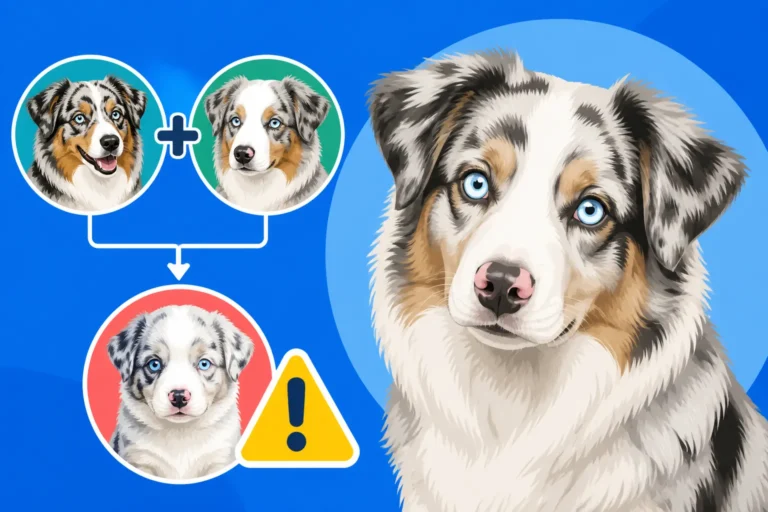
The reason responsible Australian Shepherd breeders stringently avoid breeding merle to merle is simple: it produces "double merle" puppies. These are dogs that inherit two copies of the merle gene (MM), and the consequences of this genetic double-whammy can be absolutely heartbreaking. It's not just about unusual markings; it's about severe, often lifelong, health defects that impact their quality of life in profound ways.
What Happens When Two Merle Aussies are Bred
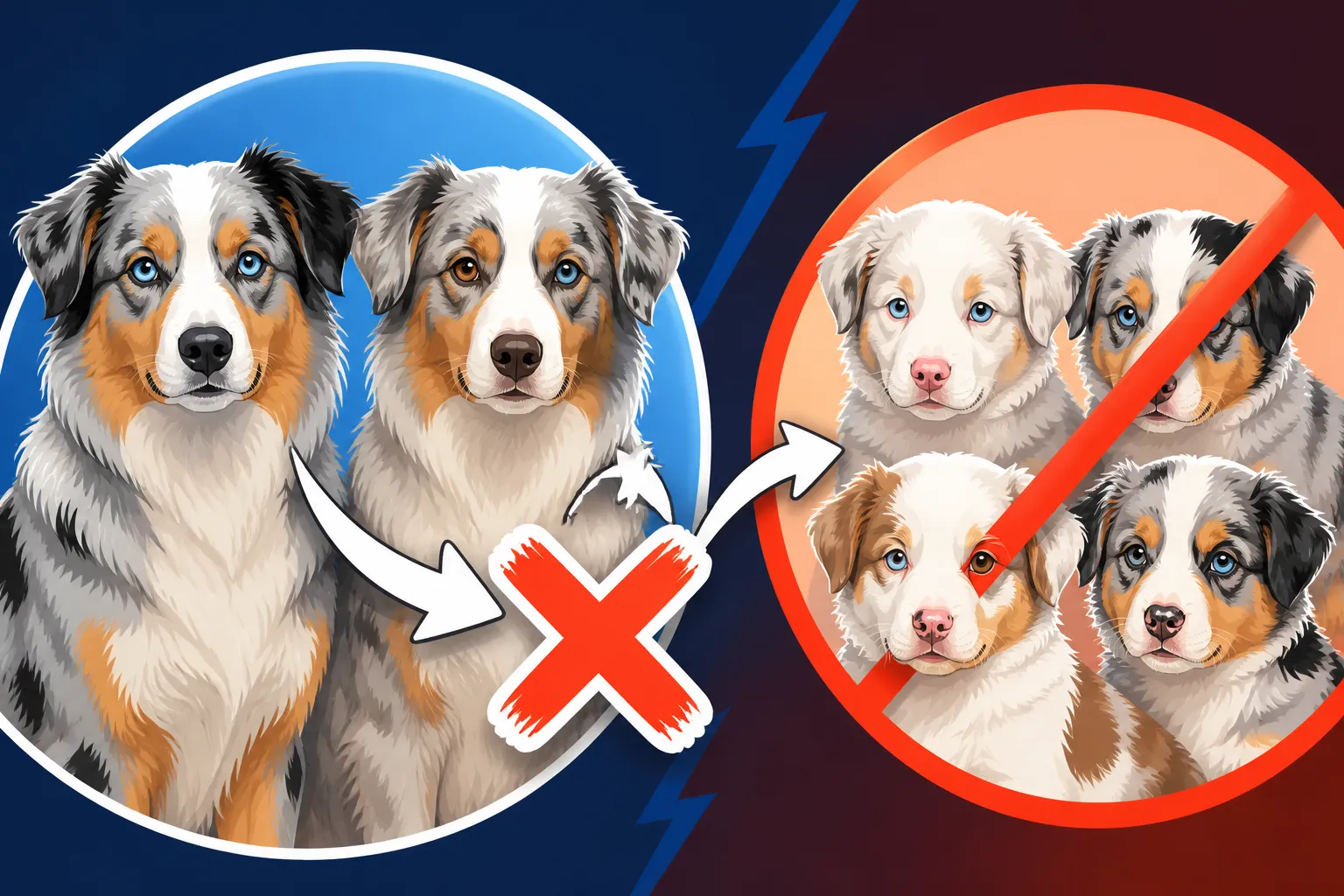
When two dogs each carrying one copy of the merle gene (Mm x Mm) are bred, the laws of Mendelian genetics come into play. Here's a simplified breakdown of the possible outcomes for each puppy in the litter:
| Parent 1 (Merle) | Parent 2 (Merle) | Possible Offspring Genotype | Phenotype |
|---|---|---|---|
| Mm | Mm | MM | Double Merle (25%) |
| Mm | Mm | Mm | Merle (50%) |
| Mm | Mm | mm | Non-Merle (25%) |
As you can see, there's a 25% chance for each puppy in the litter to inherit two copies of the merle gene (MM), making it a double merle. This means that a significant portion of the litter is at high risk for severe birth defects. This isn't a "sometimes" problem; it's a statistically predictable outcome of this irresponsible pairing. You might be interested in reading about The Odds of a Double Merle in an Aussie Litter for more insight into the probabilities.
Double merle puppies are often characterized by excessive white markings, especially on their head and face, and pale blue eyes, sometimes appearing glassy or non-pigmented. This lack of pigment isn't just external; it's an indicator of internal developmental issues that have serious ramifications for vital sensory organs.
Why the Double Merle Gene Causes Health Problems
The merle gene, in its single copy (Mm) form, acts as a dilution gene. In its double dose (MM) form, it goes into overdrive, causing an extreme reduction in pigment not just in the coat, but critically, in areas of the body that require pigment for proper development and function. The most severely affected systems are the eyes and ears.
Pigmentation plays a crucial role in the development of the structures within the eye that are responsible for vision, and within the inner ear for hearing. Without sufficient pigment during embryonic development, these structures don't form correctly. This isn't just about color; it's about cellular function and structural integrity. The cells that produce pigment are closely linked to the development of these sensory organs. When pigment production is disrupted by two copies of the merle gene, the delicate processes of eye and ear formation go awry, leading to a range of defects from mild to severe.
The Devastating Health Consequences for Double Merles
The ethical concern with double merle breeding isn't aesthetic; it's profoundly about welfare. Dogs born with two copies of the merle gene face a litany of potential health issues, with deafness and various ocular defects being the most prevalent and severe. These conditions can significantly impair a dog's ability to navigate the world and interact with its environment.
Ocular Defects and Vision Impairment
One of the most common and distressing issues in double merle Australian Shepherds is a range of severe eye abnormalities. The merle gene, when inherited in a double dose, interferes with the proper development of the eye structures that rely on pigment for their formation. This can lead to various conditions, including:
- Microphthalmia: This is arguably the most heartbreaking ocular defect. Microphthalmia means "small eyes." Instead of normal-sized, functional eyes, a double merle puppy may be born with one or both eyes significantly underdeveloped, sometimes appearing as tiny, sunken orbs. These eyes are often non-functional, meaning the dog is completely blind in them. The severity can vary, with some dogs having only slightly smaller eyes with some residual vision, while others are essentially anophthalmic (lacking eyes altogether). For more detailed information, consider reading Microphthalmia in a Double Merle Australian Shepherd.
- Colobomas: This condition involves a hole or cleft in one of the eye structures, most commonly the iris (the colored part of the eye). While a mild iris coloboma might not severely impact vision, more extensive colobomas can affect the retina or optic nerve, leading to significant vision loss or blind spots. In double merles, colobomas are often more severe and widespread.
- Retinal Dysplasia: This refers to abnormal development of the retina, the light-sensitive tissue at the back of the eye. Retinal dysplasia can manifest as folds or detachments of the retina, leading to impaired vision or blindness.
- Cataracts: While cataracts can occur in any breed and for various reasons, double merles may be more prone to congenital cataracts (present at birth) or early-onset cataracts due to the overall developmental disruption. This further obstructs vision, making the world a blurry, opaque place.
- Misshapen Pupils: Due to colobomas or other developmental anomalies, the pupil may appear irregular or "keyhole" shaped instead of perfectly round, affecting how light enters the eye. This is distinctly different from Australian Shepherd Iris Coloboma and Merle Eyes which can occur in single merles but is typically less severe.
The impact of these ocular defects ranges from mild vision impairment to total blindness. Imagine navigating your home, playing fetch, or meeting new people when you can barely see, or not at all. It requires immense dedication and adaptation from both the dog and its human family. Veterinary care for these conditions, from initial diagnosis to potential surgeries or long-term management, can be incredibly expensive. This is where comprehensive pet insurance, like a policy from Healthy Paws, can be an absolute lifeline, helping to cover unexpected and ongoing medical costs for such extensive issues.
Deafness and Hearing Impairment
Equally devastating is the high incidence of deafness in double merle Australian Shepherds. Similar to ocular defects, the lack of pigment disrupts the development of the tiny hair cells and nerve endings within the inner ear, which are essential for processing sound.
- Congenital Deafness: Most deafness in double merles is congenital, meaning the puppies are born deaf. It's often bilateral, affecting both ears, rendering the dog completely unable to hear. In some cases, it might be unilateral (affecting only one ear), which can be harder to detect initially as the dog compensates with its good ear. For a deeper understanding, consider learning about Congenital Deafness in an Australian Shepherd Puppy.
- Diagnosis: Detecting deafness in young puppies requires specialized testing. The Brainstem Auditory Evoked Response (BAER) test is the gold standard for diagnosing hearing loss in dogs. This test measures the electrical activity in the brain in response to auditory stimuli and can pinpoint whether a dog is deaf in one or both ears. You can read more about The BAER Test for Australian Shepherd Hearing.
- Impact on Life: A deaf dog requires a different approach to training, communication, and safety. Verbal commands are useless, so owners must rely on hand signals, visual cues, and environmental awareness. Off-leash activities, especially in unfenced areas, become incredibly risky as the dog cannot hear approaching dangers like cars or other animals. Living with a deaf Australian Shepherd presents unique challenges and rewards, demanding patience, consistency, and a deep bond built on trust and visual communication. The experience of Living With a Deaf Australian Shepherd can be incredibly enriching, but it requires preparation and commitment.
The combination of vision and hearing impairments, or even just one of these severe conditions, necessitates a huge commitment from the dog's family. While double merle Aussies can live full, happy lives with proper care, their needs are significant, and their existence is a direct result of irresponsible breeding. This is why the breeding community so vehemently condemns merle-to-merle pairings.
The Ethical Imperative: Responsible Breeding Practices
Given the severe welfare implications, responsible breeding of Australian Shepherds is not just recommended; it's an ethical obligation. Breeders committed to the health and well-being of the breed adhere to strict guidelines, prioritizing genetic health over fleeting trends in coat color or perceived aesthetic appeal.
Why Responsible Breeders Never Cross Merle to Merle
The reason is simple and unwavering: to prevent suffering. Reputable Australian Shepherd breeders understand the predictable and devastating consequences of double merle matings. They recognize that purposefully breeding two merles is a gamble with a living, sentient being's health and happiness. It’s an act of irresponsibility that prioritizes profit or superficial appearance over welfare.
Ethical breeders go to great lengths to ensure they are not accidentally producing double merles. This includes:
- Genetic Testing: Any dog that might be a merle, even if it appears solid-colored (like a cryptic merle), should be genetically tested for the merle allele. This is a simple DNA test that definitively tells a breeder if a dog carries the merle gene. This ensures that a seemingly solid dog isn't inadvertently bred to a merle. It's part of The Genetic Panel Every Australian Shepherd Needs to ensure healthy offspring.
- Thorough Pedigree Research: Breeders carefully review the pedigrees of their potential breeding dogs to understand their genetic background and identify any merle ancestors, helping to prevent accidental merle-to-merle pairings with cryptic merles.
- Visual Inspection and Knowledge: Experienced breeders can often identify subtle merle markings on a dog that might otherwise appear solid. They understand Cryptic Merle That Fools Aussie Breeders and take precautions.
- Education: Responsible breeders are educated about merle genetics and freely share this knowledge with prospective puppy buyers, helping to dispel myths and explain the importance of ethical practices.
You can often find good discussions about this within breed clubs like the Australian Shepherd Club of America (ASCA) or the various regional breed-specific organizations. They advocate strongly for responsible breeding practices, emphasizing health and temperament above all else. In fact, many organizations have policies that strongly discourage or even prohibit merle-to-merle breeding. For a deeper dive, you might find Why Aussie Breeders Never Cross Merle to Merle an interesting read.
The Role of Genetic Health Screening and Testing
Beyond merle, responsible Australian Shepherd breeding involves a comprehensive approach to genetic health. Reputable breeders invest significant time and resources into health screening their breeding stock for a range of genetic conditions common in the breed. This includes, but is not limited to:
- Hip and Elbow Dysplasia: Using evaluations like those from the Orthopedic Foundation for Animals (OFA) or PennHIP to assess joint health.
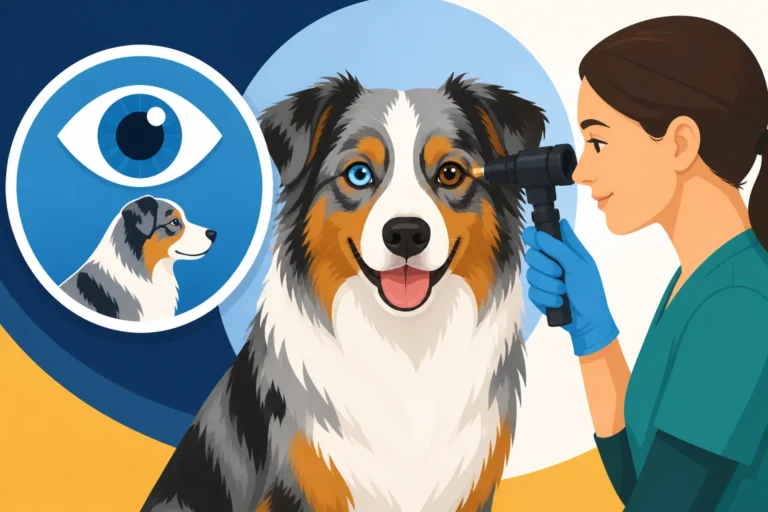
- Eye Certifications: Regular eye exams by a board-certified veterinary ophthalmologist (ACVO) to screen for hereditary eye diseases such as hereditary cataracts, Collie Eye Anomaly (CEA), and Progressive Retinal Atrophy (PRA). Learning about Hereditary Cataracts Clouding an Aussie Eye or Collie Eye Anomaly in an Australian Shepherd helps prepare potential owners.
- MDR1 Gene Mutation: Testing for the Multidrug Resistance 1 (MDR1) gene mutation, which can cause severe reactions to certain common veterinary drugs. This is particularly crucial for Australian Shepherds. Information on The MDR1 Mutation Half of Australian Shepherds Carry is vital for any Aussie owner.
- Epilepsy: While genetic tests for epilepsy are still developing, breeders track incidence in pedigrees and strive to breed away from affected lines. Understanding Australian Shepherd Epilepsy Starting Between One and Five is important for potential owners.
By conducting these health screenings, breeders aim to minimize the risk of passing on genetic diseases to future generations, ensuring puppies have the best possible start in life. When searching for a puppy, always ask to see the health clearances for both parents. A responsible breeder will be transparent and proud to share this information. This proactive approach not only benefits individual dogs but also contributes to the overall health and longevity of the Australian Shepherd breed.
Supporting a Double Merle Australian Shepherd
While the focus is on preventing double merle births, sometimes, despite best intentions or due to truly irresponsible breeding, these puppies are born. If you find yourself in a situation with a double merle Australian Shepherd, or are considering adopting one from a rescue, understanding their unique needs is paramount. These dogs can live full, happy lives, but they require a dedicated, understanding, and patient family.
Adapting Your Home for a Visually or Hearing-Impaired Dog
Creating a safe and enriching environment for a visually or hearing-impaired Australian Shepherd involves thoughtful modifications to your home and lifestyle.
For Visually Impaired Aussies:
- Consistency is Key: Do not rearrange furniture frequently. Dogs with vision impairment memorize their environment, and sudden changes can cause anxiety and bumps.
- Safe Pathways: Keep floors clear of clutter. Consider baby gates to block off stairs or dangerous areas until your dog is fully comfortable.
- Scent Markers: Use distinct scents (e.g., vanilla extract, essential oils diluted safely) on furniture legs or doorways to help your dog map their environment.
- Verbal Cues: Use consistent verbal cues like "step up," "step down," "wait," or "left/right" to guide them.
- Supervised Outdoor Time: Always supervise a blind dog outdoors, especially in unfenced areas. A long leash or harness is essential for walks to keep them safe and prevent them from bumping into obstacles or wandering into danger.
For Hearing Impaired Aussies:
- Hand Signals: Begin training immediately with clear, consistent hand signals for all commands. There are many resources for Teaching a Deaf Aussie Its First Signals.
- Vibrating Collar: A vibrating collar (not a shock collar) can be a valuable tool for getting their attention, especially outdoors. It's a gentle vibration, not a correction.
- Stomp or Light Touch: A strong stomp on the floor or a gentle tap on the shoulder can be used to get their attention indoors.
- Safe Environments: Always keep a deaf dog on a leash or in a securely fenced area when outside. They cannot hear cars, other dogs, or people approaching.
- Visual Cues and Body Language: Learn to communicate through exaggerated body language and facial expressions. Your dog will become incredibly attuned to your non-verbal cues.
For a dog with both visual and hearing impairment, the challenges are magnified, and the reliance on touch, scent, and consistent routines becomes even more critical. It takes a special kind of dedication, but the bond formed with such a dog can be incredibly profound. The financial implications for these dogs can also be significant due to specialized training, equipment, and ongoing veterinary care. Considering pet insurance from providers like Healthy Paws early on can provide crucial support for these unique circumstances.
Training and Enrichment for Double Merles
Training a double merle Australian Shepherd requires patience, creativity, and a positive reinforcement approach. These dogs are still intelligent and eager to learn; they just need communication tailored to their abilities.
For Visually Impaired Aussies:
- Scent Work: Australian Shepherds have incredible noses. Scent work, nose games, and tracking are fantastic mental enrichment activities that build confidence and provide mental stimulation.
- Touch Cues: Teach touch cues for commands. For example, a tap on the shoulder could mean "stop," or a gentle push on their hindquarters could mean "sit."
- Verbal Praise: Lavish them with verbal praise and gentle physical affection when they get it right.
- Familiarity: Introduce new toys or objects by allowing them to sniff and explore them safely.
For Hearing Impaired Aussies:
- Clicker Training Alternative: A visual marker, like a flash of a flashlight or a thumbs-up, can serve the same purpose as a clicker, marking desired behaviors for reward.
- Repetition and Consistency: Be extremely consistent with your hand signals. Practice in various environments, starting with low-distraction areas.
- Recall Practice: Practice "emergency recall" with a rapid sequence of visual signals or a vibrating collar to ensure they come when called, especially in potentially unsafe situations.
- Puzzle Toys: These are great for mental stimulation and don't rely on hearing or perfect vision.
Double merles, regardless of their sensory challenges, are still Australian Shepherds at heart. They retain their intelligence, desire to work, and need for mental and physical activity. Providing appropriate enrichment is crucial for their well-being. This might involve puzzle feeders, engaging chew toys, long line walks in safe, familiar areas, or even modified agility courses for those with some residual vision. Remember, their world might be perceived differently, but their need for engagement and love is just as strong. Pet insurance can be a huge help, especially if you consider getting a policy like those offered by Healthy Paws to cover potential long-term care needs.
Conclusion: Making Informed and Ethical Choices
The captivating beauty of the Australian Shepherd's merle coat comes with a weighty genetic responsibility. Understanding why Aussie breeders never cross merle to merle isn't just a matter of curiosity; it's a fundamental aspect of responsible pet ownership and ethical breeding. The suffering caused by double merle births—manifesting in severe vision and hearing impairments—is entirely preventable through informed breeding practices.
As prospective Australian Shepherd owners, your role is crucial. Demand transparency from breeders. Ask about health clearances, including genetic testing for the merle gene, even if a parent appears solid. Seek out breeders who prioritize the health, temperament, and welfare of their dogs above all else. Support rescues that care for double merles and other dogs with special needs. By making informed choices, you contribute to a future where every Australian Shepherd puppy born has the best possible chance at a healthy, happy life, free from preventable suffering.
Disclaimer
This article is intended for informational purposes only and does not constitute veterinary advice. Always consult with a qualified veterinarian for any health concerns or before making any decisions about your pet's care or breeding practices.