Australian Shepherd Iris Coloboma and Merle Eyes
It can be incredibly disheartening, and frankly, a little scary, to notice something unusual about your beloved Australian Shepherd's eyes. You might catch a glimpse of an irregular pupil shape, perhaps a distinct "keyhole" appearance, especially if your Aussie has those captivating merle eyes. This isn't just a quirky trait; it could be iris coloboma, a congenital eye defect that many Aussie parents worry about. This comprehensive guide aims to shed light on what iris coloboma is, its strong connection to the merle gene, and how to best care for your furry friend if they're affected.
Understanding Iris Coloboma in Australian Shepherds
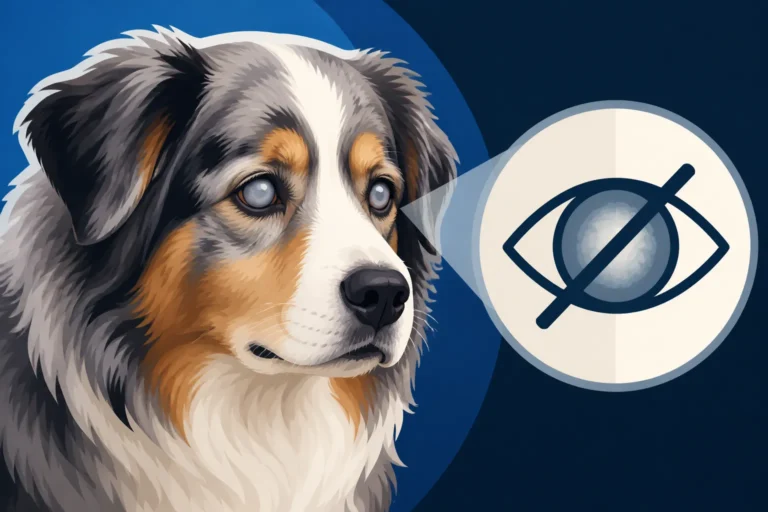
When you look into your Aussie's eyes, you expect to see that perfectly round, expressive pupil, surrounded by a vibrant iris. But with iris coloboma, that perfect circle is interrupted, often appearing like a notch or a hole in the iris itself. It's a developmental anomaly, meaning it happens while the puppy is still forming, and it's something that often catches new owners by surprise. The visual impact can range from barely noticeable to quite striking, leaving many to wonder what it means for their dog's sight and comfort.
What Exactly Is Iris Coloboma?
Iris coloboma is essentially a gap or a hole in the iris, which is the colored part of the eye that controls the size of the pupil. Imagine a small piece of a pie missing from the circle of the iris. This missing piece can make the pupil look like a "keyhole," a "teardrop," or just irregularly shaped. Sometimes, the gap is so small you might miss it, while other times it's quite large and extends deeper into other parts of the eye, though it's still primarily an iris defect. What’s important to remember is that it’s a non-progressive condition, meaning it won’t get worse over time once your dog is fully grown. It's a "what you see is what you get" situation, but the severity can vary widely from one dog to another, even within the same litter.
This defect occurs because certain parts of the eye didn't fuse properly during fetal development. Specifically, the choroidal fissure, which is an embryonic structure, fails to close completely. The choroidal fissure is a normal part of early eye development, and it usually closes up before birth. When it doesn't, you get these characteristic gaps. While the iris is the most commonly affected structure in coloboma, sometimes the defect can extend to other parts of the eye like the retina, choroid, or optic nerve head, making the condition more complex. It’s not necessarily painful for the dog, but it can certainly impact their vision, particularly in certain lighting conditions, which we’ll delve into a bit later.
How It Develops in the Eye
The development of the eye is an intricate process, with many structures needing to form and fuse at precise times. During the embryonic stage, the optic cup forms, and within it, a structure called the choroidal fissure is present. This fissure allows blood vessels and nerves to enter and exit the developing eye. Normally, this fissure completely closes by a certain point in gestation. If, for any reason, this closure is incomplete, the result is a coloboma. The location and size of the persistent opening dictate which parts of the eye are affected. When the opening primarily impacts the iris, it's called an iris coloboma.
The underlying cause for this developmental hiccup is often genetic, particularly in breeds like Australian Shepherds, where the merle gene plays a significant role. It's not just a random occurrence; there's a strong hereditary component at play. Environmental factors during pregnancy are rarely the sole cause, although some toxins or infections could theoretically interfere with development. However, for Aussies, the genetic predisposition is paramount. This means that understanding the lineage of your dog and the genetic health tests of their parents can offer vital clues about the likelihood of such conditions appearing.
The Merle Gene Connection to Eye Anomalies
It’s no secret that Australian Shepherds are renowned for their stunning merle coats and often equally striking blue eyes. However, the very gene responsible for these beautiful traits, the merle gene (M allele), is also intrinsically linked to a range of ocular and auditory defects, including iris coloboma. This connection is why awareness and responsible breeding practices are so crucial within the Aussie community. It's not just about aesthetics; it's about the health and quality of life for these wonderful dogs.
Merle Genetics and Eye Pigmentation
The merle gene is a dilution gene, meaning it lightens pigment, creating those characteristic patches of diluted color and often leading to blue eyes. It works by interfering with pigment production in various tissues, including the iris. When an Aussie inherits one copy of the merle gene (heterozygous merle, Mm), they typically exhibit the desired merle coat pattern and often have blue or partially blue eyes, sometimes even with heterochromia (different colored eyes). This single copy of the merle gene is generally considered "safe" in terms of causing severe health defects, though even single merles can exhibit mild forms of eye anomalies like iris coloboma or slight microphthalmia. The degree of dilution and its impact on eye structures can be quite variable, even among dogs with the same genetic makeup.
The pigment in the iris helps to protect the delicate structures of the eye from excessive light. When the merle gene dilutes this pigment, particularly in blue eyes, the eye's ability to filter light can be compromised. This can lead to increased light sensitivity, especially in dogs with more extensive pigment dilution within the iris or the presence of a coloboma that effectively creates a larger pupil. This is why you might notice your blue-eyed merle Aussie squinting more in bright sunlight or preferring shaded areas. It’s a direct consequence of how the merle gene impacts the very architecture and functionality of the eye.
Increased Risk in Double Merle Australian Shepherds
The real concern, and where the link becomes much stronger and more severe, is with "double merles," also known as homozygous merles (MM). These dogs inherit a merle gene from both parents, a breeding practice that is widely considered irresponsible and unethical due to the high probability of serious health issues. A Double Merle Australian Shepherds and What Breeding Two Merles Costs can be devastating, not just financially but emotionally for the owners. The double dose of the merle gene leads to extreme dilution, often resulting in predominantly white coats and significantly higher incidences of severe congenital defects.
In double merles, the risk of iris coloboma is dramatically elevated, and the condition often presents in a more severe form, sometimes affecting both eyes and extending to other structures. Beyond coloboma, double merles are prone to other severe eye defects such as microphthalmia (abnormally small eyes), irregular pupils, cataracts, and even complete blindness. Furthermore, Deafness in a Double Merle Australian Shepherd is another common and tragic consequence, as the merle gene also impacts pigment cells in the inner ear that are crucial for hearing. Breeders who knowingly produce double merles put these puppies at immense risk, leading to lives often burdened with multiple sensory deficits. It's a stark reminder of why careful genetic screening and avoiding merle-to-merle breedings are paramount.
Diagnosing Iris Coloboma and Associated Conditions
Noticing an odd eye shape or a different color can be unsettling. If you suspect your Australian Shepherd might have an iris coloboma, or any other eye abnormality, it's absolutely crucial to get a professional veterinary opinion. Early and accurate diagnosis can help you understand the extent of the condition, prepare for any potential visual challenges, and ensure your dog receives the best possible care. Don't assume anything; always consult a specialist.
The Importance of a Veterinary Ophthalmic Exam
The moment you notice anything amiss with your Aussie's eyes, whether it's an unusual pupil shape or a general change in appearance, schedule an appointment with your veterinarian. They can perform an initial assessment, but for a definitive diagnosis of iris coloboma and to rule out other complex eye issues, a referral to a board-certified veterinary ophthalmologist is often recommended. These specialists have advanced training and equipment to examine the intricate structures of the eye in detail.
During the ophthalmic exam, the specialist will use tools like an ophthalmoscope and slit lamp to carefully inspect the iris, retina, optic nerve, and other ocular components. They can precisely identify the presence, size, and location of any coloboma. This examination is more comprehensive than a routine vet check-up and is essential for understanding the full picture of your dog's eye health. It's also critical for puppies, as a comprehensive The Aussie Puppy Eye Check at Six Weeks by a qualified ophthalmologist can catch these issues early, offering peace of mind or an early action plan. This early assessment is especially important since many eye conditions in Aussies have a genetic component.
Ruling Out Other Eye Conditions
While iris coloboma has a distinct appearance, it's vital for a veterinary ophthalmologist to differentiate it from other conditions that might present similarly or coexist. For instance, iris hypoplasia, where the iris tissue is underdeveloped, might also lead to irregular pupils but has a different underlying cause and potential prognosis. Other conditions like hereditary cataracts or Collie Eye Anomaly in an Australian Shepherd (CEA) can also affect vision and may sometimes occur alongside coloboma, especially in merle dogs. A thorough exam ensures that all present conditions are identified and understood.
The ophthalmologist will also assess if the coloboma extends beyond the iris to deeper structures like the retina or optic nerve. If it does, the impact on vision could be more significant. They'll also check for signs of Microphthalmia in a Double Merle Australian Shepherd, a condition where the eyes are abnormally small, which is often seen in conjunction with severe colobomas in double merles. This comprehensive evaluation is key to providing accurate information about your dog's long-term visual prognosis. For unexpected specialist visits and diagnostics, having pet insurance like Healthy Paws can be a tremendous help, covering a significant portion of these often costly diagnostic procedures and treatments, allowing you to focus on your dog's health without financial strain.
Living with an Australian Shepherd with Iris Coloboma
Discovering your Australian Shepherd has iris coloboma can bring up a lot of questions about their daily life and future. Will they be able to see properly? Will they be comfortable? The good news is that many Aussies with iris coloboma lead full, happy lives with minimal adjustments. The key is understanding the specific challenges their condition might present and making proactive choices to support their well-being.
Vision Impact and Light Sensitivity
The primary way an iris coloboma impacts vision is by creating an abnormally shaped or larger pupil opening. The iris normally acts like the aperture of a camera, contracting in bright light and dilating in dim light to control how much light reaches the retina. When there's a permanent gap or hole (the coloboma) in the iris, too much light can enter the eye, particularly in bright environments. This can lead to photophobia, or light sensitivity, causing your Aussie to squint, blink excessively, or try to avoid bright sunlight. Imagine trying to see clearly when constantly hit with glare; it can be uncomfortable and make discerning objects more difficult.
However, the actual degree of visual impairment varies widely. A small coloboma might cause only minor light sensitivity, while a larger one, or one that extends deeper into the retina, could lead to more significant vision loss. It's not uncommon for an Australian Shepherd with a coloboma to have perfectly functional vision in most circumstances, but perhaps struggle in very bright, open spaces or suddenly transitioning from dark to light. It's also worth noting that the popular belief that Whether Blue Eyes Mean Vision Problems in an Aussie is not entirely true; while blue eyes are more often associated with coloboma due to the merle gene, the blue color itself doesn't cause vision issues, rather it's the underlying genetic factors affecting the eye's structure.
Management and Quality of Life
For most Australian Shepherds with iris coloboma, managing their condition focuses on minimizing discomfort from light sensitivity and ensuring they can navigate their environment safely. If your Aussie shows signs of photophobia, simple solutions can make a big difference. Consider dog-specific sunglasses (doggles) for outdoor activities on sunny days. These can protect their eyes from UV rays and reduce glare. Creating shaded areas in your yard or ensuring they have access to dimmer rooms indoors can also help.
Beyond managing light, it's important to provide a consistent and safe environment for your dog. If their vision is more severely impacted, especially if the coloboma is bilateral or combined with other issues like microphthalmia, keeping furniture in consistent locations and avoiding sudden changes can help them navigate with confidence. Most importantly, give them plenty of love and reassurance. Aussies are incredibly adaptable, and with your help, they can thrive despite their unique vision. Many owners find that their dogs adjust beautifully to any visual limitations and continue to enjoy their lives to the fullest. Regular check-ups with your vet or ophthalmologist will ensure their eye health remains stable.
Breeding Responsibly and Preventing Eye Defects
The genetic link between the merle gene and iris coloboma means that responsible breeding practices are paramount to reducing the incidence of this and other associated eye defects in Australian Shepherds. As loving owners, we want to ensure the health and well-being of future generations of Aussies. This means making informed choices and supporting breeders who prioritize health over aesthetics.
Genetic Screening and Ethical Breeding Practices
Any Australian Shepherd considered for breeding, especially those carrying the merle gene, should undergo comprehensive genetic health testing and specialized eye examinations. A full The Genetic Panel Every Australian Shepherd Needs will screen for known genetic markers associated with various health conditions, including several eye diseases. While a DNA test might not directly identify iris coloboma, it confirms the presence and type of merle gene (e.g., M/m or M/M), which is critical information. Furthermore, every breeding dog should have an annual The ACVO Eye Exam Australian Shepherd Breeders Run by a board-certified veterinary ophthalmologist. This exam is crucial for identifying structural abnormalities like coloboma, even if they are mild or not immediately obvious.
Ethical breeders use this information to make responsible breeding decisions. They will openly share the genetic test results and eye certifications of their breeding dogs with prospective puppy buyers. This transparency is a hallmark of a breeder who prioritizes the health of their lines. Avoiding the breeding of dogs with severe colobomas, or those that produce offspring with such conditions, helps to reduce the prevalence of these defects in the breed. It's a long-term commitment to improving breed health, ensuring that these wonderful dogs continue to bring joy without the burden of preventable health issues. You can also educate yourself on Reading an Australian Shepherd DNA Panel to better understand what these results mean.
Avoiding Merle to Merle Breedings
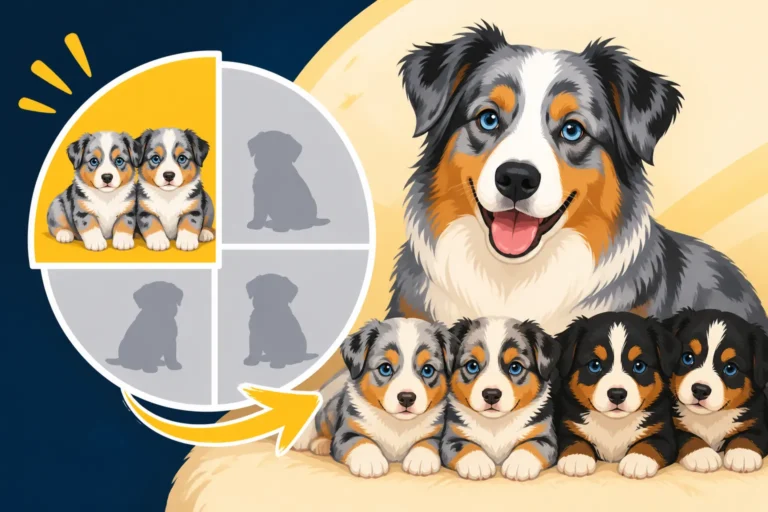
The single most critical piece of advice for preventing severe iris coloboma and other profound health issues in Australian Shepherds is to absolutely avoid merle-to-merle breedings. This means never breeding two dogs who both carry a merle gene (Mm x Mm). Such a pairing has a 25% chance of producing double merle (MM) puppies in the litter, which, as discussed, are at a significantly higher risk of severe eye defects, including extensive colobomas, microphthalmia, and total blindness, as well as deafness. This is why Why Aussie Breeders Never Cross Merle to Merle is an unwavering rule among ethical breeders.
Even breeding a merle dog to a non-merle dog with a mild coloboma is generally ill-advised. The goal should always be to reduce the genetic load for such conditions. Reputable breeders will meticulously research pedigrees, understand the merle genetics of their dogs, and choose mates that minimize the risk of producing affected offspring. This might mean breeding a merle dog only to a solid-colored (non-merle) dog, or even more cautiously, to a dog whose lineage is known to be free of significant eye issues. The health of the puppies, not the potential for "cool" colors, should always be the top priority. Responsible choices today protect Australian Shepherds tomorrow. Indeed, knowing that roughly A Quarter of a Merle Aussie Litter Born Double underscores the very real risks associated with irresponsible breeding practices and the potential for devastating health outcomes for these puppies.
| Eye Condition | Primary Affected Structure | Merle Gene Link | Typical Severity | Vision Impact | Genetic Test Available | ACVO Exam Detectable |
|---|---|---|---|---|---|---|
| Iris Coloboma | Iris | Strong | Variable | Light sensitivity, potential partial loss | Indirect (Merle Gene) | Yes |
| Collie Eye Anomaly (CEA) | Retina, Choroid, Optic Nerve Head | Yes | Variable | Mild to severe loss | Yes | Yes |
| Hereditary Cataracts | Lens | Yes (HSF4 gene) | Progressive | Partial to complete loss | Yes (HSF4 gene) | Yes |
| Progressive Retinal Atrophy (PRA) | Retina | Yes | Progressive | Night blindness to total blindness | Yes | Yes |
| Microphthalmia | Entire Eye (small eye) | Strong (Double Merle) | Severe | Severely reduced to no vision | Indirect (Merle Gene) | Yes |
Disclaimer
This article is intended for informational purposes only and does not constitute veterinary advice. Always consult with a qualified veterinarian or a board-certified veterinary ophthalmologist for any health concerns or before making any decisions about your Australian Shepherd's medical care or breeding practices.