Whether Grain-Free Settles Aussie Itching
Oh, the relentless scratch! If you've got an Australian Shepherd, you know that heartbreaking sound of them digging at their skin, sometimes until it's raw. It's truly one of the most frustrating things to witness as a pet parent, especially when you feel like you've tried everything. Many of us jump straight to diet, wondering if a grain-free food might be the magic bullet to stop the incessant itching. This guide will dive deep into why your beloved Aussie might be scratching, explore the real impact of grain-free diets, and walk you through the comprehensive steps to finally bring your furry friend some much-needed relief.
Unpacking the Itch: Why Your Aussie Might Be Scratching
It's easy to assume that if your Australian Shepherd is scratching, it must be something they ate. And while food can certainly be a culprit, it's really just one piece of a much larger and often complex puzzle. Aussies, with their beautiful double coats and active lifestyles, are prone to a variety of skin issues, and understanding the full picture is crucial for effective relief.
Beyond Just Food: Common Causes of Aussie Itching
Before we even get to what's in the food bowl, let's talk about the other major players in the itching game. It's incredibly common for Australian Shepherds to suffer from environmental allergies, much like people get hay fever. These "atopic dermatitis" triggers can be anything from pollen in the spring and fall, dust mites lurking in your carpets, or even mold spores. You might notice your Aussie itching more intensely during certain seasons, or specifically after spending time outdoors rolling in the grass. This type of allergy often presents as itching around the paws, face, ears, and belly. It's not uncommon for these environmental allergies to be a lifelong battle, requiring ongoing management.
Then there are the pesky parasites. Even if you're diligent with preventive medications, fleas can still cause a world of misery for some dogs. A single flea bite can trigger a massive allergic reaction in a sensitive Aussie, leading to intense itching, redness, and even hair loss, often around the tail base and hindquarters. Mites, too, can be silent culprits, causing anything from localized irritation to widespread discomfort. Your vet can usually diagnose these with a simple skin scraping, which is often one of the first things they'll do when faced with an itchy dog. Don't underestimate the power of these tiny invaders; they're masters of misery.
Finally, persistent itching, regardless of the initial cause, can lead to secondary infections. When your Aussie scratches, chews, or licks constantly, they break the skin barrier. This creates an open invitation for bacteria (leading to painful "hot spots" – you can read more about them in Hot Spots Hidden in an Aussie Undercoat) and yeast to proliferate, making the itching even worse. These infections create a vicious cycle: the infection causes more itching, which causes more scratching, which worsens the infection. It’s a truly miserable state for your dog, and often requires antibiotics or antifungals from your vet to get under control before you can even begin to address the underlying allergy. Sometimes, stress and anxiety can even manifest as excessive licking or chewing, turning a minor itch into a self-inflicted wound.
The Role of Food in Australian Shepherd Skin Health
Now, let's talk about food. When we discuss food-related itching, it's important to distinguish between a true food allergy and a food sensitivity. A true allergy involves an immune system response, often to a protein in the food, and can manifest quickly and intensely. A food sensitivity, on the other hand, might be a more gradual digestive intolerance that can still cause itching, gas, or loose stools, but doesn't involve the immune system in the same way. For Australian Shepherds, like many breeds, the most common food allergens are often common protein sources, such as chicken, beef, dairy, or eggs. It's a common misconception that grains are the primary culprits, but studies often point to proteins as the more frequent issue.
Symptoms of a food allergy or sensitivity in an Aussie often mirror those of environmental allergies: intense itching, especially around the ears, paws, and anal area. You might also notice redness, chronic ear infections (Australian Shepherd Ear Infections), or even gastrointestinal upset like vomiting or diarrhea. The frustration for owners often stems from the fact that these symptoms can develop at any age, sometimes after years of eating the same food without issue. Your Aussie's body can suddenly decide it no longer tolerates an ingredient it once ate happily, making diagnosis tricky. This is why when tackling skin issues, your vet will want to rule out all other potential causes before settling on a food-related diagnosis. For a broader look at Aussie skin issues, consider reading Australian Shepherd Skin, Coat and Allergy Problems.
Grain-Free: A Panacea or a Niche Solution for Aussie Itching?
The rise of grain-free dog foods has been monumental over the last couple of decades, driven by a perception that grains are "bad" for dogs or commonly cause allergies. Many pet parents, desperate for a solution to their Aussie's incessant scratching, turn to grain-free options hoping for a quick fix. But is it really the answer?
What "Grain-Free" Really Means for Dog Food
When a dog food is labeled "grain-free," it simply means that it does not contain common cereal grains like corn, wheat, soy, rice, barley, or oats. Instead, these foods typically use alternative carbohydrate sources to bind the kibble and provide energy. These substitutes often include ingredients like potatoes (sweet potato or white potato), peas, lentils, tapioca, or other legumes. The idea behind grain-free was largely based on marketing that implied grains were unnatural for dogs, linking them to ancestral diets. It played into the belief that domestic dogs, being descendants of wolves, shouldn't consume grains.
However, the science tells us a slightly different story. Dogs have evolved alongside humans for thousands of years, and during that time, their digestive systems have adapted to process starches and grains more efficiently than their wolf ancestors. Their bodies produce the enzymes needed to break down these carbohydrates. The perception that grains are inherently allergenic is largely unfounded, as true grain allergies are actually quite rare in dogs compared to allergies to common protein sources. So, while grain-free sounds natural and healthy, it's not automatically superior or more hypoallergenic than a grain-inclusive diet.
When Grain-Free Might (and Might Not) Help Your Australian Shepherd
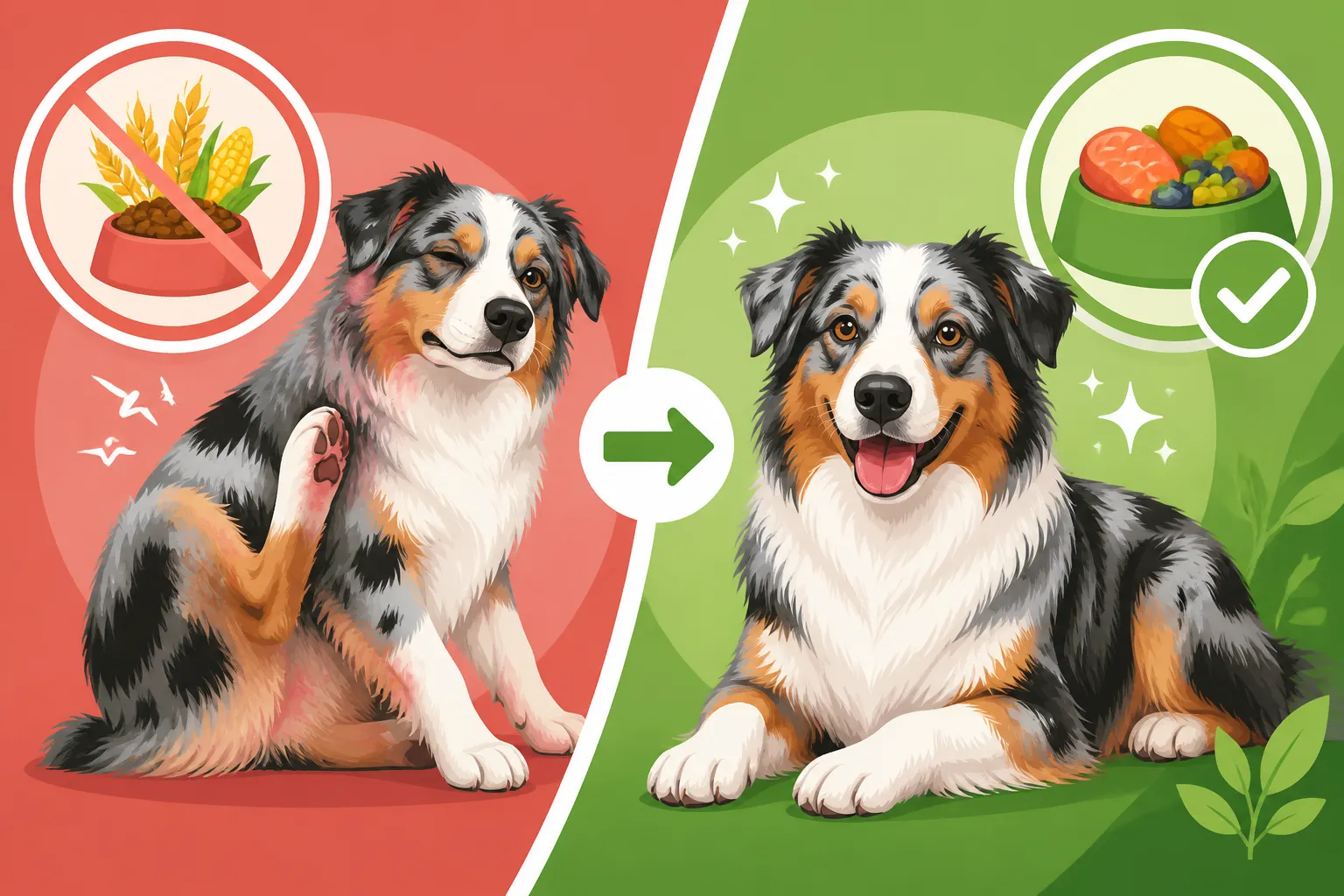
So, when might going grain-free actually help an itchy Australian Shepherd? It might offer some relief if, and only if, your Aussie has a very specific, diagnosed allergy to a particular grain. For example, if through a rigorous elimination diet, your vet determines your Aussie is genuinely allergic to wheat, then a grain-free diet that avoids wheat would certainly be beneficial. In such a rare case, removing that specific allergen would clear up their symptoms. However, it's crucial to understand that simply removing all grains without knowing the specific allergen is largely a shot in the dark.
More often than not, a grain-free diet won't resolve your Aussie's itching if the root cause isn't grain-related. As discussed, protein sources like chicken, beef, or dairy are far more common allergens. If your Aussie is reacting to chicken, switching from a chicken-and-rice kibble to a chicken-and-pea grain-free kibble won't solve anything because the primary allergen (chicken) is still present. Similarly, if your Aussie's itching is due to environmental allergies, fleas, or a bacterial infection, no dietary change, grain-free or otherwise, will make a lasting difference until those primary issues are addressed.
There's also been a lot of discussion in the veterinary community about a potential link between certain grain-free diets (particularly those high in peas, lentils, and potatoes) and a heart condition called Dilated Cardiomyopathy (DCM) in some breeds, including non-genetically predisposed ones. While research is ongoing and the connection isn't fully understood, it's a serious concern that warrants a conversation with your veterinarian before committing to a long-term grain-free diet. It highlights that switching diets, especially for health reasons, should always be done under professional guidance. For Aussies experiencing Food Allergy Itching in an Australian Shepherd, focusing on novel proteins might be a more targeted approach than simply cutting out grains.
Navigating the Allergy Labyrinth: Finding Relief for Your Itchy Aussie
When your Australian Shepherd is suffering from relentless itching, it feels like navigating a maze. The good news is there are proven strategies, with your vet's help, to get to the bottom of it and find effective relief. It often requires patience, persistence, and a multi-faceted approach.
The Gold Standard: Elimination Diets for Suspected Food Allergies
If your vet suspects a food allergy after ruling out other causes, the most reliable diagnostic tool is an elimination diet. This isn't just switching to a different bag of kibble you picked up at the store. An elimination diet is a strict, controlled feeding trial where your Aussie eats a novel protein source (something they've never eaten before, like venison, duck, rabbit, or kangaroo) or a hydrolyzed protein diet (where the proteins are broken down into such small pieces that the immune system doesn't recognize them as allergens). Brands like Royal Canin and Purina often offer prescription hydrolyzed protein diets, which can be acquired through your veterinarian.
This diet must be the only thing your Aussie consumes for a period of typically 8-12 weeks. This means no treats, no table scraps, no flavored medications, no sneaking bits of cheese – absolutely nothing else. It's incredibly challenging, especially with an Aussie who has a knack for finding dropped crumbs or raiding the cat's bowl. During this period, if the itching subsides significantly, it suggests a food allergy. The next step is a "challenge" phase, where you reintroduce the old food or individual ingredients one by one to pinpoint the exact allergen. If symptoms return after reintroducing chicken, for instance, you've found your culprit. It's a long process, but it's the most accurate way to truly identify what your Aussie cannot tolerate. You can learn more about this rigorous process in Eight Weeks of Elimination Diet on an Aussie.
Beyond Diet: A Holistic Approach to Managing Aussie Skin Issues
Even if food plays a role, or if your Aussie's itching is primarily environmental, a holistic approach is often necessary for long-term comfort. Environmental management is key for atopic Aussies. This might mean wiping down their paws after walks, regular bathing with a soothing, hypoallergenic shampoo, or using air purifiers in your home to reduce dust mites and pollen. For Seasonal Allergies in an Australian Shepherd, these measures can make a significant difference.
Medications are often part of the picture, especially for severe cases. Your vet might prescribe antihistamines, corticosteroids (for short-term relief from intense flares), or newer medications like Apoquel or Cytopoint. These are powerful tools that can break the itch-scratch cycle and give your Aussie immense relief, allowing their skin to heal. However, they are not without potential side effects, so ongoing discussions with your vet about the best long-term strategy are vital. Supplements can also support skin health; for example, Omega-3 fatty acids (like fish oil) can help strengthen the skin barrier and reduce inflammation. Fish Oil for an Aussie Double Coat offers more details on this.
Finally, regular grooming and veterinary check-ups are non-negotiable. Your Aussie's dense double coat can hide a lot of skin irritation, mats, and even secondary infections. Consistent brushing helps air circulation and removes allergens from the coat. Always discuss any changes in skin or coat with your veterinarian. Sometimes, skin issues can even be a sign of underlying systemic problems, such as Hypothyroidism and a Dull Australian Shepherd Coat, so a comprehensive vet check is essential. Getting regular The Health Tests Every Australian Shepherd Parent Needs can help catch issues early.
| Allergy Type | Common Triggers | Typical Symptoms | Diagnostic Approach |
|---|---|---|---|
| Environmental | Pollen, dust mites, mold spores | Seasonal itching (paws, face, belly), ear infections | Clinical signs, rule-out, allergy testing (blood/skin) |
| Food Allergy | Proteins (chicken, beef, dairy), grains | Non-seasonal itching (paws, ears, anal area), GI upset | Strict Elimination Diet (gold standard) |
| Parasitic | Fleas, mites, ticks | Intense itching, scabs, hair loss (tail base) | Skin scrape, flea comb, physical exam, trial treatment |
| Contact Dermatitis | Chemicals, irritants | Redness, itching at contact point | History, physical exam, patch test |
Practical Steps for Feeding an Itchy Australian Shepherd
Finding the right diet for an itchy Australian Shepherd can feel overwhelming with all the choices out there. It’s not just about picking up a bag labeled "grain-free" anymore; it's about being an informed advocate for your dog's health.
Reading Food Labels and Choosing Wisely
When you're trying to manage an Aussie's itching through diet, learning to decode food labels is a superpower. Look for foods with a single, novel protein source if you're attempting an elimination diet after vet consultation. This means the ingredient list should clearly state, for example, "venison meal" as the primary protein, and not have any vague terms like "animal fat" or "poultry digest" that could hide common allergens. Brands specializing in limited ingredient diets (LID) are designed with this in mind, often featuring one protein and one carbohydrate source, minimizing the potential for multiple allergens.
Beyond protein, pay attention to the carbohydrate sources and fats. If your vet suspects a specific protein allergy, ensuring that all ingredients are free from that protein is critical. Some LIDs might still contain chicken fat, for example, which could be an issue for a severely chicken-allergic Aussie. When shopping online, sites like Chewy or Amazon allow you to filter by specific ingredients, protein sources, or even "limited ingredient" categories, which can make the initial search a little less daunting. Always check the full ingredient list once the food arrives, as formulations can sometimes change. If you're exploring options beyond traditional kibble, some fresh food delivery services, like Ollie, may also offer novel protein recipes that could be suitable for an elimination diet if they align with your vet's recommendations. However, the absolute strictest approach will likely be a prescription hydrolyzed diet.
The Long Game: Patience and Persistence
The journey to resolving your Australian Shepherd's itching is rarely a sprint; it's often a marathon. It takes immense patience and persistence from you, the pet parent. Food allergies, in particular, can take weeks or even months to diagnose and manage effectively. You might feel discouraged if you switch foods and don't see immediate results, but remember that skin takes time to heal, and residual inflammation can linger. It's a continuous process of observation, adjustment, and communication with your veterinarian.
Keep a detailed journal of your Aussie's symptoms, diet changes, and any other relevant factors (like seasonal changes, new laundry detergent, etc.). This information is invaluable to your vet as you work together to pinpoint triggers. Remember that some Aussies have multiple allergy triggers – they might have both environmental allergies and a food sensitivity. Addressing one issue, like a food allergy, might reduce the severity of their symptoms, but they could still have residual itching from seasonal pollen. Don't give up hope. With dedicated effort, clear communication with your vet, and a willingness to explore various avenues, you can bring your beloved Australian Shepherd lasting comfort and freedom from that relentless itch.
Disclaimer
This article is for general informational purposes only and does not constitute professional advice. Laws, prices and regulations vary by location and change over time. Consult a qualified professional for guidance on your specific situation.