Stairs and a Young Australian Shepherd’s Joints
Bringing home an Australian Shepherd puppy is an absolute joy, filled with boundless energy and adorable antics. But for many new Aussie parents, the seemingly innocent act of letting their energetic pup navigate stairs can spark a genuine worry. You see them bounding up and down, and a little voice in the back of your head wonders, "Is this actually bad for them?" It’s a valid concern, and one that gets asked a lot, especially when we know Aussies can be prone to certain joint issues. This guide is here to walk you through the real risks stairs pose to a young Australian Shepherd's developing joints, explain why it matters, and give you practical strategies to keep your furry family member safe and sound.
Understanding Australian Shepherd Joint Development
It’s truly a marvel to watch an Aussie puppy grow from a tiny ball of fluff into a strong, agile dog. But during this rapid growth phase, their bones and joints are incredibly vulnerable. They aren't just miniature adult dogs; they're intricate systems in progress, and how they develop now can impact their health for a lifetime.
The Critical Growth Period
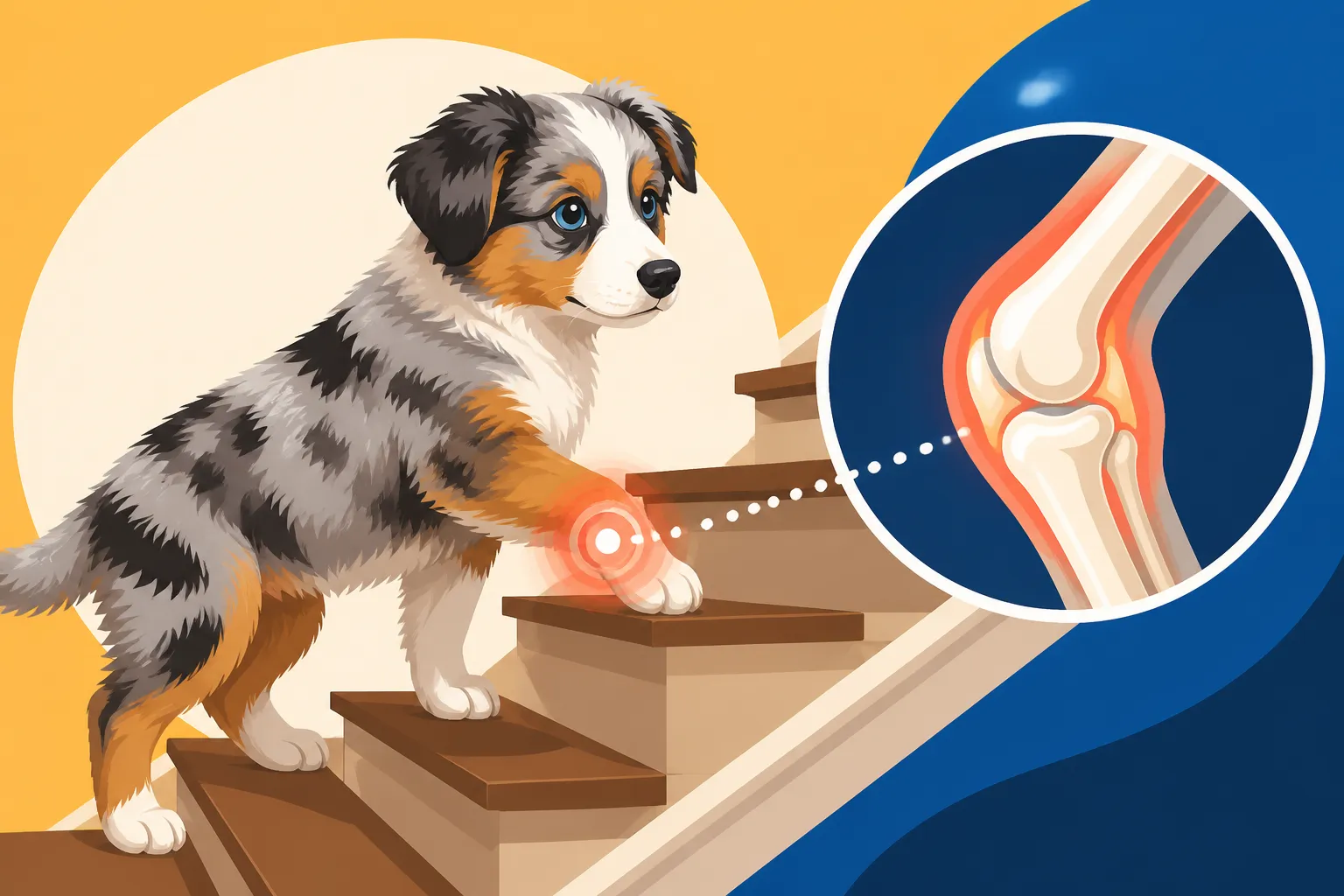
Think of your Aussie puppy's bones as soft clay rather than hardened pottery. From birth up to around 12 to 18 months, their skeletons are still forming and solidifying. At the ends of their long bones, they have what are called "growth plates," which are areas of soft, rapidly dividing cartilage. These plates are responsible for adding length to the bones. They're like little factories, busily churning out new bone cells. Because they're cartilage, they are much softer and more susceptible to injury than mature bone. Any excessive stress, impact, or twisting during this period can damage these delicate growth plates, potentially leading to abnormal bone growth, pain, and long-term joint problems. This is why you'll often hear trainers and vets recommend caution with high-impact activities. Learning about Australian Shepherd Growth Plates and When They Close can give you a better understanding of this crucial period.
Common Joint Issues in Aussies
Australian Shepherds are an incredibly active and athletic breed, bred for demanding work. Unfortunately, like many medium to large breeds, they are genetically predisposed to certain orthopedic conditions. The two most commonly discussed are hip dysplasia and elbow dysplasia. Hip dysplasia occurs when the hip joint – a ball and socket joint – doesn't form correctly, leading to looseness and eventual arthritis. Elbow dysplasia is a more complex condition involving several developmental abnormalities of the elbow joint. While these conditions have a strong genetic component, environmental factors during puppyhood, such as rapid growth, poor nutrition, and excessive or inappropriate exercise, can exacerbate them or even trigger their onset in predisposed dogs. Understanding Australian Shepherd Hip Dysplasia and Working Joints and Aussie Elbow Dysplasia From Hard Turning really highlights the importance of protecting these developing structures.
Why Stairs Pose a Risk for Young Aussies
Now that we know how delicate those growing joints are, it becomes clearer why stairs are often flagged as a potential hazard. It's not just about a single tumble; it's the cumulative effect of repeated, unnatural stress on an immature body.
Impact on Developing Cartilage
Imagine yourself running up and down a set of stairs multiple times a day. Even for an adult human, that's a lot of impact on knees and ankles. For a growing Australian Shepherd puppy, the effect is magnified. When a puppy navigates stairs, especially going down, a significant amount of force is transmitted through their legs and into those vulnerable growth plates and developing cartilage. They often bound or jump down, rather than carefully stepping, landing with disproportionate impact on their front legs. This repeated jarring can cause micro-trauma or even more significant damage to the soft cartilage that cushions their joints and forms their growth plates. Over time, this can lead to inflammation, abnormal joint development, and increase their risk of conditions like Australian Shepherd Hip Dysplasia Symptoms Before Two or elbow dysplasia.
Repetitive Strain and Microtrauma
Stairs aren't just a single-event risk; they're a source of repetitive strain. A young Aussie, with their enthusiastic spirit and sometimes clumsy coordination, might take stairs dozens of times a day in a busy household. Each ascent and descent involves a specific range of motion and weight distribution that can be particularly taxing on their still-developing musculoskeletal system. The awkward angles, the quick bursts of acceleration, and the sudden impacts contribute to continuous microtrauma. This isn't necessarily a visible injury right away, but rather tiny stresses and tears at a cellular level that, over weeks and months, can build up. This cumulative damage can prevent joints from forming properly, leading to structural weaknesses and setting the stage for pain and arthritis later in life. It's a bit like bending a thin piece of metal repeatedly; eventually, it will break or deform.
When is it Safe for an Australian Shepherd Puppy to Use Stairs?
This is the million-dollar question for many new Aussie owners! There's no single, hard-and-fast rule that applies to every single puppy, as growth rates and individual development can vary. However, there are general guidelines that responsible owners can follow to minimize risk.
Gradual Introduction and Supervision
Most veterinary and breeding experts suggest waiting until an Australian Shepherd puppy is at least 3 to 4 months old before allowing them to use stairs occasionally and under strict supervision. Even then, it should be limited. Ideally, for frequent stair use, it's best to wait until they are at least 6 months old, and even then, encourage them to go slowly. The key is gradual introduction. Don't just let them figure it out on their own. Carry them up and down, or lead them on a leash one step at a time, reinforcing a slow, controlled pace. Start with just a few steps, then gradually increase the number. Observe how they move, and if they seem hesitant, clumsy, or uncomfortable, it's a sign they're not ready. Remember, the goal isn't speed or independence, but safe, controlled movement. Think of it like a new human toddler learning to walk – you wouldn't just throw them down a flight of stairs!
Recommended Stair Readiness Timeline
| Age of Australian Shepherd Puppy | Stair Usage Recommendation | Key Considerations |
|---|---|---|
| 0-12 Weeks | Avoid entirely | Growth plates extremely soft; high risk of injury. |
| 12-16 Weeks | Carry up/down | Introduce sight/smell of stairs. No self-navigation. |
| 4-6 Months | Limited, supervised use | Encourage slow, controlled steps. Avoid jumping. |
| 6-12 Months | Increased supervised use | Still monitor for fatigue or awkwardness. Avoid excessive repetition. |
| 12-18 Months+ | Generally safe | Growth plates mostly closed. Continue to monitor for joint health. |
This table is a general guide. Always consult your vet for personalized advice, especially if your puppy shows any signs of discomfort or has specific health concerns.
Weight and Size Considerations
While age is a primary factor, a puppy's weight and overall physical development also play a crucial role. A larger, faster-growing Aussie puppy might experience more stress on their joints than a smaller, slower-growing one, even at the same age. Australian Shepherds come in a range of sizes, and a heavier pup will naturally place more strain on their joints with each impact. Pay attention to your individual puppy's build and coordination. If they still seem gangly, uncoordinated, or are in a particularly rapid growth spurt, it's better to err on the side of caution and continue carrying them or using alternative methods. The saying "bigger isn't always better" certainly applies here when it comes to early joint stress. Remember that proper nutrition, as discussed in articles like Feeding an Aussie Puppy to Fifty Pounds, also supports healthy growth without encouraging unhealthy rapid weight gain.
Practical Strategies for Managing Stairs in an Aussie Household
So, you have stairs, and you have a young Aussie. What's an owner to do? Don't worry, there are plenty of practical, realistic ways to manage the situation and protect your puppy's precious joints without completely reshaping your home or your life.
Limiting Access and Alternative Solutions
The easiest way to prevent stair-related issues in young puppies is simply to limit their access. This might sound obvious, but it’s often overlooked in the hustle and bustle of daily life.
- Baby Gates: These are your best friend! Sturdy, tall baby gates can be installed at the top and bottom of staircases. You can find excellent options on Amazon or Chewy that are specifically designed for pets, often taller and more robust than standard baby gates. They'll keep your curious pup safely contained to one level until they're old enough and strong enough to navigate stairs safely.
- Carrying Your Puppy: For smaller puppies, carrying them up and down stairs is the simplest solution. It might be a bit of a workout for you, but it's well worth it for their long-term joint health.
- Ramps: If you have a specific area where a few steps are unavoidable, or if you want to provide a less impactful way for an older, growing pup to navigate, a pet ramp can be a fantastic investment. Ramps distribute weight more evenly, reducing the direct impact associated with steps. Again, places like Chewy offer a variety of pet ramps that are designed for different heights and weights.
The goal here is proactive prevention. It's much easier to implement these strategies now than to deal with potential joint issues down the line. You'll find that these initial Exercise Limits for an Australian Shepherd Under a Year are crucial for their development.
Building Muscle Strength Safely
While limiting high-impact activities like stairs is vital, it doesn't mean your Aussie pup should be a couch potato! Building appropriate muscle strength is incredibly important for supporting their joints. Strong muscles act like natural shock absorbers and stabilizers, reducing the strain on ligaments and cartilage.
- Controlled Walks: Gentle, leash-led walks on soft, even surfaces (like grass or dirt trails, rather than pavement) are excellent. Keep them short and frequent rather than long and strenuous. Avoid pushing them too far; remember that articles like Why a Growing Aussie Should Not Run Long Distances underscore the danger of over-exercising young pups.
- Swimming: If you have access to a safe, clean body of water, swimming is a fantastic, low-impact exercise. It builds muscle without putting any strain on their joints. Always supervise your puppy closely in water.
- Short Play Sessions: Interactive play with toys, like tug or fetch (on soft ground), in short bursts, can help build muscle and coordination. Always watch for signs of fatigue and end the session before your pup is completely worn out.
- Core Strength Exercises: Simple, fun exercises like 'sit-stands' (asking them to sit, then stand, then sit again a few times) can engage core muscles and hindquarters. Body awareness games on stable, low platforms also help.
As your Aussie gets older, you can gradually increase the intensity and duration of these activities, always keeping their age and development in mind. Consider incorporating joint support into their diet, which you can discuss with your vet. Many high-quality dog foods, including some specialized recipes from companies like Ollie, offer formulations with ingredients beneficial for joint health. You might also consider supplements, as discussed in Starting Joint Support on a Young Working Aussie.
Monitoring for Signs of Discomfort
Even with the best preventative measures, it's always wise to be vigilant. Australian Shepherds are stoic dogs and might not always overtly show pain, especially when they're young and full of drive. Knowing what to look for can help you catch potential issues early.
Keep an eye out for any of these subtle signs:
- Lameness or Limping: Even a slight limp, intermittent or consistent, is a red flag.
- Stiffness: Noticeable stiffness, especially after resting or first waking up.
- Reluctance to Move: Hesitation to jump, run, or engage in activities they previously enjoyed.
- Difficulty Getting Up or Lying Down: Struggling with what should be simple movements.
- Changes in Gait: A bunny hop when running, or an awkward way of walking.
- Sensitivity to Touch: Flinching or vocalizing when you touch their hips, elbows, or back.
- Behavioral Changes: Increased irritability, lethargy, or loss of appetite can sometimes indicate pain.
If you notice any of these signs, don't hesitate to contact your veterinarian. Early diagnosis and intervention are key to managing any joint issues and giving your Australian Shepherd the best possible quality of life. Regular vet check-ups are also crucial for monitoring their overall health and skeletal development.
Disclaimer
This article is for general informational purposes only and does not constitute professional advice. Laws, prices and regulations vary by location and change over time. Consult a qualified professional for guidance on your specific situation.