Tartar Building on Aussie Molars
It’s a scenario many of us Aussie parents know all too well: you lean in for a loving sniff of your beautiful dog, and instead of fresh doggy breath, you’re hit with something distinctly…unpleasant. That tell-tale odor often signals that dental issues are brewing, and one of the biggest culprits is tartar building on your Australian Shepherd's molars. This guide will walk you through understanding why tartar forms, how to spot it early, effective at-home care, and when it’s time to call in the professionals to keep your Aussie’s smile healthy and bright.
The Silent Threat of Tartar to Your Aussie's Health
You might not think much about your Australian Shepherd's teeth on a daily basis, beyond perhaps tossing them a chew toy. But just like with humans, dental health in dogs is a critical component of their overall well-being. What starts as a seemingly innocuous layer on their teeth can quickly escalate into serious health concerns if left unchecked. Tartar isn't just an aesthetic issue; it's a breeding ground for bacteria that can impact much more than just their mouth.
How Tartar Forms on Australian Shepherd Teeth
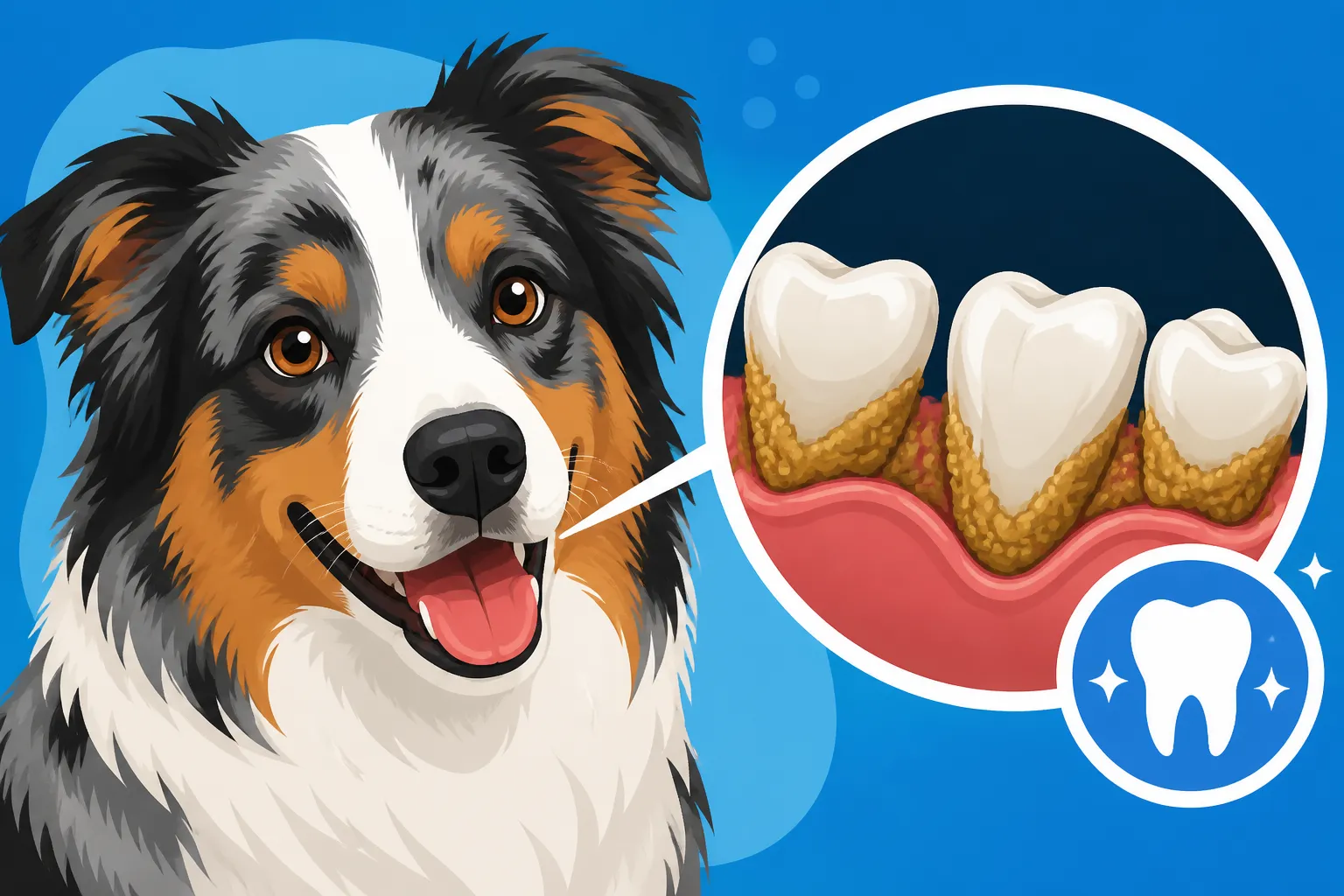
It all begins with plaque. Every time your Australian Shepherd eats, tiny food particles and bacteria mix with saliva to form a sticky film called plaque on their teeth. This plaque is almost invisible and can be easily brushed away – if you’re consistent with dental hygiene. However, if plaque isn't removed regularly, it starts to mineralize. This is where tartar comes in. Tartar, or calculus, is a hardened form of plaque that clings firmly to the tooth surface, particularly around the gum line and on those hardworking molars at the back. It creates a rough surface, making it even easier for more plaque to accumulate and harden, forming a vicious cycle.
Australian Shepherds, with their varied diets and chewing habits, are just as susceptible to this buildup as any other breed. The consistency of their food, their individual saliva chemistry, and even their genetics can influence how quickly plaque turns into tartar. Once tartar has formed, it's far too hard to remove with just a toothbrush. It requires professional scaling by a vet to chip away, much like a dental hygienist does for us. Many of us have experienced looking into our dog's mouth and seeing that yellowish-brown crud on the back teeth, feeling a pang of guilt that we haven't done enough. You're not alone in this; it's a common challenge for many dog owners.
Recognizing the Early Signs of Tartar Buildup
Catching tartar early is key to preventing more serious problems down the line. The most obvious sign, as we mentioned, is bad breath. If your Aussie's breath could knock a buzzard off a outhouse, it's probably time for a closer look. Beyond the pungent odor, you might start to notice a yellow or brownish discoloration on the surface of their teeth, especially those molars that do all the heavy chewing. This discoloration usually starts near the gum line and can spread across the entire tooth.
Another sign to watch for is inflammation of the gums, known as gingivitis. Healthy gums are typically pink and firm. If your Aussie's gums appear red, swollen, or even bleed slightly when they chew on something hard or you try to brush, gingivitis is likely present. They might also show some reluctance to chew on hard toys or seem a bit more hesitant to eat their kibble. Sometimes, you might even notice drooling more than usual, or pawing at their mouth. Don't dismiss these subtle changes; they're your dog's way of telling you something isn't right. It's easy to overlook these things when your Aussie is full of life and energy, but a quick visual check during a cuddle session can save a lot of trouble later.
The Risks of Ignoring Dental Tartar
Ignoring tartar buildup isn't just about bad breath; it's a gateway to significant health complications for your Australian Shepherd. Left untreated, gingivitis can progress to periodontal disease, a more severe infection that affects the bone and supportive tissues around the teeth. This can lead to painful tooth loss, which is heartbreaking to witness in an otherwise healthy, active dog. Imagine trying to herd sheep or chase a disc with missing, painful teeth!
But the dangers extend far beyond the mouth. The bacteria thriving in that tartar and infected gum tissue can enter your Aussie's bloodstream. Once in the bloodstream, these bacteria can travel to vital organs, potentially causing serious issues like heart disease, kidney disease, or liver problems. It's a sobering thought, but that seemingly minor dental plaque can literally become a systemic health threat. I've heard too many stories of active Aussies developing heart murmurs or kidney issues, only for the vet to trace it back to years of neglected dental care. This is why addressing Australian Shepherd Dental Care proactively is so incredibly important for their long-term health and Australian Shepherd Lifespan Across Twelve to Fifteen Years.
Everyday Strategies for Managing Tartar at Home
The good news is that you have a significant role to play in preventing and managing tartar buildup right from your own home. Establishing a consistent dental routine, much like you would for yourself, can make a world of difference. It takes dedication, especially with a busy, intelligent breed like an Australian Shepherd, but the rewards are immeasurable.
Brushing Your Aussie's Teeth Effectively
This is the gold standard for at-home dental care. Just like with humans, regular brushing is the most effective way to remove plaque before it hardens into tartar. Aim for daily brushing, but even a few times a week can provide substantial benefits. You’ll need a canine-specific toothbrush and toothpaste – never use human toothpaste, as it often contains xylitol, which is toxic to dogs. Pet toothbrushes come in various styles, from long-handled brushes to finger brushes, so you can find what works best for you and your Aussie. Many pet parents find it challenging to get a squirming Aussie to cooperate, but consistency and positive reinforcement are key.
Start slowly. Let your Aussie lick the toothpaste off your finger first to get them used to the taste. Then, introduce the brush gently, focusing on the outside surfaces of the teeth, especially those back molars where tartar loves to gather. Lift their lip, hold the brush at a 45-degree angle to the gum line, and use gentle circular motions. Don't worry if you can't reach every single tooth perfectly at first. The goal is to make it a positive experience. Praise them, give them a favorite treat afterward, and keep sessions short and sweet. Over time, as they get more accustomed to it, you'll find it easier. It’s a process, and learning Getting a Toothbrush Into an Aussie Mouth takes patience and treats! You can find a wide range of suitable toothbrushes and dog-specific toothpastes on sites like Chewy or Amazon, making it easy to get started.
Dental Chews and Toys That Actually Help
While brushing is paramount, certain dental chews and toys can complement your routine by providing mechanical abrasion that helps scrape away plaque. However, it's crucial to choose wisely. Not all dental chews are created equal. Look for chews that are specifically designed to reduce plaque and tartar, often featuring unique shapes or textures that help clean teeth as your dog chews. Products with the Veterinary Oral Health Council (VOHC) seal of acceptance are a good indicator that they've been proven effective.
Hard rubber chew toys, like those from KONG, can also help clean teeth and strengthen gums while satisfying your Aussie's natural urge to chew. Avoid excessively hard chews, such as bones or antlers, which can actually fracture teeth – a painful and expensive problem to fix. The key is to supervise your Aussie with any chew or toy, ensuring they're chewing safely and not swallowing large pieces. Always factor in your Aussie's chewing style – some are gentle gnawers, others are power chewers! A good dental chew can be a fantastic way to engage their minds and help their teeth. You can often find VOHC-approved chews and durable toys on Amazon or Chewy, making it convenient to pick the best options for your furry friend.
Incorporating Dental-Friendly Foods into Their Diet
Diet plays a role in dental health, though it's not a substitute for brushing. Some kibbles are specially formulated with a larger kibble size or a unique texture that encourages chewing and provides a scrubbing action on the teeth. These "dental diets" can be a helpful addition, particularly if your Aussie isn't keen on brushing. Discuss these options with your vet to see if a prescription dental diet is appropriate for your dog.
Beyond specialized kibble, ensuring a balanced diet that supports overall health indirectly benefits dental health. A dog in good health is better equipped to fight off infections, including those in the mouth. While fresh food diets like those offered by Ollie are great for many reasons, they don't inherently prevent tartar any more than kibble. The act of chewing and the specific design of the food are what make a difference. Avoiding excessive sugary treats or table scraps, which can contribute to plaque buildup, is always a good idea. Think about how Feeding an Australian Shepherd That Works All Day needs to be balanced for energy but also for health, including their teeth. For more general advice on nutrition, consider exploring articles like Daily Calories for a Thirty-Five to Seventy Pound Aussie or Wet Food Against Dry Food for an Australian Shepherd.
| Dental Care Method | Effectiveness | Ease of Implementation | Cost Implication | Key Considerations |
|---|---|---|---|---|
| Daily Brushing | High | Moderate to Difficult | Low (Toothpaste/Brush) | Requires consistency, positive reinforcement, canine-specific products. |
| Dental Chews | Moderate | Easy | Moderate (Ongoing purchase) | Choose VOHC-approved, supervise, avoid excessively hard items. |
| Dental Diets | Moderate | Easy | Higher (Specialized food) | Consult vet, not a substitute for brushing, larger kibble design. |
| Water Additives | Low to Moderate | Very Easy | Low to Moderate (Ongoing purchase) | Does not remove existing tartar, best as a preventative for plaque. |
| Oral Rinses/Sprays | Low to Moderate | Easy | Low to Moderate (Ongoing purchase) | Best for superficial plaque, does not penetrate hardened tartar. |
When to Seek Professional Dental Care for Your Australian Shepherd
No matter how diligently you brush or how many dental chews you provide, sometimes professional help is necessary. Tartar, once hardened, requires specialized tools and expertise to remove safely and effectively. Knowing when to involve your veterinarian can prevent minor issues from spiraling into significant pain and expense for your beloved Aussie.
The Importance of Regular Veterinary Dental Check-ups
Just like your own annual physical, your Australian Shepherd needs regular veterinary check-ups that include an assessment of their oral health. Your vet can spot early signs of gingivitis or tartar buildup that you might miss, especially on those hard-to-see back molars. These check-ups are crucial for catching issues before they become severe. Often, owners are surprised when their vet points out significant tartar, simply because they weren't sure What an Aussie's Breath Says About Its Teeth or the color of their gums really meant.
During these visits, your vet will perform a visual examination of your Aussie's mouth, noting any redness, swelling, missing teeth, or obvious tartar. They'll also gauge the level of bad breath, which can be a strong indicator of bacterial activity. If they find substantial tartar, they'll likely recommend a professional dental cleaning, which is performed under anesthesia. This recommendation isn't just about clean teeth; it's about preserving your Aussie's comfort and preventing potential systemic diseases. Think of it as an essential part of their The Health Tests Every Australian Shepherd Parent Needs routine.
Understanding Professional Dental Cleanings and Anesthesia
A professional dental cleaning for your Australian Shepherd is much more involved than a simple brushing. Because dogs won't simply hold still and say "ahhh," these procedures are performed under general anesthesia. This allows the veterinary team to thoroughly examine every tooth, including below the gum line where much of the damage occurs, and to remove tartar effectively and safely. Your vet will use ultrasonic scalers, similar to those your own dentist uses, to break up and remove hardened tartar from the tooth surfaces. They'll also polish the teeth to create a smooth surface, which helps delay future plaque accumulation.
The thought of anesthesia can be daunting for any pet owner, and it's completely natural to feel anxious about it. However, modern veterinary anesthesia protocols are very safe, especially for generally healthy dogs like most Aussies. Before the procedure, your vet will typically run pre-anesthetic blood work to ensure your Aussie is a good candidate for anesthesia and to identify any underlying health issues. During the cleaning, your dog's vital signs will be continuously monitored by a dedicated technician. Don't hesitate to ask your vet about their anesthesia protocols, monitoring equipment, and pain management strategies. Understanding the process can ease your mind and help you feel confident that you're making the best decision for your Aussie's health. You may also want to ask for an estimate of the Australian Shepherd Dental Cleaning Cost upfront.
Post-Procedure Care and Long-Term Dental Health
Once your Australian Shepherd has had a professional dental cleaning, the work isn't over. In fact, it's just beginning! Post-procedure care is critical to maintaining that newly cleaned mouth and preventing rapid tartar recurrence. Your vet might prescribe antibiotics if there was a significant infection, or provide pain medication to help your Aussie recover comfortably. They'll also give you specific instructions for feeding and care immediately following the procedure.
More importantly, a professional cleaning is your fresh start for at-home dental care. This is the perfect time to recommit to daily brushing. With a clean slate, your efforts will be far more effective in preventing new plaque and tartar from forming. Your vet may also recommend dental chews, water additives, or a dental diet to support your at-home routine. Remember, professional cleanings are not a one-and-done solution; they are a necessary intervention when at-home care has fallen behind or when tartar has already become established. By combining regular vet check-ups, diligent home care, and professional cleanings as needed, you can ensure your Aussie enjoys a healthy mouth and a long, happy life free from preventable dental pain. For those thinking about future planning, articles like Fifteen Years of Australian Shepherd Costs can help you budget for these necessary health investments.
Disclaimer
This article is for general informational purposes only and does not constitute professional advice. Laws, prices and regulations vary by location and change over time. Consult a qualified professional for guidance on your specific situation.