Why the Australian Shepherd Is Not From Australia
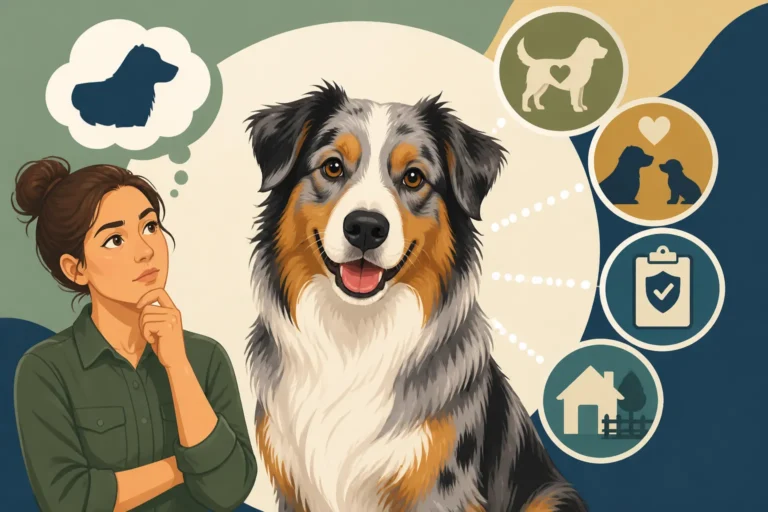
You might be surprised to learn this, but the beloved Australian Shepherd, with its striking eyes and tireless work ethic, isn't actually from Australia at all. This is one of the biggest head-scratchers for anyone new to the breed, creating immediate confusion and countless puzzled looks. This guide will unravel the mystery of the Aussie's name, revealing its true, deeply American roots and the fascinating journey that forged this incredible working dog.
The Great Aussie Misnomer: Unpacking the Name's Paradox
It's truly wild, isn't it? You hear "Australian Shepherd" and your mind immediately conjures images of the rugged outback, kangaroos, and, well, Australia. It's a perfectly logical assumption, and it’s why so many people are genuinely taken aback when they discover the truth. The name itself is perhaps the most enduring misconception about the breed, a linguistic red herring that has misled generations of dog lovers. It’s a classic example of a name sticking, even when it doesn't quite tell the whole story, creating a persistent myth that we're here to gently untangle.
A Name That Travels Well, But Not Accurately
The fact that the name "Australian Shepherd" has such strong geographical connotations is precisely what makes its actual origin so perplexing. For newcomers to the breed, it's often the first piece of information they encounter, and it sets up a certain expectation. When that expectation is challenged, it can feel like a genuine "wait, what?" moment. People often wonder if it's a relatively new breed, perhaps imported from Australia in recent times, but that's not the case either. The name has been around for a long time, cementing itself in canine nomenclature despite its geographical inaccuracy. It speaks to the power of a catchy, albeit misleading, label.
No Ancestors Down Under
Let's be absolutely clear: the development of the Australian Shepherd breed, as we know it today, did not take place on Australian soil. There were no formative breeding programs, no significant population of proto-Aussies, and no breed standard being crafted by shepherds in Australia. While dogs that contributed to the Aussie's lineage certainly passed through Australia, their ultimate transformation into the distinct breed we celebrate happened thousands of miles away. It's crucial to understand that their genetic blueprint was laid down in a very different part of the world, making the "Australian" tag a historical artifact rather than a factual description of origin. For a deeper dive into this geographical riddle, you might find Why No Australian Shepherd Existed Before America to be an enlightening read.
The True Cradle of the Breed: The American West and Basque Sheepherders
The real story of the Australian Shepherd begins not in the land of koalas and boomerangs, but in the rugged, wide-open spaces of the American West. It's a tale deeply intertwined with human migration, the pursuit of opportunity, and the indispensable role of working dogs in a challenging environment. This breed is a testament to the ingenuity and practical needs of shepherds and ranchers who were carving out a life in a new world, a world where a capable dog was often the difference between success and hardship.
From the Pyrenees to the Golden State
The true architects of the Australian Shepherd were the Basque sheepherders. These hardy, resourceful people hailed from the Pyrenees mountains, a range straddling the border of France and Spain. They brought with them their ancient herding dogs, dogs that were perfectly adapted to the demanding work of moving sheep across varied terrain. As economic opportunities shifted, many Basque families emigrated, first to Australia, seeking their fortunes in the booming sheep industry there. Later, a significant number continued their journey across the Pacific, landing on the shores of the United States, particularly during the California Gold Rush of the mid-19th century.
It's believed that the "Australian" part of the name comes from this leg of the journey. When these Basque shepherds arrived in America, often directly from Australia with their flocks and dogs, the American ranchers began to associate these exceptional working dogs with the country they had just left. It wasn't that the dogs were Australian, but rather that they arrived with things from Australia – the sheep, and the shepherds themselves. The label was more descriptive of the recent travel history than the dog's actual breeding grounds. To truly appreciate their journey, you can learn more about The Basque Herders Who Brought Aussie Ancestors. The journey westward continued, with many settling in California, which quickly became a melting pot for both people and working dog breeds.
A Mix of European Working Stock
The dogs that accompanied the Basque shepherds were not a single, formalized breed in the modern sense. They were resilient, intelligent, and instinctively driven herding dogs, likely ancestors of what we now recognize as Pyrenean Shepherds, but also various types of collies. These dogs had been selected for generations based purely on their working ability, not their appearance. Once these European working dogs arrived in the American West, they weren't kept in isolation. Instead, they were cross-bred with other existing working dogs that American ranchers already used, including various local shepherd dogs, Border Collies, and even perhaps some types of farm dogs. This mixing of diverse but highly capable herding stock was crucial. It allowed for the selection of traits that were best suited to the unique demands of American ranching – larger flocks, different terrain, and often more aggressive livestock like cattle. This blend of lineages is a fascinating aspect of their development; you can explore the contributions of Pyrenean Shepherds in the Australian Shepherd Line and Collie Blood in the Australian Shepherd for more details. The goal was always functionality: a dog that could control livestock effectively and tirelessly.
The Gold Rush and Ranching Era: Forging a New Breed
The mid-19th century American West was a land of immense opportunity and equally immense challenges. The Gold Rush drew people from all corners of the globe, and with them came the need for infrastructure, supplies, and, crucially, food. Large-scale ranching operations began to flourish, creating an unprecedented demand for reliable, hardy working dogs. It was in this crucible of necessity and practicality that the Australian Shepherd truly began to take shape, not through fancy pedigrees or show rings, but through the everyday grind of ranch life.
Demand for Hardy Herding Dogs
Imagine the vast, open rangelands stretching across California, Idaho, Colorado, and Wyoming. Ranches were sprawling, covering thousands of acres, and the livestock – sheep, cattle, and even horses – needed constant management. This wasn't a job for just any dog. Ranchers needed intelligent, agile, and robust canines that could work from sunup to sundown, navigate treacherous terrain, and handle everything from skittish sheep to stubborn cows. The focus was entirely on performance. A dog's value was measured by its ability to gather, move, and protect livestock efficiently and consistently. There was no time or inclination for breeding solely for aesthetics; functionality was king. The dogs that truly excelled were the ones that earned their keep, and their genes were the ones passed on. This intense selection pressure for practical working traits is a cornerstone of the Australian Shepherd's foundational development, directly stemming from the needs of The Gold Rush Flocks That Made the Aussie.
California: The Unofficial Birthplace
While various Western states played a role, California emerged as a particularly significant hub for the breed's early development. Its diverse landscape, from fertile valleys to rugged mountains, and its booming agricultural economy, created the perfect environment for a versatile herding dog to thrive. In California, these evolving "Aussie" type dogs were put to work herding massive flocks of sheep, often moving them between summer pastures in the high country and winter ranges in the lowlands. They also assisted with cattle drives, a task requiring immense bravery and strength. Sometimes, they even helped manage poultry on smaller farms.
The selection process was a natural, yet brutal, one. Only the most intelligent dogs, those that could read livestock and respond to their handler's commands (or even anticipate them), survived and reproduced. Only the most agile could navigate the varied terrain without injury. And only the most dedicated possessed the unwavering drive to work tirelessly day after day. This intense, real-world "breeding program" in places like California, Oregon, and Nevada solidified the essential characteristics that define the Australian Shepherd today. Many of the early and influential kennels that laid the groundwork for the modern breed were situated in these Western states, a testament to where these dogs truly proved their worth. For more insight into these specific regions, consider reading Aussies Bred in California, Colorado and Idaho.
Rodeo, Recognition, and Rising Popularity
While the Australian Shepherd's working prowess was well-known among ranchers, it was the glitz and glamour of the American rodeo circuit that launched the breed into the national spotlight. These aren't just work dogs; they're performers, and the rodeo provided the perfect stage to showcase their extraordinary intelligence, agility, and captivating personalities to a wider audience. This exposure was instrumental in their transition from unsung ranch heroes to recognized, beloved family companions and competitive sport dogs.
Jay Sisler and the Rodeo Circuit
No discussion of the Australian Shepherd's rise to fame would be complete without mentioning Jay Sisler. A legendary rodeo performer and trick dog trainer from Idaho, Sisler became synonymous with the breed in the mid-20th century. He traveled the country with his remarkable Australian Shepherds, performing elaborate routines that highlighted their incredible intelligence, obedience, and athleticism. His dogs weren't just cute; they were problem-solvers, capable of complex maneuvers and seemingly impossible tricks that captivated audiences far and wide.
Sisler's dogs appeared in Disney films and performed at countless rodeos, effectively putting the Australian Shepherd on the map for the general public. People were amazed by these beautiful, talented dogs and their seemingly boundless energy and eagerness to please. It was this widespread exposure, born from Sisler's captivating performances, that truly introduced the Australian Shepherd to homes beyond the ranch. His dogs proved that the Aussie was not just a utilitarian workhorse but a brilliant, biddable companion capable of extraordinary feats. The impact of these performances on the breed's visibility cannot be overstated, as detailed further in Australian Shepherds in Rodeo Arenas and How Rodeo Fame Spread the Aussie Nationwide.
Formalizing the Breed: ASCA and AKC
As the Australian Shepherd's popularity grew, so did the desire to preserve its unique characteristics and working heritage. This led to the formation of the Australian Shepherd Club of America (ASCA) in 1957. ASCA was established by dedicated fanciers and ranchers who wanted to maintain the breed's working abilities and create a formal standard for its characteristics. For decades, ASCA was the primary registry for Australian Shepherds, emphasizing performance and health.
Later, in 1993, the American Kennel Club (AKC) officially recognized the Australian Shepherd and placed it in the Herding Group. This brought a new level of mainstream recognition and popularity, opening up AKC conformation shows and performance events to the breed. However, this recognition also sparked a debate within the breed community. Many traditional working line enthusiasts feared that AKC recognition might lead to a shift in breeding priorities, moving away from working ability towards show ring aesthetics. Despite these concerns, AKC recognition undeniably brought the Australian Shepherd to an even broader audience. To understand the timeline and significance of these events, you can delve into The Two Dates That Brought the Aussie Into the AKC and explore the details of The ASCA Australian Shepherd Standard. Today, both organizations play a role in the breed's lineage, with breeders often choosing to participate in one or both, depending on their priorities.
Characteristics Shaped by Purpose: What Defines an Aussie
The Australian Shepherd’s distinctive personality and physical traits are not random; they are the direct result of generations of selective breeding for a specific purpose: herding livestock in challenging environments. Every aspect of an Aussie, from its intense gaze to its agile gait, tells a story of its working heritage. Understanding these core characteristics is key to appreciating why they are the way they are and what makes them such compelling, albeit demanding, companions.
Drive, Intelligence, and Athleticism
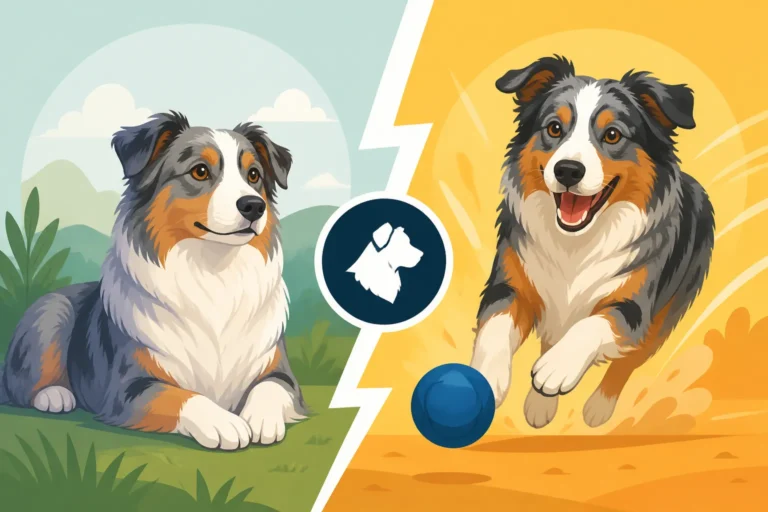
At the heart of every Australian Shepherd is an incredible combination of drive, intelligence, and athleticism. This isn't just a high-energy dog; it's a dog with an inherent, almost unstoppable urge to herd. They are wired to assess, gather, and control movement, often displaying a strong "eye" on anything that moves, whether it's sheep, squirrels, or even small children. This intense focus, combined with their sharp minds, makes them incredibly quick learners. They pick up commands with astonishing speed, but this intelligence also means they need constant mental engagement. A bored Aussie is a destructive Aussie, channeling its intellect into less desirable activities.
Physically, they are built for endurance and agility. Their medium size, muscular build, and nimble footwork allow them to navigate varied terrain, leap over obstacles, and change direction at a moment's notice – all crucial skills for managing livestock. This athleticism demands a significant outlet, far beyond a simple walk around the block. Without a job, or at least a simulated job through sports and training, an Aussie can become frustrated and difficult to manage. This intrinsic trait is so powerful that it's often said The Australian Shepherd Herding Drive You Cannot Train Out, a testament to its deeply embedded nature.
Distinctive Looks: Coat, Color, and Eyes
Beyond their remarkable working abilities, Australian Shepherds are renowned for their striking appearance. Their medium-length double coat is designed for protection against the elements, providing insulation in both cold and heat. It’s also often a canvas of breathtaking colors and patterns. The merle pattern, in particular, is iconic for the breed, creating marbled patches of blue (blue merle) or liver (red merle) against a lighter background, often accented with copper and white trim. Black tri and red tri are also common, showcasing solid base colors with white and copper points. You can read more about Merle, Tri and Every Australian Shepherd Color.
Perhaps one of the most mesmerizing features of the Australian Shepherd is its eyes. They can come in a variety of colors – deep brown, sparkling amber, piercing blue, or any combination thereof, often with flecks or marbling, a condition known as heterochromia. It's not uncommon to see an Aussie with one blue eye and one brown, or even two different colors within the same eye. These unique eye colors, especially the blues, often add to their mystique and intense gaze. While visually stunning, it's important to remember that these variations are part of the breed's diverse genetics. To learn more about these captivating features, check out Australian Shepherd Eye Colors and Split Eyes. When considering the needs of such a magnificent coat, remember that a proper grooming routine is essential. High-quality brushes and deshedding tools can be found at retailers like Chewy, helping you manage their seasonal coat blow and keep them looking their best.
Living with an American Original: What Prospective Owners Should Know
Bringing an Australian Shepherd into your home is like inviting a force of nature indoors. They are intelligent, loyal, and incredibly engaging, but they are also demanding. Their rich history as working dogs means they come pre-programmed with instincts and needs that are far beyond those of a typical companion animal. Understanding these needs before you commit is absolutely vital for a happy life together, both for you and for your future Aussie.
Beyond the Ranch: Meeting Modern Needs
The biggest challenge for most Australian Shepherd owners in today's world is channeling that inherent working drive in an environment that likely doesn't involve moving hundreds of sheep. These dogs need a job. If you don't give them a productive outlet for their intelligence and energy, they will find their own, and it often won't be something you appreciate, like herding your kids, barking incessantly at every passing leaf, or redesigning your furniture.
This means committing to extensive physical exercise, often one to two hours a day, which needs to be more than just a leash walk. Think vigorous games of fetch, hiking, running, or dog park visits. But crucially, they also need intense mental stimulation. Puzzle toys, trick training, obedience classes, and dog sports like agility, flyball, or disc dog are perfect for engaging their brilliant minds. Without both physical and mental outlets, an Aussie can become restless, anxious, and even destructive. This dedication to engagement is a significant commitment, and it directly impacts The Cost of Keeping a High-Energy Australian Shepherd Busy. Remember to look for durable, interactive toys that can stand up to an Aussie's enthusiasm and smarts, which are readily available from places like Chewy.
The Importance of Responsible Breeding and Health Testing
Given the Australian Shepherd's history and genetic makeup, choosing a responsible breeder is paramount. A good breeder prioritizes the health and temperament of their dogs above all else. This means performing comprehensive health clearances on both parent dogs to screen for genetic conditions common in the breed. Conditions like hip and elbow dysplasia, various eye diseases (such as Progressive Retinal Atrophy and Collie Eye Anomaly), and the MDR1 mutation (which can cause adverse drug reactions) are all concerns in Aussies.
A reputable breeder will be transparent about these tests, provide documentation, and be willing to discuss the health history of their lines. They will also breed for stable temperaments, ensuring their puppies are well-socialized and have the best start in life. Asking for proof of these tests, understanding the implications of conditions like Australian Shepherd Hip Dysplasia and Working Joints, and familiarizing yourself with The Genetic Panel Every Australian Shepherd Needs are essential steps. Investing in a healthy puppy from the outset can save immense heartache and vet bills down the line. To support your Aussie's health throughout its life, consider high-quality dog food, joint supplements, and preventative care items – many of which you can conveniently find at Chewy.
Disclaimer
This article is for general informational purposes only and does not constitute professional advice. Laws, prices and regulations vary by location and change over time. Consult a qualified professional for guidance on your specific situation.