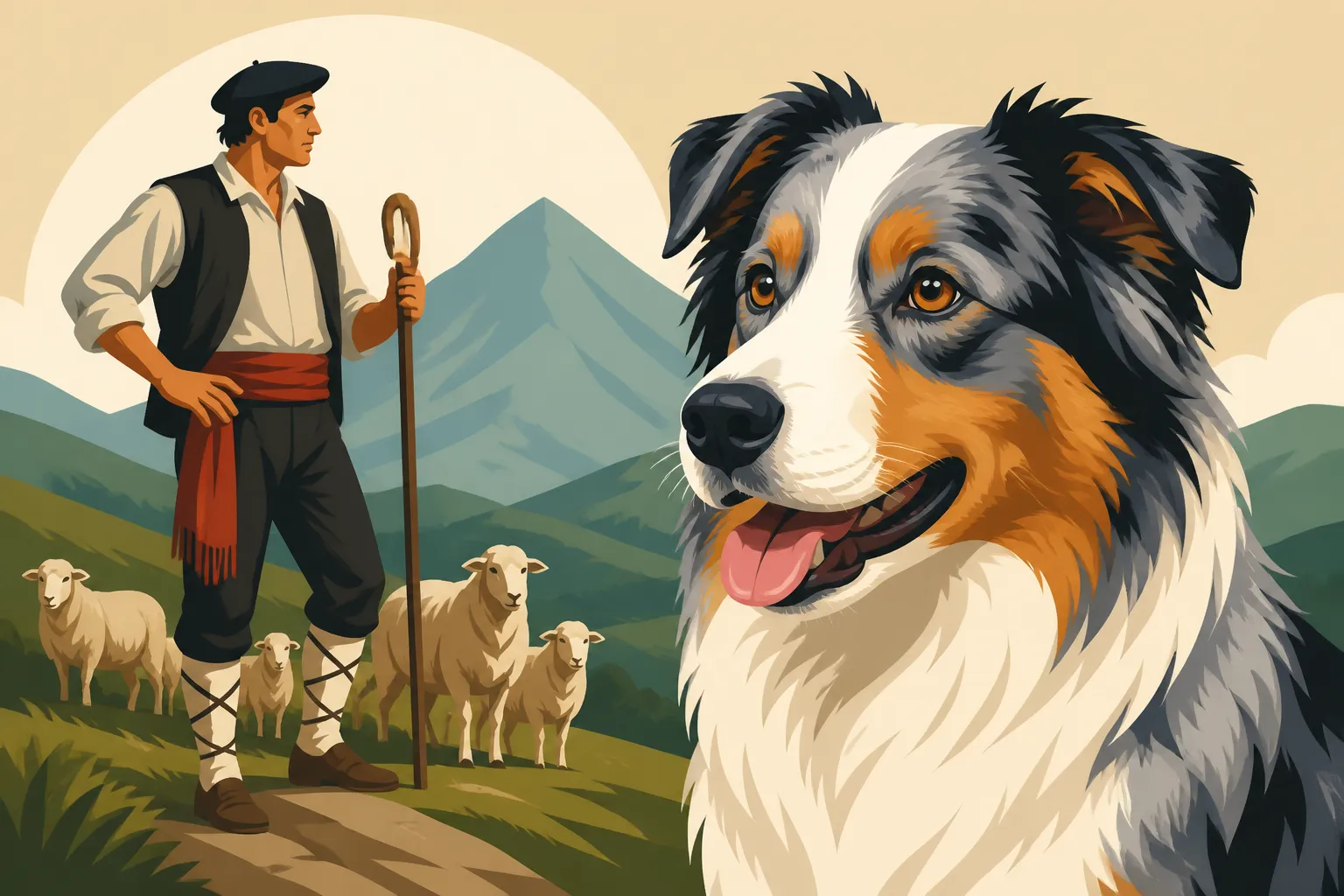
The Basque Herders Who Brought Aussie Ancestors
It's easy to look at an Australian Shepherd, with their piercing gaze and seemingly boundless energy, and wonder about their origins. Many people assume, quite understandably given the name, that these incredible dogs hail from the land Down Under. However, that couldn't be further from the truth. This guide will take you on a journey back in time, unraveling the true ancestry of the Australian Shepherd and highlighting the crucial, often unsung, role of the hardy Basque herders who truly brought these dogs to life in the American West.
The Misleading Name and True Origins of the Australian Shepherd
The name "Australian Shepherd" is, without a doubt, one of the biggest mysteries and sources of confusion surrounding this beloved breed. It's a question that perplexes many new owners and even seasoned enthusiasts, leading to a common assumption that they were developed in Australia. Let's dig into why that isn't the case and where their roots truly lie.
Unraveling the 'Australian' Myth
The most frequent frustration I hear from new Aussie parents is the disconnect between the breed's name and its actual birthplace. "But I thought they were Australian!" is a phrase uttered countless times. It's a perfectly logical conclusion, but history tells a different story. The Australian Shepherd, despite its name, is unequivocally an American breed, developed right here in the western United States. The "Australian" part of their name likely comes from the fact that some of the sheep they herded, particularly during the Gold Rush era, were imported from Australia, and those sheep often arrived with their own dogs. These "imported" dogs, which themselves had European heritage, mingled with other herding types already present in the burgeoning American West, eventually contributing to the gene pool of what would become our modern Australian Shepherd. It's a bit like calling a French fry "Freedom Fries" – the name doesn't reflect the true origin.
This historical misunderstanding often adds a layer of intrigue when people first research the breed, but understanding the true origin helps paint a clearer picture of their hardiness and adaptability. When you delve into Why the Australian Shepherd Is Not From Australia, you'll find even more fascinating details about this naming quirk.
The Journey of European Sheep and Shepherds
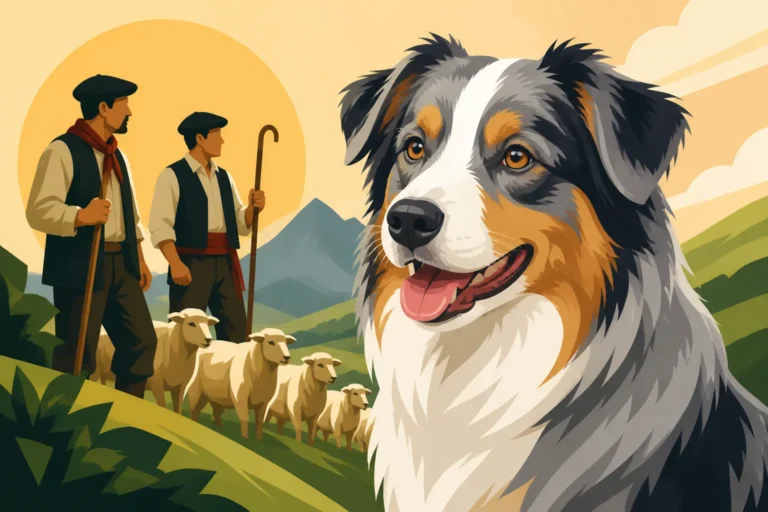
To truly understand the Australian Shepherd's ancestry, we need to look far beyond Australia, back to Europe, specifically the Pyrenees Mountains region between France and Spain. For centuries, people from this area, known as Basques, were renowned sheep herders. As opportunity beckoned in the New World, particularly during the mid-19th century and extending into the early 20th century, many Basque shepherds emigrated. They sought new lives and vast pastures in the American West, drawn by the promise of abundant land for their flocks.
These intrepid shepherds didn't come alone; they brought their most valuable companions and tools of their trade: their working dogs. These dogs were not a single, standardized breed as we understand it today, but rather a collection of resilient, intelligent, and highly capable herding dogs, bred for function over form. They were the very best at what they did – managing large flocks of sheep across rugged terrain. Imagine the enormous challenge of moving thousands of sheep across continents and then vast, untamed American landscapes; these dogs were indispensable. Without their keen instincts and tireless work ethic, the Basque herders simply couldn't have managed their livelihoods. This arduous journey forged an unbreakable bond between man, dog, and sheep, laying the groundwork for the Australian Shepherd's future development.
The Enduring Legacy of Basque Sheepherders in the American West
The landscape of the American West was a blank canvas for these European immigrants, but it also presented immense challenges. The success of the Basque shepherds, and by extension, the foundation of the Australian Shepherd, rested heavily on the abilities of their canine partners.
Pioneering the Western Rangelands with Their Dogs
When the Basque shepherds arrived in places like California, Nevada, Oregon, and Idaho, they found expansive, often untamed rangelands. These were dramatically different from the familiar, smaller pastures of the Pyrenees. Managing thousands of sheep across hundreds of miles of open country, often with minimal fencing and facing predators like coyotes and bears, required dogs of exceptional skill and endurance. The dogs brought by the Basques were perfectly suited for this demanding work. They were agile, intelligent, and possessed an innate ability to gather, drive, and protect sheep. These dogs learned to work in close cooperation with their human handlers, responding to subtle signals and understanding the nuances of flock behavior.
The Basque shepherds didn't just bring their dogs; they brought a centuries-old tradition of sheepherding, a deep understanding of animal husbandry, and an unshakeable work ethic. This cultural exchange, combined with the rugged demands of the American frontier, created a unique crucible for dog development. The dogs that thrived were the ones that could think independently, solve problems on the fly, and work tirelessly from dawn till dusk. They weren't just pets; they were integral members of the team, often considered as valuable as any human worker. You can read more about Where Aussie Ancestors Worked in California to get a clearer picture of their operational areas.
The Characteristics Prized by Basque Shepherds
The Basque shepherds weren't concerned with pedigree papers or show ring conformation. Their selection criteria were purely practical: a dog had to be a phenomenal worker. This meant they prioritized specific traits that would ensure the survival of their flocks and their own livelihoods.
Here’s what made a dog invaluable to a Basque shepherd:
- Intelligence and Trainability: The dogs needed to quickly understand complex commands and adapt to new situations. They often worked far from the shepherd, requiring independent decision-making.
- Stamina and Endurance: Herding sheep across vast distances, often at high altitudes and in extreme weather conditions, demanded incredible physical fortitude. These dogs were built for long days of continuous work.
- Keen Herding Instinct: This was non-negotiable. They needed dogs that instinctively knew how to move sheep, how to 'read' the flock, and how to control them without causing panic or harm.
- Resilience and Hardiness: The dogs had to withstand harsh weather, rough terrain, and occasional encounters with predators. They couldn't afford to be delicate or prone to illness.
- Loyalty and Protectiveness: While primarily herders, these dogs also needed to be fiercely loyal to their shepherd and protective of their flock, acting as guardians when necessary.
These are the very characteristics that became the bedrock of the Australian Shepherd temperament we know today. The dogs that flourished and passed on their genes were those that excelled in these areas, ensuring that the working drive remained deeply embedded within the lineage. Understanding these roots helps us appreciate What Ranchers Wanted From an Australian Shepherd back then and still value today.
What We Know About the Ancestral Dogs
Because the early development of the Australian Shepherd was entirely functional, focusing on ability rather than lineage or formal breeding programs, pinpointing exact ancestral breeds can be tricky. However, historical accounts and breed characteristics offer strong clues.
A Blend of European Herding Stock
It's crucial to understand that there wasn't a single "Basque Herding Dog" breed that arrived fully formed. Instead, these shepherds brought with them various types of working dogs native to their regions, particularly the Pyrenees. One prominent candidate often discussed is the Pyrenean Shepherd. These agile, intelligent dogs were known for their tireless work ethic and their ability to handle large flocks in mountainous terrain. The physical characteristics, intelligence, and intense working drive of the Pyrenean Shepherd bear a striking resemblance to many traits seen in early Australian Shepherds.
Beyond the Pyrenean dogs, it's also highly probable that various types of British collies were introduced into the gene pool. As sheep were imported from Australia (which itself had strong ties to British sheep farming), they often came with their own working dogs, many of which would have been types of Border Collies or other British herding dogs. These dogs would have intermingled with the Basque dogs and other local working canines in the American West, creating a diverse and robust gene pool. The beauty of this "melting pot" approach was that only the most capable dogs survived and reproduced, ensuring that the resulting offspring were supremely adapted to the demanding life of a Western sheepdog. This fascinating blend is a testament to the pragmatism of the shepherds. For more on this, check out The Pyrenean Shepherd and the Aussie and Working Collies in the Aussie Family Tree.
The Selection Process on the Range
Unlike modern dog breeding, which often focuses on specific appearance standards or kennel club recognition, the selection process for these ancestral dogs was brutally efficient and entirely natural. It was survival of the fittest, literally. A dog that couldn't perform its duties – whether it was moving a stubborn sheep, fending off a coyote, or enduring a blizzard – simply wouldn't be kept, much less bred.
This informal but rigorous selection favored:
- Working Aptitude: The primary driver. A dog's ability to herd, protect, and respond to the shepherd was paramount.
- Health and Vigor: Only healthy, robust dogs could withstand the harsh conditions and continuous work. Weak or sickly dogs would not thrive.
- Intelligence and Instinct: Dogs that could anticipate movements, think for themselves, and exhibit strong problem-solving skills were highly valued.
- Sound Temperament: While they needed to be tough with sheep, they also needed to be manageable and cooperative with humans. An overly aggressive or timid dog would be detrimental to the flock and the shepherd.
This table illustrates the core priorities that guided the natural selection of Australian Shepherd ancestors:
| Trait Category | Ancestral Dog Priority (Basque Herder) | Modern Australian Shepherd Priority (Responsible Breeder) |
|---|---|---|
| Purpose | Functional herding of livestock | Herding, companion, sport, service |
| Appearance | Secondary; functional structure | Breed standard, conformation, overall balance |
| Temperament | Working drive, loyalty, resilience | Intelligence, eagerness, adaptability, stable home life |
| Health | Natural hardiness, survival of fittest | Genetic testing, longevity, preventative care |
| Trainability | Instinctive understanding of tasks | High intelligence, desire to please, quick learner |
This emphasis on working ability over aesthetics ensured that the Australian Shepherd developed with an incredibly strong genetic foundation for what it was meant to do. This practical approach, driven by necessity, laid the groundwork for the intelligent, athletic, and biddable dogs we know today.
Connecting the Past to Today's Australian Shepherd
The echoes of those tough, intelligent Basque herding dogs are still profoundly evident in the Australian Shepherds of today. Their history isn't just a fun fact; it's an explanation for many of their core characteristics and needs.
How the Working Instinct Endures
If you've ever owned an Australian Shepherd, you know that their "off switch" can be elusive. That intense drive, that keen observation, that desire to gather and move things – it's all a direct inheritance from their Basque ancestors. This isn't just a cute quirk; it's their operating system. When an Aussie circles your children in the yard, nudges your ankles, or tries to "herd" the vacuum cleaner, it's simply acting on thousands of generations of instinct. This strong herding drive is something you absolutely cannot train out of them; instead, it needs to be understood and appropriately channeled.
This is why traditional walks often aren't enough for an Australian Shepherd. They need a job. They thrive on mental stimulation as much as, if not more than, physical exercise. This might mean participating in dog sports like agility, obedience, or, naturally, actual herding. Even for pet Aussies, puzzle toys, training sessions, and interactive games can help satisfy this deep-seated need to work and solve problems. Providing outlets for this instinct, perhaps with durable enrichment toys from a place like Chewy, is crucial for a well-adjusted Aussie. Otherwise, they might invent their own "jobs," which often manifest as behaviors we label as problematic, such as excessive barking, destructive chewing, or obsessive circling. If you're grappling with this, you'll find The Australian Shepherd Herding Drive You Cannot Train Out to be an incredibly insightful read.
The "Aussie" We Know Today Takes Shape
While the foundation was laid by the Basque herders, the Australian Shepherd as a recognized breed truly began to take shape in the mid-20th century in the United States. Figures like Jay Sisler, a famous rodeo performer and trick dog trainer, played a significant role in popularizing the breed and showcasing their incredible intelligence and versatility to a wider audience. Ranchers and farmers continued to breed for working ability, but as their popularity grew, more formalized breeding practices began to emerge.
Today, while some Australian Shepherds still work livestock on ranches, many are cherished family companions, excelling in dog sports, therapy work, and search and rescue. The breed standard, as recognized by organizations like the Australian Shepherd Club of America (ASCA) and the American Kennel Club (AKC), outlines desired physical traits and temperament, aiming to preserve the core characteristics that make the Aussie so special. Responsible breeders today prioritize health, temperament, and maintaining that inherent working intelligence. They conduct genetic tests for conditions like The MDR1 Mutation Half of Australian Shepherds Carry and Collie Eye Anomaly in an Australian Shepherd to ensure the healthiest possible offspring. It's a testament to the resilience and intelligence bred into them by those pioneering Basque shepherds that the Australian Shepherd continues to thrive and adapt in so many roles today.
Disclaimer
This article is for general informational purposes only and does not constitute professional advice. Laws, prices and regulations vary by location and change over time. Consult a qualified professional for guidance on your specific situation.