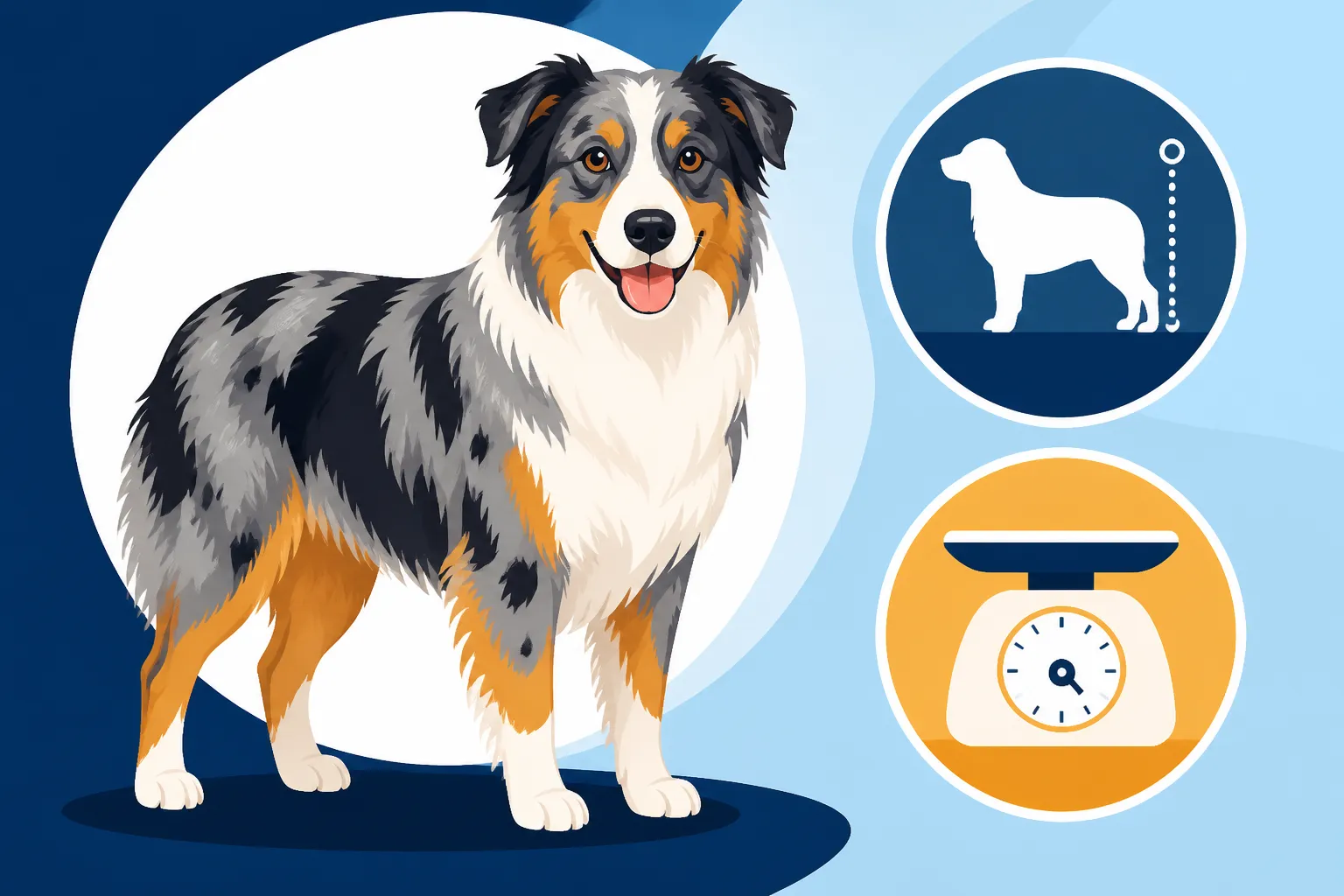
Australian Shepherd Height and Weight
One of the most common questions new Australian Shepherd owners, or even those just admiring the breed, often ask is about their size. It’s not just about how tall they stand or how much they weigh; it's about understanding what a healthy, well-developed Aussie looks like and how various factors influence their growth. This guide will take a deep dive into the typical height and weight ranges for Australian Shepherds, what influences these figures, and how to ensure your furry companion grows up strong and healthy.
Australian Shepherd Standard Size Guidelines
When you look at an Australian Shepherd, you often see a medium-sized dog with a sturdy, athletic build. This isn't just arbitrary; there's a recognized breed standard that outlines the ideal dimensions, ensuring the dogs are fit for the work they were historically bred to do. While individual Aussies can certainly fall outside these ranges, the standard provides a blueprint for what a well-conformed dog should be. It's not about being the biggest or the smallest, but about having the right proportions and musculature to be agile and enduring.
How Tall a Male Australian Shepherd Stands
For male Australian Shepherds, the breed standard generally calls for a height ranging from 20 to 23 inches at the shoulder, also known as the withers. This measurement is taken from the ground up to the highest point of the shoulder blades. It's a precise measurement that speaks to the dog's overall frame and how it's built for functionality. A male Aussie within this range typically possesses the necessary leg length and body mass to cover ground efficiently, whether working livestock or excelling in dog sports. How Tall a Male Australian Shepherd Stands delves deeper into the specifics of this height and what it means for working ability.
While a few inches might not seem like much, it can make a difference in how a dog moves and performs tasks. A male Aussie at the upper end of this range might have a longer stride, potentially covering more ground with each bound, which could be advantageous in a vast pasture. Conversely, a dog closer to the 20-inch mark might exhibit slightly more compact agility, turning tighter and quicker in close-quarters herding. It's a balance, and good breeders strive for consistency within these parameters to maintain the breed's athletic integrity.
The Height Range for a Female Aussie
Female Australian Shepherds, as is common in many dog breeds, are typically a bit smaller than their male counterparts. The breed standard for females usually sets their height between 18 and 21 inches at the withers. This slightly more diminutive stature doesn't mean they're less capable; rather, it's a natural distinction that aligns with their biological roles and often allows for greater nimbleness. The Height Range for a Female Aussie explores this in more detail.
Like the males, female Aussies are judged on their overall balance and proportion. A female on the shorter side of the spectrum is still a powerful and agile dog, often prized for her quickness and ability to duck and weave around livestock with precision. Those on the taller end maintain the breed's signature athleticism, capable of extended periods of activity. The key for both sexes is that their height complements their overall build, creating a harmonious and functional physique.
What an Australian Shepherd Should Weigh
Weight, for Australian Shepherds, isn't given as a strict number range in the same way height is. Instead, it's usually described in terms of what is proportionate to their height and bone structure, reflecting a lean and muscular condition. Generally, a healthy adult male Aussie might weigh anywhere from 50 to 65 pounds, while females typically range from 40 to 55 pounds. However, these are estimates, and the actual "correct" weight is more about body condition than a number on the scale. What an Australian Shepherd Should Weigh provides further insight into this nuanced aspect.
An Australian Shepherd should appear robust without being heavy, and sleek without being skinny. You should be able to easily feel their ribs when running your hands along their sides, but not see them prominently. Their waist should be evident when viewed from above, and there should be a distinct tuck-up of the abdomen when seen from the side. This lean, athletic build is crucial for a dog that requires high levels of physical activity. Excess weight puts undue strain on joints and organs, while being too thin can indicate underlying health issues or insufficient nutrition for their energy demands.
Here's a quick reference table for the standard ranges:
| Trait | Male Australian Shepherd | Female Australian Shepherd |
|---|---|---|
| Height (at withers) | 20-23 inches (51-58 cm) | 18-21 inches (46-53 cm) |
| Weight | 50-65 pounds (23-29.5 kg) | 40-55 pounds (18-25 kg) |
| Build | Lean, muscular, athletic | Lean, muscular, athletic |
Factors Influencing an Aussie's Growth and Final Size
While the breed standard provides a general framework, the actual size and development of an individual Australian Shepherd are influenced by a complex interplay of various factors. It's not just about what genes they inherit; how they are raised, fed, and exercised during their critical growth phases all play a significant role. Understanding these influences can help owners make informed decisions that support their Aussie's optimal development.
Genetics from Both Parents
The most foundational determinant of an Australian Shepherd's eventual size is its genetic blueprint, inherited directly from its parents. Just like in humans, taller parents tend to produce taller offspring, and dogs from lines known for larger or smaller individuals will likely follow suit. A responsible breeder will be able to provide information on the size of the puppy's parents, grandparents, and other relatives, offering a good indication of the potential adult size. This genetic heritage also dictates bone structure, muscle mass potential, and overall conformation. The Health Tests Every Australian Shepherd Parent Needs is a valuable read to understand what breeders should be testing for beyond just size.
It’s not just about simple inheritance; sometimes, a dog might take after a grandparent more than a parent, or there could be a wider range of sizes within a single litter. This genetic variability means that while predictions can be made, there are always natural variations. Owners who get their Aussies from reputable breeders often have a better idea of what to expect, as these breeders carefully select their breeding pairs to maintain desired traits, including size and structure that align with The Australian Shepherd Standard and What Judges Want.
Nutrition and Diet Quality
Beyond genetics, the quality and quantity of an Australian Shepherd's diet, especially during puppyhood, are paramount to healthy growth. A puppy needs a carefully balanced diet rich in appropriate protein, fats, vitamins, and minerals to build strong bones, develop robust muscles, and support overall organ function. Feeding a low-quality kibble with fillers or an imbalanced homemade diet can lead to deficiencies or excesses that hinder proper growth, potentially resulting in skeletal problems or stunted development. This is particularly true for breeds like Aussies, who have specific energy demands.
Many reputable dog food brands, easily found on platforms like Chewy, offer formulas specifically designed for large or medium-breed puppies, which often have a slightly different calcium-to-phosphorus ratio and calorie density to prevent too-rapid growth. Rapid growth, while seemingly desirable, can put stress on developing joints and bones, increasing the risk of conditions like hip or elbow dysplasia. Therefore, consistent, measured feeding of a high-quality diet is far more beneficial than trying to "power feed" a puppy to maximize size. Feeding an Australian Shepherd Puppy Correctly offers more guidance on this crucial topic.
Spay/Neuter Timing and Growth Plates
The timing of spaying or neutering an Australian Shepherd can also have an impact on their eventual height. Sex hormones play a crucial role in the closure of growth plates, which are areas of cartilage at the ends of long bones responsible for bone growth. When a dog is spayed or neutered before these growth plates have naturally closed, the absence of these hormones can delay their closure, leading to longer limb bones. This can result in a dog that is slightly taller than it would have been if left intact longer. Australian Shepherd Growth Plates and When They Close explains this biological process in depth.
While a slightly taller dog might not seem like a significant issue, these hormonal influences can also affect bone density and joint development, potentially altering the dog's overall proportions and gait. Many veterinarians and breed specialists now recommend waiting until an Australian Shepherd is closer to full maturity—typically between 12 to 18 months, or even later for some males—before spaying or neutering. This allows their musculoskeletal system to develop fully, potentially reducing the risk of certain orthopedic issues down the line. It's a discussion worth having with your vet, weighing the behavioral and health benefits of early vs. later sterilization for your individual dog.
Understanding Weight vs. Body Condition in Australian Shepherds
It's tempting to focus solely on the number on the scale when assessing your Australian Shepherd's health. However, a dog's weight can be misleading on its own. What truly matters is their body condition—how much fat they carry relative to their muscle mass and bone structure. An Aussie is an athletic breed, and maintaining a lean, fit body condition is paramount for their long-term health and ability to perform.
Scoring an Aussie Body Condition by Hand
Since weight can be deceptive, especially with an Aussie's thick double coat, learning to assess body condition by hand is an invaluable skill for any owner. This involves a simple physical examination that you can do regularly. Start by feeling along your dog's ribs: you should be able to easily feel them, like running your hand over knuckles, without them protruding sharply. Then, move to their waist: when viewed from above, there should be a noticeable tuck behind their ribs, like an hourglass figure, and from the side, their belly should tuck up, not hang down. Scoring an Aussie Body Condition by Hand goes into much more detail on this technique.
A dog that is too thin will have ribs, hip bones, and vertebrae that are very prominent and easily visible, with little to no fat covering them. An overweight dog, on the other hand, will have ribs that are difficult to feel due to a layer of fat, a nonexistent waist, and possibly fat deposits over their tail base. Regular body condition scoring helps you catch weight changes early, allowing you to adjust their diet or exercise routine before it becomes a significant problem.
Why a Thick Coat Hides Aussie Weight Gain
One of the biggest challenges in assessing an Australian Shepherd's weight is their magnificent double coat. This dense coat, comprising a soft, insulating undercoat and a coarser, weather-resistant outer coat, is designed to protect them from the elements. However, it also acts as a clever camouflage for weight fluctuations. What might appear as a healthy, robust dog can actually be masking an extra five or ten pounds of fat underneath all that fluff. Why a Thick Coat Hides Aussie Weight Gain highlights this common issue.
Owners can easily be fooled by their dog's full coat, thinking their Aussie is a healthy weight when they've actually started to put on a bit too much. This is why the hands-on body condition assessment is so vital. You can't rely solely on visual cues or the number on the scale from month to month. Feeling for ribs and checking the waistline regularly, especially during and after Twice-Yearly Coat Blow in an Australian Shepherd when their coat might be thinner, will give you a much more accurate picture of their physical state than simply looking at them.
The Dangers of Being Overweight or Underweight
Maintaining an ideal body condition is crucial for an Australian Shepherd's health. Being consistently overweight puts significant strain on their joints, especially the hips and elbows, which are already prone to conditions like Australian Shepherd Hip Dysplasia and Working Joints and elbow dysplasia. Excess weight can also contribute to heart disease, diabetes, respiratory issues, and a reduced lifespan. It can make them less agile, reduce their stamina, and even impact their enthusiasm for play and work.
Conversely, being underweight can also signal trouble. It might indicate an underlying health issue that prevents proper nutrient absorption, such as parasites, digestive problems, or more serious illnesses. It can also mean the dog isn't getting enough calories to support their high energy levels, leading to muscle wasting, weakened immunity, and a general lack of vitality. For an active breed like the Aussie, insufficient nutrition can dramatically hinder their ability to perform and enjoy life. Owners should always consult with their vet if they notice significant or unexplained weight loss or gain in their Australian Shepherd.
The Importance of Healthy Growth in Aussie Puppies
The puppy stage is a critical period for an Australian Shepherd's development. How they grow during their first year or so lays the foundation for their adult health, athleticism, and overall well-being. Ensuring healthy, steady growth – not too fast, not too slow – is one of the most important responsibilities of a new Aussie owner.
An Australian Shepherd Puppy Growth Chart
Watching an Australian Shepherd puppy grow is a joy, but it's important to remember that steady, not rapid, growth is the goal. While there isn't one universal growth chart that fits every single Aussie perfectly, general guidelines can help owners monitor their puppy's development. Typically, Australian Shepherd puppies will experience their most significant growth spurts between 3 and 6 months of age, then gradually slow down. They usually reach most of their adult height by 10-12 months and continue to fill out in muscle and chest width until 18-24 months. An Australian Shepherd Puppy Growth Chart can offer visual aids and more specific monthly breakdowns.
For example, a male Aussie puppy might weigh around 25-30 pounds at 4 months old, then jump to 40-45 pounds by 6 months. A female might be a few pounds lighter at each stage. Monitoring weight gain in conjunction with body condition is key. If a puppy is gaining too much weight too quickly, it could put stress on their developing joints. Keeping a weekly record of your puppy's weight can be helpful, and a good vet visit schedule will ensure their growth is on track.
Exercise Limits for an Australian Shepherd Under a Year
While Australian Shepherds are renowned for their high energy and need for activity, it's crucial to understand that their bodies are still developing during their first year, and even beyond. Over-exercising a growing puppy can cause irreversible damage to their still-forming growth plates and joints. High-impact activities like repetitive jumping, long-distance running on hard surfaces, or intense agility training should be avoided until their growth plates have closed, typically around 12 to 18 months of age. Exercise Limits for an Australian Shepherd Under a Year goes into great detail about protecting your growing pup.
Instead, focus on appropriate, lower-impact exercise. Multiple short walks throughout the day, gentle play sessions, and mental enrichment games are far more beneficial. Think about letting them explore a fenced yard, playing fetch on soft grass for short bursts, or engaging in supervised play with other well-socialized dogs. The goal is to build muscle and stamina gradually without stressing fragile joints. Platforms like Chewy offer a fantastic array of puzzle toys and interactive feeders that provide mental stimulation, which is just as important as physical exercise for a smart breed like the Aussie.
Feeding an Aussie Puppy to Fifty Pounds
Feeding an Australian Shepherd puppy appropriately is a delicate balance. You want to provide enough nutrition to support their growth, but not so much that they grow too quickly or become overweight. For an Aussie puppy destined to be a 50-pound adult, their diet needs to be calorie-dense and nutrient-rich, but portion-controlled. Using a high-quality puppy food designed for medium-to-large breeds is often recommended. Feeding an Aussie Puppy to Fifty Pounds guides you through this dietary journey.
Always follow the feeding guidelines on the food packaging, but remember these are just starting points. Adjust the quantity based on your puppy's individual growth rate, activity level, and body condition. If your puppy is looking a bit too thin, increase their portions slightly; if they're starting to look round, scale back. Splitting their daily food allowance into three or four meals until about six months of age, then reducing to two meals, can help with digestion and maintain more stable energy levels throughout the day. Consistency and careful monitoring are your best friends here.
Comparing Working Line and Show Line Aussie Sizes
It's common to hear about "working lines" and "show lines" within the Australian Shepherd breed, and while both adhere to the general breed standard, there can be subtle differences in their appearance, including size and build. These differences often stem from the distinct priorities in their breeding. Working lines are bred primarily for their herding ability, athleticism, and endurance, while show lines emphasize conformation to the breed standard for the show ring, as well as temperament suitable for a companion dog.
How Working Line Aussies Differ in Drive
Working line Australian Shepherds are bred with an intense focus on their innate herding drive and working ability. This often translates to a slightly leaner, more agile build, sometimes with a slightly narrower chest or a more lithe appearance, allowing for greater speed and maneuverability. They might appear less bulky than some show line Aussies, as every ounce of their being is honed for performance in the field. How Working Line Aussies Differ in Drive explains that their physique is a direct reflection of their job.
While they still fall within the standard height and weight ranges, a working line Aussie might be at the lower end of the weight range for their height, maintaining a very athletic, almost wiry musculature. They are built for sustained activity, quick bursts of speed, and the mental stamina required to manage livestock for hours. Their conformation prioritizes efficiency of movement over sheer mass, ensuring they can work tirelessly without easily overheating or becoming cumbersome.
What a Show Bred Aussie Is Like at Home
Show bred Australian Shepherds are selected for their adherence to the breed standard's aesthetic qualities: proportions, head shape, coat quality, and overall "presence" in the show ring. While they are still very active and intelligent dogs, the emphasis on extreme working drive might be slightly less pronounced than in a dedicated working line. This can sometimes lead to a slightly heavier bone structure and a more substantial, albeit still athletic, build.
A show-bred Aussie might be more likely to be at the mid to upper end of the weight range for their height, presenting a very balanced and impressive picture. Their focus on conformation doesn't mean they can't work or perform in sports; many excel in agility, obedience, and even some herding. It simply means their primary selection criteria leaned towards physical appearance as defined by The Australian Shepherd Standard and What Judges Want. At home, they are still high-energy companions but might possess a slightly more "off-switch" than their intensely driven working counterparts, fitting into family life with dedicated exercise and mental stimulation.
Miniature American Shepherds and the Split From Aussies
It's impossible to discuss Australian Shepherd size without briefly touching upon the Miniature American Shepherd. This breed was originally developed from smaller Australian Shepherds and was once known as the Miniature Australian Shepherd. However, they were eventually recognized as a separate breed, primarily due to their consistent smaller stature. Miniature American Shepherds and the Split From Aussies details this separation.
Miniature American Shepherds typically stand between 13 to 18 inches tall and weigh 20 to 40 pounds. While they share many characteristics with their larger Australian Shepherd cousins, including intelligence, herding instinct, and trainability, their size makes them suitable for different living situations or for owners who prefer a smaller, more portable companion. It's important for prospective owners to understand that a "mini Aussie" is, by current breed standards, a Miniature American Shepherd, and breeders should be clear about this distinction. If you see a breeder advertising "miniature Australian Shepherds," it's worth asking for clarification on their breeding practices and registration, as reputable breeders will acknowledge the separate breed designation.
Disclaimer
This article is for general informational purposes only and does not constitute professional advice. Laws, prices and regulations vary by location and change over time. Consult a qualified professional for guidance on your specific situation.