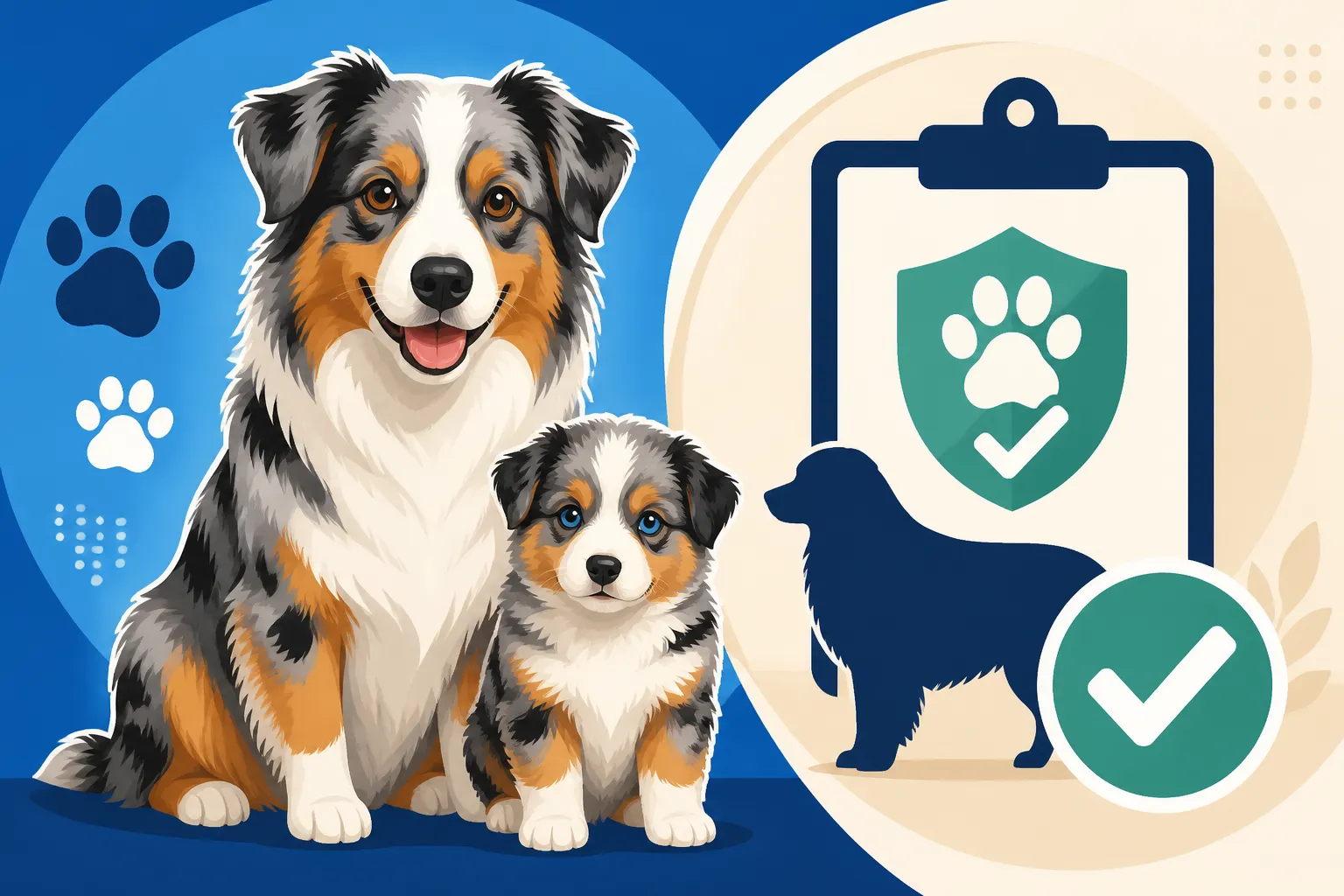
Toy Aussies and Whether Any Registry Accepts Them
It's completely understandable why the idea of a "Toy Aussie" captures so many hearts. You adore the intelligence, loyalty, and striking looks of an Australian Shepherd, but perhaps your living situation or lifestyle makes a full-sized herding dog feel like a bit much. The thought of a smaller, more compact version of that incredible dog can seem like the perfect solution. But the truth is, the term "Toy Aussie" is often a source of confusion and, unfortunately, can sometimes lead well-meaning potential owners down paths fraught with uncertainty. This guide is here to untangle the nuances of what a "Toy Aussie" truly is, why they aren't recognized by major breed registries, and what you need to consider if you're set on a smaller version of this beloved breed.
The Allure of the "Toy Aussie": What's in a Name?
The term "Toy Aussie" conjures up an image of a perfectly scaled-down Australian Shepherd, complete with the vibrant merle coat, piercing eyes, and that unmistakable clever gaze, but in a size that fits neatly into a smaller home or a less active routine. It's a tempting picture, especially with the growing popularity of "miniaturized" versions of many breeds. People love the idea of a dog that retains all the charm and character of its larger counterpart but with a more manageable footprint.
This desire for smaller breeds isn't new; it's a trend seen across the canine world, from Teacup Poodles to Mini Goldendoodles. For Australian Shepherds, their intelligence and striking appearance make them prime candidates for this kind of selective breeding or cross-breeding. When you see a cute little dog advertised as a "Toy Aussie," it often taps into that dream of having the best of both worlds: a highly trainable, beautiful dog that doesn't require a sprawling ranch. However, the critical distinction here is that "Toy Aussie" isn't an official breed name recognized by established kennel clubs. It's a descriptive term, often used by breeders who are aiming for a smaller size, but without the rigorous standards and health testing that come with a formally recognized breed. This lack of standardization is where the confusion and potential issues begin.
Sometimes, a "Toy Aussie" might simply be the smallest pup from a litter of Miniature American Shepherds, or even a smaller-than-average Australian Shepherd, perhaps a runt. Other times, the breeding practices might involve intentionally breeding down in size without considering the long-term health implications, or even crossing with other smaller breeds to achieve that desired "toy" stature. This isn't always done maliciously; sometimes breeders genuinely believe they are creating a desirable companion. But without oversight, it opens the door to significant variability in health, temperament, and true genetic makeup.
Miniature American Shepherds: The Officially Recognized Smaller Cousin
If you're truly seeking a smaller version of the Australian Shepherd that comes with the backing of official breed recognition and ethical breeding standards, then the breed you're looking for is the Miniature American Shepherd (MAS). This is where the distinction becomes crucial. The Miniature American Shepherd isn't just a marketing term; it's a legitimate, recognized breed with its own standard and a dedicated community of reputable breeders.
The MAS actually has its roots firmly intertwined with the Australian Shepherd. They were originally developed in California in the 1960s, specifically bred for their small size, intelligence, and energetic personalities, making them ideal companions for equestrians and individuals seeking a compact working dog. For a long time, they were known as "Miniature Australian Shepherds." However, as the breed gained traction and sought independent recognition, particularly with the American Kennel Club (AKC), a name change became necessary to distinguish them from their larger Australian Shepherd cousins and to clearly define them as a separate, distinct breed. This separation was finalized in 2011 when the AKC officially recognized them as the Miniature American Shepherd. You can read more about Why Mini Aussies Became a Separate Breed.
Today, Miniature American Shepherds are recognized by major kennel clubs worldwide, including the AKC, and participate in a wide range of dog sports and events. They have a defined height range, typically between 14 to 18 inches at the shoulder, which is considerably smaller than the Australian Shepherd's 18 to 23 inches. Importantly, reputable MAS breeders adhere to strict health testing protocols, ensuring their breeding stock is screened for common genetic conditions, much like responsible Australian Shepherd breeders do. This commitment to health, temperament, and a consistent breed standard is what sets the MAS apart from the often-ambiguous "Toy Aussie." They offer the intelligence, herding instinct, and striking looks that people love in an Aussie, but in a smaller, more manageable package, without the health lottery that can come with unregulated "Toy" breeding.
Why "Toy Aussies" Don't Make the Cut for Major Registries
The world of dog breeding and recognition by major registries like the American Kennel Club (AKC) or the Australian Shepherd Club of America (ASCA) isn't just about popularity or a cute name. It's built on a foundation of rigorous standards, predictability, and a deep commitment to the health and integrity of a breed over generations. This is precisely why "Toy Aussies" do not, and likely will not, gain acceptance as an official breed.
To understand why, you first need to grasp what goes into breed recognition. A recognized breed must have a consistently identifiable type, meaning all dogs of that breed should generally look, move, and behave within a specific, predictable range. This is outlined in a detailed "breed standard," which describes everything from ideal height, weight, and coat color to ear set, tail carriage, and temperament. Beyond physical traits, there must be a clear history of breeding that consistently produces these characteristics, along with a robust and diverse gene pool to prevent inbreeding and associated health problems. ASCA and the AKC Australian Shepherd Standards are prime examples of these detailed guidelines.
The "Toy Aussie" designation, unfortunately, often falls short on these critical criteria. Because it's not a standardized breed, there's no agreed-upon standard for what a "Toy Aussie" should look like, how big it should be, or what its temperament should consistently be. You might find one breeder's "Toy Aussie" is a 15-pound dog with a full tail, while another's is a 25-pound dog with a natural bobtail – both advertised under the same "Toy Aussie" umbrella. This kind of inconsistency is a red flag for any reputable registry.
Furthermore, the methods used to achieve smaller sizes in "Toy Aussies" can be highly variable and sometimes concerning. If a "Toy Aussie" is simply a smaller Miniature American Shepherd or a petite Australian Shepherd, the genetic background might be relatively sound. However, if the smaller size is achieved through breeding runts, or worse, through undisclosed cross-breeding with other small breeds (which can happen, even if the puppy "looks" like an Aussie), the predictability of health and temperament goes completely out the window. Major registries demand transparency and a clear lineage, something often lacking in "Toy Aussie" breeding.
They also emphasize responsible breeding practices, including comprehensive genetic health testing. Without an official breed standard, it's difficult for a registry to enforce what health tests are necessary or what genetic conditions are prevalent within the "Toy Aussie" population. This leaves prospective owners vulnerable to buying a dog with unknown health risks. For example, while the natural bobtail is part of the Australian Shepherd breed, breeding two natural bobtail Aussies can lead to serious spinal defects in puppies. This is why careful genetic screening, as discussed in The Aussie Bobtail Gene and Its Lethal Pairing, is crucial in responsible breeding, something often overlooked in unregulated "Toy Aussie" lines.
Navigating the Pitfalls of Unregulated "Toy Aussie" Breeding
When a breed isn't recognized by major registries, it creates a vacuum where ethical breeding practices can easily be overshadowed by market demand. This is precisely the challenge with "Toy Aussie" breeding, and it's essential for anyone considering one to be aware of the potential pitfalls concerning health, temperament, and the overall ethics of such breeding programs.
One of the most significant concerns revolves around health implications. Responsible breeders of recognized breeds meticulously screen their breeding stock for genetic diseases common to that breed, such as hip and elbow dysplasia, various eye conditions like Collie Eye Anomaly (CEA) or Progressive Retinal Atrophy (PRA), and the MDR1 gene mutation. They do this to minimize the risk of passing these conditions onto puppies. With "Toy Aussies," especially those bred solely for extreme small size, this level of health screening is often absent or insufficient. Breeders might prioritize small stature above all else, potentially overlooking critical health clearances. This can lead to a higher incidence of fragile bones, patellar luxation (slipping kneecaps), severe dental overcrowding, or even heart defects that might not manifest until later in the dog's life, leading to heartbreaking and expensive vet bills for owners.
Beyond specific genetic issues, the overall temperament and behavior of a "Toy Aussie" can be much less predictable than with a recognized breed. Australian Shepherds are renowned for their intelligence, high energy, and intense herding drive. If a "Toy Aussie" is simply a very small Aussie, it will likely retain these traits, but potentially without the physical robustness to handle such an active lifestyle, creating a mismatch. If, however, the "Toy Aussie" results from cross-breeding with an unknown smaller breed, their temperament could be a complete lottery. You might end up with a dog that has some Aussie traits but also unexpected quirks from another breed, making training and integration into a family challenging. The confident, outgoing nature often associated with Aussies might be replaced by shyness or anxiety if improper breeding or early socialization is neglected.
Then there's the ethical aspect. The demand for "designer" or "mini" versions of popular breeds fuels a market that can attract less scrupulous breeders. These individuals, sometimes referred to as "backyard breeders" or even "puppy mills," often lack the knowledge, resources, and ethical commitment of reputable breeders. They might breed dogs purely for profit, without investing in proper health testing, adequate nutrition for breeding mothers, or crucial early socialization for puppies. You might see "Toy Aussies" marketed at surprisingly high prices, often exceeding that of well-bred Australian Shepherds or Miniature American Shepherds, despite the lack of official recognition and guaranteed health. This can be misleading and leave buyers with a dog whose origins and health status are murky at best. When considering a puppy, remember that a very low price, or even a suspiciously high one without supporting health documentation, can be a warning sign, as detailed in Why a Cheap Merle Aussie Puppy Is a Warning.
It’s easy to get caught up in the excitement of a cute puppy, but understanding these potential risks is vital. Before committing to a "Toy Aussie," it's paramount to ask thorough questions, demand to see health clearances for the parents, and assess the breeding environment, as you would with any responsible breeder. When looking for supplies like food or toys, be mindful of your dog's actual size and potential sensitivities. Chewy, for example, offers a vast selection of small-breed specific foods and toys, but knowing your dog's exact needs, not just its advertised label, is key.
Making an Informed Choice: Where to Find a Smaller Aussie-Type Companion
If your heart is set on a smaller dog with the intelligence, striking looks, and active spirit reminiscent of an Australian Shepherd, then making an informed choice is absolutely paramount. The journey to finding your perfect canine companion should be guided by responsible practices, ensuring the health and well-being of your future family member.
First and foremost, if the "smaller Aussie" appeal truly resonates with you, your primary consideration should be the Miniature American Shepherd (MAS). This breed is the recognized, standardized, and ethically bred alternative. MAS breeders are dedicated to producing healthy dogs that adhere to a specific breed standard, meaning you'll have a much greater predictability in terms of size, appearance, temperament, and health. They conduct thorough health screenings, including OFA evaluations for hips and elbows, eye clearances from ACVO ophthalmologists, and genetic testing for conditions like MDR1, hereditary cataracts, and progressive retinal atrophy. Engaging with a reputable MAS breeder means you're supporting ethical practices and are far more likely to bring home a healthy, well-socialized puppy. You should always ask a breeder for proof of these screenings, as outlined in The Test Results an Aussie Breeder Must Produce.
If you're still considering a dog advertised as a "Toy Aussie," it's critical to approach with extreme caution and a healthy dose of skepticism. Treat the search as if you were adopting a mixed-breed dog, because that's essentially what you might be getting without verifiable lineage and breed standards. Here’s a checklist of questions to ask and things to look for:
- Ask for Parentage and Health Clearances: This is non-negotiable. Demand to see health clearances for both parents. This includes OFA (Orthopedic Foundation for Animals) certifications for hips and elbows, eye certifications from a board-certified veterinary ophthalmologist (ACVO), and DNA test results for common conditions like MDR1, HSF4 (hereditary cataracts), and CEA (Collie Eye Anomaly). If a breeder cannot or will not provide these, walk away. The Health Tests Every Australian Shepherd Parent Needs goes into detail about these crucial screenings.
- Meet the Parents: Observe the temperament of the parent dogs. Are they friendly, calm, and well-adjusted? Do they exhibit any signs of shyness, aggression, or excessive nervousness? This gives you a good indication of the temperament your puppy might inherit.
- Question the "Toy" Aspect: Ask specifically how the "toy" size was achieved. Was it through breeding smaller MAS, or is there another explanation? If the answer is vague or suggests breeding runts or an "accidental" small size across generations, be wary.
- Assess the Breeding Environment: When you Visiting an Australian Shepherd Litter, observe the conditions. Are the puppies and parents clean, well-fed, and living in a stimulating environment? Are the puppies well-socialized and confident? Red flags include puppies housed in dirty conditions, seeming fearful or overly timid, or not being handled regularly.
- Get a Written Contract: A reputable breeder will always provide a written contract detailing health guarantees, return policies, and spay/neuter agreements. This protects both you and the puppy.
To help you visualize the differences, here's a general comparison:
| Characteristic | Australian Shepherd (Standard) | Miniature American Shepherd (MAS) | "Toy Aussie" (Unrecognized) |
|---|---|---|---|
| Height (at shoulder) | 18-23 inches | 14-18 inches | Often < 14 inches (highly variable) |
| Weight | 40-65 pounds | 20-40 pounds | 10-25 pounds (highly variable) |
| Breed Recognition | AKC, ASCA, etc. | AKC, UKC, etc. | None by major registries |
| Breed Standard | Yes, well-defined | Yes, well-defined | No, undefined |
| Health Testing | Extensive, expected | Extensive, expected | Often absent or inconsistent |
| Temperament | Predictable, high drive | Predictable, moderate-high drive | Highly variable, unpredictable |
| Source of Smaller Size | Standard breeding | Selective breeding from Aussies | Breeding small individuals, cross-breeding (unknown) |
| Reputable Breeder Availability | High | High | Low, often backyard breeders |
Ultimately, your goal is a healthy, happy companion. While the desire for a small dog is perfectly valid, sacrificing responsible breeding for a marketing term like "Toy Aussie" can lead to heartache and unexpected expenses down the road. Focus on breeders who are transparent, dedicated to health, and committed to their dogs' well-being, whether you choose a Miniature American Shepherd or a petite Australian Shepherd from well-screened lines.
Disclaimer
This article is for general informational purposes only and does not constitute professional advice. Laws, prices and regulations vary by location and change over time. Consult a qualified professional for guidance on your specific situation.