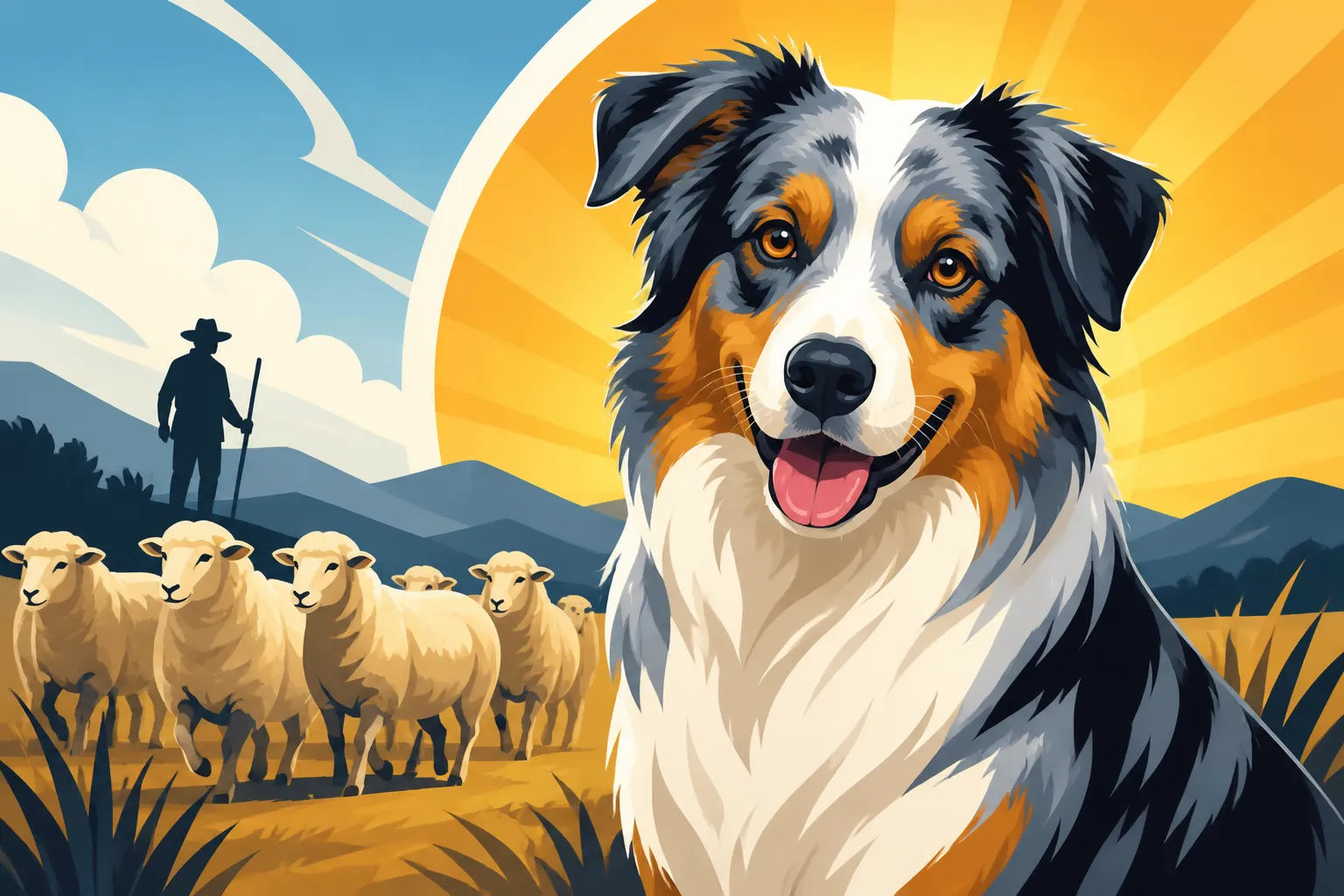
The Sheep Boom That Created the Australian Shepherd
Many people hear "Australian Shepherd" and immediately picture vast outback stations, dusty sheep, and maybe a kangaroo hopping in the distance. The truth, however, is a fascinating twist of history that grounds this incredible breed firmly in the American West, tied directly to a massive expansion of the sheep industry here. This guide will walk you through the real story of how economic shifts and the need for a particular type of working dog led to the development of the Aussie we know and love today.
The Misleading Name: Why "Australian" Shepherd?
It's one of the biggest head-scratchers for new Aussie owners: why is a dog developed in America called the "Australian" Shepherd? The name is a bit of a historical red herring, leading many to believe the breed originated down under. But the actual lineage points to a specific chain of events involving European migration and the global movement of livestock, not the breed itself coming from Australia. The name sticks because of the sheep that were imported, not the dogs.
The Basque Connection and Transatlantic Journeys
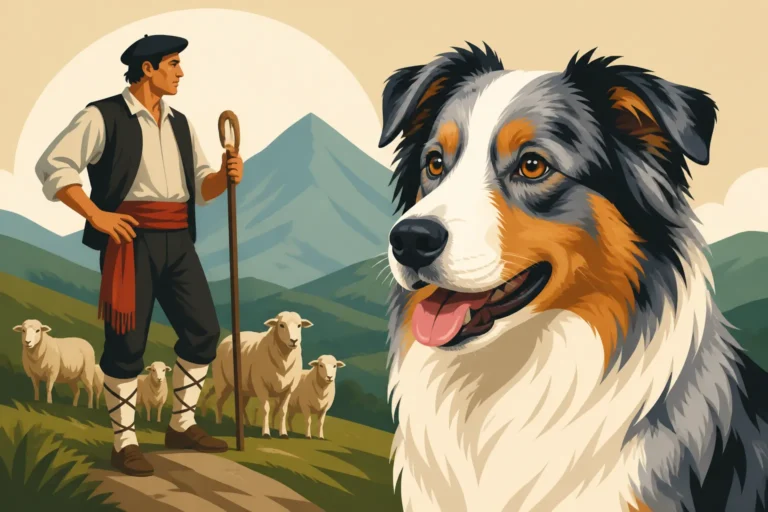
To truly understand the Aussie's origins, we need to look far beyond America's borders, back to the rugged Pyrenees Mountains between France and Spain. This is the ancestral home of the Basque people, renowned for their sheepherding traditions and their hardy, intelligent dogs. These Basque shepherds, seeking new opportunities, began to emigrate in significant numbers, first to Australia and New Zealand, and then across the Pacific to the American West, particularly during the mid-19th century. They brought with them not only their invaluable shepherding skills but also their most prized possessions: their working dogs. These dogs were the foundation stock, tough and adaptable, capable of handling large flocks in challenging terrain. The Basque Shepherds Behind the Australian Shepherd delves deeper into this fascinating cultural migration.
Imagine the journey these people and their dogs undertook – weeks or even months at sea, leaving behind everything familiar for the promise of new lands. The dogs weren't pampered pets; they were essential tools for survival, helping manage the precious flocks that represented their owners' livelihoods. They were often a mix of different European herding breeds, selected purely for their ability to work, not for appearance or a specific breed standard. This early selection process emphasized intelligence, stamina, and a strong but controllable herding instinct – traits that are still hallmarks of the Australian Shepherd today.
Early Sheepdogs on American Soil
When these Basque shepherds arrived in places like California, Oregon, and Nevada, they found themselves in a rapidly expanding agricultural landscape. They continued their work, often managing vast flocks of imported sheep. It was here, in the American West, that these European dogs began to interact and interbreed with other working dogs already present, or those brought over by other settlers. The environment was harsh, the distances were immense, and the need for reliable, versatile herding dogs was paramount.
These early dogs weren't called "Australian Shepherds" yet. They were simply "shepherd dogs" or "sheepdogs," defined by their job rather than a formal breed name. Their appearance varied widely, but what united them was their innate ability to gather, move, and protect livestock. They were the unsung heroes of the burgeoning sheep industry, working tirelessly from dawn till dusk. They often had to contend with predators, navigate rugged terrain, and respond to their shepherd's subtle commands, sometimes over long distances. Their intelligence and willingness to work were absolutely critical for the success of any rancher.
The Gold Rush and the Rise of Western Ranching
The California Gold Rush, starting in 1848, sparked an unprecedented population boom in the American West. While everyone was scrambling for gold, a less flashy but equally important industry quietly exploded: feeding all those new mouths. Suddenly, there was a massive demand for meat and wool, making sheep ranching an incredibly lucrative venture. This economic shift created the perfect storm for the development of a superior herding dog.
Demanding Conditions, Demanding Dogs
The conditions for ranching in the American West were nothing short of brutal. Huge tracts of land, often unfenced, meant sheep had to be constantly moved and managed. Predators like coyotes and mountain lions were a constant threat, and the terrain ranged from arid deserts to dense forests and steep mountains. The weather could be extreme, with scorching summers and bitter winters. This wasn't a job for a delicate dog; it required an animal with immense physical stamina, keen intelligence, and unwavering courage.
Ranchers needed dogs that could work independently when necessary, but also respond instantly to commands. They needed dogs tough enough to withstand long days on the trail, resilient enough to recover quickly, and smart enough to outthink a stubborn flock. The dogs also had to be agile, able to dart and weave through sheep, and possess that strong, innate herding instinct without being overly aggressive or "hard" on the stock. Essentially, they needed a canine all-rounder, a super-dog designed for the unique challenges of the American frontier.
Importing Superior Stock for a Growing Industry
As the sheep industry boomed, American ranchers sought to improve their flocks by importing high-quality sheep from other countries. Many of these "superior" sheep came from Australia and New Zealand, which had already established strong wool and meat industries. And, crucially, these imported sheep often arrived with their own working dogs – typically collies or other British-type herding dogs that had been used to manage them down under. The Gold Rush Flocks That Made the Aussie illustrates how this influx of both sheep and dogs shaped the landscape.
When these "Australian sheep dogs" (named for the origin of the sheep they accompanied, not necessarily their own birthplace) arrived in the States, they quickly proved their worth. They brought new genetic traits into the existing pool of working dogs, potentially adding different styles of herding, greater endurance, or increased intelligence. This created a melting pot of canine genetics in the American West, where the best traits from various European herding lines could blend and combine, all under the selective pressure of a demanding working environment. This period was truly a "survival of the fittest" for working dog traits.
Blending Bloodlines: Forging the American Sheepdog
The stage was set. You had Basque shepherds with their hardy European dogs, other settlers with their own working breeds, and then the influx of "Australian" dogs arriving with imported sheep. This wasn't a planned breeding program in a kennel; it was a natural evolution driven by necessity and the keen eye of practical stockmen.
The Mix of Herding Breeds That Contributed
The Australian Shepherd didn't spring from a single, purebred ancestor. Instead, it's a testament to genetic diversity and natural selection. Various types of herding dogs contributed to its makeup. Think about the dogs that would have been available and prized for their working ability:
- Pyrenean Shepherds: Likely from the Basque country, known for their quickness and intense focus. The Pyrenean Shepherd and the Aussie provides more context on this link.
- Collie-type dogs: These would have included various British shepherd dogs, known for their "eye" and ability to control large flocks with minimal physical force.
- German Shepherd Dogs: While perhaps less direct, some of their ancestors or similar types might have contributed robustness and courage.
- Other regional farm dogs: Any dog that proved itself capable of working livestock would have been fair game for breeding within the working community.
Ranchers weren't looking at pedigrees or breed standards; they were looking at performance. If a dog was exceptional at moving sheep, had great stamina, and was intelligent enough to learn quickly, it was bred. This practical approach meant that traits like loyalty, intelligence, a strong herding drive, and physical toughness were continually reinforced. The focus was always on creating the ultimate working partner for the rancher.
Early Breeders and the Quest for a Versatile Dog
While formal breeders with registered kennels came later, the first breeders of the Australian Shepherd were the working ranchers themselves. They were the ones selecting which dogs to breed based on their daily observations in the field. They needed a dog that wasn't just good at one thing, but incredibly versatile – able to work cattle, sheep, and even horses if needed. What Ranchers Wanted From an Australian Shepherd truly highlights this demand for an all-purpose ranch dog.
These dogs had to be calm enough to ride in a truck or stay settled in a barn, but explosive when it came to gathering a scattered flock. They needed to be biddable and responsive to their owner, forming an incredibly strong bond, yet also possess the grit to stand up to a stubborn animal twice their size. This combination of traits, refined over generations of pragmatic breeding in the American West, slowly coalesced into the distinct type we recognize as the Australian Shepherd.
Cementing the Breed's Role in the American West
The practical, working nature of the Australian Shepherd meant it naturally found its niche in the vast, open spaces of the American West. It was a breed born of necessity and tested by the rigors of ranch life. While its origins were diverse, its purpose became singular: to be the best possible working dog for American stockmen.
Post-War Popularity and Rodeo Arenas
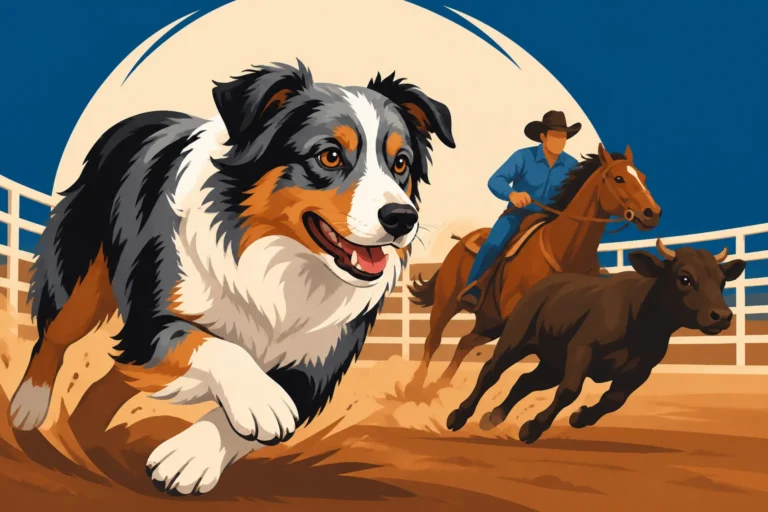
After World War II, America saw a surge in interest in Western culture, including rodeos and horse shows. This era was pivotal for the Australian Shepherd. Cowboys and rodeo performers, often also ranchers, brought their trusted Aussies with them to these events. These dogs weren't just working partners; they were often incredibly intelligent and flashy, capable of performing tricks and controlling livestock with impressive skill in front of an audience. It was in these public arenas that the Australian Shepherd really started to gain wider recognition beyond the ranches. Australian Shepherds Herding Bulls at Rodeos showcased their incredible abilities.
The sight of an agile, intelligent Aussie expertly maneuvering a herd of cattle or a flock of sheep, often with very subtle commands from its handler, was captivating. This exposure in rodeos and other Western events helped solidify the breed's reputation for intelligence, versatility, and an almost uncanny ability to read and respond to livestock. It was a natural next step for them to transition from purely working dogs to beloved family companions, as people saw their engaging personalities and trainability.
From Ranch Work to Family Companionship
Even as their popularity grew in the show ring and as pets, the core identity of the Australian Shepherd remained firmly rooted in its working heritage. This is why their strong herding drive and high energy levels are still so prominent today. While not every Aussie lives on a working ranch, those instincts for managing and moving livestock are deeply ingrained. Providing an outlet for this drive, whether through dog sports, extensive training, or simply a lot of structured activity, is crucial for their well-being. Many owners find creative ways to engage their Aussies, such as through agility or Aussie Herding Instinct Test Costs for an Aussie, even if they don't have a flock of sheep in their backyard.
The breed continued to develop with an emphasis on health, temperament, and maintaining its working ability. Organizations like the Australian Shepherd Club of America (ASCA) were formed to preserve the breed's working heritage and ensure responsible breeding practices. Even today, you'll find "working lines" of Aussies that are specifically bred for their herding prowess, and others that are bred more for conformation in the show ring, or for companionship. Regardless of their specific lineage, the underlying traits forged during the sheep boom in the American West remain the defining characteristics of this remarkable breed. How Aussie Type Settled by the 1950s provides further insight into this evolution.
Here’s a look at some key influences on the Australian Shepherd's development:
| Influence Factor | Contribution to Breed Development | Primary Origin |
|---|---|---|
| Basque Shepherds | Introduced hardy, intelligent herding dogs | Pyrenees Mountains (Europe) |
| Gold Rush Population | Created massive demand for livestock, increasing ranching | American West |
| Imported Australian Sheep | Brought "Australian Sheep Dogs" and new genetics | Australia / New Zealand |
| American Ranchers | Pragmatic breeding for versatile working traits | American West |
| Rodeo Popularity | Increased public awareness and appreciation for the breed | American West |
It’s truly incredible to think that the humble origins of managing sheep in a booming industry could lead to such a beloved and distinctive breed. Whether your Aussie is rounding up your kids in the backyard or excelling in agility, those deep-seated instincts are a direct link to the hardworking dogs of the American West. You can find excellent resources, including specific products for working and active dogs, on sites like Chewy, which many Aussie owners rely on for everything from specialized food to durable toys that stand up to their active companions. Your Aussie, at its heart, is still that diligent, intelligent dog ready for a job.
Disclaimer
This article is for general informational purposes only and does not constitute professional advice. Laws, prices and regulations vary by location and change over time. Consult a qualified professional for guidance on your specific situation.