Australian Shepherds Compared With Other Herding Breeds
It's incredibly easy to fall head over heels for the striking good looks and sparkling intelligence of an Australian Shepherd. Their mesmerizing eyes and dynamic coats are certainly captivating, but many folks discover, sometimes a bit too late, that this breed brings a whole lot more to the table than just beauty. If you're pondering adding a herding dog to your family, you're likely weighing the pros and cons of several breeds, wondering which one will truly fit your life. This guide is here to untangle the nuances, comparing the Australian Shepherd's unique traits against those of other popular herding breeds, so you can make an informed decision and avoid any surprises down the road.
The Australian Shepherd's Core Identity: Herding Drive and Temperament
When you consider an Australian Shepherd, you're not just looking at a pretty face; you're looking at a dog whose entire being is wired for work. These dogs were bred to manage livestock, often in challenging environments, and that instinct is deeply ingrained. It shapes everything from how they interact with their family to how they view the squirrels in your backyard. Understanding this foundational drive is absolutely crucial before you even start comparing them to other breeds.
Understanding the Aussie's 'Operating System'
Imagine a dog that sees the world in terms of movement, gaps, and the desire to gather and control. That's your Aussie. Their "operating system," as I like to call it, is constantly processing these signals. This isn't just about sheep in a field; it translates into how they might try to "herd" your children, organize other pets, or even try to keep you from leaving a room by blocking your path. It's not malicious; it's instinct. They're trying to keep their "flock" together and safe. This deep-seated drive means that mental stimulation and appropriate outlets are not optional extras; they are fundamental requirements for a happy, well-adjusted Australian Shepherd. If you ignore this need, you'll likely end up with a frustrated dog that invents its own (often unwelcome) jobs. The Australian Shepherd Herding Drive You Cannot Train Out explains this in detail.
This inherent herding instinct is why a simple walk around the block often isn't enough for an Australian Shepherd. They need a purpose, something to engage their quick minds and agile bodies. Think about how they might approach a game of fetch: it's not just retrieving a ball, it's often a focused, intense effort to bring the "stray" object back to the "flock" (you). Without constructive outlets, this energy and intelligence can manifest as undesirable behaviors, like incessant barking, obsessive chasing of cars or shadows, or even destructive chewing. Their brains are always on, always looking for something to do, and if you don't provide it, they will find it themselves, and you might not like their choices!
The Aussie's Reserved Nature with Strangers
Another hallmark of the Australian Shepherd temperament is their natural reservedness with strangers. Unlike some breeds that greet everyone with slobbery kisses and wagging tails, Aussies tend to be more cautious. They observe first, taking in the situation and assessing whether a newcomer is a threat or part of their safe circle. This isn't shyness or aggression; it's a protective instinct. They are loyal to their family unit and often consider strangers with a healthy dose of suspicion. This trait makes them excellent watchdogs, but it also means early and consistent Socializing an Australian Shepherd Beyond the Farm is paramount.
If an Aussie isn't properly socialized from a young age, this reservedness can escalate into fear or even reactivity. You might find your Australian Shepherd barking at visitors, shrinking away from new people on walks, or being uncomfortable in bustling environments. It's a fine line to walk: you want to respect their natural caution while ensuring they're confident and comfortable in various situations. It requires a lot of positive exposure, careful introductions, and patience. They thrive when they feel secure in their environment and with their people, and that security comes from consistent training and broad, positive experiences.
Energy and Mental Stimulation Demands
Let's be real: Australian Shepherds are not couch potatoes. They are a high-energy, high-intelligence breed, and they require a significant investment of both your time and your mental faculties. We're talking about Australian Shepherd Exercise at One to Two Hours a Day as a baseline, often needing more, but it's not just physical exertion. A tired body isn't enough if the mind is still buzzing. They crave mental challenges just as much as they crave a good run. Without both, they can become restless, destructive, and generally difficult to live with.
Think of it like this: an Aussie's mind is a powerful computer, and if you don't give it programs to run, it will start crashing or running rogue applications. Puzzle toys, training sessions, scent work, trick training, and even just novel environments for walks are vital. These aren't just fun activities; they are necessities for their well-being. A bored Aussie is often a naughty Aussie, and they are incredibly clever at finding ways to entertain themselves that might not align with your household rules. This is why many end up in rescue – people underestimate the sheer volume of engagement they need.
Aussies vs. Border Collies: A Clash of Herding Styles
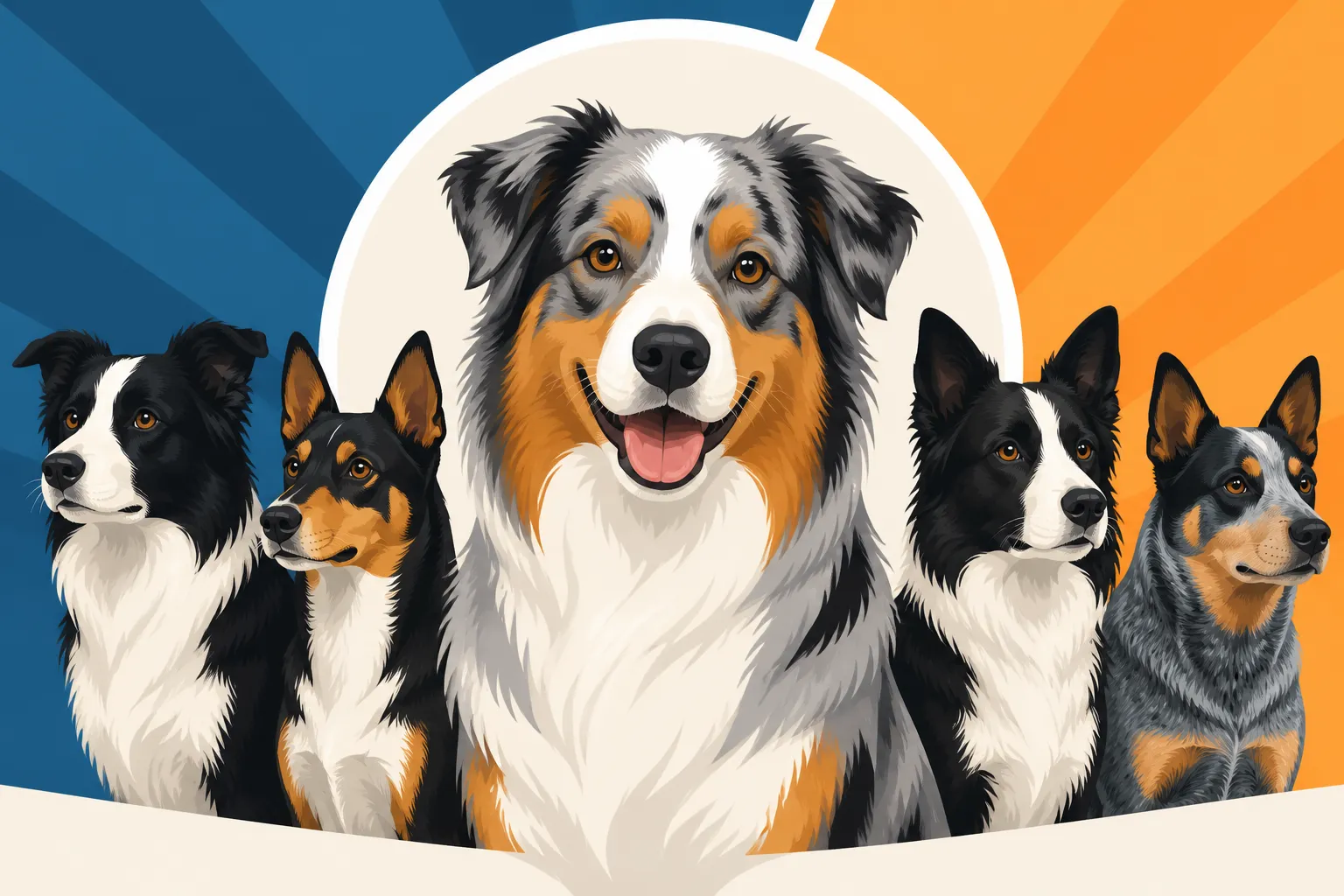
When people think of herding dogs, the Border Collie often comes to mind first, and for good reason. They are champions of the herding world. While both Aussies and Border Collies are brilliant, athletic, and possess intense herding instincts, their styles and some fundamental aspects of their temperaments differ. Understanding these differences is key to choosing between these two incredible breeds.
The Intense Focus of a Border Collie
The Border Collie is renowned for its intense "eye" – that piercing stare they use to control livestock. They can drop to the ground, fix their gaze, and move a flock with nothing but their presence. This level of focus is unparalleled. When a Border Collie is working or engaged in an activity, they are all in. This can be magnificent for competitive dog sports like agility or obedience, where precision and unwavering attention are rewarded. However, this same intensity can be a lot for an inexperienced owner to manage. They can become fixated on things: a laser pointer, a shadow, a specific toy, or even just eye contact with a person, sometimes to an obsessive degree.
An Australian Shepherd, while focused, tends to have a "looser eye." They use more body language – barking, nipping at heels, circling – to move their flock. Their focus is still intense, but it's often more dynamic and less fixed than a Border Collie's. This might make them slightly more adaptable to a bustling family environment, as they might not fixate quite as intensely on every moving thing. However, both breeds require an owner who understands how to manage and channel this incredible drive. Trying to suppress it without an alternative outlet is a recipe for frustration for both dog and owner. The Australian Shepherd Against a Border Collie dives deeper into these distinctions.
Herding Techniques: Eye vs. Loose-Eyed
Let's talk about those fundamental herding styles. A Border Collie's primary tool is that intense, hypnotic stare. They are bred to be "strong-eyed" dogs, using minimal physical contact and maximum mental pressure to control their flock. They will typically lower their bodies, stalk, and use their gaze to dictate movement. This makes them incredibly efficient and precise herders. This means they are often quieter on the job, relying on psychological pressure rather than noise or physical nips.
Australian Shepherds, on the other hand, are considered "loose-eyed" or "upright" herders. While they can certainly use their eyes, they rely more on their physical presence, quick movements, barks, and nips (often at the heels) to get the job done. They are more likely to push and gather, using their whole body to influence the flock. This difference in style often translates to their personalities in a home environment. An Aussie might be more prone to heel-nipping or body-blocking family members, trying to keep everyone together, whereas a Border Collie might try to "stare down" a child or another pet. Both require diligent training to redirect these natural behaviors into acceptable channels.
Exercise and Mental Engagement: Similarities and Differences
Both breeds are athletic powerhouses that need substantial exercise. You're not getting away with a leisurely stroll with either an Aussie or a Border Collie. They need to run, jump, play, and ideally, work. However, the type of work can differ slightly. Border Collies often excel in sports that demand intense focus and precision, like competitive obedience, flyball, or advanced agility. Their drive for repetition and perfection is incredible.
Australian Shepherds also excel in these sports, but their approach can be a bit more "freestyle" at times, a little more boisterous. They might bring a touch more exuberance to the field. Where a Border Collie might tirelessly repeat a complex sequence until it's perfect, an Aussie might inject a bit more personality or independent thought into the process. Both require owners dedicated to providing structured physical and mental activity every single day. Without it, both breeds can develop Australian Shepherd Behavior Problems From Under-Exercise like obsessive behaviors, reactivity, or destructive tendencies. Engaging them in activities like Australian Shepherd Sports From Herding to Agility is often the key to their happiness.
Australian Shepherds and German Shepherds: Different Jobs, Different Dogs
While both breeds share the "Shepherd" moniker and a common history of working alongside humans, their original purposes, and thus their inherent drives and temperaments, are quite distinct. People often get these two confused, but once you delve into their origins, the differences become clear.
Origins and Primary Functions
The Australian Shepherd, as we've discussed, was developed in the American West to herd livestock, particularly in the rodeo circuits and on ranches. Their primary job was to gather, control, and protect sheep and cattle. Their instincts are centered around managing a "flock" and working closely with a handler.
The German Shepherd Dog, on the other hand, was developed in Germany specifically as a herder and guardian of flocks, but also very quickly adopted for police work, military service, and as a general protection dog. Their role often involved larger, more dispersed flocks and a need for greater independence and protective instincts against predators or intruders. This background gives them a more inherent guarding tendency and a different kind of working drive. They are often more about protection and territory than gathering and controlling.
Protective Instincts and Guarding Behaviors
This is a significant area where the two breeds diverge. An Australian Shepherd can be protective of their family and territory, often alerting you to strangers with a bark, but their primary instinct is typically not to confront or guard aggressively. They'll often defer to their handler. Their goal is usually to keep their "flock" safe by gathering them or alerting the leader (you) to potential threats.
A German Shepherd, by design, has a much stronger guarding instinct. They are bred to be territorial and protective. This means they are often more naturally inclined to challenge perceived threats, hold boundaries, and actively defend their home and family. This makes them superb protection dogs and excellent for security roles, but it also means they require an even more experienced handler to ensure these powerful instincts are channeled appropriately. Without correct training and socialization, a German Shepherd's protective drive can become problematic, leading to aggression or over-guarding.
Training Approaches and Socialization Needs
Both breeds are highly intelligent and trainable, eager to please their owners. However, their specific training needs reflect their inherent drives. Australian Shepherds thrive on positive reinforcement and mental challenges that mimic their herding work. They respond well to agility, obedience, and trick training, often needing variety to keep them engaged. They need extensive Socializing an Australian Shepherd Beyond the Farm to prevent their reserved nature from becoming fear.
German Shepherds also benefit immensely from positive training and early socialization, but their training often focuses more on obedience, control, and channeling their protective instincts. They need to learn strong impulse control and appropriate responses to perceived threats. Their socialization needs are similar in breadth, but perhaps even more critical in depth, to ensure their protective nature doesn't become overly suspicious or aggressive. They need to learn when to be protective and when to relax. A German Shepherd might be more inclined to test boundaries and try to take charge if leadership isn't clear, whereas an Aussie typically looks more to their handler for direction.
Australian Shepherds and Shetland Sheepdogs: Mini Herders, Big Personalities
Often mistaken for "miniature Collies," Shetland Sheepdogs (Shelties) are another delightful herding breed. While they share some visual similarities and a herding background with Aussies, their size, intensity, and some behavioral traits set them apart significantly.
Size and Physical Differences
The most obvious difference is size. Australian Shepherds typically stand 18-23 inches tall and weigh 40-65 pounds, making them a medium to large breed. Shetland Sheepdogs are much smaller, usually 13-16 inches tall and weighing 15-25 pounds. This size difference impacts their exercise needs, living space requirements, and even their perceived presence. A Sheltie might be more comfortable in a smaller home or apartment, provided their mental and physical needs are met.
Despite their smaller stature, Shelties are true herding dogs. They possess that classic collie appearance with a lush double coat, but in a compact package. The Australian Shepherd Against a Shetland Sheepdog highlights more details about these distinct breeds. While an Aussie's build is rugged and athletic, built for enduring long days on the range, a Sheltie is more refined, designed for agility and speed with lighter livestock. Both breeds possess beautiful double coats that require diligent grooming to prevent matting and manage shedding. Both will also have periods of intense "coat blow" twice a year where they shed profusely. Maintaining their coats, perhaps with products from a place like Chewy, is a constant task.
Barking Tendencies and Alertness
Both Aussies and Shelties are known for being alert and making their voices heard. They are quick to warn their families of anything unusual – a squirrel in the yard, a leaf blowing by, a visitor at the door. However, Shelties generally have a reputation for being more vocal than Australian Shepherds. Their high-pitched, frequent barking can be a significant challenge for owners, especially those living in apartments or close-knit neighborhoods. They were bred to be alarm systems for the shepherd, and they take that job seriously.
An Australian Shepherd's barking often stems from their herding instinct (trying to move things, calling out to their "flock") or frustration from lack of stimulation. While they can certainly be barkers, especially if Australian Shepherd Barking and Noise Sensitivity becomes an issue, it's often not quite as incessant or high-pitched as a typical Sheltie's. Managing barking in either breed requires consistent training, environmental management, and ensuring their needs for exercise and mental engagement are fully met. Boredom is a huge driver of excessive barking for both.
Trainability and Adaptability for Different Lifestyles
Both Shelties and Aussies are incredibly intelligent and eager to please, making them highly trainable. They excel in dog sports and obedience. Shelties are often star performers in agility, obedience, and rally, their smaller size giving them an advantage in speed and tight turns. Their intensity, while different from an Aussie's, still requires consistent mental work.
An Australian Shepherd, with their slightly larger size and more robust build, brings power and endurance to their sports. They can cover ground quickly and have incredible stamina. While both can adapt to various living situations, the Sheltie's smaller size might make them a slightly easier fit for apartment living or families with less outdoor space, provided their mental exercise needs are met. However, the sheer volume of mental and physical engagement an Aussie requires means they generally thrive best with access to more space and an active, outdoorsy lifestyle. A Sheltie might be a better choice for someone who wants the intelligence and trainability of a herding dog but in a smaller, slightly less physically demanding package, though the barking might be a trade-off.
Aussies and Cattle Dogs (Heelers): Toughness and Grit
When we talk about "Cattle Dogs" or "Heelers," we're often referring to breeds like the Australian Cattle Dog (ACD) or the Queensland Heeler. These dogs were bred for an entirely different kind of herding challenge: moving stubborn, often aggressive cattle across vast distances. This tough job forged dogs with immense grit, independence, and a very specific herding style.
The "Heeler" Instinct vs. the Aussie's Flank/Head Drive
The Australian Cattle Dog is a "heeler" by definition. Their primary method of moving cattle is to nip at their heels, driving them forward. This requires immense bravery, quick reflexes, and the ability to duck and weave to avoid kicks. This heel-nipping instinct is incredibly strong in ACDs and can translate directly to human family members, especially children, if not properly managed. They are persistent and tough, designed to handle animals that push back.
Australian Shepherds, while they can and do nip at heels, also utilize flanking (circling wide to gather) and heading (getting in front to turn the stock) more prominently. Their herding style is often described as more fluid and less confrontational than a Cattle Dog's. An Aussie typically wants to gather and keep its "flock" together, whereas an ACD is more about driving the flock forward. The Australian Shepherd Against a Blue Heeler covers more of these differences. This translates to how they interact in a home: an ACD might be more prone to relentless heel-nipping, while an Aussie might be more prone to circling or body blocking. Both need outlets for these drives.
Endurance and Working Drive
Both Australian Shepherds and Australian Cattle Dogs are incredibly high-energy breeds with astonishing endurance. They were both bred to work all day, often in harsh conditions. However, the type of endurance and the intensity of their drive can differ. ACDs are often described as relentless; they have an almost inexhaustible drive to work and keep going, no matter what. They are incredibly tough and resilient.
Australian Shepherds also have fantastic endurance and drive, but their temperament might be a tad more cooperative and less independent than an ACD's. While an Aussie is certainly no pushover, an ACD might possess a more stubborn streak, born from having to face down cattle. An ACD often has a higher pain tolerance and a single-minded focus on their task. For an owner, this means both breeds need immense amounts of physical activity, but an ACD often needs it with a side of rigorous mental challenges and clear, consistent leadership to prevent them from becoming bored and destructive.
Independence and Stubbornness
Australian Cattle Dogs are known for their strong will and a degree of independence. While devoted to their families, they were bred to make decisions about moving cattle on their own, often without direct instruction from a distant shepherd. This can manifest as a streak of stubbornness or a "what's in it for me?" attitude during training. They need a confident, consistent handler who can earn their respect.
Australian Shepherds are generally more handler-focused. They thrive on working with their person and are often more eager to please, making them generally easier to train for a dedicated owner. While they are intelligent problem-solvers, they typically look to their human for direction more readily than an ACD. This doesn't mean Aussies can't be stubborn or push boundaries – they absolutely can, especially during adolescence – but the underlying motivation is often different. An Aussie might be testing limits, while an ACD might simply believe its way is better. For both, a clear understanding of Why Herding Instinct Is the Aussie Operating System is vital to effective training.
Beyond the Obvious: Comparing with Other Herding Breeds
The world of herding breeds is vast and diverse, extending far beyond the Border Collies and German Shepherds. Understanding how Australian Shepherds stack up against some less common, but equally fascinating, herders can further illuminate their unique place in the canine world.
Old English Sheepdog: Gentle Giants
The Old English Sheepdog (OES) stands in stark contrast to the athletic, often lean Australian Shepherd. With their shaggy coats and lumbering gait, OES are the "nanny dogs" of the herding world, bred to guard and move large flocks in rugged terrain. Their immense size and thick coat give them a very different presence and set of needs.
While both are herding breeds, their methods and primary instincts differ. The OES is more of a drover and protector, using its size to influence stock, whereas the Aussie is a nimble, precise gatherer. OES tend to be calmer indoors, often described as "clowns" or "gentle giants," once their exercise needs are met. However, their grooming requirements are immense, far surpassing even the double-coated Australian Shepherd. You'll need specialized brushes, detanglers, and plenty of time, perhaps even a subscription for grooming supplies from a provider like Chewy. Their protective instinct is present, but it's typically more about being a steadfast, watchful presence rather than the high-drive, fast-moving control of an Aussie.
Cardigan and Pembroke Welsh Corgis: Low Riders with High Drive
It might surprise some, but Corgis are legitimate herding dogs! These stout, low-slung dogs were bred to nip at the heels of cattle without getting kicked, thanks to their short stature. Both Cardigan and Pembroke Welsh Corgis pack a serious herding punch into a small package, and their drive often catches unsuspecting owners by surprise.
Like Australian Shepherds, Corgis have strong herding instincts that can lead to heel-nipping or body-blocking behaviors with people and other pets. They are intelligent and often quite vocal. However, their exercise needs, while significant for their size, don't typically reach the sheer mileage or intensity that an Australian Shepherd thrives on. A Corgi might be satisfied with brisk walks, active play, and plenty of mental games, whereas an Aussie needs more expansive, sustained exertion. Corgis can also be quite opinionated and possess a strong independent streak, making them different to train than the typically more handler-focused Aussie. Reading an Aussie Body Language Under a Full Coat is crucial for both, as their expressions can be subtle.
Belgian Malinois: The Intensity Amplifier
If you're looking for intensity, look no further than the Belgian Malinois. While often categorized as a "working dog" rather than strictly a "herding dog" in modern contexts, their lineage stems from herding, and their drive and focus are incredibly high. A Malinois makes an Australian Shepherd look like a relaxed stroll in the park by comparison. They are often chosen for police, military, and protection work due to their extreme drive, trainability, and powerful guarding instincts.
The energy levels of a Malinois are often described as boundless, requiring constant, rigorous physical and mental challenges. Their drive can be overwhelming for even experienced dog owners. While an Aussie is smart and driven, a Malinois often operates at another level of intensity, needing structured work and purpose every single day to prevent severe behavioral issues. Their protective and guarding instincts are far stronger than an Aussie's, meaning they require expert handling and extensive, meticulous socialization and training from a young age. Comparing a Malinois to an Australian Shepherd is like comparing a high-performance sports car to a very capable pickup truck – both get the job done, but with vastly different horsepower and handling demands.
Making the Right Choice: Matching Breed to Lifestyle
Choosing a dog, especially a herding breed, isn't about picking the cutest puppy or the most impressive athlete. It's about a realistic assessment of your lifestyle, your commitments, and what you can genuinely offer a dog for the next 10-15 years. Herding breeds, and Australian Shepherds in particular, demand a lot, but they also give back in spades with their loyalty, intelligence, and endless enthusiasm.
Assessing Your Daily Time Commitment
This is perhaps the most critical factor. An Australian Shepherd isn't a dog you can leave alone for 9-10 hours a day with just a short walk. They need interaction, training, and robust exercise, both physical and mental, daily. Think about your average day:
- Morning: Do you have 30-60 minutes for a vigorous walk, run, or training session before work?
- Mid-day: Can someone come home for a play session, a training break, or a potty break? Daycare or a dedicated dog walker might be necessary.
- Evening: Do you have another 60-90 minutes for a long walk, a trip to the dog park, agility class, or extended training and puzzle games?
If your answer to these questions involves a lot of "not really" or "maybe sometimes," an Australian Shepherd, or many other high-drive herding breeds, will likely struggle. They will find ways to entertain themselves, which usually translates to chewed furniture, incessant barking, or anxiety. This is a common path to Australian Shepherd Behavior Problems From Under-Exercise and why many end up in shelters. Honesty here is paramount.
Environment and Space Considerations
While some Australian Shepherds can adapt to apartment living if their exercise and mental needs are met meticulously, they generally thrive with more space. A securely fenced yard where they can run, play, and burn off some energy is incredibly beneficial. They love to patrol their territory, keep an eye on things, and have room to stretch their legs. However, a yard alone is not enough. It doesn't replace structured exercise and interaction.
Consider the environment you live in. Are there safe places for off-leash exercise? Are you near dog parks or hiking trails? Do you have access to training facilities for dog sports? Urban environments can be managed, but they require a much more deliberate and consistent effort to provide outlets for an Aussie's instincts and energy. Herding breeds are sensitive to their surroundings, and a bustling city environment might be overstimulating for some without proper Socializing an Australian Shepherd Beyond the Farm.
The Importance of a Good Breeder or Rescue
Regardless of which herding breed you choose, selecting the right source for your puppy or adult dog is vital. A reputable breeder will health test their breeding stock for common issues like Australian Shepherd Hip Dysplasia and Working Joints or The MDR1 Mutation Half of Australian Shepherds Carry. They will also carefully temperament test their puppies and match them to appropriate homes, considering your lifestyle and the puppy's individual drive. They understand The Test Results an Aussie Breeder Must Produce and are transparent about them.
If you're considering rescue, many breed-specific rescues specialize in Australian Shepherds and other herding dogs. They have experienced foster homes that can provide insights into an individual dog's temperament, energy levels, and specific needs. Adopting an adult dog from a rescue often means you get a clearer picture of their established personality, which can be a huge advantage when dealing with breeds known for their strong drives. Be prepared for detailed questions about your lifestyle; they want to ensure a perfect match.
Ultimately, whether an Australian Shepherd, Border Collie, German Shepherd, Sheltie, or Cattle Dog is the right fit, the key lies in understanding their fundamental drives, acknowledging the significant commitment they require, and honestly assessing your ability to meet those needs for their entire lifespan. These are magnificent, intelligent animals, but they are not for the faint of heart or the casual owner.
Disclaimer
This article is for general informational purposes only and does not constitute professional advice. Laws, prices and regulations vary by location and change over time. Consult a qualified professional for guidance on your specific situation.