How Aussie Breeders Screen Buyers
Bringing an Australian Shepherd puppy into your home is an incredibly exciting prospect, but for responsible breeders, it’s not just about finding a warm body to take a puppy. They face the critical challenge of ensuring their precious pups go to forever homes where they will thrive, and that means a rigorous screening process to protect both the individual dog and the breed's future. This guide will walk you through why and how reputable Aussie breeders carefully screen potential buyers, helping you understand what to expect and how to present yourself as the ideal candidate.
Why Australian Shepherd Breeders Take Screening Seriously
When you approach a reputable Australian Shepherd breeder, you'll quickly realize their process goes far beyond simply asking for money. They aren't just selling a product; they are entrusting a living, breathing creature with a specific genetic heritage and inherent needs into your care. This isn't a casual transaction, and their screening reflects a deep commitment to the welfare of their dogs.
Protecting the Breed's Future
A good breeder isn't just focused on the puppies in front of them; they're invested in the health, temperament, and future of the entire Australian Shepherd breed. This means they've put immense effort into genetic testing their breeding dogs for common issues like The Genetic Tests an Aussie Breeder Pays For, ensuring healthy parents with sound temperaments. They want to know their puppies won't end up in shelters, contribute to backyard breeding operations, or perpetuate negative stereotypes due to unsuitable placements. Every puppy placed responsibly is a step towards maintaining the integrity and health of the breed as a whole. They carry the weight of generations on their shoulders, and your commitment to their puppy directly impacts that legacy.
Breeders also want to prevent their lines from falling into the hands of those who might misuse them for irresponsible breeding, particularly with complex genetics like the merle pattern. They often include clauses in their contracts that restrict breeding rights or require specific health clearances before any breeding takes place. This meticulous attention ensures that the breed's standard, health, and characteristic traits are preserved, preventing the kind of reckless practices that can lead to significant problems down the line, such as with Double Merle Australian Shepherds and What Breeding Two Merles Costs. Their questions might feel intrusive at times, but remember, it stems from a place of profound dedication.
Ensuring a Lifetime Home
Australian Shepherds are not a breed for everyone. Their high intelligence, intense energy, and strong herding drive mean they require a significant investment of time, training, and mental stimulation. Many Aussies end up in rescue simply because their owners weren't prepared for their needs, a phenomenon often referred to as The Exercise Gap That Sends Aussies to Rescue. Breeders have seen this heartbreak firsthand, and they are trying to prevent it. They want to place their puppies in homes where they will be cherished family members for their entire Australian Shepherd Lifespan Across Twelve to Fifteen Years, not just for the cute puppy phase.
This commitment to a lifetime home means they're looking for stability, understanding, and a willingness to adapt. They want to know you're prepared for the challenges of puppyhood, the testing phase of adolescence, and the eventual senior years. They'll ask about your plans for training, exercise, and socialization, wanting to be confident that you've thought beyond the immediate gratification of a new puppy. It's about finding a true partnership between breeder and owner, where the dog's best interests are always at the forefront.
What Good Aussie Breeders Look For in a Buyer
When you engage with a reputable Australian Shepherd breeder, you’re essentially auditioning for the role of a lifetime companion to one of their puppies. They're not trying to be difficult; they're trying to match the right puppy with the right family, and that requires a thorough understanding of what you can offer.
Understanding the Aussie Temperament and Needs
The first and most crucial thing a breeder assesses is your understanding of the Australian Shepherd breed itself. This isn't a Golden Retriever or a Bulldog. Aussies are intensely intelligent, active, and can be quite sensitive. They possess a powerful The Australian Shepherd Herding Drive You Cannot Train Out that manifests in many ways, from heel-nipping toddlers to circling family members in the yard. Have you researched this? Do you know what you’re getting into? A breeder wants to hear that you’ve done your homework and have a realistic expectation of what life with an Aussie entails.
They’ll want to know you understand the need for significant mental and physical stimulation. Simply letting an Aussie out into a yard for an hour isn't enough; they need engagement, a job, and consistent training. Discussing your plans for activities like obedience, agility, trick training, or even actual herding will show your commitment. Knowing about typical breed behaviors, like their propensity for Australian Shepherd Barking and Noise Sensitivity, shows you’re prepared for potential challenges and not just charmed by their beautiful eyes.
Lifestyle Compatibility
Your daily life and household environment are huge factors for an Aussie breeder. They need to ascertain if your lifestyle can genuinely accommodate the demands of an Australian Shepherd. This isn't just about having a big yard (though that helps!); it's about the amount of time you can dedicate. Are you prepared for Australian Shepherd Exercise at One to Two Hours a Day, every single day, come rain or shine? Do you work long hours away from home, and if so, what are your plans for the dog during that time?
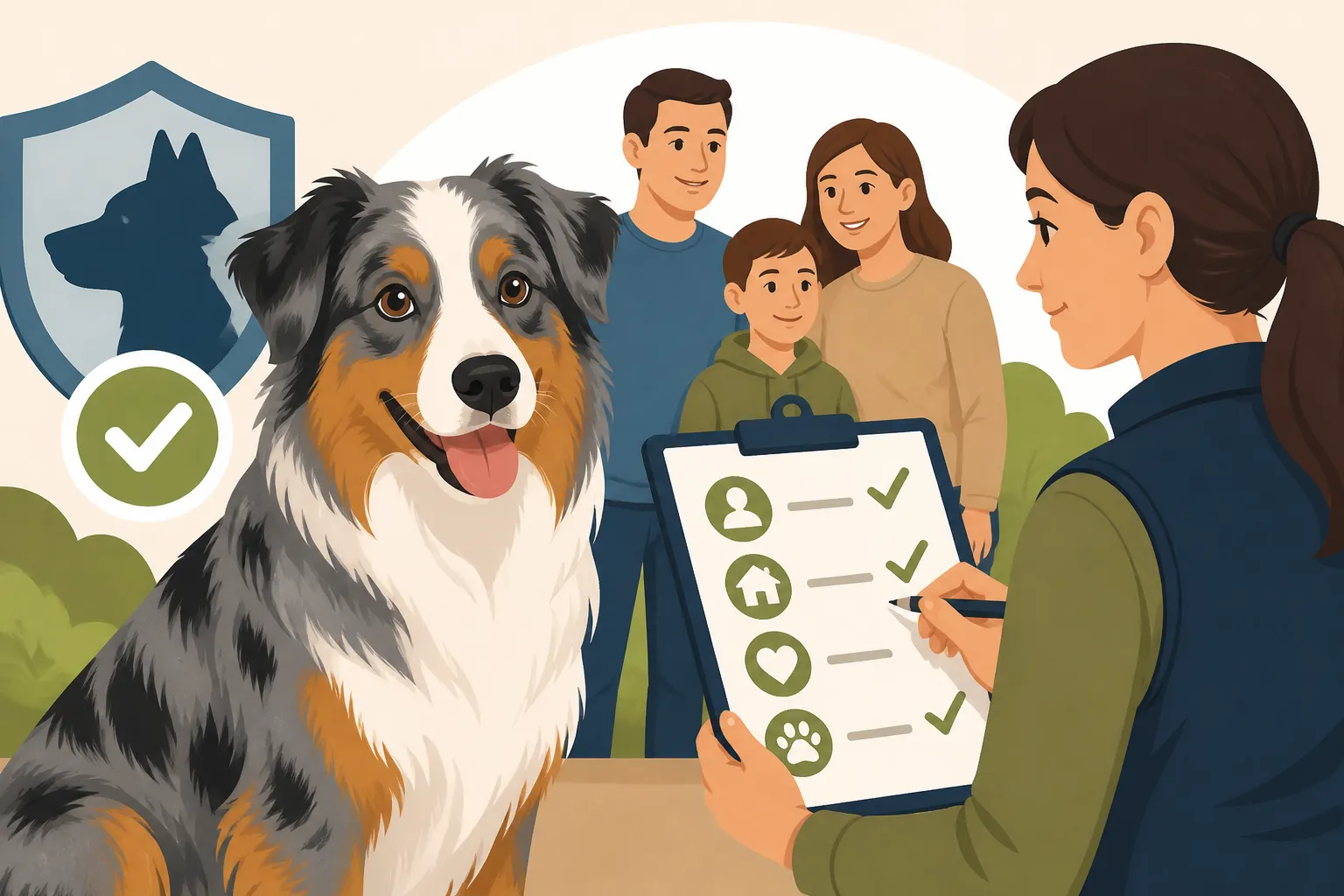
They'll likely ask about your living situation: apartment or house? Fenced yard? Children or other pets? If you have young children, they'll want to discuss how you plan to manage the Aussie's herding instincts around them. If you already have pets, they'll ask about their temperament and how you envision the integration. Breeders often use an application to gather these details initially, which helps them form a holistic picture of your home. They might also inquire about future plans, such as moving or significant life changes, to gauge long-term stability.
Experience with Active or Herding Breeds
While a good breeder won't necessarily rule out a first-time dog owner, having prior experience with active, intelligent, or even herding breeds can definitely be a plus. This suggests you already understand the commitment required and have navigated the challenges that come with high-drive dogs. If you're a first-timer, don't despair! The key is demonstrating that you've educated yourself thoroughly and are fully prepared for the unique qualities of an Australian Shepherd.
A breeder will want to know if you've ever dealt with a dog that requires extensive training, has strong instincts, or needs a 'job'. They're looking for your realistic self-assessment, not necessarily a pedigree of dog ownership. If you've been working with a professional trainer, attended dog sports classes with previous dogs, or spent time volunteering at a shelter with active breeds, these are all valuable experiences to share. Even if you've never owned a dog before, showing that you've read extensively, spoken to Aussie owners, and have a clear plan for training and socialization (perhaps even pre-booking classes) can speak volumes about your dedication. Remember, they're assessing your potential to be a responsible Aussie owner, not just your past resume. This is particularly important when considering if Whether a First-Time Owner Should Get an Aussie is a good idea.
The Typical Australian Shepherd Buyer Screening Process
Navigating the breeder's screening process can feel a bit like applying for a job, and in many ways, it is. You're applying for the privilege of bringing one of their carefully bred puppies into your life. Reputable breeders have a structured approach to ensure they're making the best possible match.
The Initial Application Form
Almost every responsible Australian Shepherd breeder will start with an application form. This isn't just a formality; it's the first filter. These forms are usually quite detailed, asking everything from your living situation and work schedule to your experience with dogs, your understanding of the breed, and your plans for training and exercise. They'll want to know about your family members, other pets, and even your thoughts on veterinary care.
Be honest and thorough in your responses. This is your chance to make a good first impression and show you’ve done your homework. If you leave sections blank or give vague answers, it suggests a lack of seriousness or preparation. Think of it as your resume for dog ownership. Many breeders will ask how you plan to manage a puppy's energy, what kind of food you intend to provide (you might mention researching options on sites like Chewy), and how you'll handle common puppy challenges like house training and nipping.
Interviewing Prospective Owners
If your application passes the initial review, the next step is typically an interview. This might be a phone call, a video chat, or even an in-person meeting at the breeder's home. This is a two-way street: the breeder gets to know you better, and you get to ask all your questions about their breeding program, the parents, and the puppies. They'll delve deeper into the information you provided on your application, probing your understanding of Australian Shepherd Temperament and Working Character and your commitment to things like ongoing socialization.
During the interview, be prepared to discuss specifics: your daily routine, how you'll manage exercise, your training philosophy, and your contingency plans for things like vacations or unexpected emergencies. They want to see that you've thought about the long-term commitment and aren't just making an impulsive decision. This is also where you can demonstrate your enthusiasm and passion for the breed, showing that you're genuinely excited to provide a loving and stimulating environment. Don't be afraid to ask tough questions yourself – a good breeder welcomes transparency.
Vet and Personal References
For many breeders, especially those with long-standing reputations, checking references is a standard part of the process. If you've owned dogs before, they'll likely ask for your current or previous veterinarian's contact information. This allows them to verify that you’re a responsible pet owner who provides routine care, vaccinations, and addresses health concerns promptly. It's a key indicator of your commitment to a dog's well-being.
They might also ask for personal references – friends, family members, or even a dog trainer who can vouch for your character and your ability to care for an animal. Choose people who know you well and can speak positively about your reliability, patience, and love for animals. Always inform your references that they might be contacted by a breeder, so they're prepared and can respond promptly. This step helps the breeder get a third-party perspective on what kind of pet parent you truly are.
Home Visits and Environmental Checks
While not universally practiced, some highly conscientious breeders may request a home visit, either in person or via video call. This allows them to see where the puppy will live, ensuring it's a safe and suitable environment. They'll look for things like secure fencing, potential hazards, and how the overall living space is set up for a dog. They want to ensure you've stocked up on appropriate chew toys (you might mention items you've selected from Chewy) and have a suitable crate if you plan on crate training, which is often crucial for an Aussie puppy's development, as outlined in Getting a Restless Aussie to Settle in a Crate.
This isn't about judging your housekeeping skills, but rather about ensuring the puppy will be safe, comfortable, and appropriately stimulated. They might offer advice on puppy-proofing or suggest ways to enhance your home for an active breed. This step, more than any other, demonstrates a breeder's ultimate dedication to their puppies' welfare and their willingness to go the extra mile to find the perfect match. If a physical visit isn't feasible due to distance, a detailed video tour and photos might be requested instead.
Red Flags That Make Breeders Hesitate
Just as you, as a buyer, are looking for a reputable breeder, breeders are constantly on the lookout for red flags that suggest a potential owner might not be the right fit for one of their Australian Shepherd puppies. Recognizing these can help you avoid inadvertently sending the wrong signals.
Lack of Research and Realistic Expectations
One of the biggest red flags is a lack of basic knowledge about the Australian Shepherd breed. If a potential buyer expresses surprise about the breed's energy levels, grooming requirements, or strong herding instincts, it immediately signals they haven't done their homework. Breeders want owners who understand that an Aussie isn't just a pretty face; it's a high-drive working dog. Phrases like "I just love the blue eyes" without any accompanying understanding of the dog's needs will raise concern.
A breeder will also be wary if a buyer has unrealistic expectations about a puppy's behavior. Assuming a puppy will be perfectly behaved from day one, or expecting it to "train itself," shows a profound lack of preparation. They're looking for individuals who understand the commitment to consistent training, socialization, and management that is vital for an Aussie, particularly through its adolescent phase, which can be challenging, as discussed in The Aussie Teenage Months and What Changes. Demonstrating an informed perspective, even if you are a first-time owner, is crucial.
Impulsive Decisions and Instant Gratification
Breeders are highly suspicious of anyone who seems to be making an impulsive decision or demanding immediate gratification. If you call and say, "I want a puppy this weekend!" without having gone through the application process, or if you seem unwilling to wait for the right litter, it’s a major red flag. Reputable breeders typically have waiting lists, and their puppies are usually reserved long before they're ready to go home. The notion of a "designer dog" often leads people to seek out specific colors or eye patterns, but a good breeder will always prioritize temperament and health over superficial traits.
A genuine interest involves patience and a willingness to follow the breeder's process. It means understanding that finding the right match takes time, sometimes months or even over a year. Someone who rushes the process often hasn't fully considered the long-term implications or isn't prepared for the commitment. Such behavior suggests the decision is driven by fleeting emotion rather than thoughtful planning, which can lead to a dog being rehomed when the novelty wears off.
Breeding Intentions Without Transparency
Another significant red flag is any indication that a buyer intends to breed their Australian Shepherd without being transparent about it or meeting the breeder's ethical standards. If you hint at wanting to "make a little money" off a litter, or if you inquire about breeding rights without showing a clear understanding of genetic health testing, conformation, and responsible breeding practices, a breeder will likely walk away. They are working hard to preserve the breed and prevent backyard breeding scenarios that often result in unhealthy or poorly socialized puppies.
Responsible breeders often include clauses in their contracts about spaying/neutering by a certain age for pet-only homes, or they require extensive health clearances and mentorship for potential breeding partners. They want to know you respect their breeding program and aren't simply looking for a cheap foundation for your own, potentially irresponsible, venture. Be upfront about any future aspirations you might have, and be prepared to demonstrate a thorough understanding of what goes into ethical breeding, potentially even asking the breeder about What an Aussie Puppy Contract Should Say regarding breeding.
Self-Assessment for Prospective Aussie Owners
Before you even fill out that first application, take a moment to honestly evaluate whether an Australian Shepherd is the right fit for your life. This isn't just about what a breeder wants to hear; it's about setting yourself and your future dog up for success.
| Factor | Ideal Aussie Owner | Potential Red Flag |
|---|---|---|
| Research & Knowledge | Can articulate breed needs, temperament, and common issues. | Surprised by high energy, grooming, or herding instincts. |
| Lifestyle | Active, enjoys outdoor activities, prepared for daily engagement. | Couch potato, expects dog to entertain itself, works long hours. |
| Living Environment | Securely fenced yard (if applicable), space for indoor play. | Unfenced yard, small apartment with no exercise plan. |
| Time Commitment | Willing to dedicate 1-2 hours daily to exercise and training. | Expects dog to be low maintenance, travels frequently without dog. |
| Training Philosophy | Committed to positive reinforcement, ongoing socialization. | Believes in harsh corrections, no plan for formal training. |
| Financial Preparedness | Budgeted for food, vet care, insurance, potential emergencies. | Unaware of typical vet bills or cost of quality food (e.g., from Chewy). |
| Long-Term View | Views dog as a 12-15 year family member, plans for all life stages. | Focuses only on puppy cuteness, no thought of future care. |
| Flexibility | Open to breeder guidance, willing to adapt plans if needed. | Rigid expectations, unwilling to compromise. |
Conclusion
The journey to bring an Australian Shepherd into your life through a reputable breeder is a thorough one, designed to ensure the best possible outcome for everyone involved. Understanding why breeders screen so carefully, what they look for in an ideal owner, and the steps involved in their process will not only prepare you but also help you demonstrate your genuine commitment. By doing your homework, being transparent, and showing patience, you'll prove that you're not just looking for a dog, but ready to be a devoted, knowledgeable, and responsible companion to a magnificent Australian Shepherd for years to come.
Disclaimer
This article is for general informational purposes only and does not constitute professional advice. Laws, prices and regulations vary by location and change over time. Consult a qualified professional for guidance on your specific situation.