Aussies as Service and Therapy Dogs
Many Australian Shepherd owners, myself included, often look at their incredibly smart, dedicated, and high-energy companions and wonder if they could fill a truly profound role as a service or therapy dog. It's a natural thought when you see how deeply they bond with their people and how intuitive they can be. However, the path to becoming a certified service or therapy dog is far more rigorous and specialized than many realize, and while Aussies certainly possess many admirable qualities, they also come with inherent breed traits that can pose unique challenges. This guide will walk you through the distinct differences between service and therapy dogs, explore why your Aussie might be a fantastic candidate or face hurdles, and outline the intensive journey required for these vital roles.
Understanding the Core Differences: Service vs. Therapy Dogs
Before we even consider whether an Australian Shepherd is suitable, it's crucial to understand that "service dog" and "therapy dog" are not interchangeable terms. They serve vastly different purposes, have different legal protections, and demand distinct temperaments and training. Many people use these terms loosely, which can lead to confusion and incorrect expectations for both the dog and the handler.
Service Dogs: A Partner in Daily Life
A service dog is not just a pet; it is specifically trained to perform tasks that mitigate a person's disability. This is a working animal, not merely a companion. Under the Americans with Disabilities Act (ADA), a service dog is defined as a dog that has been individually trained to do work or perform tasks for a person with a disability. The task must be directly related to the person's disability. Think about it: a guide dog for someone who is blind, a mobility assistance dog that helps with balance or retrieves dropped items, a medical alert dog that senses low blood sugar or an impending seizure. These dogs are granted public access rights, meaning they can go almost anywhere their handler can, even places where pets are generally not allowed. This isn't just a courtesy; it's a legal right, and handlers cannot be asked about their disability or required to make their dog demonstrate its tasks. The focus is entirely on the task the dog performs to assist with a disability.
The training for a service dog is incredibly intense and typically spans years, starting from puppyhood. They must be impeccably behaved, completely non-reactive to their environment, and focused solely on their handler. Any signs of aggression, excessive barking, or even an inability to ignore distractions in a crowded grocery store can disqualify a dog. The stakes are high because a lapse in focus or behavior could put their handler in danger.
Therapy Dogs: Bringing Comfort to Many
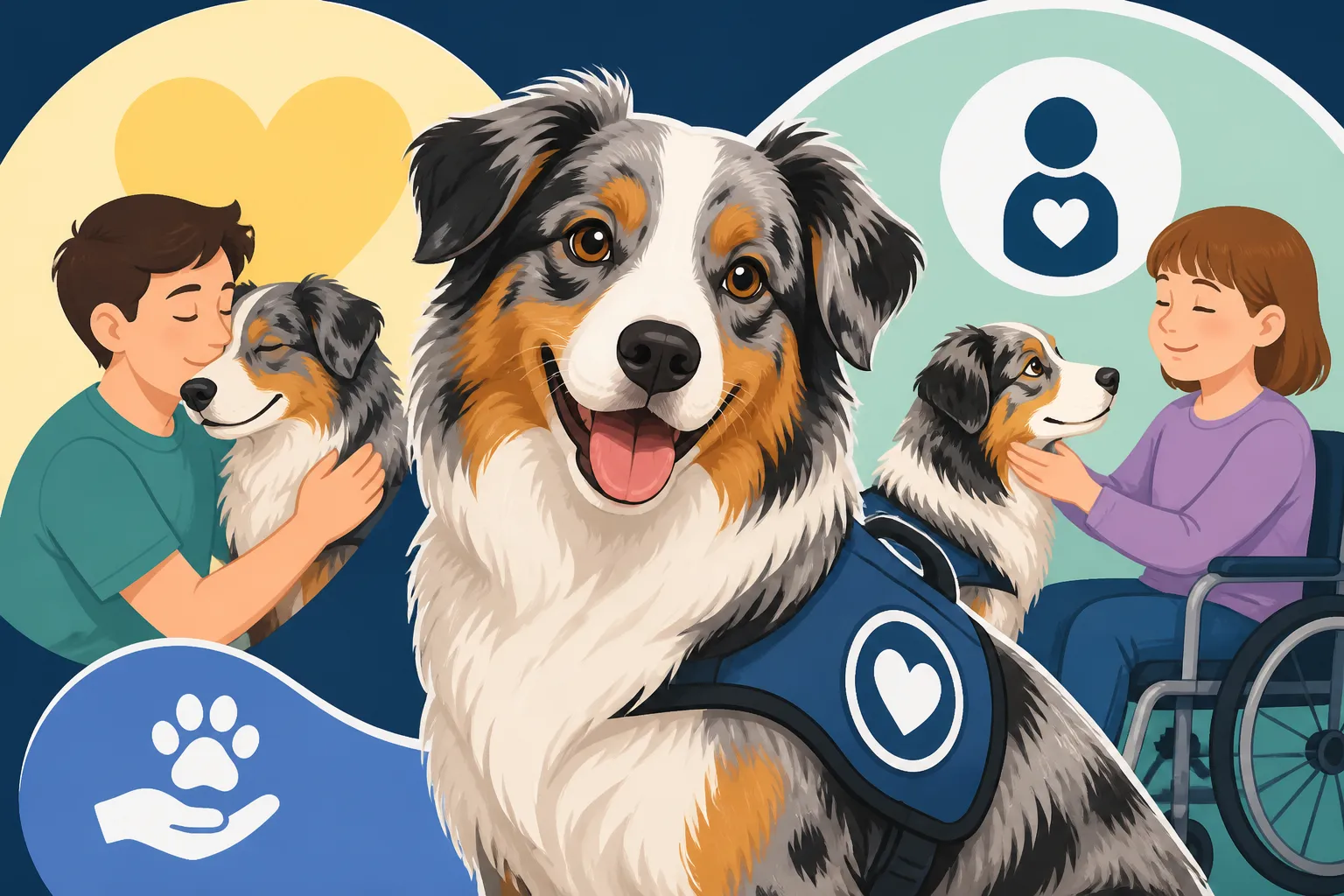
Therapy dogs, on the other hand, are delightful animals that provide comfort and affection to people in hospitals, nursing homes, schools, disaster areas, and other facilities. They are typically personal pets with exceptionally stable and friendly temperaments, owned by volunteers who take them to visit various settings. While their presence can be incredibly beneficial for emotional well-being, stress reduction, and rehabilitation, they do not have the same public access rights as service dogs. They are only permitted in facilities that explicitly welcome them.
A therapy dog's primary role is to interact with multiple people, offering a calm, reassuring, and often joyful presence. They need to be comfortable with strangers approaching, petting, sometimes even clumsy handling, and adapting to new, often noisy or stimulating environments. The training for a therapy dog focuses heavily on excellent manners, obedience, and a bulletproof temperament that can handle various human interactions and novel situations without stress or reactivity. Organizations like Therapy Dogs International often require specific certifications and evaluations to ensure a dog is suitable for this demanding but rewarding role.
Here's a quick comparison of the two roles:
| Feature | Service Dog | Therapy Dog |
|---|---|---|
| Definition | Individually trained to perform tasks for a person with a disability. | Provides comfort and affection to multiple people in various settings. |
| Legal Status | Protected under ADA; public access rights. | No ADA protection; no public access rights. |
| Purpose | Mitigates handler's disability. | Offers emotional support, comfort, and socialization. |
| Handler | Works for one specific individual with a disability. | Typically a volunteer handler with their pet visiting many people. |
| Training Focus | Specific tasks, obedience, public manners, handler focus. | Excellent manners, obedience, stable temperament, enjoyment of strangers. |
| Environment | Anywhere the handler goes (public and private spaces). | Approved facilities (hospitals, schools, nursing homes). |
Why Australian Shepherds Excel (and Sometimes Struggle)
Australian Shepherds are undeniably intelligent, loyal, and possess a strong work ethic. These traits can make them seem like ideal candidates for working roles. However, it's essential to look at the whole picture, acknowledging both their strengths and the inherent challenges that come with their breed characteristics.
Traits That Make Aussies Shine
Their sharp minds are a huge asset. Aussies are incredibly intelligent and eager to learn, which is foundational for absorbing the complex commands and tasks required of service and therapy dogs. They pick up new concepts quickly and thrive on having a "job" to do. This mental engagement is something they crave, and specialized training can be a fantastic outlet for it. Many Aussies form incredibly strong bonds with their primary person, which is crucial for the deep connection needed in a service dog partnership. Their desire to please can translate into a highly biddable dog, attentive to cues and eager for positive reinforcement. You can often find durable, high-value training treats and puzzle toys on Chewy that are perfect for keeping an Aussie's mind engaged during training sessions.
Their medium size is also often an advantage. They are large enough to perform some physical tasks, like bracing for stability or retrieving heavier items, but not so large that they are cumbersome in tight spaces, which can be a consideration for apartment living or navigating crowded areas. Their agility and natural athleticism can also be beneficial for tasks requiring precise movement or quick reactions.
Challenges in Service Work
Despite their many talents, Australian Shepherds come with certain breed-specific traits that can make the rigorous demands of service work particularly challenging. The most prominent is their strong herding instinct. This instinct to gather, chase, and control movement can manifest as heel-nipping, circling, or fixating on moving objects like bicycles, children, or even shopping carts. In public access scenarios, a service dog must ignore such distractions, and an Aussie's innate drive can be incredibly difficult to override consistently. A service dog cannot be seen attempting to "herd" strangers in a store aisle or at a park. This requires intensive and ongoing training, often starting from a very young age, to teach them impulse control and a reliable "leave it." This is where a trainer who truly understands The Australian Shepherd Herding Drive You Cannot Train Out becomes indispensable.
Another common Aussie trait is their natural suspicion of strangers. While this makes them excellent home guardians, it can be a significant hurdle for a therapy dog that needs to be universally friendly and welcoming, or a service dog that needs to remain neutral and calm in the presence of countless unfamiliar people. An Aussie's tendency to Why an Australian Shepherd Reserves Itself With Strangers means they might not naturally seek out attention from multiple people, which is the core function of a therapy dog. For a service dog, this aloofness must be managed so it doesn't manifest as reactivity or fear-based aggression in new situations. Australian Shepherd Reactivity and Overarousal can also be an issue, especially in busy, high-stimulation environments that a service dog must navigate daily.
Finally, their high energy and need for mental stimulation can be a double-edged sword. While it fuels their trainability, it also means that if their needs aren't perfectly met, they can develop undesirable behaviors such as Australian Shepherd Barking and Noise Sensitivity or Australian Shepherd Behavior Problems From Under-Exercise. A service dog needs to have a calm "off switch" when not performing tasks, and while Aussies can learn this, it requires consistent effort. An Aussie That Cannot Switch Off would struggle in a service role where long periods of calm waiting are expected.
The Rigorous Training Journey for an Aussie
Embarking on the journey to train an Australian Shepherd as a service or therapy dog is a monumental commitment of time, effort, and financial resources. It’s not simply about teaching "sit" and "stay"; it’s about shaping a dog's entire worldview and behavior to meet incredibly high standards.
Early Foundations and Socialization
The foundation for any successful working dog begins in puppyhood. For an Australian Shepherd, early and extensive socialization is non-negotiable. This means exposing them to a vast array of sights, sounds, smells, people, and environments in a positive and controlled manner. A puppy class that emphasizes positive reinforcement and appropriate social interactions is an excellent start. Think busy city streets, quiet parks, loud construction noises, children, elderly people with walkers, different floor textures, and crowded stores. Each experience needs to be positive to build confidence rather than fear or reactivity. This foundational period, often guided by something like The Australian Shepherd Puppy Curriculum Month by Month, is where an Aussie learns to generalize good behavior and remain calm in novel situations.
Beyond basic obedience, impulse control is paramount. Given an Aussie's drive, teaching them to settle, wait patiently, and ignore distractions is far more important than complex tricks. Commands like "leave it" and "wait" become life skills. This is also where you'd be looking for a Finding a Trainer Who Understands an Aussie — someone who truly understands the breed's working characteristics and can guide you in harnessing their intelligence while mitigating their herding instincts. Training with items like a long line, easily found on Chewy, allows for safe practice of recall and distance commands in distracting environments.
Advanced Task Training and Public Access
Once a solid foundation is established, the dog progresses to specific task training for service work or advanced manners for therapy work. For a service dog, this could involve:
- Mobility tasks: Helping a handler stand, retrieve dropped items, open doors.
- Medical alert tasks: Alerting to changes in blood sugar, impending seizures, or other medical events.
- Psychiatric tasks: Providing deep pressure therapy, interrupting anxiety attacks, finding an exit.
Each task is broken down into tiny steps and proofed in countless environments and with increasing distractions. The dog must perform these tasks reliably, every single time. Public access training then focuses on perfecting their behavior in public spaces. This means being invisible, quiet, and completely focused on their handler, even when surrounded by the chaos of daily life. They must ignore other dogs, food on the ground, loud noises, and people trying to interact with them. This is where an Aussie's inherent reserved nature with strangers might actually become an advantage, provided it's channeled into polite neutrality rather than fear or aggression.
For therapy dogs, advanced training means solidifying their ability to calmly interact with multiple strangers, tolerate gentle petting (and sometimes less-than-gentle petting from children), and remain unfazed by medical equipment or the sometimes erratic movements of people in facilities. They need to love people and actively seek out gentle interaction while maintaining impeccable manners.
Certification and Ongoing Maintenance
Neither service dogs nor therapy dogs have a single, universal government certification in the United States. However, reputable service dog organizations provide their own certification, often involving a rigorous public access test. For owner-trained service dogs, many choose to follow the standards set by organizations like Assistance Dogs International (ADI) or seek evaluation from professional trainers. Therapy dogs are typically certified through national organizations like Alliance of Therapy Dogs or Pet Partners, which require evaluations, background checks for handlers, and ongoing registration.
The training doesn't end with certification. Working dogs require continuous training and practice to maintain their skills and public manners. Just like any athlete, they need to stay sharp. This also includes regular vet check-ups to ensure they are physically sound and comfortable in their working role. A working Aussie's joints, for example, will need particular attention, and a good diet supported by joint supplements (also available through retailers like Chewy) might be part of their routine, especially if they are performing mobility tasks or are highly active.
Considering Your Aussie's Individual Temperament
Ultimately, suitability for service or therapy work boils down to the individual dog, regardless of breed. While certain breeds might have general predispositions, temperament is far more important than pedigree.
Temperament Over Breed
Every Australian Shepherd is an individual. You might have one with the classic high-drive, reserved-with-strangers personality, and another that is a total couch potato, never met a stranger, and thinks fetch is a suggestion. It's the latter type that often thrives more in roles requiring constant social interaction and unwavering neutrality. A dog's genetics, early experiences, and ongoing training all contribute to its temperament.
For a service dog, the ideal temperament is calm, confident, resilient, highly trainable, and utterly devoted to its handler, but neutral to everyone else. For a therapy dog, it's friendly, unflappable, enjoys being petted by strangers, and can adapt to new environments easily. An Aussie that is prone to An Australian Shepherd That Gets Worse in the Evening due to overarousal or overstimulation would likely not be a good fit for either role, as consistency and calmness are paramount.
Assessing Suitability
If you're considering your Aussie for either role, the best first step is to get an honest, objective assessment from a qualified professional trainer who specializes in service or therapy dog work. They can evaluate your dog's natural aptitudes, stress tolerance, social behaviors, and biddability. They can spot potential issues like Australian Shepherd Reactivity and Overarousal or an inability to truly relax in novel environments.
Observe your dog closely in various situations:
- How do they react to loud noises? A service dog cannot flinch at a fire alarm or a dropped tray.
- How do they react to strangers? Do they greet everyone enthusiastically (good for therapy), or are they reserved and focused on you (good for service, if not fearful)? Do they bark?
- Can they settle calmly in a new place? A busy cafe, a doctor's waiting room, or a classroom.
- What is their impulse control like around food or other dogs? A service dog cannot steal food from a low shelf or lunge at a passing canine friend.
- Do they have a strong "off switch"? Can they relax completely when not actively working? Whether an Aussie Needs a Job to Be Calm is a crucial question.
Many trainers offer temperament evaluations specifically for this purpose. An honest assessment from an expert will save you countless hours and potential heartache if your beloved Aussie, despite their wonderful qualities, simply isn't cut out for the unique pressures of a working dog role.
Support for the Working Team
Should your Australian Shepherd prove to have the right temperament and aptitude for service or therapy work, remember that it is a team effort. The handler is just as important as the dog. You must be committed to ongoing training, advocacy, and supporting your dog's physical and emotional well-being. This means being prepared to educate others about your dog's role, managing public interactions, and ensuring your dog has appropriate downtime and enrichment outside of work.
Investing in quality gear, such as comfortable, well-fitting harnesses, reflective vests for visibility, and proper identification for service or therapy dogs, is essential. These items are readily available from pet supply retailers. Continuing education, joining support groups for working dog handlers, and maintaining a strong relationship with your veterinarian and trainer will be vital for the entire working life of your Australian Shepherd. They need to feel secure, understood, and comfortable in their crucial role.
Disclaimer
This article is for general informational purposes only and does not constitute professional advice. Laws, prices and regulations vary by location and change over time. Consult a qualified professional for guidance on your specific situation.