Australian Shepherd Elbow X-Rays at Two Years
The moment your Australian Shepherd hits that two-year mark, a whole new set of considerations often comes into focus, especially when it comes to their long-term joint health. Many active Aussie owners worry about subtle limping or stiffness, knowing their beloved dogs put immense strain on their bodies during play, work, or sport. This guide is here to walk you through why elbow X-rays at this age are so important, what they can reveal, and how to navigate the process for your energetic companion.
Why Two Years is Critical for Australian Shepherd Elbow X-Rays
It might seem arbitrary, this "two-year rule," but there’s a solid biological reason why veterinarians and official registries like the Orthopedic Foundation for Animals (OFA) recommend waiting until your Australian Shepherd is at least 24 months old for definitive elbow evaluations. Your Aussie's skeletal system is still developing during their puppy and adolescent phases, and getting X-rays too early can lead to inaccurate or inconclusive results.
Understanding Growth Plate Closure and Maturity
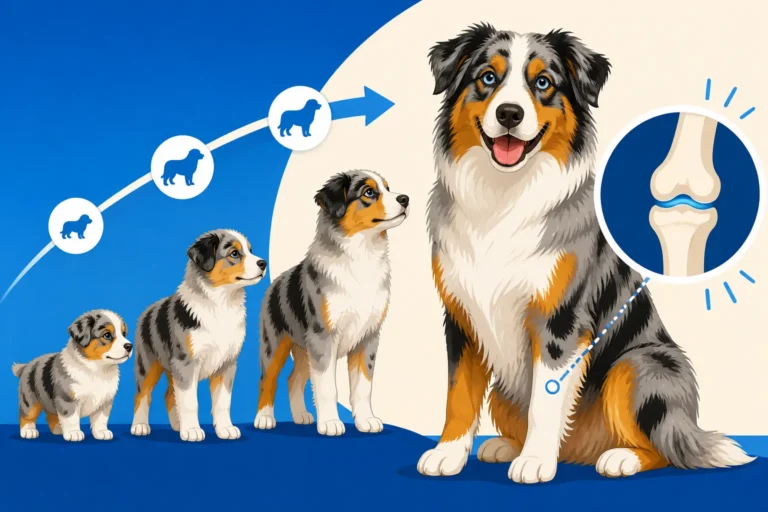
Imagine your Aussie as a growing sapling. Its bones aren't solid, mature structures until the growth plates, also known as epiphyseal plates, have completely fused and closed. These are areas of cartilage at the ends of long bones where new bone tissue is produced, allowing the bone to lengthen. In most large and medium-sized breeds like the Australian Shepherd, these growth plates continue to be active and open until around 18 to 24 months of age.
If you were to take X-rays before this closure, the open growth plates can easily be mistaken for fractures or other abnormalities, leading to misdiagnosis or, more commonly, an inability to accurately assess the joint’s true structure. By two years, the bones have reached their mature form, making it possible to get a clear, definitive picture of the elbow joint's integrity. This timing ensures that any findings, whether normal or indicative of conditions like elbow dysplasia, are based on a fully developed skeletal structure, providing the most reliable assessment for both your vet and, if applicable, for official health registries. It’s a bit like waiting for a cake to fully cool before slicing it – you get a much better result.
The Role of OFA and PennHIP in Elbow Evaluation
When we talk about definitive joint health, especially for a breed like the Australian Shepherd, the Orthopedic Foundation for Animals (OFA) often comes up. OFA is a widely recognized health registry that aims to reduce the incidence of genetic diseases in dogs by certifying their health. For elbows, OFA issues grades based on X-ray evaluations by a panel of three independent radiologists. To receive an official OFA elbow certification, your dog must be at least 24 months old.
While OFA is well-known for hips, their elbow evaluations are just as crucial. They categorize elbows as normal (Grade 0), mild (Grade I), moderate (Grade II), or severe (Grade III) elbow dysplasia. These certifications aren't just for breeders; they provide invaluable information for any owner, offering insight into their dog's predisposition to arthritis and future mobility issues. Understanding your Aussie's elbow status can help you make informed decisions about exercise routines, weight management, and potential preventative care. Some breeders also use PennHIP evaluations, which focus more on hip laxity but generally also recommend full skeletal maturity for comprehensive joint assessment. Both systems provide critical data points in a breed that can be prone to joint conditions like Australian Shepherd Hip Dysplasia and OFA Scoring and, of course, elbow issues.
Deciphering Australian Shepherd Elbow Dysplasia
Elbow dysplasia is a general term encompassing several developmental abnormalities that can affect the elbow joint of growing dogs. It’s a common and often painful condition, especially in active breeds like Australian Shepherds. When left unaddressed, it can lead to chronic pain and debilitating arthritis.
What Exactly is Elbow Dysplasia?
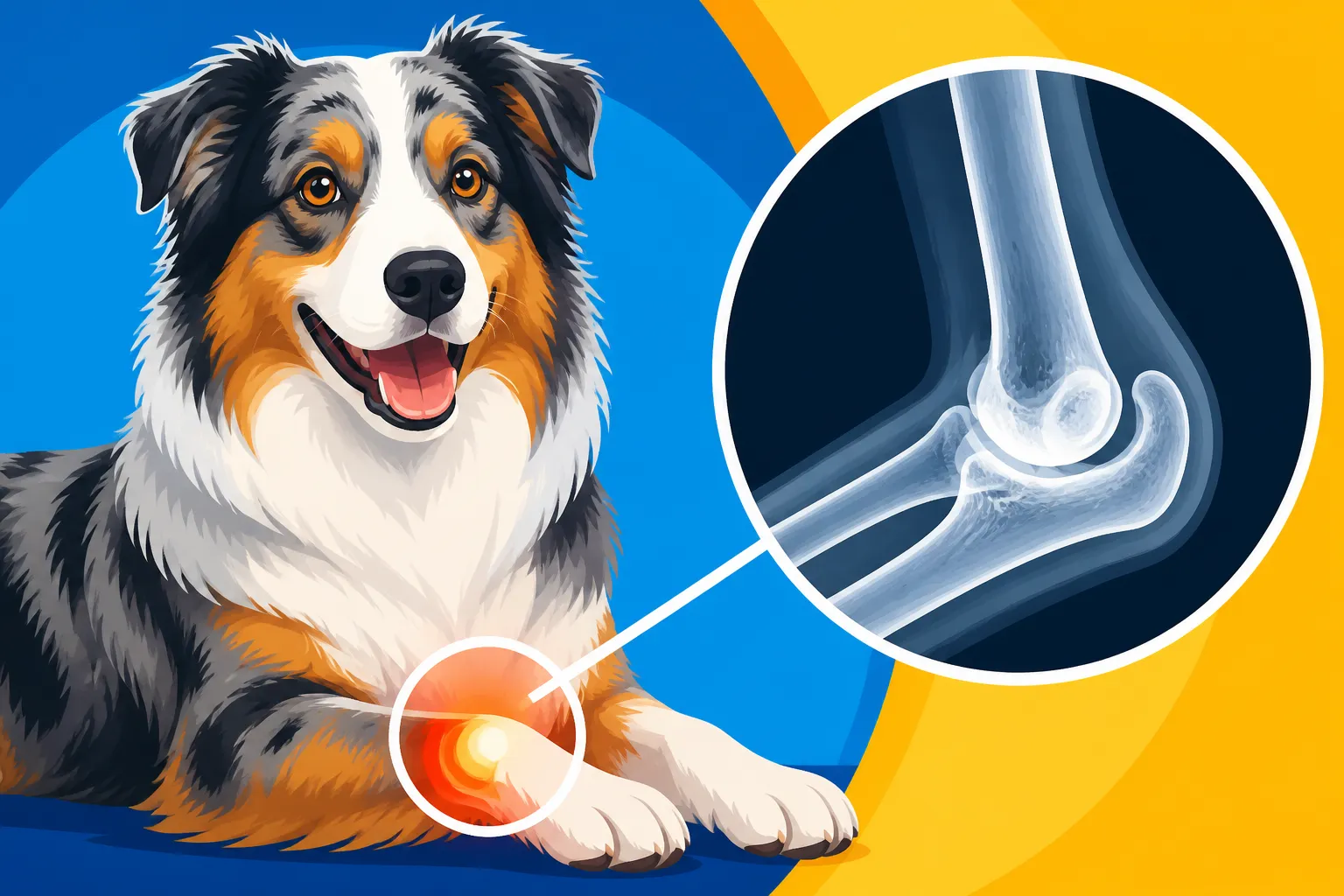
Elbow dysplasia isn't just one problem; it's a complex condition that refers to several distinct, yet often related, abnormalities that occur during the growth phase. These issues prevent the three bones of the elbow joint – the humerus, radius, and ulna – from fitting together properly. Think of it like a poorly built engine where the parts don't quite align, leading to friction and wear. Over time, this abnormal joint mechanics cause progressive degeneration and osteoarthritis.
The four primary components of elbow dysplasia are:
- Fragmented Coronoid Process (FCP): This is when a small piece of bone breaks off the ulna, which is one of the forearm bones. This fragment can float in the joint, causing pain and inflammation.
- Ununited Anconeal Process (UAP): A separate growth center, the anconeal process, usually fuses with the ulna around 4-5 months of age. If it fails to unite, it becomes a UAP, leading to instability and discomfort.
- Osteochondritis Dissecans (OCD): This occurs when cartilage separates from the underlying bone, often creating a flap or loose body within the joint. This can be incredibly painful and interferes with normal joint function.
- Elbow Incongruity: This term describes a general mismatch in the length or shape of the bones forming the joint, causing an uneven distribution of weight and abnormal pressure on the cartilage.
These conditions can occur individually or in combination, making diagnosis tricky without proper imaging. They are primarily genetic, though environmental factors like rapid growth, excessive exercise during puppyhood, and nutrition can influence their severity. For Australian Shepherds, with their high energy and genetic predispositions, understanding these facets is crucial. It’s not simply a matter of "bad luck"; there's often a hereditary component that careful breeders try to screen out, contributing to the broader goal of The Health Tests Every Australian Shepherd Parent Needs.
Recognizing the Subtle Signs in Active Aussies
One of the most frustrating aspects of elbow dysplasia in an Australian Shepherd is that these dogs are incredibly stoic. Their high pain tolerance and immense desire to work and play often mean they will mask discomfort for a long time. You might not see obvious lameness until the condition is quite advanced, or they’re simply too sore to hide it anymore. This is why paying close attention to subtle changes in their behavior or movement is so important.
Look for signs like a slight stiffness after rest, especially first thing in the morning or after a long nap. You might notice a reluctance to engage in activities they once loved, such as jumping into the car, navigating stairs, or playing extended games of fetch. They might shift their weight, or walk with an odd, short stride on one or both front legs. Some Aussies might develop a wider stance with their front legs to try and alleviate pressure, or they might lick at their elbows. A significant indicator can be a decrease in endurance or a noticeable change in their willingness or ability to perform during dog sports or herding activities. For instance, an Aussie known for its intense focus in agility might suddenly seem hesitant on turns or over jumps, which could be an early warning sign that something hurts, possibly linked to Aussie Elbow Dysplasia From Hard Turning. Don't dismiss these changes as just "getting older" or "being tired" in a young, active dog. Early detection through tools like X-rays allows for earlier intervention, which can significantly improve their quality of life and slow the progression of debilitating arthritis.
The Elbow X-Ray Process and Interpretation
Getting X-rays done might sound intimidating, but it's a routine and generally straightforward procedure. Knowing what to expect can help ease your mind and ensure you're prepared for the best possible results.
Preparing for Your Aussie's Radiographs
When you bring your Australian Shepherd in for elbow X-rays, especially for official OFA submission, sedation is almost always required. This isn't just to keep your dog still; it's to ensure the exact positioning needed for diagnostic-quality images. A twitch or a slight shift during the X-ray can lead to blurry images, requiring repeat sedation and X-rays, which is something no one wants. The sedation allows the veterinary team to position your Aussie precisely on the X-ray table, ensuring the joint is properly extended and rotated to capture all necessary angles. This precise positioning is critical for visualizing the subtle bone changes associated with elbow dysplasia.
Your vet will likely ask you to fast your Aussie for a certain number of hours before the appointment to ensure an empty stomach, which is a standard safety precaution when administering sedatives. They will also discuss your dog’s general health history to choose the safest sedative protocol. Once sedated, your Aussie will be gently positioned by trained veterinary technicians, and several views of each elbow will be taken. After the X-rays are complete, your dog will be monitored as they recover from the sedation. The entire process, from check-in to going home, might take a few hours, but the actual X-ray time is relatively brief. If you have concerns about your Aussie's reaction to certain medications due to genetic predispositions, such as the MDR1 mutation, this is definitely something to discuss with your vet beforehand, ensuring they are aware of Australian Shepherd Drug Reactions at the Emergency Vet.
What the Veterinarian and Radiologist Look For
Once the X-rays are taken, your veterinarian will do an initial review, but for official certification (like OFA), the images are sent to a panel of board-certified veterinary radiologists. These experts are specifically trained to identify minute details and subtle changes in bone and joint structures that might indicate issues.
When evaluating elbow X-rays, they are looking for specific indicators of the various components of elbow dysplasia:
- Osteophytes: These are small bone spurs that form around the joint margins, a classic sign of osteoarthritis. Their presence indicates chronic inflammation and joint degeneration.
- Sclerosis: An increased density of bone, often seen around areas of stress or microtrauma.
- Joint Incongruity: They look for any unevenness or gaps in the joint space where the bones should articulate smoothly.
- Fragmented Coronoid Process (FCP) and Ununited Anconeal Process (UAP): These are specific bone fragments or growth plate abnormalities as discussed earlier.
- Osteochondritis Dissecans (OCD) lesions: Areas where cartilage has separated from the underlying bone.
The radiologists grade the elbows, typically on a scale from Normal (Grade 0) to Severe (Grade III), based on the presence and severity of these findings. This grading system is universally understood and provides a clear picture of your Aussie's elbow health. For example, a dog with Grade I might have mild osteophytes, while a Grade III might show significant bone remodeling and joint degeneration. This detailed interpretation is crucial for understanding the prognosis and guiding future management strategies, just as a thorough Australian Shepherd Puppy Eye Check at Six Weeks gives an early look at ocular health.
Here’s a simplified table explaining the OFA elbow grades:
| OFA Elbow Grade | Description | Clinical Significance |
|---|---|---|
| Normal (Grade 0) | No evidence of elbow dysplasia. | Excellent joint health, low risk of future issues. |
| Grade I (Mild) | Minimal bone changes, slight osteophytes. | Mild osteoarthritis, may show subtle clinical signs. |
| Grade II (Moderate) | Moderate bone changes, distinct osteophytes. | Moderate osteoarthritis, likely to show clinical lameness. |
| Grade III (Severe) | Severe bone changes, significant osteophytes, joint remodeling. | Severe osteoarthritis, significant lameness and pain. |
Navigating an Elbow Dysplasia Diagnosis
Receiving a diagnosis of elbow dysplasia can be disheartening, but it’s not the end of the world for your Australian Shepherd. Many dogs with elbow dysplasia can live full, happy lives with proper management. The key is understanding the available options and committing to a long-term care plan.
Treatment Options for Affected Australian Shepherds
The approach to treating elbow dysplasia depends heavily on its severity and the specific components involved. Generally, treatment options fall into two main categories: conservative management and surgical intervention.
Conservative Management: This is often the first line of defense for mild to moderate cases, or for dogs who are not candidates for surgery. It focuses on reducing pain, inflammation, and slowing the progression of arthritis.
- Weight Management: Keeping your Aussie at a lean, healthy weight is paramount. Every extra pound significantly increases the load on their joints, exacerbating pain and accelerating cartilage wear. This is a common theme in joint health, as you'd find in discussions about How Weight Multiplies the Load on Aussie Joints.
- Controlled Exercise: While exercise is crucial for Aussies, it needs to be modified. High-impact activities like intense fetch or prolonged running on hard surfaces should be minimized or avoided. Instead, focus on low-impact options like swimming, leash walks, or controlled short bursts of play.
- Medication: Non-steroidal anti-inflammatory drugs (NSAIDs) are commonly prescribed to manage pain and inflammation. Your vet might also recommend joint supplements like glucosamine, chondroitin, and omega-3 fatty acids, which can help support cartilage health and reduce inflammation.
- Physical Therapy: Canine physical therapy, including hydrotherapy (underwater treadmill), therapeutic exercises, and massage, can significantly improve mobility, strengthen supporting muscles, and reduce pain.
Surgical Intervention: For more severe cases, or when conservative management isn't providing sufficient relief, surgery might be recommended. The type of surgery depends on the specific cause of the elbow dysplasia.
- Arthroscopy: A minimally invasive procedure where a small camera is inserted into the joint to identify and remove loose cartilage fragments (like FCP or OCD lesions). This can significantly reduce pain and prevent further joint damage.
- Corrective Osteotomies: In some cases of elbow incongruity, bones might be cut and realigned to improve the joint fit.
- Total Elbow Replacement: This is a more drastic measure, reserved for severe, end-stage arthritis where other treatments have failed. It involves replacing the damaged joint with prosthetic components, similar to human joint replacements.
The decision for surgery is a big one and involves careful consideration with your vet, potentially a veterinary orthopedic specialist. While surgery can offer significant relief, it also comes with recovery periods and its own set of risks and costs. Having pet insurance like Healthy Paws, which is known for its comprehensive coverage, can provide immense peace of mind and financial assistance when faced with such expensive decisions.
Living With and Managing an Aussie with Elbow Dysplasia
A diagnosis of elbow dysplasia is a lifelong commitment to management, but it doesn't mean your Australian Shepherd can't live a happy, active life. It just means you'll need to be more mindful and proactive about their care. The goal is to minimize pain, maintain mobility, and slow the progression of osteoarthritis.
Regular veterinary check-ups are essential to monitor your dog's condition and adjust their management plan as needed. This might include periodic X-rays to assess the joint degeneration and blood work if they are on long-term medications. You might also consider consulting with a certified canine rehabilitation specialist, who can design a tailored exercise program and introduce therapies like laser therapy or acupuncture to complement conventional treatments.
Beyond medical interventions, creating a joint-friendly home environment can make a big difference. Provide orthopedic beds, use ramps for cars or high furniture, and ensure good traction on slippery floors with rugs or paw grippers. Continue to focus on mental enrichment to keep your smart Aussie engaged, even if physical activity is reduced. Puzzle toys, scent work, and trick training can be excellent outlets for their energy without putting strain on their elbows. Starting joint support early, even for young, seemingly healthy dogs, can also be a proactive measure to protect those hard-working joints, as detailed in articles like Starting Joint Support on a Young Working Aussie. While the journey might require more attention and resources, including considering options like Healthy Paws for ongoing vet bills, the unwavering loyalty and joy your Australian Shepherd brings to your life make every effort worthwhile.
Disclaimer
Please remember that this information is intended for educational purposes only and should not replace professional veterinary advice. Always consult with your veterinarian for any health concerns or before making any decisions about your Australian Shepherd's care, diet, or treatment.