What Collie Eye Anomaly Does to an Aussie Eye
Finding out your beloved Australian Shepherd might have a genetic eye condition like Collie Eye Anomaly (CEA) can be incredibly worrying. You want to understand exactly what it means for their vision, their comfort, and their future. This guide will walk you through what CEA is, how it affects an Aussie's eyes, and what you can do to manage the condition.
Understanding Collie Eye Anomaly in Australian Shepherds
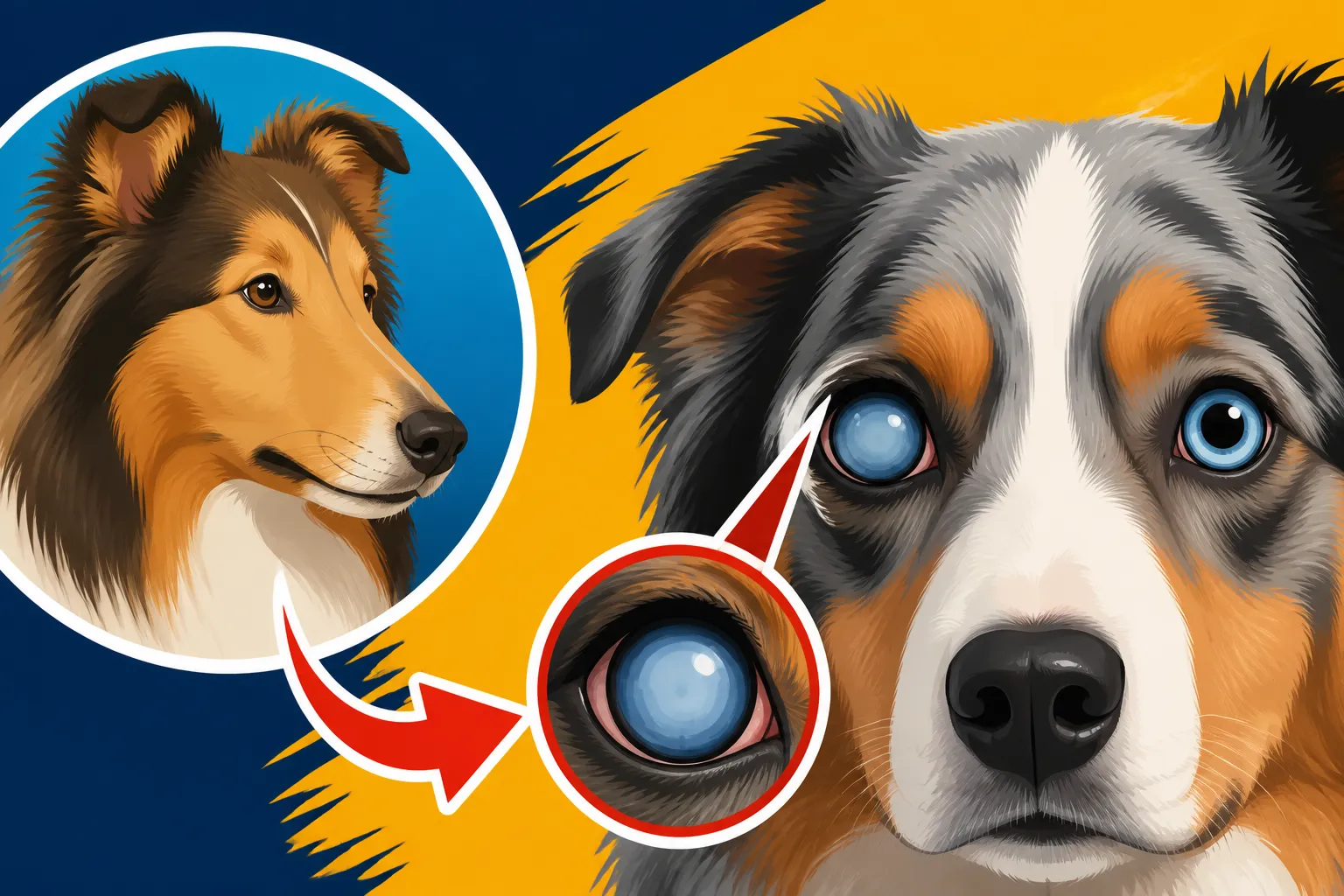
Collie Eye Anomaly, often simply called CEA, isn't just a concern for Collies anymore; it's a significant inherited eye disease that affects Australian Shepherds, Shetland Sheepdogs, and several other herding breeds. It's a developmental disorder, meaning the abnormalities are present from birth, even if they aren't immediately obvious. The core problem lies in the incorrect development of certain structures within the eye, particularly the choroid, which is the layer of blood vessels and connective tissue that nourishes the retina.
When we talk about CEA, we're actually looking at a spectrum of potential issues, not just one single problem. At its mildest, it might be barely noticeable and cause no vision impairment, while at its most severe, it can lead to blindness. It's important to remember that this isn't something your Aussie "catches" or that develops suddenly due to an injury. It's written in their genetic code from the moment they're conceived. For many owners, the initial diagnosis can be a shock, especially if their dog seems to be seeing perfectly fine. However, understanding the underlying cause is the first step in providing the best care.
The Genetic Roots of CEA
CEA is an autosomal recessive genetic disorder. This means that for an Australian Shepherd to actually show symptoms of CEA, they need to inherit two copies of the affected gene—one from each parent. If an Aussie inherits only one copy, they are considered a "carrier." Carriers typically don't display any signs of the condition themselves, but they can pass the gene on to their offspring. This is precisely why genetic testing is so vital in responsible breeding programs. Without knowing the genetic status of both parents, breeders might unwittingly pair two carriers, leading to a litter where a quarter of the puppies could be affected by CEA. It’s a silent problem that can have devastating consequences if not addressed proactively through genetic screening.
Different Degrees of CEA Severity
The severity of CEA can vary greatly among affected dogs, and even between the two eyes of the same dog. Vets often grade CEA from mild to severe, and understanding these grades helps predict the potential impact on your Aussie's vision.
- Choroidal Hypoplasia (CH): This is the mildest form of CEA and, thankfully, the most common. It involves a thinning or underdevelopment of the choroid, the vascular layer behind the retina. Dogs with only CH usually have normal vision and experience no problems throughout their lives. The changes are so subtle that they can only be detected by a trained veterinary ophthalmologist using specialized equipment, often as part of The Aussie Puppy Eye Check at Six Weeks. Many owners are surprised to learn their dog has CH because there are no outward signs.
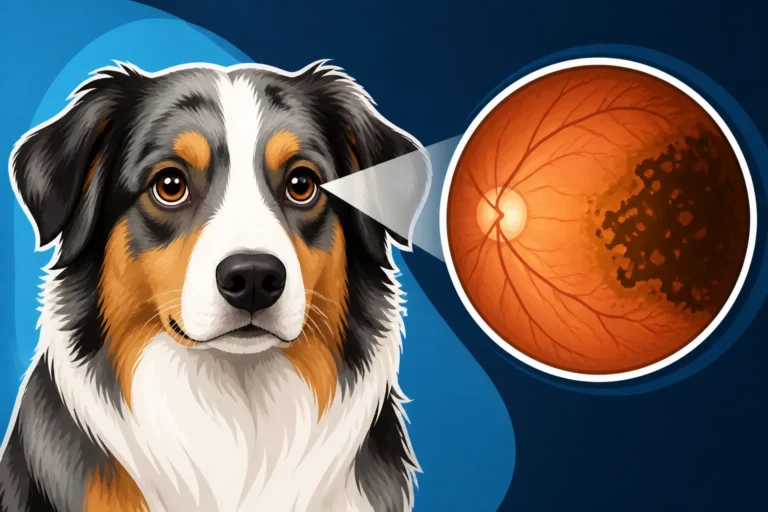
- Coloboma: This is a more serious manifestation. A coloboma is essentially a "hole" or defect in a structure of the eye, most commonly the optic disc (where the optic nerve leaves the eye). Imagine a keyhole shape, or a notch, in a place that should be smooth. If the coloboma is small, it might only cause a blind spot. However, larger colobomas can significantly impair vision, sometimes leading to partial or complete blindness in the affected eye. They can also make the eye more susceptible to other, more severe complications. You might want to learn more about Australian Shepherd Iris Coloboma and Merle Eyes for specific details related to eye structure.
- Retinal Detachment: This is one of the most severe complications of CEA. It occurs when the retina, the light-sensitive tissue at the back of the eye, separates from the underlying choroid. This is a medical emergency and typically results in sudden, severe vision loss or complete blindness in the affected eye. Retinal detachment can also be accompanied by bleeding within the eye (intraocular hemorrhage), further compounding the vision loss. These severe forms are thankfully less common but highlight the importance of careful breeding and early diagnosis.
How CEA Manifests in an Aussie Eye
The insidious nature of Collie Eye Anomaly is that it often isn't immediately obvious to the average owner, especially in its milder forms. It's not like a visible injury or a cloudy cataract that you can spot from across the room. The changes are internal and require specialized examination. However, for those Aussies with more severe forms, the manifestation can range from barely noticeable to profoundly impacting their daily lives.
Subtle Signs of Choroidal Hypoplasia
For an Australian Shepherd with only choroidal hypoplasia (CH), the signs are usually non-existent to the casual observer. Your dog will likely navigate their environment with perfect confidence, catch treats mid-air, and track a frisbee with precision. This is why many owners only discover their dog has CEA after a routine eye exam with a veterinary ophthalmologist. During such an exam, the specialist uses an ophthalmoscope to look at the back of the eye, specifically the choroid. They'll be looking for areas where the choroid appears thinner or more sparsely pigmented than it should be. It's a diagnosis made on a microscopic level, essentially, revealing an underdevelopment that doesn't hinder function in most cases. This emphasizes why regular vet check-ups, especially specific eye exams, are so important for this breed.
The Impact of Colobomas on Vision
When CEA presents as a coloboma, the impact on your Aussie's vision can be more significant and varied. A coloboma is a visible defect, often described as a "keyhole" or irregular shape, typically affecting the optic disc and surrounding retina. Think of it as a missing piece in the complex puzzle of the eye's internal structure.
- Small Colobomas: If the coloboma is small and located in an area that doesn't drastically interfere with the main visual pathway, your Aussie might just have a minor blind spot. They might compensate for it without you even realizing, much like how humans adapt to a minor flaw in their vision.
- Large Colobomas: A larger coloboma, however, can lead to significant blind spots, making navigation difficult, especially in unfamiliar environments or low light. Your dog might bump into objects, be startled by things appearing suddenly in their peripheral vision, or hesitate when jumping or descending stairs.
- Retinal Detachment Risk: The real danger with colobomas, particularly large ones, is their potential to lead to a secondary retinal detachment or hemorrhage. The weakened area around the coloboma can predispose the retina to pull away from the underlying layers. This is a serious event, often causing sudden, complete blindness in the affected eye. If you notice your Aussie suddenly seems disoriented, bumps into everything, or their pupils look abnormal, an immediate veterinary visit is crucial.
It’s worth noting that some Australian Shepherds can have different degrees of CEA in each eye. One eye might have mild CH with no functional impact, while the other might have a larger coloboma leading to vision impairment. This uneven presentation adds another layer of complexity to diagnosis and management. Knowing Whether a Mildly Affected CEA Aussie Sees Normally can help you understand the long-term prognosis.
| CEA Severity Level | Choroidal Hypoplasia (CH) | Coloboma (Optic Disc) | Retinal Detachment/Hemorrhage |
|---|---|---|---|
| Visual Impairment | Usually none to minimal | Can cause blind spots, partial vision loss, or even blindness | Severe vision loss, often total blindness in affected eye |
| Visible to Owner? | No, requires specialized ophthalmic exam | No, requires specialized ophthalmic exam | Sometimes visible (pupil abnormalities), but often not |
| Progression? | No, stable from birth | No, stable from birth (but can lead to secondary issues) | Can occur suddenly, leading to rapid deterioration |
| Treatment Options | None needed; monitoring | None for coloboma itself; potential surgery for detachment | Emergency surgery for reattachment (variable success) |
| Breeding Status | Affected dogs should not be bred; carriers with caution | Affected dogs should not be bred | Affected dogs should not be bred |
Diagnosing and Managing CEA in Your Aussie
The journey to understanding and managing Collie Eye Anomaly in your Australian Shepherd typically begins with a diagnosis and then moves into tailored care based on the severity. It's not always a straightforward path, but with diligent veterinary care, you can ensure your Aussie lives their best life.
The Critical Role of the Puppy Eye Check
For Australian Shepherds, a specialized eye examination performed by a board-certified veterinary ophthalmologist is the gold standard for diagnosing CEA. This exam, known as an ACVO (American College of Veterinary Ophthalmologists) eye exam, is ideally performed between 6 and 8 weeks of age. This specific timeframe is crucial for two reasons:
- Choroidal Hypoplasia Detection: At this young age, the pigmentation in the choroid is not yet fully developed, making it easier for the ophthalmologist to detect the subtle thinning characteristic of choroidal hypoplasia. As the puppy gets older and pigmentation increases, these mild forms can become "masked," making diagnosis more difficult later in life.
- Breeding Decisions: Early detection allows breeders to make informed decisions about their breeding lines and to provide potential puppy buyers with accurate health information.
During the exam, the ophthalmologist will dilate the puppy's pupils and examine the back of the eye, looking for any abnormalities in the choroid, optic disc, and retina. They can identify colobomas and assess the overall health of the eye structures. This is why The ACVO Eye Exam Australian Shepherd Breeders Run is an essential step for responsible breeders.
Genetic Testing for CEA
While a clinical eye exam is vital, particularly for detecting the physical manifestations of CEA, a DNA test offers another crucial layer of information. There's a specific genetic test available that identifies the mutation responsible for CEA. This test can determine if your Australian Shepherd is clear (does not carry the gene), a carrier (carries one copy of the gene but is unaffected), or affected (carries two copies and will likely show some degree of the condition, though severity varies).
The beauty of The CEA DNA Test for Australian Shepherds is that it can be done at any age using a simple cheek swab. For breeders, this is invaluable for making informed breeding decisions, helping to reduce the incidence of CEA in future generations. For owners, it offers peace of mind or, if positive, helps prepare for potential issues. This test is part of The Genetic Panel Every Australian Shepherd Needs to ensure comprehensive health screening for your Aussie.
Living with an Affected Australian Shepherd
If your Australian Shepherd is diagnosed with CEA, especially the milder choroidal hypoplasia, it's natural to worry. But for most dogs with CH, no special treatment or intervention is required. Their vision remains normal, and they live full, happy lives. Your vet will likely recommend annual eye check-ups to monitor for any changes, though progression is rare for CH.
For dogs with colobomas, especially larger ones, management focuses on minimizing risks and adapting to any vision impairment.
- Regular Monitoring: Ongoing veterinary ophthalmic check-ups are essential to monitor the coloboma and watch for any signs of retinal detachment or hemorrhage.
- Environmental Adjustments: If your Aussie has significant vision loss, you'll need to make some adjustments at home. Keep furniture in consistent locations, use distinct scents for different areas, and verbally cue your dog when approaching obstacles. You can learn more about navigating life with a vision-impaired dog from resources on living with blind dogs.
- Protection: Since eyes with colobomas can be more fragile, protecting them from injury is important. This might mean avoiding rough play that could lead to head trauma or even considering protective eyewear in certain situations, like hiking through dense brush.
- Addressing Complications: In the rare event of a retinal detachment, surgery might be an option, depending on the extent and location of the detachment, but success rates can vary. Your veterinary ophthalmologist will be the best guide for these complex decisions.
Pet insurance, like coverage offered by Healthy Paws, can be incredibly helpful for managing unexpected veterinary costs. However, it’s important to understand that CEA, being a congenital and often diagnosed early condition, would likely be considered a pre-existing condition if diagnosed before your policy takes effect. It’s always wise to look into pet insurance early in your Aussie's life and carefully review policy details regarding genetic conditions. A good policy from Healthy Paws or a similar provider can offer peace of mind for other unforeseen health challenges that may arise throughout your Australian Shepherd's lifespan, which typically ranges Australian Shepherd Lifespan Across Twelve to Fifteen Years.
Preventing CEA and Promoting Eye Health
The best way to prevent Collie Eye Anomaly is through responsible breeding practices that prioritize genetic health. For Australian Shepherd breeders, this means not only understanding the breed standard but also being proactive about genetic testing.
Responsible Breeding Practices
A truly ethical Australian Shepherd breeder will perform both clinical eye exams on their puppies at 6-8 weeks of age and conduct DNA testing on their breeding stock for CEA. They should be transparent about these results and be able to provide documentation for both parent dogs.
- Testing Parents: Both sire and dam should be tested for the CEA gene. Ideally, at least one parent should be "clear" (not carry the gene). If you breed a carrier to a clear dog, none of the puppies will be affected, although some may be carriers. Breeding two carriers together, however, guarantees that some puppies will be affected.
- Avoiding Affected Dogs: Dogs that are affected with CEA, especially those with colobomas or a history of retinal detachment, should not be used for breeding, regardless of how wonderful their temperament or conformation might be. The risk of passing on severe vision problems is too high.
- Informed Decisions: Even carriers, who are clinically normal, should be bred with careful consideration. The goal is to gradually reduce the prevalence of the gene in the breed population while maintaining genetic diversity. A reputable breeder will explain their decisions and show you proof of their health clearances. You should be wary of any breeder who cannot provide comprehensive health records, including those for eyes, for their breeding dogs and puppies.
General Eye Health for Your Aussie
Beyond genetic testing for specific conditions like CEA, maintaining overall good eye health for your Australian Shepherd is crucial throughout their life.
- Regular Veterinary Check-ups: These are essential, not just for specific conditions like CEA, but for general eye health. Your regular vet can spot early signs of issues like Hereditary Cataracts Clouding an Aussie Eye or Progressive Retinal Atrophy in an Aussie and refer you to a specialist if needed.
- Observation at Home: Pay attention to your Aussie's eyes daily. Look for redness, discharge, excessive tearing, cloudiness, squinting, or any changes in how they navigate their environment. If you notice anything unusual, contact your vet. Early detection can make a big difference in the outcome of many eye conditions.
- Protection from Injury: Australian Shepherds are active dogs, and their eyes can be susceptible to injury from debris, branches, or rough play. While you can't prevent every accident, being mindful of their environment, especially during high-energy activities or off-leash adventures in wooded areas, can help.
- Nutrition: A balanced diet provides the essential vitamins and nutrients needed for overall health, including eye health. While nutrition won't prevent a genetic condition like CEA, it supports the eye's ability to function optimally.
By combining responsible breeding practices with vigilant home observation and professional veterinary care, we can work towards a future where Australian Shepherds continue to mesmerize us with their intelligent eyes, unhindered by preventable genetic conditions. Being proactive about their health, and considering support like a Healthy Paws insurance plan for unforeseen issues, truly makes you the best advocate for your furry companion.
Disclaimer
This article is for general informational purposes only and does not constitute professional advice. Laws, prices and regulations vary by location and change over time. Consult a qualified professional for guidance on your specific situation.