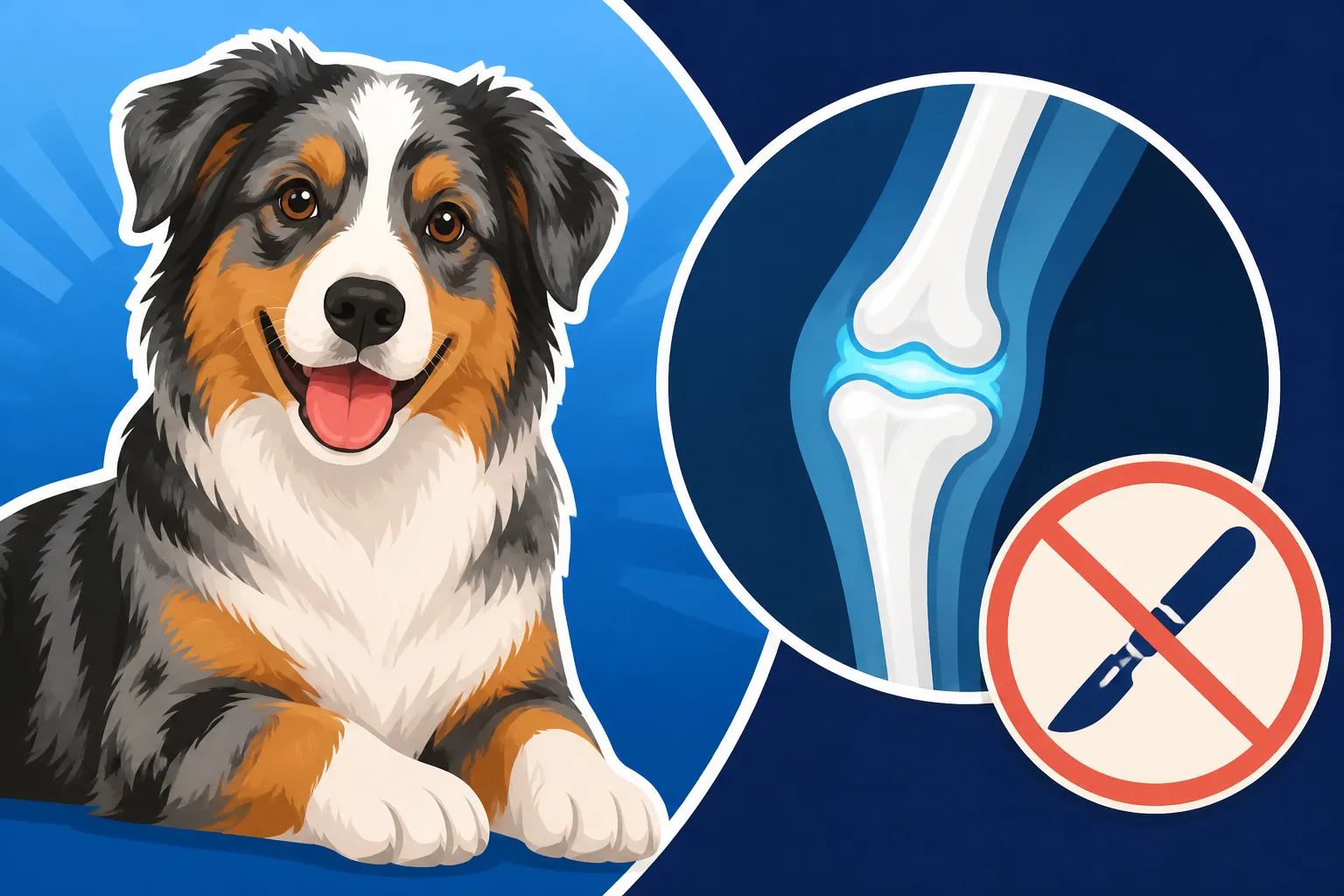
Neuter Timing Around Aussie Growth Plates
Deciding when to neuter your beloved Australian Shepherd can feel like navigating a minefield of conflicting advice, leaving many of us anxious about making the right choice for our furry family members. It’s a huge decision, and the traditional "six months" recommendation is increasingly being questioned, especially for active breeds like Aussies, because new research suggests significant long-term health implications tied to growth plate development. This comprehensive guide will delve into the science and considerations behind neuter timing, helping you feel confident in protecting your Australian Shepherd's joint health and overall well-being.
Understanding Your Australian Shepherd's Growth Plates
Before we talk about when to neuter, it's essential to understand what we're talking about. Your Australian Shepherd isn't just a mini-horse; they're a complex organism with intricate skeletal development, and at the heart of that are their growth plates. These aren't just minor anatomical features; they are the very engine of your puppy's skeletal development.
What Are Growth Plates?
Think of growth plates, also known as epiphyseal plates, as the construction zones at the ends of your Australian Shepherd's long bones. These are areas of cartilage located near the joints—like the knees, hips, and shoulders—where new bone tissue is produced, allowing the bones to lengthen. Until these plates fully mature and harden, or "close," they are incredibly vulnerable. During your Aussie's puppyhood and adolescence, these plates are actively working, expanding and transforming cartilage into solid bone, steadily increasing your dog's height and limb length. It's a finely tuned process, crucial for forming the strong, agile skeleton characteristic of a working Australian Shepherd.
The Critical Timing of Growth Plate Closure
For an active, medium-to-large breed like an Australian Shepherd, these growth plates typically close anywhere between 12 and 18 months of age, though some individual variation exists. For larger or slower-maturing individuals, it might even be a little later. This timeframe is crucial because it marks the period when your Aussie's bones are still actively growing and shaping. If you think about it, a puppy's skeleton isn't just a smaller version of an adult's; it's a dynamic structure undergoing constant change. You can learn more about this specific developmental stage by reading our article on Australian Shepherd Growth Plates and When They Close. These plates need time, and the right hormonal environment, to properly fuse and solidify into the mature bone structure that will support your dog for the rest of their life. Rushing this process can have lasting consequences, something no loving Aussie owner wants.
The Hormonal Impact of Early Neutering on Bone Health
This is where the traditional advice often clashes with emerging scientific understanding, and it can be incredibly frustrating for owners trying to do their best. We've all been told that six months is the magic age for neutering, but for a breed like the Australian Shepherd, that timing might actually be working against their long-term health. The reason lies deep within their hormonal system.
How Hormones Influence Bone Development
The closure of growth plates isn't just a matter of time; it's heavily influenced by sex hormones like testosterone in males and estrogen in females. These hormones act like a signal, telling the growth plates when it's time to stop producing cartilage and fully ossify into bone. When a male or female Australian Shepherd reaches sexual maturity, their body produces these hormones in significant amounts, which then play a direct role in signaling the growth plates to close naturally. Without this crucial hormonal input, the growth plates tend to stay open for a longer period. This doesn't mean your Aussie will grow into a giant, but it can lead to bones growing for a longer duration than intended, resulting in slightly longer limbs and an altered bone structure. Imagine a house where the foundation is poured, but the builders remove all the support beams before the concrete has fully cured and strengthened; the structure will stand, but it might not be as stable or robust as it should be.
Increased Risk of Orthopedic Issues
For an athletic breed like the Australian Shepherd, these subtle changes in bone structure can have significant consequences. When growth plates stay open longer due to the absence of sex hormones, it can lead to bones that are disproportionately longer or have slightly different angles than if they had closed naturally. This, in turn, can put abnormal stress on joints. Studies are increasingly showing a correlation between early spay/neuter (before growth plate closure) and an increased incidence of certain orthopedic problems. We're talking about heartbreaking issues like hip and elbow dysplasia, which can be debilitating for an active Aussie, or cranial cruciate ligament (CCL) tears in the knees, which often require expensive surgery. For many owners, the idea of their vibrant, working-line Aussie being sidelined with joint pain is devastating. This is why many now advocate for allowing your Aussie to mature fully before neutering. It’s a complex issue, and it's certainly worth discussing with your veterinarian how pet insurance plans, such as those offered by Healthy Paws, might help cover these potential orthopedic challenges if they arise later in life, regardless of your chosen neuter timing.
Behavioral and Other Health Considerations
Beyond bone health, the timing of neutering can also influence other aspects of your Australian Shepherd's well-being. Some research suggests that sex hormones play a role in cognitive development and fear responses, particularly in males. While anecdotal, many trainers and owners report that male Aussies neutered too young might be more prone to certain anxieties or reactivity, simply because they haven't had the full spectrum of hormonal development to help shape a confident, mature personality. On the flip side, waiting too long, especially with males, can sometimes reinforce undesirable behaviors like marking or roaming. For females, the situation is even more nuanced, balancing the joint health benefits of delayed spay against the increased risk of mammary tumors with each heat cycle. It's a tricky balance, and it’s completely normal to feel overwhelmed by the choices.
Weighing the Benefits: Waiting Versus Traditional Timing
This is often where the real debate lies, and it’s important to acknowledge that there are valid points on both sides. The "right" answer isn't always clear-cut, especially when trying to apply general advice to a specific, unique breed like the Australian Shepherd.
The Advantages of Delayed Neutering
More and more veterinarians and experienced Aussie breeders are advocating for delaying neutering until after your dog's growth plates have closed, typically around 18-24 months for Australian Shepherds. The primary benefit, as we've discussed, is allowing those crucial growth plates to close under the natural influence of sex hormones. This can lead to a more robust, structurally sound skeleton and potentially reduce the risk of orthopedic issues that are common in active, working breeds. These include conditions like Australian Shepherd Hip Dysplasia and Working Joints and serious injuries such as Cruciate Tears in a Working Australian Shepherd.
Allowing natural hormonal development can also contribute to better muscle mass and density, which provides additional support for joints and overall physical strength, something critical for an Aussie involved in sports or herding. Furthermore, some studies suggest a reduced risk of certain cancers, such as osteosarcoma (bone cancer), in dogs that are neutered later or remain intact. While it’s not a guarantee, stacking the odds in favor of better joint health and potentially lower cancer risk is a compelling argument for many owners, especially given the breed's predisposition to joint problems and other health concerns. Investing in a robust pet insurance plan, like those offered by Healthy Paws, can be incredibly beneficial for mitigating the financial impact of unexpected health issues, particularly if you choose to wait on neutering and want to ensure coverage for potential joint problems down the line.
The Risks and Challenges of Waiting
Of course, waiting to neuter isn't without its own set of considerations and responsibilities. The most obvious risk, if you have a female, is unwanted pregnancy. An intact female Australian Shepherd can become pregnant during her heat cycles, typically occurring twice a year. This requires vigilant management: secure fencing, leashed walks, and careful supervision when around intact males. For male Aussies, waiting can sometimes lead to an increased tendency for roaming, marking territory, or showing intact male-specific behaviors like heightened interest in females in heat.
There are also certain health risks associated with leaving dogs intact. For females, each heat cycle slightly increases the risk of mammary tumors, although the risk is significantly higher if spayed after multiple heat cycles compared to before the first or second. For males, remaining intact carries a risk of testicular cancer (which is completely eliminated with neutering) and prostate issues as they age. However, it's important to note that early neutering has also been linked to other cancer risks, so it often becomes a trade-off rather than a clear-cut solution. Navigating this means weighing the potential benefits of allowing full development against the very real practical challenges and specific health risks of leaving your Aussie intact for longer.
To help visualize the trade-offs, here's a quick comparison:
| Factor | Early Neutering (e.g., 6-12 months) | Delayed Neutering (e.g., 18-24 months) |
|---|---|---|
| Growth Plate Closure | May delay closure, potentially leading to longer bones/altered angles | Allows natural closure with hormonal influence, potentially stronger joints |
| Joint Health Risk | Potentially increased risk of hip dysplasia, CCL tears | Potentially decreased risk of hip dysplasia, CCL tears |
| Mammary Tumor Risk | Significantly reduced for females if done before 1st/2nd heat | Slightly increased for females with each heat cycle |
| Testicular Cancer Risk | Eliminated for males | Present for males |
| Prostate Issues (Males) | Reduced | Potentially increased with age |
| Roaming/Marking (Males) | May reduce incidence if done early | May be more prevalent if not trained/managed |
| Unwanted Pregnancy | Eliminated for females | High risk if not managed diligently |
| Overall Muscle/Bone Mass | May be slightly less developed | Generally better developed |
Making the Informed Decision for Your Australian Shepherd
Ultimately, the decision of when to neuter your Australian Shepherd is a personal one, but it should be an informed one. There's no one-size-fits-all answer, and what's right for one Aussie might not be ideal for another. You need to consider a range of factors specific to your dog, your lifestyle, and your veterinarian's professional insights.
Consulting Your Veterinarian
This step cannot be overstated. Your veterinarian is your primary resource and should be an active partner in this decision-making process. Don't be afraid to have an open, honest discussion about the latest research regarding neuter timing, especially concerning growth plates and joint health in active breeds. Be prepared to ask tough questions and express any concerns you have. A good vet will be up-to-date on current recommendations and willing to discuss the pros and cons of different timings for your specific dog, rather than just defaulting to traditional advice. They can help you assess your Aussie's individual growth and development, considering their bone structure and any predispositions revealed by genetic testing, like those found in The Genetic Panel Every Australian Shepherd Needs. They can also advise on things like Australian Shepherd Puppy Growth Chart specifics for your pup.
Considering Individual Factors
Beyond what your vet says, take a deep dive into your own Australian Shepherd's circumstances.
- Genetics and Breeding: What do you know about your Aussie's lineage? If their parents or close relatives had a history of orthopedic problems like hip or elbow dysplasia, you might lean more towards delayed neutering to give your pup the best chance at sound joints. You can ask your breeder about their practices and the Australian Shepherd Hip Dysplasia and OFA Scoring results for their breeding stock.
- Activity Level: Is your Australian Shepherd destined for intense agility, herding, or other high-impact sports? If so, ensuring optimal joint development is paramount. An Aussie that is highly active will put more stress on their joints throughout their life, making robust bone development even more crucial.
- Your Lifestyle and Environment: Can you realistically manage an intact male or female without the risk of accidental pregnancies or roaming? Do you have a secure yard? Are you committed to vigilant supervision during walks and around other dogs? If preventing unwanted litters is a major concern due to your living situation or ability to supervise, it might influence your decision towards earlier neutering.
- Behavioral Maturity: Observe your Aussie's behavior. Are they still very puppy-like, or are they beginning to show signs of adolescent maturity? While not directly tied to growth plates, waiting until an Aussie is more mentally mature might contribute to a more stable temperament, though this is debated and highly individual.
Making the Responsible Choice
For many active male Australian Shepherds, delaying neutering until 18-24 months is increasingly recommended to allow full musculoskeletal development. For females, the decision can be more complex due to the mammary tumor risk. Some vets may recommend spaying after their first heat cycle, which typically occurs between 8-12 months, as this allows for some hormonal exposure and potentially better joint development while still significantly reducing mammary cancer risk compared to waiting for multiple heat cycles. However, this comes with the immense responsibility of managing an intact female through a heat cycle, which means no dog parks, no unsupervised yard time, and constant vigilance.
Ultimately, the goal is to make the decision that offers the best long-term health outcomes for your unique Australian Shepherd. This often means embracing a more nuanced approach than the simple "six months" recommendation. Whatever you decide, remember to discuss it thoroughly with your vet, keep a close eye on your Aussie's health, and be aware of potential issues like Australian Shepherd Arthritis After Years of Work or How Weight Multiplies the Load on Aussie Joints, which can impact joint health at any age. Comprehensive pet insurance from a provider like Healthy Paws can truly offer peace of mind, covering accidents and illnesses throughout your Australian Shepherd's life, whether or not you decide to wait on neutering.
Disclaimer
This article is for general informational purposes only and does not constitute professional advice. Laws, prices and regulations vary by location and change over time. Consult a qualified professional for guidance on your specific situation.