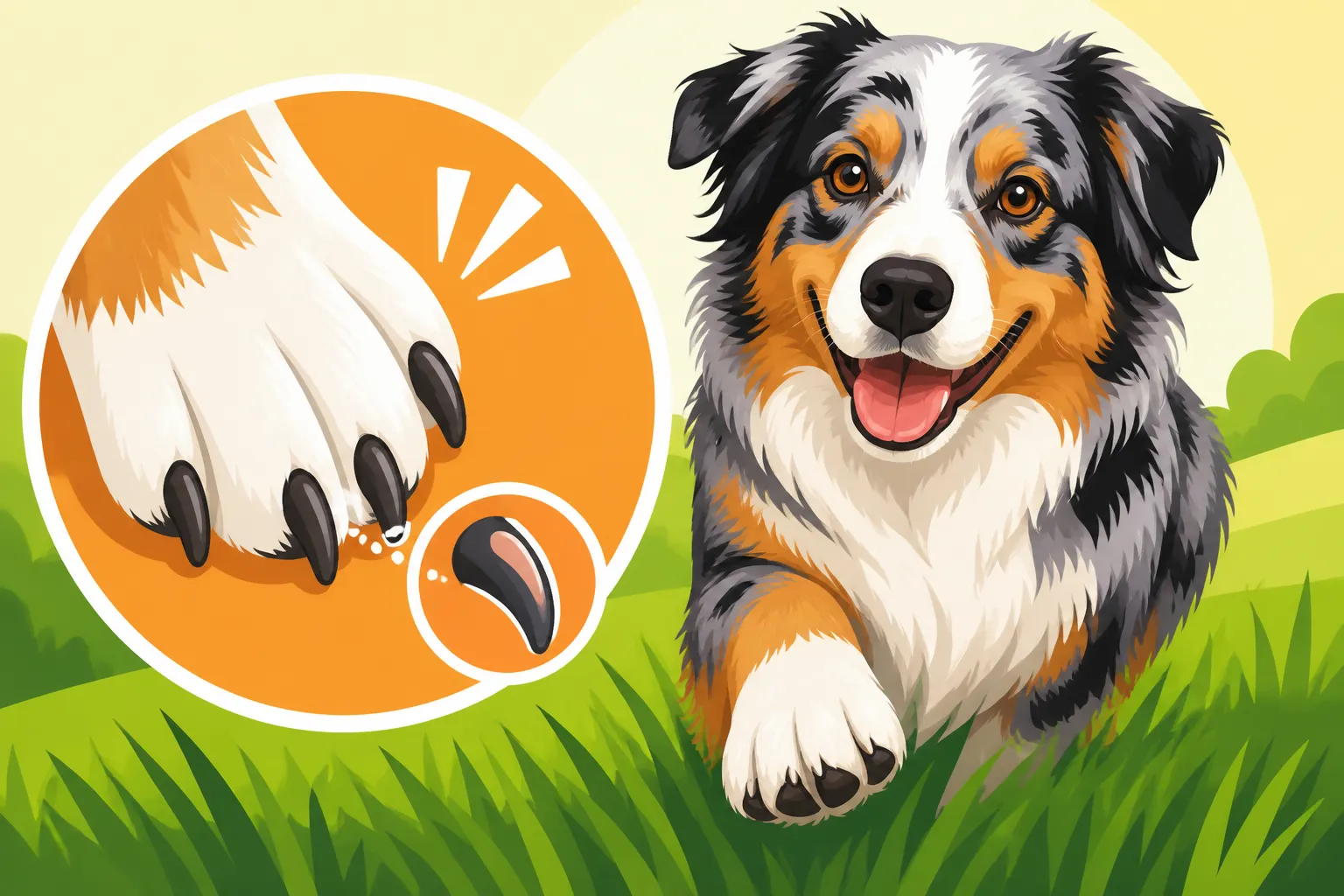
Nail Care for an Aussie That Runs on Grass
It's a common misconception among Australian Shepherd parents that because their active, energetic dogs spend so much time romping around on grass, their nails will naturally stay short. We picture them tearing across fields, the ground doing all the work, but the reality is often quite different. Soft grass simply doesn't provide the abrasive surface needed to grind down those tough Aussie nails, leaving many owners struggling with overgrown claws that cause discomfort, alter gait, and even lead to painful injuries. This guide is here to walk you through everything you need to know about managing your grass-loving Australian Shepherd's nail health, ensuring their paws stay comfortable and sound.
The Reality of Aussie Nails on Grass
Many of us get an Australian Shepherd because we love their energy and picture them running free, whether that's on a farm, a hiking trail, or just a big, beautiful grassy yard. We assume that all that activity, especially on natural terrain, will take care of their nail length. But as many experienced Aussie owners discover, that's often not the case.
Why Grass Doesn't Wear Nails Down Enough
Think about your own fingernails. If you spend your days typing or using your hands, they might naturally wear down a bit. But if you were only ever touching soft surfaces like carpet or grass, they'd grow long and need regular trimming. It's the same for our Aussies. Grass, even coarse grass, is a relatively soft surface. It cushions their paws and provides very little friction against the hard keratin of their nails.
Compare that to an Australian Shepherd who regularly works on concrete, asphalt, gravel, or rocky trails. These harder, abrasive surfaces act like a natural file, slowly but surely wearing down the nail tips with every step. A working line Australian Shepherd might naturally have shorter nails if their daily routine involves herding on varied terrain or extensive fieldwork. However, a pet Aussie who spends most of their exercise time in a suburban park or a well-maintained backyard, no matter how vigorously they run, simply isn't encountering the kind of ground that files nails effectively. Their nails might look short from the top, but often, the underside and the quick (the sensitive part of the nail) are actually quite long.
The Problems With Overgrown Nails
Overgrown nails aren't just an aesthetic issue; they lead to a cascade of problems for your Australian Shepherd's comfort and long-term health. The most immediate concern is physical discomfort. When nails are too long, they push up against the ground when your Aussie stands or walks, forcing their toes to splay out and putting unnatural pressure on the nail beds. This can feel like constantly walking in shoes that are too small or having pebbles stuck in your boots.
Beyond the discomfort, long nails can significantly alter your dog's gait. Instead of walking squarely on their paw pads, they compensate by shifting their weight, which can lead to strain on their joints, tendons, and ligaments. Over time, this altered biomechanics can contribute to more serious orthopedic issues. We often talk about Australian Shepherd Hip Dysplasia and Working Joints or Australian Shepherd Arthritis After Years of Work, and while overgrown nails aren't the sole cause, they certainly exacerbate these conditions by adding unnecessary stress to already vulnerable areas.
Perhaps the most common and immediate danger is the risk of painful tears or breaks. Long nails are much more likely to catch on carpets, furniture, or rough terrain, leading to a partial or complete avulsion (tearing off) of the nail. This is an incredibly painful injury, often accompanied by bleeding, and almost always requires a vet visit, potentially involving sedation, pain medication, and antibiotics. These unexpected vet bills can add up quickly, highlighting why proactive care is so crucial.
Essential Tools and Techniques for Aussie Nail Trimming
Tackling your Australian Shepherd's nails can feel like a daunting task, especially if they're not thrilled about having their paws handled. But with the right tools and a solid technique, it becomes a manageable, even routine, part of their care.
Choosing the Right Nail Trimmers
The market is flooded with various nail trimming tools, and finding the one that works best for both you and your Aussie is key.
- Scissor-style Clippers: Brands like Resco and Millers Forge offer these. They resemble a pair of pliers with sharp blades. They're generally easy to use, provide a clean cut, and are suitable for most nail sizes. For a larger breed like an Australian Shepherd with thick nails, opt for a heavy-duty model designed for larger dogs.
- Guillotine-style Clippers: Brands such as Safari and JW Pet make these. You insert the nail into a hole, and a blade slides across to make the cut. Some people find these trickier to position correctly, especially on thick or dark nails, and they can sometimes "crush" the nail if the blades aren't perfectly sharp or if used improperly.
- Nail Grinders: Tools like a Dremel Pet Grooming Kit or models from Casfuy have become incredibly popular. These battery-operated rotary tools sand down the nail rather than cutting it. They're fantastic for achieving smooth edges and can be less intimidating for dogs who dislike the "snip" sensation of clippers. They also allow you to take off tiny bits at a time, which is excellent for slowly receding the quick.
When choosing, prioritize sharpness. Dull clippers will crush and split the nail, causing pain and making the experience unpleasant. A good quality trimmer should feel sturdy in your hand and make a clean, swift cut. You can find a wide variety of these tools, along with styptic powder (essential for accidental quick cuts), on pet supply sites like Chewy.
| Trimmer Type | Pros | Cons | Best For |
|---|---|---|---|
| Scissor-style | Strong, clean cut; easy to grip. | Can be intimidating; risk of quicking if not careful. | General use, quick trims, thick nails. |
| Guillotine-style | Simple mechanism. | Can crush nails if dull; less control for black nails. | Smaller dogs, medium thickness nails. |
| Nail Grinder | Smooth finish; safer for black nails; pushes quick back over time. | Noise/vibration can scare some dogs; takes longer. | Fearful dogs, achieving short quicks, smooth edges. |
Mastering the Trimming Technique
Regardless of your chosen tool, a calm approach and understanding of nail anatomy are crucial.
- Positioning: Find a comfortable spot for both you and your Aussie. Some prefer their dog lying down, others sitting, or even standing. Use treats and praise liberally.
- Identify the Quick: On clear or white nails, the quick appears as a pinkish area within the nail. This is where the blood vessels and nerves are, and you absolutely want to avoid cutting it. On black nails, it's much harder to see. In this case, make tiny snips from the tip, looking at the cross-section of the nail. You'll see a white or grayish outer ring, and as you get closer to the quick, a small, dark dot (the "bullseye") will appear in the center. Stop cutting as soon as you see this or just before it.
- Making the Cut: With clippers, aim to cut at a slight angle, just below the quick. Take small amounts off at a time. It's always better to take too little than too much.
- Accidental Quick Cuts: It happens to the best of us! Don't panic. Have styptic powder (like Kwik Stop) readily available. Apply firm pressure with the powder to the bleeding quick. Stay calm; your dog will pick up on your anxiety. Reassure them and offer a high-value treat. While it's momentarily painful, it's not life-threatening.
The Benefits of Nail Grinding
Nail grinders offer distinct advantages, especially for Aussies with dark nails or those prone to anxiety with clippers.
Firstly, grinders create a much smoother, rounded nail edge. This means less chance of snagging on fabric or skin, which is a common issue with the sharper edges left by clippers. It's also more comfortable for you when your Aussie "paws" you.
Secondly, and perhaps most importantly, grinders allow you to slowly and carefully reduce the nail length, often pushing the quick back over time. By grinding little bits off every few days, the quick, which is a living tissue, will gradually recede further into the nail bed. This allows for significantly shorter, healthier nails than often achievable with clippers alone, without the fear of quicking.
Introducing a grinder requires patience. Start by letting your Aussie see and sniff the tool while it's off. Offer treats. Then turn it on a short distance away, rewarding any calm behavior. Gradually move it closer, let the vibration touch their paw (without grinding), and eventually, lightly touch a single nail for a second or two, always with praise and rewards. Over time, most dogs can learn to tolerate or even enjoy their grinding sessions.
Establishing a Regular Nail Care Routine
Consistency is truly the unsung hero of Australian Shepherd nail care. It’s not about one heroic trim every few months; it’s about a steady, predictable rhythm that keeps nails at a healthy length and reduces stress for everyone involved.
Frequency and Consistency are Key
For most active Australian Shepherds, especially those primarily running on grass, trimming or grinding their nails at least once a week, or at minimum every two weeks, is ideal. This might sound like a lot, but hear me out. When you trim frequently, you're only taking off a tiny amount of nail each time. This makes the job quicker, less stressful for your dog, and significantly reduces the chance of hitting the quick.
The magic of consistency is that it slowly encourages the quick to recede. Each time you trim just shy of the quick, the quick itself gradually pulls back a little further. Over months of consistent care, you'll find you can get your Aussie's nails shorter and shorter without ever causing pain. This not only maintains healthy paw structure but also makes future grooming sessions much easier. It should become as routine as their Australian Shepherd Dental and Ear Routine, an expected part of their overall wellness.
Ignoring nails until they click-clack on hard floors, or worse, until they start to curl and interfere with walking, means the quick will have grown long. At that point, a single trim won't get them back to a healthy length, and you'll be faced with a longer, more challenging process to bring the quick back.
Making Nail Care a Positive Experience
Building a positive association with nail care from day one is paramount. If you have an Australian Shepherd puppy, start handling their paws frequently and gently from the moment they come home. Touch their toes, rub their paw pads, and get them used to the sensation. Integrate this into their regular "check-up" routine, much like the Australian Shepherd Puppy Health Checks at Eight Weeks you'd do yourself.
When you introduce actual trimming or grinding, make it a party! Use the highest-value treats your Aussie loves. Maybe it's bits of cheese, cooked chicken, or even specialized soft treats from brands like Ollie, known for their delicious and wholesome options. The goal is for your dog to associate the clippers or grinder with something incredibly positive.
Keep sessions short, especially in the beginning. Even if you only manage to trim one nail, celebrate it! Offer generous praise and rewards. If your Aussie shows signs of stress (pulling away, licking lips, yawning, panting), stop, take a break, and try again later or the next day. Pushing them too far will only build negative associations. Over time, as trust and positive reinforcement build, they'll become much more tolerant, and some even start to enjoy the pampering.
Professional Grooming and Vet Support
Sometimes, despite our best efforts, we need a little help. There's no shame in seeking professional assistance, especially if your Australian Shepherd is particularly anxious about nail trims or if their nails have become severely overgrown.
Professional groomers are experts at handling all types of dogs and nails. They have specialized tools, techniques, and often, the "magic touch" that can calm a nervous dog. They can quickly and efficiently trim or grind nails, and importantly, they can offer advice on maintaining them between visits. A regular trip to the groomer, maybe every 4-6 weeks, can complement your at-home routine, ensuring those nails stay in tip-top shape. This can be especially beneficial during their twice-yearly "coat blow" when they might be getting a full deshedding treatment anyway, as discussed in Australian Shepherd Grooming and Shedding Costs.
For dogs with extreme anxiety, or for nails that are so long they've started to curl into the paw pad, your veterinarian might be the best option. They can often trim nails under mild sedation if necessary, ensuring your Aussie doesn't endure unnecessary stress or pain. This is also the route to take if you suspect an ingrown nail or an infection. While routine nail trims might not be covered, injuries like torn nails that require veterinary intervention can quickly add up. This is where having pet insurance, such as a policy from Healthy Paws, can provide immense peace of mind, helping to cover unexpected costs and ensuring your Aussie gets the care they need without financial strain. Remember, cooperative care techniques, as highlighted in Cooperative Care for an Australian Shepherd at the Vet, can also make these vet visits less stressful for everyone.
Common Nail Care Challenges and Solutions
Even with the best intentions and tools, nail care for an Australian Shepherd can present some unique challenges. Their intelligence and sensitivity mean they can quickly develop strong opinions about their paws, and their active lifestyle can lead to specific issues.
Dealing with Fear and Anxiety
One of the biggest hurdles many Aussie owners face is a dog who is genuinely terrified of nail trims. This fear isn't just "being stubborn"; it often stems from a past negative experience (like being quicked) or simply an aversion to the sensation and sound of trimming. Punishing fear will only make it worse, so patience and a positive approach are crucial.
The solution lies in counter-conditioning and desensitization. This means gradually exposing your Aussie to the nail care tools and process in tiny, non-threatening steps, always pairing it with something highly positive.
- Step 1: Just the presence. Start by simply having the clippers or grinder in the room. Don't touch your dog with them. Just show them, say "good dog," and give a treat. Repeat this over several days.
- Step 2: Touch the paw. With the tool still off and away from the paw, gently touch your Aussie's paw. Give a treat. Repeat many times.
- Step 3: Introduce the tool's touch. Gently touch the back of the clippers or the unplugged grinder to your Aussie's paw, then immediately give a treat. The goal is to make the tool's touch a predictor of good things.
- Step 4: Sound association. For grinders, turn it on briefly in another room, then give a treat. Gradually move it closer. For clippers, make the "snip" sound without touching the dog, then give a treat.
- Step 5: The quick touch/clip. Once your Aussie is comfortable with all the above, try just one quick touch of the grinder to a single nail, or a tiny snip from one nail tip. Immediately follow with a jackpot of treats and praise.
It might take weeks or even months to build trust, but it's worth it for a dog who no longer dreads nail day. Consider using a lick mat spread with peanut butter or a high-value chew from Chewy to distract them during the actual trim.
Ingrown Nails and Nail Bed Infections
Overgrown nails aren't just uncomfortable; they can become a serious health hazard. If left too long, especially the dewclaws (the thumbs on their front legs), nails can grow so long that they curl around and embed themselves into the paw pad. This is incredibly painful, like having a sharp splinter constantly digging into their flesh.
Symptoms of an ingrown nail or a nail bed infection (which can arise from an ingrown nail or other trauma) include:
- Limping or reluctance to put weight on a paw.
- Excessive licking or chewing at the paw.
- Swelling, redness, or discharge around the nail or paw pad.
- Pain when the paw is touched.
- A foul odor coming from the paw.
If you notice any of these signs, it's crucial to seek veterinary attention promptly. Your vet will be able to safely remove the ingrown nail, clean any infection, and prescribe antibiotics or pain relief if needed. This is another scenario where pet insurance like Healthy Paws can alleviate the financial burden of unexpected treatment. Prevention is always the best cure, so maintaining a consistent trimming schedule is vital to avoid these painful situations, along with regularly checking your Aussie's paws for issues, similar to how you would check for Australian Shepherd Paw Pads After Rough Ground or when Checking an Australian Shepherd for Ticks.
Understanding the Quick and Its Growth
The quick is often the biggest mystery and fear factor for Aussie owners. It's a blood vessel and nerve that runs down the center of each nail. In light-colored nails, it's visibly pink; in dark nails, it's invisible from the outside. Cutting into the quick causes pain and bleeding, which can understandably make both you and your dog hesitant about future trims.
However, the quick is not static. It grows with the nail. If nails are allowed to grow long, the quick extends further down the nail. The good news is that with consistent, short trims (even just a tiny bit every few days), the quick will gradually recede. This process, often called "quickening," allows you to get the nails shorter and shorter over time, eventually reaching a point where they don't touch the ground when your Aussie stands. This is the ideal length, preventing splayed toes and promoting healthy paw and joint function.
Remember, every tiny trim, even if it feels insignificant, helps encourage that quick to pull back. It’s a marathon, not a sprint. Especially for an older Aussie, whose activity might be slowing down and whose nails might have become thicker or more challenging, this consistent, gentle approach is key. If you're managing an Grooming an Arthritic Australian Shepherd, ensuring their paws are comfortable is a huge part of their quality of life.
Disclaimer
The information provided in this article is for general informational purposes only and is not a substitute for professional veterinary advice, diagnosis, or treatment. Always seek the advice of your veterinarian or other qualified health provider with any questions you may have regarding a medical condition or the health and welfare of your pet.