How Long to Rest an Aussie After a Meal
It’s a scenario every Australian Shepherd owner knows well: you’ve just fed your energetic companion, and within minutes, they’re pacing, nudging a toy, or looking at you with those intense eyes, clearly ready for action. But that post-meal burst of energy can actually be dangerous for your Aussie, especially when it comes to the serious risk of bloat. This guide will help you understand why rest after eating is so crucial for Australian Shepherds, how long you should truly wait, and practical strategies to keep your furry friend safe and healthy after their meals.
Understanding the Risk: Bloat (GDV) in Australian Shepherds
One of the most terrifying emergencies an Australian Shepherd owner can face is Gastric Dilatation-Volvulus, commonly known as bloat. It’s a rapid, life-threatening condition where the stomach first fills with gas (dilatation) and then twists upon itself (volvulus), trapping the gas and cutting off blood supply. This isn't just a stomachache; it's a critical situation that requires immediate veterinary intervention.
What Gastric Dilatation-Volvulus (GDV) Is
Imagine your dog's stomach like a balloon. In bloat, it inflates rapidly with air, food, or fluid, becoming distended and putting immense pressure on other organs. The dilatation itself is dangerous, causing extreme pain and potentially leading to shock. What makes GDV even more lethal is when this distended stomach then twists, or volvuluses. When the stomach twists, both the entrance and exit are sealed, preventing gas from escaping and food from moving through. Crucially, the blood vessels leading to and from the stomach are also pinched off. This cuts off circulation, leading to tissue death in the stomach wall, and can quickly send your dog into circulatory shock. The spleen, which is attached to the stomach, often twists with it, adding to the severity. The speed at which this happens is frightening, and what might seem like mild discomfort can escalate into a full-blown emergency in less than an hour. The pain is excruciating, and even with immediate surgery, the prognosis can be guarded, underscoring the importance of prevention.
Why Aussies Are Particularly Susceptible
Australian Shepherds, with their deep chests and active dispositions, fall into a category of breeds at higher risk for bloat. While bloat can technically affect any dog, breeds with a deep, narrow chest conformation are significantly more prone to it. Think of it like a pendulum – a long, narrow stomach has more room to swing and twist within the abdominal cavity compared to a shallow, wide stomach. Why an Aussie's Deep Chest Raises Bloat Risk goes into more detail about this anatomical predisposition.
Beyond their physical build, an Aussie's temperament and lifestyle can also contribute. They are often high-energy dogs, bred for work and activity, meaning they might be more inclined to exercise vigorously right after eating, or gulp down their food too quickly, both of which are risk factors. Stress, anxiety, and genetics also play a role, with a higher incidence observed in certain bloodlines. If an Australian Shepherd bolts their food down, then immediately races around the yard or engages in intense play, the combination of a full stomach and vigorous movement creates a perfect storm for the stomach to distend and potentially twist. Understanding these unique factors for Aussies is key to implementing effective preventive measures in their daily routine.
The Golden Rule: How Long to Wait After Meals
When it comes to feeding your Australian Shepherd, patience isn't just a virtue, it's a critical safety measure. The general recommendation to prevent bloat focuses heavily on restricting activity around meal times.
The Standard Recommendation and Why It Matters
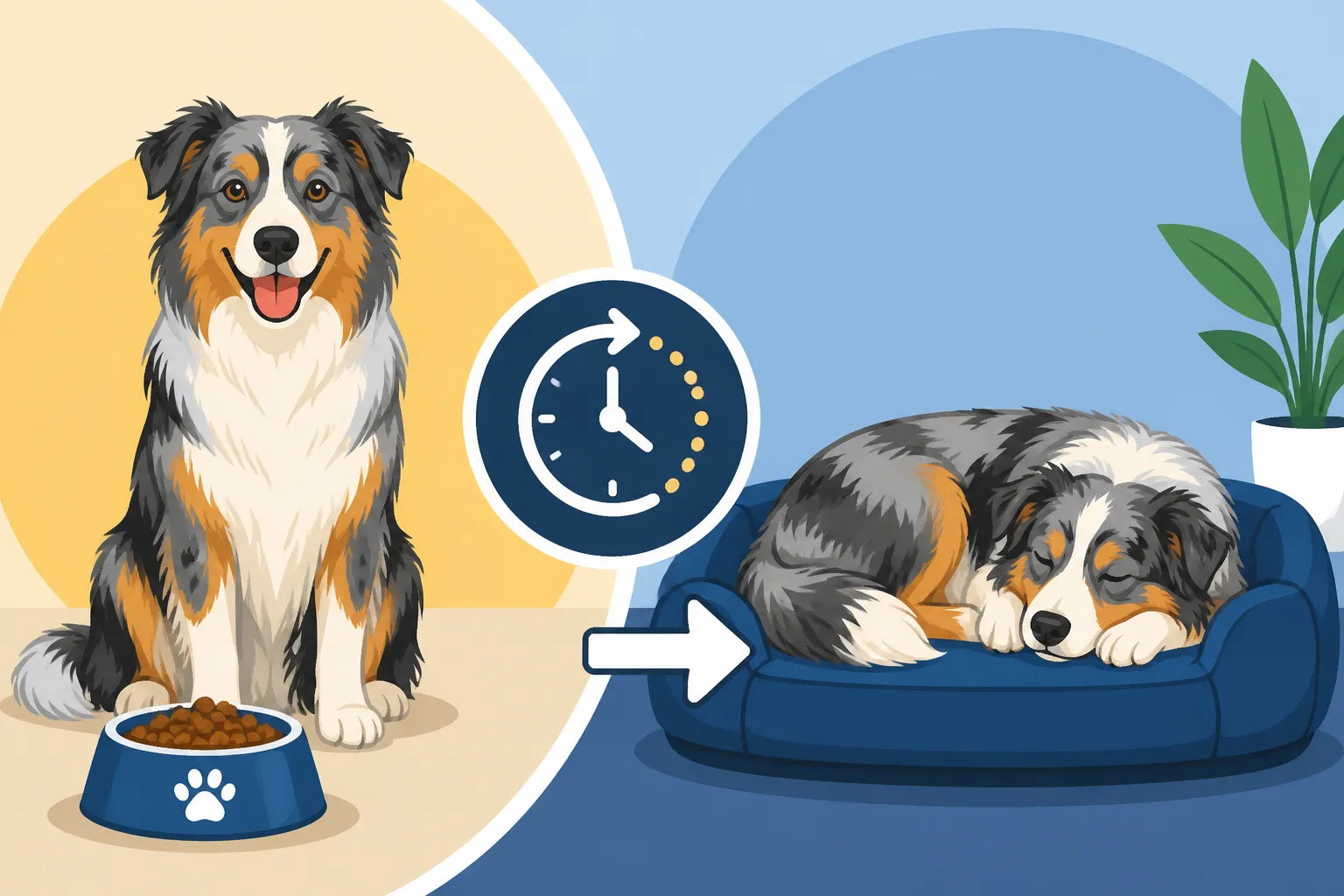
Most veterinarians and experienced Australian Shepherd owners will recommend a "no activity" period of at least 30 minutes before and ideally 60 to 90 minutes after a meal. For some, even two hours post-meal is the safer bet, especially after a large meal. This isn't just about giving their food time to settle; it's about allowing the stomach to digest without unnecessary agitation. When a dog eats, its stomach starts the process of breaking down food. If the dog engages in vigorous exercise — running, jumping, rolling, or even intense tug-of-war — immediately after eating, the full stomach can swing and bounce, increasing the likelihood of gas accumulation and, more critically, twisting.
The physiological reasoning is straightforward: digestion requires the stomach to be relatively calm to do its job efficiently. Blood flow is redirected to the digestive organs, and excessive movement can disrupt this process. Furthermore, gulping air during panting from exercise, combined with fermentation of food, can lead to gas buildup. With a deep-chested breed like an Australian Shepherd, this gas has more room to expand, and the stomach has more rotational freedom, increasing the chances of the dangerous volvulus. Adhering to this rest period significantly reduces the mechanical stress on the stomach and allows the initial stages of digestion to occur safely.
Factors Influencing the Waiting Time
While the 60-90 minute window is a good baseline, several factors can influence how long you should actually keep your Aussie calm after a meal. It's not a one-size-fits-all situation, and being observant of your individual dog's habits and the type of meal they just consumed is essential.
Meal Size and Frequency: A larger meal naturally takes longer to digest than a smaller one. If your Aussie eats one big meal a day, the post-meal rest period should lean towards the longer end of the recommended scale, perhaps 90 minutes or even two hours. Many owners of high-risk breeds opt to split their dog's daily ration into two or three smaller meals. Splitting an Australian Shepherd's Ration Into Two Meals is a common strategy, which not only aids digestion but can also reduce the feeling of extreme fullness that might tempt them to exercise to "burn it off." Smaller, more frequent meals generally mean a shorter, though still important, rest period after each.
Food Type and Consistency: Dry kibble, especially if expanded by water or stomach acids, can take up more volume and may be digested differently than wet food or a fresh food diet. Some studies suggest that diets with larger particle sizes or those that promote faster eating might be risk factors, though the evidence is mixed. Regardless, a food that causes your dog to drink a lot of water right after eating (further filling the stomach) should prompt a longer rest. Consider the density and bulk of the meal. If you're feeding a diet like those from Ollie, which can be more moist and potentially less voluminous than dry kibble, the digestion might still require a similar rest period, as the mechanical aspect of a full stomach is key.
Individual Aussie Metabolism and Sensitivity: Just like people, every dog is an individual. Some Aussies might be naturally slower eaters or have a more sensitive digestive system. Others might be absolute vacuum cleaners at mealtime. Observe your dog. Does he seem particularly bloated or uncomfortable after certain meals? Does he gulp water immediately after eating? These observations can help you fine-tune the rest period. A dog with a history of digestive issues or one that is known to be particularly prone to gulping air might benefit from an even longer, quieter rest period.
Intensity of Anticipated Activity: If you know your Aussie is about to have a high-energy training session, an agility class, or a long run, you absolutely must extend the pre- and post-meal rest periods. A quick potty break on a leash is fine, but anything involving intense bursts of movement, twisting, or jumping should be strictly avoided for at least an hour to 90 minutes, and ideally longer, after eating. Always err on the side of caution when high-intensity exercise is in the picture.
Practical Strategies for Managing Post-Meal Activity
Managing an Australian Shepherd's energy levels after a meal can feel like a contradiction, given their innate drive. However, with smart strategies, you can ensure their safety without stifling their need for engagement.
Creating a Calm Post-Meal Environment
The biggest challenge with an Aussie post-meal is their boundless energy and desire to be "doing something." Left to their own devices, many would launch into a full-speed zoomie session or grab a toy for an intense game of fetch. This is precisely what we need to prevent.
The "Quiet Time" Zone: Designate a specific "quiet time" zone for your Aussie after meals. This could be their crate, a cozy bed in a low-traffic area, or a mat with a special, non-arousing chew. The goal is to enforce calm, not punish activity. The crate, if properly introduced and seen as a safe den, can be an excellent tool for this. Make it comfortable with a soft bed. For dogs who aren't crate-trained or who find it stressful, a dedicated mat or bed in a quiet corner can work, but it might require more active supervision from you. The key is to teach them that mealtime is followed by a predictable period of relaxation.
Mental Stimulation Over Physical Exertion: Instead of physical play, offer mental enrichment that keeps them engaged but still. This is where puzzle toys, Lickimats, or long-lasting chews can come in handy after the initial digestion has begun, not immediately following mealtime when the stomach is most full. A KONG stuffed with a bit of peanut butter or plain yogurt and frozen can provide a good 20-30 minutes of low-key engagement without causing stomach upset. Ensure that any chew toy is not something they will aggressively gulp down, or that involves frantic head shaking or jumping. Simple obedience commands practiced calmly, or a gentle petting session, can also fulfill their need for interaction without risking bloat. For an Aussie that really struggles to switch off, as detailed in An Australian Shepherd That Cannot Switch Off, this quiet time is doubly important.
Supervision and Redirection: Especially with puppies or young adults, you'll need to actively supervise them during this rest period. If they start to get restless or look like they're winding up for play, gently redirect them back to their quiet spot with a calm voice or a treat lure. Consistency is vital; they need to learn that this is the routine. This also applies to other household members, particularly children, who might not understand the risks of immediate post-meal play.
Smart Feeding Practices to Minimize Risk
Beyond the post-meal rest, how you feed your Australian Shepherd can dramatically impact their risk of bloat.
Slow Feeder Bowls: These bowls are a game-changer for fast eaters. They have obstacles, ridges, or mazes that force your dog to eat around them, significantly slowing down their ingestion. Eating too quickly can lead to swallowing excessive air along with the food, a known bloat risk factor. You can find a wide variety of effective slow feeder bowls on Chewy or Amazon, ranging from plastic to ceramic designs. Slow Feeder Bowls for an Australian Shepherd offers more insights into choosing the right one.
Splitting Meals: As mentioned earlier, breaking your Aussie's daily food ration into two or even three smaller meals instead of one large one can reduce the volume in the stomach at any given time. This not only eases digestion but also lessens the pressure on the stomach walls, potentially reducing the risk of stretching and twisting. For example, if your Aussie normally gets 3 cups of food per day, consider feeding 1.5 cups in the morning and 1.5 cups in the evening, rather than all 3 cups at once.
Elevated Bowls (with caution): The topic of elevated food bowls and bloat is actually quite controversial. While they were once widely recommended to prevent bloat, recent studies have suggested that they might actually increase the risk in large, deep-chested breeds. The theory is that elevated bowls can allow a dog to eat faster and gulp more air. Therefore, it's generally recommended to feed Aussies from bowls placed on the floor unless there's a specific medical reason (like neck arthritis) to use an elevated feeder, and then only under veterinary guidance.
Food Consistency and Hydration: Some argue that feeding a moistened kibble, or even a wet/fresh food diet, might be safer than extremely dry kibble. The thought is that the added moisture could reduce the amount of water a dog gulps after eating, and potentially slow down digestion slightly. However, ensure that any added moisture doesn't turn the food into a "slop" that can be ingested even faster. Always ensure fresh water is available, but try to avoid your Aussie guzzling huge amounts immediately after finishing their meal.
Recognizing Warning Signs of Trouble
Despite all precautions, bloat can still occur. Recognizing the early warning signs is absolutely critical, as time is of the essence in treating GDV. If you suspect bloat, do not wait; it's an immediate emergency.
Key Symptoms to Watch For:
- Restlessness and pacing: Your Aussie might be unable to get comfortable, constantly shifting position, or pacing aimlessly.
- Distended or swollen abdomen: This is often the most obvious sign. Your dog's belly will appear visibly larger and feel tight or drum-like to the touch. This can be subtle at first, but will become more pronounced.
- Unproductive retching or dry heaving: Your dog will try to vomit but nothing (or very little) comes up. This is a classic symptom of the stomach being twisted.
- Excessive drooling: Due to nausea and discomfort.
- Pain and discomfort: Your Aussie might whine, groan, or show signs of pain when you touch their abdomen.
- Weakness and collapse: As the condition progresses, your dog may become weak, pant heavily, and eventually collapse. Their gums might appear pale, and their heart rate can increase.
If you observe any combination of these symptoms, especially the unproductive retching and a distended abdomen, consider it an emergency. Get your Australian Shepherd to the nearest emergency veterinary clinic immediately. Do not try to "wait and see" or attempt home remedies; every minute counts. Bloat Warning Signs in an Australian Shepherd provides a deeper dive into these critical indicators. Discussing preventative options like a gastropexy with your vet, as explored in Whether an Australian Shepherd Needs a Gastropexy, might also be a proactive step for high-risk individuals.
Integrating Rest into a Working Aussie's Schedule
Australian Shepherds are designed for work, and their innate drive means they often want to be active. Integrating the necessary post-meal rest into the schedule of a dog that lives for movement can be a puzzle, but it’s a crucial one to solve for their health.
Balancing Instinct with Safety
A working Australian Shepherd isn't content to lie around all day; they thrive on having a job, whether it's herding livestock, excelling in agility, or being a devoted running partner. This means their meal schedule and activity levels are often intertwined. The challenge lies in respecting their instincts while ensuring their safety from bloat.
Strategic Meal Timing: The most effective way to balance their drive with safety is through strategic meal timing. If your Aussie has a busy morning of herding practice or a long hike, feed them at least 60-90 minutes before any strenuous activity. This gives their stomach time to partially empty and begin digestion. More importantly, after the activity, allow for a significant cool-down period of at least 30 minutes before offering food. A hot, panting dog that immediately eats and drinks is at higher risk. The same rules apply to their evening meal. If you have an agility class, a frisbee session, or a long walk planned for the evening, feed them well in advance or after the activity, followed by the mandated rest period. Feeding an Australian Shepherd That Works All Day offers comprehensive advice on how to fuel these energetic dogs safely.
"Active Rest" Alternatives: Instead of physical exertion, engage your Aussie's mind with low-impact activities during the rest period. This could involve practicing polite leash manners during a slow, sniffing walk around the yard (not a power walk!), or engaging in simple scent games indoors. Hiding a few treats in a snuffle mat (found on Amazon or Chewy) or under an overturned cup can satisfy their working drive without the physical risks. The goal is to channel their mental energy, which they have in abundance, rather than their physical energy.
Post-Exercise Recovery and Meal Timing
It's just as important to manage meal timing around vigorous exercise as it is to manage activity after meals. A hot, panting Aussie coming off a high-intensity session needs to recover before food or water is introduced in large quantities.
The Cool-Down Protocol: After any strenuous activity like running, agility, or extensive playtime, your Australian Shepherd needs a proper cool-down. This means a gradual decrease in activity, such as a slow walk, for 10-20 minutes. This allows their breathing and heart rate to return to normal, and their body temperature to regulate. During this time, offer small sips of water, not a full bowl to gulp down. Over-drinking by a hot, panting dog can itself be a bloat trigger. Australian Shepherd Exercise at One to Two Hours a Day discusses the types of exercise Aussies need and how to manage them safely.
Waiting to Feed: Only once your Aussie is calm, no longer panting heavily, and has had a chance to drink small amounts of water over time, should you offer their meal. Even then, the 60-90 minute post-meal rest period still applies. Think of it as a buffer zone on both sides of the meal when it comes to intense activity. If you know you have an early morning training session, adjust your feeding schedule so the first meal is either several hours before, or a small portion is given after the training session and cool-down. This conscious planning is essential for the long-term health of your working companion. A dog that is too wired to settle, perhaps one that exhibits An Australian Shepherd That Paces Indoors, will require even more careful management of their post-meal environment.
Caring for an Australian Shepherd means being vigilant about their health and understanding their unique predispositions. Bloat is a serious threat, but with careful meal management, smart feeding practices, and a clear understanding of the risks, you can significantly reduce the chances of your beloved Aussie ever experiencing this terrifying condition. Always prioritize their safety and well-being around meal times, even if it means temporarily curbing their boundless enthusiasm.
Disclaimer
This article is for general informational purposes only and does not constitute professional advice. Laws, prices and regulations vary by location and change over time. Consult a qualified professional for guidance on your specific situation.