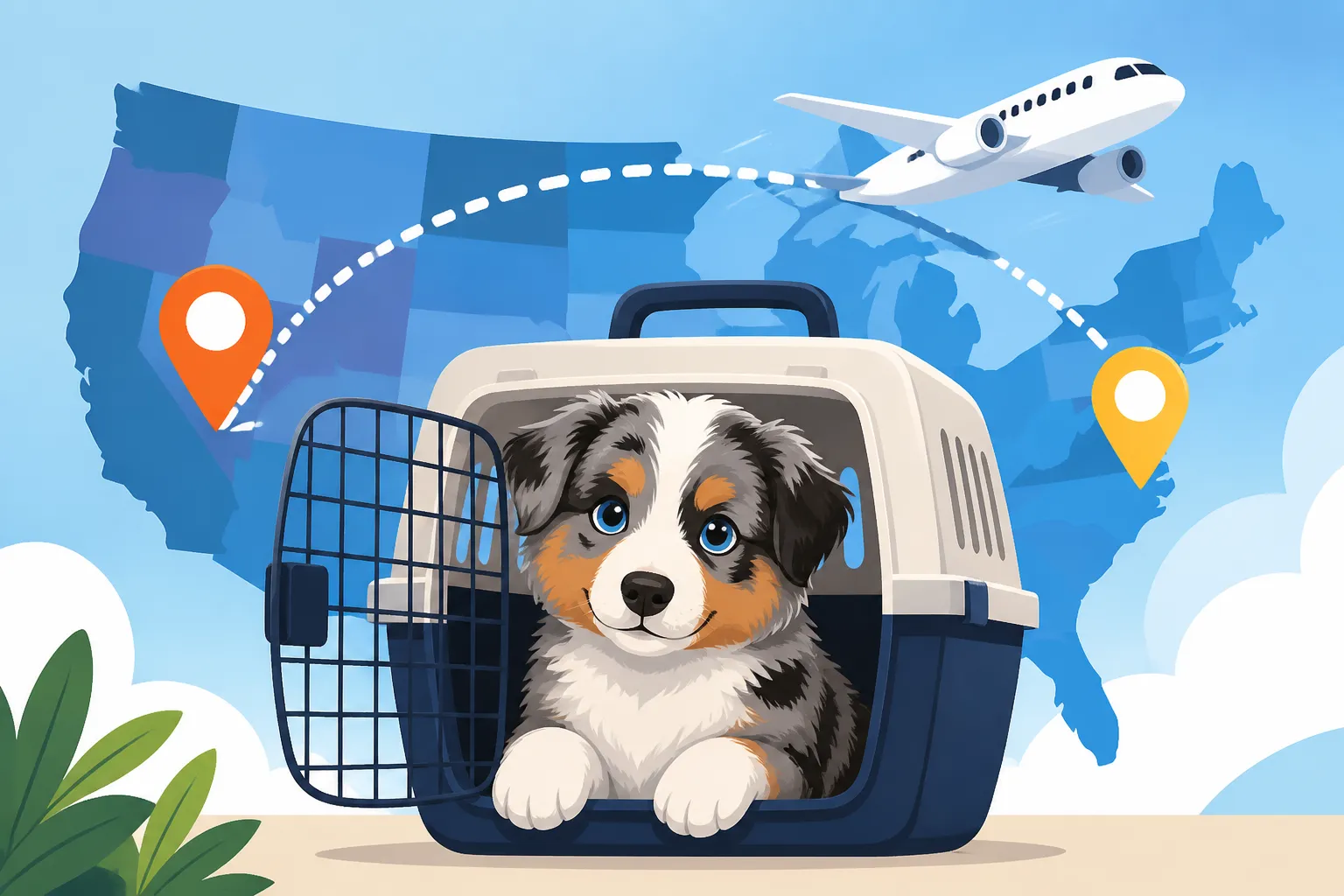
Shipping an Australian Shepherd Puppy Across States
Bringing a new Australian Shepherd puppy home is an incredibly exciting time, but if your chosen breeder is across state lines, the logistics of getting your fluffy bundle to you can feel like a daunting maze of regulations, costs, and anxieties. It's completely normal to feel overwhelmed wondering about everything from airline rules to health certificates and ensuring your little one is safe and comfortable. This guide will walk you through the entire process of shipping an Australian Shepherd puppy across states, demystifying the journey so you can focus on preparing for their arrival.
Understanding the Logistics of Interstate Puppy Travel
When you've found the perfect Australian Shepherd puppy, often from a reputable breeder who might not be in your immediate vicinity, arranging their travel becomes a primary concern. It’s not as simple as popping them on a bus; there are strict rules and best practices to ensure their welfare.
Regulations and Restrictions by State and Airline
Every state has its own set of animal import regulations, and these are often focused on preventing the spread of disease. You’ll need to research both the state your puppy is coming from and your destination state. Typically, a Certificate of Veterinary Inspection (CVI), commonly known as a health certificate, is mandatory. This document certifies that a licensed veterinarian has examined the puppy and found it free of infectious diseases and external parasites, and fit for travel. The validity period for these certificates is usually quite short, often 10 days, sometimes up to 30, so timing with your breeder and vet is crucial.
Airlines, too, have extensive rules, which can vary wildly. Some airlines have outright bans on shipping pets as cargo during certain times of the year due to temperature restrictions. Others might have breed-specific restrictions, though Australian Shepherds are generally not on "snub-nosed" breed lists that face common cargo bans. You'll need to check the specific airline's pet travel policy, paying close attention to crate dimensions, required documentation, and age limits for puppies. Many airlines won't ship puppies younger than 8 or 10 weeks, and often require them to be fully weaned and strong enough for the journey. For an Australian Shepherd puppy, proper socialization and Australian Shepherd Puppy Health Checks at Eight Weeks from a good breeder should ensure they're ready for travel at the appropriate age.
Choosing the Right Shipping Method
You typically have a few options when it comes to bringing your Australian Shepherd puppy home from another state, each with its own pros and cons.
Air Cargo: This is often the most common method for longer distances. The puppy travels in a temperature-controlled, pressurized compartment below the passenger cabin. While it can seem scary to owners, airlines that transport pets as cargo usually have specific protocols for their care, including designated holding areas and loading procedures. However, direct flights are always preferable to minimize stress and transfer risks. Some reputable breeders have established relationships with specific airlines, like United Cargo or Delta Cargo, due to their pet travel programs. It's vital to research the airline's reputation for pet safety, check for incident reports, and understand their specific temperature embargoes. For example, during hot summer months, many airlines will not ship animals if ground temperatures exceed a certain degree at either origin or destination.
In-Cabin Travel: For smaller Australian Shepherd puppies (often under 20 pounds, including the carrier), some airlines allow them to travel in the cabin with a passenger. This means the puppy is under the seat in front of you. This is generally considered the least stressful option for the puppy, as they are with a person they know (either the breeder or a designated courier) and can be monitored. However, there are strict size and weight limits for carriers, and only a limited number of pets are allowed per flight. If you or the breeder are flying, this might be an option for a very young or smaller Aussie puppy, though they grow quickly!
Ground Transport: This option involves hiring a professional pet transport service to drive your puppy to you. These services can range from large, multi-pet operations to smaller, more personalized transporters. Ground transport can be a less stressful alternative to flying for some puppies, as it avoids the noise and changes in pressure of air travel. It also allows for more frequent potty breaks, food, and human interaction. However, it can be slower and potentially more expensive for very long distances. Always thoroughly vet any ground transport service: ask for references, check their safety record, and ensure they have proper climate control and secure crates. A responsible breeder might have preferred transporters they've worked with previously.
Preparing Your Aussie Puppy for the Journey
Regardless of the chosen method, preparing your Australian Shepherd puppy for the journey is paramount to their comfort and safety. This starts long before travel day.
Crate Training: Your puppy will need to be comfortable in a travel-appropriate crate. If they're accustomed to their crate as a safe, cozy den, the travel experience will be far less stressful. The crate must meet airline or transport service specifications, often requiring specific dimensions, ventilation, "LIVE ANIMAL" stickers, and attached food/water dishes. It's a good idea to introduce the crate early with positive reinforcement, feeding meals inside, and making it a comfortable space with familiar bedding. For tips on managing crate protest, see our article on Getting a Restless Aussie to Settle in a Crate. Chewy offers a wide range of airline-approved crates and accessories suitable for travel.
Health Checks and Essential Supplies: A final veterinary check-up right before travel is critical to ensure your puppy is healthy. Make sure they have all necessary The Puppy Shot Series for an Aussie up to date for their age and that their health certificate is issued within the required timeframe. Pack a small bag with their usual food (to avoid stomach upset), any necessary medications, a favorite toy or blanket with the scent of their littermates/mother, and plenty of water. Attaching clear identification to the crate, including your contact information and the puppy’s destination, is a must. A microchip, easily scanned if they somehow get separated from their carrier, is also a smart move, especially for an Aussie that might have a tendency to Microchipping an Aussie That Bolts After Movement.
Navigating Health Certificates and Veterinary Requirements
The legal and health aspects of interstate puppy travel can feel like the most intimidating part, but with a good breeder and a cooperative vet, it's entirely manageable. This section breaks down what you need to know about the crucial paperwork and health protocols.
The Importance of a Certified Vet Exam
Before any interstate travel, your Australian Shepherd puppy must undergo a thorough examination by a licensed veterinarian. This isn't just a formality; it's a critical step to confirm the puppy's fitness for travel and to prevent the spread of diseases. During this exam, the vet will check for a variety of health indicators:
- Overall Physical Condition: Assessing general alertness, gait, body condition score, and coat quality.
- Parasites: Checking for internal parasites (worms) and external parasites (fleas, ticks). Often, a fecal test is performed.
- Vaccination Status: Verifying that the puppy has received appropriate vaccinations for its age, typically distemper, parvovirus, adenovirus, and parainfluenza. If they are old enough, a rabies vaccination might be required, though most puppies traveling are too young for this.
- Heart and Lungs: Listening for any murmurs, arrhythmias, or respiratory issues.
- Eyes and Ears: Checking for any discharge, infections, or abnormalities. This is particularly important for Aussies, given concerns like Collie Eye Anomaly in an Australian Shepherd or Hereditary Cataracts Clouding an Aussie Eye.
- Mouth and Teeth: Inspecting gums and puppy teeth for health.
- Temperament: Observing the puppy's general demeanor to ensure they are not overly anxious or aggressive, which could make travel more stressful.
The vet’s findings are recorded on the health certificate, attesting that the puppy appears healthy and suitable for travel. This is peace of mind not just for you, but for regulatory bodies ensuring animal welfare.
Required Vaccinations and Parasite Prevention
For puppies, the primary vaccinations are typically a series of shots that protect against common and dangerous diseases. Your Australian Shepherd puppy should have received at least their first set of Distemper, Hepatitis, Parvovirus, and Parainfluenza (DHPP or DAPP) vaccines. Some states might require additional vaccinations or a specific timing of these vaccines. It's also crucial that the puppy has been dewormed regularly, as intestinal parasites are common in young puppies and can be exacerbated by stress.
Flea and tick prevention is another key element. Your vet will ensure the puppy is free of these external parasites. While generally safe, if your Aussie has The MDR1 Mutation Half of Australian Shepherds Carry, your vet will be careful to use Parasite Prevention Safe for an MDR1 Australian Shepherd. The health certificate will often specify the dates of these treatments. Remember, these measures are not just about compliance; they are fundamental to your puppy's well-being and preventing the introduction of parasites to your home and other pets.
Understanding Interstate Health Certificates
The Certificate of Veterinary Inspection (CVI) is the official document that permits your puppy to cross state lines. It's issued by a licensed, accredited veterinarian and usually needs to be endorsed by the state's animal health official from the originating state's Department of Agriculture. This endorsement adds an extra layer of verification, confirming the vet followed all necessary protocols.
Here's what you'll typically find on a CVI:
- Puppy’s Details: Breed (Australian Shepherd!), age, sex, color, microchip number (if applicable).
- Owner/Consignee Information: Your name and address.
- Breeder/Originator Information: The breeder's name and address.
- Destination Information: Your state and county.
- Examination Date: When the vet performed the health check.
- Vaccination Records: Dates of vaccinations, vaccine types, and next due dates.
- Parasite Treatments: Dates and types of deworming and flea/tick prevention.
- Vet's Statement: A declaration that the puppy is healthy and shows no signs of communicable diseases.
- Accreditation Number: The vet's federal accreditation number.
- State Endorsement: The official seal and signature from the state animal health office.
The validity period for a CVI is typically 10 days from the date of examination, but it can vary. This means the puppy must arrive at its destination within that timeframe. Coordinating this with your breeder, their vet, and the chosen transport method is crucial to avoid delays or needing a new certificate.
Costs Associated with Shipping an Australian Shepherd Puppy
Understanding the financial outlay for shipping an Australian Shepherd puppy across states is crucial for budgeting. It's more than just the cost of the puppy itself; there are several layers of expenses.
Breakdown of Shipping Fees
The fees for shipping can vary significantly based on the method you choose, the distance, and the time of year.
Air Cargo: Expect airline cargo fees to range anywhere from $250 to $700 or more, depending on the airline, the size of the crate, and the distance of the flight. This fee usually covers the animal’s passage in the cargo hold. Some airlines might offer additional services for a higher cost. These prices can fluctuate based on fuel costs and demand. Remember, these prices are per pet, so if you were considering getting two puppies, that cost would double.
In-Cabin Travel: If the puppy is small enough to fly in the cabin with you or a courier, the fee is generally lower, typically $100 to $200 per flight. However, this is usually only an option for very young puppies and requires a dedicated traveler.
Ground Transport Services: This can be the most variable cost. Professional ground transport for an Australian Shepherd puppy could range from $300 for a short distance to upwards of $1,000 or more for cross-country journeys. The price often depends on whether it's a dedicated transport (more expensive) or a shared transport where the puppy is one of several being delivered along a route. Reputable services, like those found through trusted pet transport brokers or recommended by your breeder, might cost more, but they offer greater peace of mind with their safety protocols and experienced drivers.
Veterinary and Documentation Expenses
Beyond the shipping itself, the veterinary care and associated paperwork add to the overall cost.
Health Exam and Certificate: A veterinary examination for the health certificate typically costs $50 to $150. This fee covers the vet's time for the thorough check-up and the preparation of the certificate. This is usually paid by the breeder, but it's good to confirm.
State Endorsement: The state's Department of Agriculture charges a fee to endorse the health certificate. This usually runs from $35 to $75. This is a non-negotiable step for interstate travel and ensures the document is officially recognized.
Vaccinations and Deworming: While most breeders include initial vaccinations and deworming in the puppy's purchase price, if any additional boosters or treatments are needed specifically for travel, these could incur extra costs. For example, if your puppy needed a final deworming just before the health certificate exam. The Health Tests Every Australian Shepherd Parent Needs includes a range of genetic tests, not typically required for travel but important for the puppy's overall health history.
It's also worth thinking about Australian Shepherd Vet Bills Between $15,000 and $40,000 over a dog's lifetime, and the shipping costs are just the first step in that journey.
Supplies and Comfort Items for Travel
You'll also need to factor in the cost of essential supplies to make your puppy's journey as comfortable and safe as possible.
Travel Crate: A proper, airline-approved travel crate is a must. These can range from $50 to $150 or more, depending on size and features. It needs to be sturdy, well-ventilated, and large enough for the puppy to stand up and turn around comfortably. Make sure to get one that can accommodate your growing Australian Shepherd puppy for the immediate future. For more on crate sizing, check out Australian Shepherd Crate Size and Cost. Many online retailers like Chewy offer suitable options.
Bedding and Comfort Items: Soft, absorbent bedding (like a crate pad or blanket) can provide comfort and absorb any accidents. Bringing a familiar scent, such as a towel rubbed on the littermates or mother, can greatly reduce anxiety. These items might add $20 to $50.
Food and Water Bowls: Attachable, spill-proof food and water bowls for the crate are required for air travel and highly recommended for ground transport. These are usually inexpensive, around $10 to $20.
Other Supplies: Don't forget identification tags for the crate, "LIVE ANIMAL" stickers (often provided by the airline, but good to have), and a small bag of your puppy's current food to last a few days. The breeder will often send a small bag of food, but having extra is always wise. Consider a small amount of fresh food from a brand like Ollie to entice them to eat after arrival if they're stressed. These miscellaneous items can easily add another $20 to $50 to your budget. Remember, the first Week One Aussie Bills From Crate to Vet include these initial setup costs.
Ensuring Your Puppy's Safety and Comfort During Transit
The well-being of your Australian Shepherd puppy during its journey is likely your biggest concern. Proactive steps can significantly reduce stress and improve their experience.
Minimizing Stress for Your Aussie Puppy
Travel, by its very nature, can be stressful for young animals. Doing everything you can to make the experience less daunting is key.
Familiarity and Scent: Before the journey, ensure the puppy has spent time getting comfortable in their travel crate. Place a blanket or towel with the familiar scent of their mother and littermates inside the crate. This familiar smell acts as a comfort object, creating a sense of security in an unfamiliar environment. Your breeder will often provide this, knowing how beneficial it is. Also, wearing an old t-shirt for a few hours and then giving it to the puppy to sleep on can transfer your scent, helping them bond with you even before they meet you.
Pre-Travel Exercise and Potty Breaks: Just before departure, ensure your Australian Shepherd puppy gets a good opportunity to relieve themselves. For air travel, this is crucial. A short, calm play session can help burn off some nervous energy, but avoid over-tiring them. For ground transport, responsible transporters will schedule frequent stops for potty breaks and stretching. Limiting food a few hours before travel (but never water!) can help prevent an upset stomach, but always follow the breeder's or transporter's advice.
Hydration: Ensuring your puppy stays hydrated is paramount. For air cargo, a water bottle attached to the crate door is usually required. For ground transport, fresh water should be offered frequently. A dehydrated puppy is a stressed puppy.
Emergency Protocols and Communication
Even with the best planning, unforeseen circumstances can arise during travel. Being prepared for delays or issues is important.
Emergency Contact Information: Ensure all crates and documentation clearly display emergency contact information for both the breeder and yourself. Include phone numbers and email addresses. If using a transport service, confirm they have this information readily available.
Flight Tracking/Communication with Transporter: If your puppy is flying, track the flight status diligently. Major airlines like Delta and United offer robust cargo tracking systems. For ground transport, a reputable transporter will provide regular updates, often including photos or videos of your puppy during their journey. Don't hesitate to ask for updates if you haven't heard anything. Open lines of communication are vital for peace of mind.
Contingency Plans: Discuss with the breeder what happens in case of extreme weather delays, missed connections, or other issues. Who is responsible for lodging the puppy? What are the protocols for extended delays? Having these conversations upfront ensures everyone is on the same page. While we all hope for smooth sailing, understanding these protocols can alleviate anxiety if a problem does arise. Consider pet insurance options from providers like Healthy Paws for future veterinary needs, as unexpected emergencies can always happen.
Welcoming Your Puppy Home After Travel
The moment your Australian Shepherd puppy arrives is exhilarating, but they've just had a big journey. Their first few hours and days with you are all about de-stressing and settling in.
Quiet Arrival: When your puppy first arrives, whether by plane or car, try to make the reunion as calm as possible. Avoid overwhelming them with too many new faces or loud noises. Let them sniff around their new surroundings quietly.
Immediate Potty Break: The very first thing to do is take them directly to the designated potty area in your yard. Don't engage in play or long cuddles until they've had a chance to relieve themselves. Praise them calmly when they do. This immediately reinforces good habits.
Food and Water: Offer them fresh water immediately. After a short while, offer a small, familiar meal. Don't be alarmed if they're not ravenous; stress can suppress appetite. Stick to the food the breeder was feeding to avoid an upset stomach, which can manifest as Australian Shepherd Puppy Diarrhea After Homecoming.
Designated Safe Space: Show them their crate or designated safe space. This should be a comfortable, quiet area where they can retreat and feel secure. Continue to use a blanket or toy with the familiar scent from the breeder. Enforced naps in their crate are excellent for allowing them to decompress.
Vet Check-Up: Schedule a veterinary check-up within the first few days of arrival. This is an important step for any new puppy, even if they've just had a health certificate issued. Your vet can give them a once-over, establish a health baseline, and discuss their future vaccination schedule and parasite prevention. This also gives you a chance to discuss any questions or concerns you have about your Australian Shepherd puppy's transition.
Disclaimer
The information provided in this article is for general informational purposes only and does not constitute professional veterinary or legal advice. Always consult with a qualified veterinarian regarding your pet's health and specific travel requirements, and research the latest state and airline regulations before making any travel arrangements.