Aussies in Search and Rescue
Many Australian Shepherd owners find themselves marvelling at their dog's intelligence, boundless energy, and intense focus, often wondering if these incredible traits could be channeled into something truly meaningful. While daily walks and backyard games are good, the inherent drive of an Aussie often craves a higher purpose. If you've ever considered how your highly capable Australian Shepherd could contribute to saving lives, this guide is for you. We're going to dive deep into why Aussies can be phenomenal in search and rescue (SAR), what kind of work they excel at, and the serious commitment involved in becoming a certified SAR team.
The Innate Qualities That Make Aussies Shine in SAR
Australian Shepherds possess a suite of characteristics that, when properly harnessed, make them exceptionally well-suited for the demanding world of search and rescue. It's not just about their energy; it's about how that energy combines with their incredible minds and unwavering loyalty.
Unwavering Drive and Intelligence
At the heart of every Australian Shepherd is a profound desire to work and solve problems. Their ancestral role involved managing flocks, which required constant observation, quick decision-making, and immense stamina. This isn't just a physical trait; it's a mental one. They are constantly assessing their environment, looking for cues, and trying to understand their handler's intent. This keen intelligence makes them highly adaptable to complex SAR scenarios where conditions are unpredictable and tasks require nuanced thinking. They don't just follow commands; they think through the problem with you.
Their famed "herding drive" – that intense focus on movement and control – can be beautifully repurposed in SAR. Instead of gathering sheep, they learn to methodically search an area, using their instincts to "gather" or locate a human scent. It's about channeling that intense natural instinct into a productive, life-saving mission. You can't truly The Australian Shepherd Herding Drive You Cannot Train Out, but you can direct it. This drive, combined with their sharp minds, means they often grasp complex search patterns and tasks more quickly than many other breeds.
Athleticism and Endurance
A search and rescue mission is often a marathon, not a sprint. Australian Shepherds are built for sustained activity. Their medium size, muscular build, and agile frame allow them to navigate diverse and challenging terrains with relative ease. Whether it's scrambling over fallen trees, trekking through thick brush, or covering vast open fields, an Aussie typically has the physical prowess to keep going when other dogs might tire.
This endurance isn't just about covering ground; it's about maintaining focus and performance over long periods. A SAR dog might work for hours, sometimes through adverse weather conditions, requiring exceptional stamina. Their dense double coats, while needing regular grooming, offer protection from both cold and heat, adding to their resilience in varied environments. Maintaining their physical condition is paramount, much like an elite athlete.
Loyalty and Trainability
The bond between an Australian Shepherd and their handler is legendary. This deep connection is not only heartwarming but absolutely critical in SAR work. A SAR dog needs to trust its handler implicitly, and the handler needs to be able to "read" their dog's subtle signals, understanding when they're on scent, fatigued, or needing a break. This partnership is built on mutual respect and understanding, cultivated through countless hours of training.
Aussies are eager to please, which, coupled with their intelligence, makes them highly trainable. They thrive on having a job and excel when given clear tasks and positive reinforcement. Their desire to work alongside their human partner means they're not easily distracted once focused on a task. This trainability extends beyond basic obedience; it allows them to master intricate scent discrimination, alert behaviors, and even specialized tasks needed for specific SAR disciplines. Finding a trainer who truly understands Finding a Trainer Who Understands an Aussie is crucial to unlocking their full potential.
Diverse Roles for Australian Shepherds in Search and Rescue
Australian Shepherds' versatility allows them to excel in several key search and rescue disciplines, each playing a vital role in locating missing persons. Their adaptable nature means they can switch gears depending on the mission's demands.
Wilderness and Trailing SAR
When someone goes missing in a vast wilderness area – a lost hiker, a child who wandered off, or an elderly person with dementia – wilderness search dogs are often the first line of defense. Australian Shepherds are incredibly effective in this role. Their excellent scenting ability, combined with their stamina to cover large areas, makes them ideal for finding individuals across diverse terrains like dense forests, open fields, or mountainous regions.
In trailing or tracking, an Aussie is taught to follow the specific scent of a missing person, often from a scent article provided by their family. This requires immense focus and an ability to ignore distracting environmental scents. An Australian Shepherd's methodical nature, a carryover from their herding days, helps them work systematically through a trail, carefully unraveling the path of the missing person. Their vocal nature can also be an asset, as some Aussies will "bark out" a find, alerting their handler over long distances. The intensity needed for this work is a powerful form of Mental Work That Actually Tires an Australian Shepherd.
Human Remains Detection HRD
While it's a somber and often emotionally taxing specialty, Human Remains Detection (HRD) is a critical component of SAR. HRD dogs are trained to locate human remains, whether recent or historical, on land or in water. Australian Shepherds, with their meticulous search patterns and sustained focus, can be highly effective in this discipline. They are trained to identify the unique scent of human decomposition and indicate a "find" to their handler through a specific trained behavior, such as sitting or barking.
This work often involves searching in challenging environments, from disaster sites to dense woods. An Aussie's agility and determination to thoroughly search every nook and cranny, combined with their unwavering commitment to their handler, make them invaluable. It’s a job where precision and persistence are paramount, and an Aussie's inherent drive helps them stay on task for extended periods.
Disaster Response
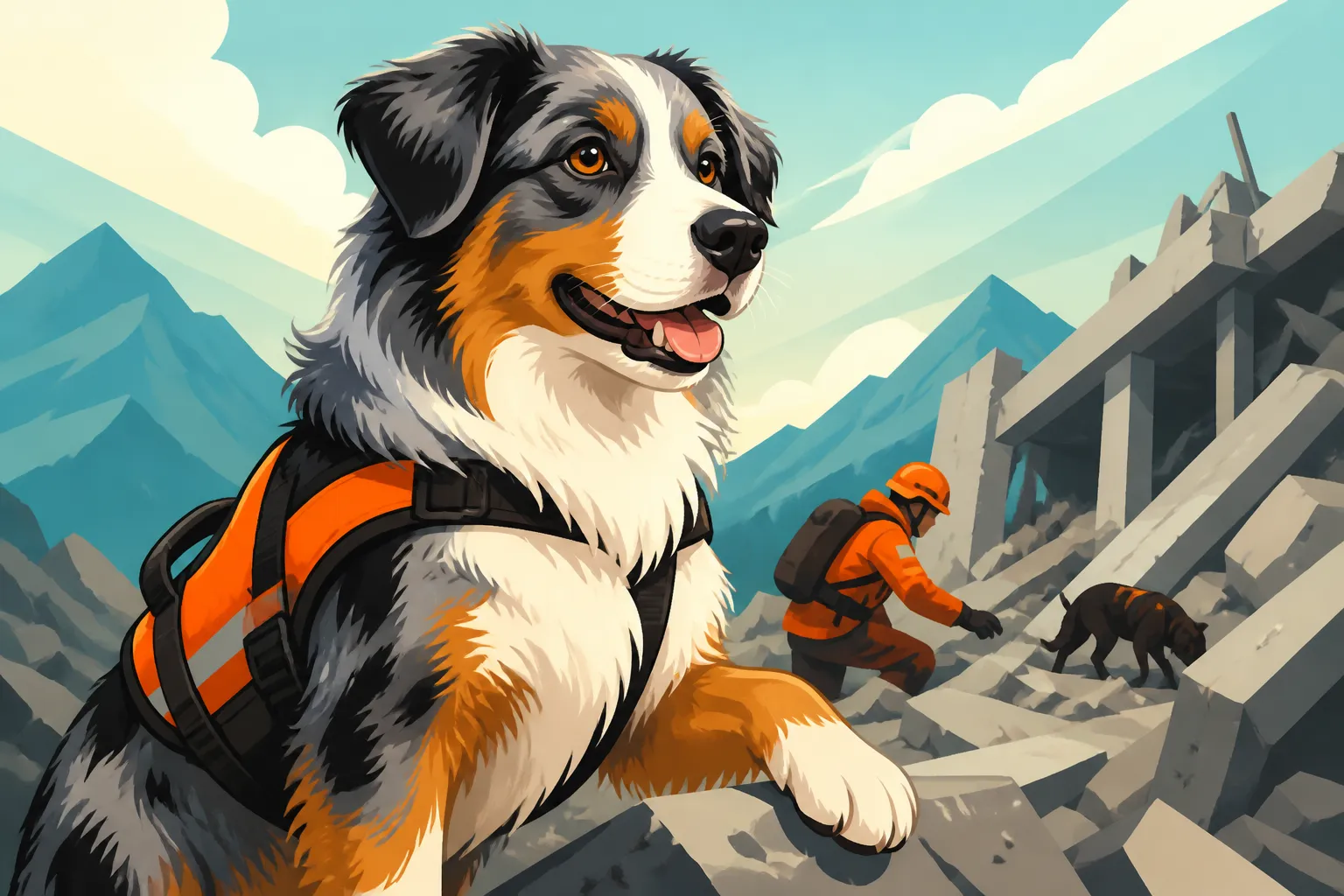
In the aftermath of natural disasters like earthquakes, hurricanes, or tornadoes, disaster response dogs are deployed to search for survivors trapped in rubble. While breeds like German Shepherds and Labradors are commonly seen, an Australian Shepherd, with proper training, can also contribute. Their medium size allows them to navigate tight spaces and unstable debris piles where larger dogs might struggle. Their agility and confidence on uneven surfaces are huge assets.
The temperament required for disaster work is exceptional: dogs must be fearless, able to work independently yet respond instantly to their handler's commands, and undeterred by loud noises or unstable footing. While some Aussies might be naturally more sensitive to noise, focused training and early Socializing an Australian Shepherd Beyond the Farm can build the resilience needed. This is a highly specialized and dangerous field, demanding the utmost courage and mental fortitude from both dog and handler.
The Rigors of Training for SAR with an Aussie
Becoming a certified search and rescue team with your Australian Shepherd is not a casual endeavor; it's a multi-year commitment that demands dedication, consistency, and a significant investment of time and resources.
Building Foundational Skills
Before any specialized SAR training can begin, your Australian Shepherd needs a rock-solid foundation in obedience and socialization. This goes far beyond typical pet manners. A SAR dog must be bomb-proof in its obedience, responding instantly and reliably to commands under extreme distraction and stress. This means impeccable recall, even around highly stimulating environments or moving objects, as highlighted in Australian Shepherd Recall Around Moving Things. A dog that bolts after a squirrel in a search area is not only ineffective but can jeopardize the mission.
Environmental socialization is also crucial. Your Aussie must be comfortable and confident in a myriad of situations: loud noises, strange people, different animals, slippery surfaces, heights, dark spaces, and various vehicles. They need to view the world as an exciting place to explore and work, rather than a source of fear or anxiety. This extensive exposure, beginning in puppyhood, builds a resilient and adaptable partner ready for anything.
Specialized Scent and Search Training
Once foundational skills are in place, the real SAR work begins: developing their natural scenting abilities into a precise, reliable search tool. This involves teaching them to recognize human scent (live or remains) and to systematically cover a search area without missing anything. Training typically starts with "runaways" – a person hiding for the dog to find – and gradually increases in difficulty, duration, and the size of the search area.
The dog learns to indicate a "find" through a specific alert, such as a bark, a retrieve of a specific item, or by returning to the handler and leading them to the scent source. This requires immense focus, perseverance, and a strong "play drive" or "prey drive" that can be channeled into the reward for finding the hidden person. Many SAR handlers leverage toys from retailers like Chewy as high-value rewards to keep their Aussies motivated through long training sessions. The goal is to make the "game" of finding a person the most rewarding thing in the world.
Handler Training and Teamwork
It's vital to understand that in SAR, there are no "dog handlers"; there are "K9 teams." The human half of the team requires just as much, if not more, training than the dog. Handlers must learn navigation, wilderness first aid, incident command systems, radio communication, map reading, scent theory, search strategy, and team dynamics. They must be physically fit enough to keep up with their dog in challenging terrain and mentally resilient enough to cope with the emotional toll of SAR work.
This intense personal development ensures the handler can effectively guide their dog, understand its alerts, and make critical decisions under pressure. It's a true partnership, where both members are highly trained and completely dependent on each other. Neglecting the handler's training is akin to giving a highly tuned race car to someone who can't drive stick.
Challenges and Long-Term Commitment
While the idea of working alongside your Australian Shepherd to save lives is incredibly appealing, it's crucial to approach SAR with a realistic understanding of the significant challenges and long-term commitment involved.
The Time and Financial Investment
Becoming a certified SAR team takes years, not months. You can expect to spend hundreds, if not thousands, of hours training, attending workshops, and participating in practice searches. This commitment often means sacrificing weekends, evenings, and personal holidays. It’s not just the training hours; it’s the travel to various training sites, the time spent on physical conditioning for both yourself and your dog, and the ongoing maintenance of skills.
Financially, SAR is demanding. There are costs for specialized gear (like vests, long lines, and GPS trackers, many of which can be found on Chewy), advanced training classes, certifications, travel expenses, and veterinary care for a highly active working dog. While some teams are volunteer-based, the personal investment remains substantial. For many, it's akin to having a demanding part-time job that you pay to do.
Health and Temperament Requirements
Not every Australian Shepherd, no matter how beloved, is cut out for SAR work. Physical soundness is non-negotiable. SAR dogs often work in harsh conditions, so they must be free from debilitating conditions like hip or elbow dysplasia, certain eye diseases, or heart issues. A comprehensive The Genetic Panel Every Australian Shepherd Needs is essential before even considering SAR training, as underlying health issues can not only shorten a dog's working career but also endanger the team.
Beyond physical health, temperament is paramount. A SAR dog needs to be confident, resilient, stable, and eager to work. They must be fearless but not reckless, persistent but not stubborn. Dogs that show aggression, extreme shyness, or high reactivity, even if managed in a home environment, generally won't make good SAR candidates. An Aussie whose Australian Shepherd Behavior Problems From Under-Exercise manifests as anxiety or reactivity might struggle with the unpredictable nature of SAR. It takes a truly exceptional canine personality to excel in this field.
Emotional Demands and Burnout
Search and rescue work is inherently emotional. Teams are often called out in traumatic circumstances, searching for vulnerable individuals, sometimes with tragic outcomes. Both dogs and handlers can experience stress, fatigue, and emotional burnout. Handlers must develop coping mechanisms and a strong support network to manage the mental and emotional toll.
Dogs, too, can be affected. While they view it as a game, the intensity of the work, the pressure to perform, and the often somber atmosphere can be taxing. Handlers must be vigilant for signs of stress or fatigue in their dog and ensure they receive adequate rest, positive reinforcement, and mental breaks. Knowing when to step back, take a break, or even retire a dog from active duty for their well-being is a critical, often difficult, part of the commitment. Giving an Australian Shepherd a Job Instead of a Walk is powerful, but that job also needs healthy boundaries and self-care.
It is a long road, filled with challenges and triumphs, but for those who commit, the bond forged and the potential to make a profound difference are immeasurable rewards.
| SAR Specialty | Key Australian Shepherd Traits | Typical Terrain/Scenario |
|---|---|---|
| Wilderness Search | High endurance, strong prey drive (repurposed for finding), agility, vocal | Forests, mountains, open fields, finding lost hikers |
| Trailing/Tracking | Acute scent discrimination, methodical pace, focus | Urban areas, wilderness, following specific human scent |
| Human Remains Detection | Meticulous search pattern, sustained focus, drive to "find" | Any environment, from wilderness to collapsed structures |
| Disaster Response | Agility, confidence on unstable ground, independent search, physical stamina | Collapsed buildings, debris fields, urban rubble |
Disclaimer
This article is for general informational purposes only and does not constitute professional advice. Laws, prices and regulations vary by location and change over time. Consult a qualified professional for guidance on your specific situation.