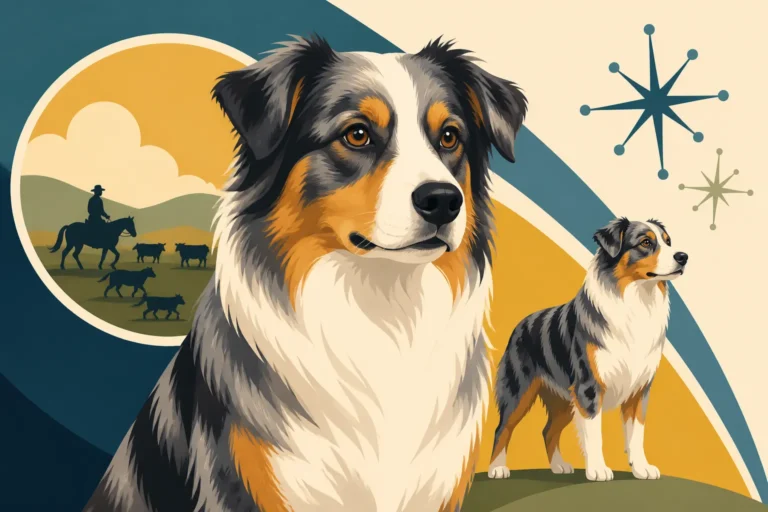
Australian Shepherd Registration Numbers Over Time
It's completely understandable to be curious about how a breed's popularity shifts over time, especially with a dog as striking and capable as the Australian Shepherd. When you look at a breed like the Aussie, with its captivating gaze and boundless energy, it's easy to see why so many people fall in love. But understanding their journey through official registries gives us a glimpse into not just their rising star, but also the dedicated people who worked to preserve their unique traits. This guide will take a deep dive into the historical and ongoing trends of Australian Shepherd registration, helping you understand what these numbers tell us about the breed's journey from working ranch dog to beloved family companion.
The Early Days and the American Stock Dog Association
Before the Australian Shepherd became widely known, it was a working dog, prized by ranchers and farmers for its intelligence and incredible herding ability. These dogs weren't initially bred for show rings or fancy pedigrees; they were bred for function. Their worth was measured in how well they could move cattle and sheep, how quickly they learned, and how devoted they were to their handlers. This focus on utility meant that formal registration, in the sense that many purebred dogs experience it today, wasn't always a top priority for early Aussie owners.
The Foundation of ASCA
The primary registry for Australian Shepherds for many decades was the Australian Shepherd Club of America (ASCA), formed in the 1950s. This organization was founded by people deeply committed to the breed's working heritage, recognizing the need to document bloodlines and preserve the traits that made Aussies such exceptional stock dogs. Think of it as a gathering of like-minded individuals who saw the incredible potential in these dogs and wanted to ensure their lineage and characteristics were recorded for future generations. For a long time, if you had an Australian Shepherd, ASCA was the place to register it. They focused on maintaining the breed's working integrity, even as its popularity slowly started to spread beyond the ranch. The emphasis was heavily on performance and capability, ensuring that dogs registered met a certain standard of working ability, not just appearance.
Documenting a Working Breed's History
The registration numbers from ASCA in those early years reflect a steady, organic growth, driven by people who genuinely valued the Australian Shepherd for its inherent talents. It wasn't about mass appeal; it was about preserving a specific type of dog that excelled at a demanding job. These registrations helped track health information and temperaments within different lines, providing valuable data for breeders who were trying to produce the best possible working dogs. It's a testament to the foresight of those early enthusiasts that these records exist, allowing us to trace the lineage of many modern Aussies back to these foundational animals. Without ASCA's dedication, much of the breed's history and genetic understanding would likely be lost. People interested in the origins often look to groups like ASCA to understand Where the Australian Shepherd Was Actually Developed and The Basque Shepherds Behind the Australian Shepherd.
The AKC Era and Surging Popularity
The landscape of Australian Shepherd registration shifted significantly with the breed's recognition by the American Kennel Club (AKC). For many breeds, AKC recognition is a major milestone, often leading to a substantial increase in public awareness and, consequently, registration numbers. This was certainly true for the Australian Shepherd.
The Road to AKC Recognition
The decision for the Australian Shepherd to seek AKC recognition was not without debate within the breed community. Many cherished ASCA's focus on working ability and worried that joining the AKC would dilute the breed's heritage, shifting the emphasis from function to conformation (how closely a dog matches the written breed standard for appearance). However, proponents argued that AKC recognition would bring greater visibility, establish the breed on a national and international stage, and ensure its long-term future. Ultimately, the Australian Shepherd entered the AKC Herding Group in 1993, a pivotal moment for the breed. This move exposed the Aussie to a much wider audience, moving it from a niche working dog to a more mainstream companion animal. This period marks one of The Two Dates That Brought the Aussie Into the AKC and truly began to expand their reach.
How AKC Recognition Impacted Numbers
Once the AKC recognized the breed, registration numbers saw a significant uptick. This wasn't just existing ASCA dogs cross-registering; it was new owners, drawn to the breed's striking looks and perceived intelligence, entering the world of Australian Shepherds. The AKC's vast network, including dog shows, public education, and extensive online resources, introduced the Aussie to millions who might never have encountered one on a ranch. This wider exposure meant that more people were not only seeing Australian Shepherds but also actively seeking them out as pets. The breed quickly climbed the ranks of the AKC's most popular breeds list, a clear indicator of its growing appeal. As these dogs became more common in suburban homes, the demand for appropriate supplies also grew, with services like Chewy becoming essential for many new owners.
The table below illustrates a hypothetical, generalized trend of how registration might be interpreted across different registries and over time, reflecting how a breed's journey from specialized working dog to popular companion can impact its official numbers.
| Era/Registry | Primary Focus | Typical Growth Pattern | Breed Visibility | Factors Influencing Numbers |
|---|---|---|---|---|
| Pre-ASCA (Early 1900s) | Working Utility | Very Slow, Informal | Localized to Ranches | Functional need, word-of-mouth among ranchers |
| ASCA Dominance (Mid-C) | Working & Preservation | Steady, Organic | Niche, Working Circles | Breed loyalty, working performance, specific bloodlines |
| Post-AKC Recognition | Conformation & Companions | Rapid, Exponential | Mainstream, National | Media exposure, dog shows, public perception, perceived "cuteness" |
| Modern Era (Both) | Diverse Roles | Stabilizing, but High | Widespread | Responsible breeding, demand for specific temperaments, access to online resources (like Chewy) |
It's important to remember that this table provides a conceptual view. Actual numbers would vary year by year, but the overarching trends generally align with these shifts in focus and visibility. This widespread adoption also meant that owners, needing everything from food to toys, increasingly turned to online retailers like Chewy for convenience and selection, reflecting the breed's move into more general pet ownership.
What the Numbers Don't Always Tell You
While registration numbers are excellent indicators of popularity, they don't paint the whole picture. A surge in registrations doesn't automatically mean a breed is better, or that every registered dog comes from responsible breeding. It often means increased demand, which can, unfortunately, attract breeders who are more interested in profit than preservation of health and temperament. For instance, sometimes dogs are registered without adequate health clearances or without a full understanding of their genetic lineage. This is why it's crucial for prospective owners to look beyond mere registration and delve into a breeder's practices. Reputable breeders will always provide documentation of health testing, like those needed for The Genetic Panel Every Australian Shepherd Needs, and be transparent about their breeding goals.
Interpreting Modern Registration Trends
In recent decades, the Australian Shepherd has remained a consistently popular breed, often ranking high on national lists. This enduring appeal speaks to the breed's undeniable charm, intelligence, and versatility. However, these trends also highlight the ongoing responsibility of breeders and owners to maintain the breed's health and integrity.
The Balance of Working and Show Lines
Today, you'll find Australian Shepherds from both dedicated working lines and those bred primarily for conformation in the show ring, often crossing registered with both ASCA and AKC. While the AKC standard still calls for a dog with herding instincts and a sound temperament, the emphasis in show lines often leans towards aesthetics and calm demeanor suitable for a family pet. Working lines, on the other hand, continue to prioritize intense drive, stamina, and problem-solving skills necessary for active stock work. These different priorities can sometimes lead to divergent trends in breeding. When people ask about the core differences, they are often asking about Ranch Bred Against Ring Bred Australian Shepherds. Responsible breeders, regardless of their primary focus, understand that temperament and health are paramount, aiming for dogs that are both beautiful and sound, whether their future is in the pasture or the family room.
The steady demand, even for dogs from more intense working lines, demonstrates that many owners are seeking an active, intelligent companion capable of engaging in various dog sports or activities. This means that while a "show" Aussie might be well-suited for a more relaxed family life, even they typically thrive on mental and physical challenges. Owners looking for specific traits might find their perfect match among ASCA-registered dogs, which often emphasize the practical aspects of the breed's character, or with AKC-registered dogs where a broader range of appearances and temperaments might be found, but still with a clear expectation of an active, intelligent dog as described in The Temperament the Aussie Standard Requires.
Factors Influencing Stability and Decline
While the Australian Shepherd has enjoyed considerable popularity, no breed's numbers climb indefinitely. Factors that can lead to stabilization or even slight declines in registration numbers include:
- Awareness of Breed Needs: As more people learn about the significant exercise and mental stimulation requirements of an Australian Shepherd, some may decide it's not the right breed for their lifestyle. This self-selection, while potentially reducing overall numbers, can lead to better outcomes for individual dogs by ensuring they go to appropriate homes.
- Responsible Breeding Practices: Ethical breeders often have long waiting lists and may breed less frequently to ensure they can dedicate proper care and attention to each litter. This controlled breeding helps maintain quality but naturally limits the sheer volume of available puppies.
- Economic Factors: Pet ownership, especially of active breeds like Aussies, can be a significant financial commitment. Economic downturns or rising costs of living can impact people's ability to take on a new pet, which can reflect in registration figures.
- Increased Scrutiny on Breeding: Greater public awareness about issues like puppy mills and irresponsible breeding has led to more scrutiny. Organizations and individuals are increasingly advocating for health testing, proper socialization, and ethical breeding practices, which can make it harder for high-volume, less scrupulous operations to thrive, thus impacting overall numbers. This includes an emphasis on genetic testing that can uncover issues like Australian Shepherd Hip Dysplasia and Working Joints or The MDR1 Mutation Half of Australian Shepherds Carry.
It's also worth noting that the rise of "designer breeds" or mixed breeds can sometimes draw attention away from purebreds, affecting registration trends for many established breeds. However, the Australian Shepherd's unique combination of beauty, brains, and athleticism continues to ensure its place as a top choice for many dog enthusiasts.
The Future of Australian Shepherd Registration
The future of Australian Shepherd registration will likely continue to be a blend of traditional working dog values and broader companion animal appeal. The breed's dual registry options (ASCA and AKC) allow for diverse paths for breeders and owners, catering to different priorities while ultimately striving for the same goal: healthy, well-tempered Australian Shepherds.
The Role of Breed Clubs and Education
Breed clubs, both at the national level (ASCA, AKC) and local clubs, play a vital role in guiding the breed's future. They are responsible for maintaining breed standards, promoting responsible breeding practices, and educating the public about the unique characteristics and needs of Australian Shepherds. As the breed remains popular, it becomes even more critical for these organizations to emphasize health testing, temperament screening, and appropriate placement of puppies. This ensures that the Australian Shepherd continues to be recognized not just for its striking appearance, but for its robust health and wonderful character.
Education is paramount. When people truly understand Whether Your Week Has Room for an Aussie or The Australian Shepherd Herding Drive You Cannot Train Out, they are better equipped to make an informed decision about bringing one into their home. This kind of education helps prevent dogs from ending up in rescue situations because their owners weren't prepared for their energy or intelligence. Reputable breeders are also key educators, guiding prospective owners through the breed's requirements and ensuring a good match. They often recommend trusted sources for everything a new owner might need, from high-quality food to durable toys, with services like Chewy frequently mentioned for their wide selection.
Looking Ahead: Sustainability and Health
While high registration numbers might seem like a mark of success, true success for a breed lies in its long-term health and vitality. This means prioritizing responsible breeding over sheer volume. Breeders who conduct thorough health screenings, including genetic tests and orthopedic evaluations, contribute significantly to the breed's future. The emphasis should always be on producing sound, healthy dogs with stable temperaments, regardless of whether they are destined for the show ring, the agility course, the sheep pasture, or the family couch.
The ongoing conversation about Whether Australian Shepherds Are Overbred Now is crucial. As popularity grows, so does the potential for overbreeding and a decline in breed health. Responsible breeding requires careful selection of breeding pairs, a deep understanding of genetics, and a commitment to the well-being of every puppy. Supporting these ethical breeders, even if it means waiting longer for a puppy or paying a higher price, is vital for the sustainability of the Australian Shepherd breed. The ultimate goal is not just high registration numbers, but a legacy of healthy, happy, and well-adjusted Australian Shepherds for generations to come, ensuring that the remarkable qualities that made them popular in the first place are never compromised.
Disclaimer
This article is for general informational purposes only and does not constitute professional advice. Laws, prices and regulations vary by location and change over time. Consult a qualified professional for guidance on your specific situation.