The Australian Shepherd Against a Border Collie
It's incredibly common for people to find themselves torn between an Australian Shepherd and a Border Collie when looking for a smart, active, and loyal companion. On the surface, they share so many incredible traits – intelligence, athleticism, and that undeniable herding instinct – that it can be genuinely confusing to discern which breed would be the better fit for your lifestyle. This guide is here to untangle those nuances, offering a clear comparison to help you understand the subtle, yet significant, differences between these two magnificent working dogs.
The Core Instinct: Herding Drive and Style
Both Australian Shepherds and Border Collies are renowned for their herding abilities, but the way they approach this ancient task, and how that translates to their behavior in a pet home, is distinctly different. Understanding this fundamental difference is crucial for any potential owner.
How Their Herding Instinct Manifests
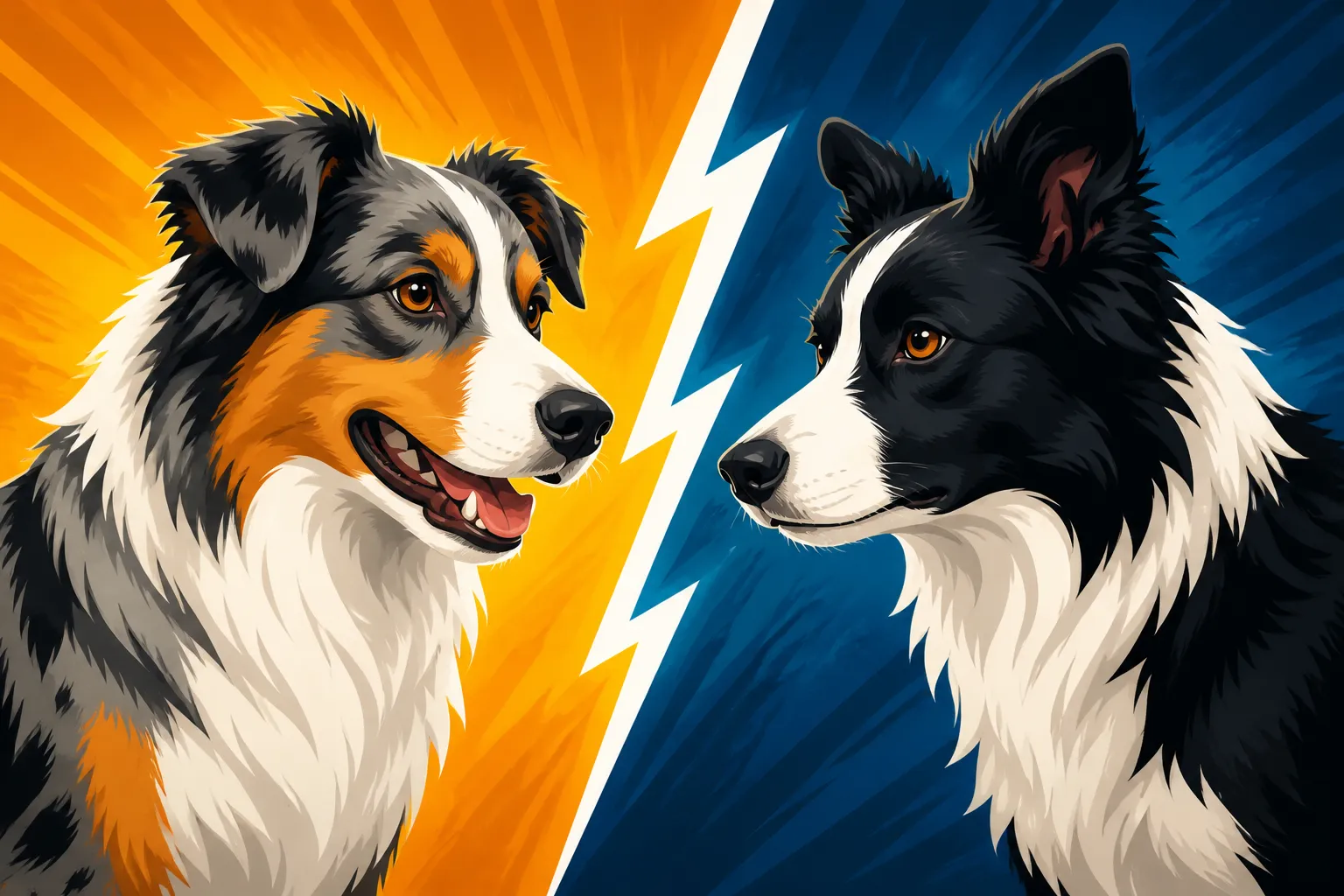
A Border Collie is the quintessential "eye" dog. When they herd, they use an intense stare, a low crouch, and stealthy movements to control stock. It's a precise, almost hypnotic approach that allows them to move sheep with minimal physical contact, relying instead on psychological pressure and subtle body language. This "eye" is a powerful tool on the farm, but in a home environment, it can manifest in some unexpected ways. You might find a Border Collie intensely staring at children, other pets, or even inanimate objects, trying to "gather" them. They might try to control movement with their gaze, or even block pathways. This isn't aggression; it's simply their instinct playing out, often in frustrating ways if not properly channeled.
Australian Shepherds, while also herders, typically employ a more upright, body-driven style. They're more likely to use nips at the heels, bumps, and barking to move stock. They're excellent at circling and gathering, often working a wider perimeter than a Border Collie might. In a pet home, this means an Aussie is more likely to be found trying to "organize" the family, gently (or not so gently) nudging people, nipping at ankles, or circling children during play. They might see a vacuum cleaner as something that needs to be herded, or try to keep all the neighborhood dogs in a neat group at the park. This isn't about the intense stare, but about active, physical management. It's important to understand that you cannot train out this fundamental drive; you can only redirect it. You’ll find a lot more information on this in The Australian Shepherd Herding Drive You Cannot Train Out.
Managing Intense Herding Drives in a Pet Home
Living with either a Border Collie or an Australian Shepherd means committing to providing outlets for their innate herding drives. If these instincts aren't given appropriate channels, both breeds can become frustrated, destructive, or develop problematic behaviors. For a Border Collie, that intense "eye" needs a job, whether it's agility, flyball, or advanced obedience. Without mental engagement, they can become fixated on shadows, lights, or develop obsessive-compulsive behaviors trying to "herd" imaginary objects. Owners often feel immense pressure to constantly occupy their Border Collie's mind.
For an Australian Shepherd, redirecting their physical herding style often means engaging in sports like Treibball, herding balls, or disc dog. Tug games, especially those that involve a "chase and retrieve" element, can be great for satisfying that desire to move and collect. You'll need to teach them appropriate boundaries, like not nipping at family members' heels, and offer approved toys as alternatives. This is where Australian Shepherd Heel Nipping and How to Redirect It becomes essential reading. The frustration for Aussie owners often comes from managing the sheer physicality of their dog's attempts to herd everything in sight. Providing a suitable "job" is paramount, rather than just aimless exercise. This concept is explored further in Giving an Australian Shepherd a Job Instead of a Walk.
Energy Levels and Exercise Requirements
Both breeds are high-energy, no doubt about it. But the type of energy, and what truly satisfies it, can differ significantly. It's not just about how long you walk them, but what that walk entails.
Daily Exercise: Quality Versus Quantity
Border Collies are often described as canine athletes, bred for endurance and speed across vast pastures. They can go and go, seemingly tireless, thriving on long runs, intense games of fetch, and demanding physical challenges like agility courses. Many owners find that a Border Collie needs several hours of intense physical exercise daily – not just a leisurely stroll around the block. Without this, they can become bouncy, destructive, and difficult to live with. Their need for physical exertion is profound, and they often need owners who are equally dedicated to strenuous outdoor activities, come rain or shine.
Australian Shepherds also require substantial exercise, typically one to two hours a day, but their needs lean more towards a blend of physical activity and mental engagement. While they can keep up on long hikes or runs, an Aussie might be just as happy with a shorter, more structured session of fetch combined with trick training or a scent work game. They are powerful and agile, excelling in sports like agility and flyball, but they often crave purpose in their exercise. Simply letting an Aussie run around in a yard won't cut it; they need engagement with their human. Many owners lament that their Aussie seems to "get worse in the evening" if they haven't had enough mental and physical stimulation, becoming restless and demanding. Why Physical Exercise Alone Never Settles an Aussie really digs into this.
Mental Stimulation: The Underrated Need
Here's where both breeds truly shine and where a new owner can easily fall short if they're not prepared. For both the Border Collie and the Australian Shepherd, mental exercise is just as important, if not more so, than physical exercise. These are dogs bred to think, problem-solve, and make decisions independently on the farm.
A Border Collie, with its intense focus, thrives on learning complex commands, intricate sequences in dog sports, and engaging in puzzles that challenge their intellect. They often learn new commands with frightening speed and can become bored or destructive if their minds aren't constantly stimulated. Puzzle toys filled with kibble, advanced obedience training, or even teaching them to perform household tasks can keep their sharp minds occupied. You'll find yourself browsing online stores like Chewy for endless puzzle toys and brain games to keep them engaged.
Australian Shepherds also demand significant mental work. They are incredibly smart and enjoy learning tricks, engaging in scent work, and solving problems. However, their independent nature means they might get bored with repetitive tasks quicker than a Border Collie and need variety. Scent games, where they use their noses to find hidden treats or objects, are fantastic for tiring out an Aussie's mind without over-stressing their joints. Scent Games That Tire an Australian Shepherd offers great ideas. They need to feel like they have a "job," even if that job is just finding all the hidden treats in the living room. Without this mental engagement, both breeds can become anxious, vocal, or channel their intelligence into finding mischievous ways to entertain themselves, often at your expense.
Temperament and Trainability
While both breeds are intelligent and highly trainable, their default temperaments and how they interact with the world can present different challenges and rewards.
Approach to Strangers and New Situations
Border Collies can sometimes be reserved or even shy with strangers, preferring to observe from a distance rather than greeting everyone enthusiastically. This can stem from their intense focus on their work; they weren't necessarily bred to be social butterflies at the town market. Early and extensive socialization is paramount to ensure they grow into well-adjusted adults who are confident in new environments and around new people. Without it, some can become timid or even reactive when faced with unfamiliar situations. They need positive experiences in a wide variety of settings from a young age to prevent anxiety.
Australian Shepherds are typically described as reserved with strangers, taking a "wait and see" approach. They are inherently loyal to their family and may not be effusive with newcomers. This isn't shyness or aggression, but a characteristic caution common in guardian breeds. However, if not properly socialized, this reservation can tip into fear or reactivity, especially if they perceive a threat to their family or territory. It's crucial to expose an Aussie puppy to a wide range of sights, sounds, people, and other well-behaved dogs in a positive and controlled manner. Starting with a solid foundation of early socialization, like outlined in Socializing an Aussie Puppy Off the Farm, is vital to help them develop into confident, well-adjusted companions.
Trainability and Biddability
Both breeds are incredibly intelligent and eager to learn, often topping lists of the smartest dog breeds. However, their motivations and how they respond to training can differ.
Border Collies are often described as highly biddable, meaning they are very willing to please their handler and respond quickly to commands. They thrive on structured training and excel in competitive obedience, agility, and other dog sports where precision and speed are valued. Their intense focus allows them to absorb information rapidly and execute complex tasks. They are often highly motivated by praise and the opportunity to work, making them a dream to train for those who enjoy the process.
Australian Shepherds are also highly intelligent and quick learners, but they can be a bit more independent or "opinionated" than some Border Collies. While they love to learn and participate in activities with their humans, they may test boundaries or become bored if training isn't engaging or if they don't see the "point." They can be incredibly creative problem-solvers, which means they might figure out how to get what they want in ways you hadn't anticipated. Consistency, positive reinforcement, and making training feel like a fun game or a puzzle are key to success with an Aussie. When it comes to something like Australian Shepherd Recall Around Moving Things, you'll need to work extra hard to build that reliability due to their natural instincts.
Grooming, Health, and Lifespan Considerations
While their working temperaments are the biggest differentiating factor, there are practical considerations regarding their physical care and health.
Coat Care Differences
Both the Australian Shepherd and the Border Collie possess a double coat designed for protection against the elements, meaning both shed, often quite a lot, especially during seasonal "coat blows."
The Australian Shepherd typically has a medium-length double coat, with moderate feathering on the legs, chest, and tail. This coat requires regular brushing, usually a few times a week, to prevent mats and tangles, especially behind the ears, in the armpits, and on the "trousers" (the feathering on their hind legs). During their biannual coat blow, shedding can be profuse, demanding daily brushing to remove loose undercoat. The Australian Shepherd Double Coat Explained dives deeper into what to expect. Stock up on sturdy brushes and deshedding tools from places like Chewy; you'll need them!
Border Collies can have either a rough (medium-length) or smooth (short) double coat. The rough coat is more common and requires similar maintenance to an Aussie's coat, with regular brushing to prevent matting and manage shedding. The smooth coat, while still a double coat and still sheds, generally requires less intensive grooming. Even with a smooth coat, regular brushing is important to keep the skin healthy and minimize loose hair around the house. Both breeds should never be shaved, as their double coat provides insulation in both hot and cold weather.
Common Health Concerns
Both breeds are generally robust and healthy, but like all purebred dogs, they are prone to certain genetic conditions. Reputable breeders will screen their breeding stock to minimize the risk of passing these on.
Shared Concerns:
- Hip and Elbow Dysplasia: Both breeds are active dogs, and faulty joint development can lead to arthritis and pain. Screening through organizations like OFA (Orthopedic Foundation for Animals) is standard for responsible breeders. Australian Shepherd Hip Dysplasia and Working Joints provides more detail.
- Eye Anomalies: Conditions like Collie Eye Anomaly (CEA) and Progressive Retinal Atrophy (PRA) can affect vision. Regular eye exams by a veterinary ophthalmologist (ACVO) and genetic testing are important. Hereditary Cataracts Clouding an Aussie Eye is a good read on this.
- MDR1 Mutation: This gene mutation affects how certain drugs are processed, making dogs sensitive to common medications. Both breeds, being descended from herding lines, can carry this. Genetic testing is crucial, as listed in The MDR1 Mutation Half of Australian Shepherds Carry.
Border Collie Specific (more prevalent):
- Trapped Neutrophil Syndrome (TNS): A fatal immunodeficiency.
- Neuronal Ceroid Lipofuscinosis (NCL): A neurological disorder.
Australian Shepherd Specific (more prevalent):
- Epilepsy: Idiopathic epilepsy can affect Aussies, with seizures typically starting between one and five years of age.
- Certain Autoimmune Diseases: While not exclusive, some autoimmune conditions can be seen more frequently in Aussies.
It’s crucial to buy from a breeder who performs all recommended health screenings for their lines, regardless of which breed you choose. This transparent approach protects you and ensures a healthier puppy.
Here's a quick comparison of some key traits:
| Trait | Australian Shepherd | Border Collie |
|---|---|---|
| Herding Style | Upright, body pressure, nips, circling, gathering | "Eye" herder, low crouch, intense stare, stealthy moves |
| Energy Output | High; needs significant physical and mental work | Extremely high; often needs intense physical and mental work |
| Temperament with Strangers | Reserved, watchful, takes time to warm up | Can be reserved to shy, prefers to observe or ignore |
| Trainability | Highly intelligent, eager, can be independent/opinionated | Extremely intelligent, highly biddable, intense focus |
| Grooming | Medium-length double coat, moderate feathering, regular brushing | Rough (medium) or smooth (short) double coat, regular brushing for rough |
| Common Health | Hip/Elbow Dysplasia, MDR1, eye issues, Epilepsy, Autoimmune | Hip/Elbow Dysplasia, MDR1, eye issues, TNS, NCL |
Choosing between an Australian Shepherd and a Border Collie is a significant decision that comes down to a deep understanding of their nuanced differences and an honest assessment of your lifestyle. Both breeds demand immense commitment in terms of exercise, mental stimulation, and consistent training. A Border Collie might be more suited for an owner looking for a focused, intensely biddable partner for competitive dog sports who thrives on precise work. An Australian Shepherd might appeal to someone who wants a versatile, clever, and loyal companion for a variety of activities, who appreciates a bit more independence and a more "body-driven" approach to life.
Ultimately, neither breed is a "set it and forget it" kind of dog. Good quality food, whether from your local pet store or delivered from Chewy, excellent veterinary care, and an endless supply of patience and engagement will be paramount. Research thoroughly, meet individuals of both breeds if possible, and remember that regardless of your choice, you'll be welcoming an incredibly intelligent, active, and devoted partner into your life.
Disclaimer
This article is for general informational purposes only and does not constitute professional advice. Laws, prices and regulations vary by location and change over time. Consult a qualified professional for guidance on your specific situation.